
Reviewed · ANGKOR TEMPLE TOURS
Siem Reap: Angkor Full-Day Group Tour with Japanese Guide
Stone faces in the mist set the tone. The big win here is a Japanese-speaking guide who helps you understand what you’re seeing, not just where to stand for photos. You’ll also get smooth hotel pickup and transport, plus a realistic visit pace that makes the long day feel manageable.
I especially like how the route gives you variety fast: you move from Angkor Thom’s towering stone faces at Bayon, to the jungle atmosphere of Ta Prohm, then end at Angkor Wat. When the guide is sharp with details (the Japanese-language guides Chun and Bun are specifically praised for clear explanations and good humor), you walk away feeling you actually learned something.
One thing to factor in: the tour price does not include the Angkor entrance pass, and lunch isn’t included either. That means your all-in cost will be higher than the headline price, so it’s best to budget for the ticket and food up front.
In This Review
- Key things to know before you go
- Picking a 1-day or 2-day Angkor route that matches your energy
- Morning in Angkor Thom: South Gate to Bayon’s stone smiles
- Ta Prohm: the jungle temple that feels like a movie set
- Midday break at Srah Srang, then Angkor Wat at the right time
- The optional sunrise plan: when the early start is actually worth it
- Day 2 upgrade: Pre Rup, Banteay Srei, Beng Mealea, then Bakong
- Transport and timing: tuk-tuk versus A/C van, and why it matters
- Japanese-guide quality: explanations, humor, and pacing that feels human
- Price and value: $50 tour cost plus the Angkor Park pass
- Dress code and what to pack so you don’t lose time
- Who should book this Angkor Japanese guide tour
- Should you book this Siem Reap Angkor tour?
- FAQ
- What temples are included on the 1-day tour?
- What extra do I need to buy before the tour?
- How does the sunrise option change the schedule?
- How much is the Angkor entrance ticket?
- What transportation will I use?
- Is lunch included?
- What should I wear and bring for Angkor?
Key things to know before you go
- Japanese guide, not just a driver: expect explanations, photo help, and a calm rhythm so the temples make sense
- Two strong routes: a focused 1-day circuit or a slower 2-day plan with Banteay Srei and Beng Mealea
- Sunrise option: a very early start with the right finish time for a calmer morning
- Cold water and cold towels during visits: small thing, big comfort in Siem Reap heat
- Dress rules matter at Khmer temples: plan clothing so you do not lose time getting covered
- Angkor Park pass is extra: skipping the ticket line helps, but you still need the ticket
More temple circuits, set side by side
- Angkor Wat Sunrise or Sunset Tour with Guide from Siem Reap★ 5.0 · 12,109 reviews
- Siem Reap: Angkor Wat: Small-Group Sunrise or Sunset Tour★ 5.0 · 9,444 reviews
- Siem Reap: Angkor Wat 2-Day Tour with Sunrise and Sunset★ 4.9 · 4,429 reviews
- Siem Reap: Full-Day Angkor Wat Guided Tour with Sunset★ 4.9 · 3,803 reviews
Picking a 1-day or 2-day Angkor route that matches your energy
This is built as a full-day, temple-focused experience from Siem Reap, with a clear choice. If you want the “main hits” without spreading out too much, the 1-day version covers three main stops across the Angkor complex: Ta Prohm, Angkor Thom highlights (including Bayon), and Angkor Wat.
If you’d rather slow down and see temples that feel more countryside and less showroom, upgrade to the 2-day option. That adds Pre Rup, Banteay Srei, Beng Mealea, and finishes day two at Bakong. The added time matters because Angkor doesn’t feel like one place. It feels like several places stitched together, and your brain needs a little breathing room.
If you’re traveling on a tight schedule but still want the best payoff, the optional sunrise approach on the 1-day plan (or the early start on day two) can be the difference between a rushed “checklist” and a more memorable morning mood.
Morning in Angkor Thom: South Gate to Bayon’s stone smiles
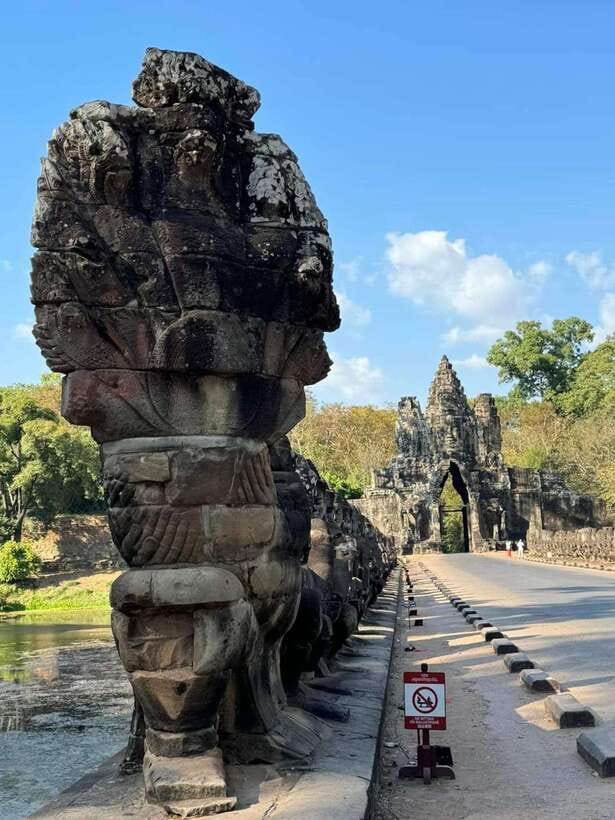
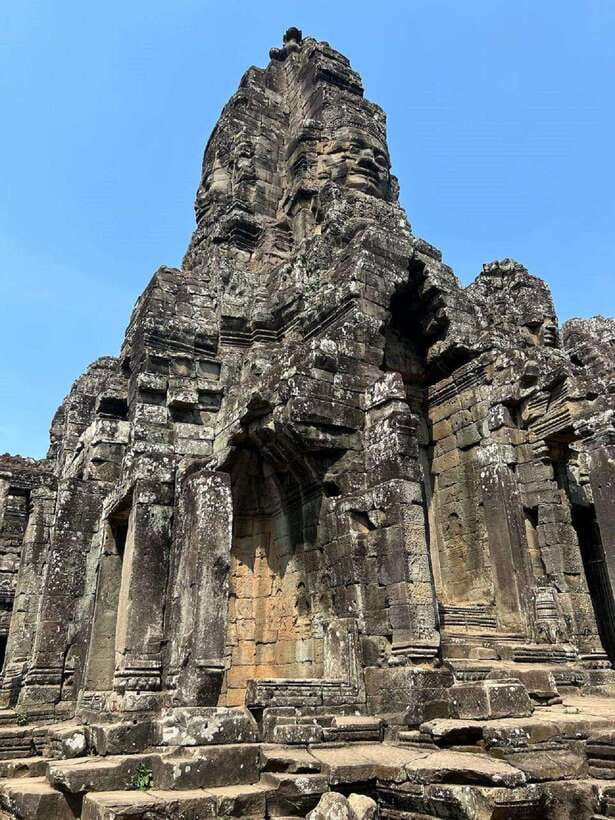
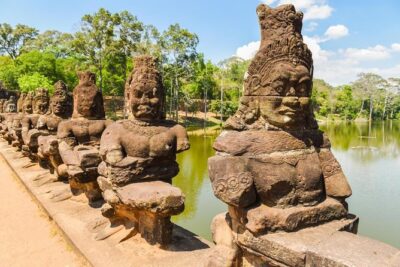
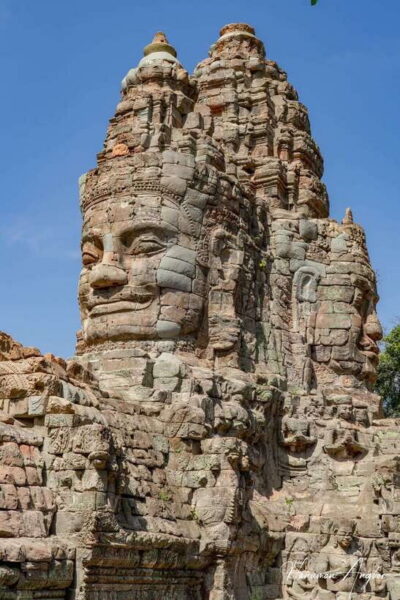
The day starts with pickup from your hotel lobby in Krong Siem Reap, typically between 08:30 and 09:00 AM, and you’ll head straight into Angkor Thom. The first big moment is entering through the South Gate, where giant stone faces greet you. It’s a strong opener because it gives you a sense of scale before you even reach the core buildings.
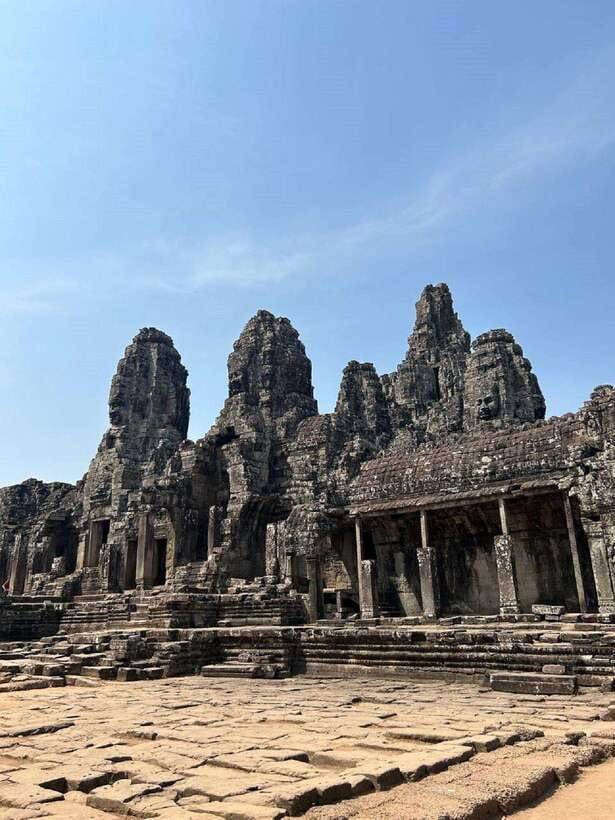
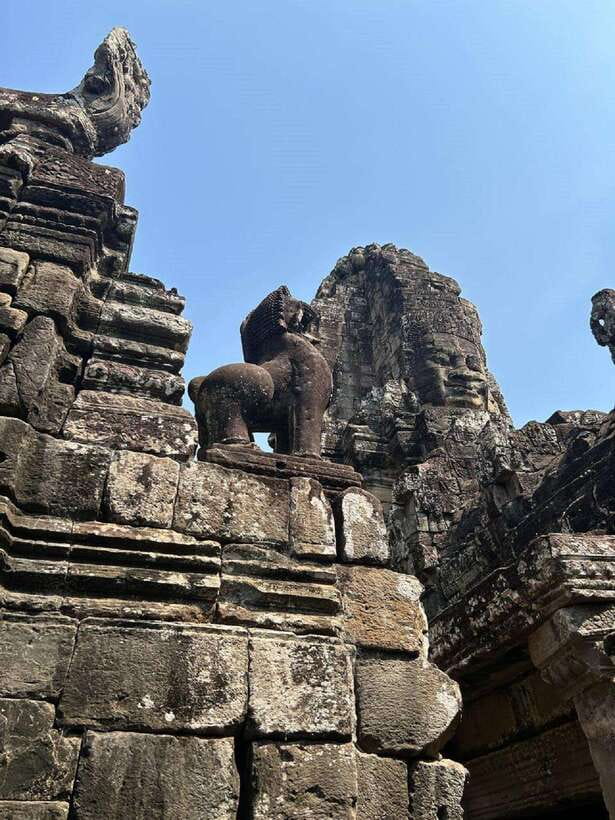
From there, you go temple by temple with a guided pace. Bayon is the centerpiece. You’ll see the 54 towers and 216 smiling faces associated with Avalokitesvara. A good Japanese guide really changes how this reads. Instead of “random faces everywhere,” you start noticing how the carvings repeat, how the towers create depth, and why the whole complex looks both busy and controlled at once.
You also visit Baphuon, a temple that’s described as recently restored, and it’s a great contrast to Bayon. Bayon feels like a portrait wall. Baphuon feels like architecture you can climb with your eyes, especially when you notice the sightlines from terraces.
Then you get two more stops that add texture:
- The Elephant Terrace, a ceremonial platform linked with royal processions
- The Terrace of the Leper King, known for detailed carvings and associated with the god of death, Yama
These parts can be easy to skim if you travel alone. With a guide, you slow down in the right places.
Ta Prohm: the jungle temple that feels like a movie set
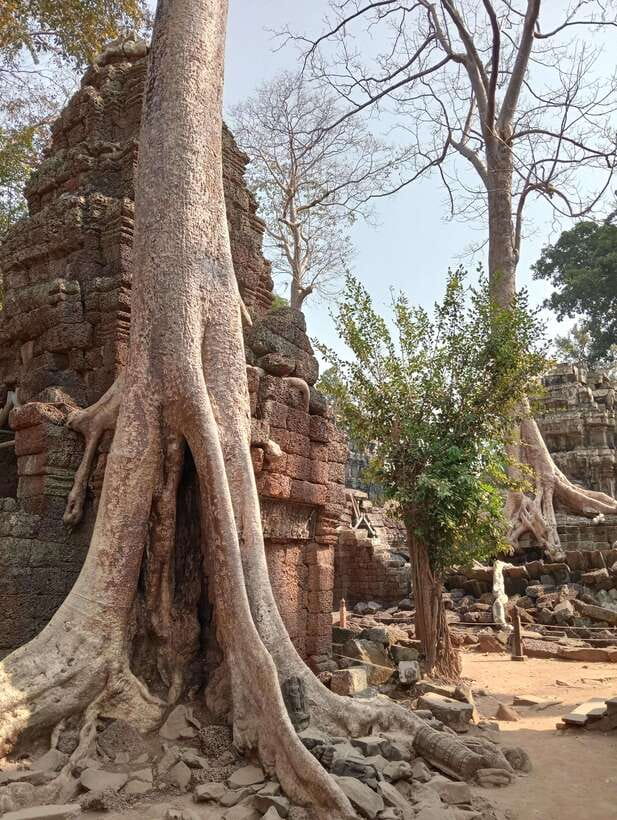
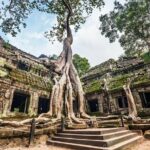
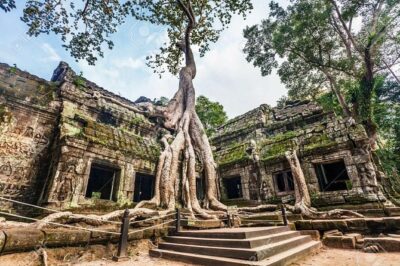
Ta Prohm is where Angkor starts to look less like a finished monument and more like a scene the forest reclaimed. You’ll spend about one hour here, with the guide pointing out what to watch for and how to frame the ruins.
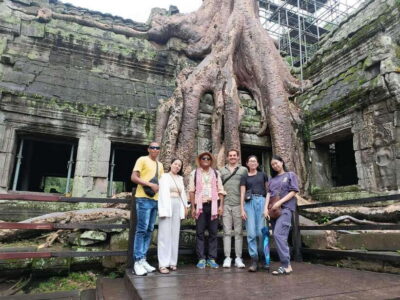
This is the stop where massive tree roots wrap around stone, giving you that Tomb Raider vibe without needing to pretend. The temple was left in a natural state after rediscovery, and the contrast is the point: Khmer stone and modern jungle growth side by side.
For your photos, Ta Prohm is forgiving but also crowded in spots. A Japanese guide who knows the right angles can help you avoid the worst congestion and still get clean compositions. The guides specifically praised for photo guidance are known for steering you to good viewpoints rather than just letting you wander.
Midday break at Srah Srang, then Angkor Wat at the right time
Mid-tour, you’ll make time for Srah Srang, which is a break period before lunch. Lunch is not included, so you’ll either stop at a nearby restaurant or follow the guide’s recommendation.
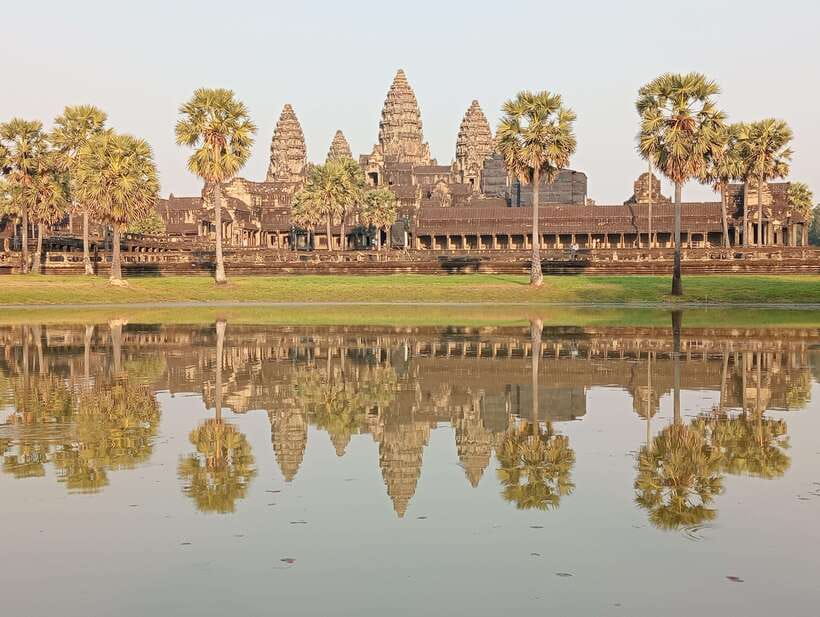
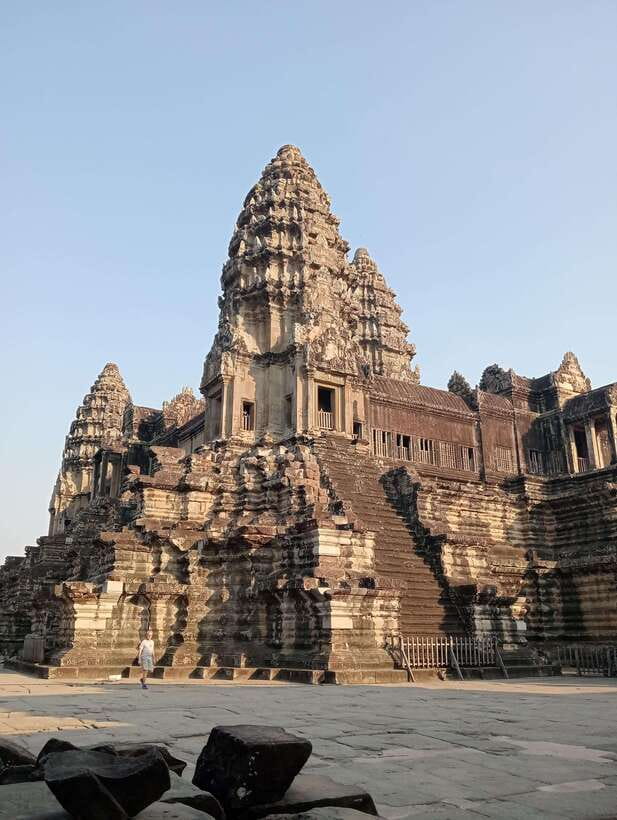
Then you shift to Angkor Wat in the later part of the day, typically finishing around 04:30 to 05:00 PM and returning you to your hotel. If you’ve done early mornings elsewhere, this timing works well. You get a full day without feeling like you’re standing in the dark or rushing through the important scenes.
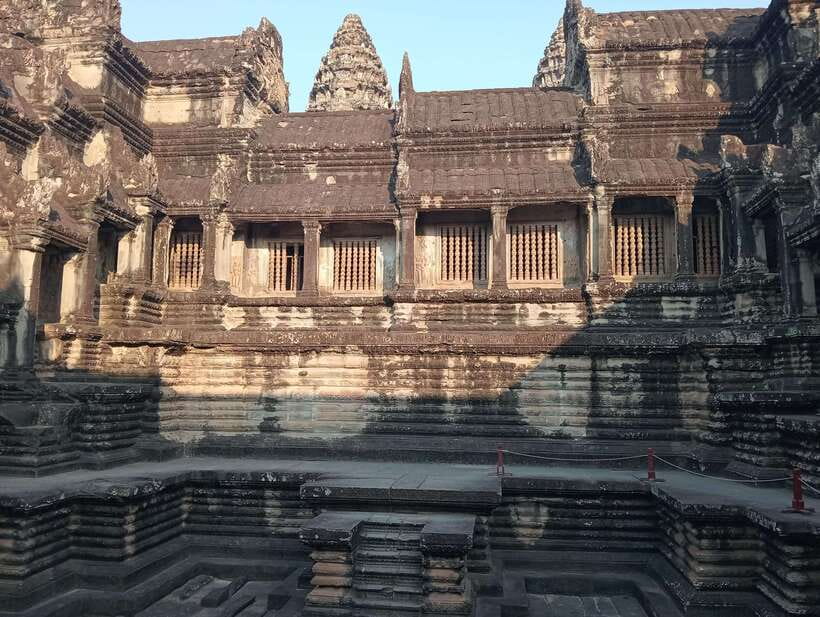
Angkor Wat is described as the world’s largest religious monument, and your guide’s job is to help you interpret the symbolism and history, not just recite facts. If you’re the type who likes to understand what the bas-reliefs mean and why certain layouts matter, you’ll likely get more from this stop than you expected.
More days made easy with a guide
The optional sunrise plan: when the early start is actually worth it
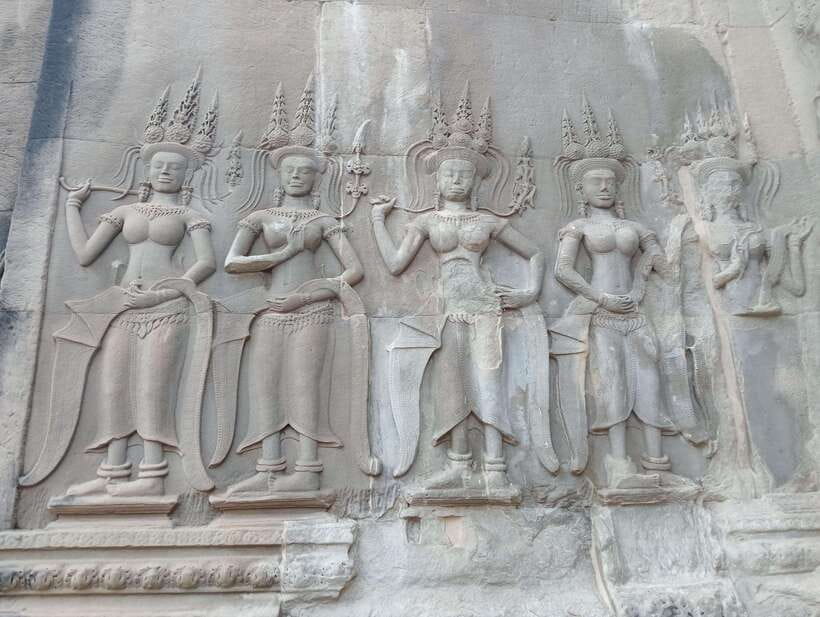
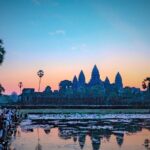
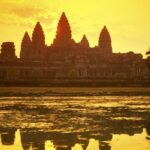
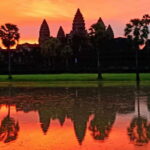
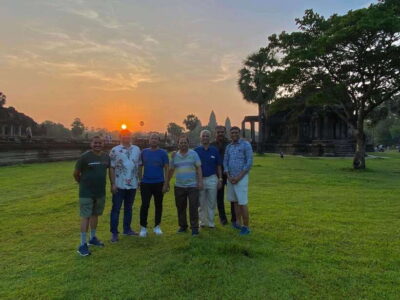
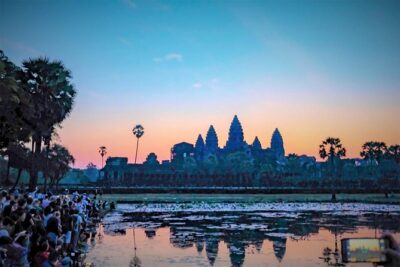
Sunrise changes everything, but only if you plan for it. If you choose the sunrise option on the 1-day plan, pickup is typically 04:30 to 05:00 AM, and the tour finishes around 12:00 PM. You’ll want energy for a long morning, and you should bring breakfast from your hotel. That’s not optional fluff. It’s part of making sunrise feel smooth instead of miserable.
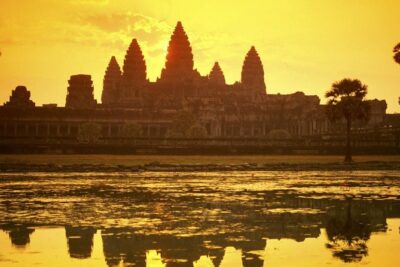
The payoff is the morning light and fewer crowds. More importantly, sunrise gives you a calmer pace for Angkor Wat’s big forms. You’re not fighting harsh midday shadows. You’re seeing the surfaces in softer tones, which makes carvings and tower lines read better.
If you hate the idea of a very long day, the sunrise option also helps you break the temple day into a morning you can remember, then an afternoon you can enjoy on your own.
Day 2 upgrade: Pre Rup, Banteay Srei, Beng Mealea, then Bakong
The 2-day option is for you if you want Angkor to feel less like one exhausting lap and more like a sequence of distinct worlds.
Day two starts again early at 05:00 AM for sunrise at Angkor Wat. After sunrise, you eat breakfast brought from your hotel, then your day moves into:
- Pre Rup: a warm brick and laterite 10th-century pyramid temple with high terraces and great views
- Banteay Srei: the famous pink sandstone site with incredibly detailed carvings, often called the “Citadel of Women”
- Lunch (not included): a local Cambodian meal before heading further out
- Beng Mealea: a temple almost completely taken over by nature, with collapsed galleries and tree roots that make it feel adventurous and photogenic
- Bakong: the first grand stone pyramid temple of the Khmer Empire, typically reached around 2:30 to 3:00 PM
Pre Rup is a smart opener for day two because it’s architectural and view-based. You feel the terrain and the geometry. Banteay Srei feels like the craftsman’s showpiece, where details take center stage. Then Beng Mealea gives you a different kind of emotional experience. It’s not about perfect symmetry. It’s about ruins as nature’s co-architect.
If you like photos where the subject looks wild, not curated, Beng Mealea will likely be one of your favorite stops.
Transport and timing: tuk-tuk versus A/C van, and why it matters
How you travel affects your energy more than you’d think. This tour varies transport based on group size and option.
For shared tours:
- 1–2 people typically use a tuk-tuk
- 3–6 people travel by A/C van
For private tours:
- 1–2 people use a tuk-tuk (and you can choose a car at checkout)
- 3+ people use an A/C van or bus
On a 2-day private plan, 1–2 people can use a tuk-tuk on day one and a car on day two, depending on how the option is set.
In Siem Reap, that air-conditioned time is a real comfort advantage. Heat adds up. Even if you’re excited, the temples win when you arrive with your legs and brain still functioning.
Also note that pickup is hotel-based. Tell the operator your hotel name, and plan to be ready in the lobby roughly 15 minutes before pickup.
Japanese-guide quality: explanations, humor, and pacing that feels human
The biggest difference between a good and average Angkor tour is whether you come out understanding the temples you walked through. This experience is built around a Japanese-speaking guide, and the most praised guides are noted for a few things:
- clear, easy-to-follow explanations about what you’re seeing
- knowing photo spots and good angles
- adjusting pace for slower walkers, including older parents
- flexibility when weather shifts, including switching to a restaurant at the right time
You don’t need a PhD to enjoy Angkor, but you do need context. Stone faces, terraces, symbolism, and layout can look random without help. With a guide who can connect the dots in Japanese, you get more meaning from the same concrete and sandstone.
And yes, there’s humor. Some Japanese guides add wordplay and light gags. It sounds minor, but it keeps the day from feeling like a lecture hall. You remember more when you’re relaxed.
Price and value: $50 tour cost plus the Angkor Park pass
The tour price is $50 per person, and it’s a fair starting point for a guided day with hotel pickup, transport, and included comfort items like cold water and cold towels.
But you must budget the Angkor Archaeological Park pass separately:
- $37 per person for a 1-day pass
- $62 per person for a 2–3 day pass
So your likely totals look like this:
- 1-day plan: $50 + $37 = $87 per person, plus lunch and tips
- 2-day plan: $50 + $62 = $112 per person, plus lunch and tips
Lunch is not included, and tips are optional, so treat food and small extras as part of your travel plan. Still, the value is solid because you’re getting a guide, transport, and a route that hits major sites without wasting time.
One nice detail: there’s also skip the ticket line support. You still buy the pass, but you spend less time queueing.
Dress code and what to pack so you don’t lose time
Angkor temples have strict clothing rules, and this tour flags them clearly. You should plan ahead so you don’t waste time searching for a workaround at the entrance.
Not allowed:
- shorts
- short skirts
- sleeveless shirts
For temple entry, you may use a scarf to cover knees and shoulders in many places. But except for Angkor Wat, you must wear trousers and skirts that cover the knees and shirts that cover the shoulders. In practice, pack like you’ll be outdoors and winded, then cover up like a respectful guest.
What to bring:
- comfortable shoes
- hat
- camera
- comfortable clothes
- insect repellent
- cash
If you’re doing sunrise, you’ll also want your breakfast plan ready, since you’re expected to bring breakfast from your hotel.
Who should book this Angkor Japanese guide tour
This is a strong fit if:
- you want a Japanese-speaking guide who explains what you’re seeing
- you care about getting good photos without taking over the day yourself
- you want a structured route with pickup and transport handled
- you prefer the option to go faster with a 1-day circuit or slower with a 2-day upgrade
It may not be ideal if:
- you want total independence and zero schedule (this is organized touring)
- you hate early mornings and sunrise starts
- you need wheelchair access, since it is not suitable for wheelchair users
- you’re traveling with very young infants or very advanced age, since it lists constraints (babies under 1 and people over 95 are not suitable)
Should you book this Siem Reap Angkor tour?
I’d book it if you want the temples without turning your trip into logistics. The Japanese guidance, the realistic pacing, and the fact that you’re carried between key sites in a way that makes sense for a single-day schedule are real advantages. The 2-day option is especially worth considering if you want Banteay Srei and Beng Mealea, because those two add a different feel than the main “must-see” crowd magnets.
If you’re budget-sensitive, run the math early. The headline price looks simple, but the Angkor Park pass and lunch are part of your final cost. Once you account for that, the value is straightforward: organized touring, a guide who helps you understand, and a route that hits the big moments without feeling like a sprint.
If you want, tell me your travel dates and whether you prefer the sunrise option or the 2-day upgrade, and I can suggest the best way to plan your temple day around heat and your own pace.
FAQ
What temples are included on the 1-day tour?
The 1-day option covers Ta Prohm, Angkor Thom highlights (South Gate, Terrace of the Elephants, Baphuon, Bayon), a break at Srah Srang, and a guided visit to Angkor Wat.
What extra do I need to buy before the tour?
You need to purchase the Angkor Complex entrance ticket (Angkor Archaeological Park pass) separately. Lunch is also not included, and tips are optional.
How does the sunrise option change the schedule?
If you choose sunrise, pickup is typically between 04:30 AM and 05:00 AM, and the tour finishes around 12:00 PM. You’re advised to bring breakfast from your hotel to enjoy after the sunrise.
How much is the Angkor entrance ticket?
The pass is $37 per person for 1 day and $62 per person for 2–3 days.
What transportation will I use?
It depends on your group size and tour type. Shared tours use tuk-tuk for 1–2 people and an A/C van for 3–6 people. Private tours use tuk-tuk for 1–2 people (with a car option at checkout) and an A/C van or bus for 3+ people.
Is lunch included?
No. Lunch is not included on both the 1-day and 2-day options.
What should I wear and bring for Angkor?
Wear clothing that follows the temple dress code: no shorts, short skirts, or sleeveless shirts. Bring comfortable shoes, a hat, camera, comfortable clothes, insect repellent, and cash. A scarf that covers knees and shoulders can help with temple entry.
More Siem Reap Tours to Compare
- Angkor Wat Sunrise or Sunset Tour with Guide from Siem Reap
★ 5.0 · 12,109 reviews - Siem Reap: Angkor Wat: Small-Group Sunrise or Sunset Tour
★ 5.0 · 9,444 reviews - From Siem Reap: Kampong Phluk Floating Village Tour by Boat
★ 4.9 · 6,979 reviews - Sunset tour of Kampong Phluk stilts home village on the Tonle Sap
★ 5.0 · 4,865 reviews - Siem Reap: Angkor Wat 2-Day Tour with Sunrise and Sunset
★ 4.9 · 4,429 reviews
More Tour Reviews in Siem Reap
- Angkor Wat Sunrise or Sunset Tour with Guide from Siem Reap
★ 5.0 · 12,109 reviews - Siem Reap: Angkor Wat: Small-Group Sunrise or Sunset Tour
★ 5.0 · 9,444 reviews - From Siem Reap: Kampong Phluk Floating Village Tour by Boat
★ 4.9 · 6,979 reviews - Sunset tour of Kampong Phluk stilts home village on the Tonle Sap
★ 5.0 · 4,865 reviews - Siem Reap: Angkor Wat 2-Day Tour with Sunrise and Sunset
★ 4.9 · 4,429 reviews
More Temple Circuits Around Siem Reap
- Angkor Wat Sunrise or Sunset Tour with Guide from Siem Reap
★ 5.0 · 12,109 reviews - Siem Reap: Angkor Wat: Small-Group Sunrise or Sunset Tour
★ 5.0 · 9,444 reviews - Siem Reap: Angkor Wat 2-Day Tour with Sunrise and Sunset
★ 4.9 · 4,429 reviews - Siem Reap: Full-Day Angkor Wat Guided Tour with Sunset
★ 4.9 · 3,803 reviews - Angkor Wat Sunrise tour with Small – Group and Guide tours
★ 5.0 · 3,655 reviews
Just Added: Fresh Siem Reap Tour Reviews

Angkor Temple Tours, compared.
 ★ 5.0Angkor Wat Sunrise or Sunset Tour with Guide from Siem ReapFrom $1812,109 reviews
 ★ 5.0Angkor Wat: Small-Group Sunrise or Sunset TourFrom $159,444 reviews
 ★ 4.9Angkor Wat 2-Day Tour with Sunrise and SunsetFrom $344,429 reviews
 ★ 4.9Full-Day Angkor Wat Guided Tour with SunsetFrom $153,803 reviews
 ★ 5.0Angkor Wat Sunrise tour with Small – Group and Guide toursFrom $143,655 reviews
 ★ 5.0Angkor Wat Highlights and Sunrise Guided Tour from Siem ReapFrom $233,213 reviews
 ★ 5.0Angkor Wat Sunset Small Group Tour with Lunch IncludedFrom $203,059 reviews
 ★ 5.0Full-Day Angkor Wat Sunrise Private Tour with Guide from Siem ReapFrom $602,920 reviews