
Reviewed · ANGKOR WAT TEMPLE TOURS
Siem Reap: Angkor Wat Small-Group Full Day Tour and Sunset
Angkor at sunrise and sunset is a full-day rhythm. This small-group tour strings together the big hits—Angkor Thom, Ta Prohm, and Angkor Wat—with a village stop where you’ll see how palm cake and palm sugar are made. It’s one of those days where the temples feel like they’re telling a story in stone.
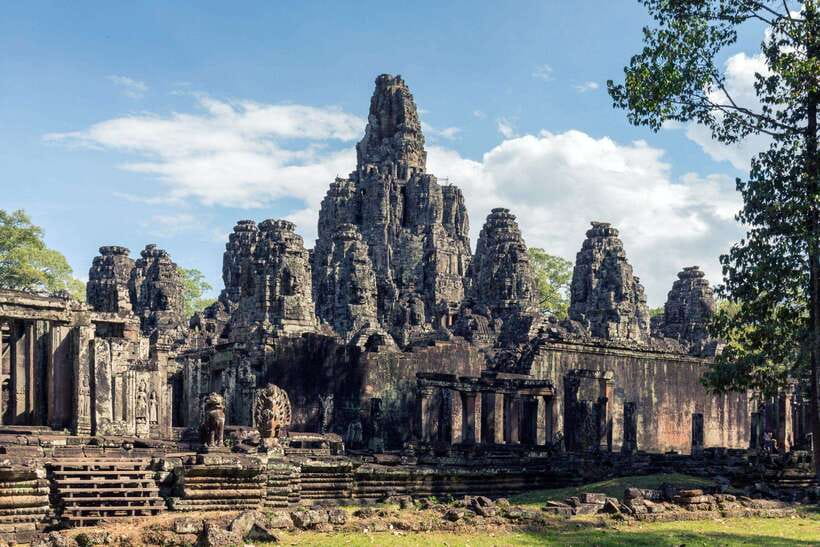
What I like most is how the route flows. You start inside the walls of Angkor Thom, hit the Bayon’s famous stone faces and the Terrace of the Elephants, then continue outward to Ta Prohm before finishing at the most iconic view point in the area. Second, the day includes more than temples: you get lunch and a cultural visit in Phum Preah Dak, which adds a real sense of place beyond the ruins.
One thing to keep in mind is timing at the end of the day. The sunset experience is built around a climb to Phnom Bakheng, but one past itinerary note flagged that the sunset portion might not feel close to Angkor Wat itself. If sunset locations matter to you, I’d ask your guide where you’ll watch from before you commit.
In This Review
- Key things to know before you go
- Morning pickup and Angkor Thom: the Great Royal City’s stone walls
- Bayon, Terrace of Elephants, and the face-magic you’ll remember
- Phimeanakas, the Leper King Terrace, and Baphuon: Hindu symbolism inside Angkor Thom
- Ta Prohm: the roots, the ruins, and why it works on film and in real life
- Lunch and Phum Preah Dak: palm cake and palm sugar beyond the ruins
- Angkor Wat in late-day light: jungle views and the icon that still hits
- Phnom Bakheng sunset climb: the view payoff and the pacing reality
- Price and value: what $32 covers, and the costs you must plan for
- Practical dress and comfort tips that actually matter
- Guide and driver: the small-group advantage
- Who should book this Angkor day tour?
- Should you book?
- FAQ
- What’s the duration of the Siem Reap Angkor Wat small-group tour?
- How much does the tour cost, and what’s not included?
- Do I need an Angkor pass for this tour?
- Is hotel pickup and drop-off included?
- What’s included in the tour besides the guide?
- Is lunch included?
- What temples and sights are visited during the day?
- Is the village stop included?
- What language is the tour guide?
- Are there any dress rules?
Key things to know before you go
A temple route that’s heavy on the icons: Bayon faces, Terrace of Elephants, Ta Prohm roots, Angkor Wat, then Phnom Bakheng.
You’ll add culture in Phum Preah Dak: palm cake and palm sugar-making, not just a quick photo stop.
Bring the right gear for walking: comfortable shoes, sun hat, sunscreen, and clothes that cover properly.
Angkor pass is extra: the $32 tour price does not include the Angkor pass ($37 per person).
Expect some “day pace” tradeoffs: it’s a lot to fit into 10 hours, so plan your expectations for speed and crowding.
Other ways to walk the great temple
- Angkor Wat Sunrise or Sunset Tour with Guide from Siem Reap★ 5.0 · 12,109 reviews
- Siem Reap: Angkor Wat: Small-Group Sunrise or Sunset Tour★ 5.0 · 9,444 reviews
- Siem Reap: Angkor Wat 2-Day Tour with Sunrise and Sunset★ 4.9 · 4,429 reviews
- Siem Reap: Full-Day Angkor Wat Guided Tour with Sunset★ 4.9 · 3,803 reviews
Morning pickup and Angkor Thom: the Great Royal City’s stone walls
The day starts with hotel pickup in Krong Siem Reap, and you’ll want to be ready in the lobby about 10 minutes before your scheduled time. You ride in a luxury minivan with insurance, plus a licensed guide who speaks English, and you’ll get cold drinking water and cold towels to keep things manageable in the heat.
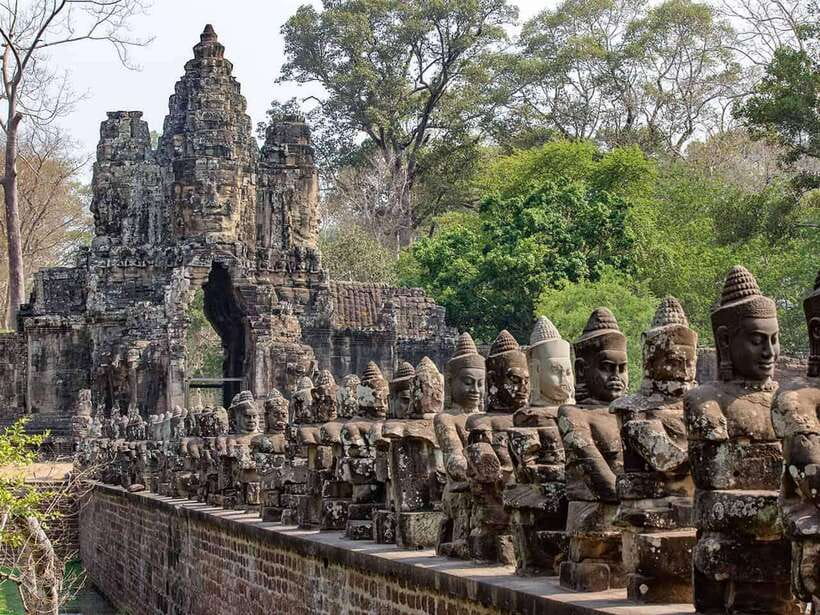
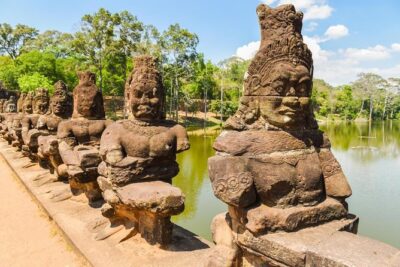
Then you’re straight into Angkor Thom, the 12th-century fortified city built by King Jayavarman VII. This is the part many visitors underestimate: before you get to the famous faces and terraces, you need that mental map of the city walls and gateways. Once you see it from the right angles, it’s easier to understand how the Khmer capital functioned like a planned world—ritual space, political power, and city life all layered together.
Practical tip: wear shoes you don’t mind getting dusty. Khmer temple grounds look scenic, but the paths can be uneven and sandy.
Bayon, Terrace of Elephants, and the face-magic you’ll remember
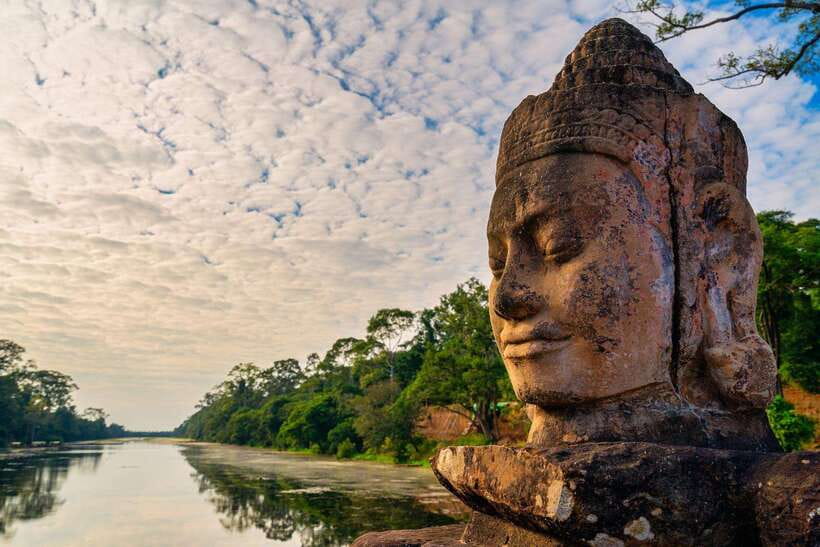
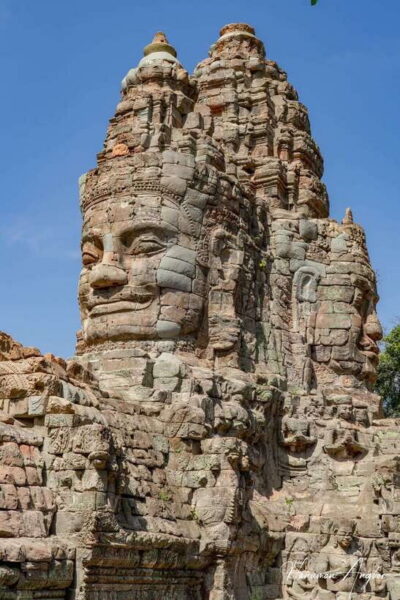
Next up is the Bayon Temple, famous for hundreds of stone faces looking out from towers. The effect is less like a single monument and more like a whole “vision network” around you. Stand at different points and the mood changes fast—the faces can look stern, watchful, almost different as the light shifts.
From there you head to the Terrace of Elephants, which was part of the royal palace complex area. It’s a great stop because it shows scale: you can feel how grand ceremonies would have been when this space was living, not just preserved.
What I like here is that this isn’t only about posing. If you take a few minutes to walk the terraces and look up at the carvings from multiple angles, the temple complex starts making sense as architecture for movement—where people would gather, process, and look toward power.
Phimeanakas, the Leper King Terrace, and Baphuon: Hindu symbolism inside Angkor Thom
Angkor Thom isn’t just Bayon. You also visit Phimeanakas, the Terrace of the Leper King, and Baphuon Temple. Together, these stops help you see Angkor as more than one “style.” You get Hindu-era temple logic mixed into a city that kept evolving.
Baphuon matters because it’s described as the largest Hindu temple in Angkor Thom. That label is useful: it tells you to treat it like a major structural and spiritual anchor, not a minor detour. The terraces and temple courtyards around it feel built for both ceremony and status.
The Terrace of the Leper King can be a more emotional stop. Even if you don’t know the full background story, the name alone pushes you to pay attention to the carvings and how people used these spaces. It’s the kind of stop where your guide’s explanation helps you connect the visuals to meaning.
Practical tip: if you’re sensitive to heat, this is a good time to take short shade breaks without falling behind. The overall day is packed.
Ta Prohm: the roots, the ruins, and why it works on film and in real life
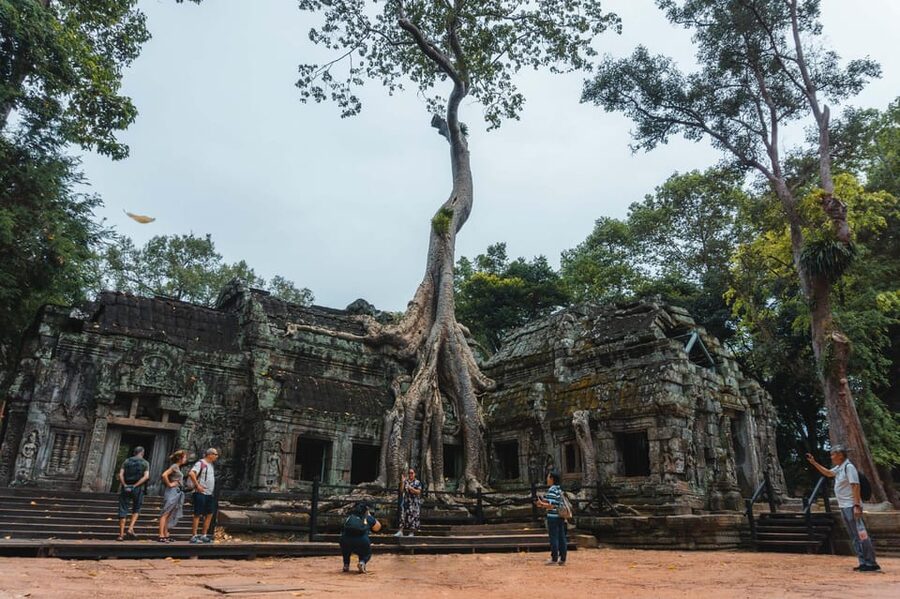
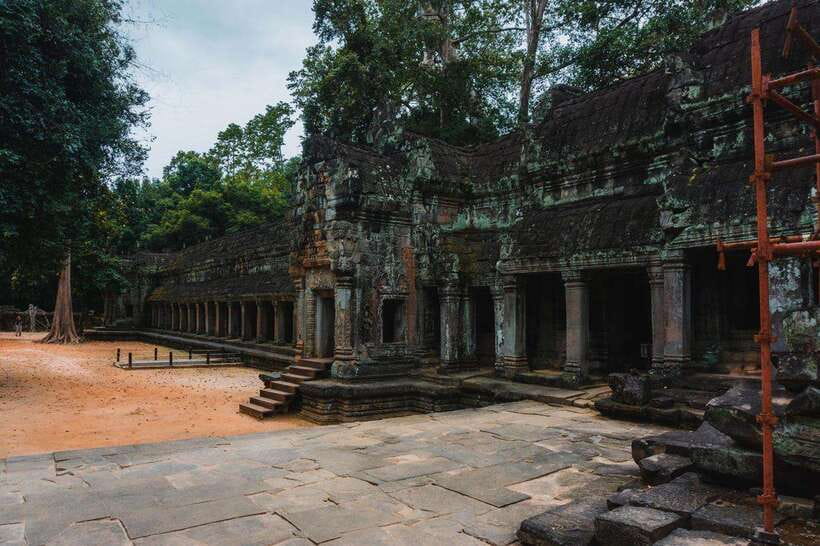
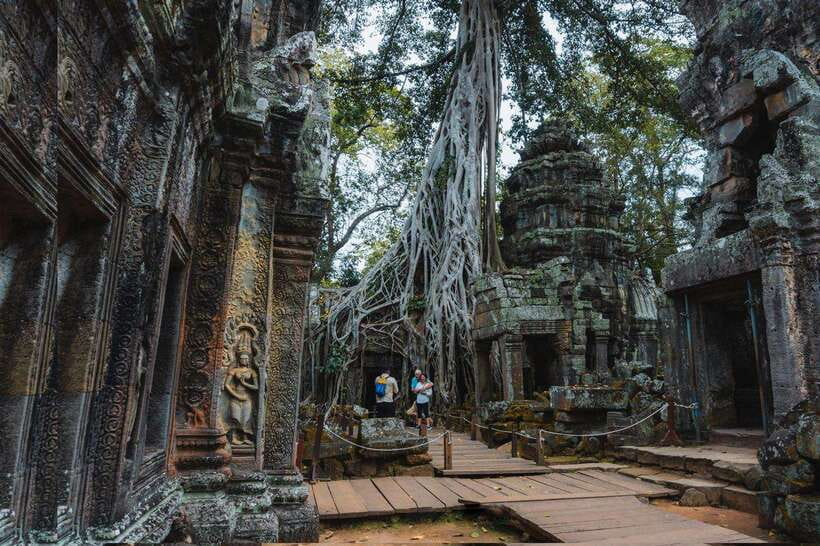
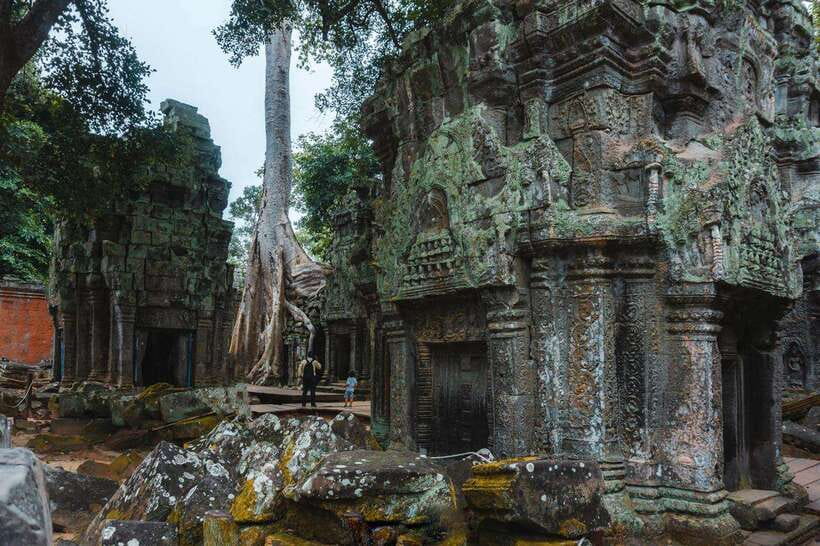
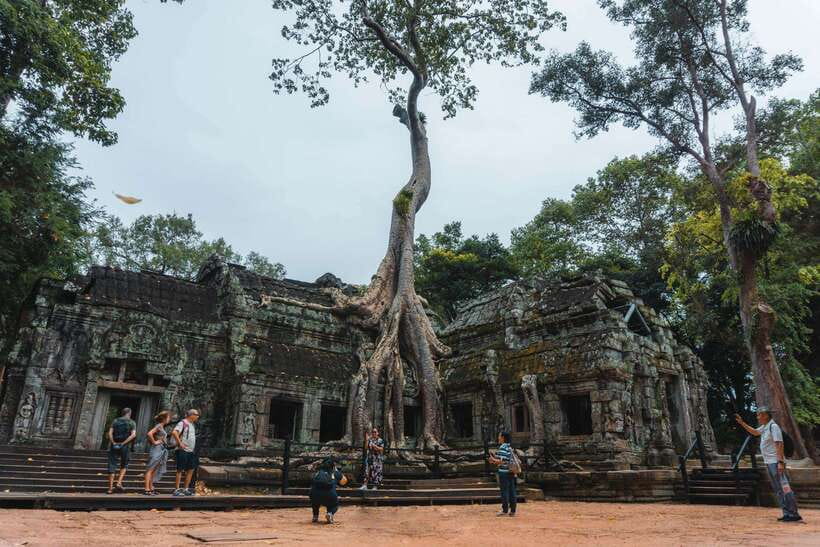
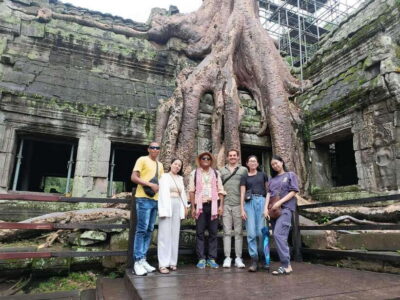
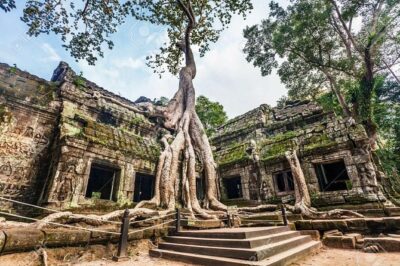
After Angkor Thom, the tour shifts to Ta Prohm Temple, left in its original state and famously overgrown with trees and roots. This is one of those places where the “movie-famous” look isn’t just a trick. The way roots thread through stone gives you that slow, reality-check feeling: nature did not quietly cooperate with architecture. It took over.
The main value of Ta Prohm on a small-group day is that you can slow down enough to notice patterns—how the roots sit in the cracks, how the light hits different surfaces, and how the temple’s layout pulls you forward. You don’t want to power-walk it; you’ll miss the best visuals.
Also, Ta Prohm is ideal for photos, but it can be crowded. A guide helps you time your stops and choose better angles, especially if you want images without feeling trapped in a single viewpoint.
Chasing the light? More dawn and dusk runs
Lunch and Phum Preah Dak: palm cake and palm sugar beyond the ruins
Lunch is included as part of the stop at Phum Preah Dak, an authentic village visit. This is where the tour adds real texture: you learn about local life and how people make palm cake and palm sugar. Even if your Khmer vocabulary is limited, watching hands work with food ingredients is instantly understandable.
Why this matters: Angkor can make Cambodia feel like one big outdoor museum. The village stop corrects that. It reminds you these temples are a backdrop to living culture, not the whole country.
One practical note: the tour price does not include lunch, but the schedule includes a lunch stop as part of the day. In practice, the exact lunch setup can involve paying on-site, sometimes in cash. If you don’t want hassles, bring some cash just in case you’re asked to cover the meal during the village lunch portion.
Angkor Wat in late-day light: jungle views and the icon that still hits
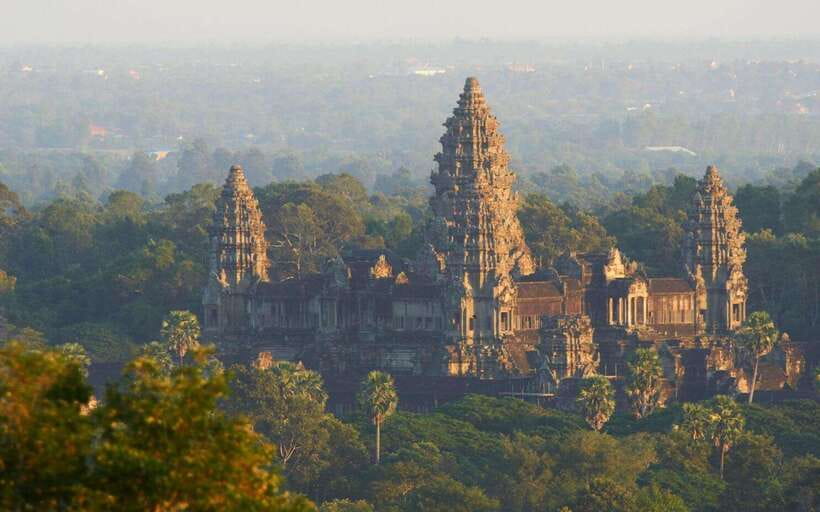
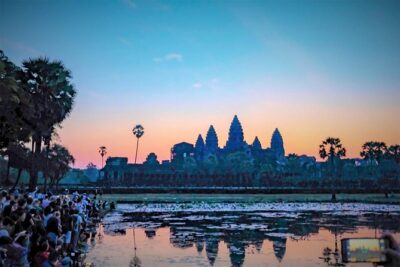
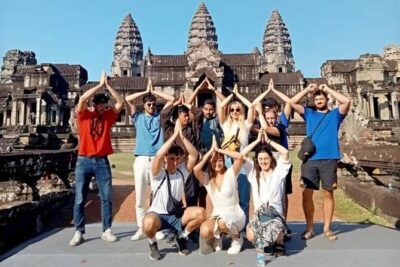
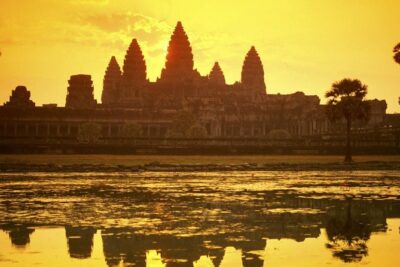
After the village stop, you’ll head to Angkor Wat, described as the largest sacred building in the world and a top Khmer civilization icon. This is the final “big anchor” of the day, and it’s placed late so you get better light than you’d usually get at the start.
What makes Angkor Wat work even for experienced travelers is how it changes by angle and weather. You can also sense the scale faster here: the mass of stone, the geometry, and the surrounding jungle feel like they belong to the same scene. The guide can help you understand what you’re seeing so it doesn’t become only a checklist moment.
Practical tip: keep water coming. Even with cold water included, you’ll burn through it. Also, use sunscreen even if clouds move in—Temple air and humid sun don’t always play fair.
Phnom Bakheng sunset climb: the view payoff and the pacing reality
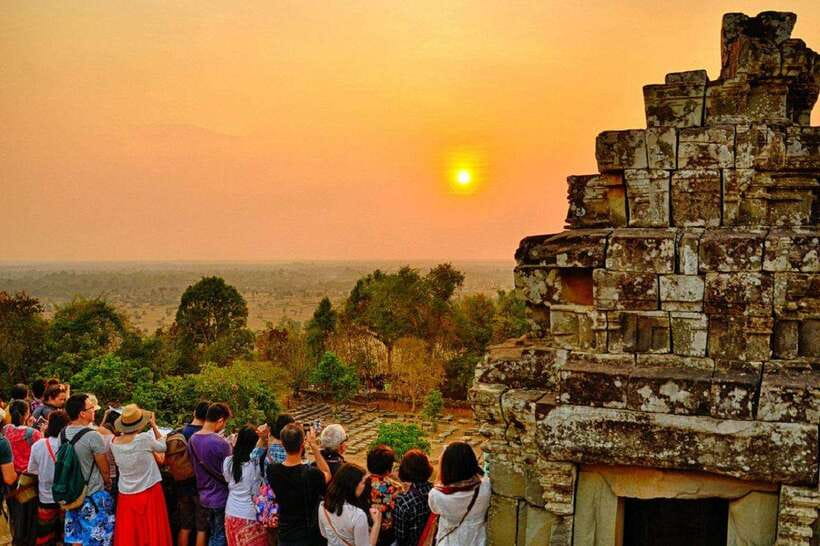
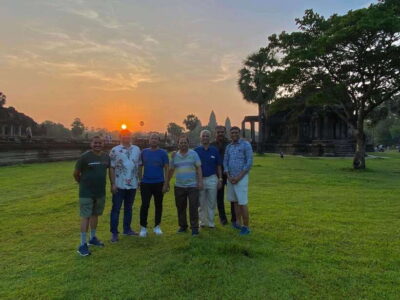
The day ends with a climb to Phnom Bakheng to watch the sunset. This is a classic “work for the view” moment. The climb isn’t just steps—it’s a chance to see how the surrounding area frames the temples and to watch the sky shift over stone.
Here’s the reality check: the sunset portion depends on what the tour can access and how the timing lines up. One previous itinerary note suggested that the sunset experience didn’t end up feeling as close to Angkor Wat as expected. That doesn’t mean sunset is bad—it just means you should ask your guide where you’ll stand and what the view will be like so your expectations match the plan.
If you want a smoother sunset experience:
- go in expecting a climb and crowds
- bring water in your day bag
- set aside time to stand patiently rather than rushing for the “perfect” angle
Price and value: what $32 covers, and the costs you must plan for
The listed price is $32 per person for a 10-hour small-group full day. What you get for that money is solid: hotel pickup and drop-off, a luxury minivan with insurance, a white-glove licensed driver, an English-speaking guide, plus cold water and cold towels.
But you still need to budget for two big things:
- Angkor pass: $37 per person (not included)
- Lunch: not included in the base cost
So the all-in temple day is more than $32. Still, it can be good value because you’re not only paying for transport—you’re paying for an organized route through Angkor Thom, Ta Prohm, Angkor Wat, plus the village cultural stop. Without a guide, you’d spend a lot of energy figuring out entrances, logic, and timing.
Who gets best value? People who want the key sights in one day and who appreciate having an English guide explain what you’re looking at as you go.
Practical dress and comfort tips that actually matter
This tour is active. You’ll be walking temple grounds and climbing. Make it easy on your feet and your skin.
Bring:
- comfortable shoes
- sun hat
- sunscreen
- comfortable clothing
Not allowed:
- short skirts
My advice: wear breathable clothing you can move in. Temple days are often about sweat management as much as sightseeing.
Guide and driver: the small-group advantage
Small-group tours live or die by the guide’s pacing and explanations, and this one is run by Passion Indochina Travel Co.,Ltd. In at least one documented experience, the guide named Bunhak was highlighted as excellent, and the driver Nol was described as friendly and smooth.
Even without needing star treatment, a good guide helps you:
- avoid getting lost in the complex temple spaces
- understand why certain carvings and terraces matter
- keep the day from turning into a rushed photo marathon
If you care about a calm, guided experience rather than strict speed, this kind of setup is usually worth it.
Who should book this Angkor day tour?
Book it if you want:
- a single long day that covers Angkor Thom, Bayon, Ta Prohm, Angkor Wat, plus Phnom Bakheng sunset
- a mix of temples and village culture (Phum Preah Dak)
- English guidance so the sites feel meaningful, not random
- small-group comfort with pickup, water, and towels
Skip it or adjust expectations if:
- sunset logistics matter a lot to you and you want Angkor Wat views specifically from the final viewpoint
- you hate long days and prefer a tighter route with fewer stops
- you’re counting on everything to be perfectly synchronized to an exact schedule
One more thought: if you’re the type who wants to spend hours at one place, this itinerary may feel full. But if you like seeing a lot and absorbing explanations along the way, it fits well.
Should you book?
I’d book this tour if you’re planning a first or second Angkor visit and you want the “big stack” of temples without having to build the route yourself. The price is reasonable for what’s included, and the Phum Preah Dak stop gives you something real beyond the stone.
Just do two things before you go: plan for the Angkor pass cost, and ask your guide where you’ll watch sunset from at Phnom Bakheng. Get those details aligned, and you’ll have a day that feels like Cambodia’s heritage—temples first, culture alongside, and a sunset finish that’s worth the climb.
FAQ
What’s the duration of the Siem Reap Angkor Wat small-group tour?
The tour runs for 10 hours.
How much does the tour cost, and what’s not included?
The tour price is $32 per person. The Angkor pass (at $37 per person) and lunch are not included.
Do I need an Angkor pass for this tour?
Yes. The Angkor pass is required and costs $37 per person.
Is hotel pickup and drop-off included?
Yes. The tour includes pickup and drop-off at your hotel in Krong Siem Reap.
What’s included in the tour besides the guide?
You get a luxury minivan with insurance, a licensed English-speaking guide, cold drinking water, and cold towels.
Is lunch included?
Lunch is not included in the tour price.
What temples and sights are visited during the day?
You’ll see Angkor Thom, Bayon, the Terrace of Elephants, Phimeanakas, the Terrace of the Leper King, Baphuon Temple, Ta Prohm, Angkor Wat, and you’ll climb Phnom Bakheng for sunset.
Is the village stop included?
Yes. You visit Phum Preah Dak and learn about palm cake and palm sugar.
What language is the tour guide?
The guide speaks English.
Are there any dress rules?
Short skirts are not allowed. Comfortable clothing that covers appropriately is recommended, along with comfortable shoes and sun protection like a hat and sunscreen.
More Temple Circuits Around Siem Reap
- Angkor Wat Sunrise or Sunset Tour with Guide from Siem Reap
★ 5.0 · 12,109 reviews - Siem Reap: Angkor Wat: Small-Group Sunrise or Sunset Tour
★ 5.0 · 9,444 reviews - Siem Reap: Angkor Wat 2-Day Tour with Sunrise and Sunset
★ 4.9 · 4,429 reviews - Siem Reap: Full-Day Angkor Wat Guided Tour with Sunset
★ 4.9 · 3,803 reviews - Angkor Wat Sunrise tour with Small – Group and Guide tours
★ 5.0 · 3,655 reviews
Dawn and Dusk Over Angkor
- Angkor Wat Sunrise or Sunset Tour with Guide from Siem Reap
★ 5.0 · 12,109 reviews - Siem Reap: Angkor Wat: Small-Group Sunrise or Sunset Tour
★ 5.0 · 9,444 reviews - Sunset tour of Kampong Phluk stilts home village on the Tonle Sap
★ 5.0 · 4,865 reviews - Siem Reap: Angkor Wat 2-Day Tour with Sunrise and Sunset
★ 4.9 · 4,429 reviews - Siem Reap: Full-Day Angkor Wat Guided Tour with Sunset
★ 4.9 · 3,803 reviews
Angkor Wat, a Few More Ways In
- Angkor Wat Sunrise or Sunset Tour with Guide from Siem Reap
★ 5.0 · 12,109 reviews - Siem Reap: Angkor Wat: Small-Group Sunrise or Sunset Tour
★ 5.0 · 9,444 reviews - Siem Reap: Angkor Wat 2-Day Tour with Sunrise and Sunset
★ 4.9 · 4,429 reviews - Siem Reap: Full-Day Angkor Wat Guided Tour with Sunset
★ 4.9 · 3,803 reviews - Angkor Wat Sunrise tour with Small – Group and Guide tours
★ 5.0 · 3,655 reviews
Just Added: Fresh Siem Reap Tour Reviews

Angkor Wat Temple Tours, compared.
 ★ 5.0Angkor Wat Sunrise or Sunset Tour with Guide from Siem ReapFrom $1812,109 reviews
 ★ 5.0Angkor Wat: Small-Group Sunrise or Sunset TourFrom $159,444 reviews
 ★ 4.9Angkor Wat 2-Day Tour with Sunrise and SunsetFrom $344,429 reviews
 ★ 4.9Full-Day Angkor Wat Guided Tour with SunsetFrom $153,803 reviews
 ★ 5.0Angkor Wat Sunrise tour with Small – Group and Guide toursFrom $143,655 reviews
 ★ 5.0Angkor Wat Highlights and Sunrise Guided Tour from Siem ReapFrom $233,213 reviews
 ★ 5.0Angkor Wat Sunset Small Group Tour with Lunch IncludedFrom $203,059 reviews
 ★ 5.0Full-Day Angkor Wat Sunrise Private Tour with Guide from Siem ReapFrom $602,920 reviews