
Reviewed · ANGKOR WAT TEMPLE TOURS
Siem Reap Angkor Wat Sunrise or Sunset Explore The Temples +Guide
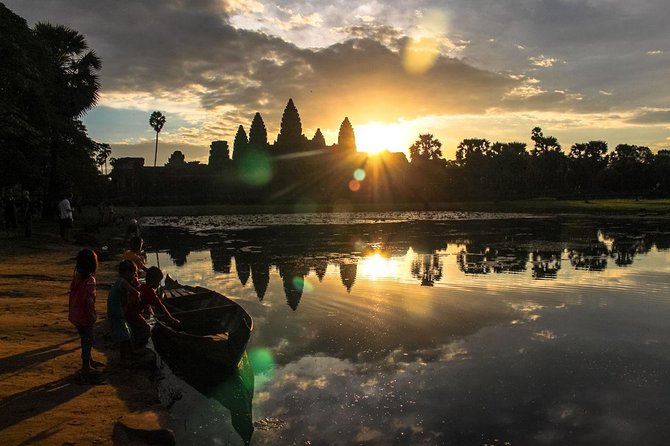
Sunrise at Angkor shifts your whole day. This $18 Siem Reap temple tour is built around the Angkor Wat sunrise or sunset experience, then keeps going with a guided route that helps you make sense of what you are seeing. I like the early start and I love that the day runs with a clear plan, from hotel pickup to the last gate stop.
One watch-out: entrance fees are not included in the price, so you’ll want to budget for your Angkor Archaeological Park tickets and any temple entry costs.
In This Review
- Key highlights worth knowing before you go
- Why this Angkor Wat sunrise or sunset circuit works
- Getting to the temples: pickup, air-conditioned comfort, and timing
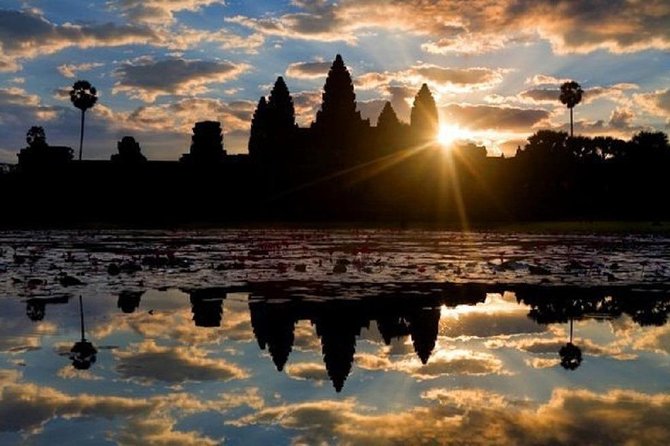
- Angkor Wat at first light: what you’ll actually notice
- Banteay Kdei: the calm corridor stop that many people skip
- Ta Prohm and the tree roots: how to get the best photos
- Bayon Temple: the 200+ faces and the story you can feel
- Tonle Om Gate (South Gate of Angkor Thom): the dramatic finish
- Price and logistics: what $18 really buys you
- Guides, English, and the difference it makes
- What to bring for sunrise or sunset at Angkor
- Who this tour suits best
- Should you book this guided Angkor Wat sunrise/sunset day?
- FAQ
- Is pickup and drop-off included?
- Is entrance fee to Angkor Wat and other temples included?
- What’s the tour duration?
- Does the tour include a guide and is the guide English speaking?
- How many people are in the group?
- Is drinking water provided?
- What if the weather is bad?
Key highlights worth knowing before you go
- Pickup, drop-off, and an air-conditioned minibus so you spend less time arranging transport.
- Angkor Wat first, then a smart temple run through Banteay Kdei, Ta Prohm, Bayon, and Tonle Om Gate.
- Banteay Kdei adds a quieter rhythm with serene corridors and unique carvings.
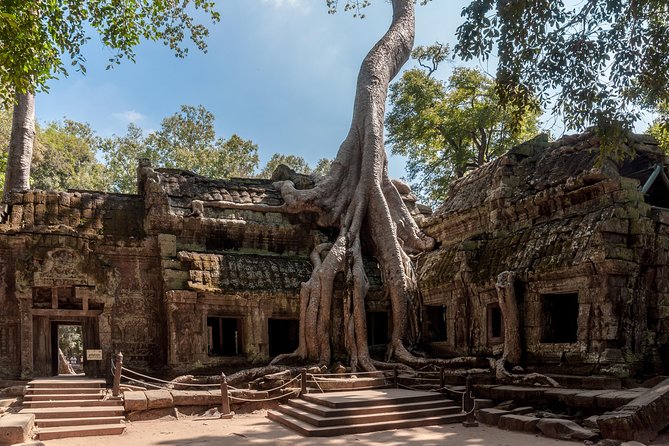
- Ta Prohm is the photo-heavy stop thanks to the big tree roots over the ruins.
- Bayon’s face towers are the emotional center of Angkor Thom.
- Small group size (max 25) helps the tour feel manageable rather than chaotic.
Other ways to walk the great temple
- Angkor Wat Sunrise or Sunset Tour with Guide from Siem Reap★ 5.0 · 12,109 reviews
- Siem Reap: Angkor Wat: Small-Group Sunrise or Sunset Tour★ 5.0 · 9,444 reviews
- Siem Reap: Angkor Wat 2-Day Tour with Sunrise and Sunset★ 4.9 · 4,429 reviews
- Siem Reap: Full-Day Angkor Wat Guided Tour with Sunset★ 4.9 · 3,803 reviews
Why this Angkor Wat sunrise or sunset circuit works
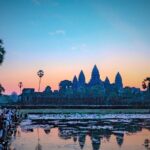
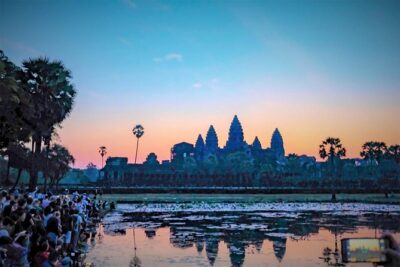
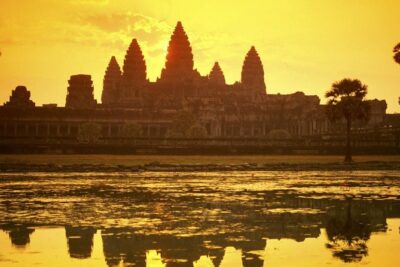
Angkor is one of those places where timing matters more than you expect. For the sunrise option, you’re up early enough to catch Angkor Wat when the light is soft and the temple looks extra sculpted. For the sunset option, you get the same spiritual stage, but with warmer tones and a different mood.
What makes this day feel efficient is how it mixes the big draw with the calmer, more interesting side of the complex. Angkor Wat gives you the headline view, and then the tour doesn’t just repeat the same scenery. You also get Banteay Kdei as a quieter break, which helps you reset before Ta Prohm and Bayon crank the wow-factor.
The best part for me is the pacing with an English-speaking guide. The temples can feel overwhelming if you wander in “just looking.” Here, you get the context for what you’re seeing and how the sites connect.
Getting to the temples: pickup, air-conditioned comfort, and timing
Your day starts with hotel pickup in Siem Reap, then a ride into the Angkor Archaeological Park in an air-conditioned minibus. That matters more than it sounds, especially if you’re doing sunrise. Early mornings in Cambodia can be cool at first, then warm quickly, so you’ll appreciate the comfort before you’re standing in bright light with a camera.
The tour is set for about 8 hours 30 minutes. That’s long enough to cover several major stops without feeling like a sprint. It’s also short enough that you can still enjoy the rest of Siem Reap afterward, instead of collapsing for the night.
You’ll also have a mobile ticket as part of the setup. That’s handy because you aren’t juggling paper at the entry points. Still, remember that the entrance fee isn’t included. The tour takes care of the guide, transport, and water—tickets are your extra cost.
Angkor Wat at first light: what you’ll actually notice
Angkor Wat is famous for a reason, but what impresses me most is how the details keep revealing themselves the longer you stay. Your visit starts at the temple with time to move through the main areas while the lighting does its thing.
Here’s what to watch for as the sun changes:
- Grand galleries and carvings: the surfaces are dense with detail, so move slowly and look sideways, not just straight ahead.
- Sacred sanctuaries: Angkor Wat isn’t only visual drama. It has an almost ceremonial layout, and the guide helps you read the symbolism.
- The sheer scale: it can feel unreal until you compare it to your own walking pace.
Practical note: sunrise crowds and light conditions can make people rush. You’ll get a better experience if you stick close to the guide’s timing. If you drift for photos too long, you can miss the calmer moments.
Also, you’ll need to buy your Angkor Archaeological Park entrance ticket before going inside. Plan ahead so the start of your visit isn’t delayed.
Banteay Kdei: the calm corridor stop that many people skip
After Angkor Wat’s intensity, Banteay Kdei feels like a breath of air. Even the name tells you the tone—Banteay Kdei means Citadel of Chambers. This is a Buddhist monastery dating to the late 12th century, and the vibe is more reflective than flashy.
What I like about this stop is that it gives you something different from the usual “most photographed” circuit. You’ll find serene corridors and unique carvings that feel less crowded than the headline sites. If you’re the kind of traveler who likes to stand still and actually look, Banteay Kdei is where that pays off.
The time here is about 1 hour, so it’s not a deep, slow monastery marathon. It’s enough to get the architecture and carvings into your brain without feeling rushed.
If you want fewer photo distractions and more understanding of temple layout, this is the stop to lean into. The guide’s explanations are particularly helpful here because the details can be easy to miss if you only skim.
Chasing the light? More dawn and dusk runs

Ta Prohm and the tree roots: how to get the best photos
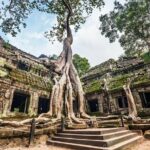
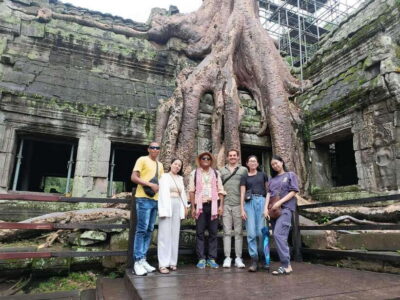
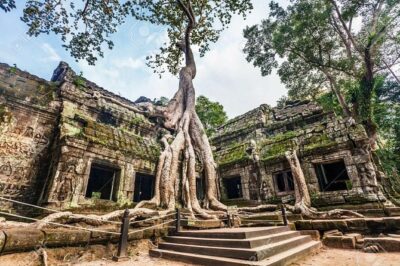
Ta Prohm is the temple that most people recognize instantly because of the massive tree roots spreading over the ruins. This is the classic “jungle temple” effect—less restored, more raw, more dramatic.
What you’re seeing isn’t just decoration. The interaction between architecture and nature is part of the story. The result is a temple that feels alive, like it’s mid-transformation. It’s also one of the easiest stops to photograph because there are so many natural frames: doorways, root shadows, and broken walls that form lines leading your eye.
You’ll likely get around 2 hours here, which is a solid amount of time. Still, it can get hot and crowded. A useful approach is to spend the first chunk learning where the best angles are, then slow down for your final photos near the spots the guide points out.
One more practical tip: keep your pace steady. Ta Prohm rewards attention, but it’s easy to get stuck photographing the same corner while the group moves on.
Bayon Temple: the 200+ faces and the story you can feel
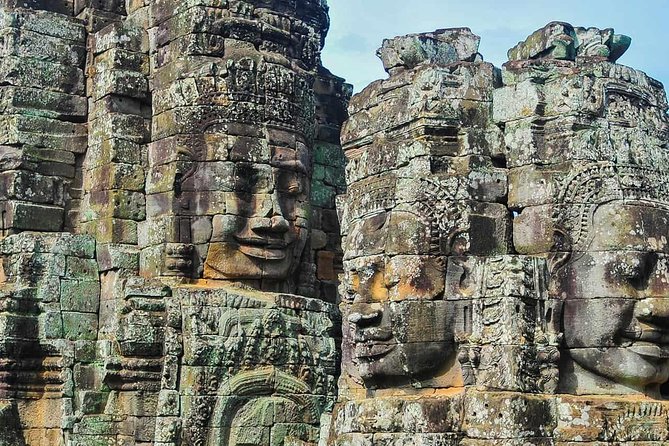
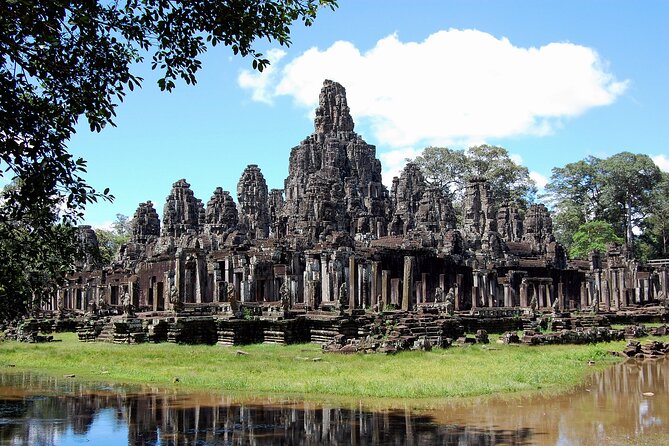
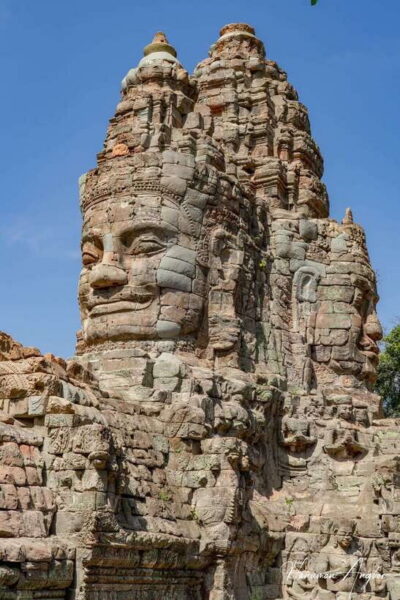
Then comes Bayon Temple, and it changes the tone again. Bayon sits at the center of Angkor Thom and is known for its 54 towers, each decorated with massive serene faces of Avalokiteshvara.
If Angkor Wat feels like a monument, Bayon feels like a conversation. The faces are repeated all around, so you get the feeling of being watched in a calm, almost meditative way. Even if you don’t know all the religious details, the expressions come across clearly.
What to notice while you walk:
- The towers and face repetition: the view shifts as you move, and the faces feel different depending on your angle.
- Intricate carvings: there are scenes carved into stone, and the guide’s context helps you connect them to daily life and historical moments.
- The central position: you spend time surrounded by the temple’s layout, not just looking at a single landmark.
You’ll have about 2 hours here. That’s enough to see the face towers from multiple sides and still pause for carvings without feeling like you’re skipping everything.
Tonle Om Gate (South Gate of Angkor Thom): the dramatic finish
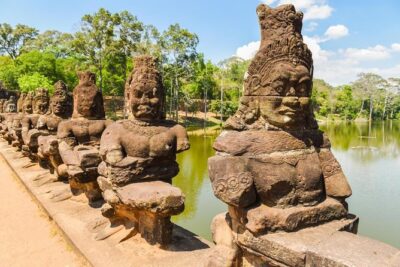
This last stop is short but satisfying. You’ll reach Tonle Om Gate, the South Gate of Angkor Thom, and it’s a classic Angkor entrance moment: a grand gateway with statues of gods and demons lining the causeway, plus four giant stone faces crowning the gate.
The gate is a good closer for the day because it wraps the experience into one strong image: not only temples, but entrances, symbolism, and the idea of arrival.
Expect about 30 minutes at this stop. Use that time to walk the causeway for perspective and get one final sense of scale before heading back toward Siem Reap.
Price and logistics: what $18 really buys you
For $18, what you are paying for is the structure. You get transportation (mini-bus), a professional English-speaking guide, pickup and drop-off, and drinking water. For a day covering multiple major sites, that’s good value—especially if you don’t want to negotiate transport or build your own route.
What $18 does not include is equally important: entrance fees. You should plan on paying for tickets when you’re at the park. If you only look at the headline price, you might feel surprised later. Budget both costs from the start, and the day feels fair.
Also note the group size: max 25 travelers. For Angkor, that’s not tiny, but it’s manageable. You won’t feel like you are stuck in a huge herd.
Finally, the tour depends on good weather. If conditions are poor, you may be offered a different date or a full refund. That’s not a small detail here—rain affects walking surfaces, visibility, and sunrise/sunset quality.
Guides, English, and the difference it makes
This kind of temple day lives or dies by interpretation. Without a guide, you can easily end up with “I saw temples” and not much else.
On this route, guides have been praised for strong English and for keeping everything on time. Names like Prem and Chamrong come up in the way people describe the day, with special credit for clear explanations and smooth planning. If you care about understanding the carving themes and layout choices, that matters.
I also like that the day is described as running smoothly and matching the plan. When you’re juggling early start times and several stops, that kind of operational clarity reduces stress.
What to bring for sunrise or sunset at Angkor
This is practical, because Angkor days can be uncomfortable fast.
Bring:
- A light layer for the morning or evening shift
- Sunscreen and a hat
- Water (you’ll get some, but you might want more depending on heat and your pace)
- Comfortable shoes with traction
- A flashlight or phone light for early movement (if you’re doing sunrise)
If you’re doing sunrise, you’ll also want to be ready for cooler air at first, then warming up as the sun rises. If you’re doing sunset, plan for lowering light and possible evening chill near the end of the day.
One more tip: don’t over-pack your camera bag. With roots, towers, and long stone corridors, you’ll constantly switch angles. A simple setup keeps you from missing moments while changing gear.
Who this tour suits best
This tour fits best if you want:
- A guided Angkor Wat sunrise or sunset experience without building a route yourself
- Several major temple stops in one day, with a realistic time budget
- An English-speaking guide to explain what you’re seeing at each site
It’s also a good choice if you prefer a group day with limits (max 25) rather than private chaos.
If you’re the type who wants hours and hours at one temple only, or you want heavy off-the-beaten-path exploration beyond these big names, you might feel the time is too structured. But if you want a strong, coherent first Angkor day, this one hits the right balance.
Should you book this guided Angkor Wat sunrise/sunset day?
I’d book it if you want a first Angkor day that feels organized and understandable. For the price, you’re getting the hard parts handled—pickup, transport, an English guide, and water—so you can spend your energy on the temples instead of logistics.
You should also book it with eyes open: the entrance fees are extra, and the weather matters. If you budget for tickets and pack for early light and walking, this tour offers a high-value way to see the most meaningful Angkor sights in a single day.
If you’re unsure, choose based on timing. Sunrise is for the calm, first-light mood. Sunset is for warm colors and a different energy. Either way, you’ll get the key sequence: Angkor Wat, Banteay Kdei, Ta Prohm, Bayon, and the Tonle Om Gate finish.
FAQ
Is pickup and drop-off included?
Yes. Pickup from your Siem Reap hotel and drop-off at the end of the tour are included.
Is entrance fee to Angkor Wat and other temples included?
No. Entrance tickets are not included, so you’ll need to purchase them separately (your cost).
What’s the tour duration?
The tour runs about 8 hours 30 minutes (approx.).
Does the tour include a guide and is the guide English speaking?
Yes. You’ll have a professional English-speaking tour guide.
How many people are in the group?
The tour has a maximum group size of 25 travelers.
Is drinking water provided?
Yes. Drinking water is included.
What if the weather is bad?
The experience requires good weather. If it’s canceled due to poor weather, you’ll be offered a different date or a full refund.
If you tell me whether you’re doing sunrise or sunset, I can suggest a simple packing checklist based on the time of day and what you care about most (photos, fewer crowds, or slower temple time).
More Temple Circuits Around Siem Reap
- Angkor Wat Sunrise or Sunset Tour with Guide from Siem Reap
★ 5.0 · 12,109 reviews - Siem Reap: Angkor Wat: Small-Group Sunrise or Sunset Tour
★ 5.0 · 9,444 reviews - Siem Reap: Angkor Wat 2-Day Tour with Sunrise and Sunset
★ 4.9 · 4,429 reviews - Siem Reap: Full-Day Angkor Wat Guided Tour with Sunset
★ 4.9 · 3,803 reviews - Angkor Wat Sunrise tour with Small – Group and Guide tours
★ 5.0 · 3,655 reviews
Dawn and Dusk Over Angkor
- Angkor Wat Sunrise or Sunset Tour with Guide from Siem Reap
★ 5.0 · 12,109 reviews - Siem Reap: Angkor Wat: Small-Group Sunrise or Sunset Tour
★ 5.0 · 9,444 reviews - Sunset tour of Kampong Phluk stilts home village on the Tonle Sap
★ 5.0 · 4,865 reviews - Siem Reap: Angkor Wat 2-Day Tour with Sunrise and Sunset
★ 4.9 · 4,429 reviews - Siem Reap: Full-Day Angkor Wat Guided Tour with Sunset
★ 4.9 · 3,803 reviews
Angkor Wat, a Few More Ways In
- Angkor Wat Sunrise or Sunset Tour with Guide from Siem Reap
★ 5.0 · 12,109 reviews - Siem Reap: Angkor Wat: Small-Group Sunrise or Sunset Tour
★ 5.0 · 9,444 reviews - Siem Reap: Angkor Wat 2-Day Tour with Sunrise and Sunset
★ 4.9 · 4,429 reviews - Siem Reap: Full-Day Angkor Wat Guided Tour with Sunset
★ 4.9 · 3,803 reviews - Angkor Wat Sunrise tour with Small – Group and Guide tours
★ 5.0 · 3,655 reviews
Just Added: Fresh Siem Reap Tour Reviews

Angkor Wat Temple Tours, compared.
 ★ 5.0Angkor Wat Sunrise or Sunset Tour with Guide from Siem ReapFrom $1812,109 reviews
 ★ 5.0Angkor Wat: Small-Group Sunrise or Sunset TourFrom $159,444 reviews
 ★ 4.9Angkor Wat 2-Day Tour with Sunrise and SunsetFrom $344,429 reviews
 ★ 4.9Full-Day Angkor Wat Guided Tour with SunsetFrom $153,803 reviews
 ★ 5.0Angkor Wat Sunrise tour with Small – Group and Guide toursFrom $143,655 reviews
 ★ 5.0Angkor Wat Highlights and Sunrise Guided Tour from Siem ReapFrom $233,213 reviews
 ★ 5.0Angkor Wat Sunset Small Group Tour with Lunch IncludedFrom $203,059 reviews
 ★ 5.0Full-Day Angkor Wat Sunrise Private Tour with Guide from Siem ReapFrom $602,920 reviews