
Reviewed · ANGKOR WAT TEMPLE TOURS
Siem Reap: Angkor Wat Tour Explore The Most Iconic Temples
Eight hours, five temples, and a calm plan. This is a private, hotel-to-temple day that lets you hit sunrise at Angkor Wat and then roll through big-hitter sites without constantly figuring out transport. I like how it stays focused on the most memorable stops, including Bayon’s 200+ smiling faces, instead of turning into a long, exhausting bus shuffle. One heads-up: the Angkor Temple Pass is not included, and you’ll also need to follow the shoulder-and-knee dress rule for the temples.
You’ll get private round-trip rides, a cool towel, and unlimited bottled water, and the driver is English-speaking. Recent guests also mention drivers like Ray, Daniel, and Soka, plus guides such as Chamrong and Lay who help you time each temple and stay on track.
In This Review
- Key things to know before you go
- A Smart Way to See Angkor in One Focused 8-Hour Day
- The $24 Price: What You’re Really Paying For
- Hotel Pickup, Temple Pass, and Dressing for the Temples
- Sunrise at Angkor Wat: The Moat Reflections You Want
- Inside Angkor Wat: Carvings, Galleries, and the Sacred Core
- Banteay Kdei: The Calmer Temple Stop with Quiet Charm
- Ta Prohm: When the Jungle Meets the Stones
- Ta Keo: The Unfinished Temple That Feels Different
- Bayon Temple: Smiling Faces Over 54 Towers
- Tonle Om Gate (South Gate of Angkor Thom): A Strong Photo Finish
- Transport Details That Affect Your Comfort
- Who This Tour Fits Best (and Who Should Rethink It)
- Should You Book This Angkor Tour?
- FAQ
- What temples are included on this 8-hour Angkor tour?
- Is the Angkor Wat Pass included in the price?
- How long is the tour?
- Do I get hotel pickup and drop-off?
- What does the $24 price include?
- What time does the sunrise option start?
- What should I bring to visit the temples?
- What should I wear?
- Is this tour wheelchair accessible?
- Are there age limits?
Key things to know before you go
- Sunrise option at Angkor Wat helps you see the moat reflections before the busiest moment.
- Banteay Kdei is quieter and feels more relaxed than the big-name crowds.
- Ta Prohm’s jungle look is left largely unrestored, with dramatic tree roots over the ruins.
- Ta Keo is unfinished on purpose, which makes it different from the rest of the complex.
- Bayon’s 54 towers each show four massive faces of Avalokiteshvara.
- Temple Pass is separate, so budget extra before you get there.
Other ways to walk the great temple
- Angkor Wat Sunrise or Sunset Tour with Guide from Siem Reap★ 5.0 · 12,109 reviews
- Siem Reap: Angkor Wat: Small-Group Sunrise or Sunset Tour★ 5.0 · 9,444 reviews
- Siem Reap: Angkor Wat 2-Day Tour with Sunrise and Sunset★ 4.9 · 4,429 reviews
- Siem Reap: Full-Day Angkor Wat Guided Tour with Sunset★ 4.9 · 3,803 reviews
A Smart Way to See Angkor in One Focused 8-Hour Day
Angkor Wat is huge, and the whole area can feel like a maze when you’re trying to plan everything yourself. This tour is built to solve that problem with an organized route and private pickup and drop-off in Siem Reap. You’re not stuck waiting around with a mixed group or negotiating your way through the day.
I also like that the route is practical. You get a classic “core set” of temples: Angkor Wat, Banteay Kdei, Ta Prohm, Ta Keo, Bayon, and then a photo stop at Tonle Om Gate (the south gate of Angkor Thom). That gives you variety in a single day: sacred galleries, a quieter monastery stop, a jungle-caught-in-time scene, an unfinished summit, and those iconic stone faces.
The tour is 8 hours, so it fits well if you want Angkor without devoting your entire day. Still, you’ll want comfortable walking shoes because the terrain inside the temple grounds is uneven.
The $24 Price: What You’re Really Paying For
The headline price is $24 per group up to 2, and the value comes from what’s included: hotel pickup and drop-off, private round-trip transportation, unlimited bottled water, and a cool towel. In other words, you’re paying mostly for the hassle-free logistics and a driver who can keep you moving.
The important part is what’s not included: the Angkor Wat Pass (temple tickets) and meals. That means your final cost depends on how you budget for the entrance ticket(s). If you’re traveling in a pair, the per-person feel gets better fast because the price is per group up to 2.
If you’re the type who prefers a plan you can trust, this is a strong deal. If you enjoy building your own route and you like long discovery walks on your own schedule, then you might compare it against DIY transport plus ticket time.
Hotel Pickup, Temple Pass, and Dressing for the Temples
Pickup is simple: the driver goes to your hotel or accommodation and comes about 5 minutes before departure. You’ll also get a message one day before the tour. From there, the driver takes you to purchase the temple pass, which you pay for separately.
Before you leave, plan your outfit for Cambodian temple rules. You’ll want clothing that covers your shoulders and knees, and you’ll also want sunscreen and sunglasses. Bring cash too, since cash is specifically recommended, and you never want to gamble on whether you can pay for small extras you didn’t plan.
Also, don’t count on wheelchairs here. The tour isn’t wheelchair accessible because of uneven temple terrain. If you’re traveling with mobility challenges, you should think through the walking time and the ground conditions before booking.
Sunrise at Angkor Wat: The Moat Reflections You Want
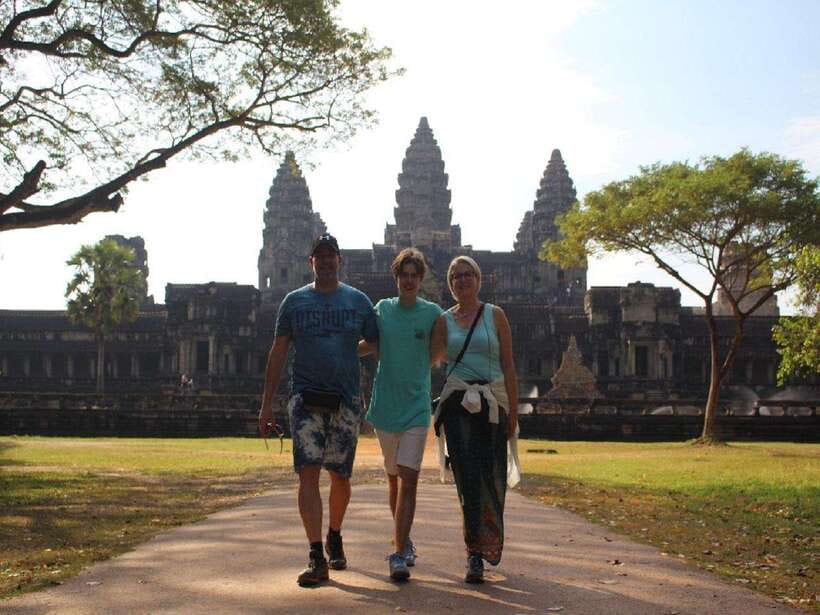
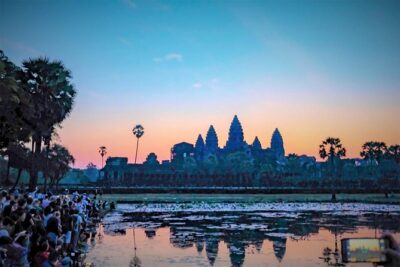
If you book the sunrise start, the day begins early with an early-morning pickup and travel to the Angkor Archaeological Park. After you purchase your entrance tickets, you head through a western entrance to experience Angkor Wat at sunrise.
This is where the tour earns its keep. You get the chance to photograph the towers reflecting in the surrounding moat before the main crowds arrive. The difference is not just comfort. It changes the feel of Angkor: the area is quieter, the light is softer, and you can actually take time to notice carvings and architecture instead of rushing for the next photo.
Practical tip: sunrise is cool and bright at the same time. Bring sunglasses even if it feels chilly, and keep your camera settings ready so you can work fast when the light hits.
More temple circuits, set side by side

Inside Angkor Wat: Carvings, Galleries, and the Sacred Core
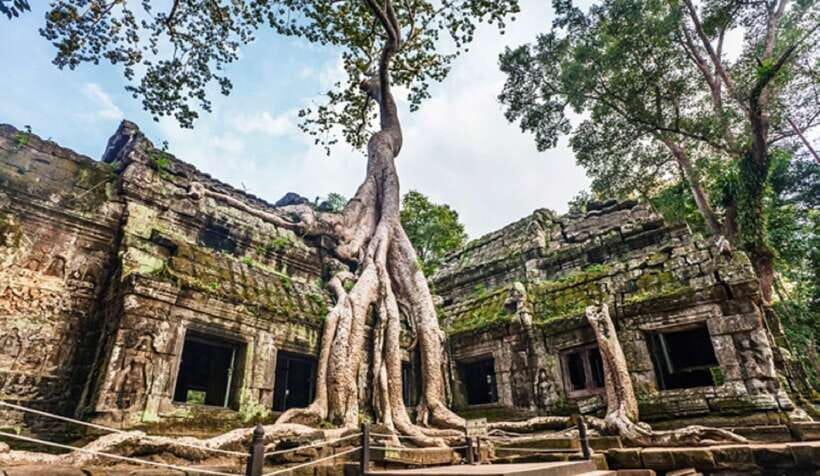
After sunrise, you explore the interior of Angkor Wat. It started as a Hindu temple dedicated to Vishnu and later became a Buddhist site, so you’ll see layers of meaning and iconography throughout the complex.
The big visual payoff here is the combination of intricate bas-reliefs and the grand galleries that lead your eyes toward the central sanctuary. The bas-reliefs depict Hindu mythology, and the overall design gives you a sense of scale without needing a long lecture.
This stop also benefits from the private setup. You can move at your pace, pause when something catches your eye, and avoid turning your visit into a strict line-following contest.
Banteay Kdei: The Calmer Temple Stop with Quiet Charm
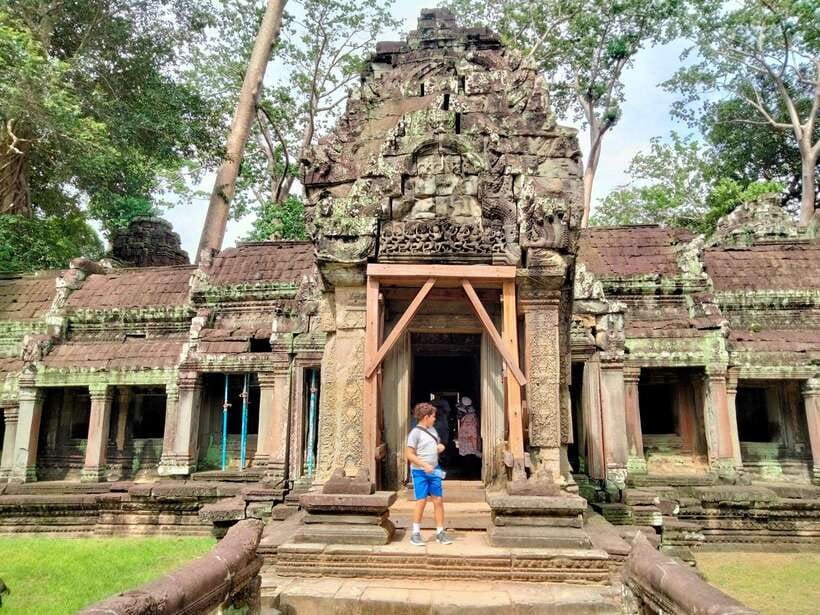
Next comes Banteay Kdei, a Buddhist monastery temple that many people skip when they only chase the most famous names. That’s exactly why it works on this route. Banteay Kdei means Citadel of Chambers, and it’s built in the late 12th century.
What you’ll notice is the atmosphere: serene corridors, unique carvings, and a partially ruined feel that makes it more mysterious than glossy. It’s still part of Angkor’s major story, but it doesn’t feel as intense as the busiest sites.
If you want one temple that feels like a breather, this is the one. You’ll get architecture and detail, but you also get breathing room for photos and slower looking.
Ta Prohm: When the Jungle Meets the Stones
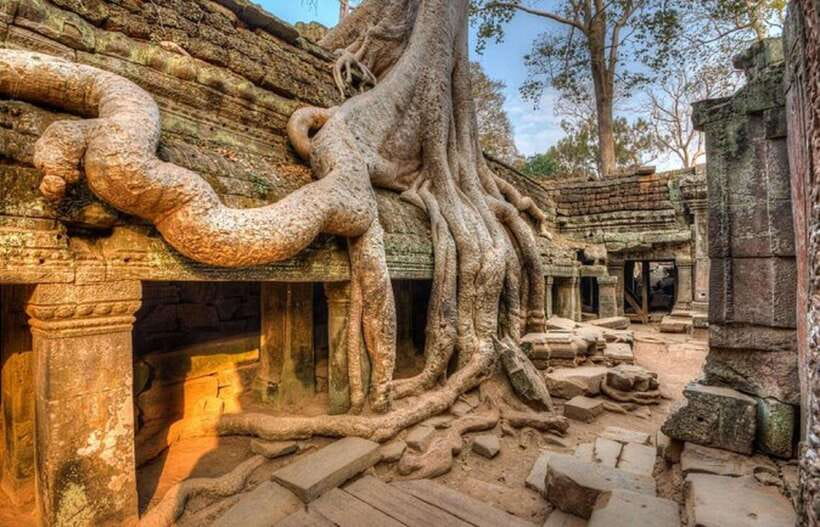
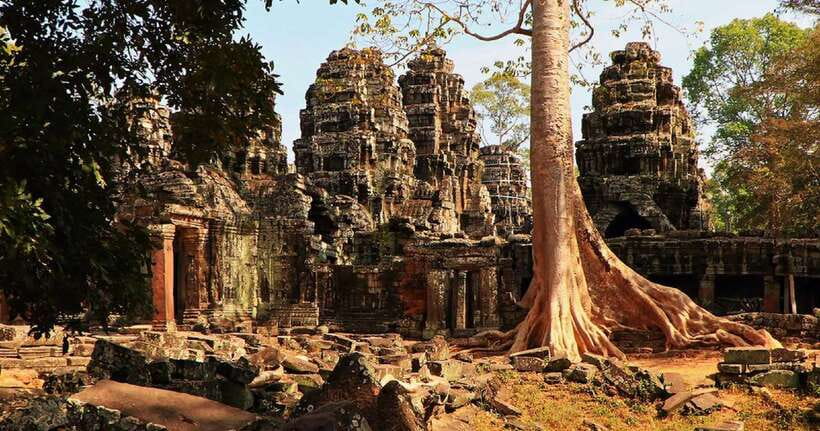
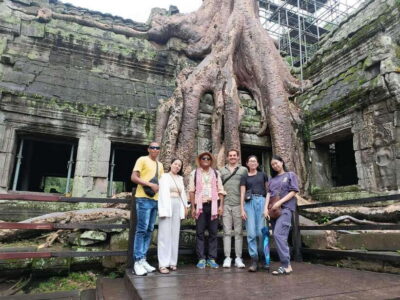
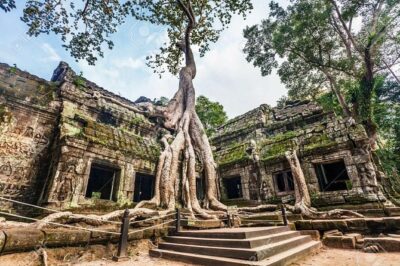
Ta Prohm is the famous one: the jungle temple where giant tree roots grow over the ruins. It’s a 12th-century temple that was left largely unrestored, which creates that striking “nature took over” effect.
This stop is also a pop-culture landmark. It became world-famous thanks to the movie Tomb Raider starring Angelina Jolie. You don’t need to be a fan of the film to appreciate what’s happening here visually. The roots and broken stone create a kind of visual story you can walk through.
One practical thing I’d plan for: this is the kind of place where you’ll be tempted to stop every few steps for photos. Go with comfortable shoes and a steady pace. And if you hear that monkeys are around, take it seriously. Some guides may warn you to watch for them, and you’ll enjoy the visit more if you keep your snack and belongings secure.
Ta Keo: The Unfinished Temple That Feels Different
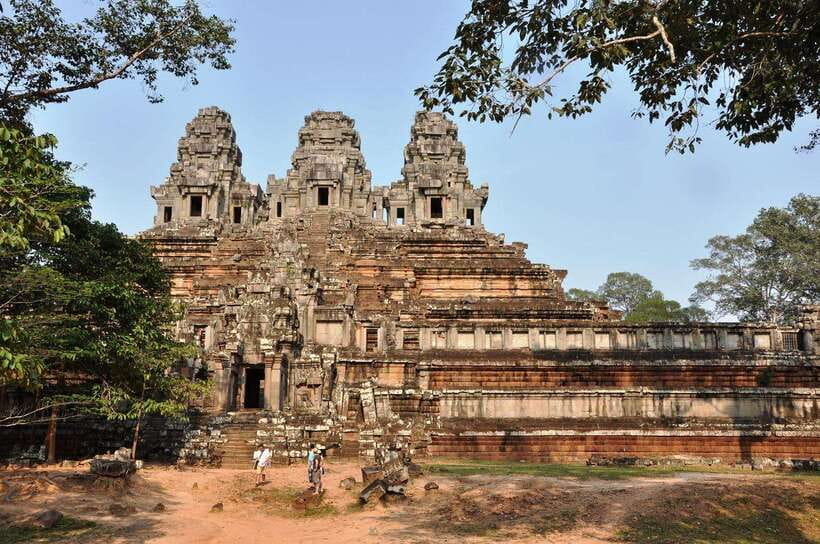
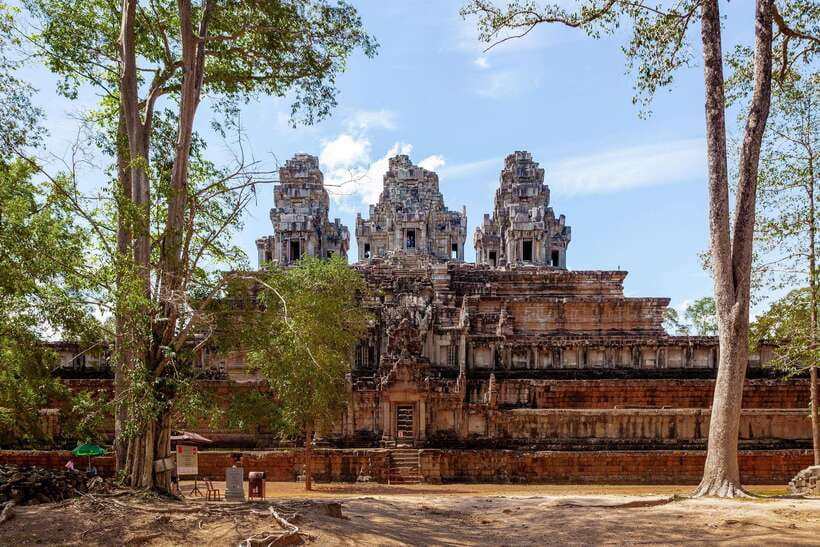
Then there’s Ta Keo, built during the late 10th to early 11th century by King Jayavarman V, continued later by his successors. The reason Ta Keo stands out in this set is simple and fascinating: it was never fully completed.
That unfinished status changes how you experience the architecture. Instead of everything feeling finished and polished, you see an older ambition that never reached its final form. It gives the temple a different emotional texture than the other stops.
If you’re the kind of traveler who likes to understand how places were made, this is a great counterpoint to the heavily restored, fully “complete” feel many famous sites have. Here, the gaps matter.
Bayon Temple: Smiling Faces Over 54 Towers
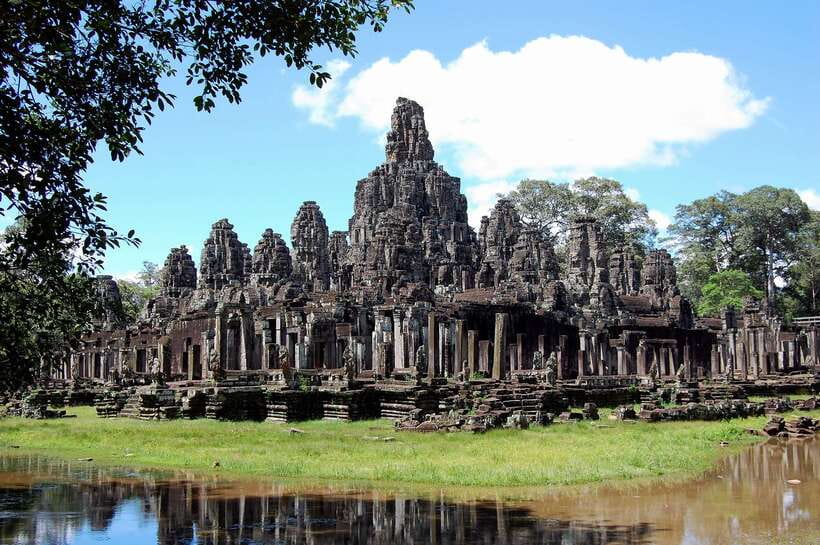
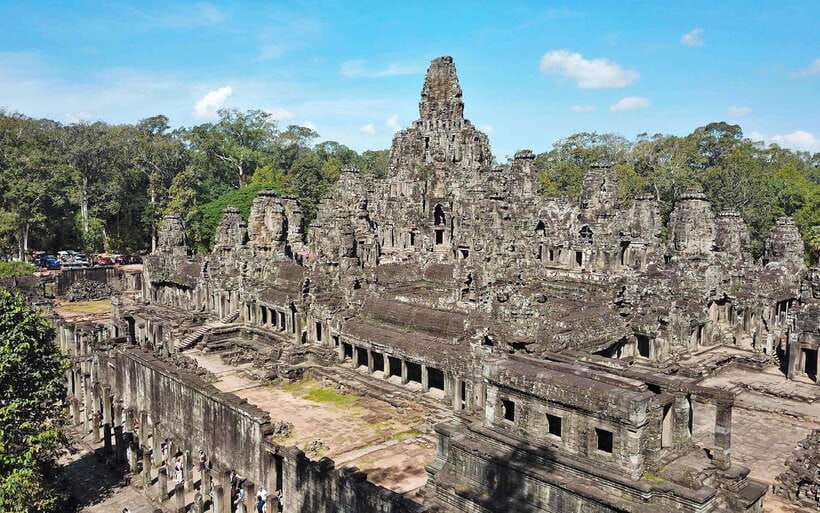
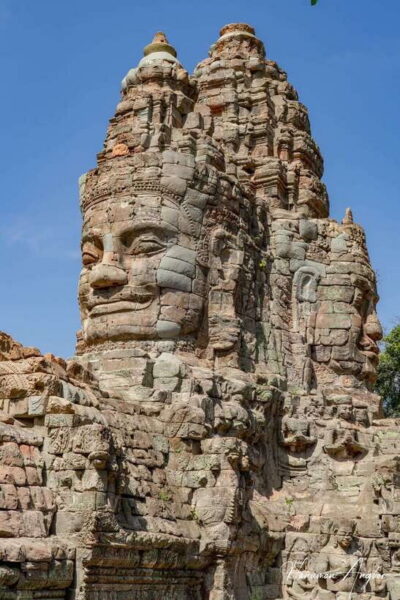
Bayon Temple is located at the center of Angkor Thom, and it’s known for 54 towers. Each tower is adorned with four massive faces of Avalokiteshvara, which is exactly the kind of detail your brain keeps trying to find from one tower to the next.
On top of the faces, the temple also has intricate carvings depicting scenes of daily life and historical battles. That means you’re not only looking at one repeating motif. You’re also reading snapshots of stories carved into stone.
This is usually one of the most iconic parts of the day, so plan to take your time. In several recent experiences, guides like Chamrong and Lay were described as giving clear tips and staying available when you needed a hand. That kind of support matters because Bayon rewards slow looking.
Tonle Om Gate (South Gate of Angkor Thom): A Strong Photo Finish
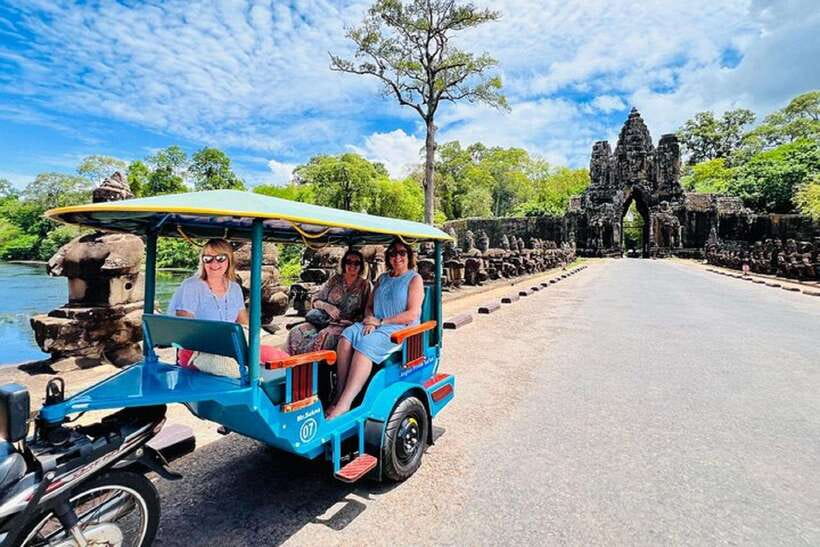
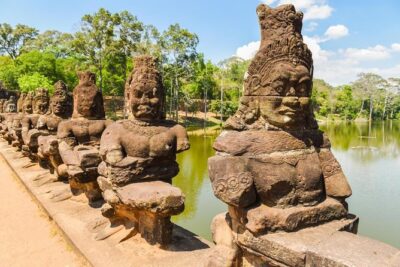
To wrap up, you stop at Tonle Om Gate, the south gate of Angkor Thom. The gate is flanked by a dramatic causeway lined with statues of gods and demons. You’ll also see four giant stone faces crowning the gateway, similar in style to the faces at Bayon.
This is a smart last stop because it gives you a “big frame” feeling. After walking through carved spaces and towers, the gate view lets you reset and grab photos that show the temple complex in a wider context.
Then it’s back toward Siem Reap for your hotel or accommodation.
Transport Details That Affect Your Comfort
The itinerary is packed enough that comfort matters. You get private round-trip transportation, and unlimited bottled water plus a cool towel during the tour. More than one recent guest specifically mentioned cold towels and cold water as part of the good service feeling, with some noting jasmine-scented towels.
You may also ride in a tuk-tuk style vehicle depending on how the tour is set up that day. Several reviews mention tuk-tuk rides as part of the experience, and that breeze can make a hot Angkor day feel easier.
On a hot day, small differences add up: shaded rides between temples, cool towels when you need them, and a driver who waits for you at each stop. That’s what people are praising most.
Who This Tour Fits Best (and Who Should Rethink It)
This tour is ideal if you want a structured Angkor day with minimal logistics. You’ll like it if you:
- want sunrise at Angkor Wat
- prefer a fixed route through the most memorable temples
- value private transportation and a driver who keeps you on schedule
- want an English-speaking driver with help timing each stop
It’s less ideal if you’re determined to explore everything independently. Angkor rewards slow wandering, and this is an 8-hour plan with set stops.
It also isn’t suitable for babies under 1 year or for people over 95 years, and it isn’t wheelchair accessible because of uneven terrain.
Should You Book This Angkor Tour?
If your goal is to see the most iconic temples in one day without wrestling with transport, I think it’s a very solid choice. The value equation is strong: low base price for private transportation, water, and towels, with the temple pass handled separately. The sunrise option at Angkor Wat is the biggest reason to book, because early light and fewer crowds make the temple experience feel more personal.
I’d book it if you like having a plan you can trust, and if you’re comfortable dressing properly for temples and walking on uneven ground. If you want to stay spontaneous all day, or you don’t care about sunrise, then you may want to compare against other Angkor options that give you more freedom.
Either way, do yourself a favor and come prepared: sunscreen, sunglasses, cash, shoulder-and-knee coverage, and good shoes. Those simple items are what turn a great itinerary into a smooth, enjoyable day.
FAQ
What temples are included on this 8-hour Angkor tour?
The tour includes Angkor Wat, Banteay Kdei, Ta Prohm, Ta Keo, Bayon Temple, and a stop at Tonle Om Gate (South Gate of Angkor Thom).
Is the Angkor Wat Pass included in the price?
No. The Angkor Wat Pass (temple tickets) is not included and must be purchased separately.
How long is the tour?
It is listed as valid for 8 hours.
Do I get hotel pickup and drop-off?
Yes. The tour includes pick-up and drop-off at your hotel or accommodation.
What does the $24 price include?
Included items are private round-trip transportation, unlimited bottled water during the tour, and a cool towel, plus pick-up/drop-off.
What time does the sunrise option start?
The sunrise option includes an early morning pickup from your Siem Reap hotel, then travel to the Angkor Archaeological Park for sunrise at Angkor Wat.
What should I bring to visit the temples?
Bring sunglasses, sunscreen, and cash.
What should I wear?
Wear a cloth that covers your shoulder and your knee. Also wear comfortable walking shoes.
Is this tour wheelchair accessible?
No. It is not wheelchair accessible due to uneven temple terrain.
Are there age limits?
It is not suitable for babies under 1 year, and it is not suitable for people over 95 years.
More Tour Reviews in Siem Reap
- Angkor Wat Sunrise or Sunset Tour with Guide from Siem Reap
★ 5.0 · 12,109 reviews - Siem Reap: Angkor Wat: Small-Group Sunrise or Sunset Tour
★ 5.0 · 9,444 reviews - From Siem Reap: Kampong Phluk Floating Village Tour by Boat
★ 4.9 · 6,979 reviews - Sunset tour of Kampong Phluk stilts home village on the Tonle Sap
★ 5.0 · 4,865 reviews - Siem Reap: Angkor Wat 2-Day Tour with Sunrise and Sunset
★ 4.9 · 4,429 reviews
More Temple Circuits Around Siem Reap
- Angkor Wat Sunrise or Sunset Tour with Guide from Siem Reap
★ 5.0 · 12,109 reviews - Siem Reap: Angkor Wat: Small-Group Sunrise or Sunset Tour
★ 5.0 · 9,444 reviews - Siem Reap: Angkor Wat 2-Day Tour with Sunrise and Sunset
★ 4.9 · 4,429 reviews - Siem Reap: Full-Day Angkor Wat Guided Tour with Sunset
★ 4.9 · 3,803 reviews - Angkor Wat Sunrise tour with Small – Group and Guide tours
★ 5.0 · 3,655 reviews
Angkor Wat, a Few More Ways In
- Angkor Wat Sunrise or Sunset Tour with Guide from Siem Reap
★ 5.0 · 12,109 reviews - Siem Reap: Angkor Wat: Small-Group Sunrise or Sunset Tour
★ 5.0 · 9,444 reviews - Siem Reap: Angkor Wat 2-Day Tour with Sunrise and Sunset
★ 4.9 · 4,429 reviews - Siem Reap: Full-Day Angkor Wat Guided Tour with Sunset
★ 4.9 · 3,803 reviews - Angkor Wat Sunrise tour with Small – Group and Guide tours
★ 5.0 · 3,655 reviews
Just Added: Fresh Siem Reap Tour Reviews


Angkor Wat Temple Tours, compared.
 ★ 5.0Angkor Wat Sunrise or Sunset Tour with Guide from Siem ReapFrom $1812,109 reviews
 ★ 5.0Angkor Wat: Small-Group Sunrise or Sunset TourFrom $159,444 reviews
 ★ 4.9Angkor Wat 2-Day Tour with Sunrise and SunsetFrom $344,429 reviews
 ★ 4.9Full-Day Angkor Wat Guided Tour with SunsetFrom $153,803 reviews
 ★ 5.0Angkor Wat Sunrise tour with Small – Group and Guide toursFrom $143,655 reviews
 ★ 5.0Angkor Wat Highlights and Sunrise Guided Tour from Siem ReapFrom $233,213 reviews
 ★ 5.0Angkor Wat Sunset Small Group Tour with Lunch IncludedFrom $203,059 reviews
 ★ 5.0Full-Day Angkor Wat Sunrise Private Tour with Guide from Siem ReapFrom $602,920 reviews