
Reviewed · ANGKOR SUNRISE & SUNSET TOURS
Siem Reap: Kampong Phluk and Tonle Sap Sunset Boat Cruise
Tonle Sap does the most with one sunset. In Siem Reap, this 5-hour trip pairs a floating village visit at Kampong Phluk with a relaxing dusk boat cruise on Tonle Sap Lake.
I especially like the stop at SATCHA, where you get a quick, real look at Cambodian craft work before you hit the lake. I also like the way the day moves from village life to a Buddhist monastery on an artificial island, then ends on the water at sunset.
One thing to consider: weather and the time of year affect what you can see—so the sunset can be less dramatic on rainy or windy days, and boat routes can change when water levels recede.
In This Review
- Key highlights worth planning around
- How this 5-hour Kampong Phluk plan runs from Siem Reap
- SATCHA artisan center: a smart warm-up before the lake
- The drive to Tonle Sap: why 21 kilometers matters
- Reaching Kampong Phluk: from ferry port to stilt-house life
- Mangrove forest area and wildlife you might spot
- Buddhist monastery on an artificial island: the pause in the middle
- Tonle Sap sunset boat cruise: timing, weather, and flexibility
- Price and value: what $80 includes (and what to budget)
- When the floating village looks different: March through July
- Guide quality and the human touch that makes this worth it
- Who this tour fits best (and who might want another option)
- Practical tips for your afternoon on Tonle Sap
- Should you book this Kampong Phluk and Tonle Sap sunset cruise?
- FAQ
- FAQ
- What time does the tour pick me up in Siem Reap?
- How long is the tour?
- Where does the tour go after pickup?
- What happens at Kampong Phluk?
- Do you also visit a monastery?
- Is there a sunset part of the experience?
- What is included in the price?
- What is not included?
- What should I bring?
- When are floating village conditions described as changing the most?
Key highlights worth planning around
- SATCHA crafts first: A focused introduction to Cambodian making before the floating villages
- Kampong Phluk by local boat: See stilt houses and everyday fishing life up close
- Mangrove area walk-through time: Crab-eating macaques can be part of the experience
- A monastery on a man-made island: A calm contrast to the lake activity
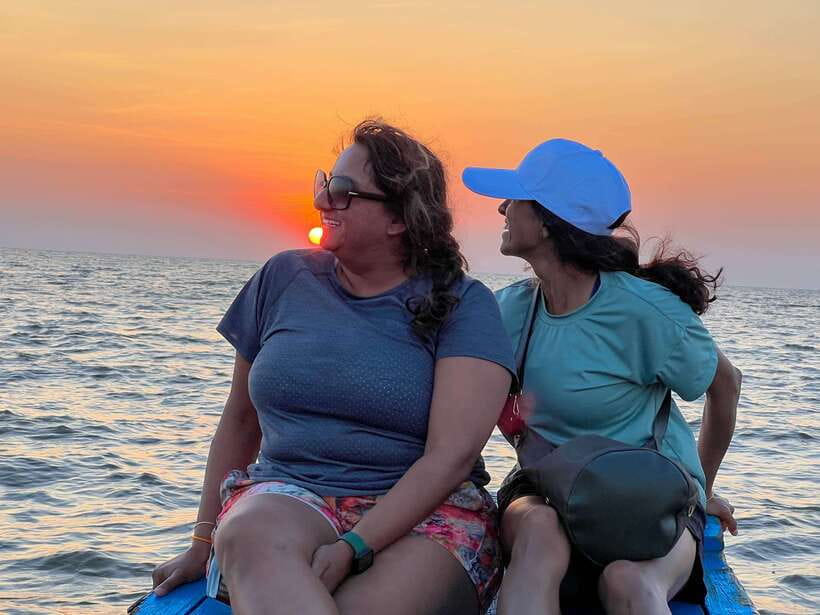
- Sunset on Tonle Sap Lake: Timing is the goal, but clouds and wind can shift the view
Chasing the light? More dawn and dusk runs
- Angkor Wat Sunrise or Sunset Tour with Guide from Siem Reap★ 5.0 · 12,109 reviews
- Siem Reap: Angkor Wat: Small-Group Sunrise or Sunset Tour★ 5.0 · 9,444 reviews
- Sunset tour of Kampong Phluk stilts home village on the Tonle Sap★ 5.0 · 4,865 reviews
- Siem Reap: Angkor Wat 2-Day Tour with Sunrise and Sunset★ 4.9 · 4,429 reviews
How this 5-hour Kampong Phluk plan runs from Siem Reap

This tour is built around a simple rhythm: afternoon pickup, a craft stop, a ride to the lake, boat time through Kampong Phluk, then monastery and sunset, and back to your hotel in Siem Reap.
Pickup happens between 2:00 pm and 2:30 pm. Your guide and driver aim to keep it smooth—plan to be in the hotel lobby about 10 minutes before your scheduled pickup time, since waiting is limited.
The total time on the water and in the floating-village area is the main event. You’re not trying to cram in a dozen temples here—you’re trying to see Tonle Sap as a living place, not just a photo stop.
SATCHA artisan center: a smart warm-up before the lake
The trip starts with a stop at SATCHA, the first Cambodian handicraft center described here as incubating local artisans. It mixes traditional knowledge with contemporary design, with a stated focus on sustainable social, economic, and environmental impact.
What I like about starting here: it helps you notice details later. When you reach the lake, you’re not just watching boats and houses—you’re also better able to connect what you see to Cambodian livelihoods and skills.
You’ll have time to look around and learn. In one of the experiences shared, the guide explained crafts and there was no pressure to buy anything—wood, stone, and rattan work were part of what people saw.
The drive to Tonle Sap: why 21 kilometers matters
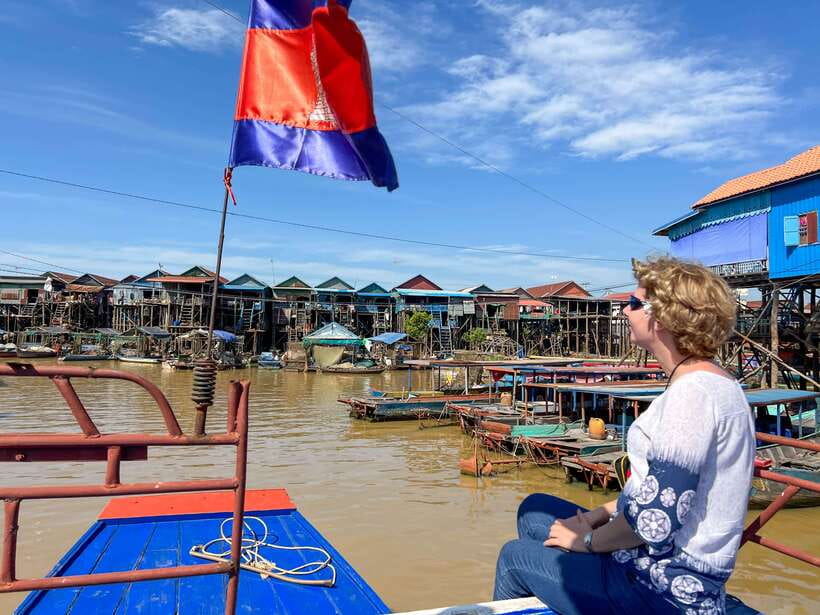
After SATCHA, you head toward Kampong Phluk, described as a flooded and fishing village area on Tonle Sap Lake. It’s about 21 kilometers from Siem Reap town, so this is a manageable, not-too-long transit.
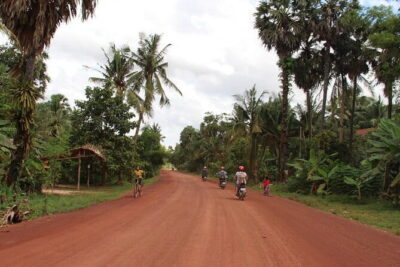
The payoff of the drive is the shift in atmosphere. You’re leaving Siem Reap’s tourist zone and moving toward the lake’s rhythm, with countryside views along the way.
By the time you reach the lake port, you’re ready for what happens next: switching from road travel to water travel.
Reaching Kampong Phluk: from ferry port to stilt-house life
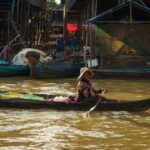
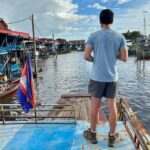
Once at the lake port, you take a local boat from the ferry to explore the floating village area. This is where the tone changes—things feel slower, more local, and more about daily routine.
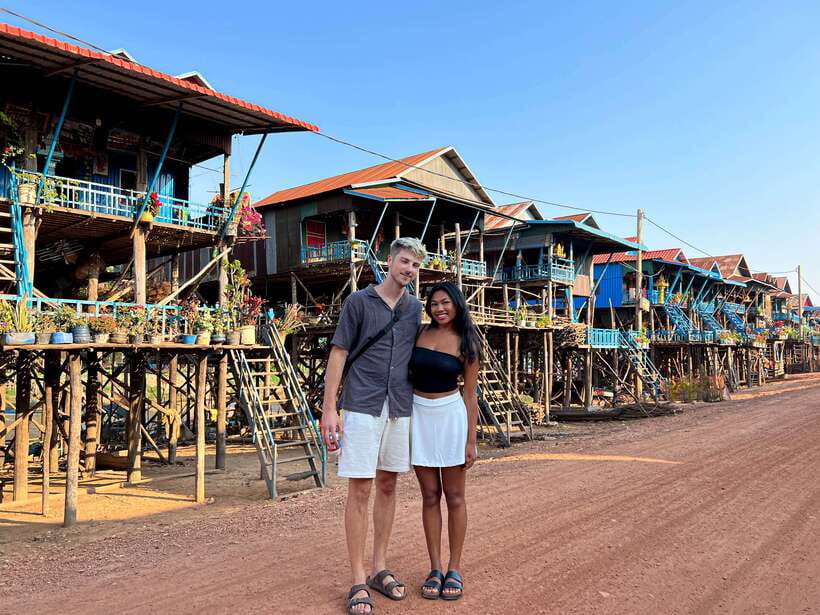
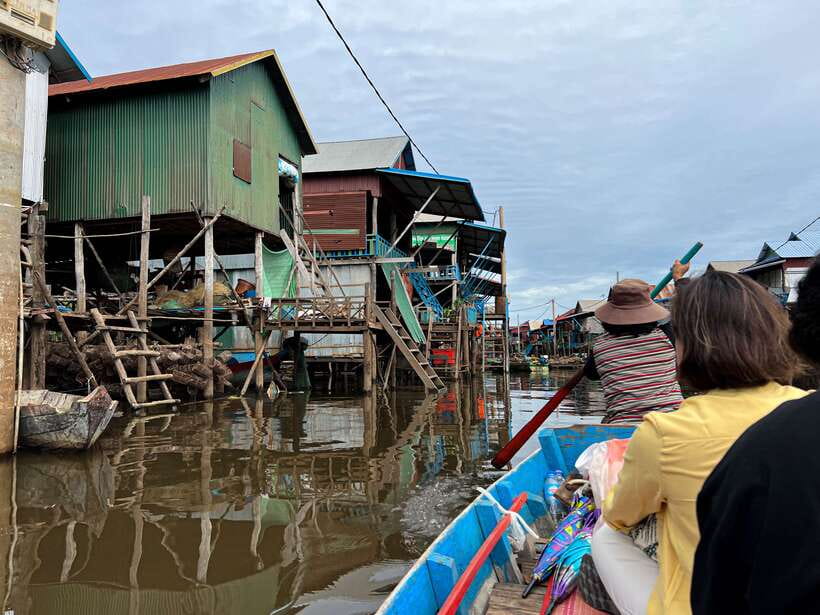
At Kampong Phluk, you’ll see how many families earn a living primarily from fishing. Most homes sit on long poles, so the high-water seasons don’t erase the village the way it would for a normal shoreline community.
This part works well for people who want more than landmarks. You’re looking at a whole way of life—how housing is built around the water’s behavior, and how that changes across seasons.
Back out on the lake, more stilted villages
Mangrove forest area and wildlife you might spot
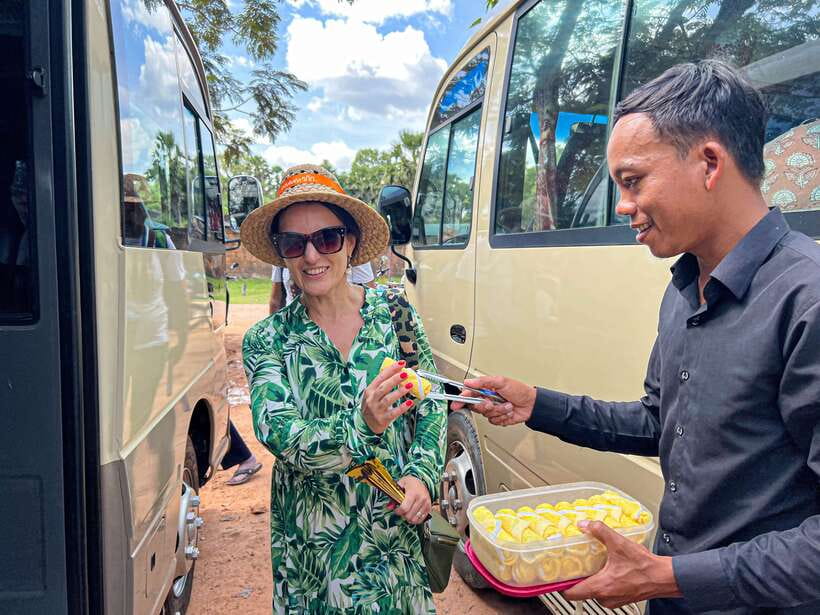
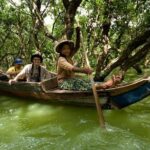
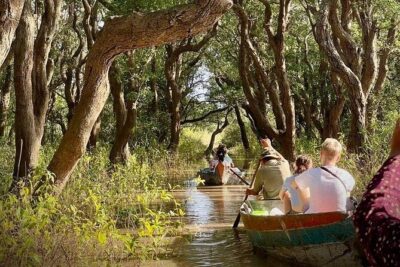
After exploring the village, you’re guided through the flooded mangrove forest area around Kampong Phluk. Here’s one detail that stands out: the area is described as home to a variety of species, including crab-eating macaques.
Also mentioned is a community size—about 3,000 inhabitants in the area. That gives you a sense that this isn’t a tiny, staged village. It’s a real neighborhood shaped by the lake.
Practical note: access can depend on water levels, especially during the drier months (more on that below). Your experience may look different from what you see in peak-rainy-season photos.
Buddhist monastery on an artificial island: the pause in the middle

After lake village time, the schedule includes a visit to a Buddhist monastery built on an artificial island. Even if you’re not on a strict temple schedule during your Cambodia trip, this stop has value because it changes the pace.
A monastery stop gives you a quiet contrast after boat and village movement. It also adds a cultural layer, so the tour isn’t only about housing and fishing—it shows how spiritual life exists alongside the water-based economy.
You’ll also build toward the final act: sunset from a local boat.
Tonle Sap sunset boat cruise: timing, weather, and flexibility
The day ends with a boat ride on Tonle Sap Lake to watch the sunset. For many people, this is the emotional closer—water, sky, and the lake feeling like the main character.
But the tour’s own experience reality is that weather can interfere. In one case shared, late July brought rain and wind, and the sunset view wasn’t as clear as planned. The bright side: the guide still kept the day meaningful by spending extra time explaining life in the floating village, including how things look in the dry season when houses sit on higher stilts.
So, if the sky doesn’t cooperate, don’t assume the tour “fails.” I’d think of sunset as the goal, and the human story as the constant.
Price and value: what $80 includes (and what to budget)
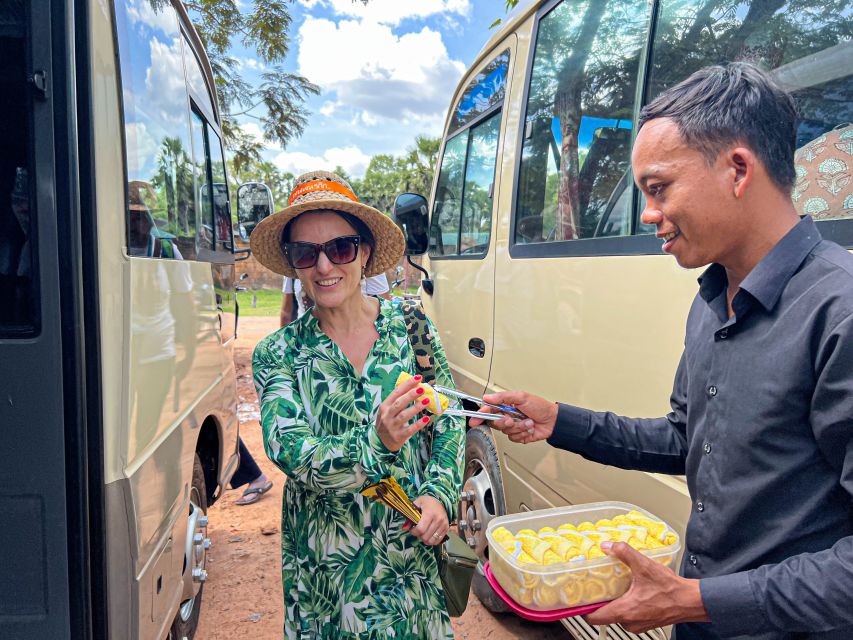
At $80 per person for a 5-hour tour, you’re paying for more than a simple boat ride. The package includes:
- A professional English-speaking tour guide
- A/C transport (minivan/minibus)
- Hotel pick-up and drop-off
- Entrance fee + boat ride
- A cool bottle of water
What’s not included is dinner and wine, plus personal expenses. So if you’re hungry afterward, plan a meal back in Siem Reap. This tour doesn’t try to act like your whole evening program.
Is $80 good value? In my view, yes—because the price covers the parts that often add up on day trips: guide time, transport, lake access, and the boat segments. You’re also not driving yourself and figuring out ferries, which is a real time-saver in a place where schedules can vary.
When the floating village looks different: March through July
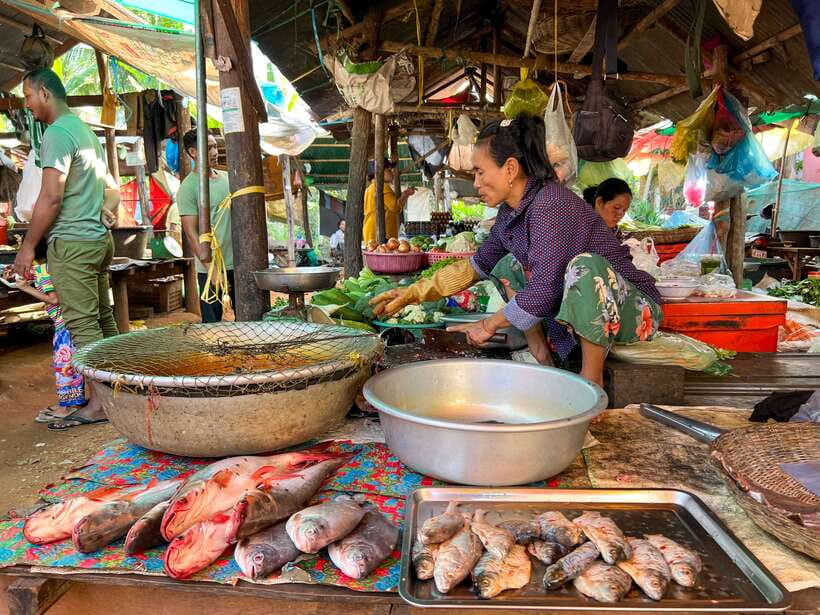
There’s a special seasonal window mentioned here: from the end of March to the end of July, floating villages can look and work differently as the water levels recede.
This matters because it changes what you see:
- You get a different perspective of daily life during the drier season.
- Some boats may become stuck.
- Smaller canoes might be unable to travel through the jungle forest.
That shift can be disappointing if you want postcard-perfect images. But it can be fantastic if you want something more real: you see how villagers live when the lake behaves differently, and the village takes on a new form.
One review detail that matches this reality: in late July, a guide explained the dry-season layout and you’d expect to see the houses built on higher stilts.
Guide quality and the human touch that makes this worth it
The guide role here is not optional. It’s the difference between riding past a place and actually understanding it.
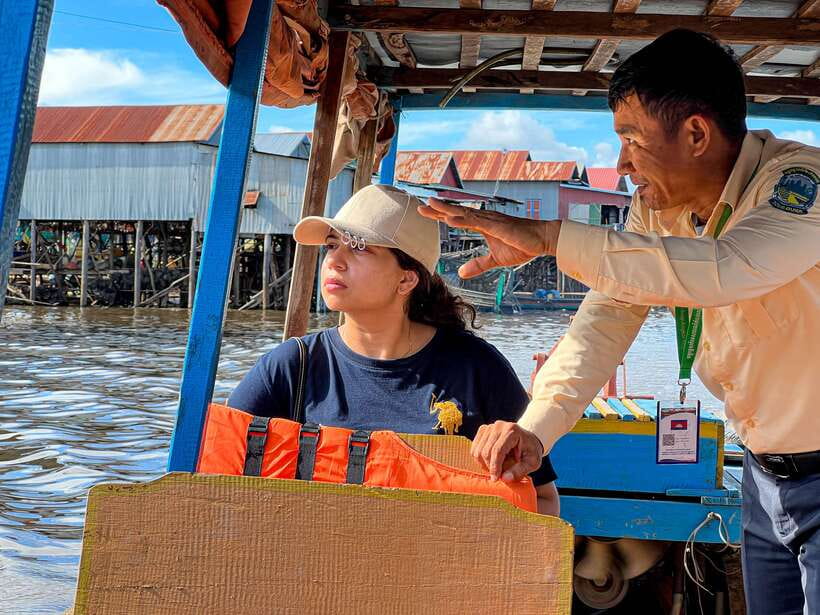
In the experiences shared, the guides were repeatedly described as friendly, informative, and genuinely invested in making the trip go well. Specific names came up—Mr. Rama, Mr. Ti, and Mr. Sean—and each is tied to how they explained what you were seeing.
That matters on a lake day. If you only get the boat and a quick look at houses, you might come away with photos. With strong guiding, you come away with reasons—why houses are built the way they are, how fishing shapes schedules, and how the lake season affects life.
Who this tour fits best (and who might want another option)
This works best if you want:
- A real floating village experience that goes beyond quick sightseeing
- A combined plan—craft center + Kampong Phluk + monastery + sunset
- A guided day where you can ask questions and get context in English
You might want to skip it—or choose a different time—if you:
- Are mainly chasing perfect sunset photos no matter what
- Don’t like weather-dependent plans, since rain and wind can affect the final boat view
- Are visiting during a period when access might be limited by water level changes
Practical tips for your afternoon on Tonle Sap
The tour already tells you what to bring, and I’ll stick to that list:
- Sunglasses
- Sunscreen
- Insect repellent
Also, plan your timing. This is an afternoon-to-evening style trip, not a morning start. It’s designed to end around sunset while you’re still in Siem Reap, so you’ll likely want a relaxed plan for afterward.
Should you book this Kampong Phluk and Tonle Sap sunset cruise?
If you’re choosing between “seeing the floating village” and “understanding it,” I think this booking makes sense. You get multiple layers in one 5-hour block: SATCHA for craft context, boat time into Kampong Phluk, mangrove area exploration, a monastery visit, and then the sunset cruise.
Book it if:
- You want a guided, English-friendly lake day with included transport and boat segments
- You’re okay with the idea that sunset can depend on wind and rain
- You’re open to seasonal differences in how the floating village looks and functions
Consider waiting or adjusting dates if you’re only interested in a specific kind of sunset photo and nothing else. But if you enjoy culture, daily life, and a real sense of place, this tour is a strong fit.
FAQ
FAQ
What time does the tour pick me up in Siem Reap?
Pickup is scheduled between 2:00 pm and 2:30 pm from your hotel in Siem Reap.
How long is the tour?
The total duration is about 5 hours.
Where does the tour go after pickup?
After pickup, the plan includes a stop at the SATCHA artisan center, then travel to Kampong Phluk on Tonle Sap Lake.
What happens at Kampong Phluk?
You take a local boat to explore Kampong Phluk, a flooded and fishing village area on Tonle Sap Lake, and you can see everyday life for families who primarily rely on fishing.
Do you also visit a monastery?
Yes. The itinerary includes a visit to a Buddhist monastery built on an artificial island.
Is there a sunset part of the experience?
Yes. You’ll enjoy the sunset from a local boat on Tonle Sap Lake.
What is included in the price?
Included are a professional English-speaking guide, A/C transport, hotel pick-up and drop-off, entrance fees plus the boat ride, and a cool bottle of water.
What is not included?
Dinner and wine are not included, along with personal expenses.
What should I bring?
Bring sunglasses, sunscreen, and insect repellent.
When are floating village conditions described as changing the most?
From the end of March to the end of July, water levels start to recede. During this time, access and village views can be different, including the possibility of boats becoming stuck and smaller canoes not traveling through some jungle forest areas.
More Tour Reviews in Siem Reap
- Angkor Wat Sunrise or Sunset Tour with Guide from Siem Reap
★ 5.0 · 12,109 reviews - Siem Reap: Angkor Wat: Small-Group Sunrise or Sunset Tour
★ 5.0 · 9,444 reviews - From Siem Reap: Kampong Phluk Floating Village Tour by Boat
★ 4.9 · 6,979 reviews - Sunset tour of Kampong Phluk stilts home village on the Tonle Sap
★ 5.0 · 4,865 reviews - Siem Reap: Angkor Wat 2-Day Tour with Sunrise and Sunset
★ 4.9 · 4,429 reviews
Out on Tonle Sap
- From Siem Reap: Kampong Phluk Floating Village Tour by Boat
★ 4.9 · 6,979 reviews - Sunset tour of Kampong Phluk stilts home village on the Tonle Sap
★ 5.0 · 4,865 reviews - Kompong Phluk Floating Village Half-Day Tour ( Morning / Sunset )
★ 5.0 · 1,494 reviews - Siem Reap: Kulen Mountain, Beng Mealea and Tonle Sap Tour
★ 5.0 · 1,483 reviews - Tonle Sap Lake & Kampong Phluk Village Half-Day Tour
★ 5.0 · 1,045 reviews
Dawn and Dusk Over Angkor
- Angkor Wat Sunrise or Sunset Tour with Guide from Siem Reap
★ 5.0 · 12,109 reviews - Siem Reap: Angkor Wat: Small-Group Sunrise or Sunset Tour
★ 5.0 · 9,444 reviews - Sunset tour of Kampong Phluk stilts home village on the Tonle Sap
★ 5.0 · 4,865 reviews - Siem Reap: Angkor Wat 2-Day Tour with Sunrise and Sunset
★ 4.9 · 4,429 reviews - Siem Reap: Full-Day Angkor Wat Guided Tour with Sunset
★ 4.9 · 3,803 reviews
Just Added: Fresh Siem Reap Tour Reviews

Angkor Sunrise & Sunset Tours, compared.
 ★ 5.0Angkor Wat Sunrise or Sunset Tour with Guide from Siem ReapFrom $1812,109 reviews
 ★ 5.0Angkor Wat: Small-Group Sunrise or Sunset TourFrom $159,444 reviews
 ★ 5.0Sunset tour of Kampong Phluk stilts home village on the Tonle SapFrom $214,865 reviews
 ★ 4.9Angkor Wat 2-Day Tour with Sunrise and SunsetFrom $344,429 reviews
 ★ 4.9Full-Day Angkor Wat Guided Tour with SunsetFrom $153,803 reviews
 ★ 5.0Angkor Wat Sunrise tour with Small – Group and Guide toursFrom $143,655 reviews
 ★ 5.0Angkor Wat Highlights and Sunrise Guided Tour from Siem ReapFrom $233,213 reviews
 ★ 5.0Angkor Wat Sunset Small Group Tour with Lunch IncludedFrom $203,059 reviews
Browse the lists this tour appears in