
Reviewed · ANGKOR TEMPLE TOURS
Small Tour and Big Tour By Car
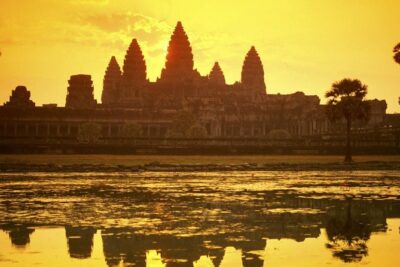
Angkor at sunrise is a wake-up call worth it. This 2-day Angkor tour by car packs the major sights plus lesser-known stops, with an English-speaking guide helping you read what you’re seeing in plain language.
I especially like the way the plan balances iconic temples (the kind you came for) with quieter complexes that feel more open and less rushed.
Second, I really like the logistics for your comfort: air-conditioned car time between sites, WiFi on board, and pickup offered so you’re not hunting tuk-tuks in the dark. It’s also built as a private tour/activity, so your group keeps the pace without getting swallowed by a crowd.
The main drawback to consider is the early schedule plus the extra costs: the tour’s temple pass is not included, and the sunrise and sunset moments require early wake-ups and a real climb at Phnom Bakheng.
In This Review
- Key highlights you’ll feel right away
- Price and what you actually get for $22
- How the timing works: sunrise, sunset, and your energy level
- Day 1 temple day: Angkor Wat, Ta Prohm, and the Angkor Thom highlights
- Stop 1: Angkor Wat (1 hour 10 minutes)
- Stop 2: Ta Prohm (45 minutes)
- Stop 3: Ta Keo (20 minutes)
- Stop 4: Banteay Kdei (30 minutes)
- Stop 5: Srah Srang (15 minutes)
- Stop 6: Prasat Kravan (20 minutes)
- Stop 7: Phimeanakas (30 minutes)
- Stop 8: Phnom Bakheng (1 hour)
- Stop 9: Bayon (40 minutes)
- Stop 10: Chau Say Tevoda (20 minutes)
- Day 2 temple day: Neak Pean and Preah Khan’s more lived-in feel
- Stop 1: Neak Pean (1 hour 20 minutes)
- Stop 2: Preah Khan (40 minutes)
- Stop 3: Banteay Samre (30 minutes)
- Stop 4: Ta Som (20 minutes)
- The included comforts: car, WiFi, water, and private pacing
- Temple pass and meals: the part that can surprise your budget
- Tips for the sunrise and Phnom Bakheng climb
- My verdict: is this the right 2-day Angkor tour for you?
- FAQ
- What time does the tour start in Siem Reap?
- Is pickup offered?
- What’s included in the $22 price?
- What’s not included?
- How long is the tour?
- Which temples are included on Day 1?
- Which temples are included on Day 2?
- Do they include sunrise and sunset viewing?
- What happens if weather is bad?
Key highlights you’ll feel right away
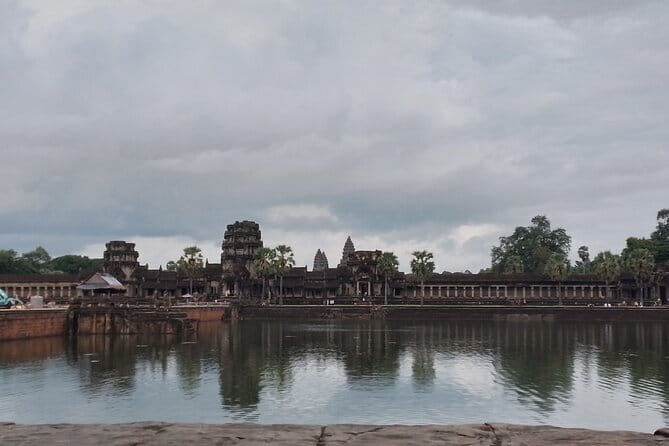
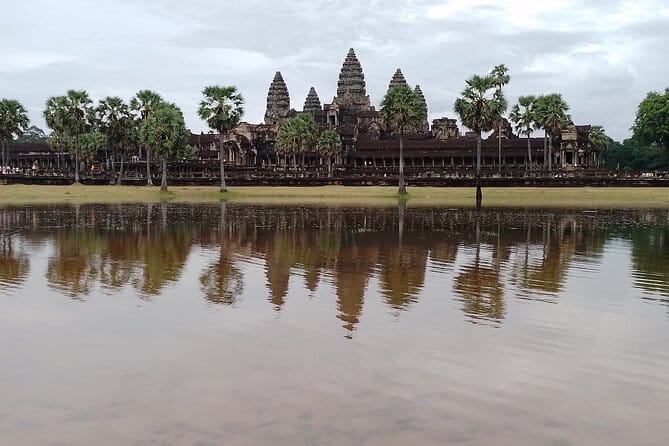
- 4:45am Angkor Wat sunrise start that hits while the light is soft and the crowds are still waking up
- Phnom Bakheng sunset viewpoint with an extra climb up toward the top temple for standout angles
- Angkor Thom circuit in one Day 1: Bayon faces, Baphuon-style vibes, and temple styles that mix Hindu and Buddhist eras
- Ta Prohm’s roots-over-ruins look with time to slow down and enjoy the photo scene
- A/C transport + WiFi makes the long temple days easier on your feet and patience
- All the major stops are spread out over two days so you’re not doing everything in one exhausting, back-to-back push
More temple circuits, set side by side
- Angkor Wat Sunrise or Sunset Tour with Guide from Siem Reap★ 5.0 · 12,109 reviews
- Siem Reap: Angkor Wat: Small-Group Sunrise or Sunset Tour★ 5.0 · 9,444 reviews
- Siem Reap: Angkor Wat 2-Day Tour with Sunrise and Sunset★ 4.9 · 4,429 reviews
- Siem Reap: Full-Day Angkor Wat Guided Tour with Sunset★ 4.9 · 3,803 reviews
Price and what you actually get for $22
At $22 per person for about two days, this is the kind of deal that usually only works if the operator keeps things lean. You’re paying for the guide time, car transport, and the tour structure that strings the temples together with timing.
What’s included is meaningful: all fees and taxes, one bottle of water each, air-conditioned vehicle, private transportation, and WiFi on board. The “all fees and taxes” part matters in Siem Reap because a lot of tours quietly add small extras that turn into a bigger bill later.
What’s not included is just as important for your budget: the temple pass, plus your own meals and personal expenses. If you want the full experience, you should plan on paying for the pass separately, and you’ll want a little cash or card readiness once you arrive at the temples.
My take: the price feels fair because it focuses on transportation + guidance across multiple temple stops, not on fancy extras. If you already know you’ll want a pass anyway, this is a strong way to turn that pass into a two-day temple program.
How the timing works: sunrise, sunset, and your energy level
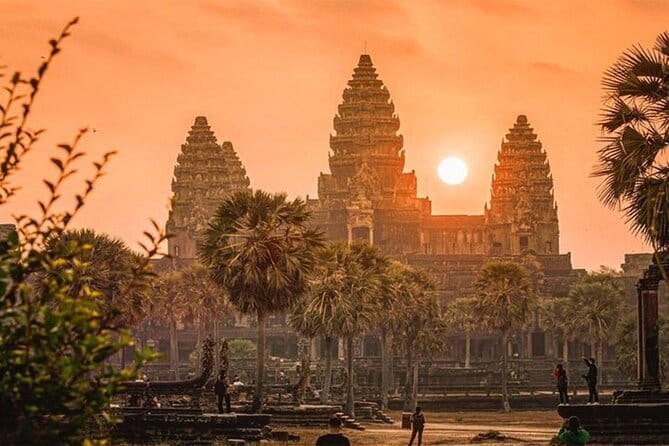
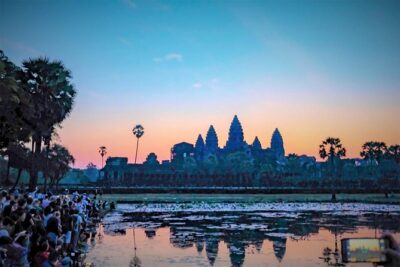
This tour is built around two signature moments: Angkor Wat sunrise starting around 4:45am, and a Phnom Bakheng sunset experience starting about 5pm with time to climb toward the top temple.
That means you’ll live on two rhythms:
- one early-morning rhythm (dark-to-light, cooler temps, and a temple you want to see before it gets busy)
- one late-afternoon rhythm (heat easing off, sky-color changes, and a climb that feels steeper at night than in daylight)
You’ll also want to keep expectations realistic about walking. Even when a stop is listed as 15 to 45 minutes, the time adds up across the day—especially when you include stairways, uneven stone, and the stop-and-look part that temples naturally demand.
One more timing note: the “start time” listed is 8:00am from Siem Reap Airport, but the itinerary also calls for a 4:45am sunrise start. That’s not rare in Siem Reap tours, where the scheduled meeting point can differ from the actual pickup for a sunrise day. If you book, ask the operator to confirm your exact pickup time for sunrise.
Day 1 temple day: Angkor Wat, Ta Prohm, and the Angkor Thom highlights
Day 1 is where the tour earns its reputation. You move through a classic Khmer mix: Hindu foundations, later Buddhist use, and the visual signatures that help you tell temple styles apart.
Stop 1: Angkor Wat (1 hour 10 minutes)
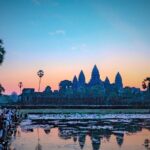
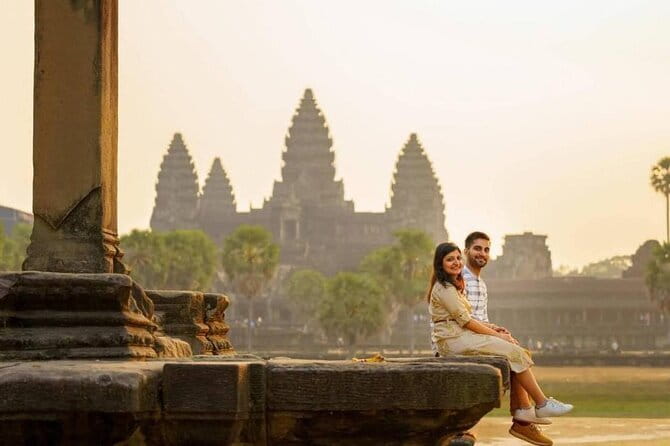
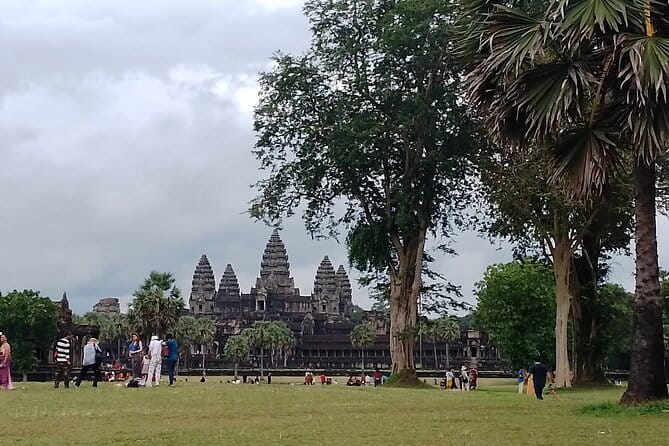
Angkor Wat is the star for a reason. It was built for King Suryavarman II in the early 12th century, and it’s the best-preserved temple at Angkor, staying a significant religious center since it was founded. The architecture is “high classical Khmer style” in the cleanest form—perfect if you want to understand what Khmer temple design was trying to do: make a heaven-on-earth kind of space.
This is also the day’s early set-up for later comparisons. Once you see Angkor Wat well, the next temples start to make more sense.
Stop 2: Ta Prohm (45 minutes)
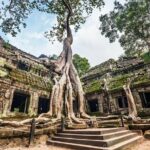
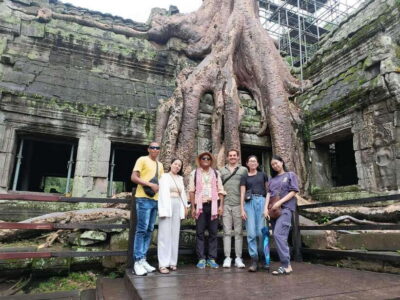
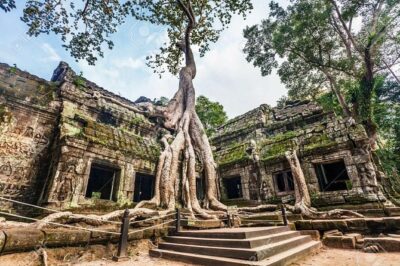
Ta Prohm is all about the famous look: trees growing out of the ruins, with jungle surroundings that make the whole place feel atmospheric. It’s described as being Bayon style and tied to King Jayavarman VII, functioning as a Mahayana Buddhist monastery and university.
This is one of those stops where you’ll get the most by slowing down. Look for how the roots and stone create natural frames for the carvings.
Stop 3: Ta Keo (20 minutes)
Ta Keo is a different mood. It’s a temple-mountain dedicated to Shiva, and it was the first Angkor temple constructed wholly of sandstone. The guide-style benefit here is that Ta Keo helps you notice how Khmer builders used scale and form even when the decoration looks simpler than at other sites.
Stop 4: Banteay Kdei (30 minutes)
Banteay Kdei is a Buddhist temple in the Bayon style, built in the late 12th to early 13th century. The twist is the mystery: the inscription stone has never been found, so its dedication remains unknown.
If you like temples that feel slightly more open and less “photo-locked,” Banteay Kdei can be a nice mid-day break—still important, but not as overwhelming as Angkor Wat.
Stop 5: Srah Srang (15 minutes)
Srah Srang means The Royal Bath. It’s tied to a chapel to Kama, God of Love, and it’s the kind of stop where you can pause and look at the water shape, not just the buildings. It’s short on time, so go in ready to take a mental snapshot rather than expecting a long wander.
Stop 6: Prasat Kravan (20 minutes)
Prasat Kravan is dedicated to Hinduism, built by King Harshavarman I in the early 10th century. This stop gives you an “in-between” feel—useful for linking earlier Hindu themes with what comes later as the tour moves toward Angkor Thom’s major faces and state temples.
Stop 7: Phimeanakas (30 minutes)
Phimeanakas is the former royal palace, with a laterite and sandstone pyramid. It’s described as lacking surviving carvings, so it may not hit as hard on detail, but it does offer something practical: it’s the tallest scalable temple in Angkor Thom, and the view from the top is the reward. The western staircase (at the back) is noted as the easiest to climb.
This is one of your “pay off the effort” stops.
Stop 8: Phnom Bakheng (1 hour)
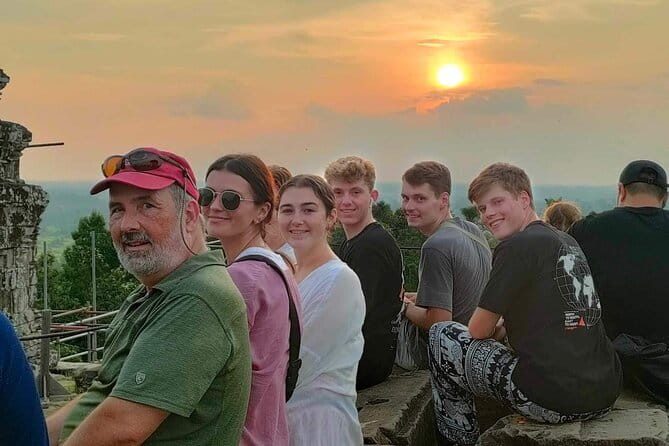
This is your sunset centerpiece. Phnom Bakheng is said to be the best place to see sunset, which is why most tourists don’t skip it. The temple is older than Angkor Wat, constructed more than two centuries earlier, and built as a Hindu temple mountain dedicated to Shiva.
The big reason this stop works: you’re not just looking at a building—you’re looking at a view with a temple in the frame. The tour also notes an extra temple at the top of the mountain, so the climb is part of the show, not just a means to an end.
Stop 9: Bayon (40 minutes)
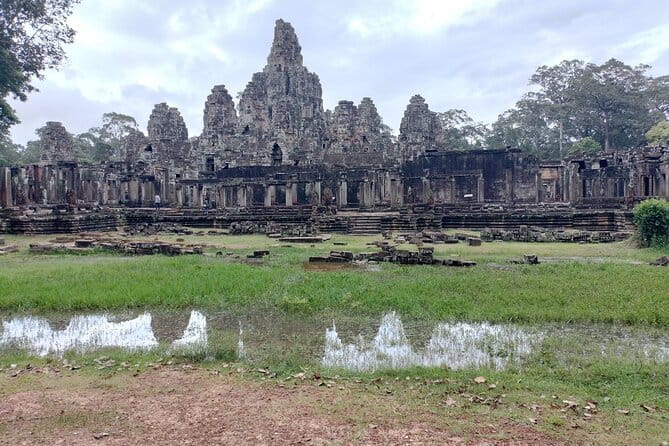
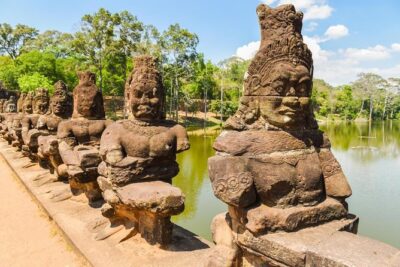
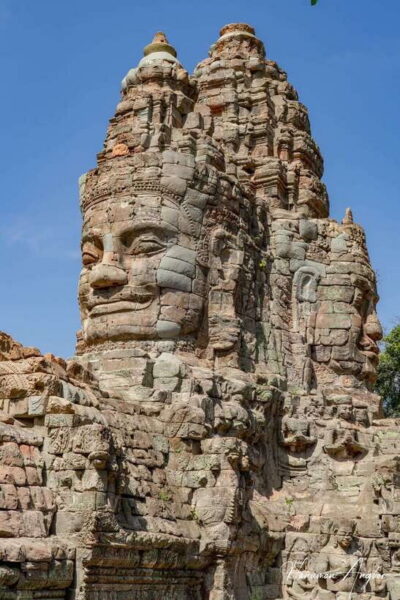
Bayon is where Angkor Thom becomes unmistakable. It’s richly decorated and built in the late 12th to early 13th century. The tour description emphasizes that Bayon was built as a state temple centered in Jayavarman’s capital, Angkor Thom, and as a primarily Mahayana Buddhist shrine. Later rulers added Hindu and Theravada modifications after Jayavarman’s death.
If you’ve ever wondered why people get emotional seeing Bayon, it’s because the faces feel like they’re watching you from every angle. With guide time, you’ll notice how the temple’s layout supports that effect.
Stop 10: Chau Say Tevoda (20 minutes)
Chau Say Tevoda is a smaller temple with a similar design and floor plan to Thommanon across the street, but with extra gopuras and libraries. It’s described as being in good condition, built around the same time as Angkor Wat, and easier to recognize for the Angkor Wat style in its towers and carvings.
This stop is a good “wrap up” before Day 2 starts—less about huge scale, more about finishing your mental map of what you’ve been seeing.
Day 2 temple day: Neak Pean and Preah Khan’s more lived-in feel
Day 2 feels a little more spread out in vibe. You’re still doing multiple sites, but the tone shifts from big icon mode to more “read the place” mode—especially at Preah Khan.
Stop 1: Neak Pean (1 hour 20 minutes)
Neak Pean is a small island temple in the middle of a baray, with a central temple positioned at the axis of a lotus-pattern layout of eight pools. It’s called Neak Pean, meaning coiled serpents, tied to nagas encircling the temple.
This stop is excellent if you like Khmer water engineering and how temples were designed with a whole sacred water system in mind. The longer time slot helps you enjoy the axis and symmetry instead of treating it as a quick photo.
Stop 2: Preah Khan (40 minutes)
Preah Khan is tied to Jayavarman VII’s victory over the invading Chams in 1191. In its heyday, it functioned as a huge center with almost 100,000 officials and servants. The layout is described as successive rectangular galleries around a Buddhist sanctuary, with Hindu satellite temples and later additions.
The biggest practical point: Preah Khan is left largely unrestored with trees and vegetation growing among the ruins. That means you might see less polish, but you often get a stronger sense of place—less staged, more real.
Stop 3: Banteay Samre (30 minutes)
Banteay Samre is described as a large, flatter temple with Angkor Wat-style architecture and artistry. It’s been restored using the anastylosis method, meaning archaeologists rebuilt using original components where possible.
If you’re tired of climbing and uneven ground, the flatter design can feel like a breather. The restored look can also help you appreciate the original craftsmanship.
Stop 4: Ta Som (20 minutes)
Ta Som is short, but it’s still worth it for the shift in temple personality. It’s noted as the grandfather of the temple name, and you get a quick window into another Khmer design stage without draining the day.
The included comforts: car, WiFi, water, and private pacing
This tour is designed for practical travel, not just checklists. Private transportation matters because temples aren’t close together in any simple way. Between stops, you’ll appreciate the A/C time, and the tour includes one bottle of water per person to keep you from running dry during the hottest hours.
The WiFi on board is also a nice bonus in Siem Reap, where your phone battery can drop fast with photos and navigation. It’s not required, but it helps you stay functional.
The private setup is especially good if you prefer a steady rhythm. You won’t have to adjust to random group behaviors, and you can ask quick questions as you go—like why a temple was built, or what you’re looking at in Bayon versus Ta Prohm.
Temple pass and meals: the part that can surprise your budget
Every stop in the itinerary notes that the admission ticket is not included, and the “temple pass” is also listed as not included overall. So treat the temple pass as your main added cost on top of the tour price.
Meals are also on your own expense. Even with a great schedule, temple days run long, and you’ll want flexibility to buy something close to where you are rather than planning a complicated sit-down meal strategy.
The easiest way to stay relaxed is to plan like this:
- budget for the temple pass
- keep water and snacks in mind for the long windows
- decide ahead of time whether you’ll eat casual local food or something simpler near town
Tips for the sunrise and Phnom Bakheng climb
These moments are the reason many people book Angkor tours, but they can also be the roughest on your body.
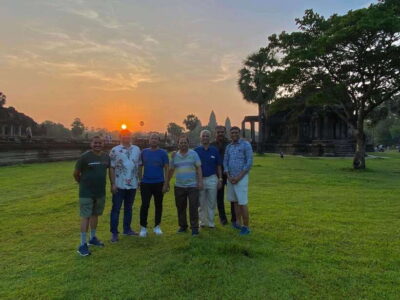
For sunrise at Angkor Wat starting around 4:45am, expect chilly early air and a rush of movement while most of Siem Reap is still waking up. Go in ready to move quickly and keep your energy for the walk and viewing.
For Phnom Bakheng at sunset starting about 5pm, remember it’s a climb to the viewpoint area and the top temple is part of the experience. Wear footwear that can handle stone steps, and give yourself time to slow down near the edges so you don’t rush for the best angle.
If you’re traveling with older parents or anyone who doesn’t like stairs, ask your guide how to pace the climb and where the easiest photo spots are.
My verdict: is this the right 2-day Angkor tour for you?
Book this if you want:
- a two-day plan that covers big names like Angkor Wat and Bayon, plus a stack of additional temples
- an English-speaking guide who can connect Khmer architecture to the story of what you’re seeing
- A/C car transport to reduce downtime between sites
- the key wow moments: Angkor Wat sunrise and Phnom Bakheng sunset
Don’t book this if:
- you hate early starts or you know you’ll struggle with stairs and a sunset climb
- you’d rather pick fewer temples and spend more time at each without feeling scheduled
- you’re trying to keep the total budget extremely low, since the temple pass is separate
If you’re okay with a structured schedule and you want maximum temple coverage without chaos, this is a solid value way to do Angkor in two days.
FAQ
What time does the tour start in Siem Reap?
The meeting point is Siem Reap Airport with a start time listed as 8:00am. The tour schedule also includes a 4:45am sunrise start for Angkor Wat, so confirm the exact pickup time for that early segment.
Is pickup offered?
Yes. Pickup is offered as part of the tour features.
What’s included in the $22 price?
The tour includes all fees and taxes, one bottle of water each person, air-conditioned vehicle, private transportation, and WiFi on board. An English-speaking guide is included as well.
What’s not included?
Temple admission is not included (you’ll need a temple pass). Meals and other personal expenses are also not included.
How long is the tour?
It runs for about 2 days (approx.).
Which temples are included on Day 1?
Day 1 covers Angkor Wat, Ta Prohm, Ta Keo, Banteay Kdei, Srah Srang, Prasat Kravan, Phimeanakas, Phnom Bakheng, Bayon, and Chau Say Tevoda.
Which temples are included on Day 2?
Day 2 covers Neak Pean, Preah Khan, Banteay Samre, and Ta Som.
Do they include sunrise and sunset viewing?
Yes. Angkor Wat sunrise is scheduled to start around 4:45am, and Phnom Bakheng sunset viewing is scheduled starting around 5pm with a climb to the viewpoint area.
What happens if weather is bad?
This experience requires good weather. If it’s canceled due to poor weather, you’ll be offered a different date or a full refund.
More Siem Reap Tours to Compare
- Angkor Wat Sunrise or Sunset Tour with Guide from Siem Reap
★ 5.0 · 12,109 reviews - Siem Reap: Angkor Wat: Small-Group Sunrise or Sunset Tour
★ 5.0 · 9,444 reviews - From Siem Reap: Kampong Phluk Floating Village Tour by Boat
★ 4.9 · 6,979 reviews - Sunset tour of Kampong Phluk stilts home village on the Tonle Sap
★ 5.0 · 4,865 reviews - Siem Reap: Angkor Wat 2-Day Tour with Sunrise and Sunset
★ 4.9 · 4,429 reviews
More Tour Reviews in Siem Reap
- Angkor Wat Sunrise or Sunset Tour with Guide from Siem Reap
★ 5.0 · 12,109 reviews - Siem Reap: Angkor Wat: Small-Group Sunrise or Sunset Tour
★ 5.0 · 9,444 reviews - From Siem Reap: Kampong Phluk Floating Village Tour by Boat
★ 4.9 · 6,979 reviews - Sunset tour of Kampong Phluk stilts home village on the Tonle Sap
★ 5.0 · 4,865 reviews - Siem Reap: Angkor Wat 2-Day Tour with Sunrise and Sunset
★ 4.9 · 4,429 reviews
More Temple Circuits Around Siem Reap
- Angkor Wat Sunrise or Sunset Tour with Guide from Siem Reap
★ 5.0 · 12,109 reviews - Siem Reap: Angkor Wat: Small-Group Sunrise or Sunset Tour
★ 5.0 · 9,444 reviews - Siem Reap: Angkor Wat 2-Day Tour with Sunrise and Sunset
★ 4.9 · 4,429 reviews - Siem Reap: Full-Day Angkor Wat Guided Tour with Sunset
★ 4.9 · 3,803 reviews - Angkor Wat Sunrise tour with Small – Group and Guide tours
★ 5.0 · 3,655 reviews
Just Added: Fresh Siem Reap Tour Reviews

Angkor Temple Tours, compared.
 ★ 5.0Angkor Wat Sunrise or Sunset Tour with Guide from Siem ReapFrom $1812,109 reviews
 ★ 5.0Angkor Wat: Small-Group Sunrise or Sunset TourFrom $159,444 reviews
 ★ 4.9Angkor Wat 2-Day Tour with Sunrise and SunsetFrom $344,429 reviews
 ★ 4.9Full-Day Angkor Wat Guided Tour with SunsetFrom $153,803 reviews
 ★ 5.0Angkor Wat Sunrise tour with Small – Group and Guide toursFrom $143,655 reviews
 ★ 5.0Angkor Wat Highlights and Sunrise Guided Tour from Siem ReapFrom $233,213 reviews
 ★ 5.0Angkor Wat Sunset Small Group Tour with Lunch IncludedFrom $203,059 reviews
 ★ 5.0Full-Day Angkor Wat Sunrise Private Tour with Guide from Siem ReapFrom $602,920 reviews