
Reviewed · ANGKOR WAT TEMPLE TOURS
Sun Rise at Angkor Wat Small Group Day Tour from Siem Reap
Dawn at Angkor feels like a movie.
This small-group Angkor Wat sunrise tour is built for the quiet hours: you ride out before light, enter from the less-used eastern side, and walk the Jungle Path toward the ancient library pools before the sun crests the towers. I like that the route mixes big-ticket moments (Angkor Wat at first light) with human-scale temple details, including a long stretch of bas-relief carvings your guide helps you read. The second thing I really appreciate is the pacing: after sunrise you still get time to explore, then you hit Ta Prohm and Angkor Thom before the day gets too hot.
One thing to consider: the Angkor Wat admission is not included ($37 per person), so your real total is higher once you buy the e-ticket. Also, it starts before dawn, so bring a little patience for the early wake-up.
In This Review
- 6 Key Reasons This Sunrise Tour Works So Well
- Sunrise Angkor Wat Starts in the Dark (and That’s the Point)
- The Angkor Wat Moment: World’s Largest Religious Complex, But Human-Scale
- Entering the Sunrise Route: What You Gain by Avoiding Crowds and Heat
- Angkor Thom South Gate: The Big Entry With 54 Stone Figures
- Bayon Temple: Where Jayavarman VII’s State Temple Really Gets Personal
- Terrace of the Elephants and the Leper King: Two Terraces, Two Moods
- Ta Prohm (Tomb Raider Temple): Jungle-Linked Ruins You Can Feel
- The Surprising Bonus Energy: Short Stops That Add up
- Timing and Clothes: Small Rules That Make the Day Smoother
- Price and Value: $17 Plus the Real Temple Cost
- The Best Fit: Who Should Book This Sunrise Tour
- Should You Book This Angkor Wat Sunrise Small Group Tour?
- FAQ
- Is pickup available from hotels in Siem Reap?
- How long is the tour?
- How much does the tour cost?
- Do I need to pay an admission fee for Angkor Wat?
- Are the other temple stops free?
- Will I get an e-ticket link in advance?
- What should I wear to enter the temples?
- What kind of shoes should I bring?
- How big is the group?
- What is the cancellation window?
6 Key Reasons This Sunrise Tour Works So Well
- Early entry from the eastern side: You start in darkness and move before the biggest rush forms.
- Jungle Path to the library pools: You’re not just standing in place; you’re walking into the atmosphere.
- Your guide does the heavy lifting: History and culture are built into the route, so you don’t just photograph stones.
- Angkor Thom highlights in a smart order: Bayon, terraces, and major gates come one after another while your energy is still good.
- Ta Prohm at the right time of day: Jungle-enveloped ruins can feel extra “real” when you’re early enough to avoid crowds.
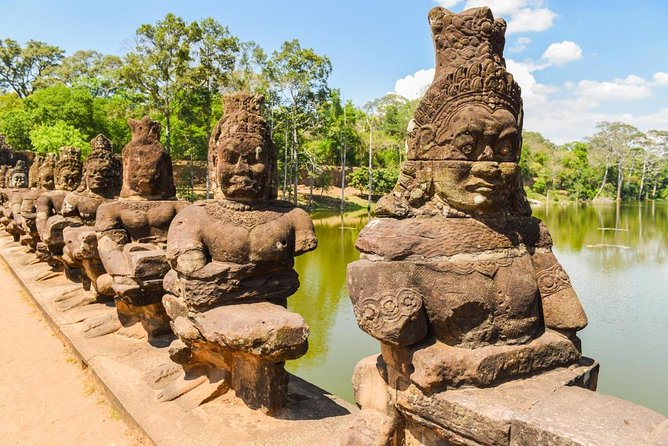
- Small group (max 10): Less shoulder-to-shoulder touring, and more time to ask questions.
Other ways to walk the great temple
- Angkor Wat Sunrise or Sunset Tour with Guide from Siem Reap★ 5.0 · 12,109 reviews
- Siem Reap: Angkor Wat: Small-Group Sunrise or Sunset Tour★ 5.0 · 9,444 reviews
- Siem Reap: Angkor Wat 2-Day Tour with Sunrise and Sunset★ 4.9 · 4,429 reviews
- Siem Reap: Full-Day Angkor Wat Guided Tour with Sunset★ 4.9 · 3,803 reviews
Sunrise Angkor Wat Starts in the Dark (and That’s the Point)
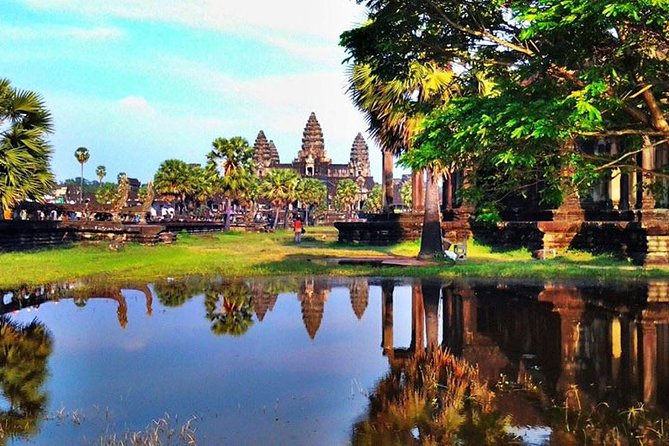
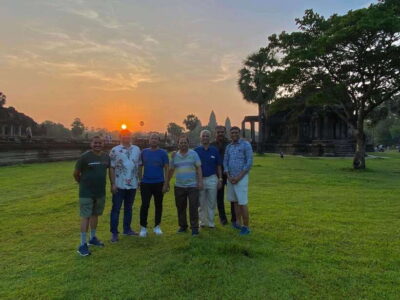
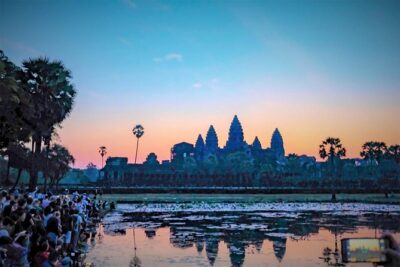
This tour is designed around a simple idea: you see Angkor at its best when most people are still asleep. Pickup happens from your hotel in Siem Reap before dawn, and you head to Angkor Wat in the early hours. Then you enter the temple complex in darkness from the eastern side, which matters because it changes the feel of your first steps. The stones don’t look like tourist scenery yet. They look like a place with its own rhythm.
As you move along the Jungle Path, you’re heading toward the ancient library pools—one of those areas where the light begins to shift and the whole complex starts to “open up” visually. This is also when you want a camera ready, not because it’s perfect already, but because you’ll catch the gradual change from near-black to sunrise glow.
The Angkor Wat Moment: World’s Largest Religious Complex, But Human-Scale
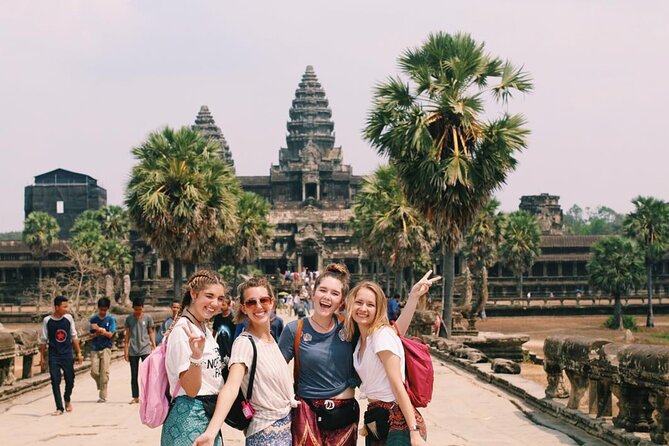
Angkor Wat is the world’s largest religious complex, and it’s also the best-preserved one at Angkor. Built in the 12th century, it can feel overwhelming if you only treat it like a photo stop. This is where having a guide helps. You’ll hear history and cultural context as you walk, and you’ll also be pointed toward the kind of architectural details that are easy to miss if you’re on your own.
A key highlight is the bas-relief carving experience. The day includes time for you to wander past the longest stretch of bas-reliefs in the world. That’s not just impressive trivia—it changes how the temple reads. Instead of standing in front of walls, you can start tracing scenes and patterns, with your guide helping you make sense of what you’re seeing.
Then you go deeper into the central chambers and up to the upper terraces. That climb isn’t just for views. It’s the way Angkor Wat is meant to be experienced—layered, structured, and awe-building without needing sound effects. If you’re someone who likes to understand what you’re looking at, this segment tends to be the emotional payoff of the whole day.
Entering the Sunrise Route: What You Gain by Avoiding Crowds and Heat
The tour is explicitly built to help you escape the crowds and the heat. That’s not marketing fluff; it shows up in the order of stops and in the early start. By the time many groups arrive, you’ve already done the hardest-to-replicate part: getting positioned before sunrise and walking the temple grounds while the light is still soft.
You’ll also have time for photo opportunities along the way. The goal isn’t to rush every viewpoint. It’s to capture the best angles at the right time, then move on so you don’t spend your morning trapped in slow-moving lines.
You should still expect warm weather once the day gets going. This tour includes bottled water, and at least one reviewer specifically noted cold towels being provided in the heat. Don’t assume that will always be included in every situation, but it’s a good sign that comfort is considered, not ignored.
Angkor Thom South Gate: The Big Entry With 54 Stone Figures
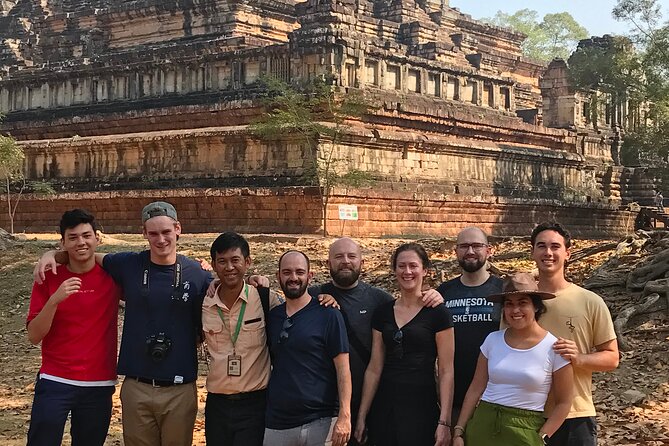
After breakfast, the tour shifts from Angkor Wat’s big, formal feeling to Angkor Thom’s walled-city drama. The first stop inside Angkor Thom is the South Gate, one of the five gates of the ancient Khmer capital.
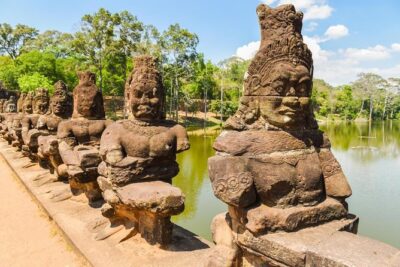
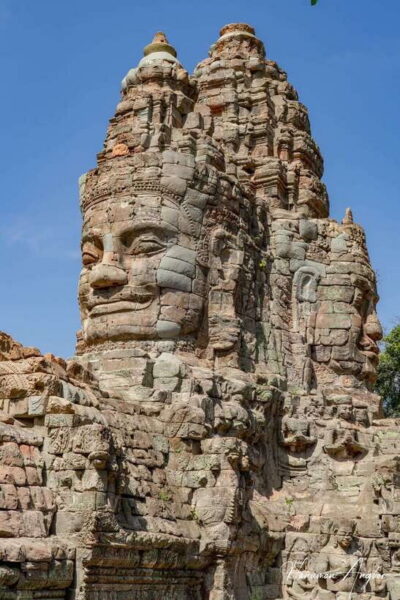
What makes the South Gate memorable is the visual rhythm of the stone figures. This gate is flanked by a row of 54 stone figures on each side, framing the entrance like a ceremonial corridor. Even if you don’t know the names of every figure, the symmetry helps you “read” the space quickly. It’s a strong start to the Angkor Thom portion because it gives you a clear transition from temple complex to fortress city.
Chasing the light? More dawn and dusk runs


Bayon Temple: Where Jayavarman VII’s State Temple Really Gets Personal
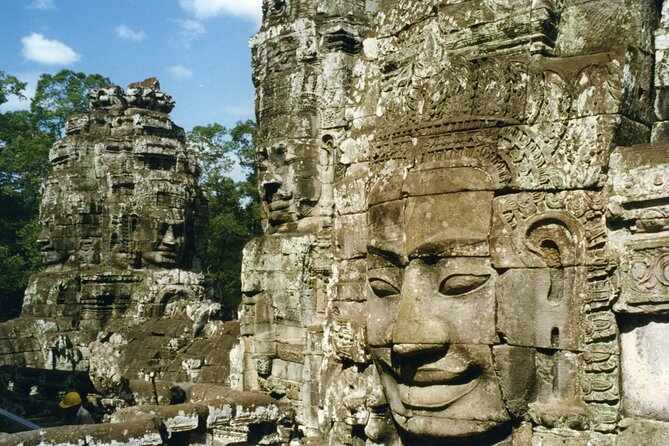
Next comes Bayon Temple, a richly decorated Khmer temple built in the 13th century as the state temple of King Jayavarman VII. The Bayon sits at the center of Jayavarman’s capital city, which helps explain why it feels both central and crowded in concept—even if you’re visiting in a calmer morning stretch.
Bayon is the place where you get those iconic faces and the kind of intricate decoration that makes people slow down without meaning to. You’ll have about an hour here, which is just enough time to soak it in, take photos, and still feel like you explored instead of simply walked through.
Terrace of the Elephants and the Leper King: Two Terraces, Two Moods
You’ll spend time at two famous terraces, each with its own vibe.
Terrace of the Elephants is long—about 350 meters—and it was used as a reviewing stand for public ceremonies. Some local Khmer residents even refer to it as the Ancient Khmer Stadium. That nickname helps you visualize the function: it’s a platform meant for gathering and watching, not a random decorative feature.
Then you move to the Terrace of the Leper King. The U-shaped structure is thought by some to have been used as a royal cremation site. Even if you take the name as just a name, the shape and setting make it eerie in a way that fits the broader tone of Angkor Thom. It’s the kind of stop where your guide’s interpretation helps you see beyond the label.
Both terraces are included with free admission stops in the plan, so you’re using time well without extra ticket pressure.
Ta Prohm (Tomb Raider Temple): Jungle-Linked Ruins You Can Feel
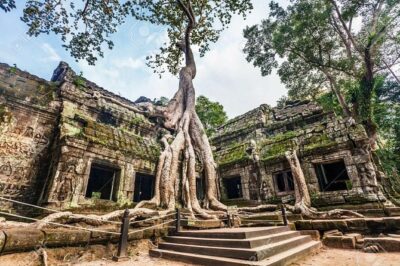
Ta Prohm is one of the most atmospheric temples in the area. It’s the jungle-enveloped one that many people recognize from films, but it’s worth approaching it as architecture plus ecosystem—not just a movie set.
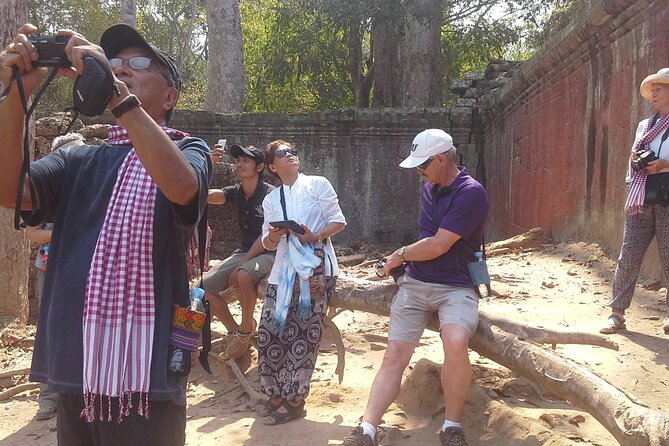
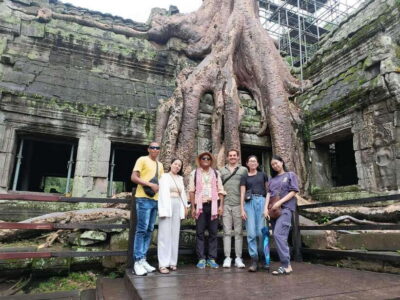
Here’s what you should expect: you’ll see the temple framed by trees and roots, with details of stonework partly swallowed by nature’s hold. The tour allots about an hour, which is enough to wander thoughtfully and then come back for the best photo spots when the light is kind.
This stop tends to be emotional for a lot of people because it feels alive. Not just because of greenery, but because the ruins are visually “active.” They look like they are still being discovered.
The Surprising Bonus Energy: Short Stops That Add up
A couple of the itinerary moments are quick, but that doesn’t make them filler.
There’s mention of a place the guide takes you to that most tourists never see, plus another “secret stop” that sets the tone for the day’s next adventure. The exact details aren’t spelled out in the provided description, but the pattern is clear: you’re not only hitting the obvious pinpoints. You’re also getting at least a couple of moments that feel more like guided discovery than checklist touring.
If you like tours that keep a bit of mystery, that’s one of the stronger benefits here.
Timing and Clothes: Small Rules That Make the Day Smoother
Angkor temple visits can have dress rules, and this tour flags them for you: to enter some temples, you have to wear clothes that cover your knees and shoulders. Bring something simple that meets the requirement without making you miserable in heat.
Also, wear flat shoes that are comfortable for walking. Angkor is uneven, dusty, and full of stairs and long stretches. If you’re thinking about flip-flops, don’t. You’ll regret it before the sun fully rises.
One more practical note: you’re encouraged to take a boxed breakfast from your hotel. The reason is practical: it gives you flexibility and also a chance to eat at a local cafe near Angkor Wat if you choose. That flexibility is a quiet quality-of-life upgrade on an early day.
Price and Value: $17 Plus the Real Temple Cost
The tour price is $17 per person, and it’s for an English speaking guide, an air-conditioned vehicle, and hotel pickup/drop-off, plus bottled water.
But you do need to budget for the main temple admission: Angkor Wat costs $37 per person and is not included. Other stops in the plan are listed with free admission in the schedule, so you’re not paying ticket-by-ticket across the entire day.
So your “real” cost is closer to $54 before any extras like food or optional souvenirs. That sounds like a jump, but it’s still decent value for an eight-hour day that includes sunrise timing, multiple major temple sites, and a guide who explains what you’re seeing. The small group size (max 10) also improves value because you’re not fighting the crowd or losing attention to translation gaps.
If you’re the type who loves temples but hates confusing self-guided logistics, this price structure often makes sense. If you’re comfortable navigating on your own and already have everything handled, you might find cheaper options. For most people, though, paying for early entry plus a good guide is the difference between a fun trip and a confusing one.
The Best Fit: Who Should Book This Sunrise Tour
This tour is a strong match if you:
- Want sunrise at Angkor Wat without dealing with timing chaos.
- Like structured sightseeing but still want time to look.
- Prefer small groups (max 10) over large buses.
- Appreciate when a guide helps you interpret carvings, layouts, and meaning.
In the reviews connected to this experience, people also highlight guide quality and support. Names mentioned include Nara, Raj, and Sim, and the overall theme is consistent: clear explanations, friendly guidance, and helpful touches like water and cold towels.
If you’re traveling with kids, the early start can be a challenge, but the guide and smaller group format can reduce stress. If you hate long walking days or stairs, you’ll want to think carefully, because you will climb and move around multiple temple areas.
Should You Book This Angkor Wat Sunrise Small Group Tour?
Book it if sunrise is your top priority and you want a smooth, guided day that connects Angkor Wat to Angkor Thom and Ta Prohm in a way that feels timed, not random.
Skip it or consider alternatives if:
- You don’t want to pay for Angkor Wat admission on top of the tour price.
- You’re not a fan of very early mornings.
- You prefer to roam at your own pace with zero structure.
My take: if you can handle a pre-dawn start, this is a very practical way to get the Angkor experience most people chase. Sunrise plus a smart route plus a guide who can make carvings and architecture click—that combo is hard to beat for the money.
FAQ
Is pickup available from hotels in Siem Reap?
Yes. The tour includes hotel pickup and drop-off, using an air-conditioned vehicle.
How long is the tour?
The duration is about 8 hours (approximately).
How much does the tour cost?
The tour price is $17.00 per person.
Do I need to pay an admission fee for Angkor Wat?
Yes. Angkor Wat admission is $37.00 per person and it is not included in the tour price.
Are the other temple stops free?
In the tour schedule you provided, several stops (Angkor Thom South Gate, Bayon Temple, Terrace of the Leper King, Terrace of the Elephants, and Ta Prohm) are marked as free admission.
Will I get an e-ticket link in advance?
Yes. Your tour guide will send you a link to purchase the temple entrance e-ticket days in advance.
What should I wear to enter the temples?
Some temples require clothes that cover your knees and shoulders. Bring something light that meets those rules.
What kind of shoes should I bring?
Wear flat shoes that are comfortable for walking.
How big is the group?
This tour has a maximum of 10 travelers.
What is the cancellation window?
Free cancellation is available up to 24 hours in advance for a full refund. If you cancel less than 24 hours before the start time, the amount paid is not refunded.
More Temple Circuits Around Siem Reap
- Angkor Wat Sunrise or Sunset Tour with Guide from Siem Reap
★ 5.0 · 12,109 reviews - Siem Reap: Angkor Wat: Small-Group Sunrise or Sunset Tour
★ 5.0 · 9,444 reviews - Siem Reap: Angkor Wat 2-Day Tour with Sunrise and Sunset
★ 4.9 · 4,429 reviews - Siem Reap: Full-Day Angkor Wat Guided Tour with Sunset
★ 4.9 · 3,803 reviews - Angkor Wat Sunrise tour with Small – Group and Guide tours
★ 5.0 · 3,655 reviews
Dawn and Dusk Over Angkor
- Angkor Wat Sunrise or Sunset Tour with Guide from Siem Reap
★ 5.0 · 12,109 reviews - Siem Reap: Angkor Wat: Small-Group Sunrise or Sunset Tour
★ 5.0 · 9,444 reviews - Sunset tour of Kampong Phluk stilts home village on the Tonle Sap
★ 5.0 · 4,865 reviews - Siem Reap: Angkor Wat 2-Day Tour with Sunrise and Sunset
★ 4.9 · 4,429 reviews - Siem Reap: Full-Day Angkor Wat Guided Tour with Sunset
★ 4.9 · 3,803 reviews
Angkor Wat, a Few More Ways In
- Angkor Wat Sunrise or Sunset Tour with Guide from Siem Reap
★ 5.0 · 12,109 reviews - Siem Reap: Angkor Wat: Small-Group Sunrise or Sunset Tour
★ 5.0 · 9,444 reviews - Siem Reap: Angkor Wat 2-Day Tour with Sunrise and Sunset
★ 4.9 · 4,429 reviews - Siem Reap: Full-Day Angkor Wat Guided Tour with Sunset
★ 4.9 · 3,803 reviews - Angkor Wat Sunrise tour with Small – Group and Guide tours
★ 5.0 · 3,655 reviews
Just Added: Fresh Siem Reap Tour Reviews


Angkor Wat Temple Tours, compared.
 ★ 5.0Angkor Wat Sunrise or Sunset Tour with Guide from Siem ReapFrom $1812,109 reviews
 ★ 5.0Angkor Wat: Small-Group Sunrise or Sunset TourFrom $159,444 reviews
 ★ 4.9Angkor Wat 2-Day Tour with Sunrise and SunsetFrom $344,429 reviews
 ★ 4.9Full-Day Angkor Wat Guided Tour with SunsetFrom $153,803 reviews
 ★ 5.0Angkor Wat Sunrise tour with Small – Group and Guide toursFrom $143,655 reviews
 ★ 5.0Angkor Wat Highlights and Sunrise Guided Tour from Siem ReapFrom $233,213 reviews
 ★ 5.0Angkor Wat Sunset Small Group Tour with Lunch IncludedFrom $203,059 reviews
 ★ 5.0Full-Day Angkor Wat Sunrise Private Tour with Guide from Siem ReapFrom $602,920 reviews