
Reviewed · ANGKOR WAT TEMPLE TOURS
Sunrise Angkor Wat, Angkor Thom Ancient Capital, Ta Promh
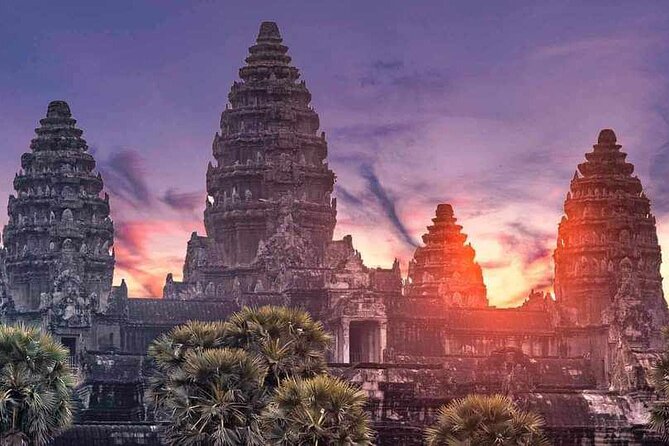
Angkor at sunrise changes everything. This tour hits three top temples before the day gets hot, with A/C transport, hotel pickup, and a licensed guide to make the stones make sense. I like that it balances big-photo moments with real explanations, from Angkor Wat’s original state to how Angkor Thom’s layout works. The main drawback is timing: you start at 4:30 am, and you’ll need the dress code and temple ticket plan down cold.
You’ll see Angkor Wat, the ancient capital of Angkor Thom, and the jungle-famous Ta Prohm with a schedule that respects your energy. I also like the practical extras in the vehicle—cold water, a fresh towel, and soft drinks—because that kind of help matters when you’re moving early and staying on your feet. The only real consideration is the entrance ticket: the tour price doesn’t include the temple admission fee, so budget for that on top.
In This Review
- Key things to know before you go
- Sunrise Angkor Wat: why that early start is the whole point
- Entering Angkor Wat with real context, not just photos
- Angkor Thom’s South Gate to Bayon: the parts you’ll actually remember
- Ta Prohm: seeing the jungle ruin the way it was found
- VIP A/C comfort: the practical side of an early temple day
- Price and value: $75 for the tour, plus the temple pass
- What to wear and how to keep the day smooth
- How the guide shapes your day (and why reviews keep naming them)
- Who this sunrise tour suits best
- Should you book this Sunrise Angkor Wat + Angkor Thom + Ta Prohm tour?
- FAQ
- What time does the Sunrise Angkor Wat tour start?
- How long is the tour?
- Is hotel pickup and drop-off included?
- Are temple entrance tickets included in the price?
- Is transportation provided, and is it air-conditioned?
- What’s included during the ride?
- What dress code do I need for the temples?
- Is this a private tour?
Key things to know before you go
- 4:30 am start so you can catch Angkor Wat before daytime heat and crowds
- Three temples, one efficient route, with a guide to connect the sites
- A/C vehicle plus cold drinks and towels, not just a sweaty van ride
- Licensed guide and escort/host to keep you oriented and informed
- Temple tickets are separate (day pass is listed as $37 USD per person)
- Dress code is strict: no shorts or sleeveless tops; knees and shoulders covered
Other ways to walk the great temple
- Angkor Wat Sunrise or Sunset Tour with Guide from Siem Reap★ 5.0 · 12,109 reviews
- Siem Reap: Angkor Wat: Small-Group Sunrise or Sunset Tour★ 5.0 · 9,444 reviews
- Siem Reap: Angkor Wat 2-Day Tour with Sunrise and Sunset★ 4.9 · 4,429 reviews
- Siem Reap: Full-Day Angkor Wat Guided Tour with Sunset★ 4.9 · 3,803 reviews
Sunrise Angkor Wat: why that early start is the whole point
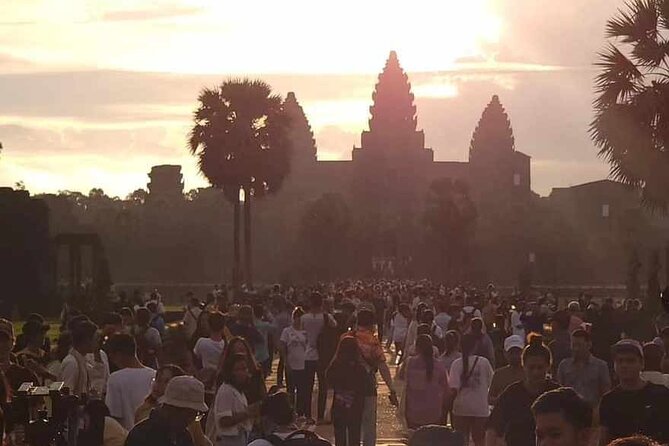
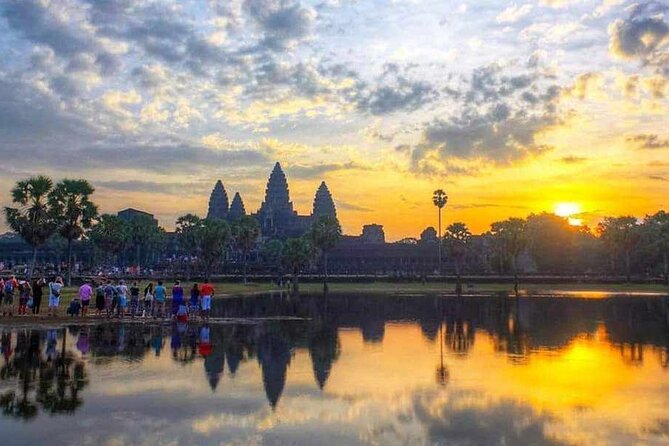
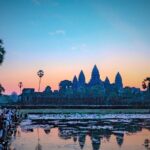
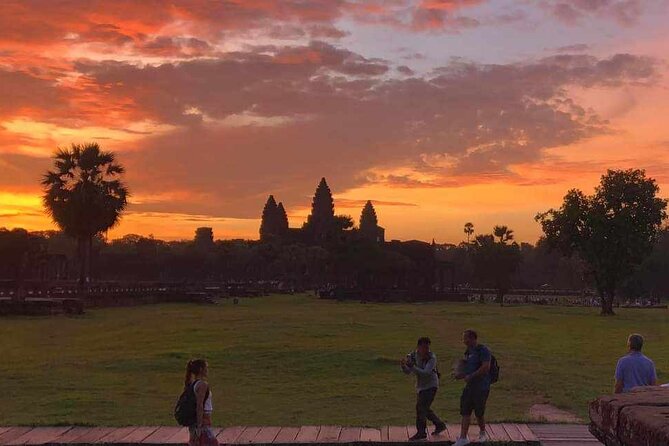
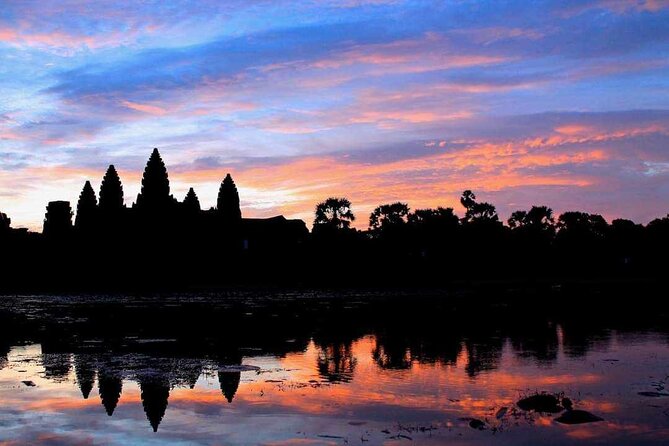
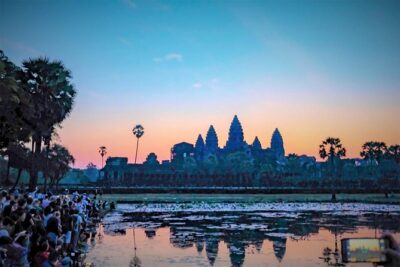
If you’ve seen Angkor photos, you already know the look. What you may not expect is how much the morning changes the experience. Starting at 4:30 am means you’re arriving while the site feels quieter and the light is softer. It’s the kind of timing that makes Angkor Wat feel less like a checklist and more like a living place.
This is also when your body has the best chance of enjoying long walks without feeling wrecked. Later, the combination of sun, humidity, and stone surfaces can turn even a short stop into a battle with heat. Here, the rhythm of the day is built to beat that.
One more benefit of going early: the guide can take time. When you’re not rushing to escape the heat, explanations land better. You get the big picture first, then the details.
Entering Angkor Wat with real context, not just photos
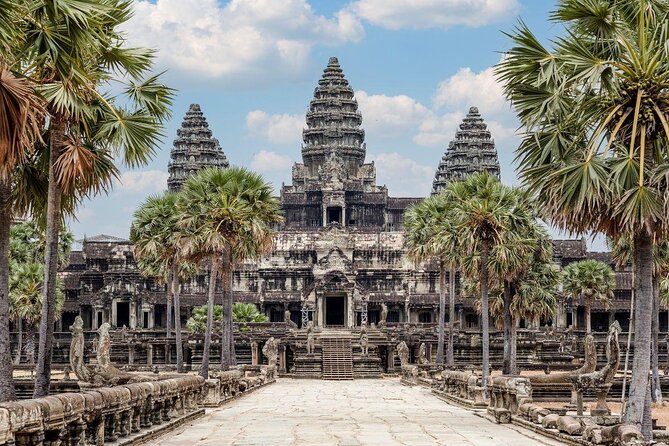
Angkor Wat is the headliner, and this tour gives it proper time: about 3 hours on site. You’re not just dropped off for a quick circuit. The guide focuses on key details, including what the temple looked like in its original state—a perspective that helps you understand what you’re seeing now.
Angkor Wat is described as the masterpiece of Khmer architecture and art, built by King Suryavarman II in the early-mid 12th century. It’s also dedicated to the Hindu god Vishnu. Those aren’t trivia words; they change how you read the building. You start to see the plan and symbols as intentional, not random stonework.
A practical tip: Angkor Wat is huge. Even with a guide, there’s a lot to take in. Wear shoes you can rely on for uneven stone. And if you like photography, this is when you can shoot without fighting the harsh sun and crowds that pile in later.
You’ll also want to plan for tickets. Admission for the temples is not included in the tour price. The day pass is listed as $37 USD per person, so have that figured out before you get to the gate.
Angkor Thom’s South Gate to Bayon: the parts you’ll actually remember
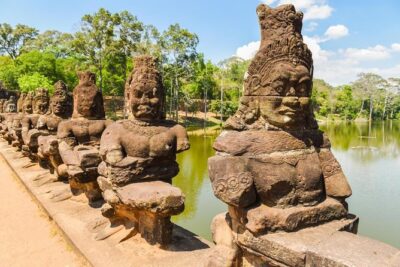
After Angkor Wat, you shift to the ancient capital: Angkor Thom. This stop is packed, but the strategy is smart. You start with the South Gate for photos, then move toward Bayon Temple.
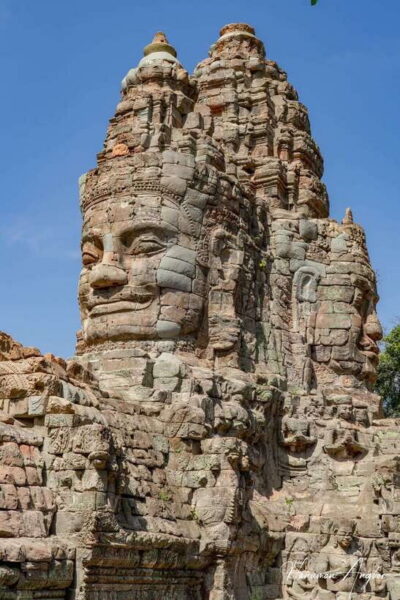
Bayon is famous for its 54 towers and the expression people associate with its faces. The guide frames those faces as the compassionate Boddhisattva. That detail matters because it gives the towers a meaning beyond just being striking visuals.
From Bayon, you’re able to connect multiple highlights rather than treating each temple like a standalone postcard:
- Baphuon, described as a nearby temple-mountain
- Royal Enclosure, including Phimeanakas
- The Elephants Terrace
- The Terrace of the Leper King
Some of these names sound intimidating, but with a guide walking you through the layout, they become easier to place. Even if you don’t memorize everything, you’ll leave with a mental map: gate, main faces, royal spaces, and the terraces that show how power and ceremony were staged.
One caution: there’s limited time for photo stops in the middle of a big day. This tour notes a short time at the South Gate for photos along the way. If you’re the type who needs slow wandering for every corner, you may want to keep your priorities tight and save extra time for Ta Prohm later in the day.
Ta Prohm: seeing the jungle ruin the way it was found
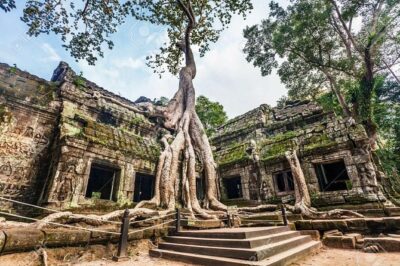
The last major stop is Ta Prohm, one of the most recognizable temples in the park. It’s built from the mid-12th to early 13th centuries, and what makes it special is that it was left largely as found.
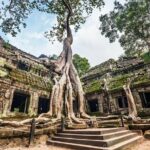
That’s why Ta Prohm hits differently. Instead of a pristine restored look, you get an active sense of decay and recovery—temple stone wrapped with tree roots, walls partly crumbling, jungle vines and trees shaping the ruins. The guide’s presence helps you notice the difference between what’s structural and what’s swallowed by vegetation, which turns the site from scenic to understandable.
This stop is shorter—about 1 hour—which is usually enough for the classic views and a calm walk through the most dramatic sections. The tradeoff is that Ta Prohm can make you want to keep going. If you’re the kind of traveler who takes your time at one place and forgets the rest, you’ll probably feel a little rushed here. Still, one hour at this temple often feels like the right balance after a long morning.
Photo note: Ta Prohm is busy in its own way, even when the day is still cool. Bring a lens or phone settings that handle mixed shade from overhanging leaves, and expect darker interiors where roots and shadows dominate.
Chasing the light? More dawn and dusk runs

VIP A/C comfort: the practical side of an early temple day
One of the best things about this tour is that comfort is treated as part of the experience, not an afterthought. You travel between dispersed temples in an A/C car, and you get high-quality cool water, a fresh towel, and soft drinks.
That’s not just “nice.” It affects how long you can enjoy your day. Sunrise tours can turn into a dehydration headache fast, especially when you’re outside and moving early. The water and towels help you reset between stops, and the A/C ride lets you recover without waiting around in the street.
The reviews back this up with specific guide behavior. Guides such as Pierre (also referenced with Veasna as a guide name in messages) are described as offering bottled water to help everyone stay hydrated. Even in low season, where you might sometimes have quieter spaces, that attention to comfort still makes the day easier.
You also travel with a tour escort/host and a licensed local guide. A licensed guide matters at Angkor because there’s a lot of meaning hiding in the stone. A good guide won’t just point. They connect the site to how Khmer rulers planned, built, and used temples as a statement.
This tour is also private—meaning only your group participates. That can change the vibe. You’re less likely to feel squeezed by a crowd, and you can ask the guide questions without shouting over everyone.
Price and value: $75 for the tour, plus the temple pass
The listed price is $75.00 per person for the tour itself, running roughly 6 to 8 hours. That includes the licensed guide, air-conditioned transport, pickup and drop-off in Siem Reap, plus the sunrise service for early departure.
But the temples cost extra. The day admission ticket is listed as $37.00 USD per person (and children under 12 are not charged). The tour itself states admission tickets are not included, so you should plan for the total.
In value terms, here’s what you’re really paying for:
- You get a guide with enough time at each stop to explain what you’re seeing
- You get air-conditioned transport and refresh items (water, towels, soft drinks)
- You get hotel pickup and a structured itinerary that fits sunrise timing
If you were to self-drive or hire a tuk-tuk for an early morning, you’d likely save money on the guide component, but you’d lose the interpretive help. At Angkor, interpretation is half the value. The other half is logistics: sunrise timing and moving between dispersed temples without burning your energy.
What to wear and how to keep the day smooth
The dress code is not casual. You’ll need to cover knees and shoulders for both men and women. That means no shorts and no sleeveless tops. The tour also notes that the dress code is formal and that you may be refused entry if you don’t meet the requirement.
So pack or plan accordingly. Lightweight long pants and a breathable shirt help a lot in Cambodia’s heat. Choose fabric you can stand in for hours without feeling sticky or miserable. You don’t want to trade one problem for another at 4:30 am.
Also think about your morning routine. A sunrise tour starts early enough that you’ll want breakfast strategies ready before pickup. The itinerary summary doesn’t mention meals, so don’t assume there’s lunch provided. Bring a small plan for energy outside of the soft drinks included in the car.
Finally, confirm ticket handling. The tour notes mobile ticket, which is helpful if it reduces time at gates. Still, follow the instructions you receive at booking so you don’t arrive unprepared.
How the guide shapes your day (and why reviews keep naming them)
Angkor can be overwhelming. Thousands of carvings, multiple rulers, and temple changes across centuries. A good guide helps you spot patterns and understand why a temple was built, not just what it looks like.
This tour is consistently praised for guide quality. Names that show up in the feedback include Pierre, Pedro, and Veasna (Pedro). One review notes that Pierre is the best guide in Angkor Wat and another says he speaks very good French, is kind, and is professional. Another set of comments highlights attentive explanations and a helpful, respectful approach from Veasna (Pedro).
There’s also mention of comfort care: bottled water during the day to keep everyone hydrated. That’s a small detail, but on an all-day sunrise schedule, it’s the difference between enjoying the temples and counting minutes until you can sit down.
The most useful part of guide work on this itinerary is how it connects sites:
- Angkor Wat’s original state and meaning
- Angkor Thom’s gate-to-faces-to-royal-terraces route
- Ta Prohm’s “left as found” jungle ruin effect
If your goal is first-time confidence—knowing where you are and what you’re looking at—this structure supports that.
Who this sunrise tour suits best
This tour fits especially well if you:
- Are a first-time visitor and want a clear, focused route across major sites
- Care about history and meaning, not just taking pictures
- Prefer air-conditioned travel and practical comfort
- Like the idea of beating heat and crowds with a pre-dawn start
- Want a private experience with your group rather than sharing space with strangers
It may be less ideal if you:
- Hate early mornings and struggle with 4:30 am departures
- Need long, slow unstructured time inside each temple (because the schedule is efficient)
- Forget to plan for the separate temple admission ticket
Should you book this Sunrise Angkor Wat + Angkor Thom + Ta Prohm tour?
If you want Angkor at its most watchable time of day, I think this is a strong choice. The itinerary makes sense: start early at Angkor Wat, move into the capital story at Angkor Thom, then finish with the cinematic ruin of Ta Prohm. The A/C ride and refresh items are exactly what you want on a long day that starts before most people are awake.
Book it if sunrise timing matters to you and you’d rather pay for guidance than figure it all out on your own. Skip it only if the early departure is a deal-breaker or if you prefer a slower, more open temple day with fewer planned stops.
FAQ
What time does the Sunrise Angkor Wat tour start?
The tour starts at 4:30 am.
How long is the tour?
The experience runs about 6 to 8 hours.
Is hotel pickup and drop-off included?
Yes. Pickup and drop-off in Siem Reap are included.
Are temple entrance tickets included in the price?
No. Temple entrance tickets are not included. A day ticket is listed as $37 USD per person, and children under 12 are not charged.
Is transportation provided, and is it air-conditioned?
Yes. You’ll travel in an A/C car between the temples.
What’s included during the ride?
You get cool water, a fresh towel, and soft drinks during transportation.
What dress code do I need for the temples?
You must cover knees and shoulders. No shorts and no sleeveless tops are allowed, and the tour notes a formal dress code. Entry may be refused if you don’t comply.
Is this a private tour?
Yes. It’s private, and only your group participates.
Through Angkor Thom to Bayon
- Siem Reap Tour: Angkor Wat Sunrise, Bayon, Ta Prohm, Banteay Srei
★ 5.0 · 931 reviews - Angkor Wat Private Driver Tours to Angkor Wat Sunrise, Angkor Thom & Ta Prohm
★ 5.0 · 98 reviews - Angkor Wat Sunrise and Angkor Thom Sunset Tour
★ 5.0 · 89 reviews - Angkor Wat, Angkor Thom Ancient Capital, Ta Promh Temple
★ 5.0 · 85 reviews - Private Temples Guided Tour (Angkor Wat, Ta Prom & Angkor Thom)
★ 5.0 · 75 reviews
Dawn and Dusk Over Angkor
- Angkor Wat Sunrise or Sunset Tour with Guide from Siem Reap
★ 5.0 · 12,109 reviews - Siem Reap: Angkor Wat: Small-Group Sunrise or Sunset Tour
★ 5.0 · 9,444 reviews - Sunset tour of Kampong Phluk stilts home village on the Tonle Sap
★ 5.0 · 4,865 reviews - Siem Reap: Angkor Wat 2-Day Tour with Sunrise and Sunset
★ 4.9 · 4,429 reviews - Siem Reap: Full-Day Angkor Wat Guided Tour with Sunset
★ 4.9 · 3,803 reviews
Angkor Wat, a Few More Ways In
- Angkor Wat Sunrise or Sunset Tour with Guide from Siem Reap
★ 5.0 · 12,109 reviews - Siem Reap: Angkor Wat: Small-Group Sunrise or Sunset Tour
★ 5.0 · 9,444 reviews - Siem Reap: Angkor Wat 2-Day Tour with Sunrise and Sunset
★ 4.9 · 4,429 reviews - Siem Reap: Full-Day Angkor Wat Guided Tour with Sunset
★ 4.9 · 3,803 reviews - Angkor Wat Sunrise tour with Small – Group and Guide tours
★ 5.0 · 3,655 reviews
Just Added: Fresh Siem Reap Tour Reviews



Angkor Wat Temple Tours, compared.
 ★ 5.0Angkor Wat Sunrise or Sunset Tour with Guide from Siem ReapFrom $1812,109 reviews
 ★ 5.0Angkor Wat: Small-Group Sunrise or Sunset TourFrom $159,444 reviews
 ★ 4.9Angkor Wat 2-Day Tour with Sunrise and SunsetFrom $344,429 reviews
 ★ 4.9Full-Day Angkor Wat Guided Tour with SunsetFrom $153,803 reviews
 ★ 5.0Angkor Wat Sunrise tour with Small – Group and Guide toursFrom $143,655 reviews
 ★ 5.0Angkor Wat Highlights and Sunrise Guided Tour from Siem ReapFrom $233,213 reviews
 ★ 5.0Angkor Wat Sunset Small Group Tour with Lunch IncludedFrom $203,059 reviews
 ★ 5.0Full-Day Angkor Wat Sunrise Private Tour with Guide from Siem ReapFrom $602,920 reviews
Browse the lists this tour appears in