
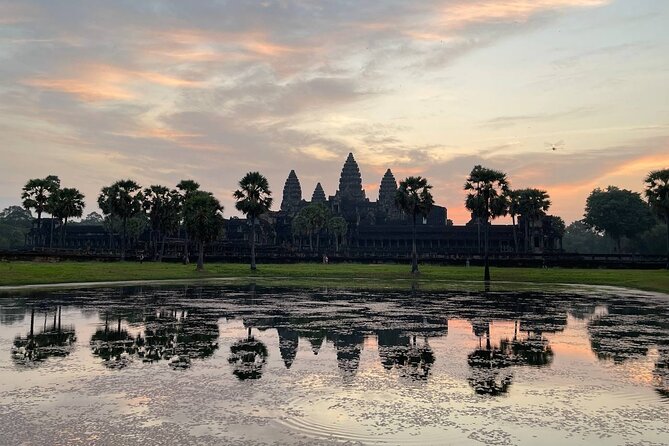
Reviewed · ANGKOR SUNRISE & SUNSET TOURS
Sunrise Tour of Angkor Temples from Siem Reap
Sunrise in Angkor feels like a reset button. This sunrise-first Angkor loop from Siem Reap hits the temple when the crowds are still asleep, and a sharp English-speaking guide (often Mr. Tann) turns the stonework into a story. The tradeoff is timing: you leave your hotel around 4:00–4:30am, and the $37 temple pass is paid separately from the $26 tour price.
I also like the way the day is paced, especially with driver Pan and a small group (up to 15), so you can move at a human speed and still catch the key sights. If you’re mainly hunting “checklist temples,” you might find it a little too guided—but if you want meaning plus great photos, it’s a very solid deal.
In This Review
- Key things to know before you go
- Sunrise departure from Siem Reap: what “4:00am” really means
- Angkor Wat at first light: photos, meaning, and practical navigation
- Ta Prohm and Elephant Terrace: the jungle-temple vibe in real life
- Angkor Thom and Bayon Temple: a maze built for slow looking
- Price and value: $26 sounds low, but here’s the real total
- Tour pace, group size, and why your guide matters
- What’s included vs. what to budget for (and what to pack)
- Weather, drones, and respectful rules at Angkor
- Who this sunrise Angkor tour fits best
- Should you book this sunrise tour?
- FAQ
- What time does pickup usually happen?
- How long is the tour?
- Is hotel pickup and drop-off included?
- Are temple entrance fees included in the $26 price?
- Can I buy the temple pass the day of the tour?
- Does the tour include breakfast or lunch?
- What temples and areas are visited?
- What’s the dress code?
- Are drones allowed?
- Is there a minimum age?
- Is there free cancellation?
Key things to know before you go
- Angkor Wat at first light: you’re there early enough for golden dawn sky and calm viewing
- Professional English guide (Mr. Tann): history and practical temple navigation built into the tour
- Ta Prohm + Elephant Terrace: the movie-famous roots of the jungle-choked temples
- Angkor Thom on the way to Bayon: you pass through the capital city zone en route
- Small group size: up to 15 travelers, which helps keep the morning smooth
- Temple fees are separate: $37 per person for the sites on the itinerary, paid in advance or day-of
Chasing the light? More dawn and dusk runs
- Angkor Wat Sunrise or Sunset Tour with Guide from Siem Reap★ 5.0 · 12,109 reviews
- Siem Reap: Angkor Wat: Small-Group Sunrise or Sunset Tour★ 5.0 · 9,444 reviews
- Sunset tour of Kampong Phluk stilts home village on the Tonle Sap★ 5.0 · 4,865 reviews
- Siem Reap: Angkor Wat 2-Day Tour with Sunrise and Sunset★ 4.9 · 4,429 reviews
Sunrise departure from Siem Reap: what “4:00am” really means
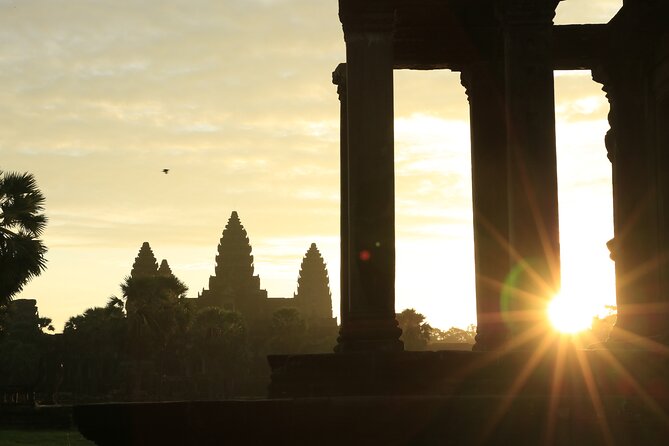
This tour is designed around one goal: see Angkor Wat before the day gets loud. You’ll be picked up from your hotel around 4:00am to 4:30am, then transported to the Angkor area. The total tour time runs about 7 to 8 hours, so you’re trading a long morning for a quieter, more atmospheric temple experience.
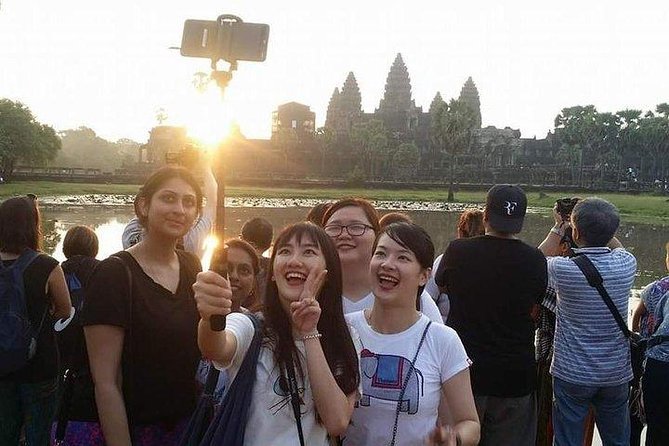
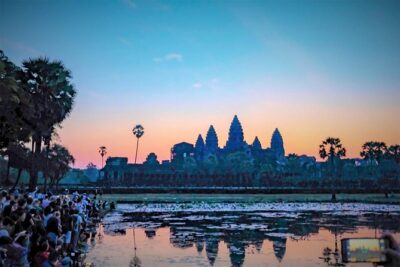
Here’s why the early start matters. Angkor Wat never stops being impressive, but morning changes the feel. The light hits differently, shadows stretch across carvings, and the whole complex seems less like an attraction and more like a living sacred space. Also, being there early buys you space—for photos, for walking, and for just standing there without elbow-to-elbow crowds.
The only real downside is obvious and worth planning for: you’ll be up before your body is fully awake. If you’re the type who hates mornings, bring a “get-through-it” mindset: water ready, camera battery charged, and no plan to sleep in afterward.
Angkor Wat at first light: photos, meaning, and practical navigation
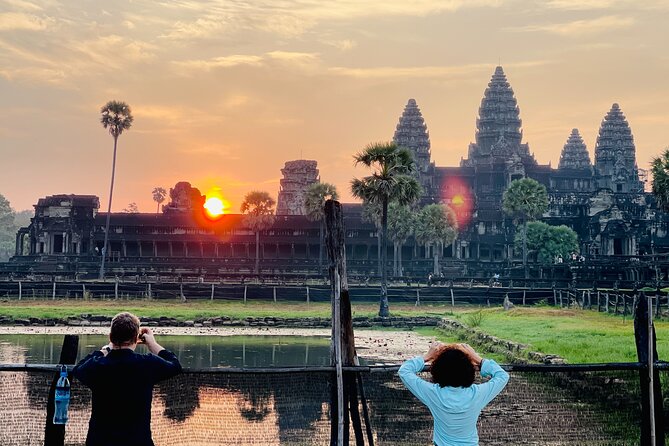
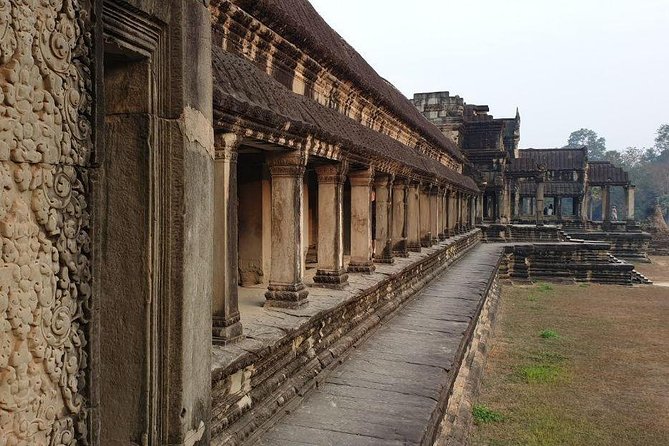
Angkor Wat is the star of the show, and this tour treats it that way. After you arrive early, you spend about 3 hours 30 minutes at the complex area with your guide.
You’ll learn why Angkor Wat mattered historically and religiously, not just what you’re looking at. That context makes a difference. Instead of seeing random bas-reliefs, you start noticing how the layout and symbolism point to the temple’s role in belief and state power. It’s the kind of explanation that helps you “read” the stonework as you walk.
You’ll also get time for photos right when the sky is warming up. Morning backlight is the big draw. Even if you’re not a serious photographer, you’ll likely appreciate it: bright enough for clear detail, but soft enough to avoid the harsh midday look that flattens carvings.
Two practical notes that will help your experience:
- Dress matters: shoulders and knees should be covered. Plan to use the right scarf/shawl if you need one—there’s a specific note that only a real dress scarf is acceptable.
- Comfort beats speed: you’ll be moving in the pre-dawn hours, then again later. Wear shoes you can walk in for a few hours without pain.
Ta Prohm and Elephant Terrace: the jungle-temple vibe in real life
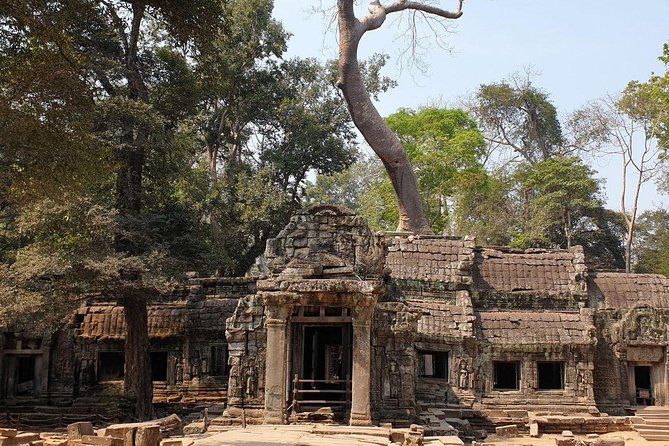
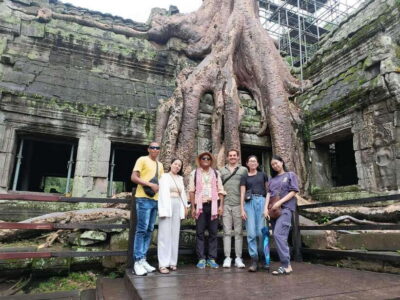
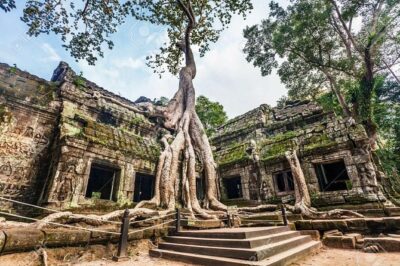
After Angkor Wat, the tour shifts from “classic symmetry” to “nature taking back the world.” You’ll continue to Ta Prohm, a temple made famous by the movie The Tomb Raider. That pop-culture link is real, but the best part is how the place feels before you even start explaining it—roots, stone, and shadows work together in a way that’s hard to replicate anywhere else.
Your time at Ta Prohm is about 2 hours, and the pace here is usually a balancing act: enough time to see it well, not so much that your morning fatigue catches up. A useful detail is that the tour also includes a meal stop at a local restaurant lasting about 1 hour. That’s not just a “we fed you” perk—it’s smart logistics. It breaks up the day and keeps you from turning cranky once the heat starts climbing.
You’ll also see Elephant Terrace as part of the Angkor Wat-to-Ta Prohm stretch. It’s one of those places where your brain starts comparing carvings and layout across temples. If you enjoy noticing details—what’s repeated, what’s worn, what’s preserved—this is a good segment.
One thing to watch: you’re going from early-calm Angkor Wat into a temple site where it’s easy to slow down and get distracted by your own photos. That’s fun, but keep an eye on timing so you don’t miss the guide’s explanations.
Angkor Thom and Bayon Temple: a maze built for slow looking
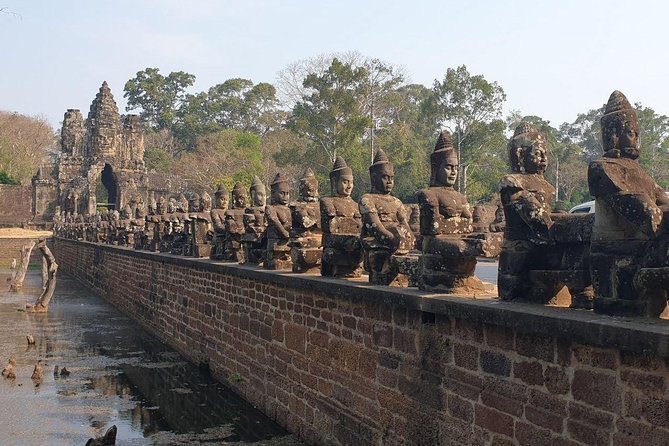
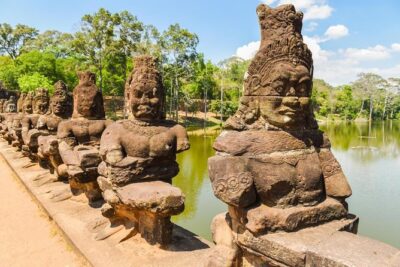
From Ta Prohm, you’ll travel toward Bayon Temple, passing through Angkor Thom City along the way. Angkor Thom matters because it isn’t just “a stop on the route.” It’s the setting for what Bayon represents—an entire capital zone, not just a single monument.
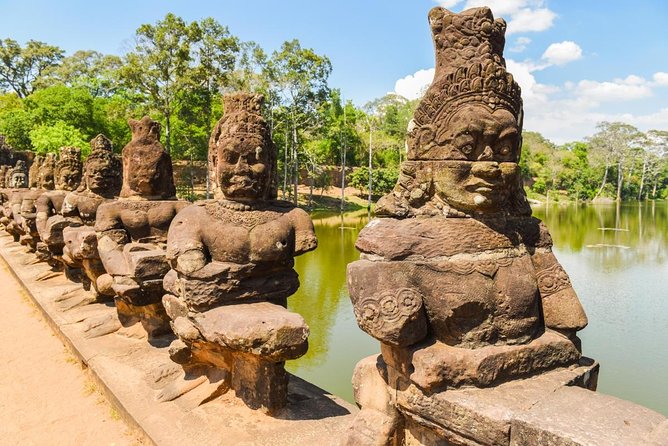
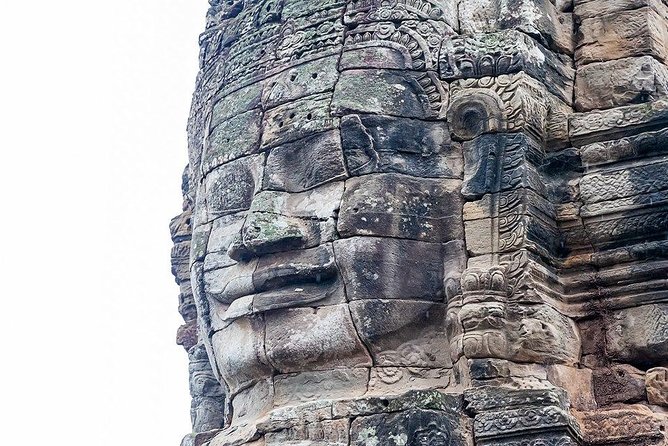
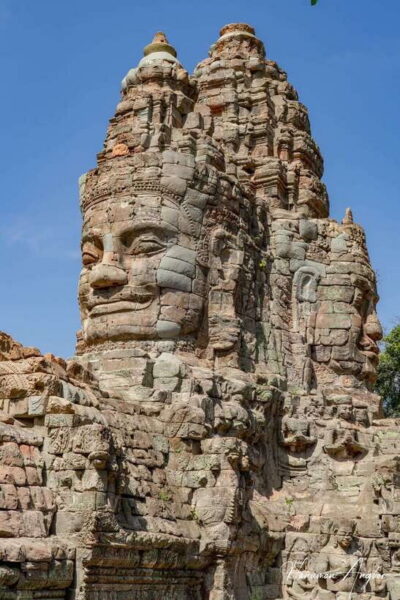
Bayon is described as compact and easy to enter in any order since it doesn’t have the surrounding wall that some other temples do. What that means for your experience: you can move through the inner areas without feeling trapped at the perimeter. The inner spaces can feel maze-like, with narrow corridors and smaller chambers. If you like getting a little lost (in a good way), Bayon delivers.
Your time here is about 1 hour. That’s enough to see the key features and absorb the unique “face” perspective Bayon is known for, without dragging you through corridors for hours. Also, because Bayon is compact, it works well if you’re traveling with mixed ages or energy levels—everyone can find their own walking pace.
More temple circuits, set side by side


Price and value: $26 sounds low, but here’s the real total
The headline price is $26 per person, and for that you get:
- a professional English-speaking tour guide
- air-conditioned transportation
- sightseeing as specified
- free hotel pickup and drop-off in Siem Reap city hotels
- bottled water
That’s a lot bundled for a morning tour. The big catch is the temple pass: $37 per person is not included, and it covers all temples on the itinerary. You can also accept visa cards, and it’s available to buy on the day of the tour just before sunrise.
So the practical “all-in” number is closer to about $63 before tips and meals (and any other personal spending). Even then, it can still be good value, because early tours at Angkor can be expensive in time and effort if you try to DIY transportation and timing. The guide helps you avoid wasted walking and gets you through the key sites in a structured way.
Meals are not included (breakfast and lunch aren’t covered), so you’ll rely on the included restaurant meal during the Ta Prohm segment and plan for the rest of your day. If your hotel includes breakfast, you can request a breakfast pack and enjoy it after sunrise at Angkor Wat. That’s a smart little hack to reduce the “empty stomach panic” that can hit during early departures.
Tour pace, group size, and why your guide matters
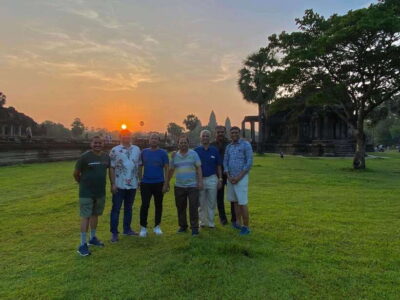
This runs as a group tour but capped at 15 travelers, which is a big difference from the huge bus crowds that can make temples feel like airports. Smaller groups usually mean:
- fewer stopping-and-starting delays
- more time for questions
- a better chance the guide can adjust pacing
In particular, the tour is associated with guides like Mr. Tann and drivers such as Pan, who are described as accommodating and good at matching the visit speed to the group. That doesn’t sound glamorous, but it changes everything in practice. Angkor tours live and die by pacing. Too fast and you miss details; too slow and you get cooked by the later heat.
Also, your guide’s English matters here. You’re not just passing time—you’re learning the religious and historic significance behind what you’re seeing. A good explanation can make you care more about what you thought you already knew.
What’s included vs. what to budget for (and what to pack)
Included you’ll generally be set with transport, guide, bottled water, and the hotel pickup/drop-off. What you should budget or plan around:
- Temple entrance fees: $37 per person (paid separately; covers the itinerary temples)
- Breakfast and drinks: not included, with one exception option via breakfast packs if your hotel provides breakfast
- Lunch: not included as a package, but there’s a meal stop at a local restaurant for about an hour during the route
- Other expenses and tips
- Travel insurance isn’t listed as included
Packing tips based on what the tour requires:
- Dress for temples: cover shoulders and knees. Bring a scarf if you have one that meets the standard (and note that only a real dress scarf is allowed)
- Comfortable walking shoes: the temples involve lots of uneven surfaces and stairways
- Camera battery and water: bottled water is included, but having your own comfort items helps
- Drone planning: drones are not allowed at the temple. Permission is only mentioned in the context of asking APSARA, so assume you should not rely on drone use for this tour
Weather, drones, and respectful rules at Angkor
Angkor works best with good weather. This experience requires it, and if conditions aren’t favorable, you’ll be offered a different date or a full refund. That means it’s worth checking your forecast the day before and not assuming sunshine on schedule.
Drone rules are straightforward: flying drones at the temple do not allow. If you want to take that risk for yourself (don’t), the only path is asking permission from APSARA. The safer move is to travel drone-free and focus on photos the old-fashioned way.
Finally, be ready to follow temple etiquette. Dress is one part, and it’s strictly tied to shoulders and knees. This isn’t a place for casual clothing. It’s also why the scarf instruction is so specific.
Who this sunrise Angkor tour fits best
This tour is a great match if you:
- want Angkor Wat at golden dawn rather than mid-morning chaos
- like having an English-speaking guide explain what you’re seeing
- prefer a small group (up to 15) with a reasonable pace
- want key highlights in one long, well-structured morning/early afternoon
It may feel less ideal if you:
- hate early starts and already struggle with 4:00–4:30am departures
- only care about quick photo angles and don’t want guided context
- are trying to avoid any extra costs beyond the $26 headline price, since the $37 temple pass is separate
Should you book this sunrise tour?
Book it if you want the classic Angkor feeling—early light, guided storytelling, and a tight route that still gives you time to look. The hotel pickup, air-conditioned transport, and bottled water reduce friction on a day that starts too early for most people.
I’d skip it or compare alternatives if you strongly dislike early mornings or if you’re trying to keep costs minimal beyond the advertised tour fee. The entrance pass ($37) and your breakfast/drink needs are real budget items.
If sunrise is your top priority—and it should be for Angkor—this one is a sensible way to get there, stay organized, and see Angkor Wat, Ta Prohm, Elephant Terrace, and Bayon Temple without wasting half your day figuring out logistics.
FAQ
What time does pickup usually happen?
Pickup from your hotel is typically between 4:00am and 4:30am.
How long is the tour?
The duration is about 7 to 8 hours.
Is hotel pickup and drop-off included?
Yes. Free pickup and drop-off are included for city hotels in Siem Reap.
Are temple entrance fees included in the $26 price?
No. Temple entrance fees are $37 per person and cover all the temples in the itinerary.
Can I buy the temple pass the day of the tour?
Yes. The temple entrance fee is available to purchase on the day of the tour just before sunrise, and it accepts visa cards.
Does the tour include breakfast or lunch?
Breakfast is not included. A meal at a local restaurant is included during the route and lasts about 1 hour. Drinks are not included.
What temples and areas are visited?
You’ll visit Angkor Wat, Ta Prohm (including the Elephant Terrace area as part of the route), and Bayon Temple, with travel through Angkor Thom City on the way.
What’s the dress code?
You need respectful dress with shoulders and knees covered. A real dress scarf is required and only that type is allowed.
Are drones allowed?
Drones are not allowed at the temples. Permission is only referenced in the context of asking APSARA.
Is there a minimum age?
Yes. The minimum age is 5 years.
Is there free cancellation?
Free cancellation is available. You can cancel up to 24 hours in advance for a full refund.
More Tour Reviews in Siem Reap
- Angkor Wat Sunrise or Sunset Tour with Guide from Siem Reap
★ 5.0 · 12,109 reviews - Siem Reap: Angkor Wat: Small-Group Sunrise or Sunset Tour
★ 5.0 · 9,444 reviews - From Siem Reap: Kampong Phluk Floating Village Tour by Boat
★ 4.9 · 6,979 reviews - Sunset tour of Kampong Phluk stilts home village on the Tonle Sap
★ 5.0 · 4,865 reviews - Siem Reap: Angkor Wat 2-Day Tour with Sunrise and Sunset
★ 4.9 · 4,429 reviews
More Temple Circuits Around Siem Reap
- Angkor Wat Sunrise or Sunset Tour with Guide from Siem Reap
★ 5.0 · 12,109 reviews - Siem Reap: Angkor Wat: Small-Group Sunrise or Sunset Tour
★ 5.0 · 9,444 reviews - Siem Reap: Angkor Wat 2-Day Tour with Sunrise and Sunset
★ 4.9 · 4,429 reviews - Siem Reap: Full-Day Angkor Wat Guided Tour with Sunset
★ 4.9 · 3,803 reviews - Angkor Wat Sunrise tour with Small – Group and Guide tours
★ 5.0 · 3,655 reviews
Dawn and Dusk Over Angkor
- Angkor Wat Sunrise or Sunset Tour with Guide from Siem Reap
★ 5.0 · 12,109 reviews - Siem Reap: Angkor Wat: Small-Group Sunrise or Sunset Tour
★ 5.0 · 9,444 reviews - Sunset tour of Kampong Phluk stilts home village on the Tonle Sap
★ 5.0 · 4,865 reviews - Siem Reap: Angkor Wat 2-Day Tour with Sunrise and Sunset
★ 4.9 · 4,429 reviews - Siem Reap: Full-Day Angkor Wat Guided Tour with Sunset
★ 4.9 · 3,803 reviews
Just Added: Fresh Siem Reap Tour Reviews


Angkor Sunrise & Sunset Tours, compared.
 ★ 5.0Angkor Wat Sunrise or Sunset Tour with Guide from Siem ReapFrom $1812,109 reviews
 ★ 5.0Angkor Wat: Small-Group Sunrise or Sunset TourFrom $159,444 reviews
 ★ 5.0Sunset tour of Kampong Phluk stilts home village on the Tonle SapFrom $214,865 reviews
 ★ 4.9Angkor Wat 2-Day Tour with Sunrise and SunsetFrom $344,429 reviews
 ★ 4.9Full-Day Angkor Wat Guided Tour with SunsetFrom $153,803 reviews
 ★ 5.0Angkor Wat Sunrise tour with Small – Group and Guide toursFrom $143,655 reviews
 ★ 5.0Angkor Wat Highlights and Sunrise Guided Tour from Siem ReapFrom $233,213 reviews
 ★ 5.0Angkor Wat Sunset Small Group Tour with Lunch IncludedFrom $203,059 reviews