
Reviewed · ANGKOR TEMPLE TOURS
Two Days Angkor Historical and Kulen Mountain Waterfall
Angkor in two days sounds wild, but it works. You’ll hit Angkor Wat and the face-filled Angkor Thom zone, then swap temple stones for Phnom Kulen’s waterfall country. It’s one of those trips where the schedule matters, because timing at sunrise/sunset and the order of sites can make the whole day feel smoother.
I like this plan because it pairs the main “wow” temples with a smart geographic flow: South Gate and Bayon faces first, then Ta Prohm’s jungle mood, then a second day that’s more about carvings and nature. I also like that you’re not stuck figuring out logistics—air-conditioned vehicle, English-speaking guide, parking fees handled, and pickup offered so you can focus on photos and not paperwork.
One drawback to think about: temple and Kulen tickets aren’t included, so you’ll need to plan for separate entry costs on top of the $150 tour price. Also, it’s a busy couple of days with real walking and heat, so comfortable shoes aren’t optional.
In This Review
- Key things I’d watch for (before you book)
- Price and Logistics: what $150 per person really buys
- Day 1 in Angkor: South Gate to sunset without wasting daylight
- Bayon, Baphoun, and Ta Prohm: two different kinds of wow
- Srah Srang: the quick stop that adds variety
- Dinner and shows at Kulen II: optional, but timed well
- Day 2 travel to Banteay Srei: carvings first, crowd pace second
- Phnom Kulen National Park: reclining Buddha, river carvings, and waterfall time
- What the English guide and air-conditioned vehicle do for you
- Pacing tips so you don’t feel like a walking battery
- Who this tour is best for (and who should think twice)
- Should you book this two-day Angkor and Kulen tour?
- FAQ
- What is included in the $150 per person price?
- Are temple tickets included?
- Is Kulen entry included?
- Does the tour include meals?
- Is pickup from your inn included?
- Can I cancel for a full refund?
Key things I’d watch for (before you book)
- Dusk at Bakheng or Pre Rup: the plan builds in a sunset moment, which is when Angkor starts feeling most magical
- A full Angkor Thom circuit: South Gate, Bayon, Baphuon, Elephant Terrace, King’s Palace zone, Phimean Akas, and more in one go
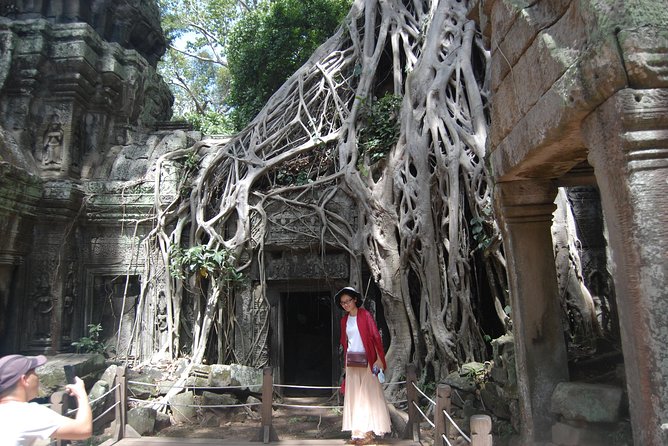
- Ta Prohm’s jungle feel: you get dedicated time for the tree roots and big-photo angles
- Banteay Srei + Phnom Kulen on Day 2: you’re not just repeating Angkor; you’re switching to carvings and waterfalls
- Tickets are separate: temple admission and Kulen entry aren’t part of the base price
- Dinner with shows is optional: there’s a well-timed evening buffet suggestion at Kulen II
More temple circuits, set side by side
- Angkor Wat Sunrise or Sunset Tour with Guide from Siem Reap★ 5.0 · 12,109 reviews
- Siem Reap: Angkor Wat: Small-Group Sunrise or Sunset Tour★ 5.0 · 9,444 reviews
- Siem Reap: Angkor Wat 2-Day Tour with Sunrise and Sunset★ 4.9 · 4,429 reviews
- Siem Reap: Full-Day Angkor Wat Guided Tour with Sunset★ 4.9 · 3,803 reviews
Price and Logistics: what $150 per person really buys
At $150 per person for about two days, the value comes from the setup: air-conditioned vehicle, private transportation, parking fees, and an English-speaking guide. You’re also traveling as a private tour/activity, meaning it’s just your group—not a random mix of strangers hopping on and off. That matters in Angkor, where you don’t want to lose time to confusion.
Two more small but important points:
- Pickup is offered, and the tour uses a mobile ticket for the experience itself. In plain terms: getting from your hotel to the sights is handled.
- Meals are not included, so you’ll want to plan for lunch breaks during the day and any evening dinner on your own schedule.
The “gotcha” is simple: temple tickets aren’t included, and the Kulen ticket is also listed as not included. That doesn’t make the tour bad—it just means the headline price isn’t the whole budget. If you hate surprise add-ons, set aside money for admissions before you go.
Day 1 in Angkor: South Gate to sunset without wasting daylight
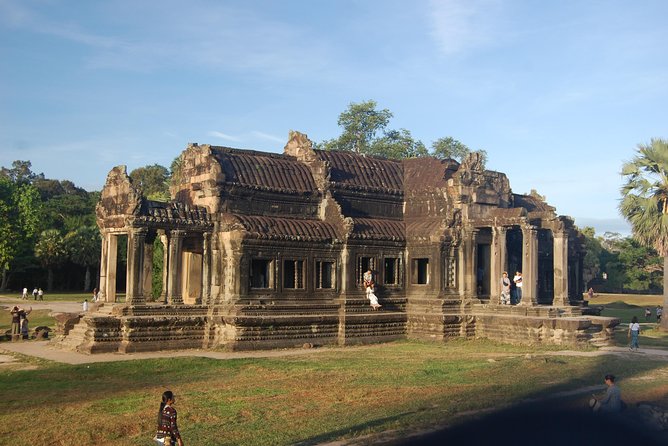
Day 1 starts with the Angkor Archaeological Park circuit, and the order is the big reason this works. You begin at the South Gate of Angkor Thom, then move through the central sights that most people think of first when they picture Angkor.
Here’s what that morning sequence is about:
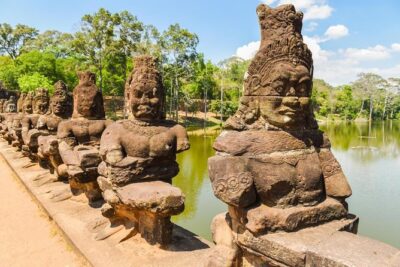
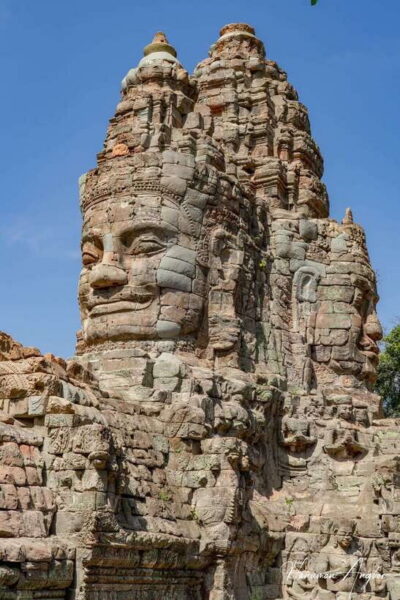
- South Gate of Angkor Thom sets the tone fast—giant stonework, a clear “you’ve arrived” feeling, and a good warm-up before the heavier hitters.
- Bayon, Baphoun, Elephant Terrace, King Palace zone, Phimean Akas and the Terrace of Outcast Lord are your core architectural stops. Expect a lot of bas-relief details and the famous Bayon faces in different angles.
- You also get a break for eating at the Angkor Park, which is practical. Angkor days run on heat and timing, so having a planned pause helps.
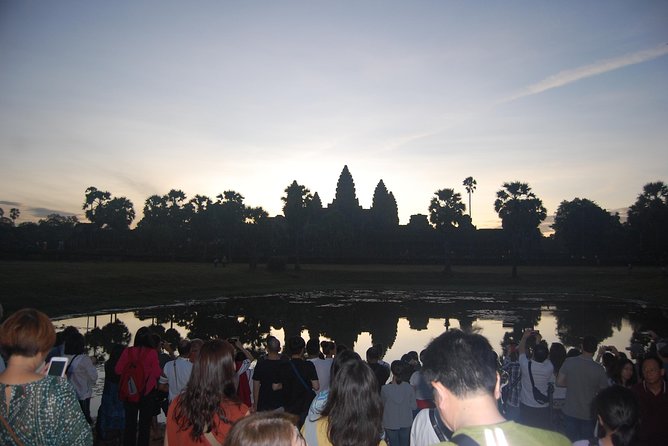
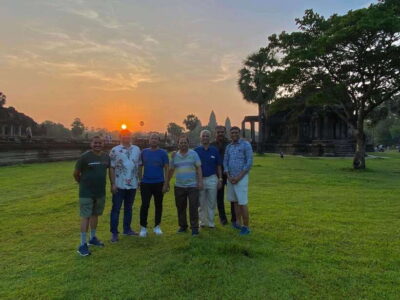
After lunch, the focus shifts to Angkor Wat, then the plan adds a dusk moment at Bakheng mountain or Pre Rup. That sunset choice is the heart of Day 1. It’s not just about the view; it’s about rhythm—by late afternoon you’re tired, and the right viewpoint makes the fatigue feel worth it.
Important consideration: sunset at Angkor can mean crowds and slower movement. The tour’s value here is that you’re guided through the day so you spend less energy figuring out timing.
Bayon, Baphoun, and Ta Prohm: two different kinds of wow
After the initial Angkor Thom circuit, the plan includes dedicated time for:
- Bayon Temple (Bayon, Baphoun, Terrace of Lepper King). This is the “faces and terraces” part of Angkor Thom. It’s where you get to slow down and actually look instead of just moving through.
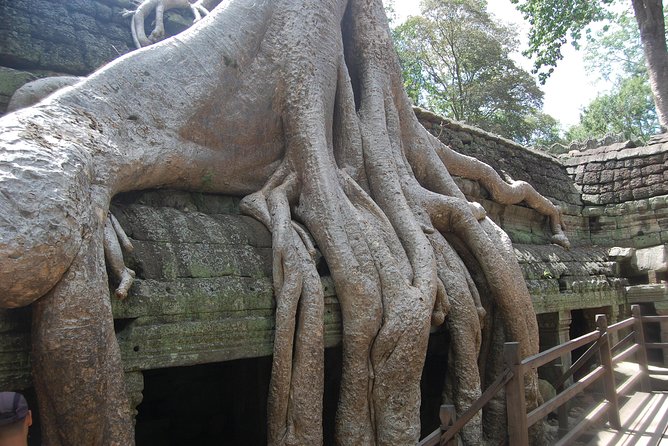
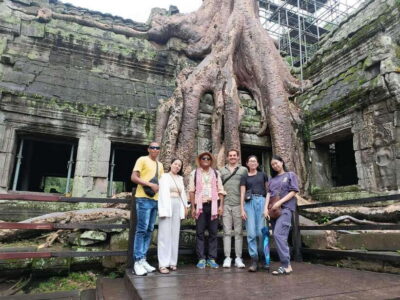
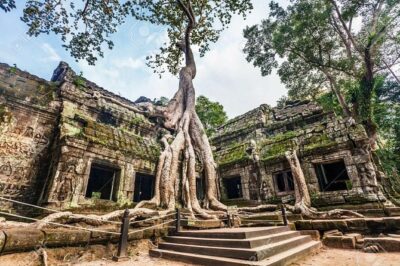
- Ta Prohm (Taprohm). This is the jungle-temple stop people talk about for a reason. You’re walking through a site where tree roots and stone feel tangled together in a way that’s instantly photogenic.
The best way to enjoy both is mindset. Bayon/Baphoun is detail-heavy and needs patience. Ta Prohm is atmospheric—move at a slower pace, look up, and don’t just shoot straight-forward photos.
Srah Srang: the quick stop that adds variety
Then there’s a shorter pass at Srah Srang, described as the royal bathing area near the opposite side of Banteay Kdei. This is one of those “small change, big difference” stops. When you’ve been looking at temple towers and carvings all morning, a water-related site gives your brain a break.
It’s also a useful reset before the day wraps up.
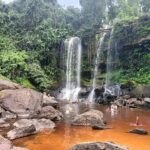
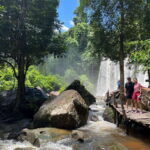
Up the holy mountain to the falls
Dinner and shows at Kulen II: optional, but timed well
Evening isn’t strictly included as a fixed part of the tour price, but the plan strongly suggests a buffet supper with customary shows at the Kulen II restaurant. If you’re into Cambodian performance and a low-effort dinner plan, this is a smart add-on because you won’t have to hunt for an evening meal after a long day.
The tour can help you book front seats, which is the difference between watching comfortably and trying to see over shoulders.
Day 2 travel to Banteay Srei: carvings first, crowd pace second
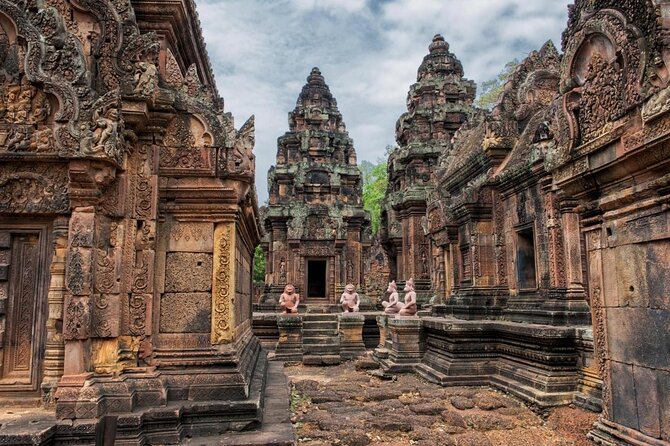
Day 2 begins with Banteay Srei, famous for fine carvings and for being more of a “detail temple” than a “big silhouette” temple. It’s also noted as a drive of about 45 minutes, so you’re getting a break from the Angkor core and seeing more of rural Cambodia.
You’re scheduled for around 2 hours here. That’s a good amount of time if you like to:
- look closely at stonework patterns,
- pause for photos without sprinting,
- and enjoy the temple as a series of close-up scenes.
One practical note: you’ll want decent footwear. Banteay Srei is not built for rushing.
Phnom Kulen National Park: reclining Buddha, river carvings, and waterfall time
Then you head to Phnom Kulen, the Kulen National park area. This is where the trip changes gears from stone temples to nature-and-spiritual-landmarks.
The plan includes:
- a visit to the Reclining Buddha,
- the River of a Thousand Ling area, where images are carved into the river banks,
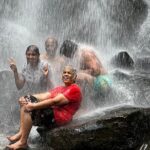
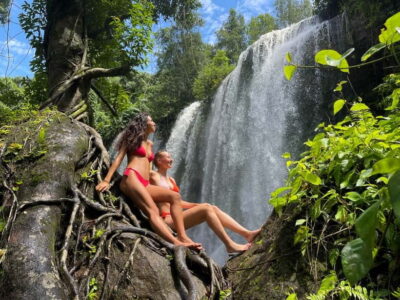
- and time for the waterfall hike described as a highlight of the Kulen experience.
The scheduled time here is about 3 hours. That suggests a moderate pace: enough to see the main points and still get outdoors without feeling like it’s all rushed.
Ticket note: Phnom Kulen’s entry is listed as admission free on the schedule for this stop, but the overall tour information also says Kulen tickets aren’t included. So be ready for the real-life possibility that you’ll need to pay some form of park entry at the gate. Keep a little extra cash on hand and ask your guide what’s required before you walk in.
What the English guide and air-conditioned vehicle do for you
An English-speaking guide sounds like a basic line item, but in Angkor it’s a huge quality-of-life upgrade. You’re dealing with:
- a lot of proper names (Bayon, Baphoun, Phimean Akas, Pre Rup, Bakheng),
- a lot of paths that look similar,
- and timing that matters (especially for dusk viewpoints).
Even a good driver helps, but the guide is what turns a day of ruins into a day that feels understandable.
Also, the air-conditioned vehicle is more than comfort. It’s recovery time between hot, slow-moving sites. That can be the difference between enjoying the last hour versus feeling done halfway through the second day.
Pacing tips so you don’t feel like a walking battery
This tour packs in major Angkor stops plus Kulen. That’s awesome, but you should plan to match the energy.
My practical advice:
- Start early mindset. Day 1 begins at 8:00 am, and you’ll feel better if you treat it like a “morning is for the big sites” plan.
- Bring water and use the planned lunch break. Meals aren’t included, so you’ll want to eat when the day offers a pause.
- Protect your feet and your patience. This is a two-day hit of temples, terraces, and park walking. Wear shoes that won’t ruin your toes by afternoon.
If you’re the type who hates tight schedules, consider whether you really want both Angkor + Kulen in one go. If you love seeing a lot without micromanaging, it’s a good match.
Who this tour is best for (and who should think twice)
This experience is a strong fit if you:
- want a guided, organized Angkor trip without doing the planning math yourself,
- like the classic Angkor temples (Angkor Wat, Angkor Thom, Bayon, Ta Prohm) plus a nature add-on,
- travel with a group and appreciate private transport.
It may be less ideal if you:
- dislike walking in heat and don’t want a packed schedule,
- want everything fully prepaid (because tickets and meals are not included).
Should you book this two-day Angkor and Kulen tour?
I’d book it if you want a no-stress way to see the major Angkor icons and still make time for Phnom Kulen waterfalls. The included guide, air-conditioned vehicle, and private setup give it real value, especially if you’d rather spend your energy enjoying temples than solving logistics.
I’d hesitate only if you’re budgeting tightly and hate add-on costs for tickets, or if you’re looking for a slow, laid-back trip. If that’s you, you might prefer a shorter Angkor-focused option.
If you do book, plan for separate admission tickets, wear comfortable shoes, and treat dusk time as the moment you’re saving your best energy for.
FAQ
What is included in the $150 per person price?
The price includes an air-conditioned vehicle, private transportation, parking fees, and an English-speaking tour guide.
Are temple tickets included?
No. Temple tickets are not included, and the tour notes that admission tickets aren’t included for the listed temple stops.
Is Kulen entry included?
Kulen tickets are listed as not included. The Phnom Kulen stop is marked as admission free on the schedule, but it’s safest to confirm what you’ll need to pay for when you arrive at the park.
Does the tour include meals?
Meals are not included. Day 1 includes a break for eating at the Angkor Park, and there’s an optional buffet supper with customary shows at Kulen II in the evening.
Is pickup from your inn included?
Pickup is offered, and the tour is arranged with a starting time of 8:00 am on Day 1.
Can I cancel for a full refund?
Yes. You can cancel up to 24 hours in advance for a full refund.
More Tour Reviews in Siem Reap
- Angkor Wat Sunrise or Sunset Tour with Guide from Siem Reap
★ 5.0 · 12,109 reviews - Siem Reap: Angkor Wat: Small-Group Sunrise or Sunset Tour
★ 5.0 · 9,444 reviews - From Siem Reap: Kampong Phluk Floating Village Tour by Boat
★ 4.9 · 6,979 reviews - Sunset tour of Kampong Phluk stilts home village on the Tonle Sap
★ 5.0 · 4,865 reviews - Siem Reap: Angkor Wat 2-Day Tour with Sunrise and Sunset
★ 4.9 · 4,429 reviews
Kulen Mountain and the Falls
- Kulen Waterfall Join-in Tour (local Picnic lunch)
★ 5.0 · 2,434 reviews - Kulen Mountain: Small-Group Tour and Picnic lunch
★ 4.9 · 1,802 reviews - Siem Reap: Kulen Mountain, Beng Mealea and Tonle Sap Tour
★ 5.0 · 1,483 reviews - Phnom Kulen Waterfall & the Sacred 1000 Lingas (with Lunch)
★ 4.8 · 974 reviews - Kulen Mountain with Beng Mealea and Tonle Sap Small Group Tour
★ 5.0 · 780 reviews
More Temple Circuits Around Siem Reap
- Angkor Wat Sunrise or Sunset Tour with Guide from Siem Reap
★ 5.0 · 12,109 reviews - Siem Reap: Angkor Wat: Small-Group Sunrise or Sunset Tour
★ 5.0 · 9,444 reviews - Siem Reap: Angkor Wat 2-Day Tour with Sunrise and Sunset
★ 4.9 · 4,429 reviews - Siem Reap: Full-Day Angkor Wat Guided Tour with Sunset
★ 4.9 · 3,803 reviews - Angkor Wat Sunrise tour with Small – Group and Guide tours
★ 5.0 · 3,655 reviews
Just Added: Fresh Siem Reap Tour Reviews

Angkor Temple Tours, compared.
 ★ 5.0Angkor Wat Sunrise or Sunset Tour with Guide from Siem ReapFrom $1812,109 reviews
 ★ 5.0Angkor Wat: Small-Group Sunrise or Sunset TourFrom $159,444 reviews
 ★ 4.9Angkor Wat 2-Day Tour with Sunrise and SunsetFrom $344,429 reviews
 ★ 4.9Full-Day Angkor Wat Guided Tour with SunsetFrom $153,803 reviews
 ★ 5.0Angkor Wat Sunrise tour with Small – Group and Guide toursFrom $143,655 reviews
 ★ 5.0Angkor Wat Highlights and Sunrise Guided Tour from Siem ReapFrom $233,213 reviews
 ★ 5.0Angkor Wat Sunset Small Group Tour with Lunch IncludedFrom $203,059 reviews
 ★ 5.0Full-Day Angkor Wat Sunrise Private Tour with Guide from Siem ReapFrom $602,920 reviews
Browse the lists this tour appears in