
Reviewed · ANGKOR TEMPLE TOURS
Angkor Cycling Tour
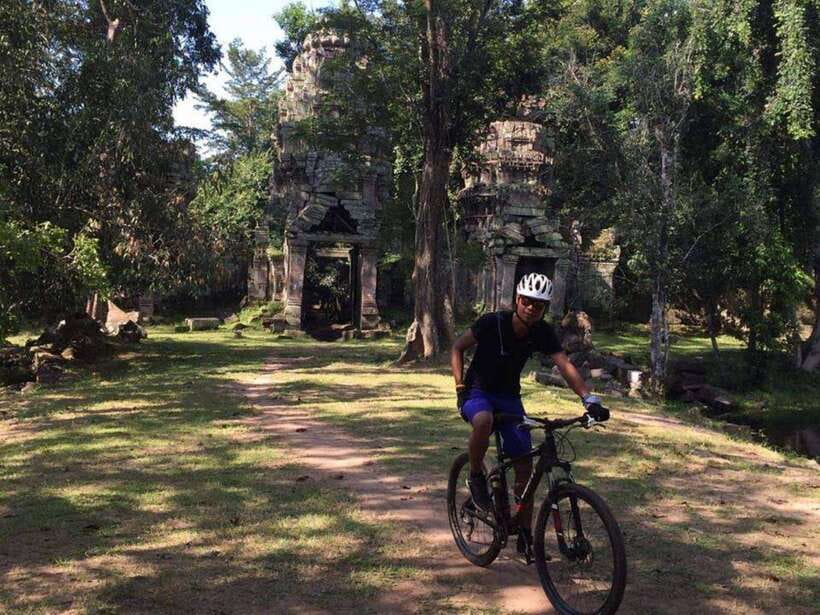
Forget temple buses for a day. You get 70% off-road trails through jungle and countryside, plus guided time at the big names like Angkor Wat. It is a rare mix of active riding and Khmer monuments that still feels relaxed.
One thing to plan for: the temple pass is required and not included in the $65 price. Start is early (7:45 am), and the sun can be intense, so bring the right clothes and expect a medium effort.
In This Review
- Key highlights worth planning around
- Why this Angkor cycling day feels different
- The route mix: 30% paved, 70% off-road, 35 km total
- The pickup, timing, and how the day actually runs
- Angkor Wat in the morning: the moat ride and the guided stories
- Angkor Thom’s fortifications: wall riding plus Ghost Gate
- Lunch at Elephant Terrace: food breaks you can actually enjoy
- Ta Nie Temple and Jayatataka Baray: a quieter pause with wildlife
- Ta Prohm: the Tomb Raider feel, minus the chaos
- How hard is it, really: riding under Cambodian sun
- What you get for $65: value that adds up fast
- Who should book this tour (and who might not)
- Should you book the Angkor Cycling Tour?
- FAQ
- How long is the Angkor Cycling Tour?
- What time does the tour start and where do you pick up?
- Is the temple pass included in the price?
- What kind of cycling should I expect?
- What is included for food and drinks?
- What should I bring and wear?
- Is the tour available in multiple languages?
Key highlights worth planning around
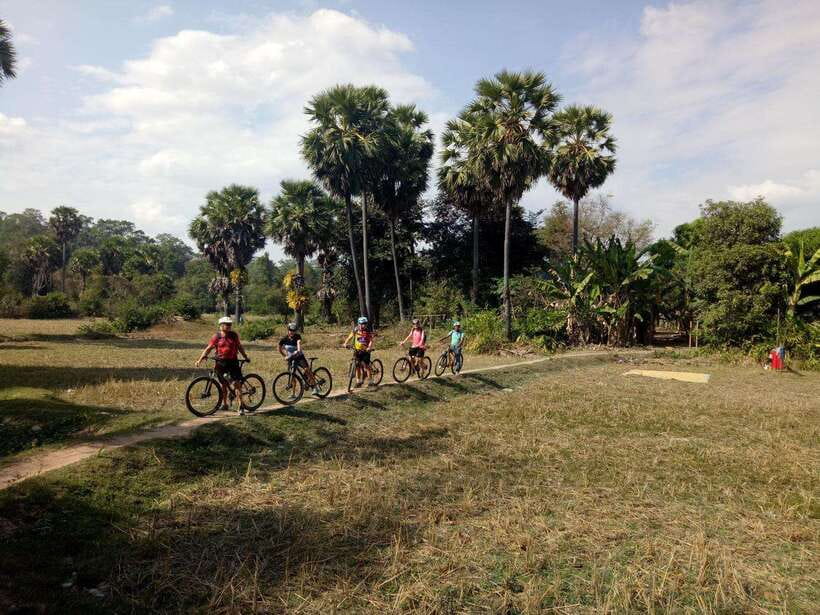
- 70% off-road riding through forest tracks, countryside lanes, and single tracks
- Angkor Wat guided time with a separate entrance for a skip-the-line feel
- Riding the Angkor Thom circuit including wall-top sections and a Ghost Gate stop
- Jayatataka Baray wildlife breaks with birdwatching and chances to spot otters
- Nature-meets-ruins temples like Ta Nie and the jungle-hugged Ta Prohm
- Bike-and-lunch setup included: mountain bike, helmet, lunch, water, and snacks
More temple circuits, set side by side
- Angkor Wat Sunrise or Sunset Tour with Guide from Siem Reap★ 5.0 · 12,109 reviews
- Siem Reap: Angkor Wat: Small-Group Sunrise or Sunset Tour★ 5.0 · 9,444 reviews
- Siem Reap: Angkor Wat 2-Day Tour with Sunrise and Sunset★ 4.9 · 4,429 reviews
- Siem Reap: Full-Day Angkor Wat Guided Tour with Sunset★ 4.9 · 3,803 reviews
Why this Angkor cycling day feels different
Angkor can turn into a checklist if you do it only by car. This tour flips the rhythm by putting you on a bike, so the monuments come with motion, smells, sounds, and real breaks from crowds.
I like how the day balances effort and ease. Most of the ride is described as mostly easy, with only a few moderate sections, which makes it a good pick if you want adventure without arriving completely cooked.
If you hate early starts or you know you are sensitive to heat, this might feel like more work than you expect. The upside is that you are in the temples when the air is still manageable.
The route mix: 30% paved, 70% off-road, 35 km total
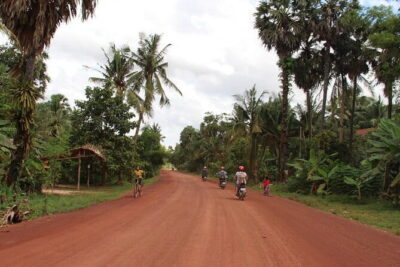
You are signing up for a 35 km day with a 30% paved / 70% off-road route. That means you will cruise smoothly at times, but you should also expect dirt, roots, and narrow tracks where you slow down and ride with attention.
You get a mountain bike in sizes for you and a helmet included, which saves you from last-minute rental headaches. The “medium” level label here makes sense: you are not doing marathon climbing all day, but you are doing real terrain.
Practical tip: closed-toe shoes matter more than you might think. A flat pedal and a dusty track will make bare sandals regretful fast.
The pickup, timing, and how the day actually runs
Your tour day starts with pickup at 7:45 AM, and the operator comes 15 minutes before from your hotel or apartment lobby in Siem Reap city (based on the pickup options). Depending on group size, transport can be a tuk tuk or minivan, and free tuk tuk transfers are included.
Once you meet your English-speaking guide, you do a quick bike fitting and then roll toward Angkor Wat. The schedule is built around time in the major temples plus riding between them, so you are not stuck waiting around for long stretches.
The vibe is guided but not rushed. You get frequent stops for photos, temple walks, and cool-downs, including water and snacks.
Angkor Wat in the morning: the moat ride and the guided stories
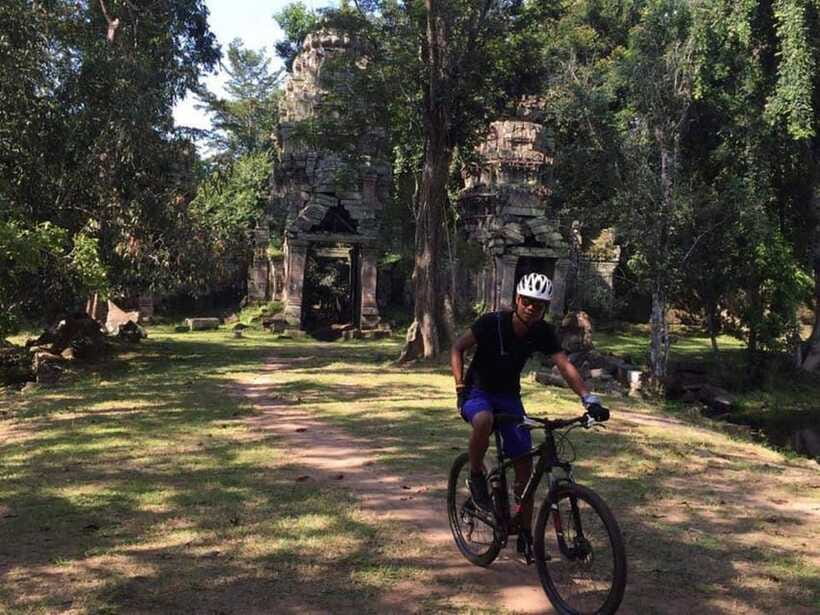
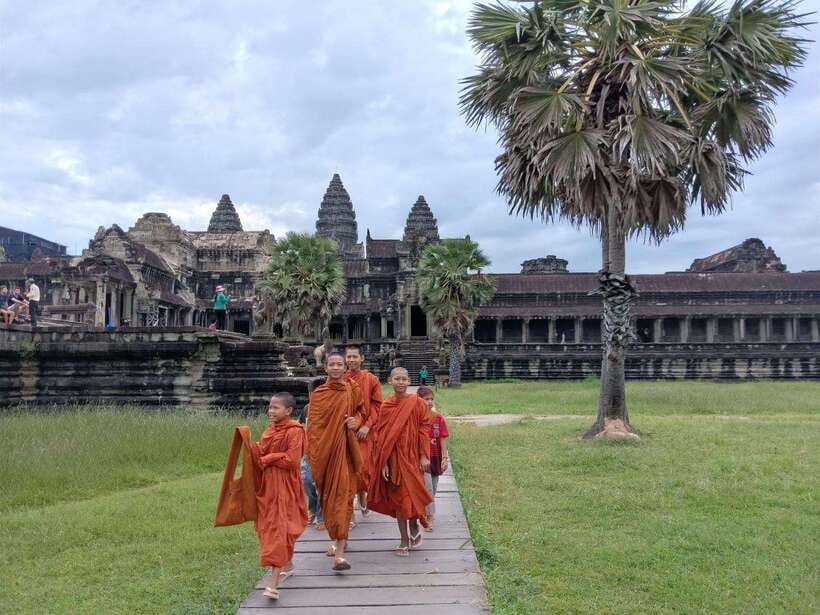
Angkor Wat is the anchor of the day, and you will start there by cycling from the Siem Reap River area into rainforest trails that lead into the complex. One of the best advantages is the separate entrance and a skip-the-line feel.
You get about two hours inside Angkor Wat with your guide, and the guide’s job is to give the temple context while you walk. That is the part that makes a massive stone site feel personal instead of just big.
My favorite part of Angkor Wat by bike is the way you get a “start-to-finish” view—cycling along the ancient moat before you even hit the main buildings. You arrive with bearings, and then the carvings make more sense.
Dress note: temple rules are not optional. You will want modest clothing for the temple visits, and the tour specifically suggests you bring spare cloth even if you ride in shorts.
Siem Reap by pedal, a couple more rides
Angkor Thom’s fortifications: wall riding plus Ghost Gate
After Angkor Wat, you cycle into the Angkor Thom area and ride along the ancient moat. Then it is off into forest trails toward Bakheng Hill, with the plan to head in away from the heaviest pressure.
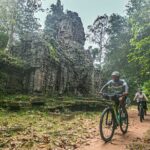
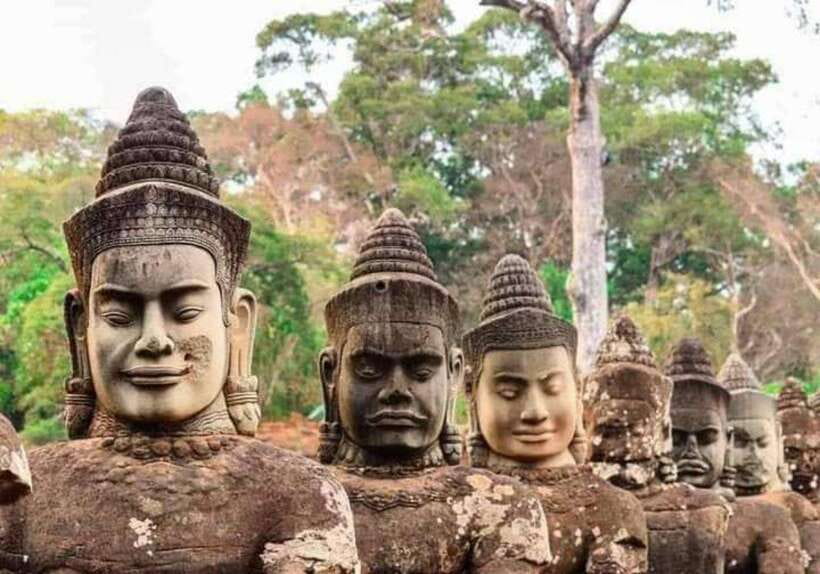
From there, you enter through the South Gate and climb onto the ancient wall—and yes, you actually ride along fortifications. That wall-top section is one of those “I cannot believe this is on a bike” moments, because you are seeing the layout from a perspective you usually only get on foot.
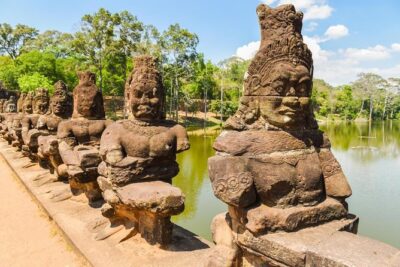
You then stop at Ghost Gate for stories and photos. It is a quick stop, but it matters because it gives meaning to the weird, dramatic design rather than treating it as a random photo spot.
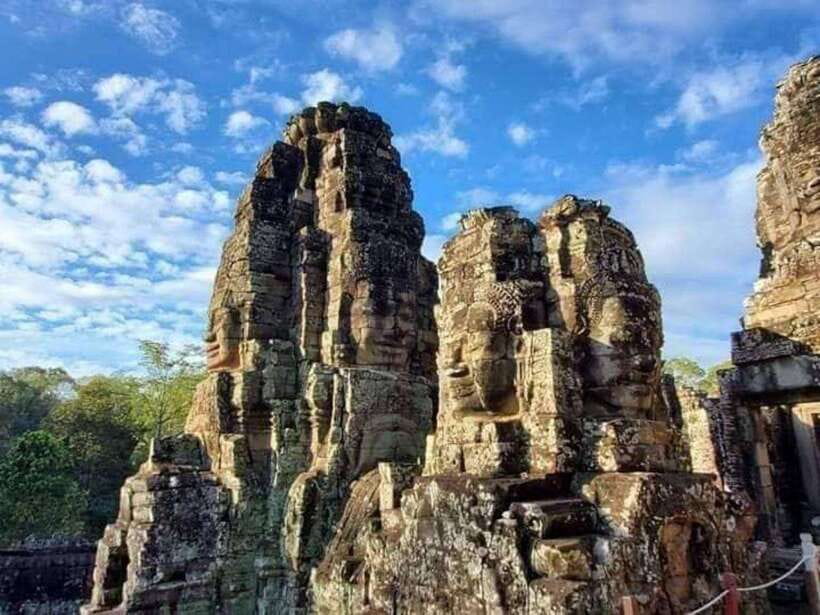
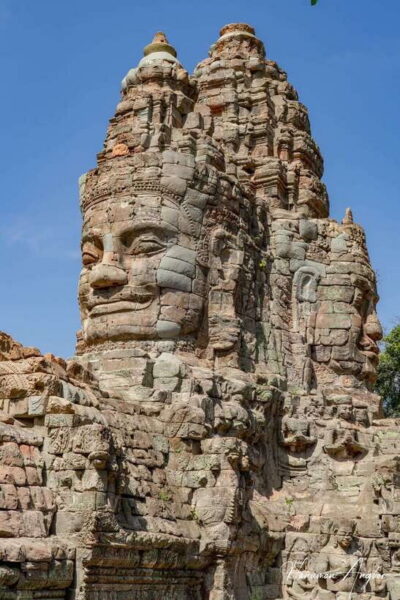
Then you arrive at Bayon Temple, known for its stone faces. You get time to see the serene expressions up close, and because you are coming by bike through the surrounding walls and gates, it feels like a connected system instead of a single stop.
Lunch at Elephant Terrace: food breaks you can actually enjoy
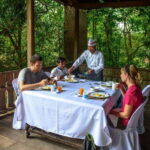
After Bayon, you cycle a short distance to Elephant Terrace for lunch. The food is at a local restaurant, and you get lunch plus a mix of water, snacks, and seasonal fruits.
There is also a very practical rhythm here: you do not just eat, you cool down. The tour includes cold water and snacks at each temple stop, so your energy does not crash right after you sit down.
The restaurant is positioned in front of Elephant Terrace, so the meal comes with a temple setting rather than a generic lunch stop. If you get hangry in the heat, this part is doing real work for your day.
Ta Nie Temple and Jayatataka Baray: a quieter pause with wildlife
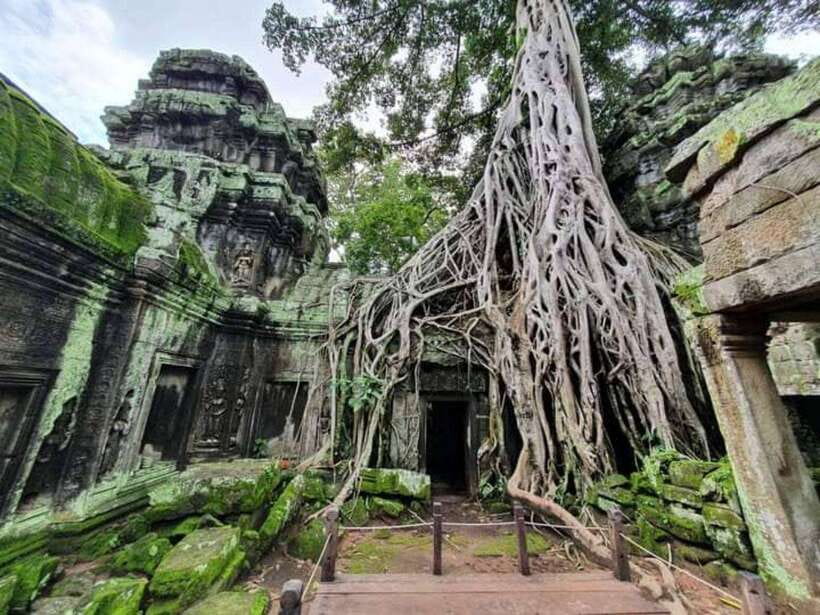
Not every temple day gives you a nature break that feels like more than a photo stop. This one includes Ta Nie Temple, a sanctuary-like site in the forest where you can slow down and enjoy the calm.
Then comes Jayatataka Baray, and this is where the tour shows it is not only about temples. You pause for birdwatching and nature watching, and the variety is part of the point: birds, butterflies, monkeys, and freshwater otters are listed as possible wildlife encounters.
You might also spot specific birds like cranes, egrets, lesser whistling ducks, and kingfishers. Even if you do not see otters, the baray area is still a good reset because it breaks up the temple intensity.
The tour also mentions a peaceful tree nursery garden, which adds a more “Cambodia right now” feeling to a day otherwise packed with ancient stone.
Ta Prohm: the Tomb Raider feel, minus the chaos
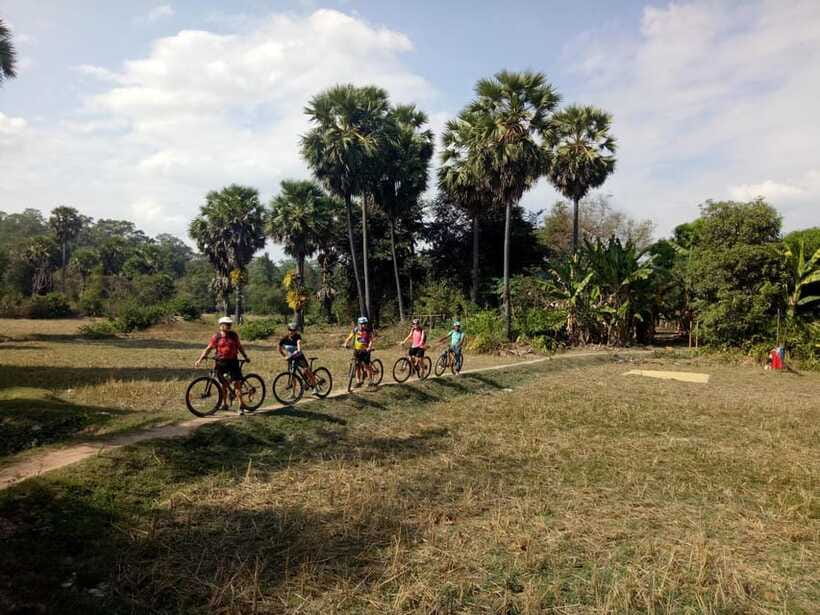
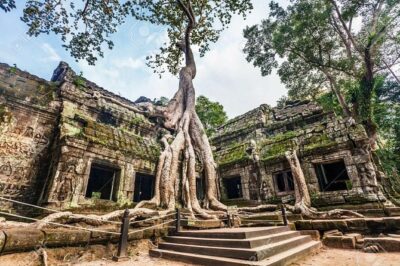
Ta Prohm is your late-day temple, the one most people recognize for the dramatic way tree roots grow through the ruins. You will arrive after Ta Nie and Jayatataka, and that ordering helps because Ta Prohm feels like a payoff rather than the first big visual punch of the day.
Once you are there, you get time to explore with your guide, looking at how architecture and jungle overlap. Expect your photos to look better here because the environment is already doing the styling—roots, walls, and light filters all working together.
Because your route includes off-road sections earlier, you arrive with a sense of momentum. That makes Ta Prohm feel like part of a continuing story, not a standalone set piece.
How hard is it, really: riding under Cambodian sun
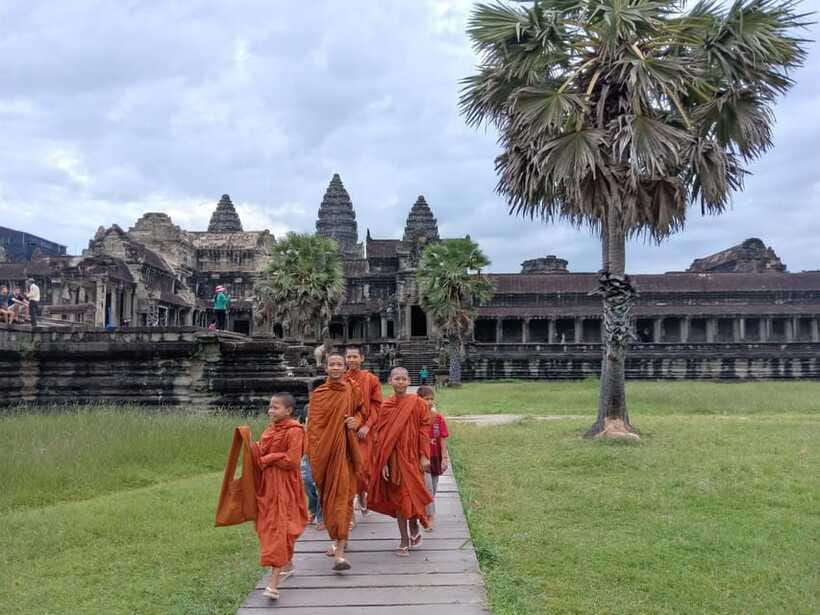
The tour is rated medium, and the feedback you get from the guides and riders seems to match the design: most of the day is manageable, with only a few moderate moments. The off-road tracks, narrow lanes, and occasional rough sections will ask for focus, but you are not doing a grindfest.
Still, heat is the real boss. The tour tips are clear: stay hydrated, bring plenty of water, and use sunscreen and sun glasses if you want to keep your mood intact.
Clothing matters in two ways. You want light, breathable stuff for biking, but you also need spare cloth for temple visits and modest attire. Also, loose clothing is not allowed, so keep it practical and tied down.
One more consideration: the tour is not suitable for pregnant women, so if that applies, pick a different Angkor format that keeps you off uneven terrain.
What you get for $65: value that adds up fast
At $65 per person for a 7-hour experience, the math is surprisingly good, but only if you look at what is included.
You get:
- a mountain bike and helmet (so no rental surprises)
- English-speaking guide (and the tour operates in English and Spanish)
- lunch plus water, snacks, and seasonal fruits
- 1st aid kit and a bike spare part
- free tuk tuk transfers
- a separate entrance / skip-the-line feel
The only major “extra” item is the temple pass, which is required and not included. That is a normal Angkor reality, but it does mean your final day cost is temple-pass plus this price.
If you were to hire a car, pay for separate entrances, and buy lunch on top, you would likely spend more while also sitting longer. This option gets you temples plus active cycling plus snacks, all in one planned day.
Who should book this tour (and who might not)
This is ideal for you if:
- you want an active Angkor day without going full endurance mode
- you like nature—jungle trails and wildlife breaks—alongside ruins
- you enjoy a slower, more peaceful rhythm than the typical rush through monuments
It is also a solid choice if you care about guidance. The guide experience on this tour is consistently praised as patient, organized, and good at keeping a friendly pace—especially on the easier sections.
You might rethink it if:
- you strongly dislike off-road riding or uneven surfaces
- you need a completely flat, low-impact day
- you are expecting temple visits with no biking between them
Should you book the Angkor Cycling Tour?
If you are curious about seeing Angkor from a bike rather than a car, I think this tour is worth booking. The best part is that it connects the dots: moat, walls, gates, and jungle trails come together with guided meaning, not just monument hopping.
Before you commit, do a quick reality check on the temple pass and the outfit rules. Pack spare cloth for temple visits, wear closed-toe shoes, and plan for sun.
If those boxes are easy for you, then $65 buys a very practical mix: real riding, major Angkor sites, and a wildlife-friendly pause at Jayatataka Baray.
FAQ
How long is the Angkor Cycling Tour?
The tour runs for 7 hours total.
What time does the tour start and where do you pick up?
Pickup is at 7:45 AM, and the operator picks up 15 minutes before from your hotel or apartment lobby in Siem Reap city. Pickup locations include Krong Siem Reap and Siem Reap Province, and drop-off options include Krong Siem Reap and Siem Reap Province.
Is the temple pass included in the price?
No. The temple pass is required for visits and is not included in the $65 price.
What kind of cycling should I expect?
You ride about 35 km with 30% paved roads and 70% off-road trails through jungle and countryside. The level is medium, with a mix of easier riding and a few more moderate parts.
What is included for food and drinks?
You get water, snacks, and seasonal fruits, plus lunch at a local restaurant. Cold water and snacks are also provided at temple stops.
What should I bring and wear?
Bring closed-toe shoes. The tour also advises you to pack spare cloth for temple visits even if you bike in shorts, and to use sunscreen and sun glasses.
Is the tour available in multiple languages?
Yes. The guide is available in English and Spanish.
More Tour Reviews in Siem Reap
- Angkor Wat Sunrise or Sunset Tour with Guide from Siem Reap
★ 5.0 · 12,109 reviews - Siem Reap: Angkor Wat: Small-Group Sunrise or Sunset Tour
★ 5.0 · 9,444 reviews - From Siem Reap: Kampong Phluk Floating Village Tour by Boat
★ 4.9 · 6,979 reviews - Sunset tour of Kampong Phluk stilts home village on the Tonle Sap
★ 5.0 · 4,865 reviews - Siem Reap: Angkor Wat 2-Day Tour with Sunrise and Sunset
★ 4.9 · 4,429 reviews
Siem Reap on Two Wheels
- Siem Reap Countryside Bike Tour / E-Bike or Tuk Tuk
★ 5.0 · 935 reviews - Angkor Sunrise Bike Tour / E-Bike or Tuk Tuk
★ 5.0 · 615 reviews - Siem Reap: Bike the Angkor Temples – Full-Day 30km Tour
★ 5.0 · 463 reviews - Siem Reap: Angkor Wat Sunrise Bike Tour & Jungle Breakfast
★ 5.0 · 415 reviews - Siem Reap: Guided Countryside Bike Tour
★ 4.9 · 294 reviews
More Temple Circuits Around Siem Reap
- Angkor Wat Sunrise or Sunset Tour with Guide from Siem Reap
★ 5.0 · 12,109 reviews - Siem Reap: Angkor Wat: Small-Group Sunrise or Sunset Tour
★ 5.0 · 9,444 reviews - Siem Reap: Angkor Wat 2-Day Tour with Sunrise and Sunset
★ 4.9 · 4,429 reviews - Siem Reap: Full-Day Angkor Wat Guided Tour with Sunset
★ 4.9 · 3,803 reviews - Angkor Wat Sunrise tour with Small – Group and Guide tours
★ 5.0 · 3,655 reviews
Just Added: Fresh Siem Reap Tour Reviews

Angkor Temple Tours, compared.
 ★ 5.0Angkor Wat Sunrise or Sunset Tour with Guide from Siem ReapFrom $1812,109 reviews
 ★ 5.0Angkor Wat: Small-Group Sunrise or Sunset TourFrom $159,444 reviews
 ★ 4.9Angkor Wat 2-Day Tour with Sunrise and SunsetFrom $344,429 reviews
 ★ 4.9Full-Day Angkor Wat Guided Tour with SunsetFrom $153,803 reviews
 ★ 5.0Angkor Wat Sunrise tour with Small – Group and Guide toursFrom $143,655 reviews
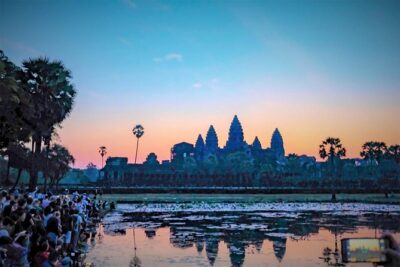 ★ 5.0Angkor Wat Highlights and Sunrise Guided Tour from Siem ReapFrom $233,213 reviews
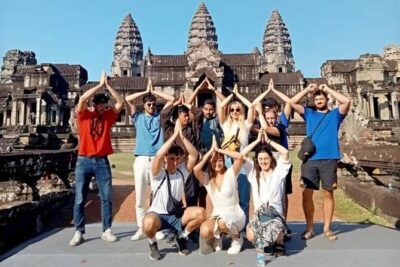 ★ 5.0Angkor Wat Sunset Small Group Tour with Lunch IncludedFrom $203,059 reviews
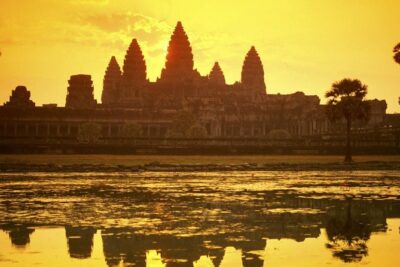 ★ 5.0Full-Day Angkor Wat Sunrise Private Tour with Guide from Siem ReapFrom $602,920 reviews
Browse the lists this tour appears in