
Reviewed · ANGKOR TEMPLE TOURS
Angkor Jungle Biking Adventure Private Cycling Tour
Cruising Angkor by bike beats the usual rush of pass-and-go. What I like most is the private pacing (you’re not stuck watching other people’s lines), and the English storytelling with guide Liap that connects the temples to Cambodia’s bigger story. The one thing to think about is the surface: it’s not a technical mountain-bike route, but you should expect some sandy patches and uneven bits in jungle roads.
You’re covering a real distance too—about 25–35 km—so this is a ride, not a stroll. Still, if you like seeing the temples with breathing room, cycling makes the day feel more personal and a lot less staged than hopping between sights by car.
In This Review
- Key takeaways before you pedal
- Private Jungle Biking: Why This Angkor Route Feels Different
- Price and What You Really Get for $22
- Hotel Pickup, Tuk-Tuk Transfer, and Bike Setup
- The Cycling Effort: 25–35 km Through Sand, Shade, and Real Roads
- Angkor Wat: Big Temple Moments Plus Bike-Friendly Timing
- Ta Prohm: The Jungle-Temple Feel That Matches the Movie Vibe
- Ta Nei, Mur d’enceinte, and the Value of the Less-Overcrowded Stops
- Victory Gate, Angkor Thom, and Bayon: Getting the Royal Layout Feeling
- French Dam and the In-Between Stops That Make the Day Human
- Lunch in Angkor Park: What to Expect (and How to Budget)
- Bikes, Helmets, and Who This Tour Really Fits
- Should You Book This Angkor Jungle Biking Adventure?
- FAQ
- Do I need an Angkor Pass for this tour?
- How far will I cycle during the day?
- What’s included in the tour price?
- Is lunch included?
- What language is the guide?
- Is the tour suitable for children?
Key takeaways before you pedal
- Private, English-speaking licensed guide Liap means you’ll get clear context, not just photo stops
- 25–35 km total riding with a day that usually returns around 3:30 PM
- Temple highlights from different angles, including Angkor Wat, Bayon, Ta Prohm, and Ta Nei
- Jungle riding between ruins, with more nature time than you’ll expect
- Bike sizes for kids and adults, plus tagalong options for less confident children (with age limits)
More temple circuits, set side by side
- Angkor Wat Sunrise or Sunset Tour with Guide from Siem Reap★ 5.0 · 12,109 reviews
- Siem Reap: Angkor Wat: Small-Group Sunrise or Sunset Tour★ 5.0 · 9,444 reviews
- Siem Reap: Angkor Wat 2-Day Tour with Sunrise and Sunset★ 4.9 · 4,429 reviews
- Siem Reap: Full-Day Angkor Wat Guided Tour with Sunset★ 4.9 · 3,803 reviews
Private Jungle Biking: Why This Angkor Route Feels Different
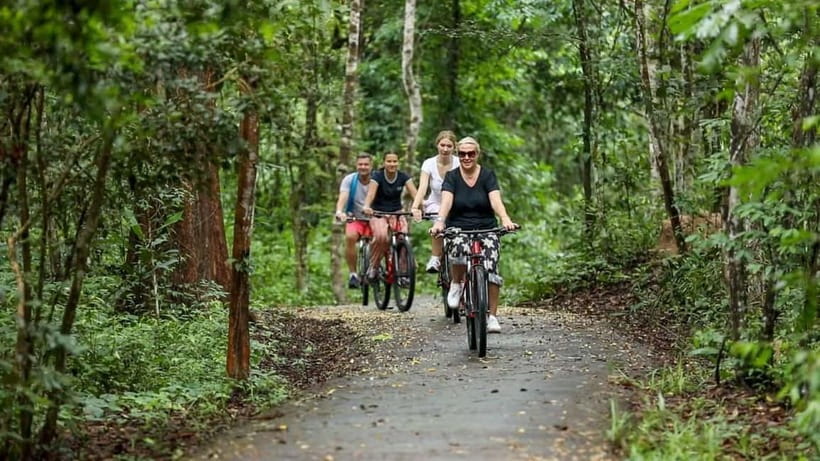
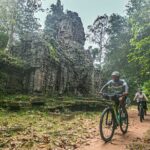
Angkor can feel like a checklist if you do it the typical way. This tour changes the tone because you’re moving under your own power. You’ll get the grand temple moments, but you’ll also get stretches where the only soundtrack is birds, road dust, and your guide calling out what to watch for.
What makes the day work well is the mix of scale. You cycle out from Siem Reap, pass the park ticket area, and then work your way into the core temple zones. By the time you reach the big hits—Angkor Wat and Bayon—it feels earned, not rushed.
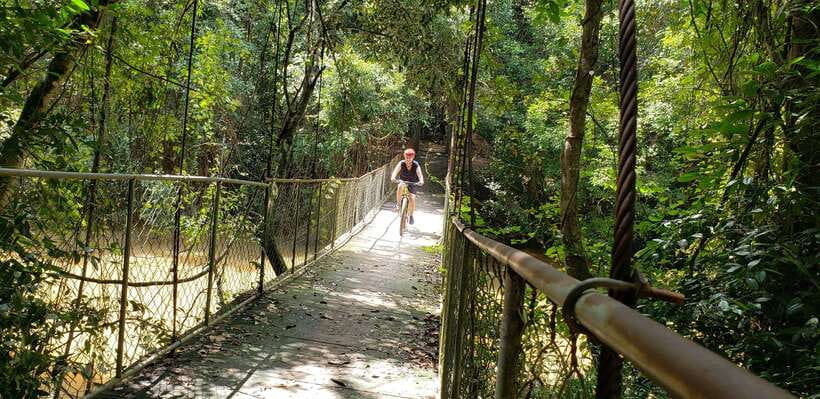
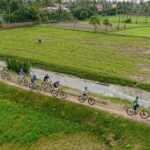
I also like that the route isn’t only “inside the big temple map.” You spend real time riding through greener areas, getting closer to the jungle and how it frames the ruins. That’s the difference you’ll feel right away: you’re not just looking at Angkor, you’re traveling through it.
Price and What You Really Get for $22
At $22 per person for an 8-hour private biking day, the value depends on what you already have—especially your Angkor Pass. Temple entry tickets are not included, so budget for the pass unless you already bought it.
Here’s the value you do get in the base price:
- hotel pick-up and drop-off
- an English-speaking biking tour guide
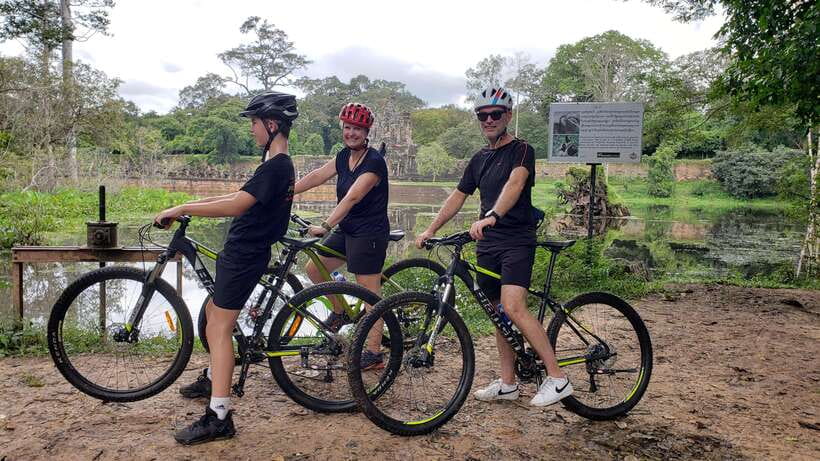
- mountain bike plus helmet
- drinking water during the ride
Then you add the day’s extras. Most notably, lunch happens at a local restaurant inside the Angkor Park area. Based on past experiences shared by guests, lunch is typically an additional cost, even though it’s part of the schedule. If you’re budgeting tightly, I’d plan on paying for lunch that day.
Still, even with the temple pass, this pricing structure can be a good deal because you’re paying for a full guided cycling route, not just a driver and a vehicle.
Hotel Pickup, Tuk-Tuk Transfer, and Bike Setup
The day starts after breakfast at your hotel. You meet your guide at the lobby, and you’ll get a quick run-through of what the tour covers and bike basics. Expect a safety briefing early on, and then you’ll head out.
One practical detail: there’s a short tuk-tuk transfer before you settle into biking. That’s helpful. It saves time and helps you start your ride when the route is more comfortable for cycling, especially as you get oriented to the temple zone roads.
Once you’re on the bike, your guide keeps you on track through the major temple areas and the in-between sections. It’s a small thing, but it matters: when you don’t have to worry about directions, you can focus on the ride and the sights.
The Cycling Effort: 25–35 km Through Sand, Shade, and Real Roads
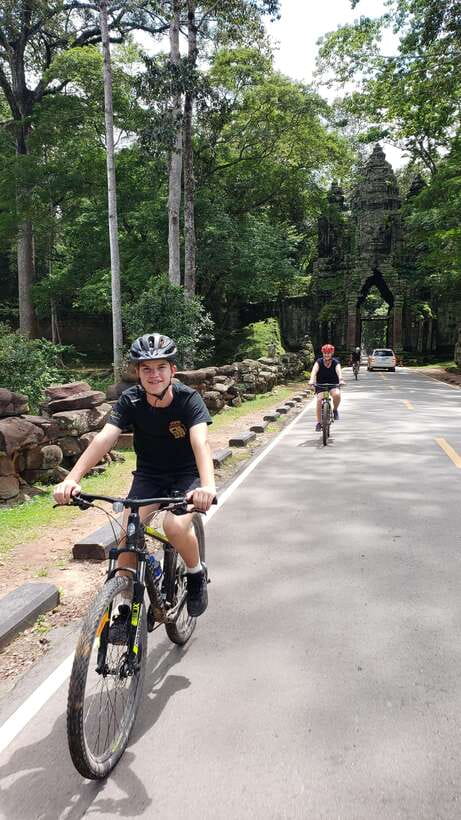
This is a cycling tour with an actual distance: 25–35 km total from start to finish. That’s long enough to feel like a day out, but it’s also manageable for many visitors who are comfortable on a bicycle.
The ride is not described as highly technical. In real terms, that means you’re not doing tricky downhill skill stuff. What you might notice is road texture—some sandy sections can slow you down for a moment. So if you only ride on perfect pavement at home, bring realistic expectations.
The upside is pacing. You’ll have stops at major sites for photos and guided walks, plus breaks for water during the day. Past guests also noted there’s plenty of water and some snacks along the route, which is exactly what you want for long temple days.
Also good: the tour is private or small-group style. Less crowd pressure means you can ride at a steady rhythm rather than constantly braking for a busy pack.
Siem Reap by pedal, a couple more rides
Angkor Wat: Big Temple Moments Plus Bike-Friendly Timing
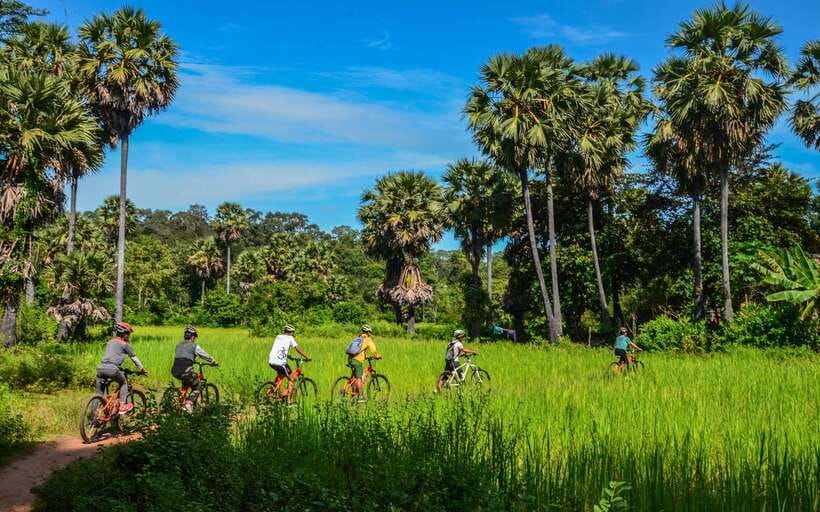
Angkor Wat is the headline, and you’ll spend time here with both photos and guided viewing. From the bike, the experience feels different than arriving on foot from a bus drop-off. You get better approach angles and you feel the space as you move through the area.
Your guide doesn’t just point and say look there. The commentary is meant to connect the temple to Cambodia’s past, with a personal, story-driven explanation. That kind of context can change how you read carvings and layout, even during a walk-and-stop visit.
You’ll also have chances to pause and take in scenic views on the ride between sites. It’s a smart way to break up the intensity of one huge complex after another.
One consideration: Angkor Wat is large, so time can feel tight if you stop to photograph every single detail. If you’re the type who loves wide shots more than micro-details, you’ll probably feel perfectly paced.
Ta Prohm: The Jungle-Temple Feel That Matches the Movie Vibe
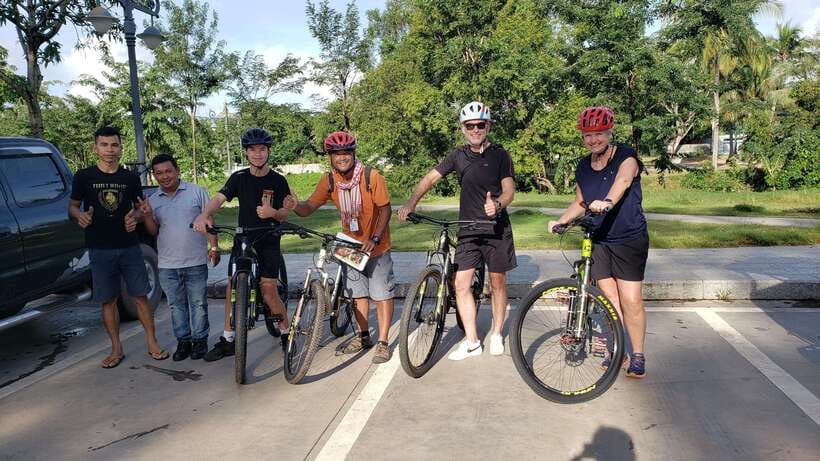
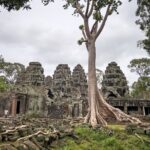
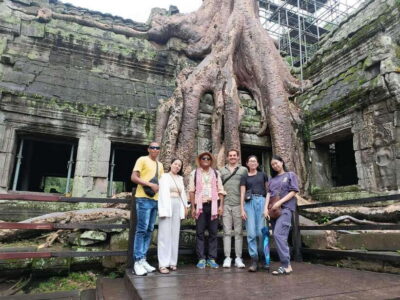
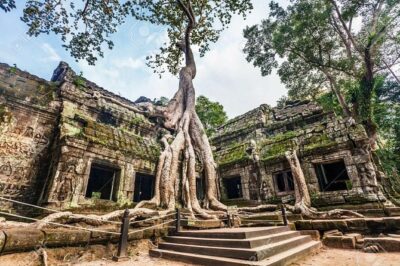
After Angkor Wat, the day shifts into more dramatic jungle atmosphere. Ta Prohm is the stop people often associate with the “jungle swallowed the stones” feeling, and this tour gives you time to see that with a guide.
You’ll have a photo stop, guided tour, and time for exploration. What makes it satisfying is that you arrive after riding through green paths. So when you see roots and crumbling structures, you’re already in the right mindset. The ride sets the mood.
The route description also emphasizes hearing nature along the path. Even if you don’t track every bird call, you’ll notice the contrast: you’re moving through quieter stretches, then stepping into one of Angkor’s most iconic, overgrown scenes.
If you’re hoping for the best photos, I’d focus on framing temples with surrounding trees and the path lines. Your bike route gives you some natural movement angles that can be harder to get when you’re stuck only walking a single corridor.
Ta Nei, Mur d’enceinte, and the Value of the Less-Overcrowded Stops
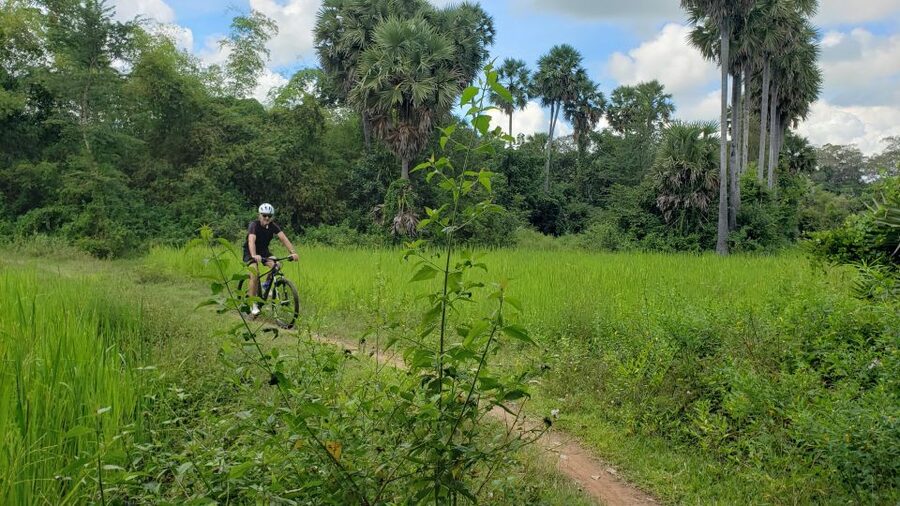
Not every stop in the day is the biggest name. That’s actually a strength here. You’ll also visit Ta Nei, plus stops like Mur d’enceinte, and then continue onward through other zones.
For Ta Nei, the description calls it a temple that’s hiding deeper in the jungle. Translation: it feels less like a crowd magnet and more like an “okay, wow” moment when you get there. You’ll get guided history and time to walk around and look up close.
Mur d’enceinte is another stop that’s positioned as a photo and guided visit point. You won’t just rush through. Even when it’s shorter, getting a guide’s explanation helps you understand why a particular enclosure or structure matters within the wider Angkor layout.
If you’re the kind of person who gets temple-fatigued after too many big-ticket repeats, these stops help reset your attention. They’re also where the cycling day feels distinct from a standard car tour.
Victory Gate, Angkor Thom, and Bayon: Getting the Royal Layout Feeling
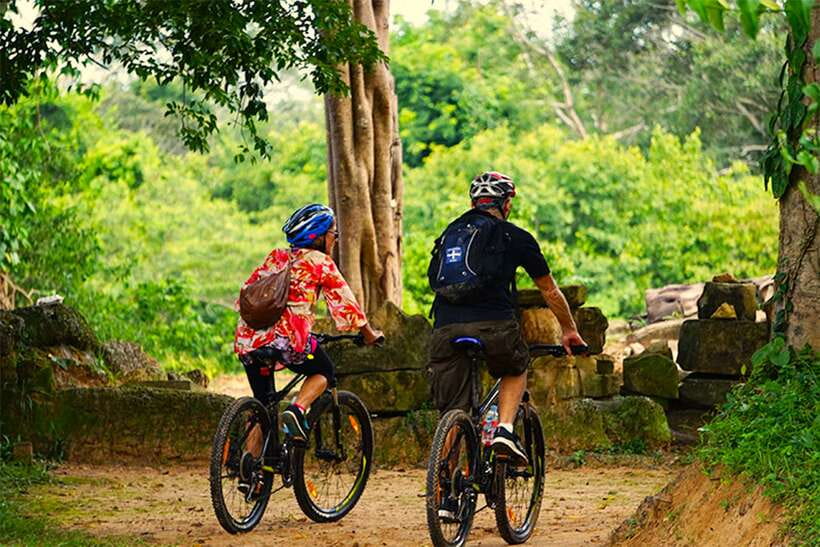
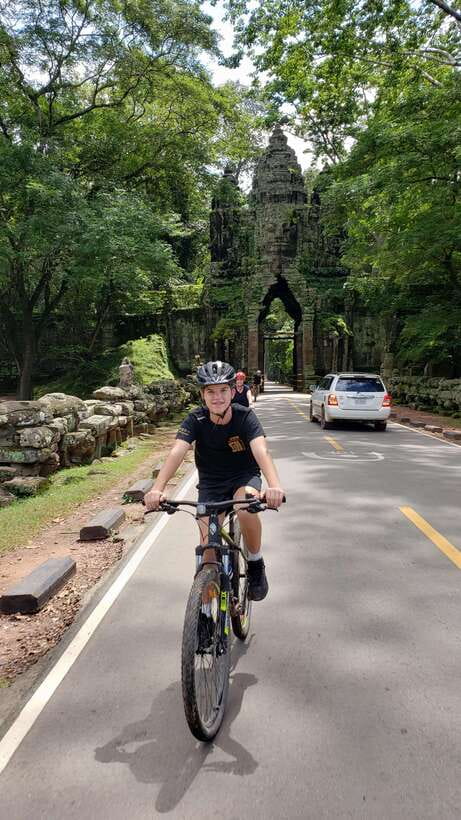
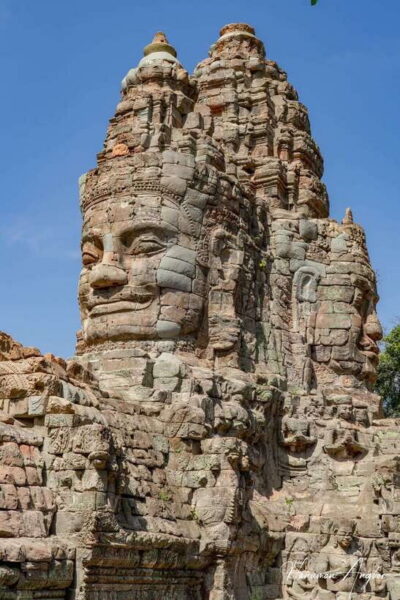
Now the route shifts to the Angkor Thom area, including Victory Gate and time at Bayon. These are some of the moments where the “Angkor scale” becomes real.
You’ll have photo stops and guided walking here too. The key is how your guide connects the dots—how gates, city zones, and temple design fit together. On a bike tour, that connection feels smoother because you’re not only moving with footsteps. You’re also moving with your whole body across spacing between areas.
Bayon is the unforgettable part for many people, and you’ll be there with time to see it properly, not just to glance at it. The schedule includes a longer site block here, with guided exploration and scenic views along the ride sections.
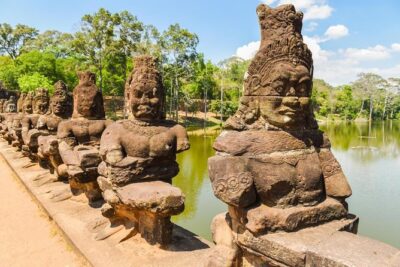
When you’re done with Bayon, you’ll keep moving—through the royal palace and Terrace of Elephant area. Even if you don’t remember every architectural term, you’ll remember the feeling of being in a royal zone, surrounded by that dense, carved stone atmosphere.
French Dam and the In-Between Stops That Make the Day Human
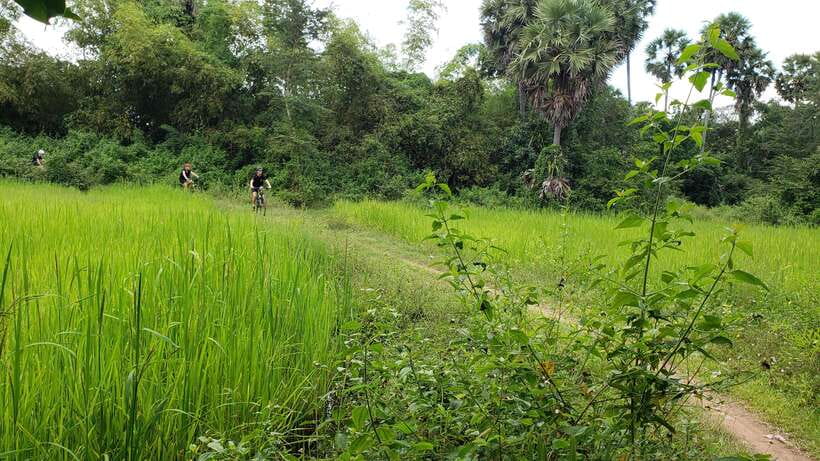
One reason I like this tour’s flow is that it doesn’t only revolve around the biggest names. You’ll stop at French Dam (ទំនប់ទឹកបារាំង), and it’s scheduled as a guided visit with photos and walking time.
In-between stops like this help the day feel human. They break up temple intensity and give you a chance to look at how water and infrastructure fit into the region’s long story. You also get visual variety, which is important when you’re spending many hours in one historical complex.
There’s also a short stop at Prohm Kel, plus small photo and guided moments at places like Nara Art and a café stop (ម៉ូយម៉ូយ). Those aren’t giant “main attraction” visits, but they do give you a quick taste of how today’s culture sits alongside the ruins.
I’d treat these as palate cleansers. Take a photo, listen to the guide’s quick notes, then get back on the bike.
Lunch in Angkor Park: What to Expect (and How to Budget)
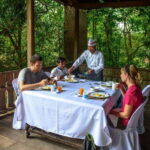
Lunch happens after you’ve covered a lot of the temple route. The plan is to break at a local Khmer restaurant inside the Angkor Park zone, with a more “authentic healthy Khmer food” style.
Here’s the budget note: lunch is not listed as included in the tour price, and past guest experiences indicate it’s extra. So don’t assume your $22 covers lunch. Bring a bit of cash and keep it simple.
What you can control is your pacing before lunch. If you burn too much energy early, you might feel sluggish by the time you sit down. On the other hand, the ride includes water and snack support, so if you pace yourself, lunch should feel like a deserved reset.
Bikes, Helmets, and Who This Tour Really Fits
You get a mountain bike and helmet, and the company says they have a full range of bike sizes from children to XXL. They also mention tagalong bikes for less confident cycling children.
That matters for families because it suggests they’re set up to handle different confidence levels. But there’s a clear boundary: the tour isn’t suitable for children under 5, and it’s not suitable for pregnant women.
For most adults, the bigger question is comfort. If you can ride a bicycle for a solid stretch and you don’t mind some sand and uneven road textures, you’ll likely be fine. If you’re expecting a leisurely ride with minimal effort, you may feel the distance.
If you want Angkor with more movement, more fresh air, and a guide who can explain what you’re seeing while you ride, this fits well.
Should You Book This Angkor Jungle Biking Adventure?
Book it if you want a temple day that feels active and personal. This is a solid value when you factor in a private setup, an English guide, hotel pick-up/drop-off, and the bike gear. The strongest part is the combination of cycling between ruins and guided stops that make the sights feel connected rather than random.
Skip it or think twice if:
- you don’t have (or don’t want to buy) an Angkor Pass
- you dislike cycling longer distances
- you’re not comfortable with sandy or uneven road sections
- you fall into the tour’s non-suitable groups (under 5, or pregnant)
If you’re aiming for a “see Angkor, but not the same way everyone else does” day, this one’s hard to beat.
FAQ
Do I need an Angkor Pass for this tour?
Yes. Temple entrance tickets are not included, so you’ll need an Angkor Pass. You can purchase an Angkor Pass at the Angkor Temple Zone on the morning of the tour or through the official Angkor Enterprise website listed by the operator.
How far will I cycle during the day?
The total cycling distance is between 25 and 35 km from start to end.
What’s included in the tour price?
Included are hotel pick-up and drop-off, a professional English speaking cycling tour guide, a mountain bike and helmet, and drinking water.
Is lunch included?
Lunch is part of the day’s schedule at a local restaurant inside the Angkor Park, but it’s not listed as included in the tour price. Plan to pay for lunch during the tour.
What language is the guide?
The tour guide is available in English.
Is the tour suitable for children?
It’s not suitable for children under 5. The provider also mentions having a range of bike sizes and tagalong bikes for less confident cycling children.
Just Your Group: Private Days
- Full-Day Angkor Wat Sunrise Private Tour with Guide from Siem Reap
★ 5.0 · 2,920 reviews - Siem Reap: Angkor Wat Private Tuk-Tuk Tour
★ 4.9 · 2,222 reviews - Angkor Wat Private Day Tour from Siem Reap
★ 5.0 · 834 reviews - Angkor Wat Private Tuk-Tuk Tour (sunrise Option) & more
★ 5.0 · 439 reviews - Private Angkor Wat Day Tour – Best of Angkor
★ 5.0 · 269 reviews
Siem Reap on Two Wheels
- Siem Reap Countryside Bike Tour / E-Bike or Tuk Tuk
★ 5.0 · 935 reviews - Angkor Sunrise Bike Tour / E-Bike or Tuk Tuk
★ 5.0 · 615 reviews - Siem Reap: Bike the Angkor Temples – Full-Day 30km Tour
★ 5.0 · 463 reviews - Siem Reap: Angkor Wat Sunrise Bike Tour & Jungle Breakfast
★ 5.0 · 415 reviews - Siem Reap: Guided Countryside Bike Tour
★ 4.9 · 294 reviews
More Temple Circuits Around Siem Reap
- Angkor Wat Sunrise or Sunset Tour with Guide from Siem Reap
★ 5.0 · 12,109 reviews - Siem Reap: Angkor Wat: Small-Group Sunrise or Sunset Tour
★ 5.0 · 9,444 reviews - Siem Reap: Angkor Wat 2-Day Tour with Sunrise and Sunset
★ 4.9 · 4,429 reviews - Siem Reap: Full-Day Angkor Wat Guided Tour with Sunset
★ 4.9 · 3,803 reviews - Angkor Wat Sunrise tour with Small – Group and Guide tours
★ 5.0 · 3,655 reviews
Just Added: Fresh Siem Reap Tour Reviews

Angkor Temple Tours, compared.
 ★ 5.0Angkor Wat Sunrise or Sunset Tour with Guide from Siem ReapFrom $1812,109 reviews
 ★ 5.0Angkor Wat: Small-Group Sunrise or Sunset TourFrom $159,444 reviews
 ★ 4.9Angkor Wat 2-Day Tour with Sunrise and SunsetFrom $344,429 reviews
 ★ 4.9Full-Day Angkor Wat Guided Tour with SunsetFrom $153,803 reviews
 ★ 5.0Angkor Wat Sunrise tour with Small – Group and Guide toursFrom $143,655 reviews
 ★ 5.0Angkor Wat Highlights and Sunrise Guided Tour from Siem ReapFrom $233,213 reviews
 ★ 5.0Angkor Wat Sunset Small Group Tour with Lunch IncludedFrom $203,059 reviews
 ★ 5.0Full-Day Angkor Wat Sunrise Private Tour with Guide from Siem ReapFrom $602,920 reviews
Browse the lists this tour appears in