
Reviewed · ANGKOR TEMPLE TOURS
Angkor National Museum Admission
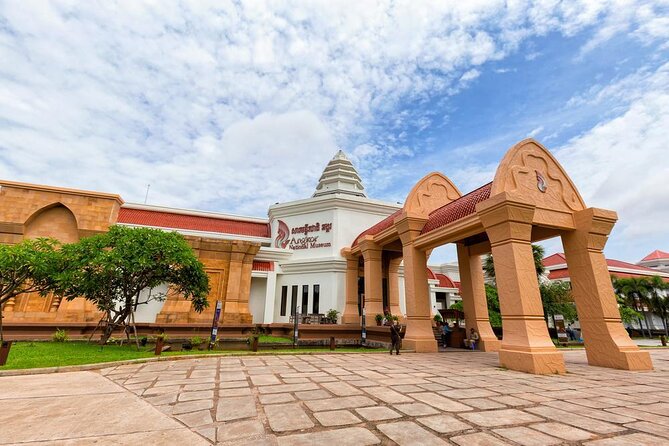
Angkor’s story starts indoors. The Angkor National Museum in Siem Reap turns temple stone into understandable Khmer ideas, with prepaid admission and self-guided galleries that you can pace yourself. Two things I really like: you can walk a one-way route through themed exhibits, and you get clear context for what you’ll see (and why it mattered) in Angkor. The main thing to watch is the dress code: knees must be covered, or entry can be refused.
You’ll get a one-way pickup from the JTB office in Siem Reap, then head to the museum entrance with a prepaid ticket that’s supposed to skip the ticket line. You can also choose your arrival time, and the visit takes about 2 hours at an easy museum pace. This is capped at a maximum of 20 travelers, which helps keep things orderly.
In This Review
- Key things to know before you go
- Why this museum is the smart add-on to Angkor Temples
- JTB pickup and prepaid entry: how the visit actually starts
- The Briefing Hall: get your bearings fast
- Galleries A and B: Khmer origins and belief in plain view
- The Exclusive Gallery on Buddhism: more than temple scenery
- The rest of the exhibits: how the museum builds toward Angkor Temples
- Pacing a self-guided visit in about two hours
- Price and value: why $132 might feel confusing
- Small group setup: 20 travelers max can feel calmer
- Practicalities that decide whether you enjoy it
- Cafe and gift shop: a good place to pause without rushing out
- Should you book the Angkor National Museum admission?
- FAQ
- What’s included with this Angkor National Museum admission?
- Is the museum visit self-guided or guided?
- Can I pick my arrival time?
- Do I need to wait in line for tickets?
- What are the museum hours?
- What dress code do I need for entry?
- Where do I meet for pickup and redemption?
Key things to know before you go
- Prepaid ticket: no waiting around for admission.
- Single-direction flow: themed galleries help you move without second-guessing.
- Buddhism-focused Exclusive Gallery: Cambodia’s religious life is treated as part of the Angkor story.
- Gallery A and B structure: a clear way to understand Khmer origins and beliefs.
- Optional audio can help: headsets are often recommended if you want more detail.
- Cafe and gift shop: a good place to pause without leaving the museum grounds.
More temple circuits, set side by side
- Angkor Wat Sunrise or Sunset Tour with Guide from Siem Reap★ 5.0 · 12,109 reviews
- Siem Reap: Angkor Wat: Small-Group Sunrise or Sunset Tour★ 5.0 · 9,444 reviews
- Siem Reap: Angkor Wat 2-Day Tour with Sunrise and Sunset★ 4.9 · 4,429 reviews
- Siem Reap: Full-Day Angkor Wat Guided Tour with Sunset★ 4.9 · 3,803 reviews
Why this museum is the smart add-on to Angkor Temples
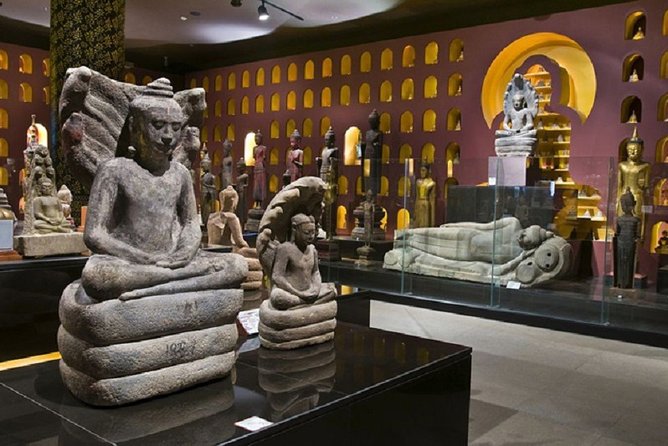
If you’re planning Angkor Temples, the Angkor National Museum is the shortcut to seeing more. Temples are stunning, but they can also feel like beautiful puzzles when you don’t know what you’re looking at. This museum is set up to connect the dots between Khmer Empire art, belief systems, and the archaeological finds from the Angkor area.
What I like about this museum is that it’s not just a pile of statues. It’s an archaeological museum focused on collecting, preserving, and presenting Angkorian artifacts, plus teaching the art and culture of Khmer civilization. Most of the collection is dated roughly from the Khmer Empire’s Angkor period (about the 9th to the 14th century). That timeframe is exactly what you’re picturing when you stand amid temple ruins and try to place them in history.
And there’s another practical benefit: the museum lets you control your mental pace. You can slow down when something catches your eye, then move on before you get museum-fatigued. A self-guided route like this is ideal if you don’t want every minute scheduled for you.
JTB pickup and prepaid entry: how the visit actually starts
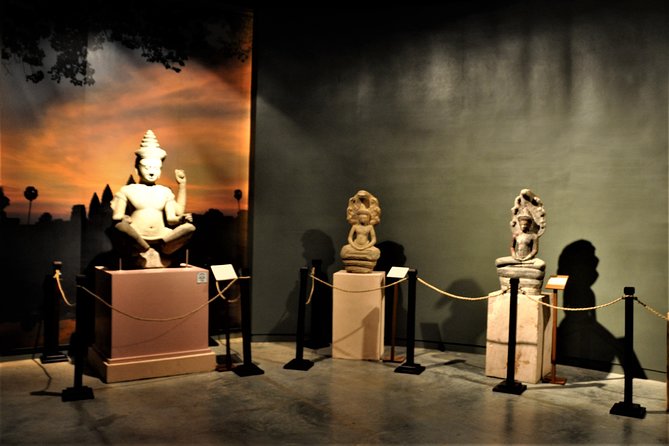
Your day begins at the JTB(Cambodia)Co.,Ltd office in Siem Reap. The address given is #52 Street, Charles De Gaulle Sangkat, Sangkat Svay Dangkum. After you meet staff with your voucher, they take you to ticket redemption at the Angkor Museum—and that’s where the prepaid part matters.
The big win here is simple: you should not be waiting for tickets at the museum entrance. That can sound small, but it changes the vibe. Instead of standing around, you get to start walking, which means you keep your energy for the exhibits.
Also, pay attention to the “flexible entrance” idea. The ticket works for an arrival time you choose, so you’re not forced into a rigid slot. If you’re the type who likes to do morning temples or you prefer a later start after breakfast, this helps.
Duration is listed at around 2 hours. With a self-guided museum, that’s enough time to see a lot, but not enough time to read every label twice. I treat it as a planning guide: give yourself 2 hours, then decide on the fly whether you want to extend.
The Briefing Hall: get your bearings fast
When you enter, the route begins with a Briefing Hall (described as The Museum Overture). This is the setup phase. Instead of immediately getting overwhelmed by objects, you start with context that makes later galleries easier to follow.
Even if you’re not the type to read every panel, this “start strong” approach matters. It’s how the museum helps you understand what you’re about to see. You’re not just looking at artifacts—you’re learning how they connect to Khmer belief, politics, and daily life around Angkor.
From there, the exhibits are arranged as a flowing, single direction through themed galleries. That layout is practical. You don’t have to keep doubling back or hunt for the next room. It’s a museum designed for movement, not wandering in circles.
If you like structure, you’ll appreciate this. If you prefer total freedom to zigzag, the one-way route can feel a little restrictive—but it keeps your visit efficient.
Galleries A and B: Khmer origins and belief in plain view
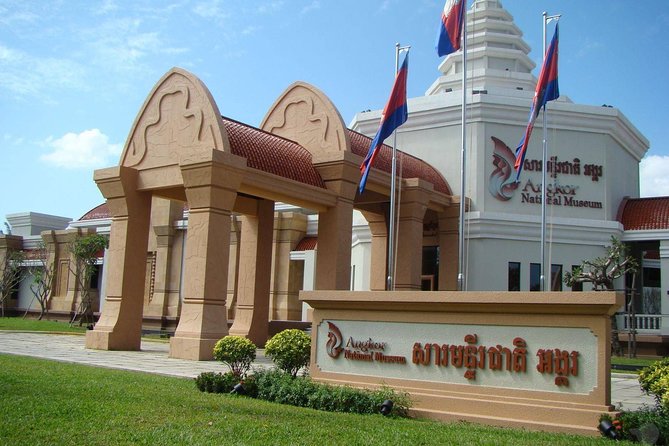
After the opening hall, the museum moves into its thematic galleries. Two are specifically called out:
- Gallery A: the Khmer Empire’s origins
- Gallery B: Khmer beliefs
This pairing is useful because it gives you a sequence. You’re not jumping from art style to art style with no explanation. You first get oriented on where the Khmer story begins, then you learn how beliefs shaped the culture you’re seeing in stonework and artifacts.
This is the part that tends to make temples “click” later. When you understand how people in the Khmer world explained their place in the universe, then you can look at temple symbolism with more than just awe. You start to recognize recurring ideas, and you notice details with purpose rather than just decoration.
One more detail that supports the learning: many artifacts are excavated from Angkor archaeological sites nearby. So the museum isn’t a random collection. It’s tied to the place and the material history of the region.
Sorting the pass, other easy options
The Exclusive Gallery on Buddhism: more than temple scenery
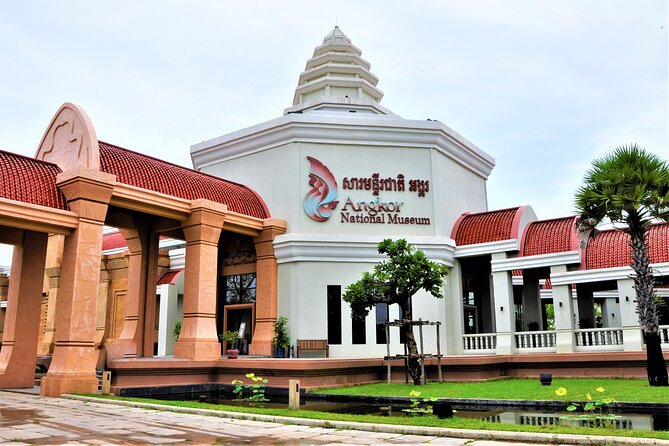
One standout section is the Exclusive Gallery, dedicated to Cambodia’s Buddhism. Angkor is often pictured through temple towers and carved faces, but religion was more than architecture. It shaped art themes, rituals, and how communities understood meaning.
This gallery gives you a way to see Buddhism as part of Khmer life rather than a separate topic you learn about elsewhere. It also helps you connect carvings and motifs you’ll encounter in temple ruins to a belief system.
I found that galleries like this are where museums become genuinely worth your time. Without that context, you can walk through temples thinking, That’s beautiful. After you see a religious context in the museum, you can start thinking, This fits into a bigger worldview.
The rest of the exhibits: how the museum builds toward Angkor Temples
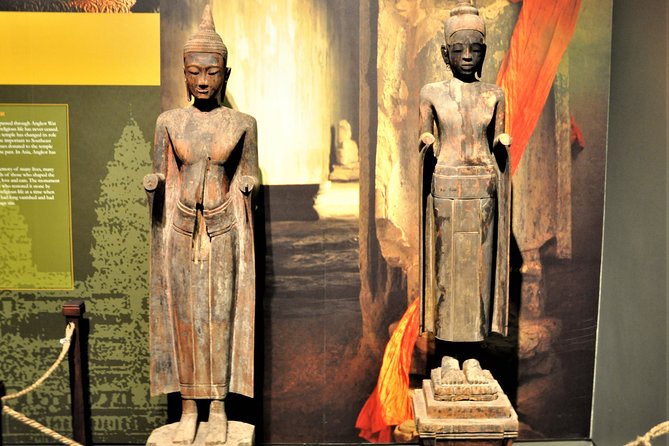
Beyond Gallery A, Gallery B, and the Buddhism-focused rooms, the museum continues through additional themed exhibits meant to explain “the wonders of the Angkor Temples and the Khmer Empire.” That’s your end goal: leaving with a clearer sense of what those temples were and how the Khmer Empire expressed beliefs through art and power.
Because the museum is self-guided, you get to decide how much time you spend on each stop. If you’re the kind of person who loves faces on carvings, you’ll probably linger longer in rooms with strong sculptural content. If you prefer explanation panels, you’ll shift your pace to match your reading style.
A practical point: since the route is single direction, it’s smart to start with curiosity instead of trying to “optimize” everything. If you force yourself to race, you’ll miss the rooms that would have helped you understand later sights.
Pacing a self-guided visit in about two hours
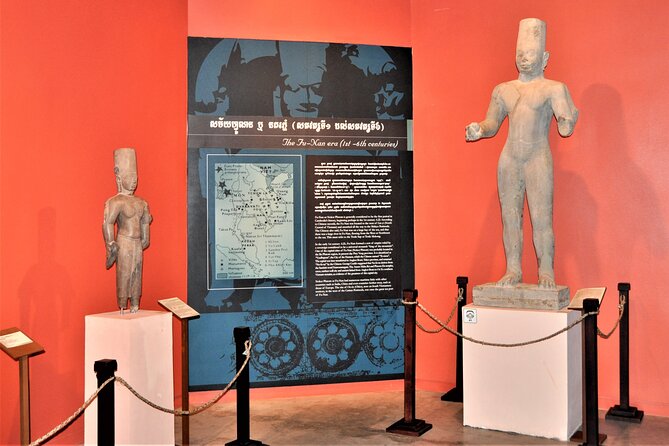
With a listed duration of around 2 hours, I’d plan your visit as three stages:
First, take time at the beginning rooms to understand the museum’s layout and the big ideas. Second, spend your middle time in Gallery A and Gallery B, where the museum does the “explain the story” work. Third, adjust near the end: either do a faster pass through remaining galleries or slow down on the sections that truly grab you.
You don’t need a rush, but you also shouldn’t expect to absorb everything. This is museum time, not homework night.
A tip from how people tend to experience it: if you like extra detail, consider adding audio/headsets. One visitor note I saw specifically recommended using the headsets for more detailed information, with audio mentioned as an extra charge. If you’re the type who hates long reading labels, audio can be worth it.
Price and value: why $132 might feel confusing
The price listed for this admission package is $132 per person, and it includes the Angkor National Museum fee plus one-way pickup from the JTB office.
Here’s the reality check I’d give you: museum ticket pricing and package pricing can show up differently depending on the booking channel. Some people have noted a much lower museum admission figure and mentioned audio as an extra add-on. The point isn’t to chase the lowest number—it’s to make sure you’re comparing like with like.
So what’s the value here?
You’re paying for three things at once:
- Admission access to the museum at your chosen time
- Prepaid entry so you can skip ticket-line hassle
- Convenient one-way transport via the JTB pickup
If you’d otherwise have to figure out your own transport (especially during busy hours), that convenience can be worth real money. If you already know how you’ll get there easily, you might feel the price is steep for “just a museum,” especially if you skip optional extras like audio.
My advice: before you book, confirm what’s included in your exact checkout. If audio isn’t included for you, decide whether you want it.
Small group setup: 20 travelers max can feel calmer
The maximum group size is listed as 20 travelers. That doesn’t mean you’ll be alone, but it usually means the pickup process and movement stay controlled. If you’re doing temples on other days, having an activity that doesn’t turn into a crowded shuffle can help your energy.
Also, ticket redemption through staff at the JTB office meeting point can be quick and organized. In one note I saw, people praised how fast passes were issued during a group visit. That kind of smooth start matters when you only have a limited time window.
Practicalities that decide whether you enjoy it
A few “check this before you show up” items make a difference:
Dress code: Knees must be covered for both men and women. If you show up in shorts or a skirt that rides up, you risk being refused entry. Plan outfits that work for both museum walls and Cambodian heat.
What to bring: Bring your confirmation voucher and show up at the JTB office meeting point so staff can guide you to ticket redemption.
Children: Children must be accompanied by an adult.
Opening hours: For 2025, hours are listed as Monday through Friday, 8:00 AM to 5:00 PM. If your travel includes weekend days, plan around weekday timing.
What’s not included: Tips, tour and audio guide, transportation beyond the one-way pickup, and meals. The museum does have a cafe, but lunch isn’t part of this package.
Cafe and gift shop: a good place to pause without rushing out
One practical perk: the museum has an on-site cafe. I saw notes praising coffee, including a cappuccino, and people described it as a nice break during the visit. There’s also a gift shop with items people liked, which can be a fun way to turn what you learned into something tangible.
When you’re spending around two hours, breaks matter. If you don’t want to lose time to getting food elsewhere, staying on-site is easier.
Should you book the Angkor National Museum admission?
Book it if you want a smoother Angkor day with less guesswork. This ticket works well as a bridge between temple ruins and the people who built them. The combination of prepaid entry and a self-guided flow lets you set your pace while still following a logical route through key galleries.
Skip or reconsider if you’re looking for a deep, live guided tour. This is self-guided, and the “tour & audio guide” is listed as not included. If you want someone to explain every room in real time, you may want to pair it with a separate guide.
Also, double-check timing. With weekday hours listed (Monday–Friday), this fits best if you can plan your museum stop on a weekday.
If you’re going to see Angkor Temples and you care about understanding what you’re looking at, this museum visit is one of the best value moves you can make for your mental picture of Khmer art and belief.
FAQ
What’s included with this Angkor National Museum admission?
The package includes the Angkor National Museum fee and a one-way pick up from the JTB office in Siem Reap to the museum. Tips, audio/tour guidance, additional transportation, meals, and personal expenses are not included.
Is the museum visit self-guided or guided?
It’s self-guided, so you can explore at your own pace through the galleries. Tour and audio guide options are listed as not included.
Can I pick my arrival time?
Yes. The entrance ticket is flexible, and you can choose an arrival time that fits your schedule.
Do I need to wait in line for tickets?
Because the admission is prepaid, you should be able to enter without waiting for tickets.
What are the museum hours?
For 2025, the museum is listed as open Monday to Friday from 8:00 AM to 5:00 PM.
What dress code do I need for entry?
You must cover your knees. This applies to both men and women, and you may be refused entry if your outfit doesn’t meet the dress requirement.
Where do I meet for pickup and redemption?
You meet at the JTB(Cambodia)Co.,Ltd office at #52 Street, Charles De Gaulle Sangkat Svay Dangkum in Siem Reap. Staff then help you proceed with ticket redemption at the Angkor Museum.
More Tour Reviews in Siem Reap
- Angkor Wat Sunrise or Sunset Tour with Guide from Siem Reap
★ 5.0 · 12,109 reviews - Siem Reap: Angkor Wat: Small-Group Sunrise or Sunset Tour
★ 5.0 · 9,444 reviews - From Siem Reap: Kampong Phluk Floating Village Tour by Boat
★ 4.9 · 6,979 reviews - Sunset tour of Kampong Phluk stilts home village on the Tonle Sap
★ 5.0 · 4,865 reviews - Siem Reap: Angkor Wat 2-Day Tour with Sunrise and Sunset
★ 4.9 · 4,429 reviews
Passes and Tickets Sorted
- Angkor Wat Admission Ticket
★ 5.0 · 227 reviews - Siem Reap: Angkor Wat Admission Ticket
★ 4.7 · 106 reviews - Kullen Waterfall Park with Small Group included entrance fee
★ 5.0 · 105 reviews - Phnom Kulen National Park Admission Ticket
★ 4.7 · 30 reviews - Angkor Eye Standard Ride Ticket
★ 5.0 · 26 reviews
More Temple Circuits Around Siem Reap
- Angkor Wat Sunrise or Sunset Tour with Guide from Siem Reap
★ 5.0 · 12,109 reviews - Siem Reap: Angkor Wat: Small-Group Sunrise or Sunset Tour
★ 5.0 · 9,444 reviews - Siem Reap: Angkor Wat 2-Day Tour with Sunrise and Sunset
★ 4.9 · 4,429 reviews - Siem Reap: Full-Day Angkor Wat Guided Tour with Sunset
★ 4.9 · 3,803 reviews - Angkor Wat Sunrise tour with Small – Group and Guide tours
★ 5.0 · 3,655 reviews
Just Added: Fresh Siem Reap Tour Reviews



Angkor Temple Tours, compared.
 ★ 5.0Angkor Wat Sunrise or Sunset Tour with Guide from Siem ReapFrom $1812,109 reviews
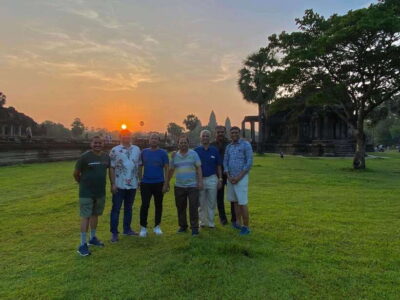 ★ 5.0Angkor Wat: Small-Group Sunrise or Sunset TourFrom $159,444 reviews
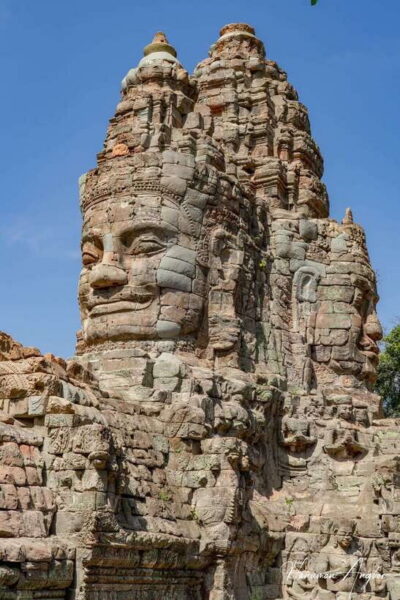 ★ 4.9Angkor Wat 2-Day Tour with Sunrise and SunsetFrom $344,429 reviews
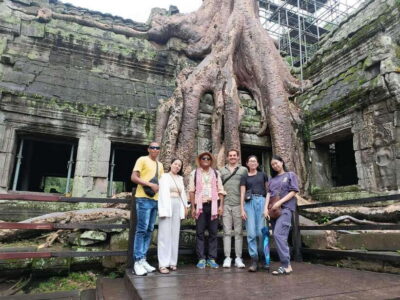 ★ 4.9Full-Day Angkor Wat Guided Tour with SunsetFrom $153,803 reviews
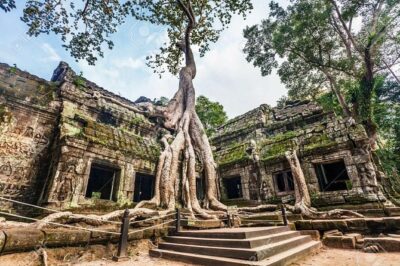 ★ 5.0Angkor Wat Sunrise tour with Small – Group and Guide toursFrom $143,655 reviews
 ★ 5.0Angkor Wat Highlights and Sunrise Guided Tour from Siem ReapFrom $233,213 reviews
 ★ 5.0Angkor Wat Sunset Small Group Tour with Lunch IncludedFrom $203,059 reviews
 ★ 5.0Full-Day Angkor Wat Sunrise Private Tour with Guide from Siem ReapFrom $602,920 reviews
Browse the lists this tour appears in