
Reviewed · ANGKOR TEMPLE TOURS
Angkor Region & Rainforest Bike Tour
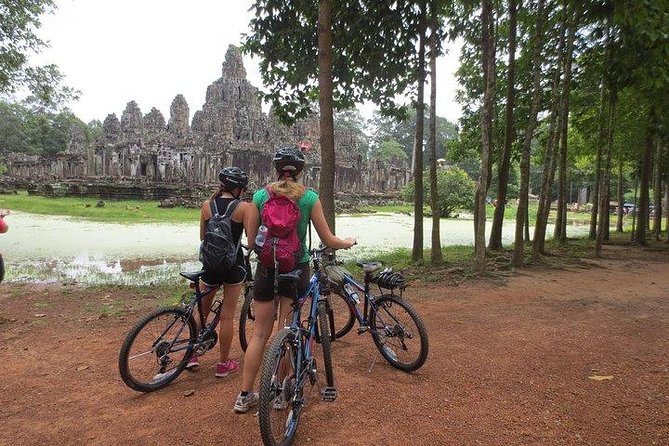
An early ride beats the day’s crowds here. This Angkor Region & Rainforest Bike Tour is built for exploring Khmer temples on two wheels, slipping onto quieter paths in the vegetation. I like that the day mixes famous stops with “off to the side” viewpoints, so you’re not just parking yourself in one long ticket line. I also like the small group feel that comes with a maximum of 10 travelers, which makes the ride feel controlled and not chaotic.
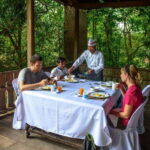
The best part for me is the value in what’s included: you get a premium TREK mountain bike and helmet, plus lunch, coconut water, and drinking water. You also travel with an English-speaking guide, and you’re not stuck figuring out which gate to enter or what to look for once you’re there.
One thing to consider: the temple pass is not included (listed at $37 for one-day entry), and the trails can get wet or muddy since the route includes rainforest riding. If you hate physical effort or don’t like getting dirty, this might feel more adventurous than you expected.
In This Review
- Key points
- Why biking makes Angkor feel smaller (in a good way)
- The 7:30am rhythm: meeting point, timing, and energy levels
- Rainforest trails and wet-weather reality
- Temple day, but in a smarter order
- Angkor Wat and the opening stretch
- Angkor Thom gates, walls, and Prasat Chrung views
- Bayon: smiling faces, up close
- Preah Khan: temple meets jungle
- Ta Nei: the ancient hospital feel
- What’s included (and why that matters for your budget)
- Gear, dress code, and comfort tips that help
- Small-group size and the guide effect
- Price and ticket math: is $50 a good deal?
- Who this bike tour is best for
- Should you book this Angkor Region & Rainforest Bike Tour?
- FAQ
- Is the temple pass included in the price?
- What time does the tour start?
- How long is the tour?
- Where do I meet the tour?
- Do I need to arrange my own bike or helmet?
- What’s included for food and drinks?
- Which temples are visited?
- Do I get hotel pick-up and drop-off?
- What should I wear in Angkor temple areas?
- Is the tour size limited?
Key points
- Skip the usual crush with routes that take you past queues and crowds on lesser-used paths
- Bike and helmet included with a quality TREK mountain bike, so you’re not spending money or time on rentals
- Five temple stops: Angkor Wat, Bayon, Preah Khan, Tanei, plus key Angkor Thom gates and walls
- Rainforest riding in real conditions, with small off-road trails that can be wet and muddy
- Lunch and drinks are included, including coconut water and pure drinking water
- Start early at 7:30am from Taphul Rd, with no hotel pick-up or drop-off
More temple circuits, set side by side
- Angkor Wat Sunrise or Sunset Tour with Guide from Siem Reap★ 5.0 · 12,109 reviews
- Siem Reap: Angkor Wat: Small-Group Sunrise or Sunset Tour★ 5.0 · 9,444 reviews
- Siem Reap: Angkor Wat 2-Day Tour with Sunrise and Sunset★ 4.9 · 4,429 reviews
- Siem Reap: Full-Day Angkor Wat Guided Tour with Sunset★ 4.9 · 3,803 reviews
Why biking makes Angkor feel smaller (in a good way)
Angkor can be overwhelming fast. Even if you love temples, the experience can turn into a traffic jam of people and loud motorbikes. This tour is designed to reduce that friction by putting you on two wheels and routing you toward calmer areas and viewpoints you might miss on a bus or car day.
I also like that the day doesn’t treat every stop like a photo stop only. With bike time between major sights, you get those in-between moments: the shade, the sounds of the vegetation, and the chance to shift gears mentally before you step back into temple crowds.
The “hidden trails” promise matters, too. It’s not just marketing language. The itinerary includes gates and walls inside Angkor Thom, plus temple areas that sit closer to jungle—so the cycling time directly shapes what kind of Angkor day you’re having. You’re not only moving between landmarks; you’re moving through the same environment that helped protect these places for centuries.
The 7:30am rhythm: meeting point, timing, and energy levels
You start at 7:30am at Taphul Rd, Krong Siem Reap. The tour ends back at the same meeting point, and there’s no hotel pick-up or drop-off. That means you’ll want to plan your morning transport carefully and give yourself buffer time to arrive early and un-rushed.
Duration is about 8 hours, so this is a real day, not a quick loop. The pacing is shaped by time at each temple and the riding portions in between. If you’re someone who usually tours at a slow walking pace, you’ll likely appreciate the steady rhythm of biking breaks—still, it’s worth noting you’ll be outside for most of the day.
Also: confirmation comes at booking, and the tour uses a mobile ticket. I find that convenient because it avoids juggling paper tickets at the start of an early morning.
Rainforest trails and wet-weather reality
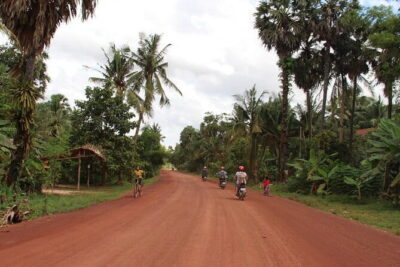
This is the part that makes the tour feel different from a basic temple circuit. The ride includes an adventurous journey through rainforest trail—a natural path through dense vegetation—plus sections that can involve smaller, wet, off-road tracks.
On a muddy day, you may feel like you’re doing a mini-adventure rather than a sightseeing stroll. That’s not a flaw; it’s part of the appeal. When the trail gets damp, the textures change: the air cools, colors deepen under shade, and the ride through the vegetation can feel more like a local environment than a curated park.
One practical thought: bring items that can handle getting a bit messy. You’ll likely be happiest if you expect muddy tires and a few splashes, especially during rainy season or after storms.
Temple day, but in a smarter order
Siem Reap by pedal, a couple more rides
Angkor Wat and the opening stretch
The day’s first major temple visit anchors the route with Angkor Wat, one of the Seven Wonders of the Ancient World. Starting here early is a big deal, not because the temple needs to be “perfectly empty,” but because mornings tend to feel more manageable and you’ll spend less of your day standing in slow-moving lines.
What you’ll notice at Angkor Wat is the sheer scale. The complex is religious and political in nature, and the guide’s job is to help you see how the design communicates power and devotion. Since you’re on a bike tour, you’re also getting the benefit of moving through the area with less stop-and-start friction.
Angkor Thom gates, walls, and Prasat Chrung views
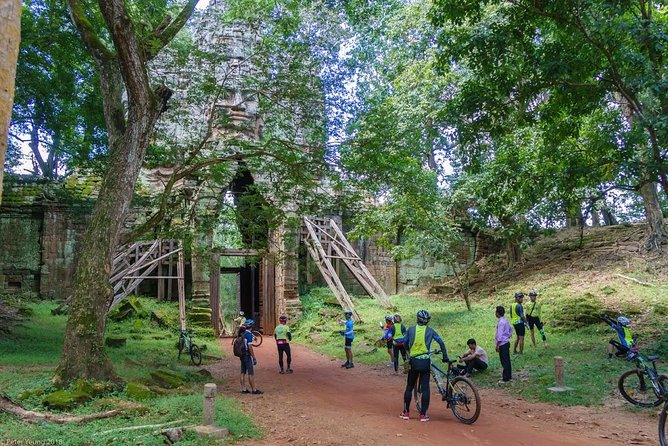
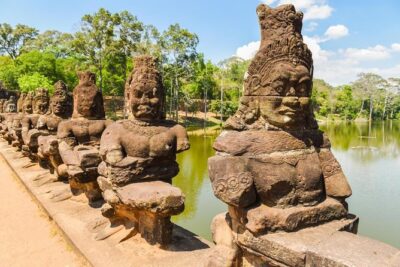
After Angkor Wat, the itinerary shifts into Angkor Thom, where you’ll see the South gate (described as the most appealing defensive wall of Angkor Thom) and then cycle through additional access points like the West gate and North gate.
A highlight is the route that includes climbing and exploring parts of the protection wall, with a payoff view at Prasat Chrung. Even if you’re not a hardcore climber, this kind of short climb can be worth it because it gives you a sense of the layout and depth of the complex.
From a value standpoint, this is one of the smartest “bike tour benefits.” You get access and orientation in a way that makes later temple photos look more meaningful, not just more numerous.
Bayon: smiling faces, up close
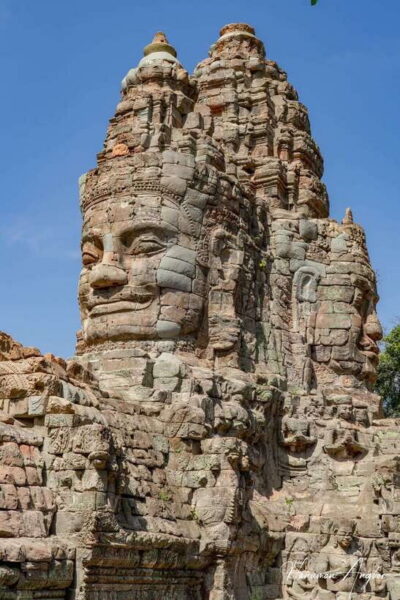
Next up is Bayon, known for its 54 towers with 216 smiling faces. This is one of those temples where the details can get lost if you’re moving too fast or stuck at the edges of the crowd.
Here, the bike-tour approach helps. You have a rhythm, and you’re guided so you can see more than the first angle. If you like repeating viewpoints—walking forward, shifting perspective, then circling back—this stop supports that style.
Preah Khan: temple meets jungle
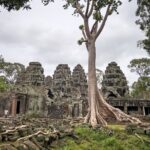
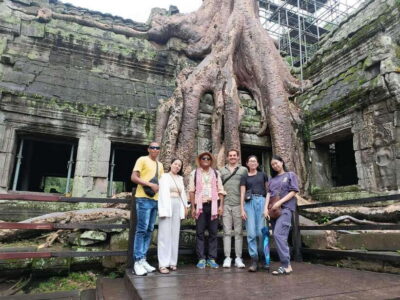
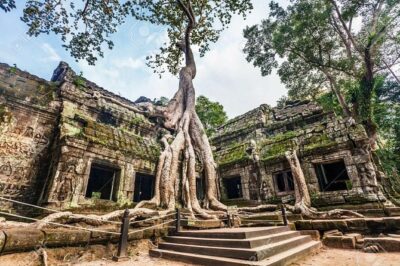
Then you move into Preah Khan, which is described as being covered by jungle. This is where the rainforest part of the experience starts to feel like more than scenery. The vegetation around the stone changes how you feel in the space. It can feel quieter and more layered, especially compared with the most famous open areas.
You’ll also enjoy that this part of the day isn’t only about big, obvious structures. It’s about atmosphere and textures: stone surfaces, root shadows, and the “how did this stay hidden for so long?” vibe that people travel to Angkor for.
Ta Nei: the ancient hospital feel
The final temple stop is Tanei, described as an ancient hospital area that feels untouched by archaeologists and embraced by surrounding nature. That phrasing is important because it suggests what kind of experience you’re getting: a calmer, more grounded feeling than the busiest temple icons.
If you’re trying to get beyond the checklist approach, this stop is a good fit. It’s also a nice way to end the day because it closes with a different mood—less about monumental spectacle and more about atmosphere and stillness.
What’s included (and why that matters for your budget)
The advertised price is $50.00 per person, and that includes a lot of the day’s real costs:
- English-speaking tour guide
- Premium mountain bike (TREK) and helmet
- Lunch
- Coconut water
- Pure drinking water
This is strong value for several reasons. First, you’re covering the rental-equipment problem. In Siem Reap, that can be a time-sink and a budget variable depending on what you choose. Here, you show up knowing you’ll have a proper bike and helmet.
Second, food and hydration matter more in a temple day than most people expect. Heat, walking, and sun exposure can turn small shortages into big discomfort. Having lunch plus coconut water and drinking water included means you can plan your day around actual energy instead of squeezing snacks between temples.
What is not included is the temple pass (listed at $37 for one-day entry). If you don’t already have an Angkor pass, you’ll need to budget that on top of the tour price.
Also not included: hotel pick-up and drop-off. That’s not a deal-breaker, but it does affect your logistics. You’ll want to be sure you can get to Taphul Rd at 7:30am smoothly.
Gear, dress code, and comfort tips that help
You’re advised to bring a camera, sunglasses, and sunscreen. Those are exactly the items that make a difference on a long day of bright stone, open air, and early-morning sun.
Dress code is also crucial. Angkor is an active spiritual site for Buddhist worship and local daily practice, and revealing clothes are prohibited in sacred palaces. That means shorts or skirts above the knees and bare shoulders aren’t appropriate. Pack clothing that covers your knees and shoulders, even if it’s hot. You’ll feel better too, because you won’t be adjusting yourself constantly when you enter temple areas.
One more practical note: your height must be advised at booking. That’s part of getting the right bike fit so you ride comfortably and safely for the full time.
Small-group size and the guide effect
This tour caps out at 10 travelers, which changes the experience more than you might think. In a group of that size, guides can actually manage the route flow—waiting when needed, pointing out details, and keeping everyone together without constant stress.
Names matter here because it signals consistency and professionalism. In past rides with the team, Bo Bo has been mentioned as part of a group that keeps bikes in good working order. That matters because Angkor riding isn’t always about flat pavement. If your bike feels reliable, you enjoy the day instead of thinking about the equipment.
Price and ticket math: is $50 a good deal?
Let’s run the numbers with what’s provided. At $50, you’re paying for the guide, a quality bike and helmet, lunch, coconut water, and drinking water. Since the temple pass is separate at $37 (one-day entry), your all-in cost depends on whether you already have that ticket.
So your decision isn’t just about the $50. It’s about whether you want to pay for:
1) rental gear you might need anyway,
2) a guide to help you interpret what you’re seeing, and
3) built-in meals so you don’t scramble during the day.
If you’re planning a full Angkor temple day and you’d rather avoid equipment rental and planning headaches, this is the kind of package that tends to feel fair. You’re also buying into the routing style—using bike access and less crowded paths—which is the main reason to choose this format over a basic temple tour.
Who this bike tour is best for
This works well if you want:
- A temple day that includes rainforest riding, not only walking through ticketed spaces
- More variety than a single temple circuit
- A smaller group with an English-speaking guide
- A practical included plan for food and hydration
It’s also a good match for people who like seeing Angkor from angles that aren’t only at the main entry points. The route through gates, protection wall views, Bayon’s faces, and the jungle-covered temples helps you build a fuller picture.
If you’re extremely budget-tight and already have all equipment and want complete freedom, a DIY approach could be cheaper. But if you value guidance, included meals and drinks, and reliable bikes, the package price makes sense.
Should you book this Angkor Region & Rainforest Bike Tour?
Book it if you’re excited by the idea of cycling through the Angkor area with less queue pressure, and you want a day that mixes big-name temples with jungle atmosphere. The included bike, helmet, lunch, coconut water, and drinking water are the kind of comforts that keep a long day enjoyable.
Skip or reconsider if you strongly prefer air-conditioned transport, hate muddy trails, or you don’t want to add the $37 temple pass to your budget. Also remember there’s no hotel pick-up, so you’ll need to manage that early start.
If you go in expecting a real bike day—some off-road riding, some temple climbing, and lots of sun—you’ll likely love how the day connects temple power to the jungle environment that helped shape it.
FAQ
Is the temple pass included in the price?
No. The tour price does not include the temple pass. A one-day entry temple pass is listed as $37.
What time does the tour start?
The start time is 7:30am.
How long is the tour?
It runs for about 8 hours.
Where do I meet the tour?
You meet at Taphul Rd, Krong Siem Reap 17252, Cambodia.
Do I need to arrange my own bike or helmet?
No. A premium TREK mountain bike and a helmet are included.
What’s included for food and drinks?
Lunch, coconut water, and pure drinking water are included.
Which temples are visited?
The tour includes Angkor Wat, Bayon, Preah Khan, Tanei, plus Angkor Thom highlights like the gates and the protection wall route described in the itinerary.
Do I get hotel pick-up and drop-off?
No. Hotel pick-up and drop-off are not included. The tour starts and ends back at the meeting point.
What should I wear in Angkor temple areas?
You should dress respectfully. Shorts or skirts above the knees and bare shoulders are prohibited in sacred palaces, so plan for clothing that covers your knees and shoulders.
Is the tour size limited?
Yes. The tour has a maximum of 10 travelers.
More Tour Reviews in Siem Reap
- Angkor Wat Sunrise or Sunset Tour with Guide from Siem Reap
★ 5.0 · 12,109 reviews - Siem Reap: Angkor Wat: Small-Group Sunrise or Sunset Tour
★ 5.0 · 9,444 reviews - From Siem Reap: Kampong Phluk Floating Village Tour by Boat
★ 4.9 · 6,979 reviews - Sunset tour of Kampong Phluk stilts home village on the Tonle Sap
★ 5.0 · 4,865 reviews - Siem Reap: Angkor Wat 2-Day Tour with Sunrise and Sunset
★ 4.9 · 4,429 reviews
Siem Reap on Two Wheels
- Siem Reap Countryside Bike Tour / E-Bike or Tuk Tuk
★ 5.0 · 935 reviews - Angkor Sunrise Bike Tour / E-Bike or Tuk Tuk
★ 5.0 · 615 reviews - Siem Reap: Bike the Angkor Temples – Full-Day 30km Tour
★ 5.0 · 463 reviews - Siem Reap: Angkor Wat Sunrise Bike Tour & Jungle Breakfast
★ 5.0 · 415 reviews - Siem Reap: Guided Countryside Bike Tour
★ 4.9 · 294 reviews
More Temple Circuits Around Siem Reap
- Angkor Wat Sunrise or Sunset Tour with Guide from Siem Reap
★ 5.0 · 12,109 reviews - Siem Reap: Angkor Wat: Small-Group Sunrise or Sunset Tour
★ 5.0 · 9,444 reviews - Siem Reap: Angkor Wat 2-Day Tour with Sunrise and Sunset
★ 4.9 · 4,429 reviews - Siem Reap: Full-Day Angkor Wat Guided Tour with Sunset
★ 4.9 · 3,803 reviews - Angkor Wat Sunrise tour with Small – Group and Guide tours
★ 5.0 · 3,655 reviews
Just Added: Fresh Siem Reap Tour Reviews

Angkor Temple Tours, compared.
 ★ 5.0Angkor Wat Sunrise or Sunset Tour with Guide from Siem ReapFrom $1812,109 reviews
 ★ 5.0Angkor Wat: Small-Group Sunrise or Sunset TourFrom $159,444 reviews
 ★ 4.9Angkor Wat 2-Day Tour with Sunrise and SunsetFrom $344,429 reviews
 ★ 4.9Full-Day Angkor Wat Guided Tour with SunsetFrom $153,803 reviews
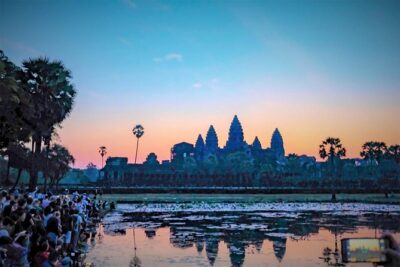
 ★ 5.0Angkor Wat Sunrise tour with Small – Group and Guide toursFrom $143,655 reviews
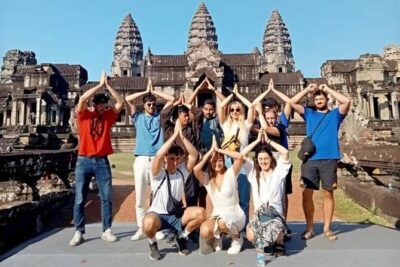
 ★ 5.0Angkor Wat Highlights and Sunrise Guided Tour from Siem ReapFrom $233,213 reviews
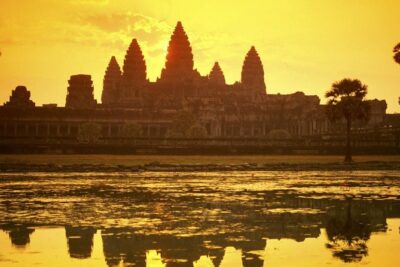
 ★ 5.0Angkor Wat Sunset Small Group Tour with Lunch IncludedFrom $203,059 reviews
 ★ 5.0Full-Day Angkor Wat Sunrise Private Tour with Guide from Siem ReapFrom $602,920 reviews
Browse the lists this tour appears in