
Sunset by e-bike beats temple shuffle. This Angkor day links the big names—Angkor Wat, Angkor Thom highlights, and Phnom Bakheng—without asking you to grind pedal power between distant ruins. You stay in a small group (max 8), with an English-speaking guide, so you get both the route help and the story pieces.
I especially like the e-bike setup. It lets you get active on country roads and temple paths without arriving wiped out. I also love that the tour includes lunch plus cold water and fruit, so the day stays practical instead of turning into a snack scramble. One thing to plan for: the temple pass/admission isn’t included, so you’ll need to budget for tickets separately.
In This Review
- Quick hits before you ride
- Why an e-bike makes sense at Angkor
- Price and what you actually get for $75
- Morning start: Angkor Wat with Khmer carving context
- Ta Prohm’s roots: riding through a slower kind of chaos
- Srah Srang lunch break: energy reset at midday
- Ta Nei Temple: the quieter jungle ruin stretch
- Bayon Temple and the Elephant Terrace rhythm
- Phnom Bakheng sunset: the uphill payoff
- Guide quality matters: English explanations and route confidence
- The itinerary, broken down without the guesswork
- What to watch out for (so the day stays fun)
- Who this tour fits best
- Should you book Angkor Sunset E-bike Tour With Lunch?
- FAQ
- Is lunch included on this tour?
- How long is the Angkor Sunset E-bike Tour With Lunch?
- Does the price include temple admission tickets?
- Do I get hotel pickup and drop-off?
- How big is the group?
- What happens if the weather is bad?
Quick hits before you ride
- Small group cap (up to 8) keeps the pace calmer and the guide easier to hear
- Hotel pickup and drop-off means less hassle than solo cycling
- E-bike assistance helps you cover more ground without feeling crushed
- Lunch at Srah Srang plus fruit snacks and cool water keeps energy steady through the afternoon
- Phnom Bakheng at sunset is the payoff after a full circuit of classic Angkor stops
- Admission tickets not included for the temples, so your day needs a plan for entry fees
Chasing the light? More dawn and dusk runs
- Angkor Wat Sunrise or Sunset Tour with Guide from Siem Reap★ 5.0 · 12,109 reviews
- Siem Reap: Angkor Wat: Small-Group Sunrise or Sunset Tour★ 5.0 · 9,444 reviews
- Sunset tour of Kampong Phluk stilts home village on the Tonle Sap★ 5.0 · 4,865 reviews
- Siem Reap: Angkor Wat 2-Day Tour with Sunrise and Sunset★ 4.9 · 4,429 reviews
Why an e-bike makes sense at Angkor
Angkor is spread out. That’s the whole point and also the problem. If you’re on a regular bike, the distances add up fast—especially when you’re stopping for photos, walking short stretches, and then remounting with the sun in your face.
This tour solves the tired-bike equation with an electric bicycle. You still get the satisfaction of moving under your own power, but the assistance helps you keep the day enjoyable. The route is also guided, so you’re not spending your mental energy working out turns on quiet roads. That matters here. Temple touring is more fun when you’re looking at things instead of navigating.
The day runs roughly 9 hours, starting at 9:00 am from Krong Siem Reap. Pickup is offered by tuk-tuk or car, then you roll into the main temple circuit and finish with sunset viewing.
Price and what you actually get for $75
At $75 per person, this isn’t a budget whisper, but it’s also not one of those “all-in” packages that hides the real costs. The most important thing to understand: temple admission is not included (the Angkor Wat tour pass and tickets for the stops aren’t part of the price). So the total day cost depends on what ticket you choose.
What you do get is the stuff that saves time and energy:
- English-speaking guide
- E-bike
- Lunch, plus fresh fruit
- Cool water during the ride
- Pickup and drop-off from your hotel
- A mobile ticket option
- Small group with a max of 8 people
For a day that includes both a long temple sequence and sunset, the value is mostly in logistics and easing the effort. If you’re comfortable renting and navigating on your own, you might compare costs. If you want a smooth, guided route with the day’s supplies handled, $75 can feel fair—especially with the food and water included.
Morning start: Angkor Wat with Khmer carving context
The day begins with pickup around 9:00 am, then you head to Angkor Wat. You’re there for about 2 hours. This is the famous Khmer temple built as a centerpiece of the Khmer empire, and the tour focuses on the art and the way it reached its peak around the 12th century.
What I like about starting here is simple: it gives you a clean entry point. Even if you’ve seen photos, being on-site with a guide helps you notice the repeated motifs and the design logic that makes Angkor Wat feel so purposeful. You’re not just walking; you’re learning what you’re looking at.
One planning note: the Angkor Wat admission ticket/temple pass isn’t included, so make sure your entry is sorted before you get there. The tour’s schedule assumes you’ll handle that part independently.
Ta Prohm’s roots: riding through a slower kind of chaos
Around 11:00 am, you shift from temple walking to e-bike cruising toward Ta Prohm. You spend about 1 hour here.
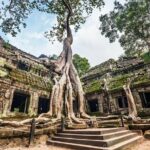
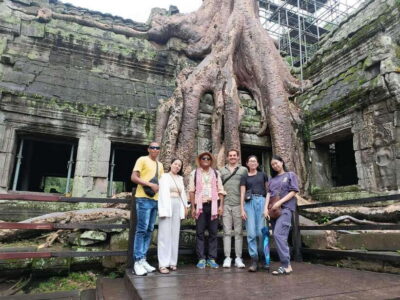
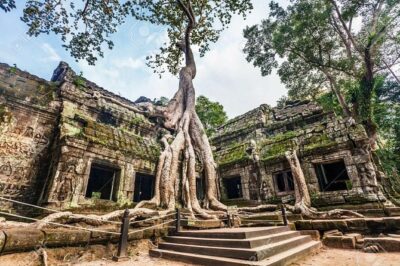
Ta Prohm is the one people recognize instantly: giant trees and massive roots that have grown into and around the stone. It’s also tied to pop culture—this is a location used for the movie Tomb Raider with Angelina Jolie. The tour keeps it moving, but the guide presence helps you understand why this temple has such a strong visual impact: the nature/stone blend is the attraction.
Practical reality: the ground and footpaths can feel uneven and crowded at peak times. An e-bike doesn’t remove the walking, but it does reduce the stress of getting between spots. You arrive ready to look, not already drained.
Again, temple admission isn’t included for this stop either, so your ticket plan matters for multiple points in the day.
More temple circuits, set side by side


Srah Srang lunch break: energy reset at midday
After Ta Prohm, the schedule reaches Srah Srang at 12:30 pm. This is your lunchtime break, about 1 hour.
Srah Srang is more than a pause button. You’re taking a break during the hottest part of the day, and that’s when it pays to have food handled for you. The tour includes lunch, plus fresh fruit snacks and cool water, which helps you keep pace instead of hunting for a meal after you’re already tired.
This is also where you get a chance to slow down mentally. Midday in Siem Reap can feel intense. A planned rest stop makes it easier to enjoy the afternoon temples instead of just pushing through to the sunset.
Ta Nei Temple: the quieter jungle ruin stretch
At 2:00 pm, you go to Ta Nei Temple. This stop lasts about 1 hour and is described as a trail route many people miss when they stick to the most obvious sites.
Here’s why I think this matters: Angkor can turn into a checklist if you only chase the headline temples. A less-frequented ruin stop gives your eyes a different experience—more weathering, more jungle character, and less of the same photo angles.
Because this is still a real temple site, you’ll want to be ready for typical outdoor conditions: uneven paths and hot sun can come into play depending on the day. The e-bike helps you travel between locations, but it won’t eliminate time outside.
Admission for this temple also isn’t included, so make sure the ticket you’ve bought covers what you need.
Bayon Temple and the Elephant Terrace rhythm
Around 3:00 pm, the tour reaches Bayon Temple, near the east gate of Angkor Thom. You’ll spend about 1 hour here.
Bayon is famous for the stone faces—large, frontal heads associated with Avalokiteshvara—and it’s also tied to royal Mahayana Buddhist worship linked to King Jayavarman VII. With a guide, you can connect the iconography to the broader Angkor Thom story, instead of just circling the main areas for pictures.
After Bayon, you also visit the Terrace of Elephants, described as the main terrace where the king sat to observe elephant training. That’s a detail worth noting because it shifts the focus from architecture alone to how people actually used these spaces in their day.
As the afternoon moves on, the mood changes. This is a good time to watch the light on the stone faces and keep an eye on your energy—especially if you’re the type who likes long, slow temple wandering.
Phnom Bakheng sunset: the uphill payoff
The final act is Phnom Bakheng, timed for sunset. The schedule allows about 2 hours for the climb up and the viewing.
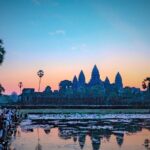
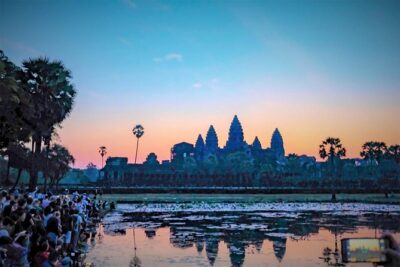
The tour description is straightforward: you go up and witness sunset over the mountain. This is the reason many people say Angkor days feel complete only when you finish at the end of the day. The horizon and the temple silhouettes do something to your memory of the place.
One thing to consider: sunset viewing at temples often involves crowds and waiting, and stairs can be part of the deal. The e-bike gets you there from a distance, but you’ll still be doing some walking near the viewing areas. If you’re sensitive to heat or stairs, build in some patience. It’s worth it, but it’s not a quick drop-in-and-out.
As with the other stops, temple admission isn’t included for this point either.
Guide quality matters: English explanations and route confidence
This tour’s success lives and dies with the guide. On this circuit, you want someone who can translate what you’re seeing into something you’ll remember tomorrow, not just a list of names.
The guide for this kind of tour is often described as friendly and attentive, with a clear way of explaining the history and architecture. One guide name that comes up is Pok—people appreciated how he shared details and kept things understandable.
Even more practical: a guide reduces the chance you’ll get turned around. Angkor roads aren’t always obvious, and a guided route means you can focus on the visuals while the logistics happen in the background. That’s especially useful if you’re on an e-bike and want your attention on safety and stopping points instead of navigation.
The itinerary, broken down without the guesswork
Here’s how the day flows, in plain English.
9:00 am – Hotel pickup → Angkor Wat (about 2 hours)
Start at the big centerpiece, with time to take in the carvings and layout. Admission isn’t included, so plan that ahead.
11:00 am – Ta Prohm (about 1 hour)
Ride to the root-covered temple. Expect an iconic, dramatic scene tied to nature and a famous film location.
12:30 pm – Srah Srang lunch stop (about 1 hour)
A real meal break, included, with fruit and water to keep you going.
2:00 pm – Ta Nei Temple (about 1 hour)
A trail-oriented stop that’s less common on the most rushed itineraries.
3:00 pm – Bayon + Terrace of Elephants (about 1 hour)
Faces of Avalokiteshvara, context around Jayavarman VII, and a glance at the ceremonial terrace area.
Late afternoon → Phnom Bakheng sunset (about 2 hours)
Climb and settle for the sunset viewing. This is your finish line.
That rhythm is the big value: you’re not bouncing randomly between sites. The timing builds in food and a final sunset window.
What to watch out for (so the day stays fun)
If you only remember one part of this review, remember this: tickets aren’t included. That means the tour price is only part of your Angkor total.
A second consideration is pacing. This is a long day: roughly 9 hours with multiple stops. It isn’t a sit-around-and-watch tour. You’ll be riding, then walking, then riding again.
Finally, sunset time can be affected by weather. The tour notes that it needs good weather, and if it’s canceled due to poor conditions, you’ll be offered another date or a full refund.
Who this tour fits best
You’ll probably like this tour if:
- You want a guided route through Angkor without worrying about navigation
- You want to cover multiple major temples in one day
- You don’t want a regular-bike day to turn into a leg workout
- You prefer small-group attention and an English-speaking guide
- You appreciate meals and water being handled
You might choose something else if:
- You’re an experienced rider who already knows how you want to route the temples
- You want a longer, unhurried time at just one or two sites (this day is built to hit many)
- You prefer fully all-inclusive pricing where tickets are bundled
Should you book Angkor Sunset E-bike Tour With Lunch?
Yes, if you want an organized, comfortable way to hit the Angkor highlights and still end with sunset. For $75, the best value is how it combines guided route, e-bike assistance, and included food/water, turning a demanding city-spanning circuit into a day you can actually enjoy.
If you hate the idea of handling temple entry separately, budget time for passes first. And if you’re sensitive to heat and walking near sunset viewpoints, plan to take it steady at Phnom Bakheng.
In short: this is a smart pick for people who want Angkor without the stress of DIY cycling—and who want the day to feel like a planned sequence rather than a scramble.
FAQ
Is lunch included on this tour?
Yes. Lunch is included at the Srah Srang stop, along with fresh fruit snacks and cool water during the day.
How long is the Angkor Sunset E-bike Tour With Lunch?
The tour runs about 9 hours (approx.).
Does the price include temple admission tickets?
No. The Angkor Wat temple pass/tickets are not included, and admission tickets for the other listed temple stops are also not included.
Do I get hotel pickup and drop-off?
Yes. Pickup and drop-off from your hotel are included, and pickup may be by tuk-tuk or car.
How big is the group?
The tour is limited to a maximum of 8 travelers.
What happens if the weather is bad?
The experience requires good weather. If it’s canceled due to poor weather, you’ll be offered a different date or a full refund.
Siem Reap on Two Wheels
- Siem Reap Countryside Bike Tour / E-Bike or Tuk Tuk
★ 5.0 · 935 reviews - Angkor Sunrise Bike Tour / E-Bike or Tuk Tuk
★ 5.0 · 615 reviews - Siem Reap: Bike the Angkor Temples – Full-Day 30km Tour
★ 5.0 · 463 reviews - Siem Reap: Angkor Wat Sunrise Bike Tour & Jungle Breakfast
★ 5.0 · 415 reviews - Siem Reap: Guided Countryside Bike Tour
★ 4.9 · 294 reviews
More Temple Circuits Around Siem Reap
- Angkor Wat Sunrise or Sunset Tour with Guide from Siem Reap
★ 5.0 · 12,109 reviews - Siem Reap: Angkor Wat: Small-Group Sunrise or Sunset Tour
★ 5.0 · 9,444 reviews - Siem Reap: Angkor Wat 2-Day Tour with Sunrise and Sunset
★ 4.9 · 4,429 reviews - Siem Reap: Full-Day Angkor Wat Guided Tour with Sunset
★ 4.9 · 3,803 reviews - Angkor Wat Sunrise tour with Small – Group and Guide tours
★ 5.0 · 3,655 reviews
Dawn and Dusk Over Angkor
- Angkor Wat Sunrise or Sunset Tour with Guide from Siem Reap
★ 5.0 · 12,109 reviews - Siem Reap: Angkor Wat: Small-Group Sunrise or Sunset Tour
★ 5.0 · 9,444 reviews - Sunset tour of Kampong Phluk stilts home village on the Tonle Sap
★ 5.0 · 4,865 reviews - Siem Reap: Angkor Wat 2-Day Tour with Sunrise and Sunset
★ 4.9 · 4,429 reviews - Siem Reap: Full-Day Angkor Wat Guided Tour with Sunset
★ 4.9 · 3,803 reviews
Just Added: Fresh Siem Reap Tour Reviews

Angkor Sunrise & Sunset Tours, compared.
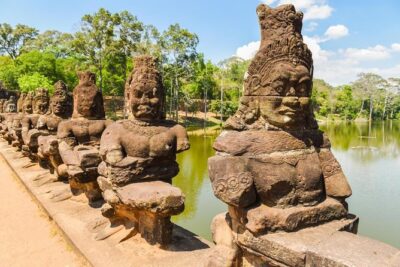 ★ 5.0Angkor Wat Sunrise or Sunset Tour with Guide from Siem ReapFrom $1812,109 reviews
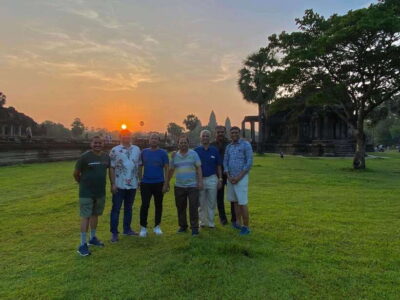 ★ 5.0Angkor Wat: Small-Group Sunrise or Sunset TourFrom $159,444 reviews
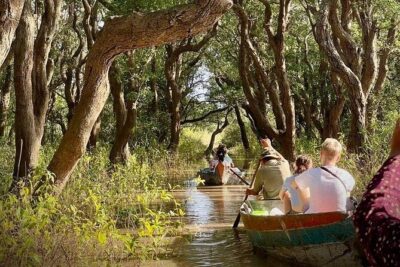 ★ 5.0Sunset tour of Kampong Phluk stilts home village on the Tonle SapFrom $214,865 reviews
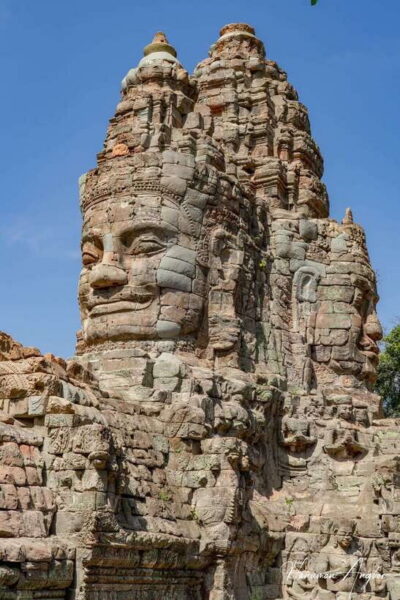 ★ 4.9Angkor Wat 2-Day Tour with Sunrise and SunsetFrom $344,429 reviews
 ★ 4.9Full-Day Angkor Wat Guided Tour with SunsetFrom $153,803 reviews
 ★ 5.0Angkor Wat Sunrise tour with Small – Group and Guide toursFrom $143,655 reviews
 ★ 5.0Angkor Wat Highlights and Sunrise Guided Tour from Siem ReapFrom $233,213 reviews
 ★ 5.0Angkor Wat Sunset Small Group Tour with Lunch IncludedFrom $203,059 reviews
Browse the lists this tour appears in