
Reviewed · ANGKOR WAT TEMPLE TOURS
Angkor Wat Bike Tour with Lunch Included
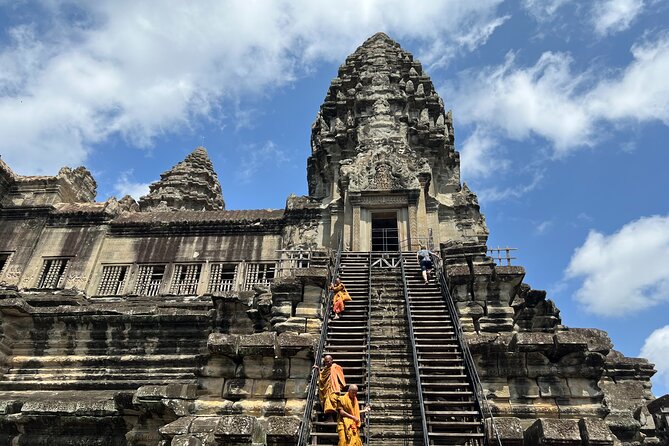
One bike ride, and Angkor clicks into place. This Angkor Wat loop mixes the big-name temples with quieter jungle ruins like Ta Nei, so you spend more time moving between wonders and less time stuck in traffic.
I love the ride plan for beginners and busy schedules: you get a clear overview of the Angkor complex without trying to brute-force it on your own. The small-group size also keeps things flexible when you want an extra minute for photos.
The possible drawback is simple: the temple pass is not included, and you’ll be cycling over hard-packed dirt with some paved sections, so it helps if you’re comfortable on that surface.
In This Review
- Key things to know before you ride
- Why cycling Angkor Wat feels smarter than rushing on foot
- 8:30 hotel pickup, helmets on, and bikes ready to roll
- Angkor Wat as your anchor point: arrive before the day gets complicated
- Ta Prohm at cycling speed: roots, stone, and film-fame context
- Lunch break around 11:30: real food, not just a pit stop
- Ta Nei Temple: the quiet jungle ruin that keeps the day interesting
- Angkor Thom and Bayon: smiling stone heads and a political view of religion
- Terrace of the Elephants: how the guide keeps it from feeling like a photo stop
- Fruits at the end and the easy return to your hotel
- The guides make it: Pok and Meam stand out for explanations and photos
- Price and logistics: $55 feels fair when you add up what’s included
- What the “small group” changes in your real experience
- Who should book this Angkor Wat bike tour
- Practical expectations for the ride day (so you don’t get surprised)
- Should you book it?
- FAQ
- FAQ
- What is the duration of the Angkor Wat Bike Tour with Lunch Included?
- How much does the tour cost per person?
- What time does pickup happen?
- How big is the group?
- Is the tour guide available in English?
- What bikes are provided?
- Is lunch included?
- Are temple passes included?
- Do you get hotel pickup and drop-off?
- Can I cancel for a full refund?
Key things to know before you ride
- Small group (up to 8): easier pacing and less waiting around between stops
- Giant mountain bikes with disc brakes + front suspension: confidence on uneven ground
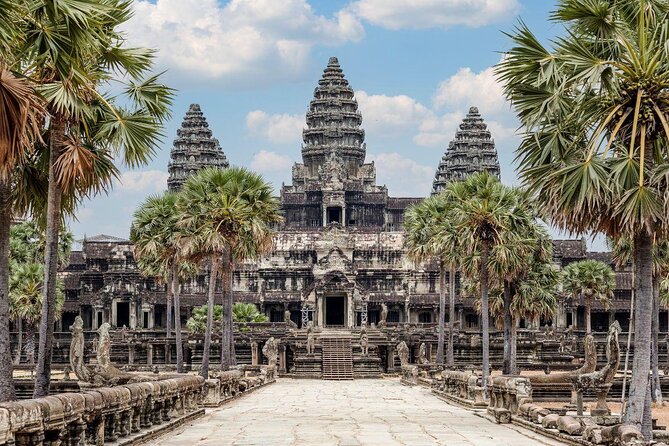
- A real temple route, not just the highlights: stops include Ta Prohm, Bayon, and Ta Nei
- Lunch plus bottled water and fruit: you’re fed and hydrated for a full 7 hours
- Support transportation included: tuk-tuk/car backing you up where needed
Other ways to walk the great temple
- Angkor Wat Sunrise or Sunset Tour with Guide from Siem Reap★ 5.0 · 12,109 reviews
- Siem Reap: Angkor Wat: Small-Group Sunrise or Sunset Tour★ 5.0 · 9,444 reviews
- Siem Reap: Angkor Wat 2-Day Tour with Sunrise and Sunset★ 4.9 · 4,429 reviews
- Siem Reap: Full-Day Angkor Wat Guided Tour with Sunset★ 4.9 · 3,803 reviews
Why cycling Angkor Wat feels smarter than rushing on foot
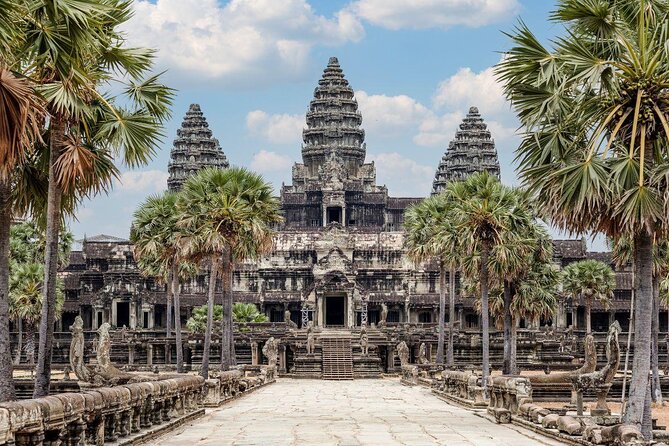
Angkor is enormous. Even if you’re motivated, doing it by foot alone can turn into a grind of long distances and stop-start lines. This bike format helps you keep momentum, so the day feels like a guided route rather than a checklist.
I like that the itinerary mixes the famous icons with spots that people often miss. You still get the full-on wow factor—then you also get the calmer, forest-feeling moments that make the whole place more than just a famous photo backdrop.
8:30 hotel pickup, helmets on, and bikes ready to roll
Your day starts with pickup from your hotel lobby around 8:30 am by tuk-tuk or car. You’ll get a helmet, a bottle of water, and a mountain bike that’s built for rougher ground.
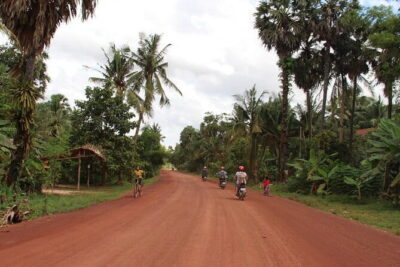
The bikes are described as modern and high-quality, including Giant models with large gear sets, disc brakes, and good front suspension. In practice, that matters because Angkor roads can feel dusty and uneven. Review comments also mention paths that are mostly hard packed dirt with some pavement and minimal traffic—so you get a mix of surfaces without constant city chaos.
Most importantly, you’re not left figuring it out. The guide and driver handle the logistics, and the support transportation is part of the plan.
Angkor Wat as your anchor point: arrive before the day gets complicated
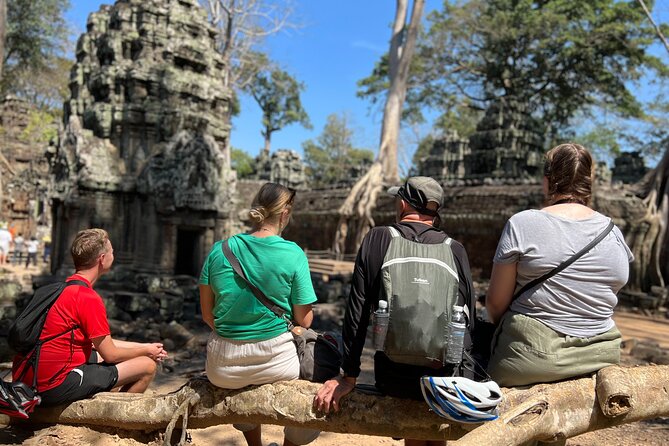
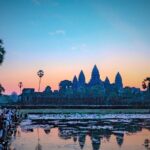
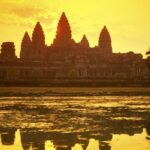
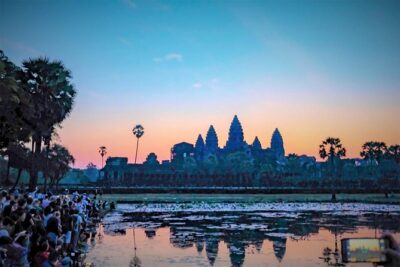
You start at Angkor Wat, the masterpiece of the Khmer temple tradition. The focus here is on orientation: you’re not just seeing buildings, you’re getting the big-picture layout and the context behind the art and design.
This stop works well early because Angkor Wat is the day’s anchor. Once you understand the scale and symbolism at the start, the later temples make more sense. You’ll also have the time to look at Khmer art and details, rather than racing straight to the next checkpoint.
Ta Prohm at cycling speed: roots, stone, and film-fame context

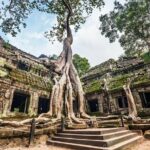
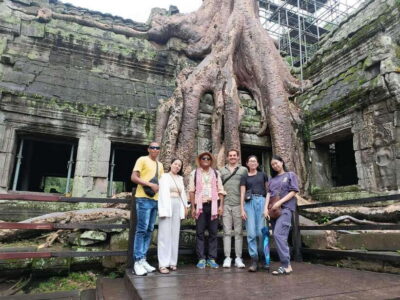
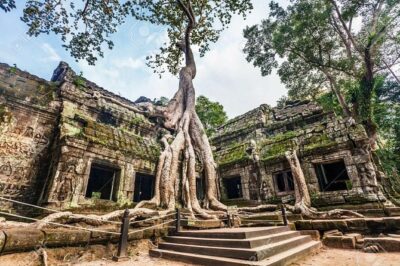
Around 10:00 am, you begin cycling and head to Ta Prohm, the temple left as it was discovered. This is the place where the roots intertwine with ancient structures and where the atmosphere feels half jungle, half masterpiece.
The tour specifically calls out that Ta Prohm is tied to Hollywood filming, including Tomb Raider starring Angelina Jolie. Even if you don’t care about that movie link, it helps explain why so many people recognize the look of the temple.
A practical note: you’ll still need to dismount and walk within the temple area. But because you’re biking between sites, you spend less of your day shuffling long distances.
More temple circuits, set side by side
Lunch break around 11:30: real food, not just a pit stop
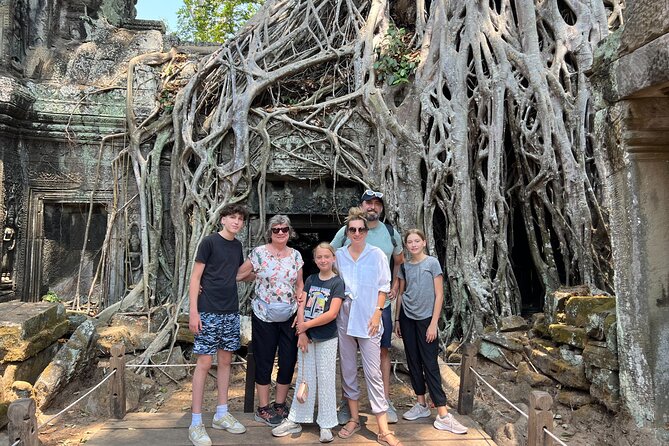
At 11:30 am, you stop for lunch at a local restaurant. The lunch is described as clean, with very good entrees, which matters in a place where you don’t want “tour food” dragging down your day.
This is the timing sweet spot. You’ve seen Angkor Wat and Ta Prohm, and you’re ready to refuel before the afternoon temples start to stack up. After lunch, you’re not tired and grumpy—you’re ready to keep moving.
Ta Nei Temple: the quiet jungle ruin that keeps the day interesting
Around 1:00 pm, you cycle toward Ta Nei Temple, described as a ruined temple in the jungle that many tourists can’t see. The value here is contrast. After the most famous names, Ta Nei gives you a calmer feel: more shade, more time with the temple rather than around the crowds.
This is also the kind of stop where a good guide changes your experience. With Khmer temple history and what you’re looking at explained clearly, the ruins start to feel less random and more like part of a larger story.
Angkor Thom and Bayon: smiling stone heads and a political view of religion
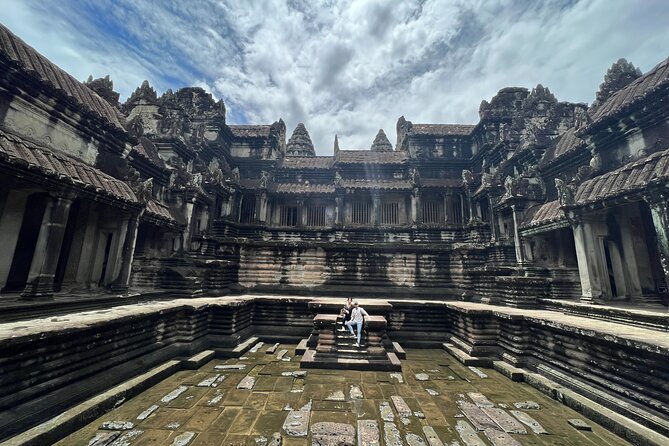
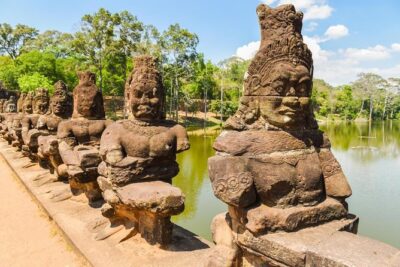
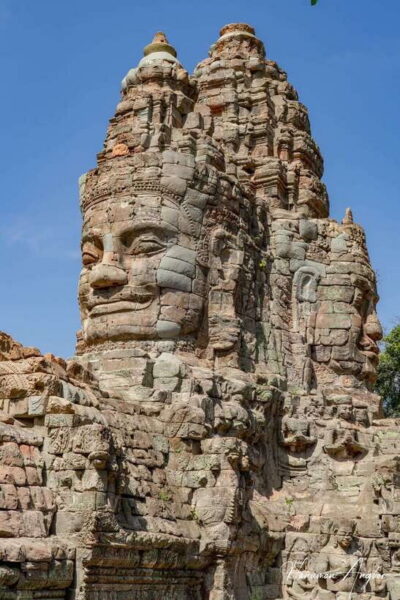
At about 2:00 pm, you reach the east gate of Angkor Thom and then visit Bayon. This is the part of the day built around the famous smiling stone heads, along with the temple’s role connected to Mahayana Buddhism and King Jayavarman VII.
What I like about including Angkor Thom with Bayon is that you don’t just see one “cool temple.” You get the sense of an entire city structure and how rulers used religion, art, and space to project power.
Your guide will point out the key faces and meaning behind Avalokiteshvara imagery and the broader context of the king’s state temple. In comments about guides, this kind of interpretation comes up again and again, especially with guides like Pok and Meam who are praised for answering questions and making explanations feel clear rather than lecture-like.
Terrace of the Elephants: how the guide keeps it from feeling like a photo stop
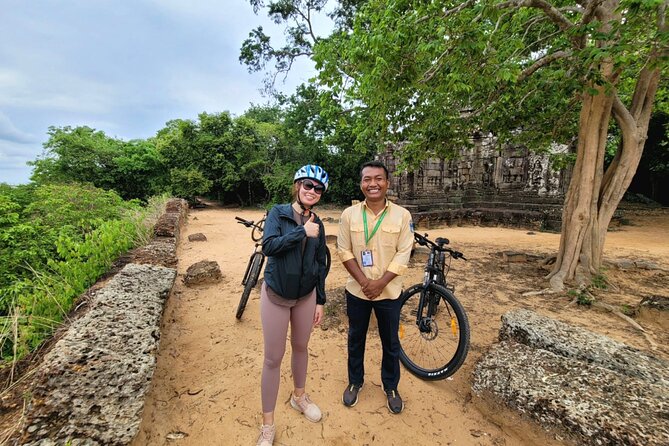
After Bayon, the tour includes the Terrace of Elephants, noted as the main terrace where the king sat to observe elephants training. It’s a short hop in the itinerary, but it adds a grounded human angle to the symbolism.
This is where I’d pay attention to what the guide tells you about use of space—because terraces and platforms in Angkor weren’t just decorative. They were stages.
Fruits at the end and the easy return to your hotel
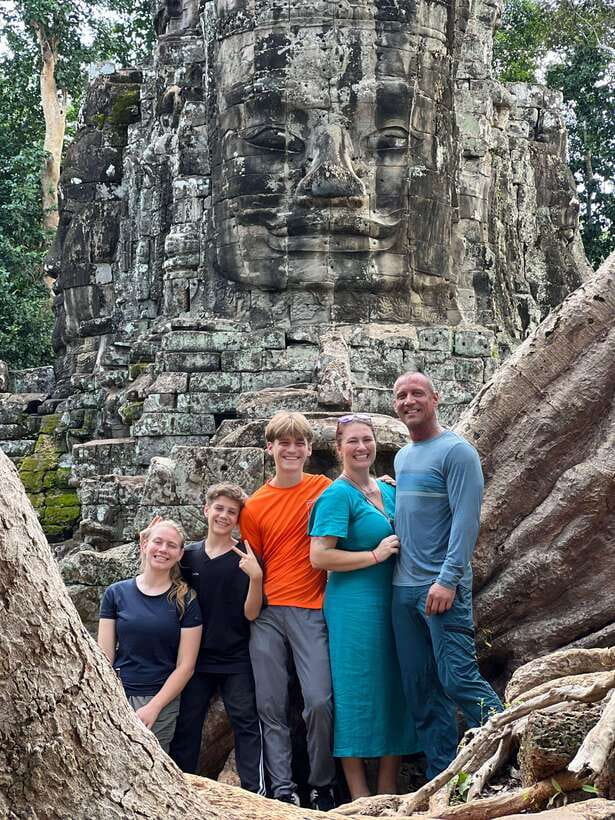
The tour wraps up around 3:00 pm. You’ll get freshly served locally grown fruit, then you’re taken back to your accommodation by tuk-tuk.
That final fruit stop is more than a nice touch. After several hours of cycling and walking, it’s an easy way to end without feeling like you have to immediately find a late snack somewhere unfamiliar.
The guides make it: Pok and Meam stand out for explanations and photos
The experience is built around more than temples and bikes—it’s also about how your guide connects the dots.
In the feedback you’ll see a repeated theme: guides like Pok and Meam are praised for being warm, welcoming, and humorous, while still delivering real historical context. Another standout detail is how they handle photos. One of the most mentioned strengths is that guides are good at taking strong photos for you and sharing them afterward, including helping you get shots you might miss while you’re trying to operate your own camera.
If you like asking questions and getting direct answers (especially about why Khmer temples look the way they do), this kind of guide interaction is a big part of the value.
Price and logistics: $55 feels fair when you add up what’s included
At $55 per person for about 7 hours, this tour can look inexpensive on paper. The better way to judge it is to add what’s bundled:
- professional English-speaking guide
- mountain bikes (with helmet, disc brakes, front suspension, and gears)
- bottle water
- lunch
- fresh fruits
- support transportation
- hotel pickup and drop-off by tuk-tuk or car
The one item you must plan for is the temple pass. Since it’s not included, you should budget that separately before you decide. But when you compare this tour’s package to piecing together transport, bike rental, and guided entry time on your own, the $55 start price makes sense for a first-time Angkor day.
Also, since the group is limited to 8 participants, you’re usually getting more attention than on big-bus tours.
What the “small group” changes in your real experience
A group of up to 8 might not sound dramatic, but it changes the day. There’s less waiting. The route can be managed at a human pace, and you can get photo stops without the whole pack piling up behind you.
It also means your guide can answer questions in context. When the group is small, explanations don’t get rushed just because the next person is already demanding to move on.
Who should book this Angkor Wat bike tour
This is a good fit if you:
- want a temple overview without spending the entire day walking
- like cycling and want a plan that handles the route for you
- prefer smaller groups with clearer guidance
- care about getting more than just the famous temples
You might want to skip it if you:
- don’t feel comfortable riding a bike over hard-packed dirt
- are expecting everything (including the temple pass) to be included
- want a totally low-effort day where you stay in a vehicle almost the whole time
Practical expectations for the ride day (so you don’t get surprised)
Based on the ride description, you’ll deal with hard packed dirt and some paved sections. That’s a normal mix for cycling in the area and it’s exactly why disc brakes and suspension matter.
Also, plan for the rhythm of a temple day: you’ll cycle between sites, then dismount to walk around temples. The walking parts are where you’ll feel the day most, not while you’re on the bike.
Should you book it?
If you’re going to Angkor with limited time, this tour is a strong choice. You get the major temples—Angkor Wat, Ta Prohm, Bayon, and Angkor Thom—plus the extra texture of Ta Nei in the jungle. You’re also supported with modern bikes, helmet, water, lunch, and fruit, which turns a long day into a manageable one.
My rule of thumb: book this if you want the best combo of movement + meaning. Skip it if you only want the easiest vehicle-only sightseeing or if you’re not comfortable on dirt cycling surfaces.
FAQ
FAQ
What is the duration of the Angkor Wat Bike Tour with Lunch Included?
The tour lasts 7 hours.
How much does the tour cost per person?
The price is $55 per person.
What time does pickup happen?
Pickup starts at 8:30 am from your hotel lobby.
How big is the group?
The group is limited to 8 participants.
Is the tour guide available in English?
Yes, the tour has an English-speaking live guide.
What bikes are provided?
You get modern, high-quality mountain bikes (Giant) with large gear sets, disc brakes, and front suspension, plus a helmet.
Is lunch included?
Yes. Lunch is included, and the tour also includes bottled water and fresh fruit.
Are temple passes included?
No. Temple Pass is not included.
Do you get hotel pickup and drop-off?
Yes. Hotel pick-up and drop-off are included by tuk-tuk or car.
Can I cancel for a full refund?
Yes. You can cancel up to 24 hours in advance for a full refund.
Siem Reap on Two Wheels
- Siem Reap Countryside Bike Tour / E-Bike or Tuk Tuk
★ 5.0 · 935 reviews - Angkor Sunrise Bike Tour / E-Bike or Tuk Tuk
★ 5.0 · 615 reviews - Siem Reap: Bike the Angkor Temples – Full-Day 30km Tour
★ 5.0 · 463 reviews - Siem Reap: Angkor Wat Sunrise Bike Tour & Jungle Breakfast
★ 5.0 · 415 reviews - Siem Reap: Guided Countryside Bike Tour
★ 4.9 · 294 reviews
More Temple Circuits Around Siem Reap
- Angkor Wat Sunrise or Sunset Tour with Guide from Siem Reap
★ 5.0 · 12,109 reviews - Siem Reap: Angkor Wat: Small-Group Sunrise or Sunset Tour
★ 5.0 · 9,444 reviews - Siem Reap: Angkor Wat 2-Day Tour with Sunrise and Sunset
★ 4.9 · 4,429 reviews - Siem Reap: Full-Day Angkor Wat Guided Tour with Sunset
★ 4.9 · 3,803 reviews - Angkor Wat Sunrise tour with Small – Group and Guide tours
★ 5.0 · 3,655 reviews
Angkor Wat, a Few More Ways In
- Angkor Wat Sunrise or Sunset Tour with Guide from Siem Reap
★ 5.0 · 12,109 reviews - Siem Reap: Angkor Wat: Small-Group Sunrise or Sunset Tour
★ 5.0 · 9,444 reviews - Siem Reap: Angkor Wat 2-Day Tour with Sunrise and Sunset
★ 4.9 · 4,429 reviews - Siem Reap: Full-Day Angkor Wat Guided Tour with Sunset
★ 4.9 · 3,803 reviews - Angkor Wat Sunrise tour with Small – Group and Guide tours
★ 5.0 · 3,655 reviews
Just Added: Fresh Siem Reap Tour Reviews

Angkor Wat Temple Tours, compared.
 ★ 5.0Angkor Wat Sunrise or Sunset Tour with Guide from Siem ReapFrom $1812,109 reviews
 ★ 5.0Angkor Wat: Small-Group Sunrise or Sunset TourFrom $159,444 reviews
 ★ 4.9Angkor Wat 2-Day Tour with Sunrise and SunsetFrom $344,429 reviews
 ★ 4.9Full-Day Angkor Wat Guided Tour with SunsetFrom $153,803 reviews
 ★ 5.0Angkor Wat Sunrise tour with Small – Group and Guide toursFrom $143,655 reviews
 ★ 5.0Angkor Wat Highlights and Sunrise Guided Tour from Siem ReapFrom $233,213 reviews
 ★ 5.0Angkor Wat Sunset Small Group Tour with Lunch IncludedFrom $203,059 reviews
 ★ 5.0Full-Day Angkor Wat Sunrise Private Tour with Guide from Siem ReapFrom $602,920 reviews
Browse the lists this tour appears in