
Reviewed · ANGKOR WAT TEMPLE TOURS
Angkor Wat Cycling Tour
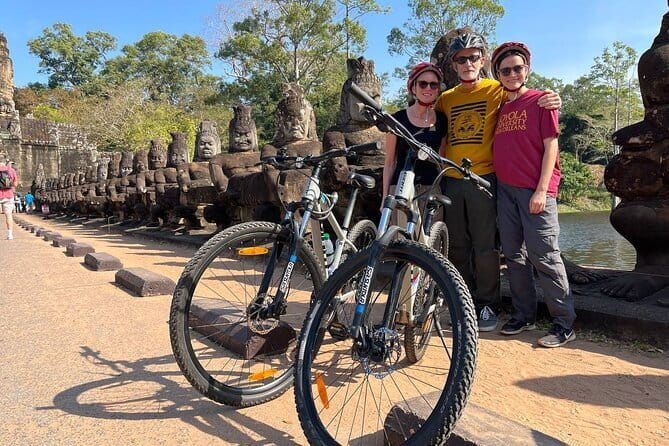
Two wheels make Angkor feel calmer. This Angkor Wat cycling tour turns the big-name sights into a slower, more flexible day on dedicated paths, so you can move through the park without the typical gridlock. I especially like how the route mixes famous monuments with quieter temple corners, and how the experience is guided by Mr. K, who keeps things organized and easy to follow.
I also love the practical side: hotel pickup and drop-off, cold drinking water, and quality mountain bikes with helmets mean you’re not hunting for basics before you start. The ride style stays leisurely, and the pace can flex depending on how much cycling you want that day.
One thing to plan for: the Angkor Temple Pass is not included. Angkor Wat’s admission requires that pass (listed at $37 per person), so your total cost will be higher than the $45 tour price.
In This Review
- Key highlights to know before you go
- Why Cycling Angkor Wat Works Better Than Just Walking
- Price and Value: $45 for the Ride, $37 for the Temple Pass
- Morning Logistics from Siem Reap Hotels
- The Route You’ll Follow: Temples, Gates, and Jungle Backroads
- Stop-by-Stop: What You’ll See at Angkor Wat, Bayon, Ta Prohm, and More
- Angkor Wat (2 hours, pass required)
- Bayon Temple (2 hours, free)
- Chau Say Tevoda (30 minutes, free)
- Ta Prohm (2 hours, free)
- Ta Nei (1 hour, free)
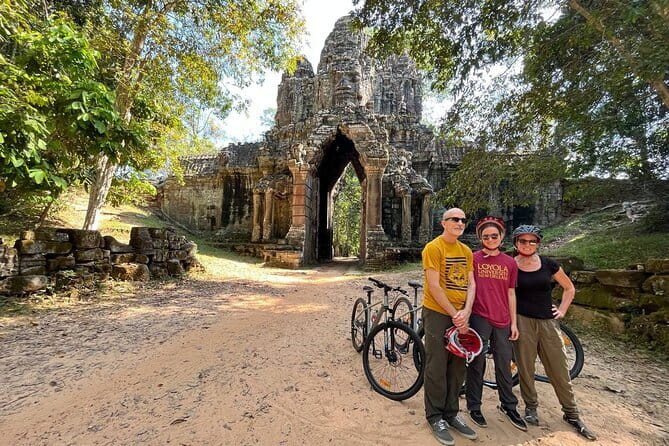
- Bayon Temple East (Death) Gate (30 minutes, free)
- Safety, Bike Quality, and Real-World Pacing
- Your Guide: Mr. K’s Friendly Organization Makes the Difference
- What It’s Like to Spend 6 to 8 Hours at Angkor Without Burning Out
- Who Should Book This Cycling Tour (and Who Might Prefer Something Else)
- Should You Book the Angkor Wat Cycling Tour?
- FAQ
- How long is the Angkor Wat cycling tour?
- What time does pickup happen?
- What’s included in the price?
- Do I need to buy the temple pass?
- Is this tour private?
- Is there free cancellation?
Key highlights to know before you go
- Mr. K runs a smooth, friendly ride, and he adjusts how you cycle to match your comfort level.
- Hotel pickup and drop-off keep your morning stress-free.
- Quality mountain bikes + helmets are included.
- You’ll see both headline temples and smaller sites with jungle backroad energy.
- Angkor Wat requires the temple pass; other stops are listed as free.
Other ways to walk the great temple
- Angkor Wat Sunrise or Sunset Tour with Guide from Siem Reap★ 5.0 · 12,109 reviews
- Siem Reap: Angkor Wat: Small-Group Sunrise or Sunset Tour★ 5.0 · 9,444 reviews
- Siem Reap: Angkor Wat 2-Day Tour with Sunrise and Sunset★ 4.9 · 4,429 reviews
- Siem Reap: Full-Day Angkor Wat Guided Tour with Sunset★ 4.9 · 3,803 reviews
Why Cycling Angkor Wat Works Better Than Just Walking
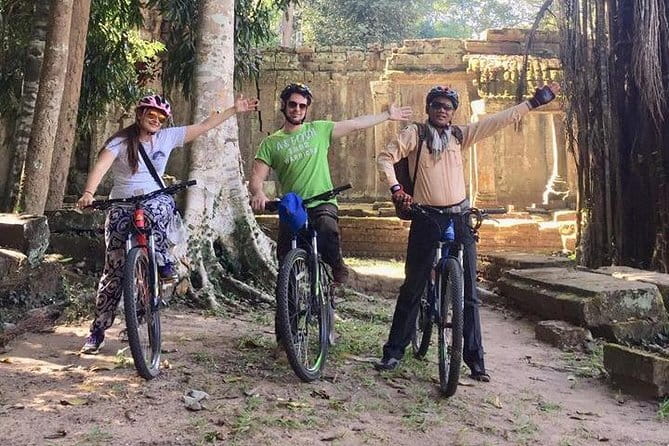
Angkor is huge, and walking-only days can turn into a temple sprint. This cycling format solves that. You still get the up-close feel of Khmer stone and sculpted faces, but you’re not spending the whole day shuffling between distant points. Instead, you ride safe, dedicated cycling paths and backroads that feel more local than tour-bus hopping.
There’s also a calm factor. The route is designed to help you avoid heavy crowd pressure by focusing on a more spread-out circuit and quieter connections through the park’s lanes and jungle edges. When you’re moving at bike speed, you naturally slow down in the places that matter most, and you can spend more time looking closely at details like tower shapes and gate positions.
I also like the theme of the day: you’re not just checking off icons. The mix of larger and lesser-known temples means you get contrast—monument scale at Angkor Wat and Ta Prohm, then the more intimate, overgrown atmosphere at spots like Chau Say Tevoda and Ta Nei.
A small but important note: this is described as a leisurely ride. That means you can enjoy the scenery without feeling like you’re training for a race.
Price and Value: $45 for the Ride, $37 for the Temple Pass
Let’s talk money in a clear way. The tour price is $45 per person, and the Angkor Temple Pass is extra at $37 per person. That makes your likely total about $82 per person, before any other personal add-ons.
Is it worth it? For me, the value hinges on what you’re getting for that $45:
- Hotel pickup and drop-off
- English-speaking guide
- Cold drinking water
- Mountain bike and helmet
That’s not just “someone leading you around.” It’s logistics handled, plus equipment supplied so you don’t pay separately for bike rental or scramble for a helmet. And the guide’s role matters at Angkor because timing and route flow can make the difference between a fun day and an exhausting one.
Where the math hurts a bit is the temple pass. Even if several temples on the route are listed as free, you’ll still need the pass for Angkor Wat, so you can’t treat the day like a bargain “only pay for the tour” situation.
If you’re the type who wants to see more than the two most famous stops, the cycling format helps you fit in multiple sites without feeling like you’re constantly walking uphill in the heat.
Morning Logistics from Siem Reap Hotels
The day starts early. You leave your hotel at 7:30 am, and the tour runs about 6 to 8 hours total. For me, the early start is a practical win. It gives you more comfortable daylight for temple viewing and cycling, and it helps you beat the busiest daytime crush.
Pickup and drop-off are included, so you’re not coordinating tuk-tuks or trying to interpret where a meeting point is in a place you don’t know yet. You’ll also get cold drinking water, which is simple but genuinely helpful during a long day.
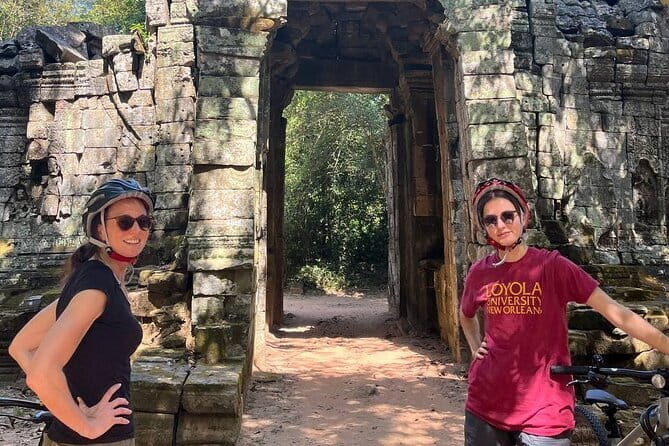
You’ll ride a mountain bike with a helmet. In the reviews, people specifically praised the bikes and the safety feeling of having good helmets. That’s a real comfort factor at Angkor, where the scenery can distract you, and the day is long enough that grip and handling matter.
One other useful thing: this is described as a private tour/activity, meaning it’s only your group. So it’s not a large open-queue situation where you’re stuck with strangers’ pace.
The Route You’ll Follow: Temples, Gates, and Jungle Backroads
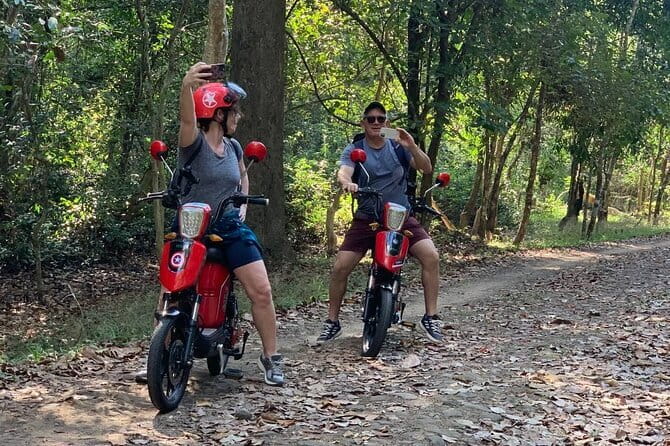
This trip is built around a loop through major and minor Angkor sites, starting at Angkor Wat and then moving through Angkor Thom and neighboring temples. The overall style is leisurely, but you still get a sense of progress because cycling links the sights more efficiently than foot travel.
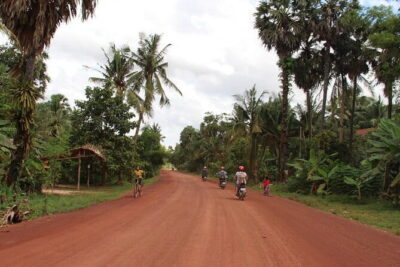
A key promise of the experience is the chance to see parts of Angkor that feel more like real backroads than postcard paths. The route is described as showing stretches of the jungle and areas that many visitors don’t experience the same way. That’s not just “pretty scenery.” It changes the whole mood. You’re more likely to feel like you’re traveling through an ancient landscape that’s still alive.
Here’s what that means stop by stop.
More temple circuits, set side by side
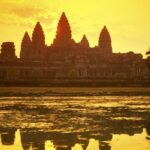
Stop-by-Stop: What You’ll See at Angkor Wat, Bayon, Ta Prohm, and More
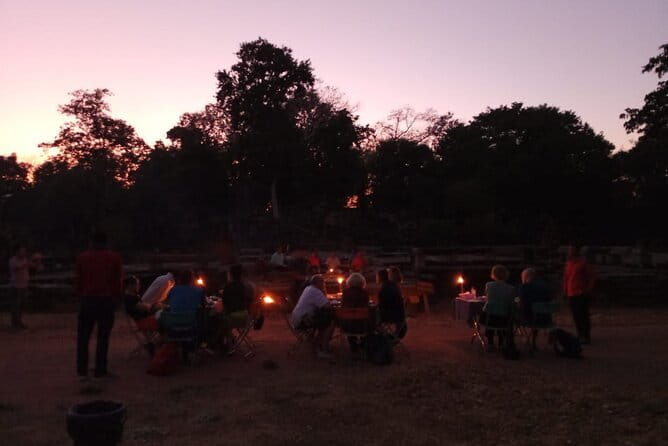
Angkor Wat (2 hours, pass required)
Angkor Wat is the headline stop. It’s the largest and most famous Khmer temple, built in the 12th century between 1113 and 1150 during the reign of Suryavarman II. It rises about 65 meters high, and it’s surrounded by a large moat area.
You’ll spend about 2 hours here. Since the Angkor Temple Pass is not included, you’ll need to purchase it separately (listed at $37 per person) before or as part of your day. This is the one stop where admission is explicitly not included.
Tip for getting the most out of your time: treat Angkor Wat like your “slow viewing” anchor. Even if you’re energized from the morning ride, plan to spend time looking at structure, causeway angles, and the way the temple frames the grounds around it.
Bayon Temple (2 hours, free)
Next comes Bayon Temple, part of Angkor Thom. It’s a Buddhist-style temple built in the late 12th/early 13th century by Jayavarman VII.
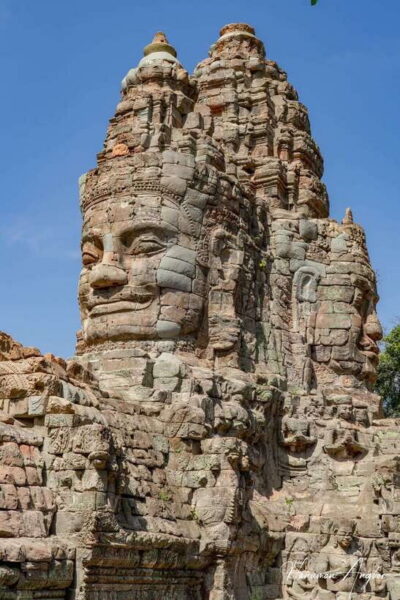
What I like here is the visual punch: Bayon has 54 towers, representing 54 provinces before and during the Khmer empire. This gives you a repeating pattern—faces and towers—from multiple viewing angles, so you’re not just looking at one static view.
Admission for Bayon is listed as free in the schedule. Expect about 2 hours to take it in without rushing.
Chau Say Tevoda (30 minutes, free)
Chau Say Tevoda is smaller but very interesting in context. It’s just east of Angkor Thom, directly south of Thommanon across the Victory Way.
This is a Hindu temple from the Angkor Wat period, built in the mid-12th century. Time here is listed at about 30 minutes, so it’s more of a targeted stop than a long linger.
This quick hit is nice if you want variety without turning every stop into a two-hour grind.
Ta Prohm (2 hours, free)
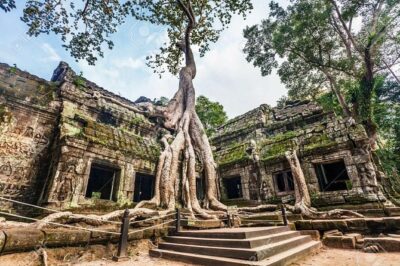
Ta Prohm is one of the most famous “story temples” because of its dramatic setting and the way the place looks half reclaimed by nature. It was built in the late 12th century by Jayavarman VII and dedicated in 1186 to his mother.
The religious background also shifts over time. It was originally Buddhist, then later converted to Hindu. That mix helps explain the variety of carvings and gallery feel you’ll notice as you walk through.
You’ll have about 2 hours here, and admission is listed as free. In a cycling day, this stop often feels like the emotional centerpiece because it’s where you slow down naturally—shade, stone corridors, and that “ancient still standing” vibe.
Ta Nei (1 hour, free)
Ta Nei is a smaller stone temple in the late 12th century style, also connected to King Jayavarman VII. It sits near the northwest corner of the East Baray, a large holy reservoir.
It’s dedicated to the Buddha, which helps it feel different from some of the Hindu-centered parts of the route. Time is about 1 hour and it’s listed as free.
I like this stop because it gives you a change of pace after the big visual hits. It’s the kind of place where you can look longer at fewer structures instead of juggling a packed checklist.
Bayon Temple East (Death) Gate (30 minutes, free)
The East (Death) Gate is one of five gates guarding Angkor Thom. It was built by Jayavarman VII in the late 12th century as part of the city reconstruction following the victory.
This is listed for about 30 minutes. It’s a brief but meaningful punctuation mark at the end of the Angkor Thom-focused section. If you like understanding how the city was structured and defended, this is the stop that helps the map in your head make sense.
Safety, Bike Quality, and Real-World Pacing
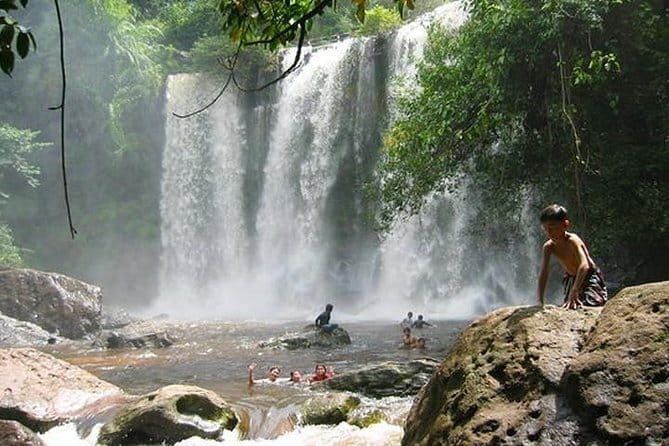
You’re on a mountain bike with a helmet, and the experience is described as using dedicated cycling paths designed to keep things safe. That matters because Angkor days are long, and uneven surfaces plus lots of standing around can wear you out.
The ride is also described as leisurely, which is exactly what you want for temple touring. You’re not chasing speed records. Instead, you’re looking for smooth movement between viewpoints, with time to stop and look.
One practical thing I value from the way this tour is run: Mr. K can accommodate how much cycling you want to do. That means if you arrive feeling energetic, you can push the cycling portion more. If you’re ready to slow down, you can still keep the day fun without feeling trapped in a strict pace.
Also, you’ll get cold drinking water. On a 6 to 8 hour day, that’s not a luxury—it’s basic survival comfort in Cambodia heat.
Your Guide: Mr. K’s Friendly Organization Makes the Difference
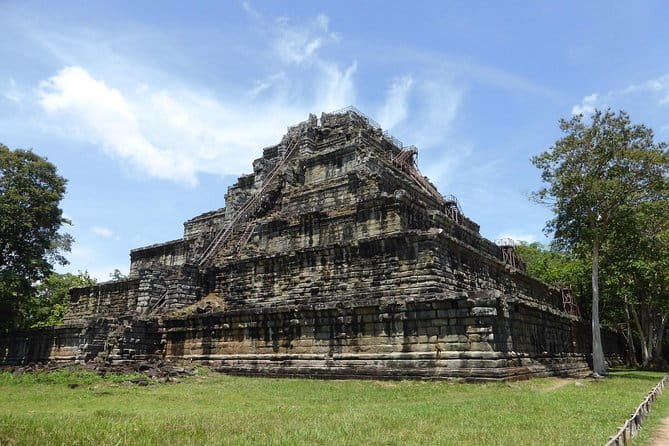
This is one of those tours where the guide really shapes the experience. Mr. K is repeatedly praised for being friendly, organized, and good at explaining what you’re seeing. People also noted he can guide you to more unusual spots and jungle stretches that aren’t always on the standard express routes.
What I like about that: it turns cycling into more than transportation. The bike becomes a way to access different corners of Angkor—places where the mood changes from open stone and big geometry to quieter, greener, more lived-in surroundings.
In one account, the day included a restaurant moment and even a relaxing massage afterward. That doesn’t appear as a formal “included item” on the basic tour features, so I’d treat it as an extra that might happen depending on the day. Still, it points to a broader style: the tour isn’t only about temples. It’s also about making the day feel comfortable and human.
If you’re the type who likes asking questions and getting real explanations instead of just hearing dates, this kind of guide match is a big reason to book.
What It’s Like to Spend 6 to 8 Hours at Angkor Without Burning Out
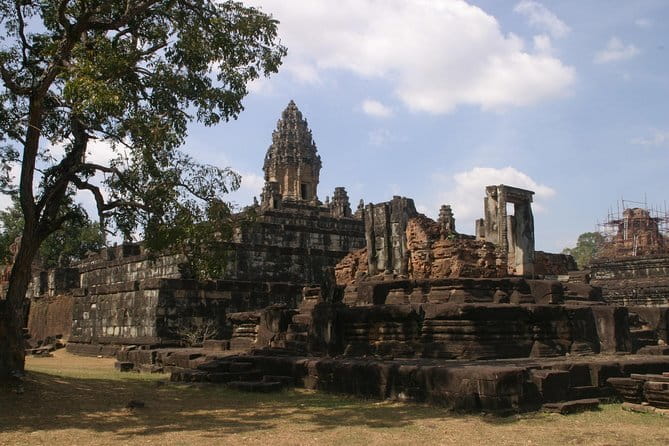
A cycling temple day can go two ways: either it feels like you’re rushing with quick stops, or it feels like a smooth flow. This one is aimed at the second.
You’ll get:
- a major anchor stop at Angkor Wat
- a long visual centerpiece at Bayon
- strong atmosphere at Ta Prohm
- variety with quicker temple stops like Chau Say Tevoda and Bayon East Gate
That variety helps keep your brain from getting bored. It also gives you different viewing styles: wide views at larger temples, tighter attention at smaller sites, and gate-focused context that makes the city plan feel more real.
The only downside risk is straightforward: temple touring still means standing, walking short stretches, and being out in the sun. Cycling helps, but it doesn’t erase the basics. Bring a plan to manage heat and rest breaks.
Who Should Book This Cycling Tour (and Who Might Prefer Something Else)
I think this tour is ideal if you:
- want to see multiple Angkor sites in one day without turning it into a foot marathon
- like the idea of backroads and jungle edge views rather than only the main circuit
- enjoy biking and want a safer, guided way to do it
- appreciate hotel pickup and equipment included in the price
It can also work for families, since private groups are available and the ride is described as leisurely. Still, since the schedule includes time at several temples, it’s best for people who are comfortable spending hours outdoors and moving between monuments.
If you don’t want to cycle at all, a walking tour may feel simpler. But if you like active sightseeing that doesn’t feel like hard labor, this hits a sweet spot.
Should You Book the Angkor Wat Cycling Tour?
If you want a more intimate, eco-friendlier-feeling way to see Angkor’s temples, cycling is a strong choice. The included bike, helmet, guide, water, and hotel pickup are real value, and the route is designed to include both major and smaller sites instead of only the top two.
My main “wait” point is the extra cost. The tour price is $45, but you should budget the $37 temple pass because Angkor Wat admission isn’t included. If you already plan to buy the pass for any Angkor day anyway, that extra line item becomes less painful.
If you’re ready for an early start and you’d rather ride through the park than constantly walk between far-flung points, this is a great way to spend a day in Siem Reap.
FAQ
How long is the Angkor Wat cycling tour?
It runs about 6 to 8 hours.
What time does pickup happen?
You leave from your hotel at 7:30 am.
What’s included in the price?
You get an English speaking tour guide, pickup and drop-off, cold drinking water, and a mountain bike with a helmet.
Do I need to buy the temple pass?
Yes. The Angkor Temple Pass is $37 per person and it is not included. Angkor Wat is listed as admission ticket not included, while several other stops are listed as free.
Is this tour private?
Yes, it’s a private tour/activity with only your group participating.
Is there free cancellation?
Yes. You can cancel up to 24 hours in advance for a full refund.
Siem Reap on Two Wheels
- Siem Reap Countryside Bike Tour / E-Bike or Tuk Tuk
★ 5.0 · 935 reviews - Angkor Sunrise Bike Tour / E-Bike or Tuk Tuk
★ 5.0 · 615 reviews - Siem Reap: Bike the Angkor Temples – Full-Day 30km Tour
★ 5.0 · 463 reviews - Siem Reap: Angkor Wat Sunrise Bike Tour & Jungle Breakfast
★ 5.0 · 415 reviews - Siem Reap: Guided Countryside Bike Tour
★ 4.9 · 294 reviews
More Temple Circuits Around Siem Reap
- Angkor Wat Sunrise or Sunset Tour with Guide from Siem Reap
★ 5.0 · 12,109 reviews - Siem Reap: Angkor Wat: Small-Group Sunrise or Sunset Tour
★ 5.0 · 9,444 reviews - Siem Reap: Angkor Wat 2-Day Tour with Sunrise and Sunset
★ 4.9 · 4,429 reviews - Siem Reap: Full-Day Angkor Wat Guided Tour with Sunset
★ 4.9 · 3,803 reviews - Angkor Wat Sunrise tour with Small – Group and Guide tours
★ 5.0 · 3,655 reviews
Angkor Wat, a Few More Ways In
- Angkor Wat Sunrise or Sunset Tour with Guide from Siem Reap
★ 5.0 · 12,109 reviews - Siem Reap: Angkor Wat: Small-Group Sunrise or Sunset Tour
★ 5.0 · 9,444 reviews - Siem Reap: Angkor Wat 2-Day Tour with Sunrise and Sunset
★ 4.9 · 4,429 reviews - Siem Reap: Full-Day Angkor Wat Guided Tour with Sunset
★ 4.9 · 3,803 reviews - Angkor Wat Sunrise tour with Small – Group and Guide tours
★ 5.0 · 3,655 reviews
Just Added: Fresh Siem Reap Tour Reviews

Angkor Wat Temple Tours, compared.
 ★ 5.0Angkor Wat Sunrise or Sunset Tour with Guide from Siem ReapFrom $1812,109 reviews
 ★ 5.0Angkor Wat: Small-Group Sunrise or Sunset TourFrom $159,444 reviews
 ★ 4.9Angkor Wat 2-Day Tour with Sunrise and SunsetFrom $344,429 reviews
 ★ 4.9Full-Day Angkor Wat Guided Tour with SunsetFrom $153,803 reviews
 ★ 5.0Angkor Wat Sunrise tour with Small – Group and Guide toursFrom $143,655 reviews
 ★ 5.0Angkor Wat Highlights and Sunrise Guided Tour from Siem ReapFrom $233,213 reviews
 ★ 5.0Angkor Wat Sunset Small Group Tour with Lunch IncludedFrom $203,059 reviews
 ★ 5.0Full-Day Angkor Wat Sunrise Private Tour with Guide from Siem ReapFrom $602,920 reviews
Browse the lists this tour appears in