
Fish, tigers, and crocodiles under one ticket. I like how an Angkor Wildlife & Aquarium ticket mixes a Freshwater Tank and hands-on Touch Pool time, so you’re not just staring at glass. It’s a conservation-focused stop that teaches you what lives in Cambodia’s Mekong and Tonle Sap systems.
I also like the way the site is kept and organized, which makes a visit feel easy even if you’re not a big “animal person.” One thing to consider: it’s a bit out of town, and if you’re expecting a huge variety of wildlife around every corner, the land exhibits may feel limited.
In This Review
- Key Highlights You’ll Actually Care About
- Your $15 Ticket: What’s Included and What That Means
- Getting There: Farther From Town Than You Might Expect
- Stop 1: Angkor Wildlife & Aquarium Circuit (Freshwater First)
- The Freshwater Tank and Why It’s a Standout
- Ocean Aquarium: The Freshwater-to-Marine Story
- Land Exhibits: Tigers, Crocs, Otters, Sun Bears, and More
- Reptiles Are a Major Focus Here
- The Touch Pool: What Hands-On Time Actually Feels Like
- How Long Should You Plan For?
- Value Check: Is It Worth $15?
- Conservation and Education: Why This Park Feels Different
- Who This Tour Suits Best (And Who Might Want to Skip)
- Quick Practical Tips Before You Go
- Should You Book Angkor Wildlife & Aquarium?
- FAQ
- How much does the Angkor Wildlife & Aquarium full day pass cost?
- How long is the experience?
- Where is this experience located?
- Are pickup and transportation included?
- Is the entry ticket included in the price?
- Is it a mobile ticket?
- What are the opening hours?
- What’s included in the ticket?
- What is not included?
- Is it easy to find public transportation?
- Can I get a refund if I cancel?
Key Highlights You’ll Actually Care About
- Freshwater Tank storytelling: get the Mekong River and Tonle Sap Lake context in one continuous layout
- Ocean Aquarium transition: see how regional freshwater habitats connect to marine life
- Touch Pool time: a hands-on stop that works well for kids and adults
- Iconic land animals: Bengal tigers, Siamese crocodiles, otters, and sun bears
- Reptiles with range: 30+ reptile species, including the Asian water monitor
- Flexible length (2–5h20): you can do it briskly or take longer for tanks and interactions
More temple circuits, set side by side
- Angkor Wat Sunrise or Sunset Tour with Guide from Siem Reap★ 5.0 · 12,109 reviews
- Siem Reap: Angkor Wat: Small-Group Sunrise or Sunset Tour★ 5.0 · 9,444 reviews
- Siem Reap: Angkor Wat 2-Day Tour with Sunrise and Sunset★ 4.9 · 4,429 reviews
- Siem Reap: Full-Day Angkor Wat Guided Tour with Sunset★ 4.9 · 3,803 reviews
Your $15 Ticket: What’s Included and What That Means
At $15 per person, this feels like a good value for Siem Reap—especially because your entry covers the core experience and the visit is supported by an air-conditioned vehicle. The ticket is also designed to be simple: you get a mobile ticket, and you’ll receive confirmation at booking.
The practical big win is that you’re not paying extra for the “main event.” Your time goes into the tank circuits, land exhibits, and the Touch Pool. On the other hand, snacks, lunch, and alcoholic beverages aren’t included, so plan to budget for food separately if you’ll be there for a full stretch.
The listed duration is wide—about 2 hours to 5 hours 20 minutes—and that range matches how people usually behave in places like this. If you move quickly, you can keep it short; if you linger around reptiles and the touch interaction, it will naturally run longer.
Getting There: Farther From Town Than You Might Expect
Angkor Wildlife & Aquarium sits a bit outside Siem Reap center. That can be totally fine if you plan around it, but it’s not a “pop in for an hour” kind of place.
The experience offers pickup, and the site is noted as being near public transportation. In addition, one guest-style detail you’ll want to know: there can be a free shuttle bus from Siem Reap centre when you book tickets in advance. If you want to reduce hassle, aim to arrange your transfer ahead of time.
Tip: if you hate commuting, you’ll feel it more on day trips that already include Angkor temples. If you’re already taking a break day, this can fit nicely because it’s a contained experience once you arrive.
Stop 1: Angkor Wildlife & Aquarium Circuit (Freshwater First)
Your visit centers on a structured walk that starts with freshwater and then transitions toward marine life. This matters more than it sounds, because it helps you understand why certain animals look and behave the way they do.
The Freshwater Tank and Why It’s a Standout
The Freshwater Tank is built around Cambodia’s major water systems. You’ll see tanks designed to showcase the Mekong River and Tonle Sap Lake, including a featured concept described as Monsters of the Mekong River. Tonle Sap is Southeast Asia’s largest freshwater lake, and the exhibits are framed to make that sound like something real—not just a fact on a sign.
This is one of the most praised parts for a reason: the setup makes freshwater feel alive. You’re not only looking at individual animals; you’re getting a sense of ecosystem change and scale. Even if you’re not into fish, you’ll likely enjoy how the exhibits connect geography to wildlife.
Possible drawback: if your interests skew heavily toward big cats and mammals, you might rush this section. But I’d still give it time—freshwater tanks are where the whole conservation message starts to click.
Above the canopy, more high-wire days



Ocean Aquarium: The Freshwater-to-Marine Story
After the freshwater exhibits, the walk leads you into the Ocean Aquarium. The idea here is a regional transition: you move from freshwater ecosystems to marine habitats found in the broader area.
This kind of “before and after” flow is useful. It helps you stop thinking in categories like freshwater vs. ocean, and start thinking about how animals adapt as environments change. You’ll also get a different visual feel: brighter colors, different tank shapes, and a shift in creature behavior.
How long should you spend here? Give yourself enough time to actually watch how the animals move. In aquarium spaces, the quick glance usually gives you less than you expect. If you take even a little time to observe, the ocean section tends to feel more satisfying.
Land Exhibits: Tigers, Crocs, Otters, Sun Bears, and More
Once you move onto land, the animal mix becomes the part most people remember when they leave. The site includes well-known species such as Bengal tigers and Siamese crocodiles, plus otters and sun bears.
If you’re a photo person, this section can be tempting—just remember that animals may pace, rest, or stay in predictable zones. You’ll get more out of this visit if you watch for normal behavior rather than expecting a constant performance.
Reptiles Are a Major Focus Here
Reptiles are heavily represented. The description calls out over 30 reptile species, including the Asian water monitor. For a lot of visitors, this is the real “I’m glad I came” moment, because water monitor species and other reptiles often get less attention in standard zoos.
Also, reptiles don’t need constant activity to be interesting. Their habitats and feeding behaviors can be surprisingly educational, especially when the exhibits are built around naturalistic housing.
One caution based on how people react to this kind of park: if you go in expecting a full roaming wildlife experience with tons of mammals across large habitats, you may come away wanting more animal variety in the land area. The site is clearly aquarium-forward, with land animals that anchor the theme rather than creating a safari-style route.
The Touch Pool: What Hands-On Time Actually Feels Like
The Touch Pool is described as a favorite for visitors of all ages. It’s the part that turns the visit from “look at wildlife” into “interact with wildlife,” even if you’re still in a controlled setting.
Here’s what makes it valuable: it forces you to slow down and pay attention. When you can make contact, you start noticing textures, movement, and the difference between species. It also tends to be the easiest section to enjoy with kids, since it’s active instead of purely observational.
If you want the best experience, plan your timing so you don’t feel rushed. Since the overall duration can extend up to about 5 hours 20 minutes, you can usually fit the touch interaction without panic.
How Long Should You Plan For?
The experience is listed at roughly 2 hours to 5 hours 20 minutes, and that spread matters for planning your day around it.
- If you’re efficient: you can likely cover the key tanks and land exhibits in about 2–3 hours.
- If you like to linger: the freshwater and ocean areas plus reptiles can easily push you toward 4–5 hours.
- If Touch Pool time is a priority: build extra time so you’re not watching the clock.
Also, because this is a conservation and education visit, the signage and habitat context can be part of the value. If you skip most reading, you’ll move faster. If you stop to learn, you’ll slow down in a good way.
Value Check: Is It Worth $15?
At $15, you’re paying for entry to the aquarium-and-wildlife complex, with fees and taxes included. You’re also getting the advantage of air-conditioned vehicle support (and possibly pickup or shuttle help depending on how you schedule it).
To judge value, I focus on what your money buys you:
- You get access to both freshwater and ocean exhibits.
- You see major regional and iconic species, including tigers and crocodiles, plus lots of reptiles.
- You get a hands-on interaction through the Touch Pool.
- You’re paying for a conservation-oriented facility, which is part of the experience purpose.
The trade-off is that this isn’t a large-scale roaming wildlife park where you expect constant sightings of every animal everywhere. It’s a structured conservation facility with strong aquarium components. If you’re coming mainly for mammals and big-cat variety, you might find the land portion more limited than you hoped.
Conservation and Education: Why This Park Feels Different
The experience is explicitly framed around conservation efforts and supporting the animals in a safe, nurturing environment. That theme isn’t just marketing fluff; it shows up in the way the exhibits are designed to teach you what species need and how ecosystems work.
You’ll also notice the focus on ecosystem habitats like the Mekong River and Tonle Sap Lake. That’s one reason the freshwater portion matters: it turns the visit into a story about water systems, not just a checklist of animals.
This is also one reason the overall visitor satisfaction tends to be very high. When a place invests in care and education, people leave feeling like they learned something and saw animals living in appropriate conditions.
Who This Tour Suits Best (And Who Might Want to Skip)
This is a great fit if you want:
- a family-friendly outing with hands-on time at the Touch Pool
- a strong aquarium experience in Siem Reap
- lots of reptiles and up-close animal viewing
- a conservation-oriented visit that’s easy to plan
It might be less satisfying if:
- you’re only interested in seeing a wide range of mammals in huge outdoor enclosures
- you hate commuting because it’s farther out of town
- you’re looking for a nonstop spectacle rather than a guided-style route through exhibits
Quick Practical Tips Before You Go
- Plan your food: snacks, lunch, and alcoholic beverages aren’t included, so decide what you’ll do on-site.
- Check your timing: opening hours are listed Monday through Friday, 8:00 AM–5:00 PM.
- Give it enough time: the 2-hour route can feel rushed; the 4–5 hour window is usually more comfortable.
- Expect structure: the experience flows from freshwater to ocean, then to land and reptiles, so wear comfy shoes and go with the flow.
Should You Book Angkor Wildlife & Aquarium?
I’d book this if you want an organized, conservation-focused visit that mixes freshwater tanks, an ocean aquarium, reptile viewing, and a Touch Pool moment—all for a straightforward $15 entry price. The high satisfaction rate (and the repeated praise for how well the park is kept) suggests you’re likely to enjoy the day even if you’re not an expert on fish and wildlife.
If your main goal is a big, roaming wildlife adventure with tons of mammals throughout the property, you may feel like the land portion doesn’t hit as hard as you want. In that case, look at other Siem Reap options first.
If you want a calmer, educational day that works well for families and animal lovers, this is an easy yes.
FAQ
How much does the Angkor Wildlife & Aquarium full day pass cost?
The price is $15.00 per person.
How long is the experience?
It runs for approximately 2 hours to 5 hours 20 minutes.
Where is this experience located?
It’s in Siem Reap, Cambodia.
Are pickup and transportation included?
Pickup is offered, and an air-conditioned vehicle is included.
Is the entry ticket included in the price?
Yes, the entry ticket is included.
Is it a mobile ticket?
Yes, the experience includes a mobile ticket.
What are the opening hours?
The listed opening hours are Monday–Friday from 8:00 AM to 5:00 PM.
What’s included in the ticket?
The ticket includes the air-conditioned vehicle, all fees and taxes, and the entry ticket.
What is not included?
Alcoholic beverages, snacks, and lunch are not included.
Is it easy to find public transportation?
The meeting point is noted as being near public transportation.
Can I get a refund if I cancel?
Free cancellation is available up to 24 hours in advance for a full refund.
More Tour Reviews in Siem Reap
- Angkor Wat Sunrise or Sunset Tour with Guide from Siem Reap
★ 5.0 · 12,109 reviews - Siem Reap: Angkor Wat: Small-Group Sunrise or Sunset Tour
★ 5.0 · 9,444 reviews - From Siem Reap: Kampong Phluk Floating Village Tour by Boat
★ 4.9 · 6,979 reviews - Sunset tour of Kampong Phluk stilts home village on the Tonle Sap
★ 5.0 · 4,865 reviews - Siem Reap: Angkor Wat 2-Day Tour with Sunrise and Sunset
★ 4.9 · 4,429 reviews
Above the Angkor Canopy
- Angkor Wat Park Zip Line Adventure in Siem Reap
★ 5.0 · 590 reviews - Angkor Zipline Eco-Adventure Canopy Tour
★ 5.0 · 37 reviews - Wildlife Expedition: Elephant Sanctuary, Kbal Spean Banteay Srei
★ 5.0 · 32 reviews - Full-Day Bike Tour in Siem Reap with Zipline
★ 5.0 · 6 reviews - Angkor Wildlife & Aquarium Halfday tour
★ 5.0 · 5 reviews
More Temple Circuits Around Siem Reap
- Angkor Wat Sunrise or Sunset Tour with Guide from Siem Reap
★ 5.0 · 12,109 reviews - Siem Reap: Angkor Wat: Small-Group Sunrise or Sunset Tour
★ 5.0 · 9,444 reviews - Siem Reap: Angkor Wat 2-Day Tour with Sunrise and Sunset
★ 4.9 · 4,429 reviews - Siem Reap: Full-Day Angkor Wat Guided Tour with Sunset
★ 4.9 · 3,803 reviews - Angkor Wat Sunrise tour with Small – Group and Guide tours
★ 5.0 · 3,655 reviews
Just Added: Fresh Siem Reap Tour Reviews


Angkor Temple Tours, compared.
 ★ 5.0Angkor Wat Sunrise or Sunset Tour with Guide from Siem ReapFrom $1812,109 reviews
 ★ 5.0Angkor Wat: Small-Group Sunrise or Sunset TourFrom $159,444 reviews
 ★ 4.9Angkor Wat 2-Day Tour with Sunrise and SunsetFrom $344,429 reviews
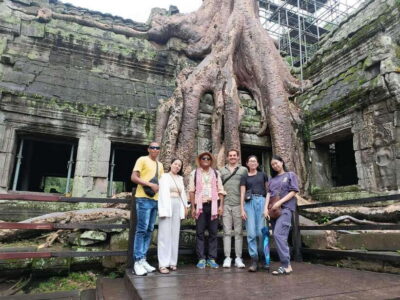 ★ 4.9Full-Day Angkor Wat Guided Tour with SunsetFrom $153,803 reviews
 ★ 5.0Angkor Wat Sunrise tour with Small – Group and Guide toursFrom $143,655 reviews
 ★ 5.0Angkor Wat Highlights and Sunrise Guided Tour from Siem ReapFrom $233,213 reviews
 ★ 5.0Angkor Wat Sunset Small Group Tour with Lunch IncludedFrom $203,059 reviews
 ★ 5.0Full-Day Angkor Wat Sunrise Private Tour with Guide from Siem ReapFrom $602,920 reviews
Browse the lists this tour appears in