
Reviewed · ANGKOR WAT TEMPLE TOURS
Guided Private Tuk Tuk Tour Angkor Wat and Small Circle and Five Extras
Angkor Wat at sunrise, then again at golden hour. This private tuk tuk version of the Small Tour hits Angkor Wat twice with an English-speaking guide leading every stop, so you don’t just see stones—you understand what you’re looking at. The trade-off is that it’s a long, intense day that starts at 6:30am, and you’ll feel it by mid-afternoon.
I like how the setup keeps things efficient: you’ll have hotel pickup, private transport, and a driver who waits while the guide brings you temple by temple. You’ll also work in a 3.5 km walk through Angkor Thom and a gravel-road jungle-feeling detour, with a lunch break at Srah Srang’s reservoir area.
In This Review
- Key things I found especially good about this tour
- The 6:30am start and how it changes the whole experience
- Private tuk tuk logistics: driver waits, guide works
- Two visits to Angkor Wat: East Gate morning calm and late-day reflections
- The quieter temple stops that make the day feel more than a checklist
- Jungle-feeling Ta Prohm, then the more off-track Ta Nei
- Steep steps at Ta Keo and quick hits for Spean Thma and two myth-carving temples
- Angkor Thom walls, Victory Gate climb, and your 3.5 km walk
- The timing puzzle: lunch at Srah Srang and how to use it well
- Wat Thmey and the reflective ending to a very active day
- Price and value: what $59 buys, and what you still pay for
- Who this tour suits (and who might prefer a slower day)
- Should you book this private tuk tuk Small Circle with Extras?
- FAQ
- What time does the tour start?
- How long is the tour?
- Is pickup included?
- Is the Angkor Ticket included in the price?
- Is lunch included?
- Is this a private tour?
- Do I need an Angkor Ticket for Wat Thmey?
- Is there free cancellation?
Key things I found especially good about this tour
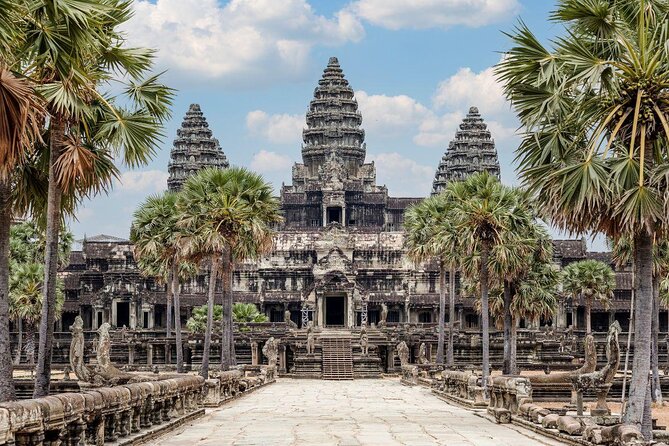
- Angkor Wat two ways: early East Gate entry for morning light, then late afternoon for pond reflections.
- Guide-led clarity: you visit with an English-speaking guide while the driver waits at each car park.
- Quiet temple pacing: smaller sites before the big crowd magnets kick in.
- Jungle atmosphere detour: Ta Nei is reached via gravel roads and feels more adventurous than the usual stops.
- One planned walking segment: a 3.5 km hike along Angkor Thom’s walls and gates instead of random wandering.
Other ways to walk the great temple
- Angkor Wat Sunrise or Sunset Tour with Guide from Siem Reap★ 5.0 · 12,109 reviews
- Siem Reap: Angkor Wat: Small-Group Sunrise or Sunset Tour★ 5.0 · 9,444 reviews
- Siem Reap: Angkor Wat 2-Day Tour with Sunrise and Sunset★ 4.9 · 4,429 reviews
- Siem Reap: Full-Day Angkor Wat Guided Tour with Sunset★ 4.9 · 3,803 reviews
The 6:30am start and how it changes the whole experience
This tour starts at 6:30am, which sounds brutal until you think about Angkor’s crowd pattern. The early timing lets you arrive at Angkor Wat during the morning hours that tend to feel calm and bright, before the busiest waves move in.
And it’s not just about beating crowds. You’re also planning your day around light and timing. The itinerary is built so you catch Angkor Wat once in the best morning light and once near the end when the atmosphere cools down and reflection shots become possible.
If you hate rushing, you’ll still be okay—but you should come ready for a full-day grind: early wake-up, steady moving, and a packed route with lots of short stops.
Private tuk tuk logistics: driver waits, guide works
This is a private tour with licensed support, and that makes a real difference at Angkor. You travel by tuk tuk, but the important part is the temple rhythm: the guide walks you through the site while the driver waits at the car park.
That means fewer awkward delays—no herding, no waiting on other groups, and less time lost to transport shuffle. It also helps on temple days when you want to ask questions, linger at a carving, or take photos without feeling like you’re holding up strangers.
Pickup is offered, and the day ends back at the meeting point or at a point of your choice in Siem Reap town centre. If you want a market stop right after, this can work well.
Two visits to Angkor Wat: East Gate morning calm and late-day reflections
The biggest value driver here is simple: you see Angkor Wat twice.
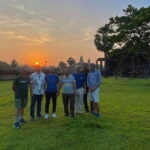
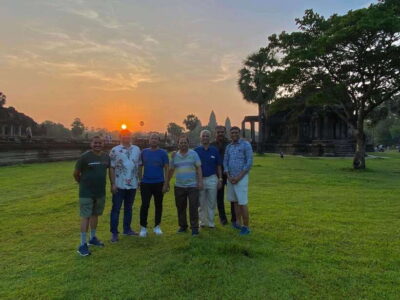
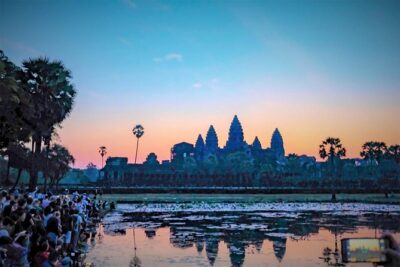
First, you enter from the East Gate, which is less frequented than the famous West Gate. The reward is that you see Angkor Wat in the morning light with less pushy crowd energy. You get a proper introduction before most people have even made it into the temple.
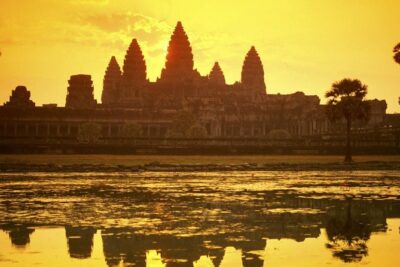
Later, you return for another Angkor Wat slot in the late afternoon. This is the time for photos of the towers reflected in ponds and moats—exactly the look people dream about when they plan Angkor. It’s also when the whole complex tends to feel more golden and watchable, even if you’re already temple-fatigued.
Practical note: bring water and plan on sun protection. Angkor isn’t a place where shade is guaranteed.
The quieter temple stops that make the day feel more than a checklist
Between Angkor Wat and the big-name compounds, you’ll hit a string of smaller temples that are easy to skip on a basic tour. That’s where this itinerary feels different.
You start with Prasat Kravan, a compact set of five towers and big brick carvings in a line. Then you move to Prasat Bat Chum, known for large inscriptions that hint at the religious shifts that played out here over time. These aren’t giant ruins, but they’re the kind of stops that give Angkor texture—less about scale, more about details.
Next comes Srah Srang, a reservoir area with a terrace featuring animal sculptures. You’ll get quick background on the difference between srahs and barays (both waterworks, but not the same thing). Even if you only stop briefly, this is a nice change from stone corridors.
Then you head into Banteay Kdei, which is described as the smaller sister of Ta Prohm but still a large complex. The layout can feel labyrinthic. The key is that you’re not doing it alone: your guide keeps you oriented while the driver holds position.
More temple circuits, set side by side
Jungle-feeling Ta Prohm, then the more off-track Ta Nei
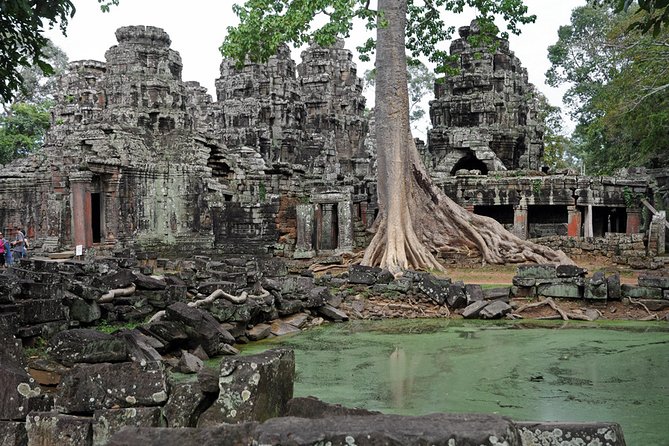
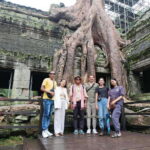
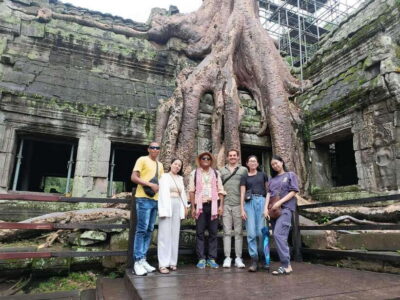
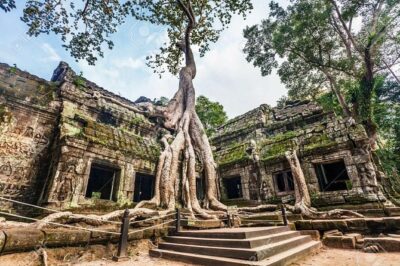
Ta Prohm is the world-famous jungle temple with enormous fig trees draped around structures. You’ll want time here, and this itinerary gives you about 1 hour 15 minutes. That’s enough to explore at a comfortable pace and still come away with the main views people chase.
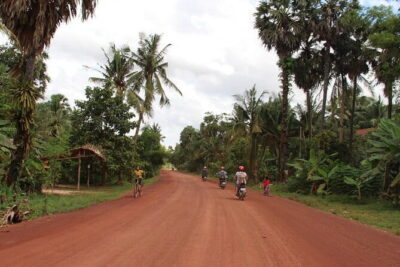
After Ta Prohm, the day turns more adventurous with Ta Nei. This one is reached on gravel roads, which is exactly why most people miss it. The ruins can deliver that Indiana Jones feeling vibe—less polished, more wild, and more about atmosphere than crowd choreography. You’ll get around 30 minutes.
If you like Angkor when it feels a bit raw and slightly unpredictable, Ta Nei is one of the strongest “extras” in the plan. If you’re looking for big, iconic photo spots only, you might find it less dramatic than the headline temples—but that’s also the point.
Steep steps at Ta Keo and quick hits for Spean Thma and two myth-carving temples
Ta Keo is a former state temple and an artificial mountain—basically a stepped pyramid. The standout here is the extremely steep stairs up to the upper platform, where five prasats sit. This is not a “casual stroll” moment. Wear shoes you can trust and take it slow on the climb.
After that, you get Spean Thma, a short photo stop at a stone bridge from the late Angkor period. The construction used carved stones from earlier temples, and today the riverbed has shifted east over time. It’s a quick stop, but it’s the kind of detail a guide helps you notice.
Then comes Chau Say Tevoda and Thommanon, a pair of medium-sized temples with processional routes and lots of pediment carvings. Chau Say Tevoda features mythological themes on its carvings, and Thommanon is the sister temple with a similar Angkor Wat-period style. Each gets short but meaningful time, so you’re not stuck too long in one place.
Finally, there’s Mangalartha, described as a small temple on a steep, tiered platform and considered the last stone temple built in Angkor. It’s rarely visited and gets about 15 minutes—just enough to make it feel special without turning the day into a slog.
Angkor Thom walls, Victory Gate climb, and your 3.5 km walk
The Angkor Thom portion is where this tour earns the “intense” label in a good way.
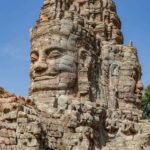
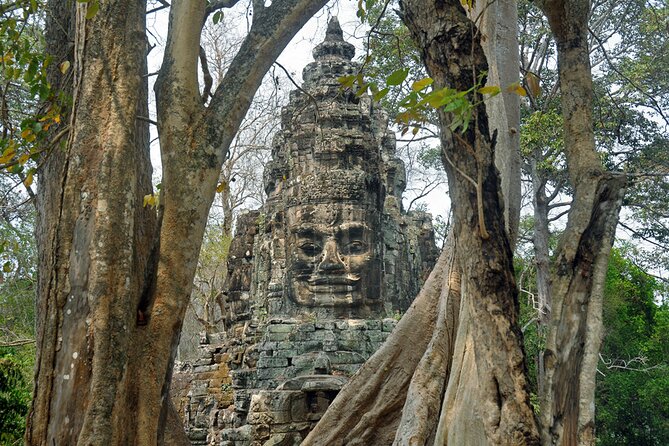
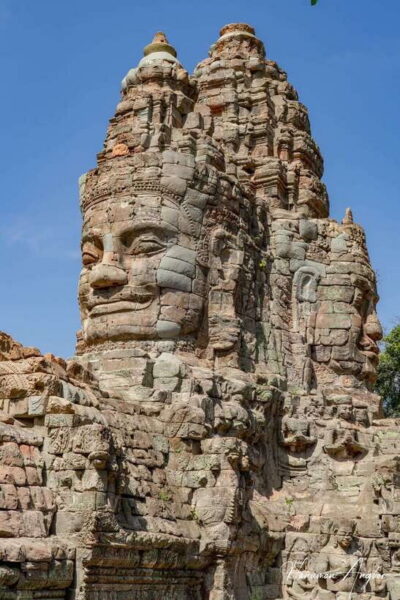
You’ll start with the Victory Gate, which is the second eastern gate of Angkor Thom. Here, you climb the wall for views toward the southern giant face of the gate. The climb isn’t optional, so it’s a real viewpoint, not just a distant photo.
Next comes Angkor Thom, with walking along the medieval city walls. The itinerary highlights the East Gate section that can surprise you because there’s no road leading directly to it. This is the part that makes Angkor Thom feel quieter and more grounded.
Then you do the planned 3.5 km hike on the city walls route, which includes Prasat Chrung—one of four corner temples placed on the city walls. You’re specifically aiming for the southeastern Prasat Chrung, noted as the best preserved.
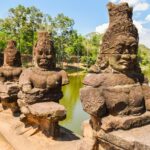
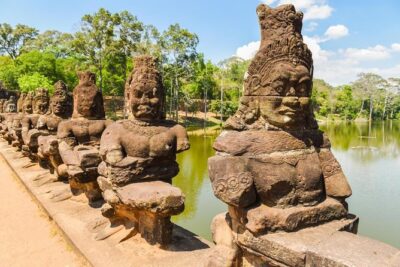
You end this walk-focused segment at the Angkor Thom South Gate, where the face tower and the railings with rows of giant statues depicting demons and gods are a must-see. You’ll take time here, and it’s usually the kind of stop that makes tired feet feel temporarily justified.
The timing puzzle: lunch at Srah Srang and how to use it well
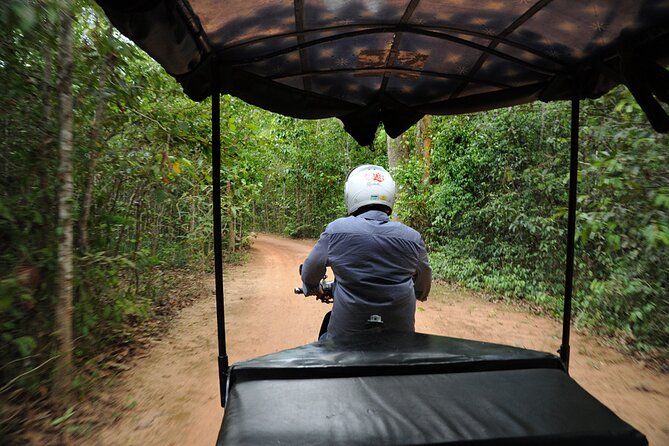
Lunch is scheduled around Srah Srang, a reservoir area with several restaurants nearby. The tour doesn’t include lunch, so you’ll decide what to eat based on what looks good and what’s fastest.
I like that this lunch break is placed where you can reset without losing the momentum of the day. You’ve already handled multiple stone stops, and you’ll soon be returning to more temples—so a real break matters.
There’s also an option: the driver can drop you at another location, but it comes with an added cost for the extra kilometre. This is useful if you want a specific restaurant or a quick errand, but if you do it, you’re trading time for convenience.
Bring cash for food. And if you’re prone to getting dehydrated, drink earlier than you think you need to. Angkor timing can fool your body.
Wat Thmey and the reflective ending to a very active day
Near the end, you’ll visit Wat Thmey (Killing Fields). This isn’t a temple stop for carvings or photo angles. It’s a small memorial stupa for victims of the Khmer Rouge, plus photo boards with images of those who were killed here, and an open prayer hall.
You only spend about 10 minutes, but it’s the kind of stop that shifts the day’s tone. It also helps balance the “wow factor” of the stone monuments with the reality that this region has deep, painful layers of history.
After that, you’re dropped back at your hotel or another point in central Siem Reap, where markets and street life are close by.
Price and value: what $59 buys, and what you still pay for
The tour price is $59 per person and lasts about 11 to 13 hours. For Angkor, that’s a fair range for a private setup because you’re paying for private transport plus a licensed English-speaking Angkor guide.
Two costs matter most:
- The Angkor Ticket is not included. The itinerary notes a 1-day ticket is $37 (US$) per person, and you need an Angkor Ticket for temple access.
- Lunch is also not included.
So your real budgeting picture is usually “tour price + ticket + lunch.” That said, the tour’s value comes from structure: you’re not just driving around. You get two timed Angkor Wat visits, a guide-led approach at each stop, and a planned walking segment through Angkor Thom.
If you’re already committed to doing Angkor properly, this can cost less than you’d expect compared to piecing together a private car for a full day and trying to self-navigate the quieter sites.
Also note: there are group discounts available, and there’s a mobile ticket mentioned in the tour features. If you’re traveling with someone, check whether the pricing becomes better per person.
Who this tour suits (and who might prefer a slower day)
This fits you best if you like:
- A structured route with fewer gaps and less guesswork.
- Short, guide-led temple stops where you can ask questions.
- Photo time at Angkor Wat twice, plus a late-afternoon pond reflection window.
- A real walk on Angkor Thom walls, not just quick photo stops.
- One jungle detour that feels less crowded, like Ta Nei via gravel roads.
It’s less ideal if:
- You hate early starts or you don’t like a packed schedule.
- You need lots of free time at each major site. This itinerary spreads attention across many temples rather than giving one or two massive blocks.
Should you book this private tuk tuk Small Circle with Extras?
I’d book it if you want an Angkor day that feels intentional: early calm at Angkor Wat, smart quieter stops, and a late-day return when the light is friendlier for photos. The guide-led approach is the difference-maker, especially for understanding what you’re seeing at smaller temples with inscriptions and carvings.
Skip it only if you’re looking for a relaxed, slow-paced day or if a steep climb and a 3.5 km walk sound like too much for your knees and energy.
If your goal is to see more than the usual highlights without getting lost, this private format delivers strong value for the price.
FAQ
What time does the tour start?
It starts at 6:30am.
How long is the tour?
It runs about 11 to 13 hours.
Is pickup included?
Pickup is offered, and you can also be dropped off back at your hotel or at a chosen point in central Siem Reap.
Is the Angkor Ticket included in the price?
No. An Angkor Ticket is not included in the tour costs, and you need it for temple access. The itinerary lists a 1-day ticket at $37 (US$) per person.
Is lunch included?
No. Lunch is not included. There’s a lunch break at Srah Srang where several restaurants are available.
Is this a private tour?
Yes. It’s private, meaning only your group participates.
Do I need an Angkor Ticket for Wat Thmey?
Wat Thmey (Killing Fields) is listed with admission ticket free, based on the itinerary.
Is there free cancellation?
Yes. You can cancel up to 24 hours before the experience for a full refund.
The Temples by Tuk-Tuk
- Siem Reap: Angkor Wat Private Tuk-Tuk Tour
★ 4.9 · 2,222 reviews - Siem Reap Countryside Bike Tour / E-Bike or Tuk Tuk
★ 5.0 · 935 reviews - Angkor Sunrise Bike Tour / E-Bike or Tuk Tuk
★ 5.0 · 615 reviews - Angkor Wat Private Tuk-Tuk Tour (sunrise Option) & more
★ 5.0 · 439 reviews - Old Siem Reap Sunset Food Tour by Tuk-tuk
★ 5.0 · 311 reviews
More Temple Circuits Around Siem Reap
- Angkor Wat Sunrise or Sunset Tour with Guide from Siem Reap
★ 5.0 · 12,109 reviews - Siem Reap: Angkor Wat: Small-Group Sunrise or Sunset Tour
★ 5.0 · 9,444 reviews - Siem Reap: Angkor Wat 2-Day Tour with Sunrise and Sunset
★ 4.9 · 4,429 reviews - Siem Reap: Full-Day Angkor Wat Guided Tour with Sunset
★ 4.9 · 3,803 reviews - Angkor Wat Sunrise tour with Small – Group and Guide tours
★ 5.0 · 3,655 reviews
Angkor Wat, a Few More Ways In
- Angkor Wat Sunrise or Sunset Tour with Guide from Siem Reap
★ 5.0 · 12,109 reviews - Siem Reap: Angkor Wat: Small-Group Sunrise or Sunset Tour
★ 5.0 · 9,444 reviews - Siem Reap: Angkor Wat 2-Day Tour with Sunrise and Sunset
★ 4.9 · 4,429 reviews - Siem Reap: Full-Day Angkor Wat Guided Tour with Sunset
★ 4.9 · 3,803 reviews - Angkor Wat Sunrise tour with Small – Group and Guide tours
★ 5.0 · 3,655 reviews
Just Added: Fresh Siem Reap Tour Reviews

Angkor Wat Temple Tours, compared.
 ★ 5.0Angkor Wat Sunrise or Sunset Tour with Guide from Siem ReapFrom $1812,109 reviews
 ★ 5.0Angkor Wat: Small-Group Sunrise or Sunset TourFrom $159,444 reviews
 ★ 4.9Angkor Wat 2-Day Tour with Sunrise and SunsetFrom $344,429 reviews
 ★ 4.9Full-Day Angkor Wat Guided Tour with SunsetFrom $153,803 reviews
 ★ 5.0Angkor Wat Sunrise tour with Small – Group and Guide toursFrom $143,655 reviews
 ★ 5.0Angkor Wat Highlights and Sunrise Guided Tour from Siem ReapFrom $233,213 reviews
 ★ 5.0Angkor Wat Sunset Small Group Tour with Lunch IncludedFrom $203,059 reviews
 ★ 5.0Full-Day Angkor Wat Sunrise Private Tour with Guide from Siem ReapFrom $602,920 reviews
Browse the lists this tour appears in