
Reviewed · ANGKOR TEMPLE TOURS
Half-Day Angkor Tuk-Tuk Explorer Tour from Siem Reap
Angkor feels huge. This tour tackles the big hitters by tuk-tuk, so you’re not stuck in one long bus ride. I especially like the open-air tuk-tuk style of travel—it’s part transport, part street-level sightseeing in Siem Reap and beyond.
I also like the private feel with small group size (up to 13), plus hotel pickup and drop-off. With a professional guide, you get more than photo stops; you get explanations that help you understand what you’re seeing at Angkor Wat and Angkor Thom.
The main thing to plan for is heat. You’ll be out in it for a good chunk of the day, and the Angkor temple pass is not included, so you’ll need to budget for that too (and bring a hat and water).
In This Review
- Quick take: what matters most
- Tuk-tuk logistics from Siem Reap: how the day really runs
- Price and value: what you’re paying for (and what to budget)
- Your guide experience: what makes it worth it
- Stop 1: Angkor Wat with time to look (and photo breaks that work)
- Stop 2: Angkor Thom and the Bayon faces (moats, bas-reliefs, and calm)
- Terrace of the Elephants: why this one works even on a tight schedule
- What included extras actually change your day
- Who this tour suits best (and who might want something else)
- Practical tips before you go: small things that prevent big hassles
- Should you book this Angkor tuk-tuk explorer?
- FAQ
- How long is the Half-Day Angkor Tuk-Tuk Explorer Tour?
- What time does the tour start in Siem Reap?
- Is hotel pickup included?
- Do I need an Angkor temple pass?
- Is mineral water included?
- Is this tour private?
- What ticket format do I receive?
- Is free cancellation available?
Quick take: what matters most
- Tuk-tuk rides between sites make Angkor feel like a living route, not a checklist
- Angkor Wat + Angkor Thom + Terrace of the Elephants cover the most famous scenes in one run
- Hotel pickup and drop-off saves time and hassle in Siem Reap
- Strong guide communication (English varies by guide, but several guides have been praised for clarity)
- Small group (max 13) keeps the pacing reasonable and the questions flowing
More temple circuits, set side by side
- Angkor Wat Sunrise or Sunset Tour with Guide from Siem Reap★ 5.0 · 12,109 reviews
- Siem Reap: Angkor Wat: Small-Group Sunrise or Sunset Tour★ 5.0 · 9,444 reviews
- Siem Reap: Angkor Wat 2-Day Tour with Sunrise and Sunset★ 4.9 · 4,429 reviews
- Siem Reap: Full-Day Angkor Wat Guided Tour with Sunset★ 4.9 · 3,803 reviews
Tuk-tuk logistics from Siem Reap: how the day really runs
This is a half-day style outing that’s listed at about 8 hours in practice. It starts at 9:00am, and you’ll meet your guide directly outside your hotel before heading out in an open-air, three-wheeled tuk-tuk. That timing is smart: you get moving early enough to see major sights without feeling like you’re wasting daylight.
The tuk-tuk setup is the point. You can hop off quickly, walk a bit, then get back on and roll to the next zone. On a complex like Angkor—where distances can feel long even when they’re not—this kind of transport helps you keep your momentum.
You’ll also want to pack for comfort. This circuit is mostly outdoors and it gets hot fast, so a light jacket can be useful early or in shaded breaks, and a hat plus plenty of water is a must. Even if you’re just going for the “big temples,” this route still needs the basics to keep you moving.
One note on the vibe: tuk-tuks are breezy, but they’re also exposed. If you don’t like sun, bring gear that protects you (hat, sunscreen, sunglasses). If you’re sensitive to heat, plan to slow down at photo-heavy spots and let the guide set the pace.
Price and value: what you’re paying for (and what to budget)
The price listed is $41.67 per person, which is attractive for a guide-led circuit with pickup. The tour includes hotel pickup and drop-off, a professional guide, and mineral water.
What’s not included is the Angkor temple pass. That’s the big practical budget item most people forget until the morning of. The tour price covers the people and logistics; the pass is your entry fee for the temples.
Here’s why the value still makes sense. First, you’re getting an organized route between multiple major sites—Angkor Wat, Angkor Thom, and the Terrace of the Elephants are all part of the plan. Second, the guide helps you interpret carvings, layouts, and symbolism so you spend less time guessing and more time actually understanding what you’re looking at.
If you want a simple rule: assume your money goes into two buckets—(1) the tuk-tuk + guide + pickup, and (2) your Angkor temple pass. That keeps your planning clean and prevents last-minute surprises.
Your guide experience: what makes it worth it
Angkor can be overwhelming when you arrive with zero context. That’s where the guide earns their fee.
In particular, I like that some guides have been praised for patient, kind pacing—useful if anyone in your party is slower or you just want time to look. I also see a pattern in feedback about English being clear enough to make the history and temple details understandable, not just recited.
You’ll also get guidance that goes beyond one temple. For example, guides have been recognized for connecting Angkor sites to wider Cambodian culture and history, not treating the temples as isolated postcard scenery. When you understand why things were built the way they were, the carvings and facial expressions stop being “random art” and start making sense.
If you’re deciding whether to book: if you enjoy learning something while you sightsee, this tour format is a strong fit because it’s built around stops, walking time, and explanation in between.
Stop 1: Angkor Wat with time to look (and photo breaks that work)
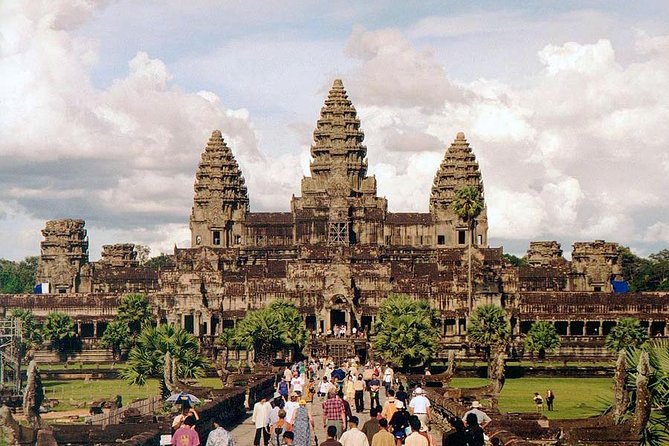
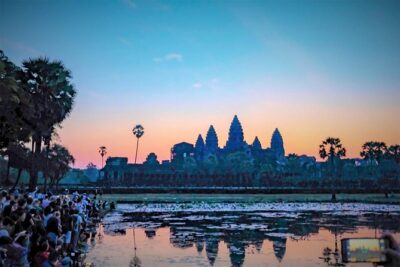
Angkor Wat is usually the reason people come. It’s the largest religious monument on Earth, a 12th-century Khmer-style complex filled with courtyards and intricate carvings. The goal here is simple: give you enough time to walk among structures and take photos without feeling rushed.
You’ll spend about 1 hour at Angkor Wat. That’s not a full deep-study timeline, but it’s enough for a first pass: get oriented, see the main courtyard feel, and capture the most famous angles. If you like photography, the tuk-tuk route helps because you can step out, shoot, and then move along instead of waiting around in one spot.
What I recommend: go into Angkor Wat with a light plan. Pick a few targets—gateway views, key carvings, and the area that best matches your photo style. Then use the remaining time to wander and let the carvings pull you in.
Also, bring a light, breathable layer. The sun ramps up quickly, and Angkor Wat is not a place where you can hide for long. Even if the tuk-tuk feels like a breeze between stops, the walking time needs real heat planning.
The temples by tuk-tuk, other routes
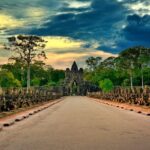

Stop 2: Angkor Thom and the Bayon faces (moats, bas-reliefs, and calm)
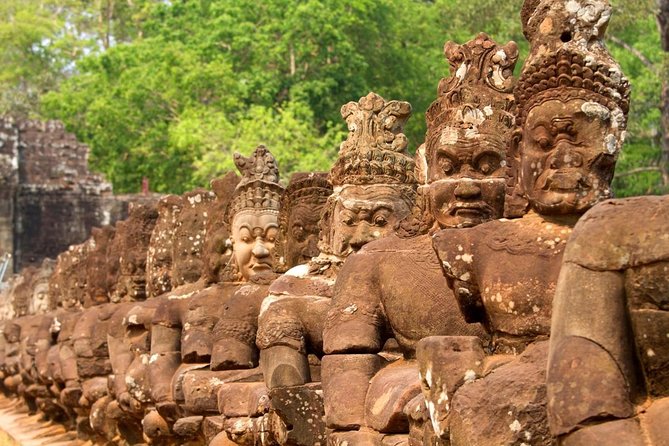
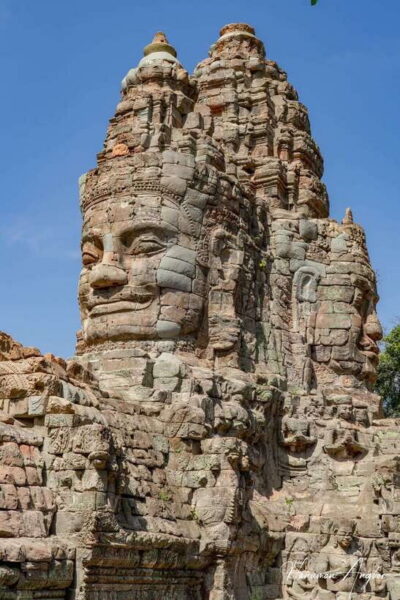
Angkor Thom is where Angkor starts to feel less like a single monument and more like a whole world. You’ll cross over moats as your guide shares commentary about the Bayon-style temple at the center.
This stop is also about 1 hour, and it’s a great contrast to Angkor Wat. Where Angkor Wat feels grand and formal, Angkor Thom often feels more mysterious and grounded in details—especially faces, expressions, and bas-reliefs.
Two sights are especially worth looking for:
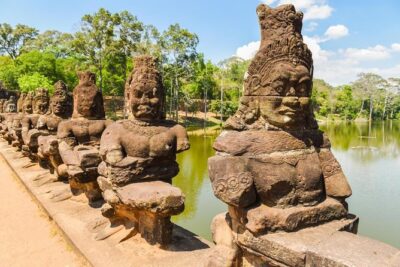
- The carvings referenced in the plan as part of the Terrace of the Elephants, including sculpted trunks
- The facial expressions in bas-relief sculptures, where the temple’s stone faces give you that instantly recognizable Bayon look
The terrace stop is where you slow down without meaning to. The detail is the reward: you find yourself tracing elements you didn’t notice at first. And because you’re on foot for part of this time, you get a better sense of scale than you would from a quick photo alone.
Drawback to keep in mind: the time is limited. If you’re the kind of traveler who could spend half a day just studying sculptures, you’ll wish you had more time at Angkor Thom. Still, for most first-timers, the pacing hits a sweet spot—enough to feel the mood and catch the key features.
Terrace of the Elephants: why this one works even on a tight schedule
The Terrace of the Elephants is famous, but it’s also easy to rush past if you’re only chasing big names. Here’s what makes it work in this itinerary: you reach it as part of your Angkor Thom time, so it feels connected rather than random.
The key value is detail. The plan points you toward the carved trunks in the terrace carvings. That’s one of those “start with one thing and the rest starts clicking” moments. Once you focus on a specific element, you begin noticing patterns around it—the repetition of motifs, the stonework emphasis, and the way the terrace serves as a narrative space.
If you want to maximize what you see, take a moment before you take photos. Look first for structure: where your eye should land, what’s central, and how the scenes relate. Then start photographing. You’ll come away with better shots and a clearer memory of what each piece is doing.
What included extras actually change your day
These small inclusions matter more than they sound on paper.
Hotel pickup and drop-off saves you from sorting transport on your own, which is a huge deal in Siem Reap mornings. You also avoid the scramble of meeting at an unfamiliar spot and then trying to find the right tuk-tuk in the heat.
The mineral water is also practical. It’s not a substitute for your own refill plan, but it’s one less thing to manage during a day that’s already pretty full. The day runs on walking time, photos, and waiting between sites; hydration helps you keep enjoying it rather than powering through.
Also, the tour offers a mobile ticket, which can reduce friction when you’re moving between points. It’s one less item to misplace while you’re juggling sunglasses, hats, and temple tickets.
Who this tour suits best (and who might want something else)
This experience is a strong match if you’re:
- Visiting Angkor for the first time and want the top sights in one organized run
- Short on time and still want a guided story, not just a self-guided wander
- Comfortable with heat and want an active, outdoor schedule
- Traveling with someone who benefits from patient pacing (some guides have been praised for handling slower guests well)
It might be less ideal if you:
- Want a long, slow, deep-dive visit into carvings and architecture with lots of flexibility
- Need lots of built-in rest time or fully sheltered breaks
- Don’t want to think about the Angkor temple pass since it’s not included
Practical tips before you go: small things that prevent big hassles
Based on what works in this kind of route, I’d do three things before the morning:
1) Pack for heat, not just for temples. That means hat, sunglasses, sunscreen, and water.
2) Plan your day around the sun. You’ll be outdoors and exposed; shaded pauses are limited.
3) Budget for the Angkor temple pass. You’ll need it regardless of the tour price.
A small “calm travel” move: decide your top two photo targets and let the rest be bonus. Angkor is visually intense. If you try to capture everything, you end up moving fast and remembering less.
If language matters to you, it’s worth noting that guides have been praised for strong spoken English and clear explanations. Still, if you want extra assurance, look for a tour confirmation that clearly states your guide assignment ahead of time and ask questions so the pace matches your comfort.
Should you book this Angkor tuk-tuk explorer?
Yes—if you want a focused way to see the essentials without the stress of planning the route yourself. The combination of tuk-tuk transport, a guided route between Angkor Wat and Angkor Thom, and a small-group ceiling makes it a smart value choice for many first-timers.
I’d book it especially if you like structure: you get the big sites in the right order, time to walk and photograph, and a guide who can explain what you’re seeing. Just don’t forget the basics—bring a hat, bring water, and make sure you’ve sorted the Angkor temple pass.
If you prefer a slower, more detailed archaeology-style visit, you might choose a longer tour instead. But for a day that covers the classics in a way that feels manageable, this is a practical, enjoyable way to do Angkor from Siem Reap.
FAQ
How long is the Half-Day Angkor Tuk-Tuk Explorer Tour?
It’s listed at about 8 hours.
What time does the tour start in Siem Reap?
The start time is 9:00am.
Is hotel pickup included?
Yes. Hotel pickup and drop-off are included.
Do I need an Angkor temple pass?
Yes. The Angkor temple pass is not included.
Is mineral water included?
Yes. Mineral water is included.
Is this tour private?
It’s described as a private tour, with a maximum of 13 travelers.
What ticket format do I receive?
A mobile ticket is provided.
Is free cancellation available?
Yes. You can cancel up to 24 hours in advance for a full refund.
More Tour Reviews in Siem Reap
- Angkor Wat Sunrise or Sunset Tour with Guide from Siem Reap
★ 5.0 · 12,109 reviews - Siem Reap: Angkor Wat: Small-Group Sunrise or Sunset Tour
★ 5.0 · 9,444 reviews - From Siem Reap: Kampong Phluk Floating Village Tour by Boat
★ 4.9 · 6,979 reviews - Sunset tour of Kampong Phluk stilts home village on the Tonle Sap
★ 5.0 · 4,865 reviews - Siem Reap: Angkor Wat 2-Day Tour with Sunrise and Sunset
★ 4.9 · 4,429 reviews
The Temples by Tuk-Tuk
- Siem Reap: Angkor Wat Private Tuk-Tuk Tour
★ 4.9 · 2,222 reviews - Siem Reap Countryside Bike Tour / E-Bike or Tuk Tuk
★ 5.0 · 935 reviews - Angkor Sunrise Bike Tour / E-Bike or Tuk Tuk
★ 5.0 · 615 reviews - Angkor Wat Private Tuk-Tuk Tour (sunrise Option) & more
★ 5.0 · 439 reviews - Old Siem Reap Sunset Food Tour by Tuk-tuk
★ 5.0 · 311 reviews
More Temple Circuits Around Siem Reap
- Angkor Wat Sunrise or Sunset Tour with Guide from Siem Reap
★ 5.0 · 12,109 reviews - Siem Reap: Angkor Wat: Small-Group Sunrise or Sunset Tour
★ 5.0 · 9,444 reviews - Siem Reap: Angkor Wat 2-Day Tour with Sunrise and Sunset
★ 4.9 · 4,429 reviews - Siem Reap: Full-Day Angkor Wat Guided Tour with Sunset
★ 4.9 · 3,803 reviews - Angkor Wat Sunrise tour with Small – Group and Guide tours
★ 5.0 · 3,655 reviews
Just Added: Fresh Siem Reap Tour Reviews


Angkor Temple Tours, compared.
 ★ 5.0Angkor Wat Sunrise or Sunset Tour with Guide from Siem ReapFrom $1812,109 reviews
 ★ 5.0Angkor Wat: Small-Group Sunrise or Sunset TourFrom $159,444 reviews
 ★ 4.9Angkor Wat 2-Day Tour with Sunrise and SunsetFrom $344,429 reviews
 ★ 4.9Full-Day Angkor Wat Guided Tour with SunsetFrom $153,803 reviews
 ★ 5.0Angkor Wat Sunrise tour with Small – Group and Guide toursFrom $143,655 reviews
 ★ 5.0Angkor Wat Highlights and Sunrise Guided Tour from Siem ReapFrom $233,213 reviews
 ★ 5.0Angkor Wat Sunset Small Group Tour with Lunch IncludedFrom $203,059 reviews
 ★ 5.0Full-Day Angkor Wat Sunrise Private Tour with Guide from Siem ReapFrom $602,920 reviews
Browse the lists this tour appears in