
Reviewed · ANGKOR TEMPLE TOURS
Half-Day: Silk Farm, Senteur Angkor, and Satcha Workshop
A half day, big wow factor. You’ll get silk-making from mulberry trees to finished fabric, plus a steady stream of hands-on craft stops at places like Satcha. I also like that the tour is built around working workshops and not just sales tables, and I’ve found the staff friendly and the grounds well-kept. One thing to consider: the shopping side can vary in price by workshop, so go in with a plan for what you want to buy.
This is a straightforward 4-hour circuit with hotel pickup in Krong Siem Reap and an English-speaking driver. You’ll move by van between stops, with photo breaks and short guided walks so you stay engaged without feeling rushed. And yes, you’ll get a separate entrance that helps you skip the slow parts.
The pace is active, and there’s no meal included. Bring comfortable shoes, a hat, and sunscreen, and be ready to focus during the stops since food and drinks aren’t allowed on the tour.
In This Review
- Key things to know before you go
- From Krong Siem Reap pickup to a 4-hour craft circuit
- Angkor Silk Farm: mulberry trees, silkworms, and weaving
- Satcha Handicraft Center: bamboo-built workshops with Khmer-inspired design
- Senteurs d’Angkor: sustainable Cambodian treasures and gift shopping
- Artisan d’Angkor: where local handicrafts get made
- Price and value: $25 per group up to 2
- What to pack, and how to make the most of the 4 hours
- Who this half-day silk and handicraft tour is best for
- Should you book Silk Farm, Senteur Angkor, and Satcha Workshop?
Key things to know before you go
- Silk-to-scarf in one visit: You’ll watch the full silk process, not just the final products.
- Satcha’s bamboo-built workshop center: Six workshops housed in Cambodian bamboo from Kampong Cham, tied to Khmer-inspired design.
- A lot of crafts in a small window: At Satcha you can encounter many know-hows, from weaving to silver plating.
- You’ll shop in multiple stages: Expect markets and craft sales woven into the visits, with pricing that can differ by stop.
- Skip-the-line access: A separate entrance is included, which saves time.
- Not wheelchair-friendly: The tour isn’t suitable for wheelchair users.
More temple circuits, set side by side
- Angkor Wat Sunrise or Sunset Tour with Guide from Siem Reap★ 5.0 · 12,109 reviews
- Siem Reap: Angkor Wat: Small-Group Sunrise or Sunset Tour★ 5.0 · 9,444 reviews
- Siem Reap: Angkor Wat 2-Day Tour with Sunrise and Sunset★ 4.9 · 4,429 reviews
- Siem Reap: Full-Day Angkor Wat Guided Tour with Sunset★ 4.9 · 3,803 reviews
From Krong Siem Reap pickup to a 4-hour craft circuit
I like how efficient this tour feels. You start with pickup in Krong Siem Reap (Krong Siem Reap), then you’re on the move quickly by van. The whole experience is designed as a compact loop, with short transfers and brief photo stops so you always know where the day is heading.
Because it’s only about four hours, the timing matters. You’ll spend roughly under an hour at the main craft stops, including guided time and time to walk around, take photos, and browse. That makes it a good match for days when you want something cultural that doesn’t swallow your whole morning or afternoon.
One practical tip: plan your outfit around walking in daylight. The itinerary includes outdoor areas at the silk farm and likely some sun exposure at multiple stops, so your hat and sunscreen aren’t optional accessories.
Angkor Silk Farm: mulberry trees, silkworms, and weaving
The silk farm visit is the heart of the tour. You’ll see the process in sequence, starting with the mulberry trees that are carefully cultivated for silkworm feed. Then you move into the silkworm lifecycle, and finally you reach the weaving stage where the raw work becomes wearable fabric.
What makes this stop valuable is the clarity of the chain. Instead of being shown a finished scarf and told a slogan, you can follow how each step depends on the last. It’s especially interesting if you’ve never thought about silk as an agriculture-and-factory blend. You’re seeing farming, then biology, then craft.
You’ll also get a photo stop and time for a guided walk. And like most craft visits in the area, there’s shopping: you’ll have a chance to look for garments and fabric items while the process is still fresh in your mind.
Two considerations for this stop:
- It’s a walk, so comfortable shoes help more than you’d expect.
- If you’re heat-sensitive, bring your hat and take photos during shade breaks rather than rushing everything in the sun.
Satcha Handicraft Center: bamboo-built workshops with Khmer-inspired design
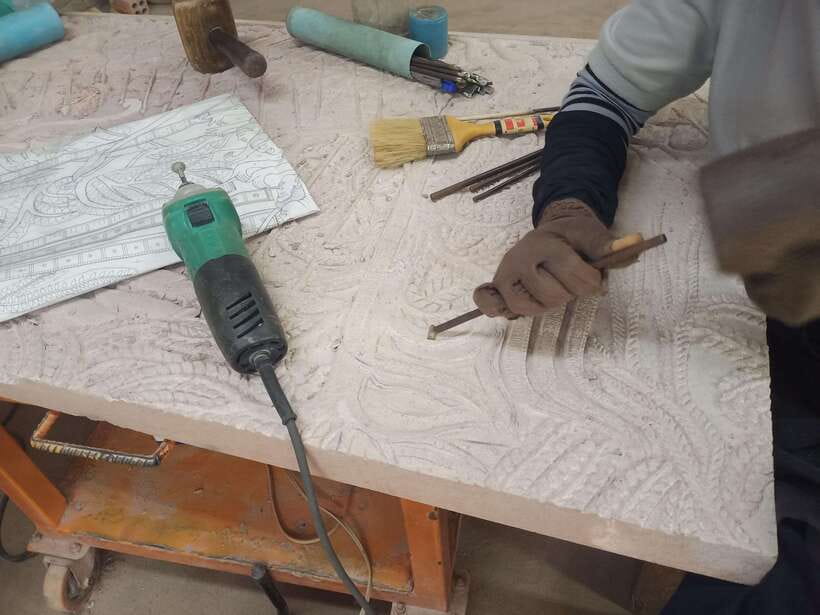
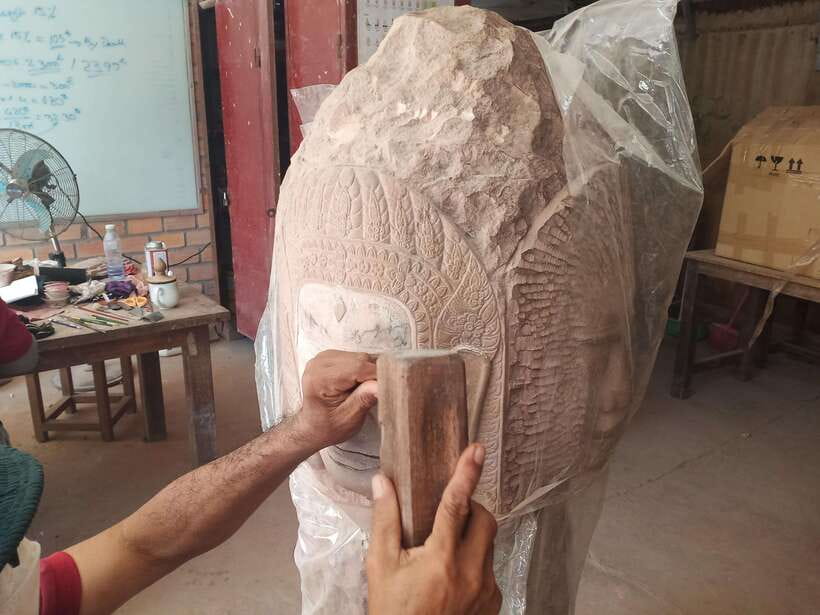
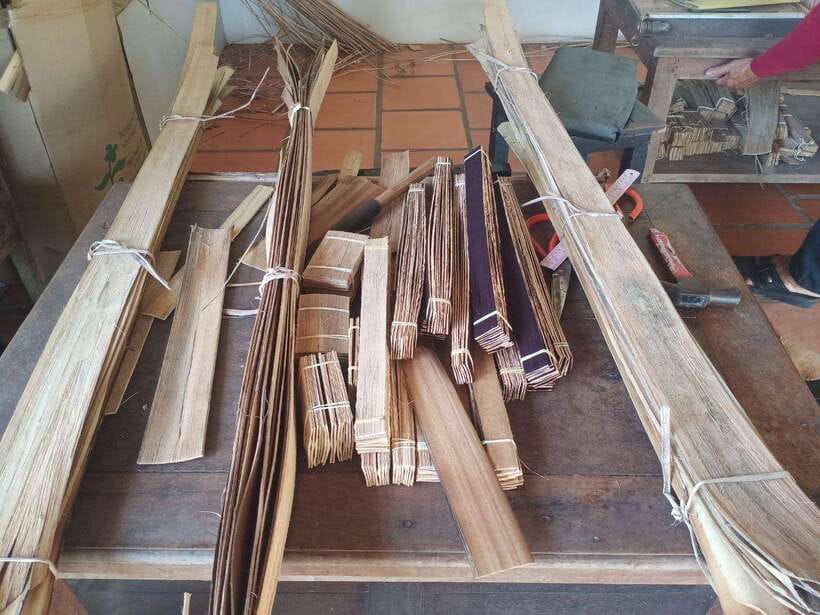
Next comes the Satcha Handicraft Center, and this is where the tour shifts from one craft storyline to a whole workshop world. The center is built using Cambodian bamboo from Kampong Cham, and you’ll see traditional know-how presented with contemporary design cues inspired by Khmer ornament.
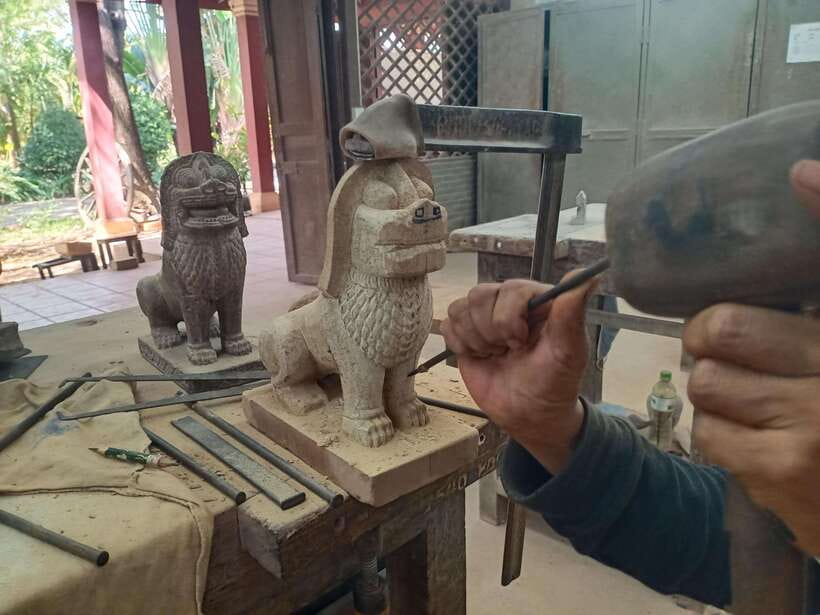
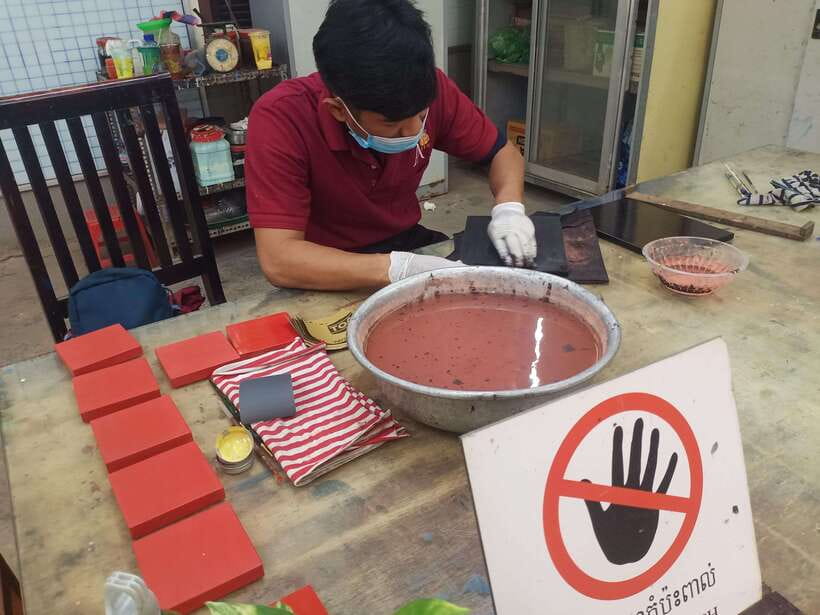
This stop is designed to feel like a real production hub. You can visit six workshops, and the scale is bigger than you might expect: the center hosts 50+ artisans and includes 15 different know-hows. You may see work across areas such as carving, stone, wood, bamboo, leather, weaving, rattan, seagrass, water hyacinth, silk, cotton, painting and lacquer, jewelry, and silver plating.
That list matters because it changes how you shop. You’re not just buying souvenirs—you’re choosing from craft specializations. If you like textiles, you’ll focus on weaving and silk. If you prefer small wearable items, jewelry and silver plating may catch your eye. If you’re a fan of natural materials, you may notice work that uses fibers like seagrass or water hyacinth.
One standout detail from the experience: you can get explanations in English, and in some cases French as well, depending on who’s in the group. The staff are also described as welcoming and smiling, which makes a difference when you’re trying to understand processes and ask questions.
A potential drawback: the shopping can feel like it has different price levels depending on the workshop. You might find some items great value, while other products cost more. My advice is simple: check the price before you fall in love with something, and decide what you truly want to carry home.
Senteurs d’Angkor: sustainable Cambodian treasures and gift shopping
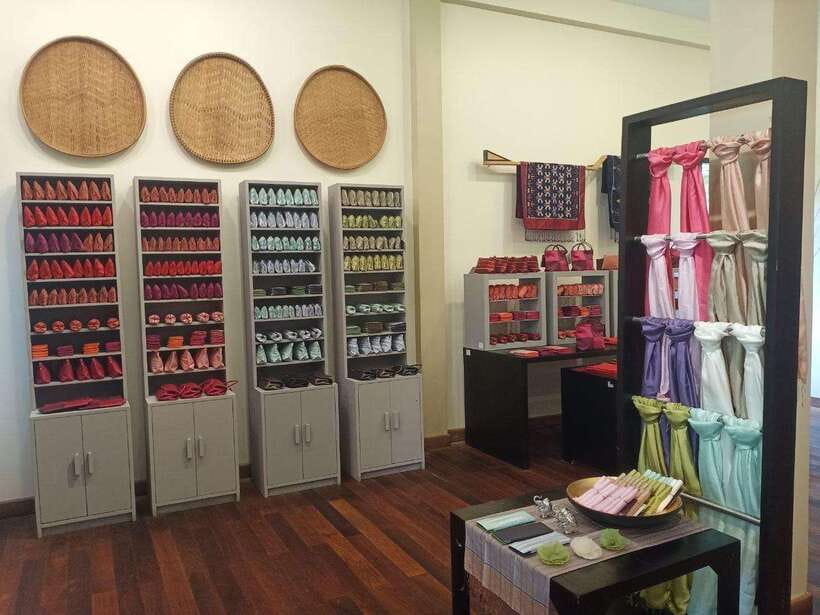
After Satcha, you’ll head to Senteurs d’Angkor, described as a hub for sustainable Cambodian treasures. The idea here is to connect products with the bigger story—how artisanal work can be part of a more responsible local economy.
What you’ll likely do during this stop is browse and learn at the same time. There’s time for guided exploration and shopping, and you’ll get a sense of the range of Khmer-inspired items made with sustainability in mind. This is also a good stop for practical gifts. When you’re leaving the silk farm and workshop center, your shopping instincts are already focused, and Senteurs gives you another set of choices that often feel more gift-ready.
If you’re trying to support artisans without turning your half day into a bargain marathon, this is a smart place to shop. The best results come when you:
- set a spending limit before you arrive,
- pick one or two categories (textiles, small decorative items, or personal accessories),
- and compare quality by how the piece is made or finished.
Past the rice fields, more village days




Artisan d’Angkor: where local handicrafts get made
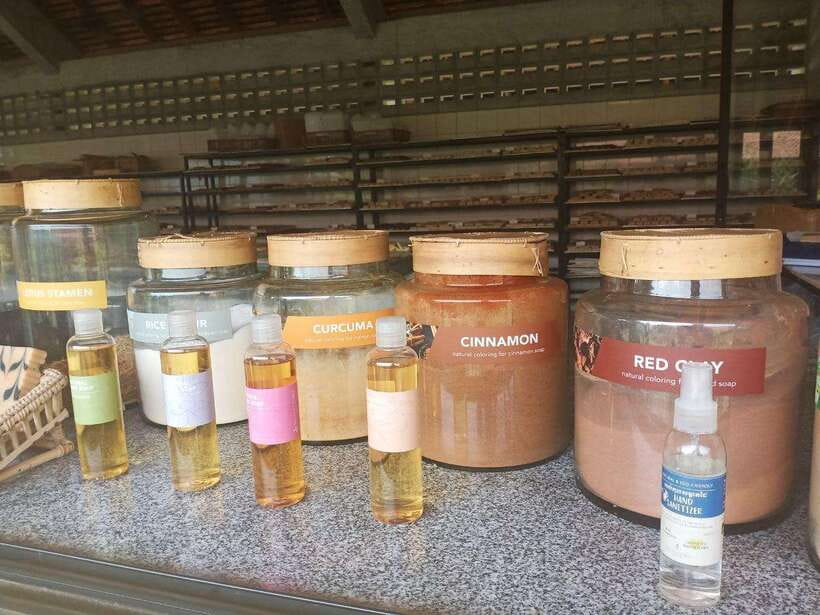
The final craft stop is Artisan d’Angkor, where local handicrafts are made. Like the other centers, you’ll have guided time, a walk-through feel, and time to browse and shop.
This part of the tour is valuable because it keeps you anchored to the making process. You’re not just collecting finished souvenirs—you’re seeing the workshop environment where products are produced. That makes the shopping feel more grounded. Even if you don’t buy much, you’re leaving with a better understanding of how many hands touch each final item.
You’ll also likely have a class element or structured explanation during the stop, along with time to visit arts and craft market areas. If you enjoy watching how things work—tools, surfaces, materials—this is the moment that can “click” for you.
If you’re the type who hates shopping pressure, you can keep it simple here. Focus on looking, taking a few photos, and asking questions. Then buy only when you’ve decided it’s something you’ll actually use at home.
Price and value: $25 per group up to 2
At $25 per group up to 2, this tour is priced to feel accessible. The biggest reason it’s good value is that you’re not paying for one attraction—you’re paying for a chain of craft experiences: silk farm, a major handicraft center, and two more craft hubs with shopping and guided explanations.
You also get hotel pickup and drop-off, plus visits to all the main stops listed. That matters because in Siem Reap, private craft visits add up fast once you start stacking admissions and transport. Here, the structure is built so you get transport time and guidance bundled into one half-day block.
Now, the reality check: you’ll probably spend extra if you buy items at multiple locations. That doesn’t mean the tour is overpriced. It just means you should treat the tour price as the learning and access cost, and treat purchases as optional add-ons.
How to get the best value:
- Plan your shopping goals before the tour starts.
- If you’re sensitive to price jumps, compare pieces at more than one stop.
- Buy fewer items, but pick pieces that match what you saw being made.
The reviews around pricing are mixed depending on the workshop. That’s normal in craft centers, where some items are simpler and others are more labor-intensive. The fix is to ask and confirm pricing early, not late.
What to pack, and how to make the most of the 4 hours
This is a “move around and look closely” tour, so your packing should match.
Bring:
- Comfortable shoes (you’ll walk at the silk farm and at craft centers)
- Hat and sunscreen (outdoor exposure is part of the day)
- Camera (you’ll get plenty of photo moments)
- Any questions you’ve been wondering about silk, weaving, and craft materials
A couple of timing tips: since meals aren’t included, don’t go too hungry. You’ll have time for shopping and browsing, and you want your attention on the explanations, not on finding food.
Also note the rules you’ll need to follow: smoking isn’t allowed, and the tour doesn’t allow consuming food or drinks during the experience. If you need water, you’ll want to ask how that’s handled in your specific case, since the tour data says food and drinks aren’t allowed during the tour.
Who this half-day silk and handicraft tour is best for
I think this tour is a strong fit for:
- First-timers in Siem Reap who want culture and crafts without committing to a full day
- People who like textile stories and want to understand silk as a process
- Gift shoppers who want locally made items with a clearer connection to how they’re made
- Anyone who enjoys watching multiple crafts in one compact route
It’s less ideal for:
- Wheelchair users, since the tour isn’t suitable for that accessibility need
- Anyone who dislikes workshop environments and shopping stops, since multiple visits include market browsing
Should you book Silk Farm, Senteur Angkor, and Satcha Workshop?
If you want a half-day in Siem Reap that feels practical and real—silk production up close, plus Khmer crafts made by active artisans—this is a good booking. The silk farm alone justifies the trip for anyone who likes to understand how products are born.
Book it if:
- you’re the kind of traveler who enjoys watching processes,
- you want a well-paced 4-hour plan with hotel pickup,
- and you want a chance to buy meaningful souvenirs from multiple craft hubs.
Skip it or rethink if:
- you only want Angkor temples and nothing else,
- you’re not interested in crafts or shopping at all,
- or your mobility needs make walking hard.
If you do book, come with comfortable shoes, a hat, and a simple shopping target. You’ll get a lot more out of the day than people who show up hoping to decide everything on the spot.
Made by Hand in Siem Reap
- Siem Reap: Cambodian Pottery Class
★ 4.9 · 339 reviews - Cambodian Pottery Class in Siem Reap
★ 4.5 · 157 reviews - Workshop Visit and Sombai Liqueur Tasting
★ 5.0 · 90 reviews - Sombai Siem Reap Workshop Cocktail Class
★ 5.0 · 23 reviews - Half-Day Cambodian Gemology Workshop from Siem Reap
★ 4.5 · 15 reviews
Through the Siem Reap Countryside
- From Siem Reap: Kampong Phluk Floating Village Tour by Boat
★ 4.9 · 6,979 reviews - Kampong Phluk Floating Village Tour by Boat
★ 5.0 · 1,020 reviews - Siem Reap Countryside Bike Tour / E-Bike or Tuk Tuk
★ 5.0 · 935 reviews - Siem Reap: Tonle Sap, Kampong Phluk & Floating Village Tour
★ 4.4 · 397 reviews - Siem Reap Countryside Quad Biking Tour
★ 5.0 · 322 reviews
More Temple Circuits Around Siem Reap
- Angkor Wat Sunrise or Sunset Tour with Guide from Siem Reap
★ 5.0 · 12,109 reviews - Siem Reap: Angkor Wat: Small-Group Sunrise or Sunset Tour
★ 5.0 · 9,444 reviews - Siem Reap: Angkor Wat 2-Day Tour with Sunrise and Sunset
★ 4.9 · 4,429 reviews - Siem Reap: Full-Day Angkor Wat Guided Tour with Sunset
★ 4.9 · 3,803 reviews - Angkor Wat Sunrise tour with Small – Group and Guide tours
★ 5.0 · 3,655 reviews
Just Added: Fresh Siem Reap Tour Reviews



Angkor Temple Tours, compared.
 ★ 5.0Angkor Wat Sunrise or Sunset Tour with Guide from Siem ReapFrom $1812,109 reviews
 ★ 5.0Angkor Wat: Small-Group Sunrise or Sunset TourFrom $159,444 reviews
 ★ 4.9Angkor Wat 2-Day Tour with Sunrise and SunsetFrom $344,429 reviews
 ★ 4.9Full-Day Angkor Wat Guided Tour with SunsetFrom $153,803 reviews
 ★ 5.0Angkor Wat Sunrise tour with Small – Group and Guide toursFrom $143,655 reviews
 ★ 5.0Angkor Wat Highlights and Sunrise Guided Tour from Siem ReapFrom $233,213 reviews
 ★ 5.0Angkor Wat Sunset Small Group Tour with Lunch IncludedFrom $203,059 reviews
 ★ 5.0Full-Day Angkor Wat Sunrise Private Tour with Guide from Siem ReapFrom $602,920 reviews
Browse the lists this tour appears in