
Reviewed · SIEM REAP COUNTRYSIDE & VILLAGE TOURS
Short Cycling at Countryside
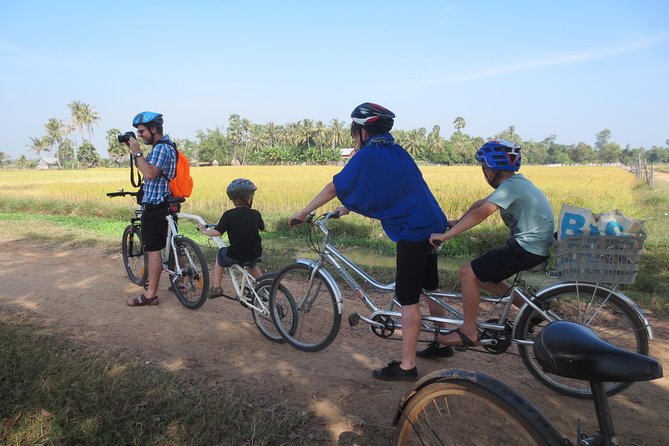
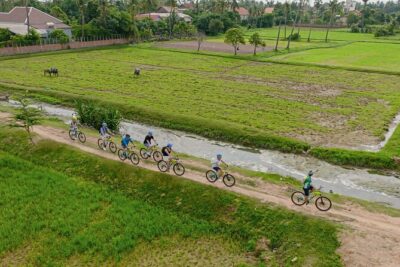
Early-morning countryside cycling clears your head fast, and it pairs fresh air paddies with real village life. I like that you start near the Siem Reap River, ride out toward Chreav village, and get photo moments with cows, buffaloes, ducks, and birds overhead. I also like the respectful stop at Arthvear pagoda, a lesser-known place that feels calm and spiritual instead of crowded. One thing to keep in mind: you can hit busier road moments, including main crossroads where cars and bikes don’t always follow strict traffic rules.
This is the kind of Siem Reap half-day that feels practical. You’re out of the city before it heats up, you get a proper bike workout for about 25km, and you come back with stories that make the countryside make sense.
In This Review
- Key highlights to look for on this 4-hour ride
- Why a 4-hour countryside bike beats rushing Angkor
- The bikes, safety gear, and the real-world road situation
- From the Siem Reap River to Chreav: paddies in green or gold
- Village life stops: farming, vegetables, hay, and farmer Q&A
- Arthvear pagoda: a calm spiritual stop with 12th-century temple details
- A 12th-century temple ride-by and the return to town
- Guides you might meet: Vannarath, Bobo, Kimmi, and Bo Bo
- Price and value: paying $30 for a full morning experience
- Who should book this, and who should choose something else
- Should you book Short Cycling at Countryside?
- FAQ
- How long is the Short Cycling at Countryside tour?
- How far will I cycle?
- What time does the tour start?
- Where do I meet the guide?
- What’s included in the price?
- Is hotel pickup and drop-off included?
Key highlights to look for on this 4-hour ride
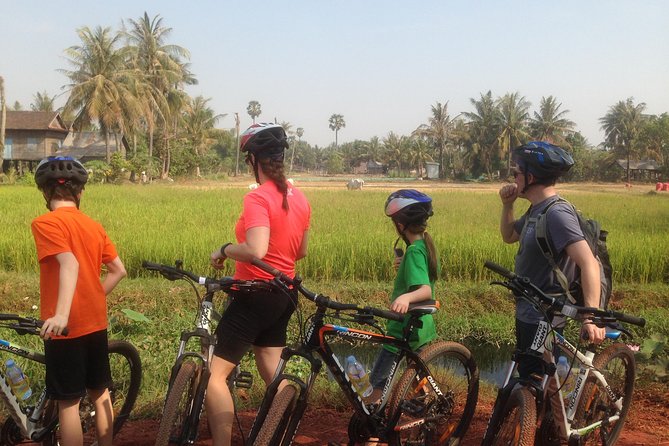
- TREK mountain bike + helmet: clean equipment and a safer setup for mostly countryside roads
- Siem Reap River start: an easy beginning that quickly turns into open fields
- Paddy colors by season: green May to October, golden November to January
- Farmer-facing stops: farming routines, vegetable growing, and hay stacking you can ask about
- Local market tastings: Khmer flavors, plus pastry/cookie-style bites
- Arthvear pagoda: a quiet pause inside a 12th-century temple area
Past the rice fields, more village days
- From Siem Reap: Kampong Phluk Floating Village Tour by Boat★ 4.9 · 6,979 reviews
- Kampong Phluk Floating Village Tour by Boat★ 5.0 · 1,020 reviews
- Siem Reap Countryside Bike Tour / E-Bike or Tuk Tuk★ 5.0 · 935 reviews
- Siem Reap: Tonle Sap, Kampong Phluk & Floating Village Tour★ 4.4 · 397 reviews
Why a 4-hour countryside bike beats rushing Angkor
Siem Reap can pull you in two directions: big-ticket temple days, or the quieter reality right outside town. This ride leans hard into the second option. You start at 7:30am from the Angkor Cycling Tour office area on Taphul Rd, then you leave downtown rhythms behind and head toward the countryside.
What makes this work for most people is the time balance. Four hours is long enough to feel you actually went somewhere, but short enough to stay flexible. You’ll cover about 25km, and the route is described as mostly countryside roads, which usually means fewer stops and less stress than city traffic-only rides.
I also like the photography angle because it’s not just “pretty views.” You’re moving through farmland and water-adjacent areas where animals are part of the daily scene: herds grazing, ducks and birds working the edges, and rice fields changing their look with the season. If you like pictures that feel lived-in, not staged, you’ll have plenty to work with.
The bikes, safety gear, and the real-world road situation
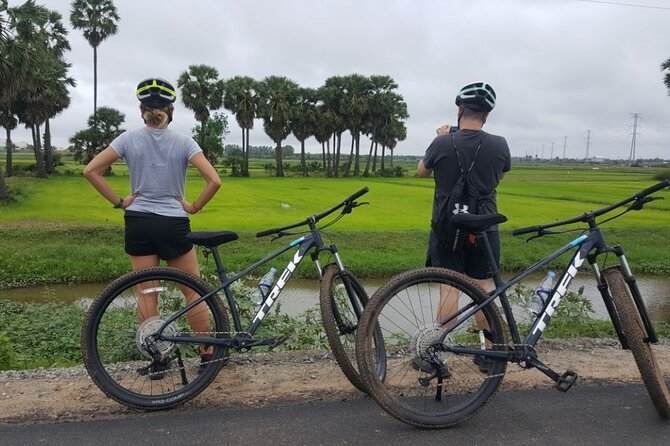
You’re not renting some tired cruiser for this. The tour includes a Trek mountain bike and a helmet, plus water and coconut water along the way. That matters because comfort and control are what make cycling enjoyable, especially in humid Cambodian mornings.
The ride is limited to a small group (maximum 10 travelers), so it’s easier for the guide to keep everyone together. You also won’t be stuck cycling inches from a long line of strangers. For many people, that’s the difference between a “nice ride” and an actually fun morning.
That said, here’s the honest note: the countryside route can still include main crossroads and road crossings. One review flagged a feeling of chaos at a crossroads, with vehicles not always treating traffic lights like they matter. If you’re nervous about riding near cars, go slow, keep your line steady, and let the guide handle the crossings. If you’re confident on a bike and comfortable riding cautiously, you’ll probably find this manageable.
From the Siem Reap River to Chreav: paddies in green or gold
You begin by meeting at the Angkor Cycling Tour office for a quick orientation, then you start along the Siem Reap River and cycle out from downtown toward Chreav village. This is a smart start. Getting out early means cooler air, softer light, and fewer people in the places you’ll pass through.
Soon, the scenery shifts into expansive rice fields and open countryside. The seasonal detail is useful because it affects what you’ll actually see:
- May to October: paddy fields are lush and green
- November to January: paddy fields turn golden
Those color shifts are not just for postcards. They change the mood of the ride. The golden season also means you can get warm, late-morning-looking photos even though you’re still out early.
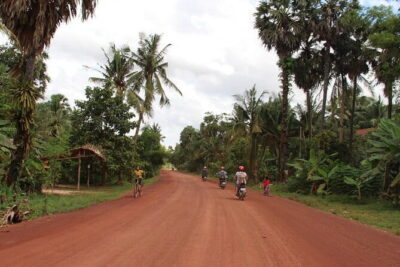
As you ride, expect plenty of wildlife-style moments. The tour is set up to highlight cows, buffaloes, ducks, and birds soaring overhead. You’ll also notice the village layout and how people live in a place shaped by water and farming cycles. It’s the kind of visual context that makes later temple visits feel less like a separate world.
Village life stops: farming, vegetables, hay, and farmer Q&A
The best part of this tour is that you don’t just ride past farmland. You get to slow down at the human side of it. The route includes time to see daily rural routines such as:
- the farming cycle
- vegetable cultivation
- hay stacking
You may also get a chance to interact with farmers, sometimes with explanations about how rice cultivation works. Even if you only catch part of the conversation, the value is big: you’re connecting what you see in the fields to a process, not just scenery.
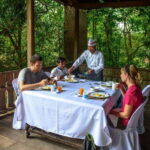
And because this is Cambodia, food matters right away. The tour includes experience with a local market and “traditional Khmer flavors,” plus tastings of local pastry and cookies. This is a good way to break up the ride and practice low-pressure cultural sampling. You’ll also come away with a better sense of what people buy and how markets fit into everyday life.
If you’re the type who asks questions, bring curiosity. The ride is designed for that. If you prefer quieter sightseeing, you’ll still enjoy watching, but the interaction time is where the tour turns from scenic cycling into real understanding.
Siem Reap by pedal, a couple more rides
Arthvear pagoda: a calm spiritual stop with 12th-century temple details
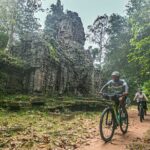
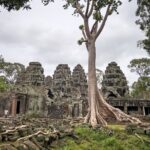
One of the most interesting parts of this morning is the detour to Arthvear pagoda, described as a lesser-known ancient pagoda with stupas and statues, and a 12th-century temple inside. In Siem Reap, “ancient temple” often makes people think of the big names. Arthvear is different because it’s framed as a quieter, more spiritual pause.
What you’ll likely appreciate here is the pacing. You’ve been cycling through fields and village routines, and then you shift into a slower, respectful space. Stupas and statue areas tend to reward attention: you notice details, you see how people move through the grounds, and you get a break from the heat and sun.
Practical advice: dress respectfully around temple areas (covering shoulders and knees is a safe bet). Also, keep your camera ready, but don’t rush. These spaces feel best when you give them a few minutes of real looking.
A 12th-century temple ride-by and the return to town
After the pagoda stop, the ride continues back toward Siem Reap and includes cycling past a 12th-century temple on the way back. This is a nice ending because it ties your morning theme together: you start with modern village life and farmland, then you see that historical layers are everywhere—just not always in the famous tourist centers.
The tour ends back at the meeting point, near the starting area. That matters because you’re not stuck trying to figure out transport right after cycling. You can head back to your hotel, grab a shower, and still have plenty of daylight for whatever you want next.
If you like the idea of a short morning activity before a heavier temple day later, this fits well. It also works as a standalone experience if you want something active that still feels culturally grounded.
Guides you might meet: Vannarath, Bobo, Kimmi, and Bo Bo
A tour is only as good as the person at the front of it, and this one gets praise for guides who explain what you’re seeing. English-speaking guidance is included, and several guides are mentioned by name in experiences people shared.
You might ride with Vannarath, who was described as fun, informative, and well-organized. You might also meet Bobo (sometimes written as Bo Bo), praised for answering questions about Cambodia and for adding thoughtful extras on the route. One person noted a surprise stop at a lotus farm, which shows that the guide may adapt when there’s time and it fits the day. Kimmi also came up as a guide for a route that included a market and countryside stretches.
The big takeaway for you: plan to talk. Ask what’s growing, what the season means, and how the farming work changes through the months. That’s where the tour’s countryside theme becomes more than just a ride.
Price and value: paying $30 for a full morning experience
At $30 per person for about 4 hours, you’re paying for more than a bike. You get:
- an English-speaking guide
- a quality Trek mountain bike and helmet
- water and coconut water
- market tastings and farm/pagoda stops
That’s the real value. If you tried to recreate this on your own, you’d need a bike, a route plan, transport coordination, and someone who could talk you through the places you’d otherwise just pass. The small group size also reduces the “herding” feeling you sometimes get on bigger tours.
One more value point: because it starts in the morning and runs a tight, scenic circuit, you’re spending your time in motion rather than waiting around. For a budget-conscious day, that’s a win.
Who should book this, and who should choose something else
This tour is ideal if you want:
- a morning active plan that gets you out of the city
- countryside views with animals and working farms
- market tastings and chances to ask farmers questions
- a calmer spiritual stop at Arthvear pagoda
It’s also a strong fit for photographers who like details and progression: river edge, paddies, village routines, then a temple pause.
I’d steer people away from this if:
- you can’t comfortably handle about 25km on roads that can include busier crossings
- you strongly need hotel pickup and drop-off, since that isn’t included
- you want a slow, minimal-motion cultural day rather than a real cycling experience
For everyone else, this offers a good mix of movement and meaning. It’s not just a workout; it’s a way to understand Siem Reap beyond the big-ticket temples.
Should you book Short Cycling at Countryside?
Book it if you want a low-drama, high-value morning that blends cycling, village life, and Arthvear pagoda into one trip. The included bike, helmet, and drinks make it easier to show up and ride without hassle, and the small group format keeps it friendly.
I’d pass if you’re anxious about crossings or you’re expecting hotel pickup. Otherwise, this is exactly the kind of Siem Reap experience that helps the temples feel connected to the world around them.
FAQ
How long is the Short Cycling at Countryside tour?
It runs for about 4 hours.
How far will I cycle?
The ride is about 25km and is mostly on countryside roads.
What time does the tour start?
The start time is 7:30am.
Where do I meet the guide?
You’ll meet at the Angkor Cycling Tour office on Taphul Rd, Krong Siem Reap 17252, Cambodia.
What’s included in the price?
The tour includes an English-speaking guide, a Trek mountain bike, a helmet, pure drinking water, and coconut water. Admission is listed as free for the tour.
Is hotel pickup and drop-off included?
No. Hotel pickup and drop-off are not included. The activity ends back at the meeting point.
More Tour Reviews in Siem Reap
- Angkor Wat Sunrise or Sunset Tour with Guide from Siem Reap
★ 5.0 · 12,109 reviews - Siem Reap: Angkor Wat: Small-Group Sunrise or Sunset Tour
★ 5.0 · 9,444 reviews - From Siem Reap: Kampong Phluk Floating Village Tour by Boat
★ 4.9 · 6,979 reviews - Sunset tour of Kampong Phluk stilts home village on the Tonle Sap
★ 5.0 · 4,865 reviews - Siem Reap: Angkor Wat 2-Day Tour with Sunrise and Sunset
★ 4.9 · 4,429 reviews
Siem Reap on Two Wheels
- Siem Reap Countryside Bike Tour / E-Bike or Tuk Tuk
★ 5.0 · 935 reviews - Angkor Sunrise Bike Tour / E-Bike or Tuk Tuk
★ 5.0 · 615 reviews - Siem Reap: Bike the Angkor Temples – Full-Day 30km Tour
★ 5.0 · 463 reviews - Siem Reap: Angkor Wat Sunrise Bike Tour & Jungle Breakfast
★ 5.0 · 415 reviews - Siem Reap: Guided Countryside Bike Tour
★ 4.9 · 294 reviews
Through the Siem Reap Countryside
- From Siem Reap: Kampong Phluk Floating Village Tour by Boat
★ 4.9 · 6,979 reviews - Kampong Phluk Floating Village Tour by Boat
★ 5.0 · 1,020 reviews - Siem Reap Countryside Bike Tour / E-Bike or Tuk Tuk
★ 5.0 · 935 reviews - Siem Reap: Tonle Sap, Kampong Phluk & Floating Village Tour
★ 4.4 · 397 reviews - Siem Reap Countryside Quad Biking Tour
★ 5.0 · 322 reviews
Just Added: Fresh Siem Reap Tour Reviews

Siem Reap Countryside & Village Tours, compared.
 ★ 4.9From Siem Reap: Kampong Phluk Floating Village Tour by BoatFrom $206,979 reviews
 ★ 5.0Kampong Phluk Floating Village Tour by BoatFrom $201,020 reviews
 ★ 5.0Siem Reap Countryside Bike Tour / E-Bike or Tuk TukFrom $35935 reviews
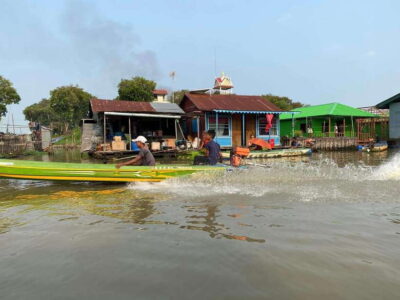 ★ 4.4Tonle Sap, Kampong Phluk & Floating Village TourFrom $17397 reviews
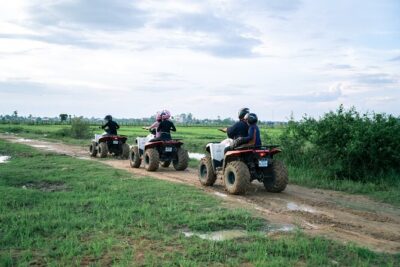 ★ 5.0Siem Reap Countryside Quad Biking TourFrom $45322 reviews
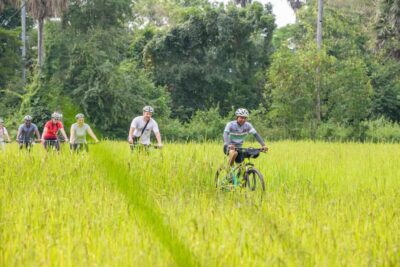 ★ 4.9Guided Countryside Bike TourFrom $35294 reviews
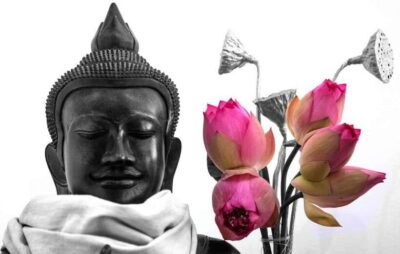 ★ 4.7Siem Reap Lotus Silk Farm Discovery tour & Lake experienceFrom $20291 reviews
 ★ 4.7Siem Reap Quad Bike Countryside TourFrom $33283 reviews
Browse the lists this tour appears in