
Reviewed · ANGKOR WAT TEMPLE TOURS
Siem Reap: Angkor Wat Private Tour by Tuk Tuk
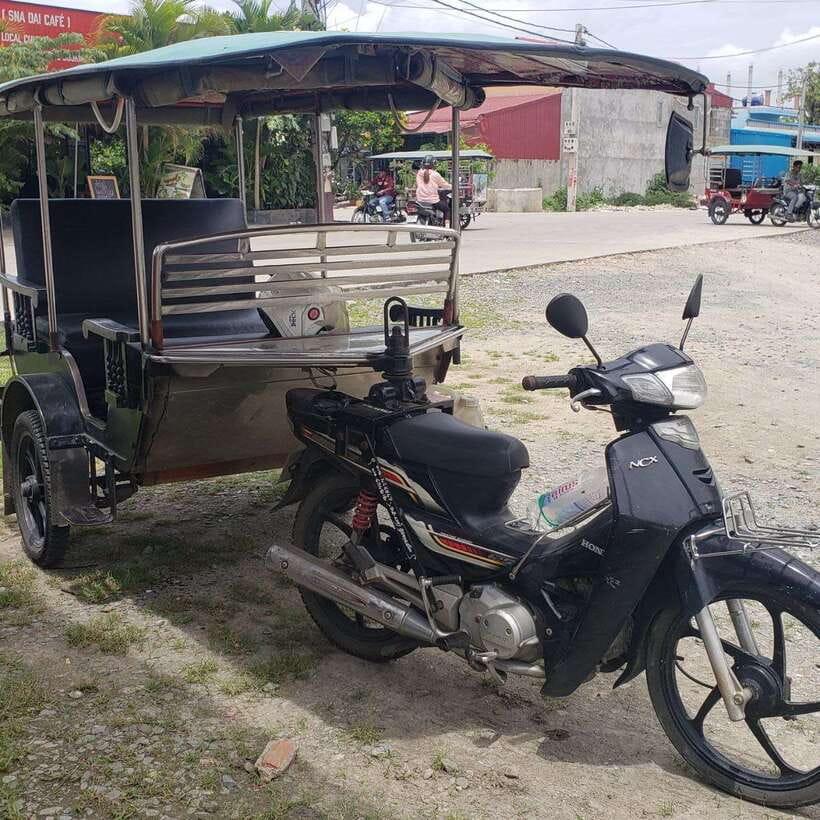
Angkor is big, but a private tuk tuk makes the day feel manageable, not frantic. This tour strings together the classic stops—Angkor Wat, Angkor Thom, and Ta Prohm—with a friendly driver, cold water, and a smooth hotel-to-temple flow. It’s also a great way to experience the temples at Khmer pace, rolling past stone towers like you’re part of the place.
I especially like two things: first, you get a fully private setup (no awkward sharing or pacing with strangers), and second, the driving experience is genuine local flavor—plus drivers such as Rachou and Pholla have been praised for being attentive, patient, and helpful with water and photos along the way.
One consideration: the tour price covers transport and guiding time, but the temple ticket and lunch are not included, so you’ll want to budget a bit more before you go.
In This Review
- Key highlights worth caring about
- A private tuk tuk day that keeps Angkor from feeling like homework
- From hotel pickup to temple gates: how the logistics work
- Angkor Wat: the Vishnu temple that became Cambodia’s symbol
- Angkor Thom’s South Gate and Bayon’s 216 faces
- Baphuon, Phimeanakas: causeways, a reclining Buddha, and a climb for views
- Terrace stops along the Royal Palace way: Elephants, the Leper King, and shaded breaks
- The Terrace of the Elephants
- The Terrace of the Lepper King
- Prasat Preah Palilay and the feel of shade
- Thommanon and Chau Say Tevoda before Ta Prohm’s roots
- Thommanon: a pair of Hindu temples with an unusual name
- Chau Say Tevoda: Shiva and Vishnu with devata detail
- Ta Prohm: the movie-famous temple with living roots
- Price and value: what $13 per person really covers
- What to watch for on the ground (so your day goes smoothly)
- Who this private tour is best for
- Should you book this Angkor Wat private tuk tuk tour?
- FAQ
- Where is the pickup location?
- How long is the Angkor Wat private tour by tuk tuk?
- Is this a private tour or a shared group?
- What does the tour include?
- What is not included?
- Which temples are visited during the day?
- How much time is spent at Angkor Wat?
- Is the driver English-speaking?
- Are water and drinking water provided?
- What are the cancellation and payment options?
Key highlights worth caring about

- Private tuk tuk from your hotel keeps you flexible on photo stops and timing
- Angkor Wat first (Vishnu-focused, built in the early 12th century) sets the tone for the day
- Angkor Thom highlights include the South Gate and Bayon’s 216 faces
- Baphuon and Phimeanakas add variety—causeway drama, reclining Buddha, and a steep viewpoint climb
- Ta Prohm with tree roots is a photographer’s dream, especially with mossy stone and Spung tree roots
- Cold drinking water is included to help you handle the heat
Other ways to walk the great temple
- Angkor Wat Sunrise or Sunset Tour with Guide from Siem Reap★ 5.0 · 12,109 reviews
- Siem Reap: Angkor Wat: Small-Group Sunrise or Sunset Tour★ 5.0 · 9,444 reviews
- Siem Reap: Angkor Wat 2-Day Tour with Sunrise and Sunset★ 4.9 · 4,429 reviews
- Siem Reap: Full-Day Angkor Wat Guided Tour with Sunset★ 4.9 · 3,803 reviews
A private tuk tuk day that keeps Angkor from feeling like homework
If you’ve ever felt overwhelmed by Angkor, you’re not alone. The temples are world-famous, but they’re also spread out, and the crowds can turn your day into a queue. A private tuk tuk tour solves a big part of that problem. You’re not waiting on a group schedule, and you can move between sights with the kind of slow, local rhythm that actually suits ruins.
This specific day is built around the “greatest hits” plus some smart mid-day variety. You’ll start with Angkor Wat, move into Angkor Thom, and finish with Ta Prohm’s famous tree-and-stone atmosphere. Along the way, you’ll get cold waters, hotel pickup and drop-off, and a driver who can handle the practical stuff so you can focus on the temples.
It’s also good value at $13 per person for a private tour. Just remember the two missing pieces—temple ticket and meals—so you don’t get surprised at the counter or at lunch.
From hotel pickup to temple gates: how the logistics work
Your day begins with pickup from your hotel lobby in Krong Siem Reap. Then you head straight into the Angkor circuit with a private, licensed driver and your own tuk tuk. That one detail matters more than people think. When you don’t share transport, you can pause for photos without negotiating with the rest of the group.
The tour includes toll roads and fee parking, plus gasoline. Translation: you shouldn’t have to track down small expenses while you’re in “temple mode.” You’ll also receive cold waters during the day, and the tour includes pure drinking water as part of the plan to help you avoid dehydration.
Another practical perk: there’s skip-the-line entry through a separate entrance. It won’t eliminate crowds (Angkor is still Angkor), but it can reduce the most time-wasting parts of temple entry.
Language is listed as English, which is ideal if you want context while still keeping things relaxed instead of turning the day into a lecture.
Angkor Wat: the Vishnu temple that became Cambodia’s symbol
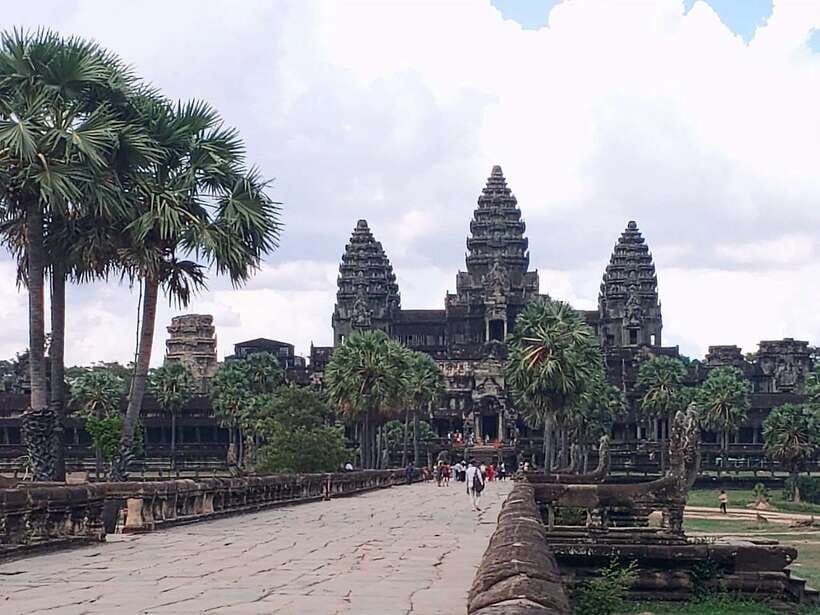
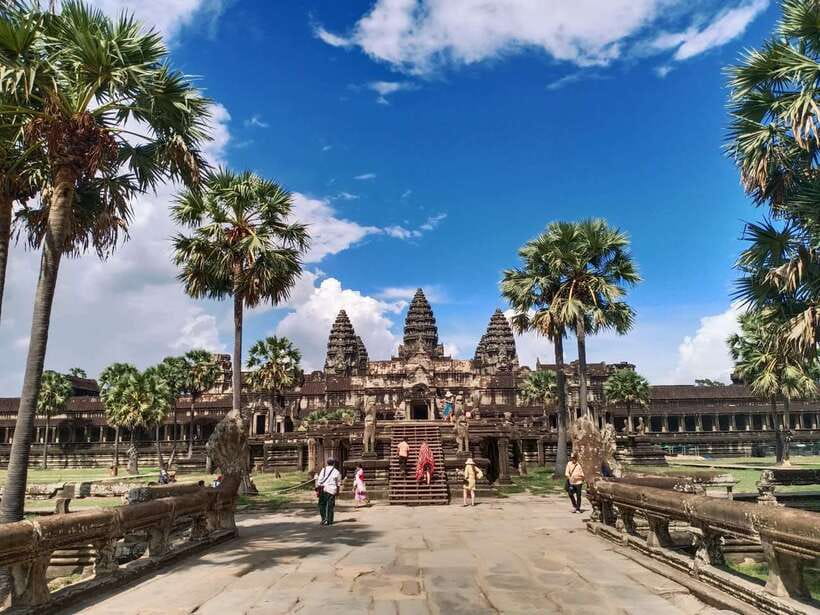
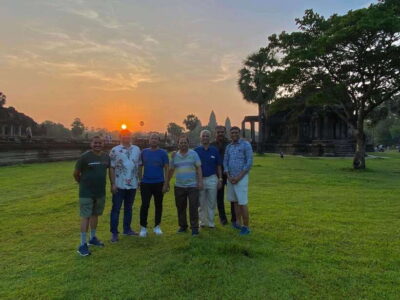
Angkor Wat is the big start. You’ll spend about 3 hours here, walking, looking, and taking in how the complex is laid out.
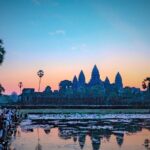
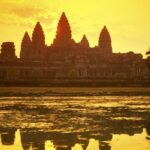
What I find most compelling is how Angkor Wat isn’t just “a temple,” it’s a statement. It was built by Khmer King Suryavarman II in the early 12th century in Yasodharapura (present-day Angkor), originally as a state temple and eventual mausoleum. And unlike earlier kings who followed Shaivism, Angkor Wat was dedicated to Vishnu.
That history shows in the design and the feeling. You’re not only looking at carved stone—you’re watching a civilization’s worldview in architecture. As the best-preserved temple at the site, Angkor Wat is also described as the only one that remained a significant religious center since its foundation, which helps explain why it carries such lasting authority even today.
If you want a simple strategy for your visit: take your time at the main areas first, then use your 3 hours to slow down for details—carvings, axes of symmetry, and the way light changes across stone. The “largest religious monument in the world” label is useful, but what really matters is that the site is still functioning as a meaningful place, not just a museum set.
Angkor Thom’s South Gate and Bayon’s 216 faces
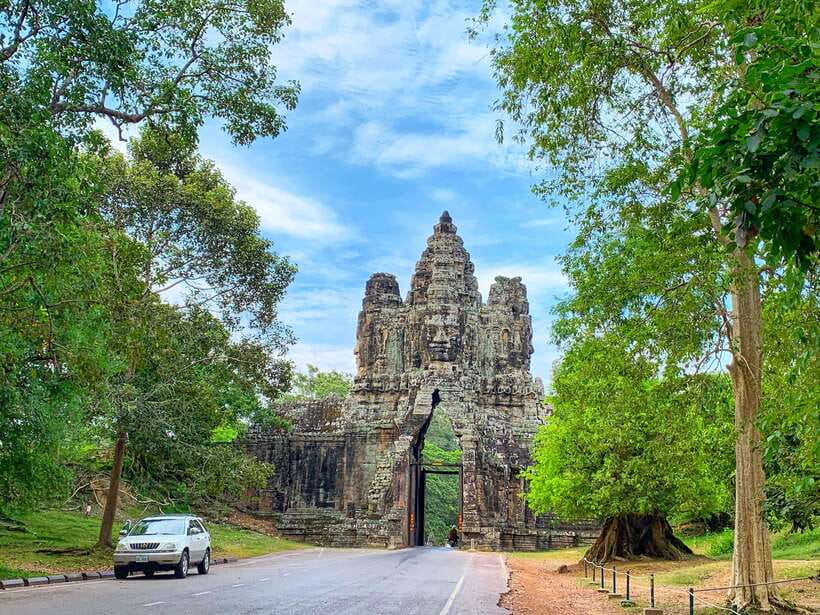
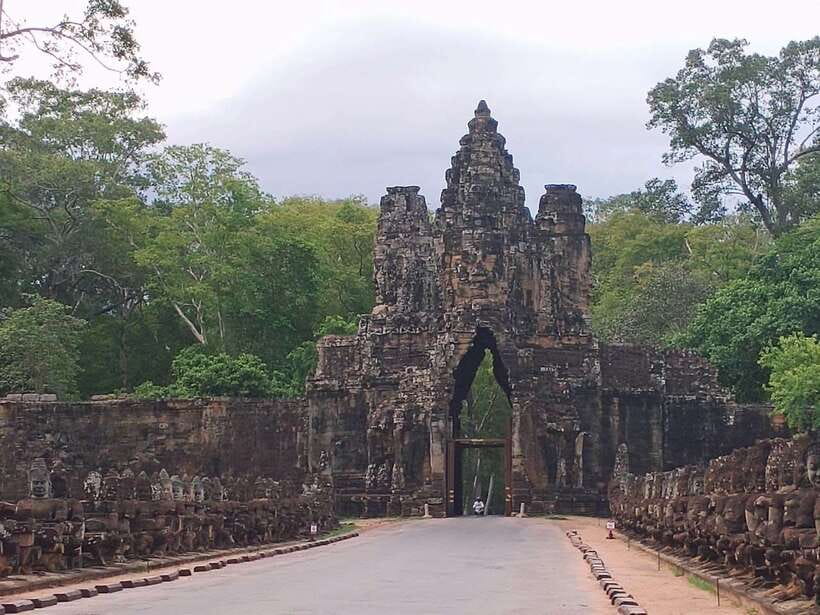
After Angkor Wat, you’ll move toward Angkor Thom, starting with a short photo stop at Tonle Om Gate (South Gate). Even that quick pause is worth it because it sets the geometry of the day: you’re transitioning from one major temple center into the walled heart of the ancient city.
Angkor Thom is protected by an eight-meter-high wall. The laterite wall is described as measuring 3 x 3 km, and it’s guarded by a moat that’s still flooded today. That detail changes your mental picture. This wasn’t an open free-for-all of ruins—it was a fortified city meant to control access and protect treasures inside.
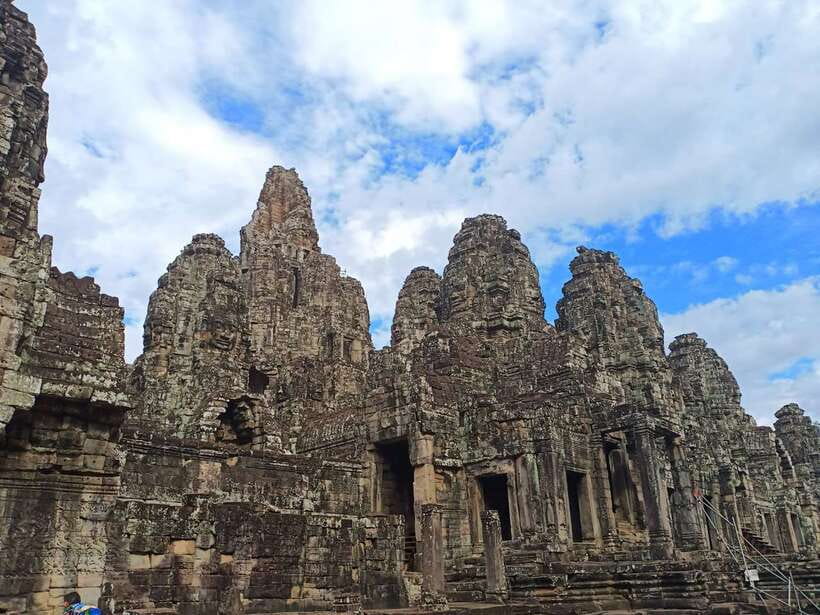
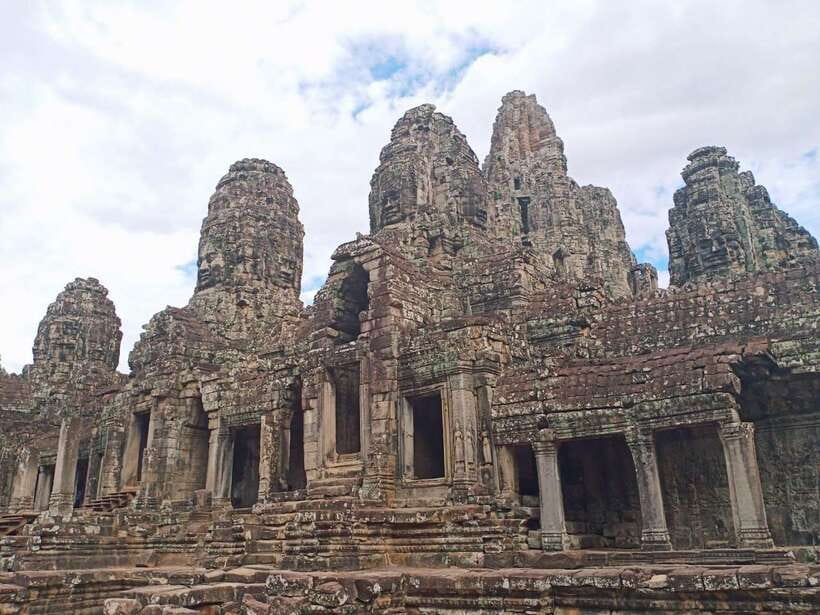
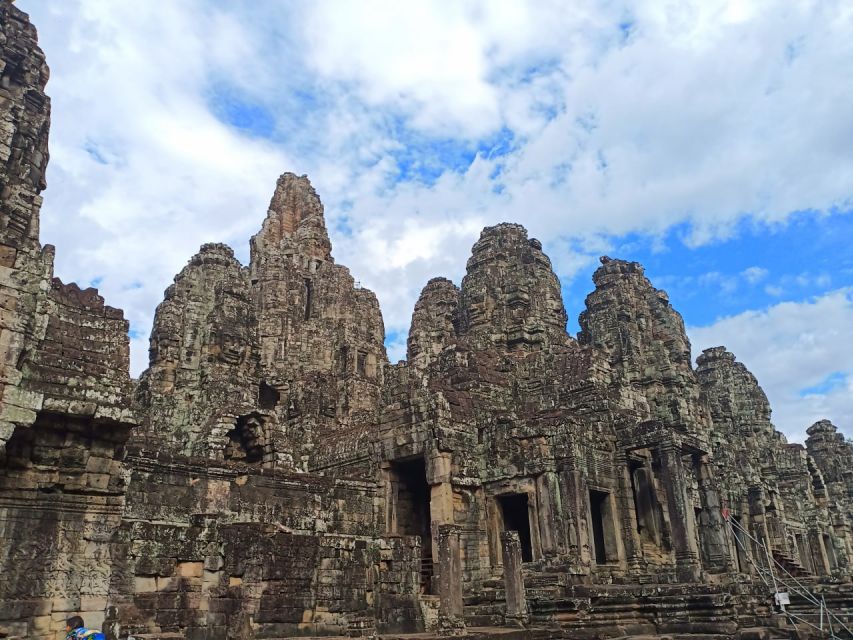
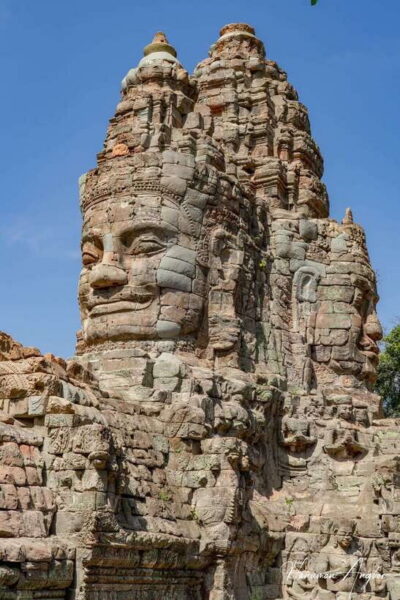
You enter through the South Gate, then head toward the center: Bayon Temple. Bayon is the temple with the legendary faces—216 enigmatic faces looking outward. The effect is hard to describe until you stand there. From a distance they look like a design element. Up close, they feel like they’re watching the changing crowd flows across the courtyard.
You’ll have about 1.5 hours at Bayon. Use that time for two different looks: one where you step back and understand the scale, then another where you move closer and focus on expression and carving. The faces are the headline, but the surrounding stonework and symmetry are where the longer visit pays off.
More temple circuits, set side by side
Baphuon, Phimeanakas: causeways, a reclining Buddha, and a climb for views
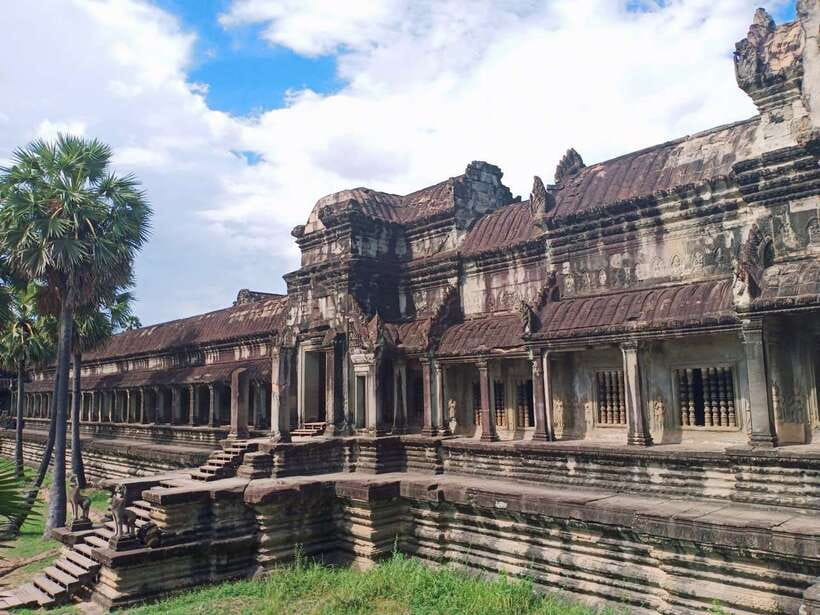
Next up is Baphuon. You’ll have around 30 minutes here, and that’s a good amount of time for a mid-day temple stop. Baphuon has a long causeway, and the big draw is an impressive giant Reclining Buddha.
The “must know” detail is that the reclining figure was treated like a jigsaw puzzle. It was reassembled in 2011, after a disruption that lasted 37 years caused by war. That context adds weight to what you’re seeing: you’re not only looking at a famous image, you’re looking at a restored piece of Khmer heritage.
From there, you’ll visit Phimeanakas. Think of it as the temple that forces you to earn your perspective. It’s described as hiding in shaded jungle and offering a decent over-the-tree-tops view—but you’ll need to take the steep steps to reach the top.
This is one of those stops where 30 minutes feels short, but that’s actually fine. You’re here for the climb and the view, not for a slow museum-like wander. If the heat is heavy, pace yourself on the steps and take the view as your reward, not your punishment.
Terrace stops along the Royal Palace way: Elephants, the Leper King, and shaded breaks
Angkor Thom isn’t only about the headline temples. The day also includes classic “palace zone” scenery—platforms, terraces, and carved detail you might miss if you rush straight from Bayon to the next big stop.
You’ll visit areas including Prasat Preah Palilay, the Terrace of the Lepper King (Preah Ponlea Sdach Komlong), and the Terrace of the Elephants, with short photo stops and about 30 minutes allocated for each of these points. Those time blocks are designed so you can look closely without burning your whole afternoon.
Here’s how I’d think about these terraces:
- They reward slower walking. Carving and figures are often placed for close viewing, not quick glances.
- They offer natural breaks. Terraces and shaded sections give your body a chance to reset between heavier temple climbs.
The Terrace of the Elephants
The “Royal Palace” area is often remembered for its animal carvings, and the Terrace of the Elephants is one of the most recognizable. Even if you don’t become a Khmer ornament scholar by the end of the day, you’ll still appreciate how the palace-era design reflects power and ceremony.
The Terrace of the Lepper King
The Terrace of the Lepper King name is part of the attraction. It hints at local legend and the way Angkor’s architecture carries stories. You won’t need a long lecture here; just walk the edge of the terrace and let the details grab you.
Prasat Preah Palilay and the feel of shade
Prasat Preah Palilay is described as a shaded area, which matters in real life. Angkor afternoons can be sweaty. Shaded temple zones make the difference between enjoying the ruins and counting minutes.
Thommanon and Chau Say Tevoda before Ta Prohm’s roots
After lunch, the plan continues deeper into the complex with Thommanon and Chau Say Tevoda, before heading to Ta Prohm.
Thommanon: a pair of Hindu temples with an unusual name
Thommanon is described as one of a pair of Hindu temples built during Suryavarman II’s reign. The name is linked to the Pali words: “Dhamma” (Buddhist teachings) and “Nanda” (supreme wisdom). Even with the name blending religious language, the key practical takeaway is that this stop gives you a different feel than the massive, iconic Angkor Wat circuit.
Chau Say Tevoda: Shiva and Vishnu with devata detail
Chau Say Tevoda is dedicated to Shiva and Vishnu, and it features unique female sculptures of devatas. This is another reason I like this route. You get the big famous temples, but you also get chances to see carved figures and temple design that won’t be the exact same “face crowd” you saw at Bayon.
Ta Prohm: the movie-famous temple with living roots
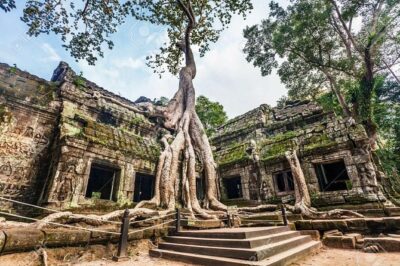
Then comes Ta Prohm, the temple made famous by the movie Tomb Raider—Angelina Jolie as Lara Croft. Even if you didn’t watch the movie, the environment is still the star.
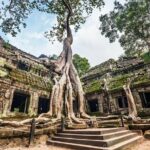
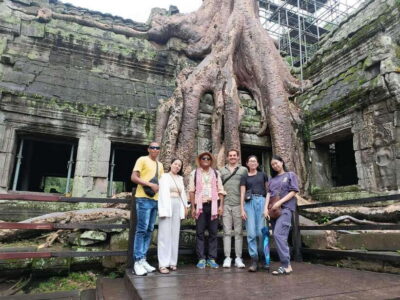
Ta Prohm is famous because nature and stone are in a close relationship. You’ll hear about Spung tree roots (Tetrameles Nudiflora) wrapping around ancient structures, with moss covering stones in a way that feels almost staged. It’s also a photographer’s paradise. The tour specifically nudges you not to miss capturing your own “explorer” moments here.
Your time for Ta Prohm is about 1 hour. That usually works well because this temple’s visuals hit hard early. Spend your hour wisely: start wide to understand the composition, then move closer for the root-and-stone textures.
When you’re done, you’ll drive back to your hotel and get dropped off, finishing the day the simple way: no extra transport planning.
Price and value: what $13 per person really covers
On paper, $13 per person for a private day sounds almost too good to be true. Here’s what you should expect to be covered:
Included:
- Private tuk tuk and private driver (licensed)
- Hotel pickup & drop-off
- Cold waters
- Toll roads and fee parking
- Gasoline
- Skip the line via a separate entrance
- Private structure: 100% private with the number of people you book
- English-speaking driver
Not included:
- Temple ticket
- Meals (lunch is a break, but it’s not included)
So the value isn’t just the price. It’s the fact that the tour bundles the “messy logistics” (transport, parking, fuel) into one clear cost. Your biggest budgeting task is simply temple entry tickets plus your lunch.
If you’re a solo traveler, this setup can still feel like a smart deal because you’re not paying extra to “share” time with strangers. If you’re a couple or small group, you’re also likely to appreciate the flexibility.
And if you hate waiting in hot lines, the separate-entrance idea is genuinely worth it.
What to watch for on the ground (so your day goes smoothly)
Angkor days have a rhythm, and this tour respects it. Still, there are practical realities you should plan around:
- Heat and walking add up. The route includes several temple zones plus steps at Phimeanakas. Cold water helps, but you’ll still want to pace yourself.
- Short stops mean smart choices. Some temples are around 30 minutes. If you want a deep, slow study of one specific place, you might feel slightly time-pressed in the others.
- Bring a plan for lunch. Lunch isn’t included. Use the driver’s local sense to pick somewhere that fits your pace and doesn’t force a rushed return.
- Skip-the-line isn’t a magic wand. It should reduce time at entry, but Angkor’s scale still brings crowds.
One small piece of guidance from the experience style: drivers often act like your day’s flexible “problem solver.” In past outings, drivers such as Rachou have been praised for helping with water, patient waiting, and even suggesting places to eat. If you want an extra viewpoint, ask politely early—when plans are still easy to adjust.
Who this private tour is best for
I think this tour fits best if you want:
- A private, no-stress way to hit Angkor’s biggest temples in one day
- Local-style transport on a route built for photos and walking
- An English-speaking driver to explain what you’re seeing while keeping the day easy
- A cost-controlled Angkor plan, since transport and parking are handled up front
You might want a different approach if you’re the type who wants long museum-style explanations at each stop, or if you’re comfortable navigating timings and temple entry details on your own. This tour is designed for coverage and flow, not for hours of one specific temple.
Should you book this Angkor Wat private tuk tuk tour?
Yes—if you want a single-day Angkor plan that’s private, good value at $13 per person, and built around the essentials: Angkor Wat, Angkor Thom (South Gate and Bayon), and Ta Prohm’s iconic roots. The included cold waters and hotel pickup drop-off remove most day-trip friction.
Hold off or adjust expectations if you hate planning for extra costs, since temple tickets and lunch aren’t included. Also, if you crave ultra-deep study at every site, you may prefer a longer or more focused tour so each temple gets the time it deserves.
If you’re booking, choose this when you want a balanced day: big sights, meaningful context, and the kind of tuk tuk ride that keeps the temples feeling human-sized.
FAQ
Where is the pickup location?
Pickup is from the lobby of your hotel in Krong Siem Reap.
How long is the Angkor Wat private tour by tuk tuk?
The tour lasts 1 day.
Is this a private tour or a shared group?
This is a fully private tour. It’s not a join tour with other guests, and it runs with the number of people you book.
What does the tour include?
It includes a private tuk tuk, a private licensed driver, toll roads, fee parking, cold waters, gasoline, and hotel pickup and drop-off. It also includes skip-the-line entry through a separate entrance.
What is not included?
Temple ticket and meals are not included.
Which temples are visited during the day?
The day includes Angkor Wat, Angkor Thom highlights such as Bayon and the South Gate, Baphuon, Phimeanakas, Preah Palilay, the Terrace of the Lepper King, the Terrace of the Elephants, Thommanon, Chau Say Tevoda, and Ta Prohm.
How much time is spent at Angkor Wat?
Angkor Wat includes about 3 hours of visit and sightseeing time.
Is the driver English-speaking?
Yes, the driver’s language is listed as English.
Are water and drinking water provided?
Yes. Cold waters are included, and the tour mentions providing pure drinking water to help avoid dehydration.
What are the cancellation and payment options?
You can cancel up to 24 hours in advance for a full refund. It also offers reserve now and pay later, meaning you can book without paying nothing today.
The Temples by Tuk-Tuk
- Siem Reap: Angkor Wat Private Tuk-Tuk Tour
★ 4.9 · 2,222 reviews - Siem Reap Countryside Bike Tour / E-Bike or Tuk Tuk
★ 5.0 · 935 reviews - Angkor Sunrise Bike Tour / E-Bike or Tuk Tuk
★ 5.0 · 615 reviews - Angkor Wat Private Tuk-Tuk Tour (sunrise Option) & more
★ 5.0 · 439 reviews - Old Siem Reap Sunset Food Tour by Tuk-tuk
★ 5.0 · 311 reviews
More Temple Circuits Around Siem Reap
- Angkor Wat Sunrise or Sunset Tour with Guide from Siem Reap
★ 5.0 · 12,109 reviews - Siem Reap: Angkor Wat: Small-Group Sunrise or Sunset Tour
★ 5.0 · 9,444 reviews - Siem Reap: Angkor Wat 2-Day Tour with Sunrise and Sunset
★ 4.9 · 4,429 reviews - Siem Reap: Full-Day Angkor Wat Guided Tour with Sunset
★ 4.9 · 3,803 reviews - Angkor Wat Sunrise tour with Small – Group and Guide tours
★ 5.0 · 3,655 reviews
Angkor Wat, a Few More Ways In
- Angkor Wat Sunrise or Sunset Tour with Guide from Siem Reap
★ 5.0 · 12,109 reviews - Siem Reap: Angkor Wat: Small-Group Sunrise or Sunset Tour
★ 5.0 · 9,444 reviews - Siem Reap: Angkor Wat 2-Day Tour with Sunrise and Sunset
★ 4.9 · 4,429 reviews - Siem Reap: Full-Day Angkor Wat Guided Tour with Sunset
★ 4.9 · 3,803 reviews - Angkor Wat Sunrise tour with Small – Group and Guide tours
★ 5.0 · 3,655 reviews
Just Added: Fresh Siem Reap Tour Reviews

Angkor Wat Temple Tours, compared.
 ★ 5.0Angkor Wat Sunrise or Sunset Tour with Guide from Siem ReapFrom $1812,109 reviews
 ★ 5.0Angkor Wat: Small-Group Sunrise or Sunset TourFrom $159,444 reviews
 ★ 4.9Angkor Wat 2-Day Tour with Sunrise and SunsetFrom $344,429 reviews
 ★ 4.9Full-Day Angkor Wat Guided Tour with SunsetFrom $153,803 reviews
 ★ 5.0Angkor Wat Sunrise tour with Small – Group and Guide toursFrom $143,655 reviews
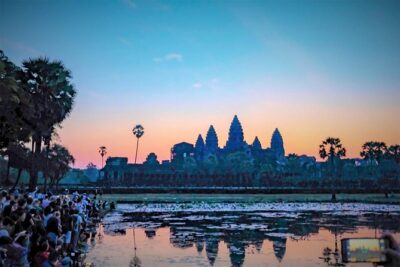 ★ 5.0Angkor Wat Highlights and Sunrise Guided Tour from Siem ReapFrom $233,213 reviews
 ★ 5.0Angkor Wat Sunset Small Group Tour with Lunch IncludedFrom $203,059 reviews
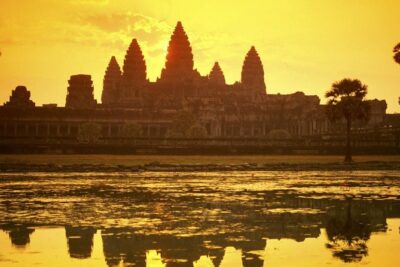 ★ 5.0Full-Day Angkor Wat Sunrise Private Tour with Guide from Siem ReapFrom $602,920 reviews
Browse the lists this tour appears in