
Reviewed · SIEM REAP FOOD TOURS
Siem Reap Cambodian Buddhist Water Blessing and Local Market
A short ride can lead to something ancient. This Siem Reap tour pairs a Buddhist water blessing at a countryside pagoda with a guided look at everyday life in a local market. It’s the kind of trip that makes Angkor feel even deeper, because you’re seeing belief and ritual in the place where people actually use them.
I especially like two parts: the chance to choose between two blessing styles (light sprinkling or the longer head-pouring ritual), and the way the guide ties what you’re doing to Buddhist meaning and local culture. There’s also a nice practical payoff: you get a sarong for the messier ritual, and your wrist ends up marked with red ties that indicate the blessing you received.
One drawback to consider: because it’s only a 2-hour experience, you won’t get a long, slow day in the countryside. If you want hours of silence, reflection, and extra time to ask questions, you may feel slightly rushed.
In This Review
- Key things that make this tour worth your time
- Heading to the countryside: the tuk-tuk rhythm and what it means
- Wat Athvear temple stop: where the ritual actually happens
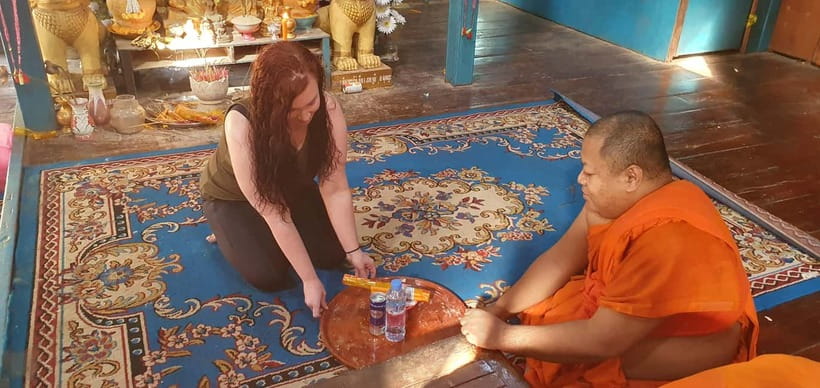
- The Buddhist water blessing ritual: two ways to receive it
- Option 1: chanting with a light sprinkling
- Option 2: the longer pouring ritual with sarong protection
- Your wrist at the end: what the red ties mean
- The guide factor: clear English and better context
- Local market time: photos, a guided walk, and real-life flavor
- Price and value: is $45 for 2 hours a fair deal?
- Who should book this water blessing and market tour?
- Should you book this tour? My honest call
- FAQ
- FAQ
- Where do I get picked up for this tour?
- How long is the experience?
- What exactly happens during the water blessing?
- Do I have to change clothes for the longer ritual?
- Is the temple/pagoda visit part of the tour?
- What does the market portion include?
- What language is the guide in?
Key things that make this tour worth your time
- Two blessing options: quick sprinkling with chanting, or the longer pouring ritual over your head
- A real pagoda setting just south of Siem Reap, with monks chanting as part of the ceremony
- Sarong provided so your clothes can stay dry during the head-pouring version
- A guided market stop with time for photos and a walk-through, not just a quick peek
- English guidance that connects ritual to culture, including examples of fluent guiding like Jorge Mia
Still hungry? More street stalls and night bites
- Siem Reap Evening Food Tour – Inclusive 5 stops Local Tastings★ 5.0 · 325 reviews
- Old Siem Reap Sunset Food Tour by Tuk-tuk★ 5.0 · 311 reviews
- Siem Reap: Street Food Experience by Tuk-Tuk★ 4.9 · 310 reviews
- Siem Reap Evening Foodie Vespa Tour / Tuk Tuk Available★ 5.0 · 174 reviews
Heading to the countryside: the tuk-tuk rhythm and what it means
The tour starts with pickup in Krong Siem Reap. You’re asked to be ready in the hotel lobby about 10 minutes before your scheduled pickup, then you head out by tuk-tuk. The transfer is short and steady, and that matters, because the whole experience is tight on time.
After roughly a 15-minute ride, you reach the countryside pagoda area for the main ritual segment. This is one reason I think the tour works so well for most visitors. You’re not spending half a day traveling out of town, yet you still get that shift in pace: from city noise to the quieter rhythms around a temple setting.
Then, after the blessing and the temple visit, you hop back toward the city for a local market stop. The second tuk-tuk ride is brief, which keeps the energy up. The market portion ends up being your “street-level” contrast to the ceremony: less chanting, more daily life.
Wat Athvear temple stop: where the ritual actually happens
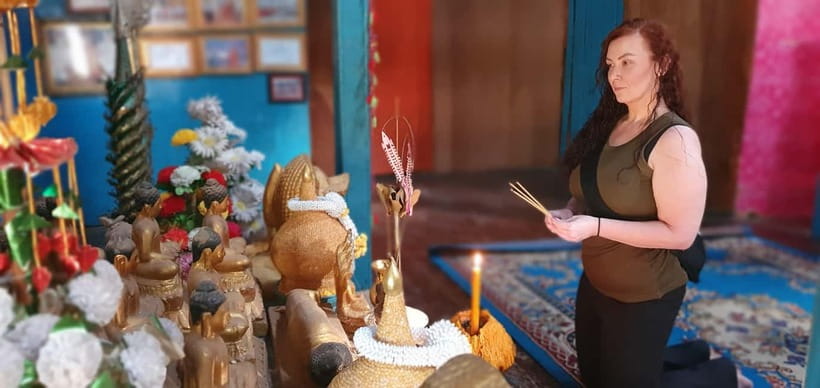
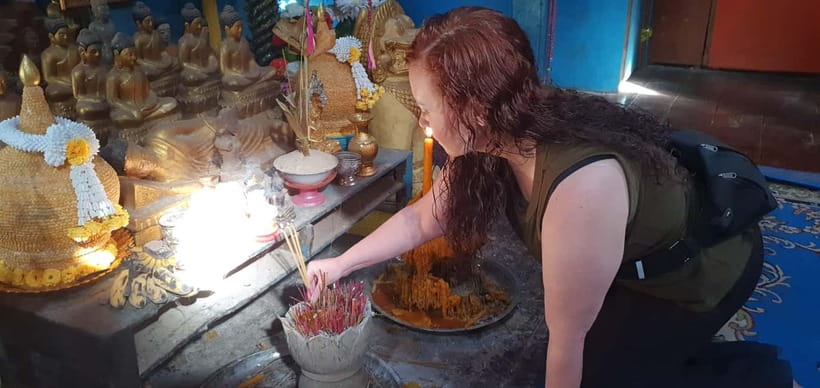
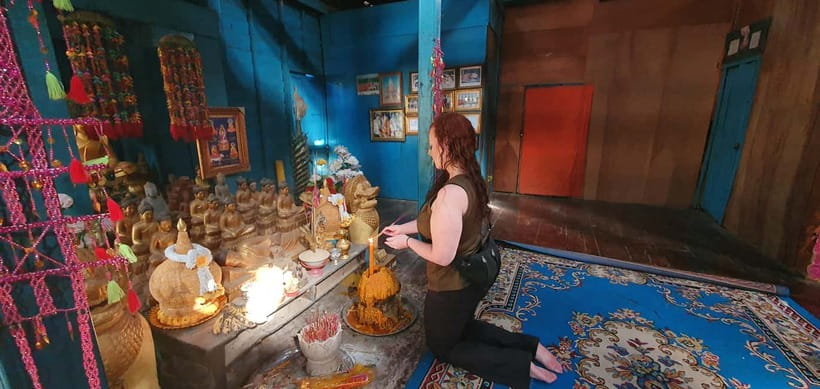
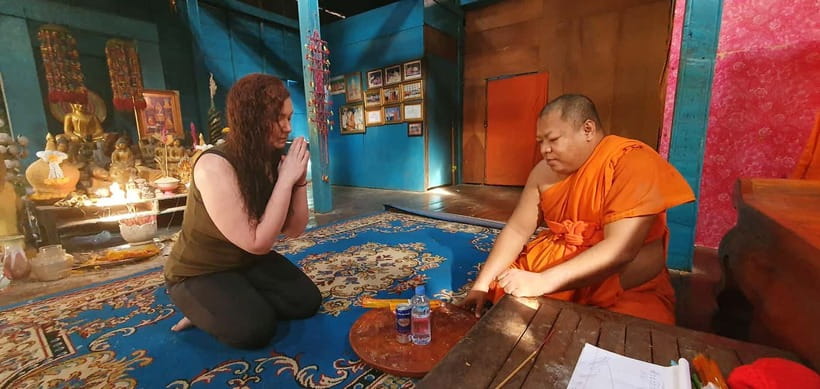
The schedule builds around a one-hour visit to the pagoda/temple area (listed as Wat Athvear). This is the heart of the experience. You’re not just watching from the sidelines; you’re participating in a ceremony where monks chant and blessed water is used in a personal way.
What you’ll find here is part spiritual, part practical. The ceremony includes actions you can follow even if you don’t know every Buddhist term yet. The monks’ chanting is part of the process, and the guide’s job is to help you understand what’s going on while you’re standing there in it.
One small but important detail: there’s a donation to the pagoda included. That’s more than a line item. It signals respect for the place and the people conducting the ritual. It also helps explain why the monks are willing to make room for visitors in the first place.
The Buddhist water blessing ritual: two ways to receive it
This is the main event, and it’s built with choice. You can take part in one of two blessing styles offered by the monks.
Option 1: chanting with a light sprinkling
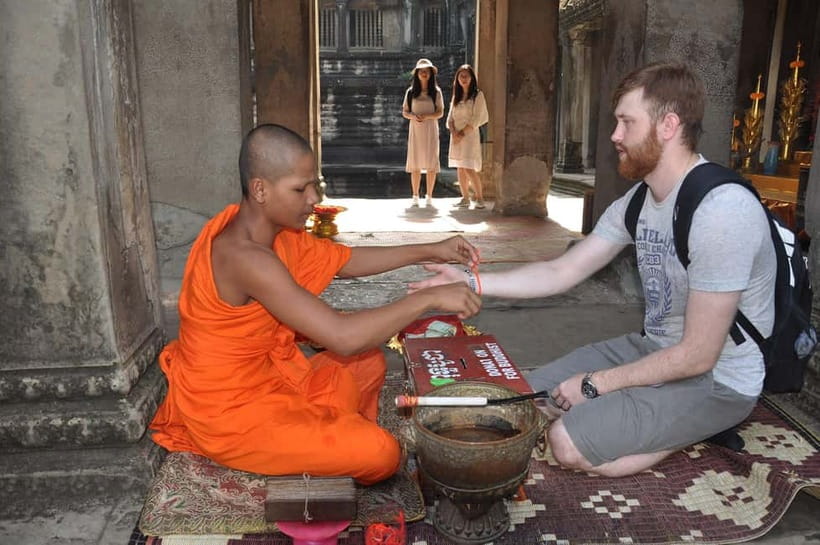
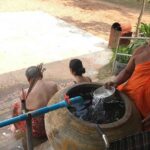
The shorter form begins with monks chanting harmoniously. The intention is spelled out in the moment: wishing you good luck, safe travel, and a long life. During this version, you’ll get a light sprinkling of water.
This option is a good fit if you’re cautious about getting wet or if you’d rather keep things simple and moving. It still feels personal because the chanting is directed toward you, but the physical intensity is lower.
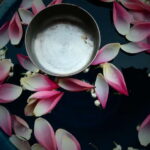
A quiet water blessing, other mornings
Option 2: the longer pouring ritual with sarong protection
The longer ritual is more theatrical, and it’s the one that includes blessed water being poured over your head while the monks chant. You don’t have to figure out the clothing situation on your own. You’ll be provided a sarong to change into so your regular clothing can stay dry.
If you’re open to a more dramatic, full-contact ceremony, this is the version that many people find most memorable. Just be honest with yourself about comfort. Even with the sarong, it’s still water-focused. You’ll want to go in knowing you’re participating in a cleansing ritual, not just receiving a symbolic blessing.
Your wrist at the end: what the red ties mean
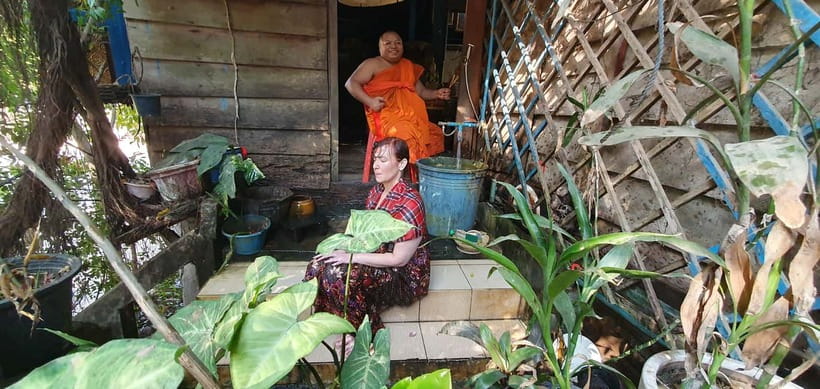
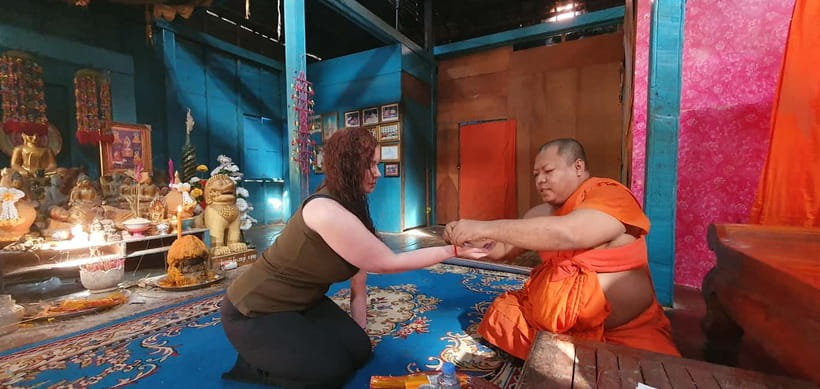
When the blessing part finishes, you’ll get something you can literally take home: your wrist is adorned with special red ties. These ties signify that you received the blessing that was performed.
It’s a small detail, but it’s useful in two ways. First, it gives closure. The ritual doesn’t end with you walking away; you have a visible mark that the ceremony happened specifically for you. Second, it helps you remember the exact experience you chose—since the ritual style you participated in is what you’re being recognized for.
If you’re the type who likes meaning you can hold onto (even when you’re far from home), this is a nice finish. It’s also a gentle reminder when you’re back in town later that day.
The guide factor: clear English and better context
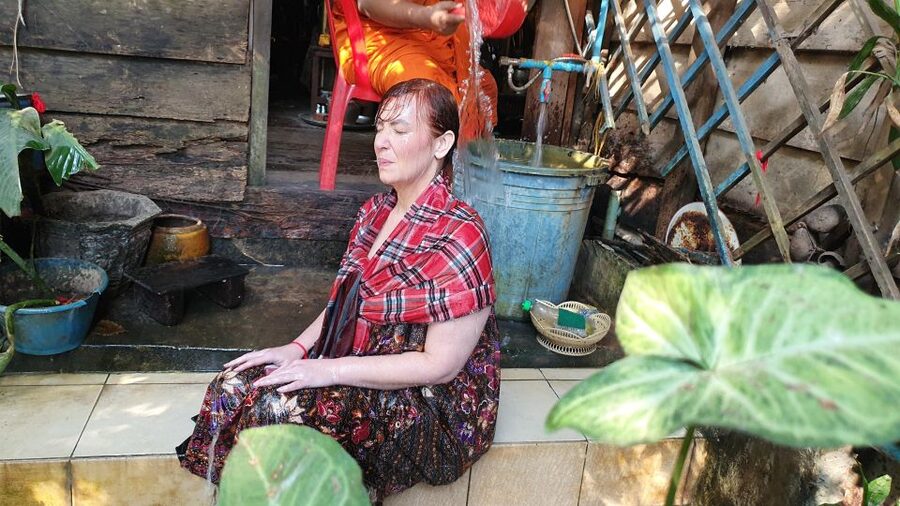
A lot of tours say they explain culture. This one actually seems to deliver that in practical language. In the feedback you’re working from, guides are described as fluent and well prepared, with one named Jorge Mia singled out for strong English and for making sure the ideas landed clearly.
Why this matters: Buddhist ritual can look confusing if you only rely on your own interpretation. When a guide connects chanting, water, and the wishes spoken during the blessing, your participation shifts from what feels like a performance to something with structure and intent.
You’ll also notice the guide’s role during the market time. The market stop isn’t just movement and photos. It’s framed as a guided walk-through, which is where you start seeing daily life instead of just collecting images.
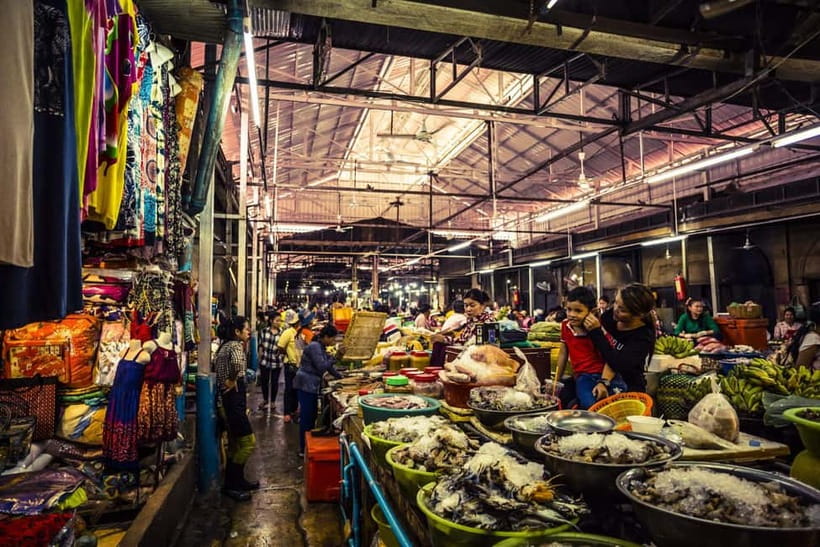
Local market time: photos, a guided walk, and real-life flavor
After returning toward Siem Reap, the tour includes a local market visit with a mix of photo stop, walking, and guided tour time (about 40 minutes).
This portion is valuable because it balances the ceremony. The blessing is personal and spiritual. The market is practical and social. You get to see what people do for everyday needs, and your guide can point out how the market fits into local life.
You also get a built-in rhythm: photo stop for quick scene setting, then a guided visit. That means you’re not stuck wandering alone with questions. You can ask what things are, how people use them, and what to look for while you’re there.
The one consideration: a 40-minute market stop is enough to get a feel for it, not enough to do deep shopping for everything. If you’re hoping to buy lots of items, plan for the market time to be your sampler session, not your whole afternoon.
Price and value: is $45 for 2 hours a fair deal?
$45 per person for a 2-hour outing in Siem Reap sounds like a lot until you break down what’s inside it. You’re paying for three things at once: the English-speaking guide, the tuk-tuk transfers, and participation in a pagoda ritual where you’re also covered for the sarong in the longer option. On top of that, there’s a donation to the pagoda included and a guided market visit.
So the value isn’t only the ceremony itself. It’s the combination of access and context. You’re getting transportation out of town, entry into a sacred space, and explanation while you’re participating. Without a guide, you’d likely have to figure out timing, appropriate behavior, and meaning on your own.
Is it perfect value? For people who want a long, slow temple day, the 2-hour format may feel tight. But for most visitors who want something meaningful without consuming the whole schedule, $45 ends up feeling reasonable, especially because the tour includes practical participation items like the sarong and the donation.
Who should book this water blessing and market tour?
This works best if you want a spiritual ritual with real structure. It’s ideal for:
- People who like ceremonies they can participate in, not just watch
- Visitors who want a better understanding of Buddhist beliefs through an on-the-ground experience
- Travelers who appreciate clear English guidance and a guided walk in the market
It may not be the best match if:
- You dislike getting wet at all and also don’t want to choose the sprinkling version
- You prefer long countryside stays with minimal ticking-clock pressure
The good news: because there are two blessing types, you can shape the experience to your comfort level.
Should you book this tour? My honest call
Book it if you want a short, guided day that connects spirituality and daily life in Siem Reap. The ritual isn’t vague. You’re given clear participation options, you’re provided a sarong for the head-pouring ceremony, and you leave with a physical mark in the form of the red wrist ties.
Skip it if your only goal is a long temple exploration or you’re chasing a full day of sightseeing. This isn’t built like that. It’s built like a focused appointment: ceremony first, market second, back to town feeling like you actually understood more than you would from a quick glance.
FAQ
FAQ
Where do I get picked up for this tour?
Pickup is included in Krong Siem Reap, and you should wait in your hotel lobby about 10 minutes before your scheduled pickup time.
How long is the experience?
The tour duration is 2 hours total, with a 1-hour water blessing experience at the pagoda.
What exactly happens during the water blessing?
You’ll participate in a Buddhist water blessing ceremony led by monks, with chanting and blessed water. You can receive either a lighter sprinkling version or a longer ritual where blessed water is poured over your head.
Do I have to change clothes for the longer ritual?
You’ll be provided a sarong to change into for the longer pouring ritual so your clothing remains dry.
Is the temple/pagoda visit part of the tour?
Yes. The schedule includes a visit to the temple/pagoda area (Wat Athvear Temple) during the main blessing segment.
What does the market portion include?
There’s time for a photo stop, a guided tour, and a market visit for about 40 minutes.
What language is the guide in?
The tour is guided in English.
More Tour Reviews in Siem Reap
- Angkor Wat Sunrise or Sunset Tour with Guide from Siem Reap
★ 5.0 · 12,109 reviews - Siem Reap: Angkor Wat: Small-Group Sunrise or Sunset Tour
★ 5.0 · 9,444 reviews - From Siem Reap: Kampong Phluk Floating Village Tour by Boat
★ 4.9 · 6,979 reviews - Sunset tour of Kampong Phluk stilts home village on the Tonle Sap
★ 5.0 · 4,865 reviews - Siem Reap: Angkor Wat 2-Day Tour with Sunrise and Sunset
★ 4.9 · 4,429 reviews
A Blessing and a Quiet Morning
- Siem Reap: 1-Hour Cambodian Buddhist Water Blessing
★ 4.9 · 68 reviews - Monk Blessing Ceremony in Siem Reap
★ 5.0 · 24 reviews - Private Guided Angkor Wat Tour by Lady Tuk Tuk with Monk Blessing
★ 5.0 · 19 reviews - Angkor Wat & Temples: Private Spiritual Tour by Lady Tuk Tuk
★ 4.9 · 18 reviews - Siem Reap: Khmer Water Blessing by Monk and Lotus Farm Visit
★ 5.0 · 15 reviews
Eat Siem Reap: More Food Walks
- Siem Reap Evening Food Tour – Inclusive 5 stops Local Tastings
★ 5.0 · 325 reviews - Old Siem Reap Sunset Food Tour by Tuk-tuk
★ 5.0 · 311 reviews - Siem Reap: Street Food Experience by Tuk-Tuk
★ 4.9 · 310 reviews - Siem Reap Evening Foodie Vespa Tour / Tuk Tuk Available
★ 5.0 · 174 reviews - Siem Reap: Local Street Food Experience by Tuk-Tuk
★ 5.0 · 141 reviews
Just Added: Fresh Siem Reap Tour Reviews

Siem Reap Food Tours, compared.
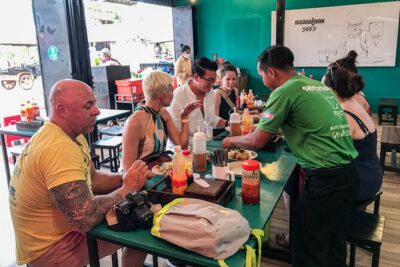 ★ 5.0Siem Reap Evening Food Tour – Inclusive 5 stops Local TastingsFrom $39325 reviews
 ★ 5.0Old Siem Reap Sunset Food Tour by Tuk-tukFrom $75311 reviews
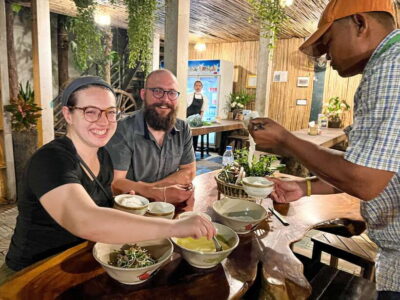 ★ 4.9Street Food Experience by Tuk-TukFrom $35310 reviews
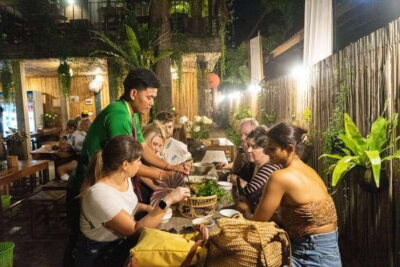 ★ 4.9Evening Food Tour with 10 Local TastingsFrom $35222 reviews
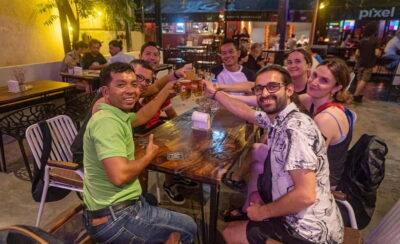 ★ 5.0Siem Reap Evening Foodie Vespa Tour / Tuk Tuk AvailableFrom $40174 reviews
 ★ 5.0Local Street Food Experience by Tuk-TukFrom $35141 reviews
 ★ 4.5The 10 Tastings of Siem Reap With Locals: Private Street Food TourFrom $51128 reviews
 ★ 5.0Ultimate Siem Reap Food Tour (10 Locals Tasting with Drinks & Transport)From $39108 reviews
Browse the lists this tour appears in