
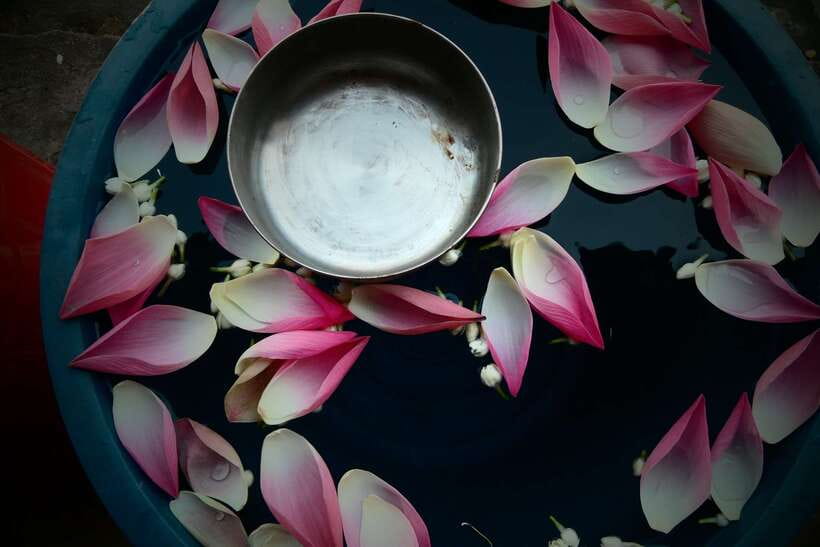
Reviewed · MONK BLESSING & SPIRITUAL TOURS
Siem Reap: 1-Hour Cambodian Buddhist Water Blessing
Want peace without more ruins? A Cambodian Buddhist water blessing at Wat Arang Pagoda is a rare way to step into a living monastery ritual, not just a photo stop. I like that you get a clear, English-speaking guide who explains what to do and what the chanting is about. The one catch: you should plan to get wet, especially if you choose the longer water-pouring version.
This is a short countryside trip just south of Siem Reap, usually timed to keep it manageable. You’ll either experience gentle chanting with a light sprinkling, or a more intense ceremony where blessed water is poured over your head while you change into a sarong. At the end, you’ll leave with the red wrist ties the monks use to mark the blessing.
In This Review
- Key things to know before you go
- Wat Arang Pagoda: the ceremony you can watch, not just read about
- Two blessing options: sprinkling vs. full head-pouring
- How the flow works: pickup, tuk-tuk ride, sarong, and wrist ties
- The English guide part: what makes this tour feel respectful
- Buddhism and the meaning of the water: why it lands emotionally
- Market stop near Siem Reap: see daily life, not just temples
- Price and value in Siem Reap: what $37 buys you
- Who should book this water blessing (and who might not)
- Final call: should you book the Siem Reap Buddhist water blessing?
Key things to know before you go
- Wat Arang Pagoda (countryside, not Angkor): you’re visiting an active pagoda just south of Siem Reap.
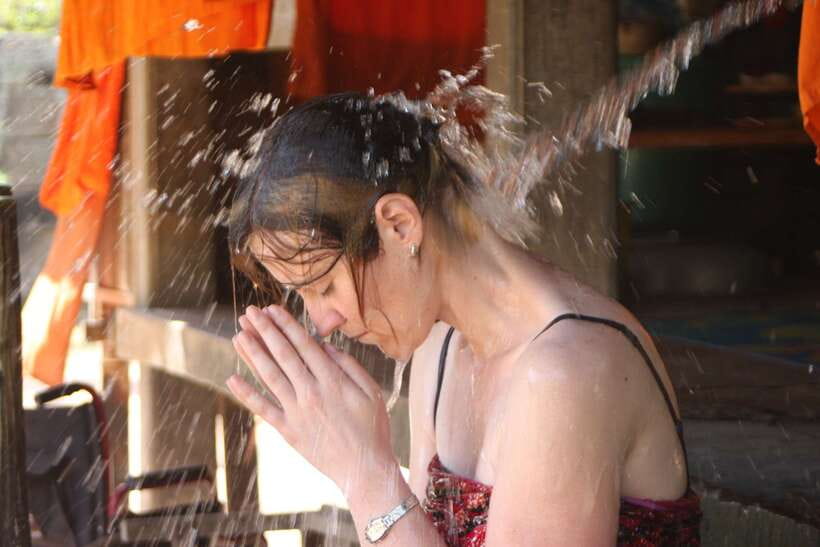
- Two blessing styles: light sprinkling with chanting, or a longer head-pouring ritual.
- Sarong provided for the longer option: it’s specifically meant to keep your clothes dry.
- A real explanation, in English: guides like Mr. Sokha or Lee often translate monk interactions and explain the ritual.
- Photos are part of the service: guides take photos and video during the ceremony so you don’t miss the moment.
- Market visit included: you’ll see how locals shop before or after the blessing.
A quiet water blessing, other mornings
- Siem Reap: 1-Hour Cambodian Buddhist Water Blessing★ 4.9 · 68 reviews
- Monk Blessing Ceremony in Siem Reap★ 5.0 · 24 reviews
- Private Guided Angkor Wat Tour by Lady Tuk Tuk with Monk Blessing★ 5.0 · 19 reviews
- Angkor Wat & Temples: Private Spiritual Tour by Lady Tuk Tuk★ 4.9 · 18 reviews
Wat Arang Pagoda: the ceremony you can watch, not just read about
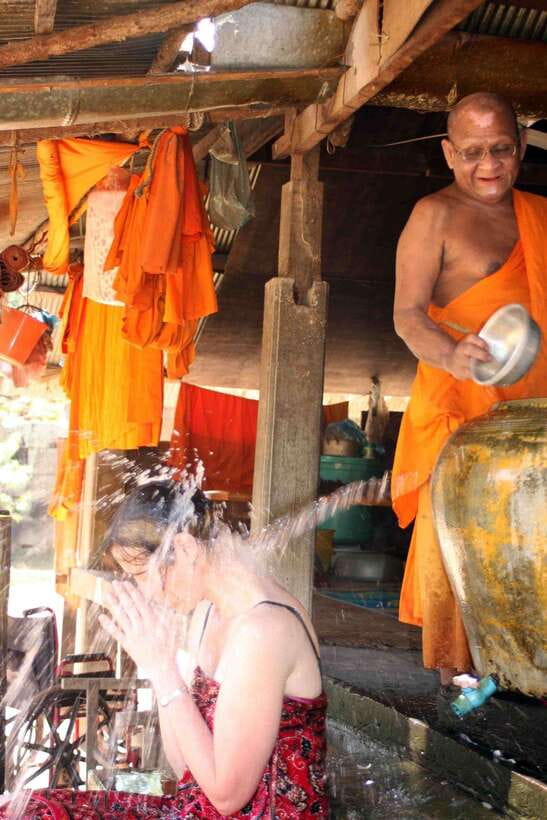
In Siem Reap, it’s easy to get stuck in a loop of temples and heat. This water blessing offers a different kind of Cambodia: something you can see happening in real time, inside an older pagoda setting. It’s also one of those activities that feels small until you’re standing right there and realize the ritual has a long local life behind it.
I like that the whole experience is built around participation, not performance. You’ll hear monks chanting, learn the basic beliefs behind what they’re doing, and then take part in the water blessing itself. And because it’s an English-led tour, you aren’t left guessing about the steps or the meaning of what you’re watching.
The setting matters too. Instead of staying in the main tourist zone, you go to the pagoda in the countryside. That shift makes the ceremony feel more grounded, and the walk-through after can feel more like visiting a working place than ticking a box.
Two blessing options: sprinkling vs. full head-pouring
This tour offers two forms of blessing from the monks. The first is a shorter style where the monks chant harmoniously and offer good luck, safe travel, and a long life, with a light sprinkling of water. It’s more gentle, and it tends to feel like a calm, clear introduction.
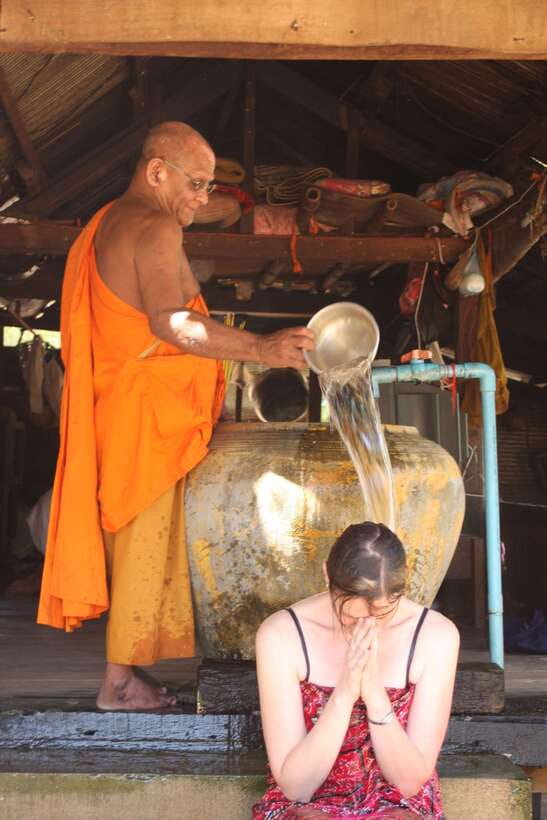
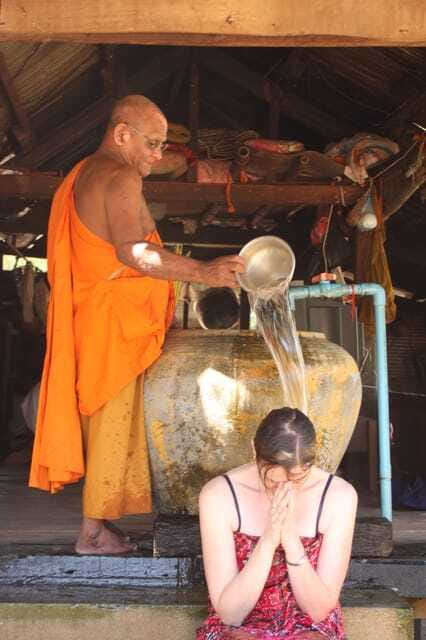
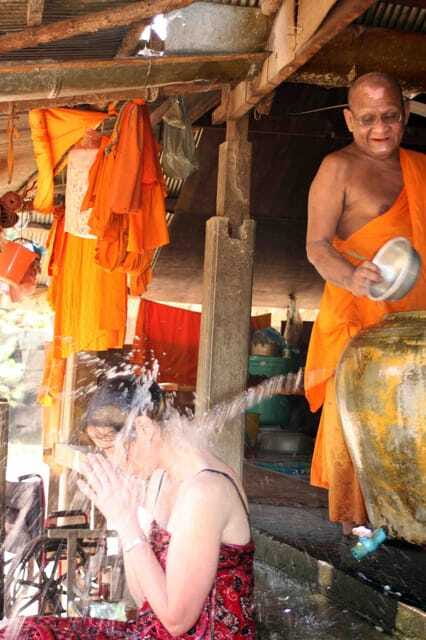
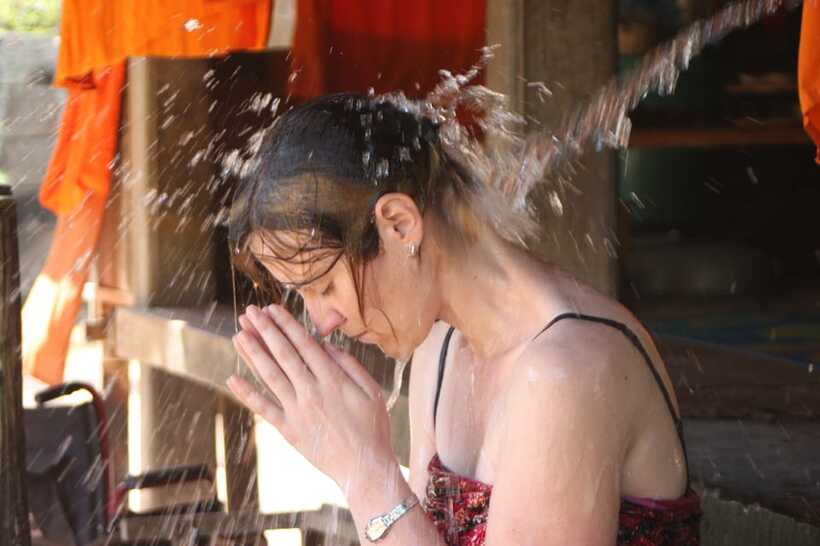
The second option is the longer ritual. Blessed water is poured over your head while the monks chant, and you’ll change into a sarong first so your clothing stays dry. This version is the one that turns the volume up. You’ll want to be mentally ready for stronger water, more sound, and the feeling that you’re in a formal ceremony rather than a quick greeting.
Here’s the practical reality: even with the sarong, you should still expect to get wet. One helpful tip that comes up is bringing extra underwear, especially if you’re doing the longer ritual. And if you have long hair, consider having a small plan for drying (a towel is provided, but you may still want more help depending on your hair length).
How the flow works: pickup, tuk-tuk ride, sarong, and wrist ties
A lot of tours say they’re cultural. This one gives you a structure you can follow. You’ll get hotel pickup, then a tuk-tuk transfer to the pagoda area in the countryside. That ride time is part of why the whole thing feels doable in a day without stealing your temple energy.
Once you arrive, the guide explains the process. Clear instruction is a big deal here because temple etiquette can be confusing if you’re winging it. You’ll be told what to do during the ceremony so you’re not constantly worrying about the next step.
For the longer ritual, you’re provided a sarong to change into so you can participate without soaking your clothes. During the blessing, you’ll sit as the monks chant and the water blessing happens. When it’s done, you’ll get the red ties for your wrist—those special ties are the visible marker that you went through the blessing ritual with the monks.
One of the nicest details: guides also tend to handle photos and videos. People often end up with a phone full of ceremony moments because the guide takes pictures for you during the key parts. It’s a small service that can save you from holding your camera while you’re trying to respectfully participate.
The English guide part: what makes this tour feel respectful
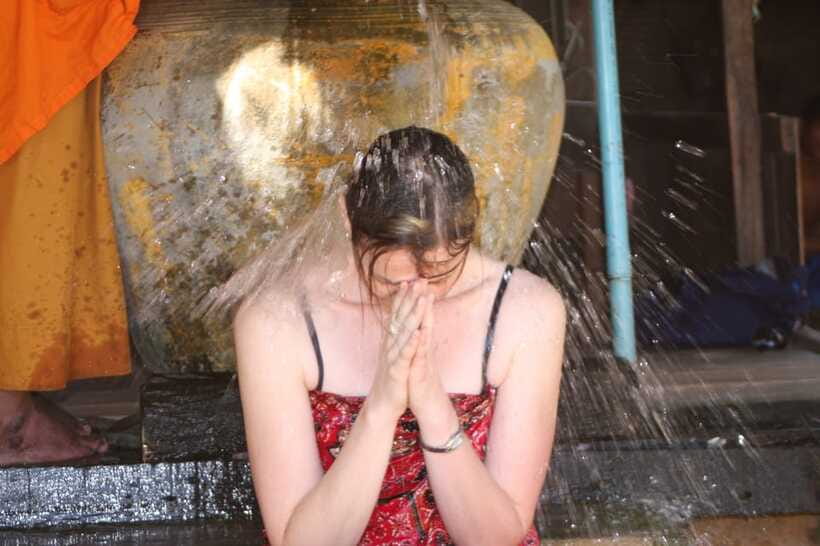
The guide is the difference between a “watch and leave” experience and one that actually sticks with you. Many people come away feeling that their guide made sense of the ritual, not just timed the schedule.
Guides such as Mr. Sokha or Lee are mentioned often for explaining the steps clearly and answering questions in English. In some cases, the guide even communicates with the monk afterward and translates observations or what was shared. That matters because you’re not just collecting a souvenir; you’re learning enough to interpret what you saw.
I also appreciate that the tone often feels practical and calm. The guide helps you follow protocol and keeps the ceremony from turning into a chaotic tourist moment. That’s especially important when the activity involves chanting, close spacing, and shared ritual space.
If you’re worried about whether this is some kind of sales pitch, you can breathe a little. One common theme from the experience is that the ceremony is presented as a spiritual cleansing tradition for everyone, not something that pushes a belief system onto you. You’ll still see monks doing a Buddhist practice, but the guiding explanation tends to focus on cleansing, protection, and the idea of positive energy rather than recruiting tourists.
Worth a side-by-side look before you book this Siem Reap tour:

Buddhism and the meaning of the water: why it lands emotionally
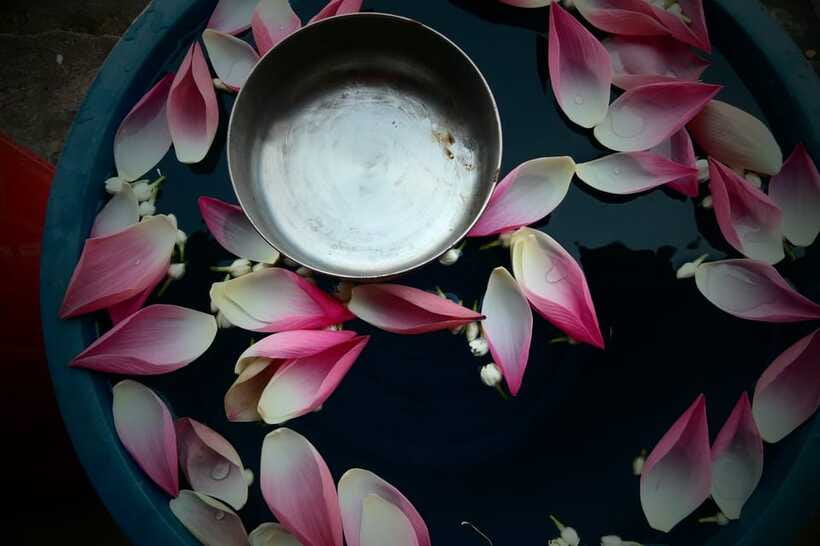
This is one of those activities where the meaning is simple, but the impact can be surprisingly personal. The water blessing is about protection, good luck, safe travel, and long life—words you hear in everyday travel language, but delivered through ritual and chanting.
What I like about how the experience is explained is that it often connects Buddhism with local spiritual beliefs. Some guides frame the ceremony in terms of Theravada tradition while also acknowledging wider Cambodian spiritual ideas, including beliefs tied to the soul or spiritual well-being. That blend can be part of why the blessing feels more like a living cultural practice than a distant “religious museum piece.”
Also, the ceremony’s physical side helps the emotional side make sense. Even the light sprinkling version is a sensory reset. You feel the water on your skin, hear the chanting, and then return to the heat and noise of Siem Reap with a calmer head. It’s not magic in the sci-fi sense. It’s more like a structured moment of attention and release.
One more thing: you’ll likely leave with the red wrist ties. That small, visible detail gives you something to carry and remember, like a marker that the experience was real and not just a tour story.
Market stop near Siem Reap: see daily life, not just temples
Included with the blessing is a market visit. This is one of the best “value add” parts, because it puts your day back into ordinary local rhythms.
You’ll pass through a local market where you can see the kinds of goods people actually buy—food like meat and fish and vegetables, and even stalls selling gold. The guide usually explains what you’re looking at, and that commentary helps you avoid wandering through a market like it’s a random set of stalls.
I like market stops that don’t feel forced. Here, the market visit pairs well with the spiritual focus of the pagoda because it shows the other side of monastery life and community: daily needs, daily trade, and local routines.
And since the guide often takes photos and videos, you may come away with images that show the market vibe as well as the ceremony, which makes your day feel fuller.
Price and value in Siem Reap: what $37 buys you
At $37 per person, this isn’t the cheapest way to spend a couple hours in Siem Reap. But the value is in the combination: a guided ceremony at a working pagoda, transportation by tuk-tuk, sarong for the longer option, a donation to the pagoda, and the market visit.
For me, the math works when you want something beyond temples. If you already have enough temple photos, or you’re tired of ruins, the water blessing gives you a different kind of memory—one tied to a ritual you can’t replicate at home. The English guide also adds value. When the guide explains meaning and helps you participate respectfully, the experience becomes less about watching and more about understanding.
The main “value risk” is time and expectations. If you assume it will be a quick stop, you might find the wet, chanting, and protocol more involved than you expected. And if you’re hoping for a gentle, dry cultural talk, you might be disappointed by how hands-on the blessing can be.
Still, for many people, the ceremony’s intimacy and the guide support make the price feel fair, especially because it includes both the pagoda ritual and a meaningful market add-on.
Who should book this water blessing (and who might not)
This is a great match if you want:
- A short alternative to temple-hopping that still feels culturally grounded
- An activity with a guided explanation, not just an entrance ticket
- A moment of calm and personal reset in the middle of hot, busy days
- Photos and translation support during a ceremony with monks
It may not be your best choice if:
- You strongly dislike getting wet. The longer head-pouring option is not subtle.
- You prefer completely quiet, non-participatory experiences. You’re expected to follow steps and engage.
- You’re short on time and need something extremely fast.
If you like learning through doing—watching, asking, and participating—you’ll probably enjoy this more than you expect.
Also, if you’re someone who asks questions, bring that energy. Guides like Sokha or Lee often handle questions well and can translate monk remarks when appropriate. That can turn the blessing from a one-time ritual into a deeper conversation about Buddhist practice and local spiritual life.
Final call: should you book the Siem Reap Buddhist water blessing?
If you’re in Siem Reap and you want one experience that feels living, not staged, I’d book it. This tour gives you a guided water blessing at Wat Arang Pagoda, two clear options for how the monks bless you, and a market visit that helps round out your day.
I’d only hesitate if you’re very water-sensitive or you’re expecting a dry, casual chat session. Plan for getting wet, bring what you need for comfort (extra underwear can help), and go in with an open mind. In return, you’ll get a short, meaningful ritual that actually teaches you what you’re participating in.
More 1-Hour Experiences in Siem Reap
- Unlimited Drinks! Pre-Game Session – 1 Hour
★ 4.5 · 7 reviews
More Tour Reviews in Siem Reap
- Angkor Wat Sunrise or Sunset Tour with Guide from Siem Reap
★ 5.0 · 12,109 reviews - Siem Reap: Angkor Wat: Small-Group Sunrise or Sunset Tour
★ 5.0 · 9,444 reviews - From Siem Reap: Kampong Phluk Floating Village Tour by Boat
★ 4.9 · 6,979 reviews - Sunset tour of Kampong Phluk stilts home village on the Tonle Sap
★ 5.0 · 4,865 reviews - Siem Reap: Angkor Wat 2-Day Tour with Sunrise and Sunset
★ 4.9 · 4,429 reviews
A Blessing and a Quiet Morning
- Monk Blessing Ceremony in Siem Reap
★ 5.0 · 24 reviews - Private Guided Angkor Wat Tour by Lady Tuk Tuk with Monk Blessing
★ 5.0 · 19 reviews - Angkor Wat & Temples: Private Spiritual Tour by Lady Tuk Tuk
★ 4.9 · 18 reviews - Siem Reap: Khmer Water Blessing by Monk and Lotus Farm Visit
★ 5.0 · 15 reviews - Siem Reap Cambodian Buddhist Water Blessing and Local Market
★ 5.0 · 13 reviews
Just Added: Fresh Siem Reap Tour Reviews

Monk Blessing & Spiritual Tours, compared.
 ★ 5.0Monk Blessing Ceremony in Siem ReapFrom $4524 reviews
 ★ 5.0Private Guided Angkor Wat Tour by Lady Tuk Tuk with Monk BlessingFrom $3719 reviews
 ★ 4.9Angkor Wat & Temples: Private Spiritual Tour by Lady Tuk TukFrom $5018 reviews
 ★ 5.0Khmer Water Blessing by Monk and Lotus Farm VisitFrom $5515 reviews
 ★ 5.0Siem Reap Cambodian Buddhist Water Blessing and Local MarketFrom $1913 reviews
★ 4.8Siem Reap Cambodian Buddhist Water Blessing and Local MarketFrom $5411 reviews
★ 5.0Siem Reap Cambodian Buddhist Water Blessing and Local MarketFrom $1913 reviews
★ 4.8Siem Reap Cambodian Buddhist Water Blessing and Local MarketFrom $5411 reviews
 ★ 5.0Traditional Khmer Water Blessing by Monk and Lotus Farm VisitFrom $7010 reviews
 ★ 5.0Monk Blessing CeremonyFrom $459 reviews
Browse the lists this tour appears in