
Reviewed · SIEM REAP CITY TOURS
Siem Reap City Tour
A tuk-tuk loop through Siem Reap’s big stories. I like that this tour uses a clean, modern tuk-tuk and that you get an English-speaking guide who puts the stops into clear context. You’ll see six different places across the city, mixing temples and monuments with Cambodia’s recent past—plus time for shopping at the Old Market and Artisans d’Angkor.
One thing to plan for: entrance fees aren’t included, and Wat Thmey and the War Museum deal with brutal Khmer Rouge history. If that’s not your kind of subject, you might want to choose a lighter, temple-focused day instead.
In This Review
- Key Points You’ll Appreciate
- Why This Siem Reap City Tour Works for First-Timers
- Pickup, Timing, and What You Pay for ($37)
- Wat Thmey (Killing Fields): A Stop You Should Respect, Not Rush
- War Museum Cambodia: Learning That Adds Meaning to the City
- Royal Residence (Built 1904) and the French Protectorate Era
- Wat Preah Prom Rath: A Quiet Pagoda Break Near Old Market
- Psar Chaa (Old Market) and Shopping Without Getting Lost
- Artisans d’Angkor: Local Crafts with a Built-In Story
- The Tuk-Tuk Experience: Comfort, Safety, and a Morning Pace That Works
- Who Should Book This Tour (and Who Might Not)
- Should You Book This Siem Reap City Tour?
- FAQ
- How long is the Siem Reap City Tour?
- What time does the tour start, and when will I be picked up?
- Is hotel pickup and drop-off included?
- What transport will I use during the tour?
- Are entrance fees included in the price?
- Which stops are included on the route?
- Is this tour private, and how do refunds work if I cancel?
Key Points You’ll Appreciate
- Hotel pickup and drop-off make this easy, especially if you’re not sure where everything is yet
- Tuk-tuk transport is included (2 people per tuk-tuk), and vehicles can switch based on your group size
- Six stops in 4–5 hours is a good pace for a morning tour that still leaves you free the rest of the day
- Entrance fees are extra (plan around USD 8 per person) while many key sights are free
- Wat Thmey and the War Museum give context you won’t get by walking past memorials alone
- Cold water and towels help on a hot day when you’re moving between several locations
Around town on foot, more walks
- Old Siem Reap Sunset Food Tour by Tuk-tuk★ 5.0 · 311 reviews
- Siem Reap City Walking Tour★ 4.5 · 114 reviews
- Siem Reap City Hidden Gems (Private Guided Tour)★ 5.0 · 105 reviews
- Highlights & Hidden Gems With Locals: Best of Siem Reap Private Tour★ 5.0 · 52 reviews
Why This Siem Reap City Tour Works for First-Timers
This is a smart half-day option when you want more than Angkor. The city has its own rhythm, and this route shows it—from daily market life to royal-era buildings to places tied to Cambodia’s darker chapters.
I also like the variety. You’re not just doing one type of sightseeing. One stop is reflective and heavy (Wat Thmey), then you move to museum learning, then you shift gears to pagodas and a craft-focused shopping stop. That “mix” matters in Siem Reap, where it’s easy to feel like everything is either temples or nothing.
Also, the practical side is handled. You’ll get pickup from your hotel, and you won’t have to negotiate your own ride between sites. The tuk-tuk experience is part of the fun, and the ride keeps the morning from feeling like a checklist.
Finally, this tour is built around an English-speaking local guide. That’s a big deal here, because the meaning of what you’re seeing changes a lot when someone explains it.
Pickup, Timing, and What You Pay for ($37)
The tour starts in the morning, with a listed start time of 7:30am. In practice, you should expect pickup around 8:00am after breakfast at your hotel. The tour runs about 4 to 5 hours, which is just long enough to hit several meaningful stops without stealing your whole day.
Price is $37 per person, and it includes a lot of the stuff that usually costs you time. You get:
- hotel pickup and drop-off
- an experienced English-speaking local guide
- private transportation (tuk-tuk by default, with options like air-conditioned taxi or minivan depending on group size)
- cool water and towels
Where it gets even better is how entrance fees shake out. Several stops are free, and the tour notes you should allow about USD 8 per person for entrance fees. That means your real-world total is usually not wildly higher than the ticket price—you’re mainly paying to get into a couple of paid sites.
One more practical point: this is a private experience, meaning only your group participates. That usually equals fewer hassles, less waiting around, and more control over how quickly you move through each stop.
Wat Thmey (Killing Fields): A Stop You Should Respect, Not Rush
Wat Thmey is the first main stop, tied to the Killing Fields. The visit is short—about 30 minutes—but it’s not the kind of place where you’ll want to speed-read your way through. This is where the tour’s “beyond temples” promise becomes real.
Because you’re going with a guide, you’ll get the context that makes memorials make sense. Without that, you might see structures and memorial areas but miss the bigger story. With a guide, you can connect what you’re looking at to the suffering and the Khmer Rouge’s impact.
That said, come prepared for emotional weight. The tour itself clearly signals this theme, and it’s wise to set expectations before you arrive. If you’re sensitive to difficult history, take breaks if you need them, and keep your pace slow.
Also, dressing matters for pagoda-style places. You’ll be better off with breathable, modest clothing, and something to cover up as needed. Even though the time here is limited, Cambodia mornings can still feel warm fast.
War Museum Cambodia: Learning That Adds Meaning to the City
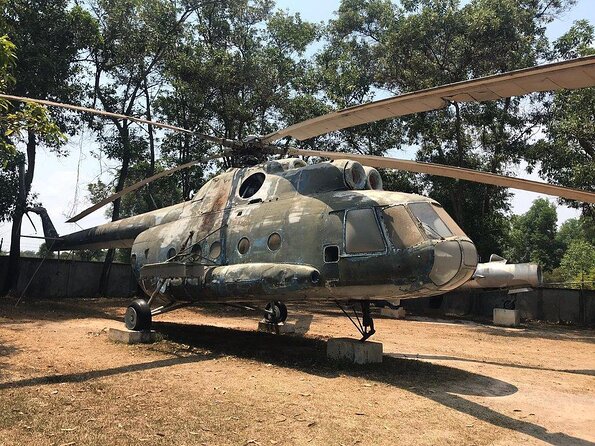
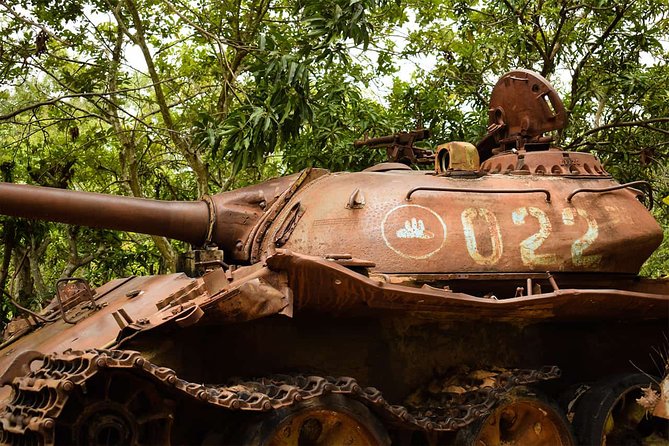
Next up is the Cambodia War Museum, with about one hour on site. This stop focuses on Cambodia’s civil war and other parts of recent Khmer history. It’s the second anchor point for understanding what shaped modern Cambodia.
A museum can feel like “just reading,” so the value here is the guide. When someone walks you through what you’re seeing—maps, displays, and the story behind them—the information becomes easier to connect to the places you visited earlier.
This is also where you should slow your brain down. You might find that your thoughts keep jumping back to Wat Thmey, because the themes connect. That’s normal. If you go in expecting “light and fun,” you’ll miss the point of why this day works.
The stop is paid (entrance not included), so plan for the small entrance-fee budget. Still, even with a paid museum, this tour holds onto good value because many other stops are free and you’re getting guided context throughout.
Bigger loops around town



Royal Residence (Built 1904) and the French Protectorate Era
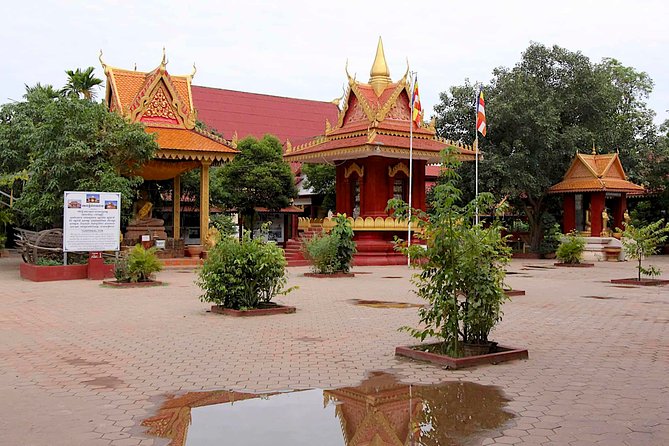
After the museum, the route shifts to something calmer: the Royal Residence, described as a historic site built in 1904 during the French protectorate period. It’s an official residence for the king when he visits Siem Reap, and the stop is about one hour.
This is a good change of pace. After heavier material, you get a chance to look at Cambodia’s story through architecture and official tradition. Even if you’re not a hardcore history nerd, you’ll likely appreciate seeing how power and culture were represented over time.
This stop is listed as free, which helps your budget. It also means you can spend time observing without feeling like every minute costs extra.
A practical tip: treat this like a photo-and-stroll stop rather than a long sit-down. The day has other places waiting, and the best use of your time is to get your bearings and notice details.
Wat Preah Prom Rath: A Quiet Pagoda Break Near Old Market
Then it’s to Wat Preah Prom Rath, a pagoda in central Siem Reap. The tour notes it’s one of the oldest temples in town, dating back over 500 years, and the visit is about 45 minutes. This stop is also free.
I like this kind of pause. After museums and history explanations, a pagoda can reset your senses. You’ll get a more traditional side of Siem Reap, and it’s close to where the Old Market action will pick up again.
Because it’s a temple area, modest clothing and respectful behavior are important. If you’re unsure, follow your guide’s lead. Usually the guide will point out what to do and where to stand, and that’s one of the hidden benefits of a guided route.
Also, this stop is a reminder that the tour is balanced. Yes, it includes Cambodia’s hardest history. But it doesn’t forget that local life, faith, and tradition still define Siem Reap day to day.
Psar Chaa (Old Market) and Shopping Without Getting Lost
Now you hit the Old Market (Psar Chaa), with about 30 minutes. The goal is practical: you’ll see daily life and you can pick souvenirs without wandering for hours.
This is where the tour helps even if you don’t want to buy much. Having a guide means you can ask quick questions—what something is, what it’s made of, what to watch out for. And you won’t feel like you’re guessing your way through a maze of stalls.
Because it’s a shorter stop, go in with a simple plan. Pick one or two categories you want—maybe textiles, small gifts, or local crafts—and set a mental budget. If you try to do everything in 30 minutes, shopping turns stressful fast.
Also, entrance to this area is free, so your real costs here are your purchases. If you want value, shop with patience and don’t feel rushed just because other stalls look busy.
Artisans d’Angkor: Local Crafts with a Built-In Story
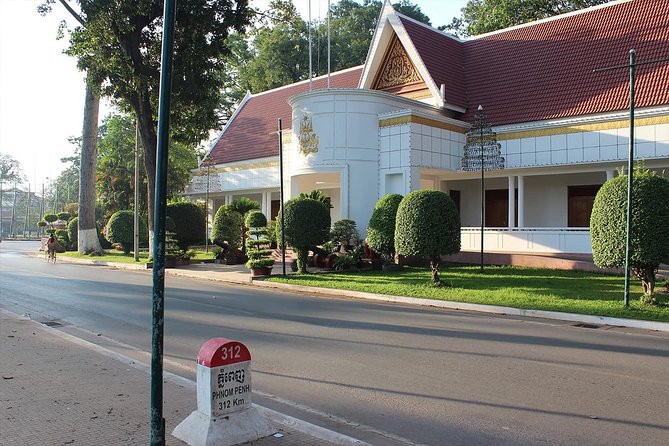
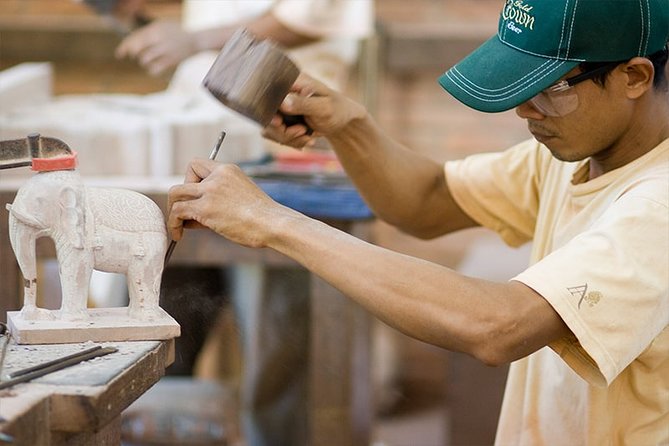
The final stop is Artisans d’Angkor, about one hour. This is described as a place where local crafts were revived, and it’s also where you can buy gifts.
What makes this useful is that it’s not just shopping for shopping’s sake. The workshop-style idea gives you a sense of how crafts are maintained and supported. Even if you don’t make a big purchase, watching the process and hearing what the place is doing can make your souvenirs feel more meaningful.
This stop is listed as free, so again, your costs mostly depend on what you buy. If you want a safer move than random street stalls, this is one of those spots where you can take a breath and browse calmly.
Tip: If you want gifts to travel home well, ask about size and packaging before you pay. The tour gives you time here, so use it.
The Tuk-Tuk Experience: Comfort, Safety, and a Morning Pace That Works
The transport part is genuinely part of the value. The tour includes a tuk-tuk (not just a token ride), and it notes 2 persons per tuk-tuk. Depending on your specifications or group size, you might ride in an air-conditioned taxi or minivan too.
From what you can expect in real-world terms, the ride is designed to keep you moving between sites without losing time. It’s also part of why the day feels like a tour rather than a schedule you’re forcing yourself to complete.
You’ll also get cool water and towels, which matters more than you’d think in Siem Reap. When you’re out for several stops, the small comfort items help you stay pleasant—and less grumpy—for the parts that are emotionally intense.
A good guide makes the difference. The tour is built around an English-speaking local guide, and that matters for sensitive context at the Killing Fields and museum. It also helps for practical navigation during the Old Market and the craft stop, where it’s easy to feel like you’re being pushed along if you don’t have someone explaining the plan.
Based on the strong overall feedback and the focus on professional, polite guiding, it’s reasonable to expect punctual pickup and a smooth flow through the day.
Who Should Book This Tour (and Who Might Not)
This tour is a great fit if you:
- want a Siem Reap city experience that goes beyond temple sightseeing
- like learning history with context, not just scanning signs
- appreciate having a guide handle logistics and pacing
- want a morning that still leaves you free afterward
It’s also a decent choice if you’re in a small group and want private time rather than a crowd shuffle.
However, you might skip it if:
- you want a light, cheerful day only
- you’re not comfortable with the Khmer Rouge topic and war-related material
- you prefer lots of free wandering time over scheduled stops
The good news is that the itinerary times are manageable. Each stop is limited, which helps you keep control of your energy—even when the content is heavy.
Should You Book This Siem Reap City Tour?
If you’re asking whether this is worth it, I’d say yes—especially for first-timers who want an honest look at Siem Reap’s past and present in a single morning. The price is fair for what you get: pickup, an English-speaking guide, tuk-tuk transport, water and towels, and a set of six stops with several free admissions.
Just go in with the right mindset. The Killing Fields and War Museum parts are not “quick photo moments.” If you can handle that and want context, you’ll get a tour that feels more grounded than the usual highlights scramble.
If you’d like to balance this day, consider pairing it with a slower afternoon back in town—markets, cafés, or just a walk—so your brain has room to process what you learned.
FAQ
How long is the Siem Reap City Tour?
It runs about 4 to 5 hours.
What time does the tour start, and when will I be picked up?
The start time is listed as 7:30am, and pickup is scheduled around 8:00am after breakfast at your hotel.
Is hotel pickup and drop-off included?
Yes. Pickup from your hotel and drop-off back at your hotel are included.
What transport will I use during the tour?
You’ll use tuk-tuk transportation (with 2 persons per tuk-tuk). Depending on group size or your specifications, the tour may use an air-conditioned taxi or minivan.
Are entrance fees included in the price?
No. Entrance fees are not included. The tour suggests you allow about USD 8 per person for entrances.
Which stops are included on the route?
The route includes Wat Thmey (Killing Fields), War Museum Cambodia, Royal Residence, Wat Preah Prom Rath, Psar Chaa (Old Market), and Artisans d’Angkor.
Is this tour private, and how do refunds work if I cancel?
It’s private for your group only. You can cancel for a full refund up to 24 hours before the experience starts.
More Siem Reap Tours to Compare
- Angkor Wat Sunrise or Sunset Tour with Guide from Siem Reap
★ 5.0 · 12,109 reviews - Siem Reap: Angkor Wat: Small-Group Sunrise or Sunset Tour
★ 5.0 · 9,444 reviews - From Siem Reap: Kampong Phluk Floating Village Tour by Boat
★ 4.9 · 6,979 reviews - Sunset tour of Kampong Phluk stilts home village on the Tonle Sap
★ 5.0 · 4,865 reviews - Siem Reap: Angkor Wat 2-Day Tour with Sunrise and Sunset
★ 4.9 · 4,429 reviews
More Tour Reviews in Siem Reap
- Angkor Wat Sunrise or Sunset Tour with Guide from Siem Reap
★ 5.0 · 12,109 reviews - Siem Reap: Angkor Wat: Small-Group Sunrise or Sunset Tour
★ 5.0 · 9,444 reviews - From Siem Reap: Kampong Phluk Floating Village Tour by Boat
★ 4.9 · 6,979 reviews - Sunset tour of Kampong Phluk stilts home village on the Tonle Sap
★ 5.0 · 4,865 reviews - Siem Reap: Angkor Wat 2-Day Tour with Sunrise and Sunset
★ 4.9 · 4,429 reviews
Around Town in Siem Reap
- Siem Reap: City Walking Tour
★ 4.6 · 583 reviews - Old Siem Reap Sunset Food Tour by Tuk-tuk
★ 5.0 · 311 reviews - Siem Reap City Walking Tour
★ 4.5 · 114 reviews - Siem Reap City Hidden Gems (Private Guided Tour)
★ 5.0 · 105 reviews - Highlights & Hidden Gems With Locals: Best of Siem Reap Private Tour
★ 5.0 · 52 reviews
Just Added: Fresh Siem Reap Tour Reviews



Siem Reap City Tours, compared.
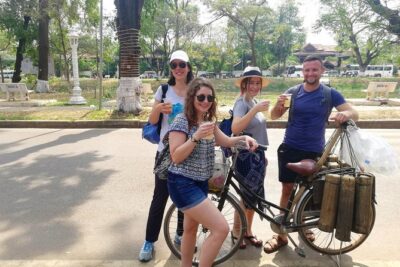 ★ 4.6City Walking TourFrom $6583 reviews
 ★ 5.0Old Siem Reap Sunset Food Tour by Tuk-tukFrom $75311 reviews
★ 4.5Siem Reap City Walking TourFrom $6114 reviews
★ 5.0Old Siem Reap Sunset Food Tour by Tuk-tukFrom $75311 reviews
★ 4.5Siem Reap City Walking TourFrom $6114 reviews
 ★ 5.0Siem Reap City Hidden Gems (Private Guided Tour)From $39105 reviews
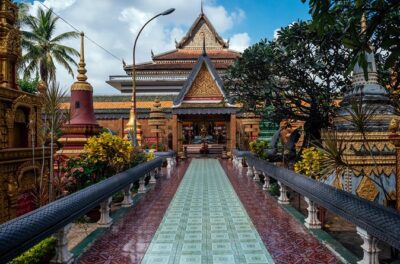 ★ 5.0Highlights & Hidden Gems With Locals: Best of Siem Reap Private TourFrom $4952 reviews
 ★ 5.0Private Angkor Temples Walking Tour from Siem ReapFrom $4245 reviews
 ★ 5.0A Day Angkor Wat Sunrise Tour, Ta Prohm & Hidden Gems Beng MealeaFrom $15536 reviews
 ★ 5.0Siem Reap City Tour with War Museum and Killing FieldFrom $4727 reviews
Browse the lists this tour appears in