
Reviewed · ANGKOR SUNRISE & SUNSET TOURS
2-Day Angkor Sunrise Temple of Angkor -Siem Reap Tour
A pre-dawn start can change everything. This 2-day Angkor Wat sunrise plan in Siem Reap pairs early temple access with a smart hit list beyond the postcard stops. You’ll see sunrise at Angkor Wat and then continue with major sites like Angkor Thom and Ta Prohm, plus daytime temples that feel more remote.
What I like most is the private transportation and English-speaking guide setup. That matters here because the day starts early, you move between multiple temple zones, and having a calm driver and clear guidance keeps the experience smooth.
One thing to consider: Angkor temple pass and site admissions are not included, and the sunrise timing means you’ll want to be ready for a very early departure.
In This Review
- Key highlights to know before you go
- Angkor Wat sunrise: the pre-dawn timing that makes it worth it
- Day 1 temple sequence: Preah Khan, Neak Pean, Banteay Srei, Pre Rup
- Preah Khan: roots, ruins, and big atmosphere
- Neak Pean: the circular island temple in Jayatataka Baray
- Banteay Srei: small temple, top-tier carving skill
- Pre Rup: a temple mountain with state-temple significance
- Day 2 Angkor Thom circuit: Bayon faces, gates, terraces
- Angkor Thom: capital energy at the city scale
- Angkor Thom South Gate: quick, impressive entry
- Terrace of the Elephants: a victory-viewing platform
- Ta Prohm: the famous jungle-temple look
- Terrace of the Leper King: a short stop with story behind the name
- What you pay for: the $117 tour price vs the Angkor temple pass
- Is this good value?
- Private transport and timing: how to make the long days feel easier
- About the guide experience
- Where each day shines: who will enjoy this most
- Should you book this Angkor sunrise package?
- FAQ
- What’s included in the $117 per person price?
- Is the Angkor temple pass included?
- What time do you leave for Angkor Wat sunrise?
- Which temples are included on Day 1?
- Which temples are included on Day 2?
- Is the floating village boat trip included?
- Is this tour private or shared?
- Where does the tour start and end?
- Can I cancel and get a full refund?
Key highlights to know before you go
- 4:10 to 4:30 am sunrise departure window (season-dependent), so your schedule is built around early light
- Angkor Wat entry from the eastern side for a quieter-feeling arrival path through bas-relief corridors
- Day 1 mixes famous + under-visited vibes, from Preah Khan and Neak Pean to Banteay Srei’s fine carvings
- Angkor Thom circuit hits the must-see landmarks: Bayon faces, South Gate, Terrace of the Elephants
- Ta Prohm and the Leper King Terrace add variety beyond the main showpieces
- Boat trip and admission fees are extra, so budget for the official passes and optional add-ons
Chasing the light? More dawn and dusk runs
- Angkor Wat Sunrise or Sunset Tour with Guide from Siem Reap★ 5.0 · 12,109 reviews
- Siem Reap: Angkor Wat: Small-Group Sunrise or Sunset Tour★ 5.0 · 9,444 reviews
- Sunset tour of Kampong Phluk stilts home village on the Tonle Sap★ 5.0 · 4,865 reviews
- Siem Reap: Angkor Wat 2-Day Tour with Sunrise and Sunset★ 4.9 · 4,429 reviews
Angkor Wat sunrise: the pre-dawn timing that makes it worth it
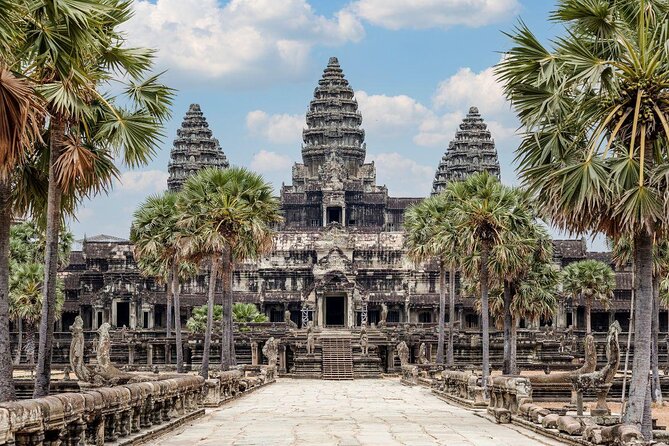
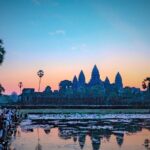
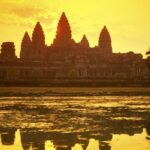
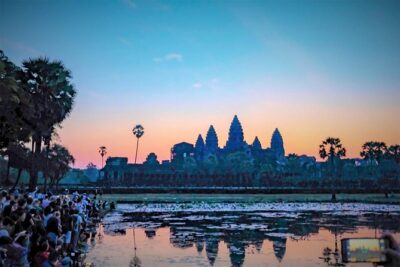
The big reason to book a sunrise-focused Angkor Wat tour is simple: you’re at the temple when most of the day’s energy hasn’t arrived yet. This one leaves your hotel around 4:10 to 4:30 am, depending on the season. That’s early, yes, but it’s also the whole point—your visit starts with the temple in near-darkness and shifts into morning light while you’re inside.
You’ll enter Angkor Wat in the dark from the eastern side, then move through cloistered corridors lined with bas-relief carvings. That approach matters because it changes the order of what you see. Instead of rushing straight toward the main views, you get a slower, more architectural introduction—stone stories before stone silhouettes.
You get about 2 hours at Angkor Wat as sunrise unfolds. For many people, that’s the sweet spot: enough time to see key angles, sit for a few minutes when the light hits just right, and still have energy for the rest of Day 2.
Practical note: sunrise tours tend to feel strict because mornings are short. If you’re the type who wants to linger, plan your pacing. If you’re flexible and just want the full experience, this timing works.
Day 1 temple sequence: Preah Khan, Neak Pean, Banteay Srei, Pre Rup
Day 1 is designed like a course in “Angkor beyond the usual photos.” You start with Preah Khan, then move through a mix of temple styles—some more ruined and atmospheric, others more refined and detailed.
Preah Khan: roots, ruins, and big atmosphere
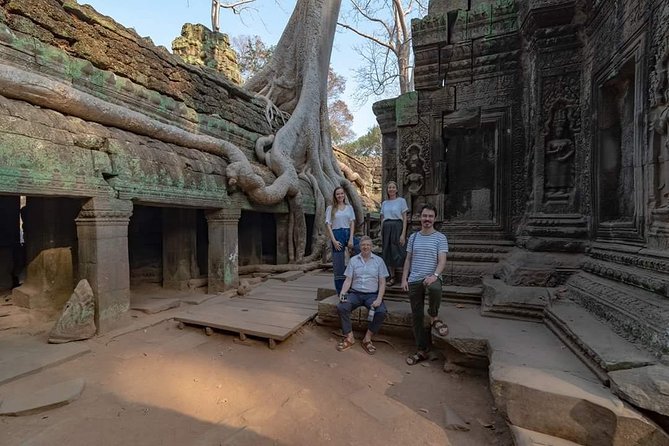
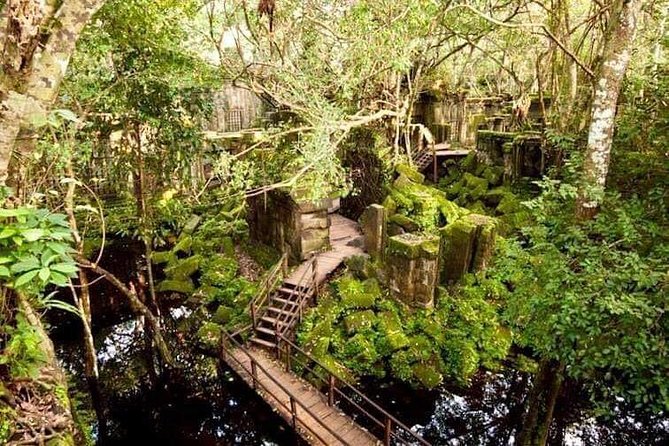
Preah Khan is a ruin site that feels alive in a different way than the polished look of some temples. Expect a mélange of crumbling stone and tree roots—a place where the architecture and the jungle share the spotlight. You’ll have about 1 hour here.
The value of starting with Preah Khan is that it sets the tone. You’re not just checking boxes; you’re learning what “temple in the jungle” actually feels like on the ground.
Neak Pean: the circular island temple in Jayatataka Baray
Next is Neak Pean, an artificial island in Jayatataka Baray. It’s a circular layout with a Buddhist temple setting, which gives you a change of pace from the Hindu-focused sites you’ll also see.
You’ll also have about 1 hour. This is the kind of stop where the structure matters as much as the views—think water setting, symmetry, and a calm pause in the day’s movement.
More temple circuits, set side by side
Banteay Srei: small temple, top-tier carving skill
Then you hit Banteay Srei, a temple often praised for its craftsmanship. The highlight here is the well-preserved sandstone work and the detailed reliefs, described as among the finest in Cambodia.
This stop is about 1 hour and it’s a big win for photographers and art lovers. Small scale can be a blessing: you can get closer to details without it feeling like you need binoculars to appreciate what’s carved into stone.
Pre Rup: a temple mountain with state-temple significance
You finish Day 1 at Pre Rup, a Hindu temple built as a state temple for Khmer king Rajendravarman and dedicated in 961 or early 962. It’s described as a temple mountain built with brick, laterite, and sandstone.
You get about 1 hour, and then you return to town in the late afternoon. This is a good ending point because it closes the day with a strong sense of place and purpose—then you’re back before you feel too cooked from the early start.
Watch your pace on Day 1: four stops is a lot even when each is only about an hour. If you want time to sit and take photos, plan for slightly slower movement.
Day 2 Angkor Thom circuit: Bayon faces, gates, terraces
Day 2 is built around Angkor’s royal core and the most recognizable visuals—starting with Angkor Thom and its key stops. This is where a guide earns their keep, because the route can otherwise blur into stone-on-stone unless someone helps you connect the landmarks to the story.
Angkor Thom: capital energy at the city scale
Angkor Thom is the former Khmer Empire capital area. You’ll have about 2 hours to move through it and reach the Bayon area.
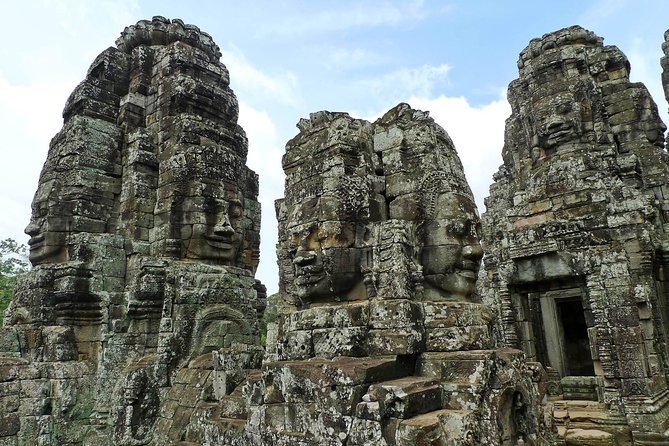
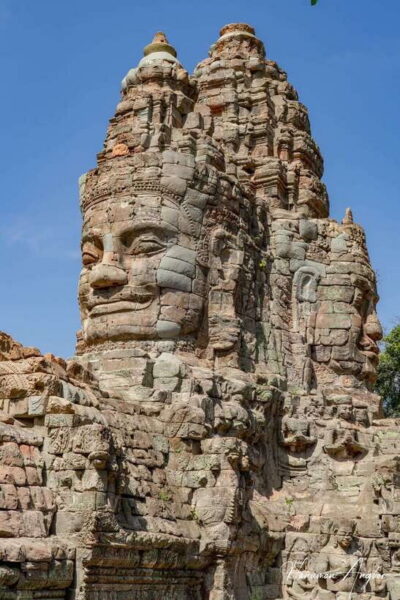
The highlight you’ll likely remember first is the Bayon’s central towers covered in more than 200 enormous faces. It’s one of those sights where the scale clicks after you see it from multiple angles. It also gives you a focal point as you walk from section to section.
Angkor Thom South Gate: quick, impressive entry
From there you’ll stop at Angkor Thom South Gate for about 20 minutes. It’s short, but it works because gates provide a kind of visual reset. You step out of the dense interior and then return with better bearings.
Terrace of the Elephants: a victory-viewing platform
Next is the Terrace of the Elephants, about 20 minutes. This is where Jayavarman VII used the platform to view his returning army after victory. Even if you’re not chasing narratives, this context gives the terrace a purpose beyond decoration.
It also helps to time your look here with shade and light changes. Terraces can look different depending on the sun angle—part of the fun is catching the details as they come into view.
Ta Prohm: the famous jungle-temple look
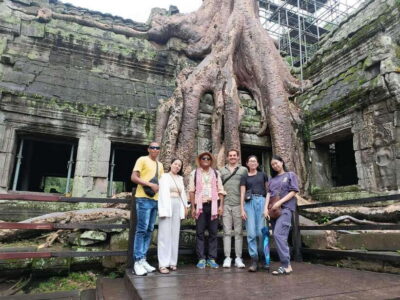
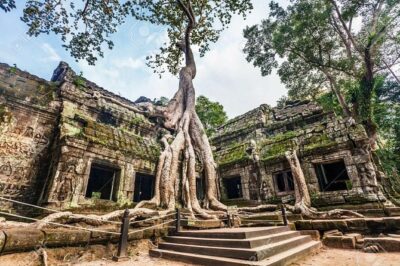
Then you move to Ta Prohm (about 1 hour). Built in the Bayon style in the late 12th and early 13th centuries, it was originally called Rajavihara.
Ta Prohm is the temple name many people already know. The value of doing it as part of a guided route is that you’ll see it with context, not just as a dramatic ruin for photos.
Terrace of the Leper King: a short stop with story behind the name
You end at Terrace of the Leper King for about 45 minutes. It’s in the northwest corner of the Royal Square area and built in the Bayon style under Jayavarman VII. The modern name comes from an 8th-century sculpture discovered there.
This last stop is a good close for Day 2 because it slows you down. Instead of chasing the biggest headline image, you get time for a more interpretive look—how names, finds, and meaning evolve around the site.
What you pay for: the $117 tour price vs the Angkor temple pass
The listed price is $117.00 per person for the 2-day experience. That price covers a lot of the “you don’t want hassles” part: English-speaking tour guide, air-conditioned vehicle, and private transportation across your temple route. You also get free airport pick up and transfer if you share your flight number and arrival time during booking.
What’s not included is the real “on-the-ground ticket” cost: Angkor entry/temple pass and admissions fees are not included. That’s a big budgeting point. When you plan your total spend, add the official temple pass to this $117. If you’re also interested in the optional add-on, the floating village boat trip is not included, and the boat ticket fee is extra.
Is this good value?
For value, you’re mainly buying time and comfort:
- A private setup means you’re not stuck waiting for a larger group
- Air-conditioning matters a lot in Siem Reap’s heat when you’re bouncing between sites
- A guide helps you connect what you’re seeing (especially on dense areas like Angkor Thom)
If you’re the type who wants flexibility on pacing and you don’t want to fight logistics, the structure feels fair. If you’re comfortable organizing passes and navigating by yourself, you might feel the price is mainly for convenience—which can still be worth it.
Private transport and timing: how to make the long days feel easier
This tour is set up as a private tour/activity, meaning only your group participates. That matters on a sunrise schedule. It reduces friction: less time wrangling, less risk of losing someone in the dark, and more control over the moment-to-moment pace.
You also get a dedicated vehicle with air-conditioning, which is a real quality-of-life upgrade when you’re moving from temple to temple.
The day starts and ends at the same area: it begins at Angkor Pro Travel (9W65+CVH, Krong Siem Reap) and ends back there. If you’re staying in Siem Reap proper, you’ll want to plan how you get to that start point in the evening before—or confirm how pickup works for your lodging.
There’s also a mobile ticket factor listed, which can simplify entry logistics once your Angkor pass is sorted.
Finally, one detail worth keeping in mind: service animals are allowed. That’s useful if you need that accommodation and want to travel without extra friction.
About the guide experience
One of the standout themes from the service side is the presence of a friendly, helpful guide—especially Mr. Lim. In particular, I see a repeated emphasis on kindness and patience for different ages and mobility levels. If you’re traveling with family members who move slower, that kind of calm attitude is worth its weight in gold.
Where each day shines: who will enjoy this most
This is a strong fit if you want:
- A sunrise Angkor Wat experience, not just a daytime “see it later” visit
- The classic Angkor Thom royal core and faces route
- A Day 1 mix that includes Banteay Srei and a couple of less-busy-feeling temples
It also works well for families with mixed ages because the private structure helps adjust pacing. One family setup mentioned having older relatives who don’t walk well and needed a patient driver. That’s a good sign if your group includes people who prefer slower breaks.
If you’re traveling solo and want maximum efficiency, the private vehicle setup still makes sense. You’ll get guide time and transport without feeling like you’re squeezed into a tight group rhythm.
Should you book this Angkor sunrise package?
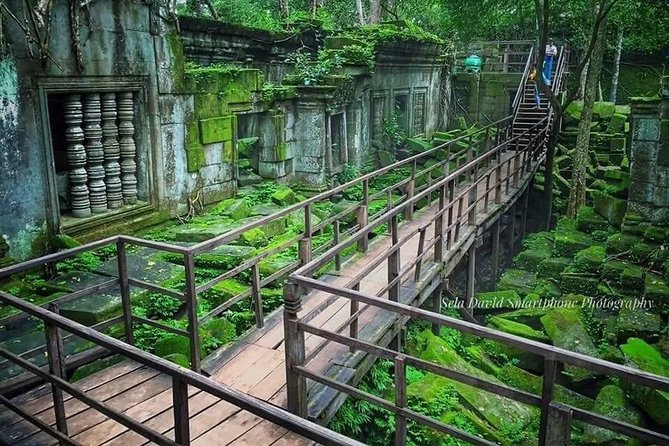
Book it if you want the early Angkor Wat sunrise moment plus a second day that doesn’t stop at just the headlines. The mix of Angkor Thom landmarks and Ta Prohm, paired with Day 1 stops like Preah Khan, Neak Pean, and Banteay Srei, creates variety without adding travel chaos.
Skip or rethink it if you want to handle everything yourself or you already have your Angkor pass sorted and prefer a more independent plan. Because temple passes and site fees are extra, your all-in cost won’t match the $117 sticker price.
Bottom line: this is a good choice when you value convenience, early timing, and a clear guided route through Angkor’s big highlights.
FAQ
What’s included in the $117 per person price?
The tour price includes an English speaking tour guide, an air-conditioned vehicle, private transportation, and free airport pickup and transfer (if you provide flight number and arrival time). It also includes hotel pickup/drop-off and transportation for the tour days.
Is the Angkor temple pass included?
No. Admission fees and the Angkor temple pass are not included, so you’ll need to budget for the official entry tickets separately.
What time do you leave for Angkor Wat sunrise?
Departure is pre-dawn, typically 4:10 to 4:30 am, depending on the time of year.
Which temples are included on Day 1?
Day 1 includes Preah Khan, Neak Pean, Banteay Srei, and Pre Rup.
Which temples are included on Day 2?
Day 2 includes Angkor Wat (sunrise), Angkor Thom, Angkor Thom South Gate, Terrace of the Elephants, Ta Prohm, and the Terrace of the Leper King.
Is the floating village boat trip included?
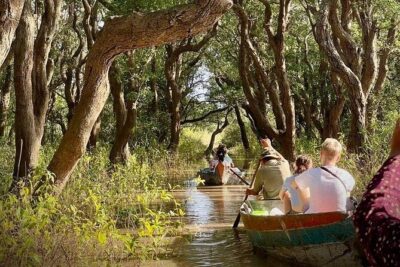
No. A floating village boat trip is listed as an optional add-on, and boat ticket fees are not included.
Is this tour private or shared?
This is a private tour/activity, and only your group will participate.
Where does the tour start and end?
It starts at Angkor Pro Travel in Krong Siem Reap and ends back at the meeting point.
Can I cancel and get a full refund?
Yes. Free cancellation is available if you cancel up to 24 hours in advance for a full refund.
More Days at the Temples
- Siem Reap: Angkor Wat 2-Day Tour with Sunrise and Sunset
★ 4.9 · 4,429 reviews - Angkor 2-Day Sunset & Sunrise Small-Group Tour
★ 5.0 · 2,567 reviews - 2 Days Exclusive Temple Highlights with Sunset and Sunrise Tour
★ 5.0 · 1,157 reviews - Siem Reap: Angkor Sunrise 1- or 2-Day Guided Temples Tour
★ 4.9 · 1,132 reviews - 2 Days Guided Historical Tour in Angkor
★ 5.0 · 855 reviews
More Temple Circuits Around Siem Reap
- Angkor Wat Sunrise or Sunset Tour with Guide from Siem Reap
★ 5.0 · 12,109 reviews - Siem Reap: Angkor Wat: Small-Group Sunrise or Sunset Tour
★ 5.0 · 9,444 reviews - Siem Reap: Angkor Wat 2-Day Tour with Sunrise and Sunset
★ 4.9 · 4,429 reviews - Siem Reap: Full-Day Angkor Wat Guided Tour with Sunset
★ 4.9 · 3,803 reviews - Angkor Wat Sunrise tour with Small – Group and Guide tours
★ 5.0 · 3,655 reviews
Dawn and Dusk Over Angkor
- Angkor Wat Sunrise or Sunset Tour with Guide from Siem Reap
★ 5.0 · 12,109 reviews - Siem Reap: Angkor Wat: Small-Group Sunrise or Sunset Tour
★ 5.0 · 9,444 reviews - Sunset tour of Kampong Phluk stilts home village on the Tonle Sap
★ 5.0 · 4,865 reviews - Siem Reap: Angkor Wat 2-Day Tour with Sunrise and Sunset
★ 4.9 · 4,429 reviews - Siem Reap: Full-Day Angkor Wat Guided Tour with Sunset
★ 4.9 · 3,803 reviews
Just Added: Fresh Siem Reap Tour Reviews


Angkor Sunrise & Sunset Tours, compared.
 ★ 5.0Angkor Wat Sunrise or Sunset Tour with Guide from Siem ReapFrom $1812,109 reviews
 ★ 5.0Angkor Wat: Small-Group Sunrise or Sunset TourFrom $159,444 reviews
 ★ 5.0Sunset tour of Kampong Phluk stilts home village on the Tonle SapFrom $214,865 reviews
 ★ 4.9Angkor Wat 2-Day Tour with Sunrise and SunsetFrom $344,429 reviews
 ★ 4.9Full-Day Angkor Wat Guided Tour with SunsetFrom $153,803 reviews
 ★ 5.0Angkor Wat Sunrise tour with Small – Group and Guide toursFrom $143,655 reviews
 ★ 5.0Angkor Wat Highlights and Sunrise Guided Tour from Siem ReapFrom $233,213 reviews
 ★ 5.0Angkor Wat Sunset Small Group Tour with Lunch IncludedFrom $203,059 reviews
Browse the lists this tour appears in