
Reviewed · ANGKOR SUNRISE & SUNSET TOURS
Siem Reap: Angkor Sunrise 1- or 2-Day Guided Temples Tour
Early mornings here pay off fast. This Siem Reap Angkor Sunrise guided tour turns that pre-dawn wake-up into a front-row Angkor Wat sunrise view, then follows with clear English storytelling (guides like Sak are often the kind of person who makes the carvings feel like real life). One possible drawback: the schedule is packed, with real walking over uneven ground and lots of stairs, so plan for your feet and energy.
I also like the comfort. You travel in an air-conditioned vehicle, and you get bottled water plus cool towels when the heat really hits. And because it’s a small group (up to 15), the guide can keep the pace friendly and help you find better angles instead of herding everyone like luggage.
In This Review
- Key Highlights You’ll Feel Immediately
- Angkor Sunrise Tour: Why This Format Works
- Day 1 Plan: Pre Rup, Banteay Srei, Neak Pean, Preah Khan, and Sunset
- Pre Rup: A Hindu temple with a clear architecture lesson
- Banteay Srei: Small temple, huge craftsmanship
- Neak Pean: A Buddhist temple on an artificial island
- Preah Khan: Ruin, roots, and a restoration story
- Sunset: You end the day with a payoff
- Day 2 Sunrise: Angkor Wat at Dawn, Then Angkor Thom Walls and Gates
- Sunrise at Angkor Wat: The view plus the atmosphere
- Inside Angkor Wat: 2 hours that actually matter
- Breakfast near the temple
- South Gate of Angkor Thom: Gods on one side, demons on the other
- Angkor Thom: More than 200 faces
- Terrace of Leper King and Terrace of Elephants
- Ta Prohm: The jungle-choked temple with monk history
- The Guide Makes It Better: Stories, Photo Angles, and Pace Control
- Price and Value: What $19 Covers (and What You Must Plan For)
- Practical Tips: Dress Code, Heat, and How to Survive the Steps
- Dress code: no shortcuts
- Footwear matters
- Heat management is built in, but you still need basics
- Should You Book This 1- or 2-Day Angkor Sunrise Tour?
- FAQ
- How long is the tour?
- Is hotel pickup and drop-off included?
- What time does the sunrise day start?
- What does the tour price include?
- Do I need to buy an Angkor temples pass?
- Are meals included?
- Is Angkor Wat sunrise access included?
- What should I bring?
- What are the rules at the temples?
- Is this tour suitable for kids or wheelchair users?
Key Highlights You’ll Feel Immediately
- Angkor Wat sunrise with an early arrival strategy that helps you get great viewing without chaos
- Banteay Srei and the Grand Circuit temples for variety beyond the headline sites
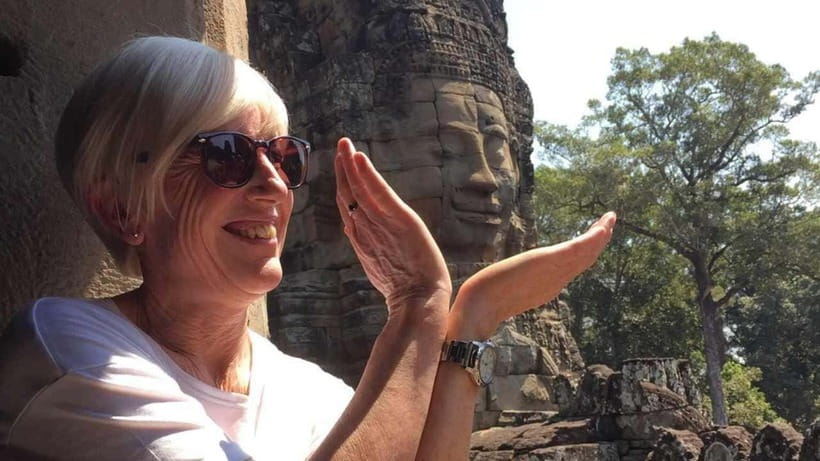
- Professional English narration that connects what you see to Khmer life and belief
- Cold water and cool towels that make a temple day actually doable in Cambodia’s heat
- Skip-the-ticket-line convenience so you spend more time looking up and walking, less time waiting
- Small-group attention that’s great if you want photos and context without stress
Chasing the light? More dawn and dusk runs
- Angkor Wat Sunrise or Sunset Tour with Guide from Siem Reap★ 5.0 · 12,109 reviews
- Siem Reap: Angkor Wat: Small-Group Sunrise or Sunset Tour★ 5.0 · 9,444 reviews
- Sunset tour of Kampong Phluk stilts home village on the Tonle Sap★ 5.0 · 4,865 reviews
- Siem Reap: Angkor Wat 2-Day Tour with Sunrise and Sunset★ 4.9 · 4,429 reviews
Angkor Sunrise Tour: Why This Format Works
Angkor is not hard to visit. What’s hard is seeing it in a way that makes sense. This tour is built for that exact problem. Instead of doing random temple stops with no context, you get guided interpretation on what you’re looking at, plus a route that balances the famous with the atmospheric.
The sunrise component is the big reason people sign up. Going in the predawn hours means you can experience Angkor Wat before it turns into a daytime theme-park. You start around 4:20–4:35 AM for the sunrise day, then you spend enough time at Angkor Wat to actually notice details: corridors, central chambers, and upper terraces. It’s not a quick glance-and-go.
The other smart piece is how the two-day plan is split. Day 1 focuses more on the outer circuit temples (and a proper sunset). Day 2 is the Angkor core: Angkor Wat, then Angkor Thom and its gates, terraces, and finally Ta Prohm. If you’re short on time in Siem Reap, this structure saves you from “temple whiplash” where every stop feels identical.
Day 1 Plan: Pre Rup, Banteay Srei, Neak Pean, Preah Khan, and Sunset
Day 1 begins with hotel pickup in the 7:40 AM to 8:00 AM window, and you’ll return late afternoon or early evening after sunset. It’s a full day, but it doesn’t feel like one long blur because each site changes the mood and the visuals.
Pre Rup: A Hindu temple with a clear architecture lesson
You’ll start at Pre Rup, a Hindu temple built around 961 or 962. You’re shown how its laterite and sandstone blend shapes the look of the structure. Even if you don’t care about construction materials, it’s a useful introduction: it helps you see that Angkor temples aren’t just pretty ruins. They’re built with intention, and the materials change the character of the stone over time.
Banteay Srei: Small temple, huge craftsmanship
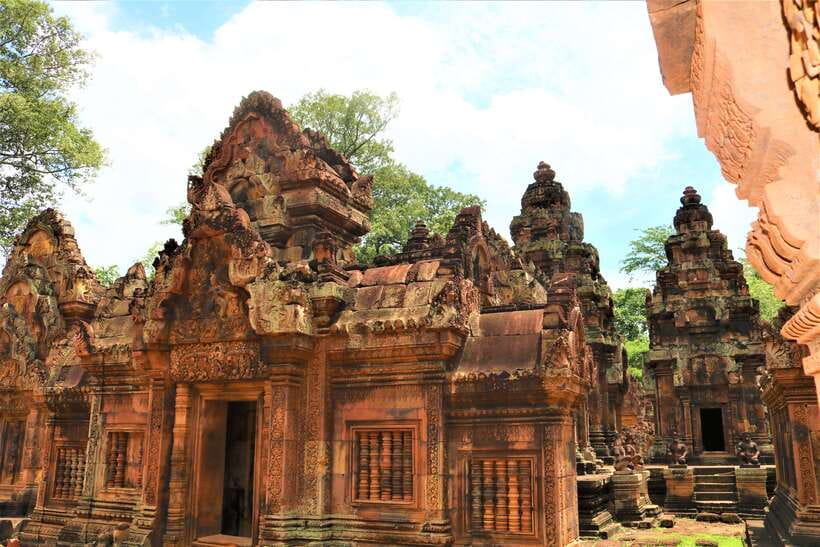
Next is Banteay Srei. This is the stop I’d prioritize if you love carved surfaces. It’s a smaller sandstone temple, but the reliefs are considered some of the finest and most skillfully crafted in Cambodia. In practice, you’ll notice the difference from the bigger complexes: more detail per square meter, more time needed to look closely, and better chances to catch your eye on expressions and patterns that you’d otherwise miss.
More temple circuits, set side by side

Neak Pean: A Buddhist temple on an artificial island
Then comes Neak Pean, a Buddhist temple set on a circular artificial island within Jayatataka Baray. This is a good “slow down” moment. It’s not just about seeing a temple shape; it’s about spotting how the Khmer landscape design mixes water management with sacred space. The setting can feel surprisingly calm compared to the bigger Angkor sites.
Preah Khan: Ruin, roots, and a restoration story
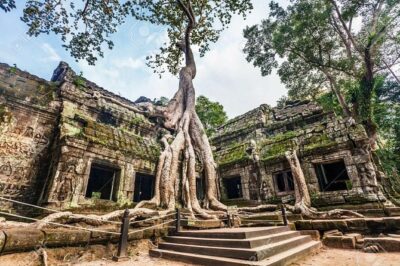
Your next highlight is Preah Khan, a ruined temple that feels dramatic because tree roots and crumbling stone are part of the visual language. Construction was commissioned by Jayavarman VII in honor of his father. Right now, it’s also under restoration by the World Monument Fund in places, which adds an extra layer to what you’re seeing: this is not only history. It’s an ongoing effort to keep the site readable for future visitors.
Sunset: You end the day with a payoff
Day 1 ends with sunset, which is more than a pretty finish. Timing it this way helps your brain switch gears. After a day of stone carvings and ruin textures, the light shift makes edges, shadows, and terraces pop in a way that doesn’t happen at midday.
Day 2 Sunrise: Angkor Wat at Dawn, Then Angkor Thom Walls and Gates
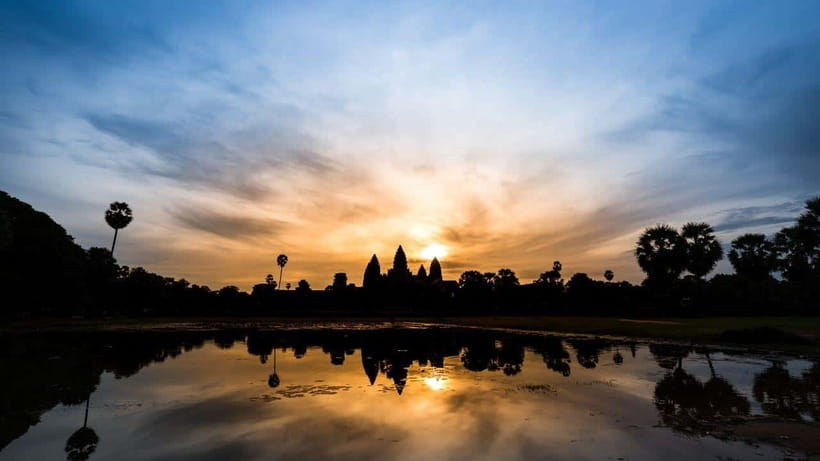
Day 2 is the headline day. Pickup is typically between 4:20 and 4:35 AM, and departure is set so you can catch sunrise outside Angkor Wat. The goal is simple: arrive early enough to get a good view and then give the temple time to reveal itself.
Sunrise at Angkor Wat: The view plus the atmosphere
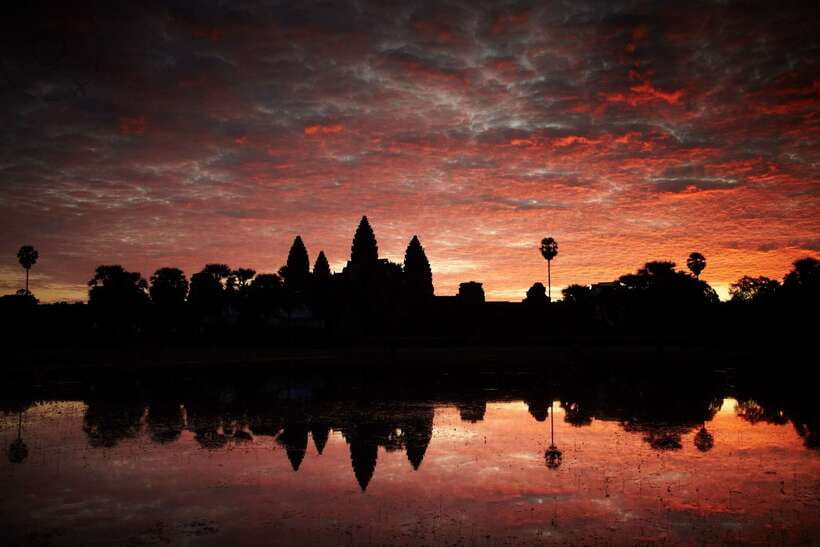
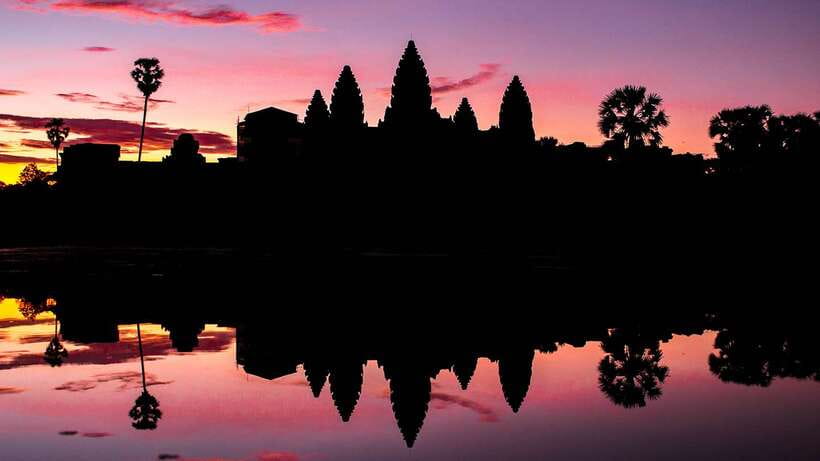
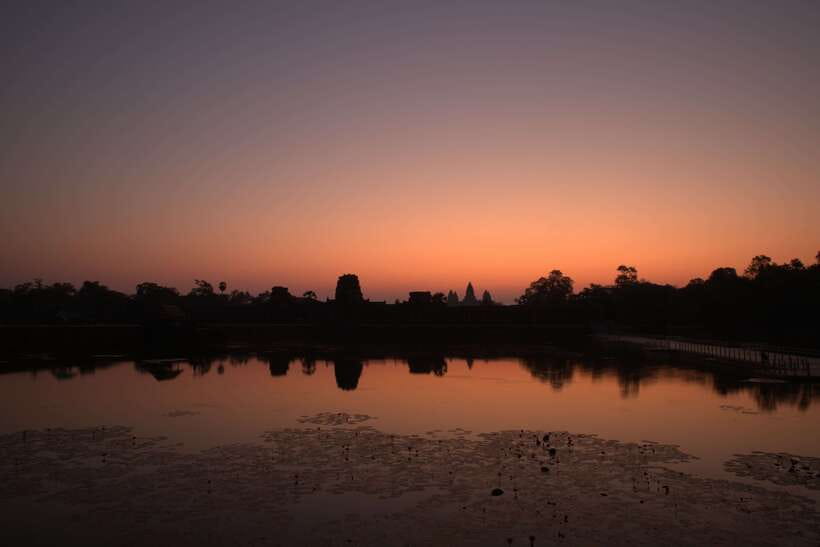
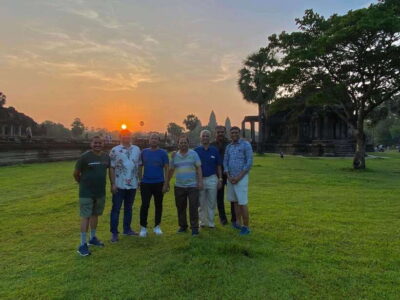
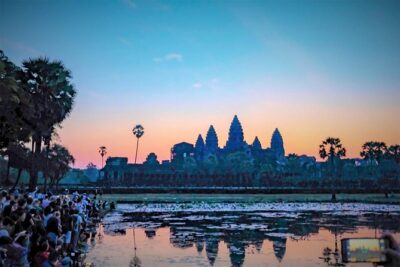
You’ll arrive in the predawn dark, then watch the sky change while Angkor Wat slowly turns from silhouette to structure. The big win here is time. You don’t just stand for a minute, you’re given time to absorb it. And yes, the guide can help you with photo angles so you’re not guessing where to stand.
Inside Angkor Wat: 2 hours that actually matter
After sunrise, you explore Angkor Wat’s interior for about two hours. Your English guide explains the stories behind the bas-relief carvings, tying the artwork to life during the height of the Khmer Empire. It’s one of those days where the information doesn’t feel like a lecture. It’s more like a lens: once you know what you’re looking for, the carvings feel less random and more purposeful.
Breakfast near the temple
You’ll have breakfast just outside Angkor Wat. Meals aren’t included in the tour price, but the schedule leaves room for an easy stop without forcing you back into town first.
South Gate of Angkor Thom: Gods on one side, demons on the other
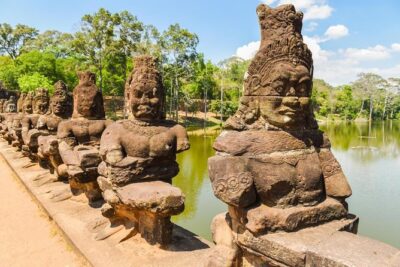
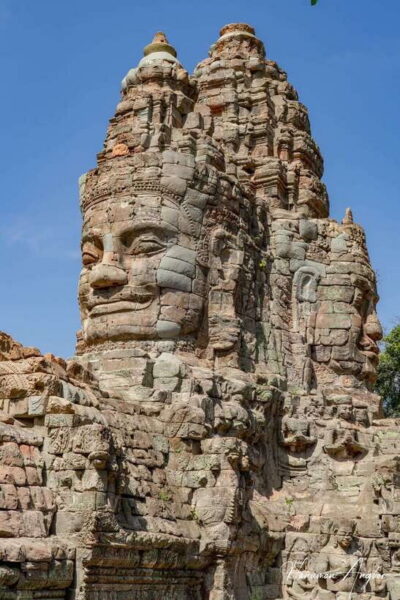
Next is the Southern Gate of Angkor Thom. Here’s a standout visual fact you’ll want to look for: there are 54 stone figures on each side, with gods to the left and demons to the right. It’s one of those spots where your eyes finally get a clear “this is the story” layout.
Angkor Thom: More than 200 faces
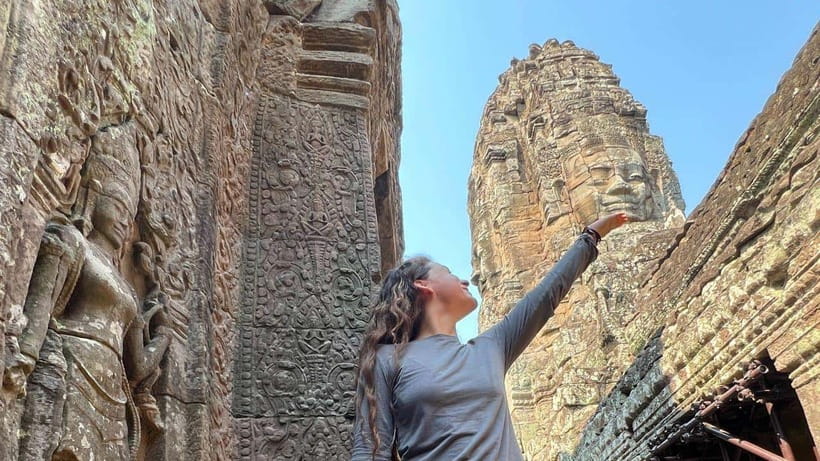
Then you’ll step into the fortified Angkor Thom area. Focus on the central towers and their more than 200 enormous faces. This is less about reading a single sculpture and more about noticing how the architecture repeats an expression across the city wall system.
Terrace of Leper King and Terrace of Elephants
After that, you’ll visit the Leper King’s Terrace and the Terrace of Elephants. These are famous names, but the tour value is in helping you see how the terraces fit the larger layout. You’re not just hunting for a photo. You’re learning what the space is meant to do.
Ta Prohm: The jungle-choked temple with monk history
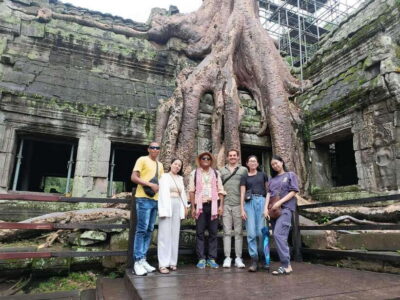
You end with Ta Prohm, once home to almost 3,000 monks. This is the temple most people recognize for its tree roots, but what changes on a guided day is that you’re not just watching roots creep over stone. You learn how Ta Prohm fits into the broader Angkor pattern of sacred space and living community.
Return to your hotel is around 12:30–1:30 PM.
The Guide Makes It Better: Stories, Photo Angles, and Pace Control
This tour’s best ingredient is the person holding the steering wheel: your English-speaking guide. What I like in particular is that the guide role isn’t only facts. It’s timing, walking order, and helping you notice things fast enough to enjoy them, not just survive them.
In the experience data, names like Sak, Pal Saruon, Pi, Sokpee, Chhay, and Lucky show up again and again. The key common thread is that these guides tend to:
- explain what you’re seeing in a way that connects temple design to Khmer culture
- point out less-obvious angles for photos
- keep you moving but not trapped, with some time to explore on your own at each stop
That balance matters. Angkor can cause “information fatigue” if you only get a nonstop lecture. Here, the tour is structured so you get narration plus real time to look around.
It also helps that the driving and logistics are handled by a professional driver team. Many participants call out drivers by name too—Vichet, Naro, Ro, Mao, Water, and others—often for safe driving plus frequent cold water and cool towels after temple stops. In a place like this, those small comforts add up.
Price and Value: What $19 Covers (and What You Must Plan For)
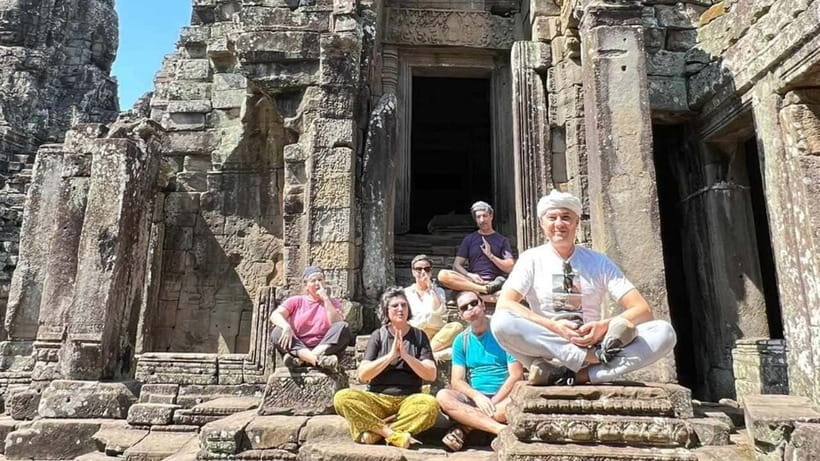
Let’s talk value in plain terms. The tour price is $19 per person, and that’s attractive—especially because it includes hotel pickup/drop-off, an English-speaking guide, and an air-conditioned vehicle, plus bottled water and cool towels.
What’s not included is the temples pass, which is $62 per person for all temples (a 2–3 day pass). Meals also aren’t included. So your real all-in cost becomes the tour price plus the pass, and then add lunch based on where you eat.
That said, the $19 price still makes sense if you:
- want a guided experience (not self-navigation)
- care about sunrise timing and interpretation inside Angkor Wat
- appreciate the comfort upgrades (AC, bottled water, cool towels)
- prefer skip-the-ticket-line convenience
If you already planned to self-drive and don’t need a guide, then the value drops. But if you want context and smoother logistics in a tight schedule, it’s hard to beat.
Practical Tips: Dress Code, Heat, and How to Survive the Steps
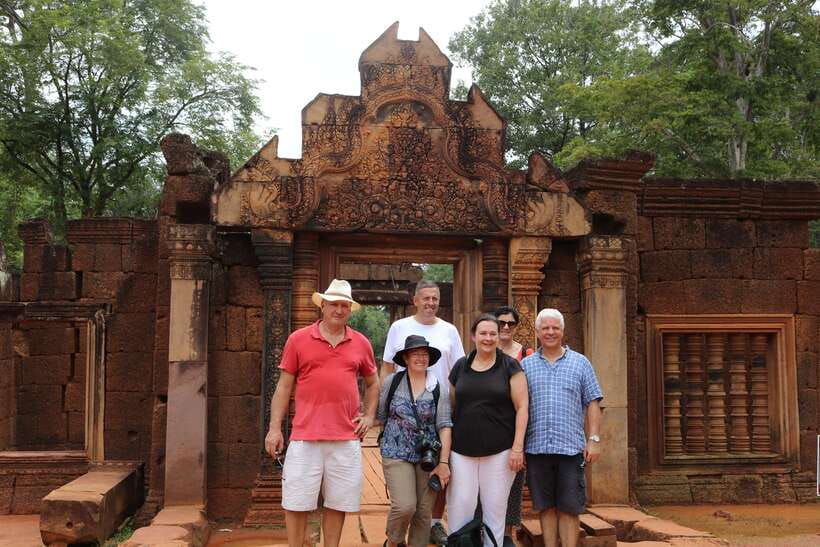
Angkor punishes bad planning more than it punishes bad legs. So set yourself up to enjoy it.
Dress code: no shortcuts
You’ll need to cover your knees and shoulders in temples. That means no shorts. Bring a light layer for shoulders if you’re traveling in hot weather, and plan outfits that you can walk in all day.
Footwear matters
You’ll be on uneven ground and moving around stairs and rubble areas. Comfortable shoes aren’t optional. You don’t need hiking boots, but you do need something stable.
Heat management is built in, but you still need basics
The tour provides bottled water and cool towels, and that help is real. Still, bring what you’re told to bring:
- sunglasses
- a sun hat
- camera
- insect repellent
- a little patience for sweaty moments
Also, avoid anything that makes you flinch every time you stop. You’ll stand around for sunrise and you’ll linger at carvings during narration.
Should You Book This 1- or 2-Day Angkor Sunrise Tour?
I think you should book this if you want a high-impact Angkor experience without turning your trip into a navigation project. The sunrise element plus the structured pairing of outer temples on Day 1 and Angkor Wat/Angkor Thom on Day 2 is the kind of planning that saves time and reduces stress. If you value photos, context, and comfort (AC, water, cool towels), this tour matches your priorities.
I’d think twice if you hate early mornings or you’re worried about extended walking over uneven surfaces. Day 2 starts before sunrise, and both days include real temple stairs and uneven ground.
If you can handle that, you’ll come away with more than snapshots. You’ll understand what you saw and why it mattered.
FAQ
How long is the tour?
The tour runs about 8 hours for a one-day option, or it’s offered as a 2-day experience.
Is hotel pickup and drop-off included?
Yes. Pickup and drop-off are included, with specific pickup windows provided for each day.
What time does the sunrise day start?
Pickup is typically between 4:20 AM and 4:35 AM, and you leave pre-dawn to catch sunrise outside Angkor Wat.
What does the tour price include?
The tour includes hotel pickup and drop-off, an English-speaking guide, bottled water and a cool towel, and air-conditioned vehicle transport.
Do I need to buy an Angkor temples pass?
Yes. The 2–3 day temples pass is not included. You pay separately (listed as $62 per person for all temples).
Are meals included?
No. Meals are not included, but you can purchase food at local restaurants near the temples.
Is Angkor Wat sunrise access included?
Yes. The tour includes sunrise viewing at Angkor Wat, and it also notes skip-the-ticket-line convenience.
What should I bring?
Bring comfortable shoes, sunglasses, a sun hat, a camera, and insect repellent.
What are the rules at the temples?
You must cover your knees and shoulders. Shorts are not allowed, and feeding animals is not allowed.
Is this tour suitable for kids or wheelchair users?
It is not suitable for children under 8 years old and it is not suitable for wheelchair users.
More Days at the Temples
- Siem Reap: Angkor Wat 2-Day Tour with Sunrise and Sunset
★ 4.9 · 4,429 reviews - Angkor 2-Day Sunset & Sunrise Small-Group Tour
★ 5.0 · 2,567 reviews - 2 Days Exclusive Temple Highlights with Sunset and Sunrise Tour
★ 5.0 · 1,157 reviews - 2 Days Guided Historical Tour in Angkor
★ 5.0 · 855 reviews - 2-Day Angkor Wat With Small, Big Circuit and Banteay Srei Tour
★ 5.0 · 545 reviews
More Temple Circuits Around Siem Reap
- Angkor Wat Sunrise or Sunset Tour with Guide from Siem Reap
★ 5.0 · 12,109 reviews - Siem Reap: Angkor Wat: Small-Group Sunrise or Sunset Tour
★ 5.0 · 9,444 reviews - Siem Reap: Angkor Wat 2-Day Tour with Sunrise and Sunset
★ 4.9 · 4,429 reviews - Siem Reap: Full-Day Angkor Wat Guided Tour with Sunset
★ 4.9 · 3,803 reviews - Angkor Wat Sunrise tour with Small – Group and Guide tours
★ 5.0 · 3,655 reviews
Dawn and Dusk Over Angkor
- Angkor Wat Sunrise or Sunset Tour with Guide from Siem Reap
★ 5.0 · 12,109 reviews - Siem Reap: Angkor Wat: Small-Group Sunrise or Sunset Tour
★ 5.0 · 9,444 reviews - Sunset tour of Kampong Phluk stilts home village on the Tonle Sap
★ 5.0 · 4,865 reviews - Siem Reap: Angkor Wat 2-Day Tour with Sunrise and Sunset
★ 4.9 · 4,429 reviews - Siem Reap: Full-Day Angkor Wat Guided Tour with Sunset
★ 4.9 · 3,803 reviews
Just Added: Fresh Siem Reap Tour Reviews

Angkor Sunrise & Sunset Tours, compared.
 ★ 5.0Angkor Wat Sunrise or Sunset Tour with Guide from Siem ReapFrom $1812,109 reviews
 ★ 5.0Angkor Wat: Small-Group Sunrise or Sunset TourFrom $159,444 reviews
 ★ 5.0Sunset tour of Kampong Phluk stilts home village on the Tonle SapFrom $214,865 reviews
 ★ 4.9Angkor Wat 2-Day Tour with Sunrise and SunsetFrom $344,429 reviews
 ★ 4.9Full-Day Angkor Wat Guided Tour with SunsetFrom $153,803 reviews
 ★ 5.0Angkor Wat Sunrise tour with Small – Group and Guide toursFrom $143,655 reviews
 ★ 5.0Angkor Wat Highlights and Sunrise Guided Tour from Siem ReapFrom $233,213 reviews
 ★ 5.0Angkor Wat Sunset Small Group Tour with Lunch IncludedFrom $203,059 reviews
Browse the lists this tour appears in