
Reviewed · ANGKOR TEMPLE TOURS
2 Days Guided Historical Tour in Angkor
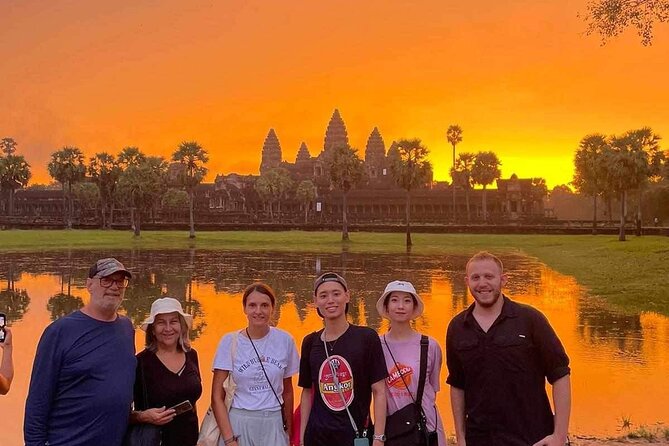
Sunrise sets the tone at Angkor Wat. This 2-day guided plan in Siem Reap is designed around early light, 11 temples, and a small 15-person group so you spend less time waiting and more time looking closely.
I really like the practical touches: hotel pickup/drop-off plus an air-conditioned vehicle, and cool water with a wet towel during long hot stretches. Those small comforts matter when you’re on temple stone for hours.
One drawback to plan for up front: the temple entrance ticket ($62 per person) is not included, and meals are also on your own.
In This Review
- Key things that make this Angkor tour tick
- Why this 2-day Angkor Wat plan feels smarter than a quick day trip
- Getting picked up at 4:30 am without losing your will to live
- Day 1: Angkor Wat sunrise plus the big names of Angkor Thom
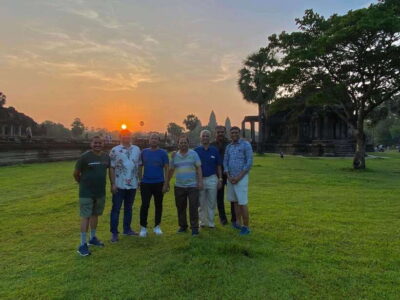
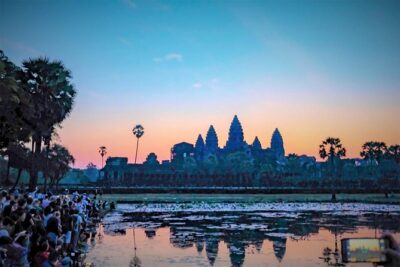
- Angkor Wat at sunrise (with time inside)
- Angkor Thom South Gate: carved faces and a causeway vibe
- Bayon Temple: the smiling faces and a longer look
- Ta Keo: break for breakfast, then a sandstone temple-mountain
- Ta Prohm: one of the best stops for first-time wow
- Day 2: the quieter temples that make Angkor feel bigger than a checklist
- Pre Rup: a state temple with a strong timeline
- Ta Som: a smaller stop, good for photos and calm walking
- Neak Pean: an artificial island and a circular setting
- Preah Khan: built for Jayavarman VII to honor his father
- Phnom Bakheng: end at a temple-mountain viewpoint for sunset
- The cost reality: $35 tour price plus the $62 temple ticket
- Guides: the real reason this tour gets strong praise
- What to expect day-to-day: walking, breaks, and bathroom stops
- Who should book this Angkor Wat tour
- Should you book this 2-day guided Angkor tour?
- FAQ
- What’s the duration of the 2-day Angkor tour?
- Is hotel pickup included?
- How many temples does the tour cover?
- What time does the tour start?
- Is the entrance ticket included in the tour price?
- Are meals included?
Key things that make this Angkor tour tick
- 4:30 am start so you can see Angkor Wat in the early light
- Max 15 people for a calmer pace and easier photos at key spots
- Hotel pickup and drop-off with an air-conditioned vehicle
- Cold water and wet towel for comfort during temple walking time
- 11 temple stops over 2 days, mixing major icons with quieter sites
- Sunset time on day two, finishing at Phnom Bakheng
More temple circuits, set side by side
- Angkor Wat Sunrise or Sunset Tour with Guide from Siem Reap★ 5.0 · 12,109 reviews
- Siem Reap: Angkor Wat: Small-Group Sunrise or Sunset Tour★ 5.0 · 9,444 reviews
- Siem Reap: Angkor Wat 2-Day Tour with Sunrise and Sunset★ 4.9 · 4,429 reviews
- Siem Reap: Full-Day Angkor Wat Guided Tour with Sunset★ 4.9 · 3,803 reviews
Why this 2-day Angkor Wat plan feels smarter than a quick day trip
Angkor is big. Even the “greatest hits” take time, and the timing changes the whole feel of the place. This tour is built around that reality: you start before most people are moving, then you keep going again the next day to reach more temples instead of rushing through only the headline names.
I like the basic structure because it balances two things you actually need. First is early morning access, which makes Angkor Wat less chaotic. Second is a full second day that reaches sites many first-timers miss, so you leave with a broader sense of how the Angkor complex works.
The result is a day-and-a-half style experience, even though it’s scheduled as two days. You’re not just checking boxes. You’re seeing how different temples relate to each other in layout and purpose, with a guide walking you through the meaning of what you’re looking at.
Getting picked up at 4:30 am without losing your will to live
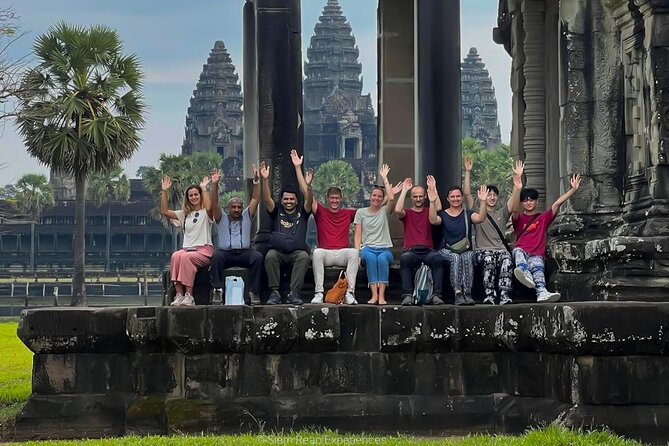
This tour runs early. Start time is 4:30 am, and pickup is offered from your hotel, with drop-off arranged afterward near Pub Street or at/around your hotel area.
I see this as a big value point. You avoid the stress of finding a tuktuk, negotiating, and then trying to be punctual at the most important moment of the day. With a group plan, you can focus on being ready to walk when it’s time.
Two more logistics details that help:
- The group size is capped at 15 people, so the guide can keep things moving without losing everyone.
- You’ll use a mobile ticket, which simplifies what you need to have on you.
One practical consideration: you’ll be up early and moving for hours, so it helps to go into the morning with a light breakfast plan and comfortable clothes you can wear repeatedly across both days.
Day 1: Angkor Wat sunrise plus the big names of Angkor Thom
Day one is the classic arc: arrive early, see Angkor Wat at sunrise, then connect into Angkor Thom and its most recognizable faces.
Angkor Wat at sunrise (with time inside)
You’re picked up from your hotel and then head out specifically for sunrise at Angkor Wat. The tour includes about 2 hours at this first stop, with a guided explanation and time to explore inside.
This is where guides can make the visit. The temple is visually stunning, but what often clicks for people is the context: how the complex was made and how it fits into the larger Angkor world. A strong guide turns those stone scenes into something you can remember later, not just something you photograph and forget.
Also note: the temple admission ticket is not included in the tour price, so budget for that upfront.
More time at the temples, spread over days


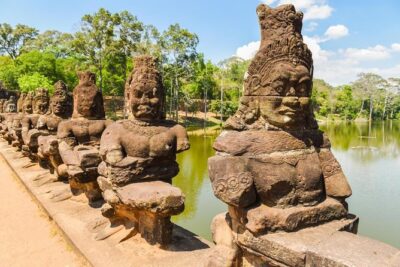
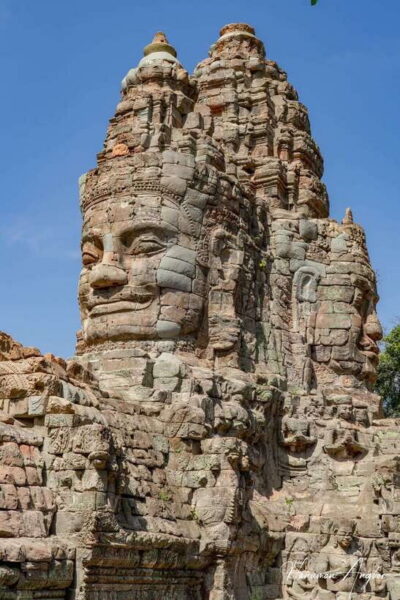
Angkor Thom South Gate: carved faces and a causeway vibe
Next comes the Angkor Thom South Gate, dated to the 12th century. You’ll have around 30 minutes here, focused on the carved faces and the stone figures along the causeway.
This short stop is useful because it works like a transition point. It helps you orient yourself before you go deeper into the main religious center of Angkor Thom. It’s also a good moment to catch photos from the outside before the day gets physically heavier.
Bayon Temple: the smiling faces and a longer look
After the gate, the schedule brings you to Bayon Temple for about 2 hours. Bayon is tied to Buddhism at Angkor, built in the late 12th or early 13th century as the state temple.
This stop is a “stay and study” temple. The guide’s job is to help you slow down, notice the decoration, and understand what you’re seeing rather than treating it like another quick photo stop. Many guides on this tour are praised for mixing history with an easy pace, so you don’t feel shoved along.
Ta Keo: break for breakfast, then a sandstone temple-mountain
Before you go inside Ta Keo, you’ll get a breakfast break (meals not included). Then you’ll spend about 1 hour at Ta Keo, described as a temple-mountain that is possibly the first Khmer structure built entirely of sandstone.
This is a nice contrast from the heavier day-one energy. Ta Keo rewards attention to form and materials. If you like architectural shapes and how stone changes in the light, this is the stop where you can feel the difference.
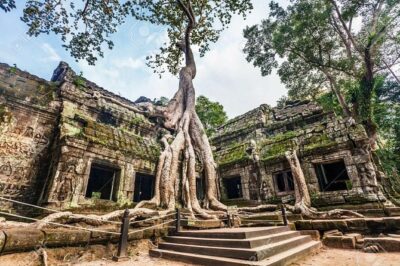
Ta Prohm: one of the best stops for first-time wow
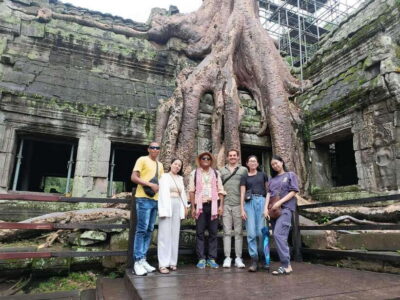
Finally on day one, you reach Ta Prohm for about 1 hour. It’s near Siem Reap (about a kilometre east of Angkor Thom), built in a Bayon style.
Ta Prohm is a great closer because it’s visually powerful without requiring you to know every Khmer term ahead of time. The guide’s explanation helps you connect it to the rest of the complex so it feels like part of a story, not a random detour.
Day 2: the quieter temples that make Angkor feel bigger than a checklist
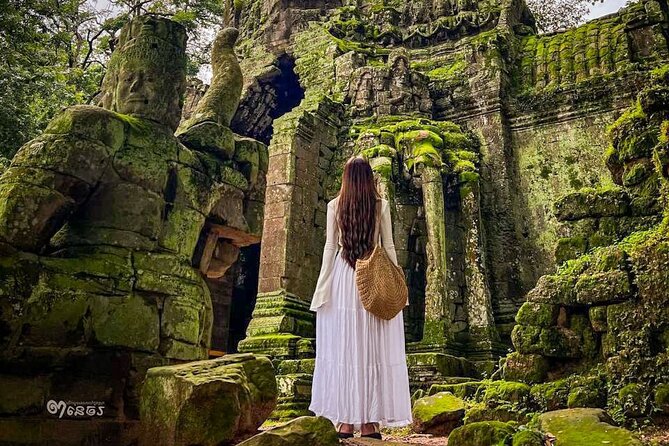
Day two shifts the tone. Instead of only the most famous names, you get a mix of Hindu temples and connected sites that deepen your understanding.
Pre Rup: a state temple with a strong timeline
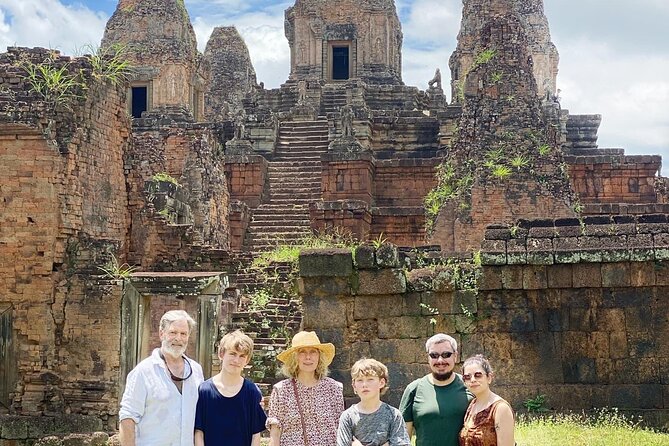
First up is Pre Rup, about 2 hours. It’s described as a Hindu temple at Angkor, built as the state temple of Khmer king Rajendravarman and dedicated in 961 or early 962.
You also get a clear physical sense of what it’s made from: brick, laterite, and sandstone. This stop works well if you’re the type who likes to understand why temples look the way they do, not just what they look like from a distance.
Ta Som: a smaller stop, good for photos and calm walking
Next is Ta Som for about 1 hour. It’s a small temple built at the end of the 12th century for King Jayavarman VII, located north east of Angkor Thom and just east of Neak Pean.
A smaller temple often means you can slow down. You can ask questions without the whole group feeling like it’s stuck in a line, and you get a chance to notice details that don’t dominate a huge crowd.
Neak Pean: an artificial island and a circular setting
Then you visit Neak Pean (about 1 hour), described as an artificial island with a Hindu temple on a circular island in Jayatataka Baray. It’s associated with Preah Khan temple and built during the reign of Jayavarman VII.
This is one of those places where the “where” matters as much as the “what.” The description alone tells you it’s a different kind of experience: water, layout, and a temple on an engineered island.
Preah Khan: built for Jayavarman VII to honor his father
Next comes Preah Khan for about 2 hours. It was built in the 12th century for Jayavarman VII to honor his father, and it sits in the northeast area of Angkor Thom, just west of the Jayatataka baray.
This stop feels like a bridge between the earlier day-one icons and the more spread-out day-two sites. The guide’s job here is to connect the geography and religious intent so it feels like one coherent complex rather than disconnected ruins.
Phnom Bakheng: end at a temple-mountain viewpoint for sunset
Day two finishes at Phnom Bakheng. The schedule shows a very short time here (about 2 minutes), and the overall tour also includes staying to watch the sunset.
So think of Phnom Bakheng as a finish line and a viewpoint. If you want sunset photos, you’ll want to be ready to move quickly, stand where the guide suggests, and accept that the exact viewing setup may depend on conditions on the ground.
The cost reality: $35 tour price plus the $62 temple ticket
The headline price is $35 per person for two days, which sounds like a steal. But here’s the math you need to plan:
- Tour price: $35
- Temple entrance ticket: $62 per person, not included
- Meals: not included
- Anything you buy on-site: souvenir stuff, snacks, drinks
So the practical total for most people is closer to $97 per person, plus meals. For that price, you’re getting a guided plan across 11 temples, with an air-conditioned vehicle, pickup/drop-off, and comfort items like cool water and a wet towel.
I think the value is strongest if you:
- want a guide to explain what you’re seeing (especially at Angkor Wat and Bayon)
- don’t want to coordinate transport across multiple sites yourself
- like having a structured pace that still gives time to look and take photos
If you already speak Khmer or you prefer total independence, you might consider self-guided options. But if you want the “what am I looking at” answers while your feet keep moving, this tour pays for itself fast.
Guides: the real reason this tour gets strong praise
The tour’s reviews strongly highlight guides who do two key things well: they explain clearly, and they manage the group with a human pace.
Names that come up repeatedly include Sok, Sary, Vone, Heang, Ho Heang, Sam, Pheap, and Sayon. People also mention guides who will answer questions on the spot and don’t just talk at you while you shuffle along.
One detail I appreciate from the way guides are described is how they handle heat. You may be dealing with very warm conditions, and the best guides keep water coming, offer pauses when needed, and help you manage the walking rhythm rather than acting like everyone has the same energy level.
If language is an issue, here’s a practical tip: one group specifically noted that having more French support could help. If you need a particular language, it’s smart to ask ahead so expectations match what the guide team can offer.
What to expect day-to-day: walking, breaks, and bathroom stops
This is not a sitting-in-a-coach tour. You’ll walk a lot across uneven temple paths. A good part of the experience is accepting that, then working with your schedule.
The tour design includes comfort breaks in real ways:
- cool water during the day
- a wet towel for cooling down
- restroom breaks
- a breakfast break on day one before Ta Keo
For heat management, I’d plan your own mini-strategy too:
- Wear breathable clothes and solid shoes
- Bring sun protection (hat/sunscreen)
- Keep your water-ready habit even if you’re provided water
Also, start each day focused. Sunrise mornings are easier if your expectations are simple: show up early, look first, then ask questions and take photos without trying to multitask too much.
Who should book this Angkor Wat tour
This tour makes the most sense if you want:
- a guided approach to Angkor Wat, Bayon, and the Angkor Thom gates
- a full two-day plan that hits major and lesser-visited sites
- a small group format that helps your day feel less chaotic
- comfort extras like hotel pickup, cool water, and wet towels
It’s also a good match for first-time Angkor visitors who feel a little lost without context. If you’re experienced and already know your way around, the structure may feel limiting, but the guide explanations can still be worth it.
Should you book this 2-day guided Angkor tour?
I’d book this if you want a balanced Angkor experience that covers 11 temples without you building a complicated itinerary from scratch. The combination of early timing, small group size, and guide-led explanations is the core value.
I would pause and plan carefully if:
- you don’t want to pay extra for the $62 temple entrance ticket
- you strongly prefer eating on your own schedule (meals aren’t included)
- you’re not comfortable with long walking days in warm weather
If you do book, get ready for the big mornings, pack for heat, and bring a few questions about what you’re seeing. That’s when the guide experience tends to pay off the most.
FAQ
What’s the duration of the 2-day Angkor tour?
The tour runs for about 2 days, with specific temple time blocks across both mornings and afternoons.
Is hotel pickup included?
Yes. The tour includes pickup and drop-off from your hotel.
How many temples does the tour cover?
You’ll visit 11 temples across the two days.
What time does the tour start?
The start time is 4:30 am.
Is the entrance ticket included in the tour price?
No. The temple entrance fee is not included. The ticket is listed as $62 per person.
Are meals included?
No. Meals are not included, though there is a breakfast break scheduled on day one (not included in the tour prices).
More Tour Reviews in Siem Reap
- Angkor Wat Sunrise or Sunset Tour with Guide from Siem Reap
★ 5.0 · 12,109 reviews - Siem Reap: Angkor Wat: Small-Group Sunrise or Sunset Tour
★ 5.0 · 9,444 reviews - From Siem Reap: Kampong Phluk Floating Village Tour by Boat
★ 4.9 · 6,979 reviews - Sunset tour of Kampong Phluk stilts home village on the Tonle Sap
★ 5.0 · 4,865 reviews - Siem Reap: Angkor Wat 2-Day Tour with Sunrise and Sunset
★ 4.9 · 4,429 reviews
More Days at the Temples
- Siem Reap: Angkor Wat 2-Day Tour with Sunrise and Sunset
★ 4.9 · 4,429 reviews - Angkor 2-Day Sunset & Sunrise Small-Group Tour
★ 5.0 · 2,567 reviews - 2 Days Exclusive Temple Highlights with Sunset and Sunrise Tour
★ 5.0 · 1,157 reviews - Siem Reap: Angkor Sunrise 1- or 2-Day Guided Temples Tour
★ 4.9 · 1,132 reviews - 2-Day Angkor Wat With Small, Big Circuit and Banteay Srei Tour
★ 5.0 · 545 reviews
More Temple Circuits Around Siem Reap
- Angkor Wat Sunrise or Sunset Tour with Guide from Siem Reap
★ 5.0 · 12,109 reviews - Siem Reap: Angkor Wat: Small-Group Sunrise or Sunset Tour
★ 5.0 · 9,444 reviews - Siem Reap: Angkor Wat 2-Day Tour with Sunrise and Sunset
★ 4.9 · 4,429 reviews - Siem Reap: Full-Day Angkor Wat Guided Tour with Sunset
★ 4.9 · 3,803 reviews - Angkor Wat Sunrise tour with Small – Group and Guide tours
★ 5.0 · 3,655 reviews
Just Added: Fresh Siem Reap Tour Reviews


Angkor Temple Tours, compared.
 ★ 5.0Angkor Wat Sunrise or Sunset Tour with Guide from Siem ReapFrom $1812,109 reviews
 ★ 5.0Angkor Wat: Small-Group Sunrise or Sunset TourFrom $159,444 reviews
 ★ 4.9Angkor Wat 2-Day Tour with Sunrise and SunsetFrom $344,429 reviews
 ★ 4.9Full-Day Angkor Wat Guided Tour with SunsetFrom $153,803 reviews
 ★ 5.0Angkor Wat Sunrise tour with Small – Group and Guide toursFrom $143,655 reviews
 ★ 5.0Angkor Wat Highlights and Sunrise Guided Tour from Siem ReapFrom $233,213 reviews
 ★ 5.0Angkor Wat Sunset Small Group Tour with Lunch IncludedFrom $203,059 reviews
 ★ 5.0Full-Day Angkor Wat Sunrise Private Tour with Guide from Siem ReapFrom $602,920 reviews
Browse the lists this tour appears in