
Reviewed · ANGKOR TEMPLE TOURS
2-Day ‘Angkor & Village’ Tour
Angkor in two days, without the chaos. I like the private pace and the comfort of an air-conditioned vehicle that makes the long temple days feel manageable. My only real caution is that there’s a fair bit of walking and climbing, so bring shoes you trust on uneven stone.
This tour is built for first-timers who want the big names (Bayon, Ta Prohm, Angkor Wat) plus the temples that most people skip. The guide helps you read what you’re seeing, and you get practical extras like bottled water and cold towels.
At $130 for about two days, it’s a good value if you’re also planning to buy Angkor passes and do one extra-water experience like Kompong Phluk. If you hate heat, glare, or steps, you’ll need to go in with a smart plan.
In This Review
- Key highlights worth planning around
- Price and what it covers (plus the one big add-on)
- Day 1: Angkor Archaeological Park to Bayon’s faces
- Ta Prohm and the parts you’ll want to slow down for
- Terrace of the Elephants and the royal-court feeling
- Angkor Wat after lunch: the huge moment, twice earned
- Phnom Bakheng: the end-of-day climb tradeoff
- Day 2 sunrise at Angkor Wat: why the second visit matters
- Banteay Srei: the ladies’ temple with finer details
- Banteay Samre and Pre Rup: strong “second-tier” value
- Kompong Phluk by boat: a real change of pace
- Or choose the Preah Khan area instead of Kompong Phluk
- How the guide and AC ride affect your whole day
- Practical tips to make those steps feel manageable
- Who should book this tour (and who might want to skip it)
- Should you book the 2-Day Angkor & Village Tour?
- FAQ
- How long is the 2-Day Angkor & Village Tour?
- What time does the tour start, and is hotel pickup included?
- Is this a private tour?
- Is an English-speaking guide included?
- Are temple passes included in the price?
- Does the tour include Angkor Wat sunrise?
- Is there a boat ride for the floating village?
- What’s included besides transportation and the guide?
- Is the tour suitable for young children?
Key highlights worth planning around
- Angkor Wat twice: an afternoon visit plus a second round for sunrise viewing
- English-speaking guides who guide your attention (examples include Seng and Choup)
- Temple variety: Angkor Thom, Bayon, Baphuon, Ta Prohm, then the “signature” monuments
- Banteay Srei on day 2, plus other smaller temple stops for a wider view
- Kompong Phluk by boat with the motorised boat fee included
- Real breaks built in: AC rides, bottled water, and cold towels during long days
More temple circuits, set side by side
- Angkor Wat Sunrise or Sunset Tour with Guide from Siem Reap★ 5.0 · 12,109 reviews
- Siem Reap: Angkor Wat: Small-Group Sunrise or Sunset Tour★ 5.0 · 9,444 reviews
- Siem Reap: Angkor Wat 2-Day Tour with Sunrise and Sunset★ 4.9 · 4,429 reviews
- Siem Reap: Full-Day Angkor Wat Guided Tour with Sunset★ 4.9 · 3,803 reviews
Price and what it covers (plus the one big add-on)
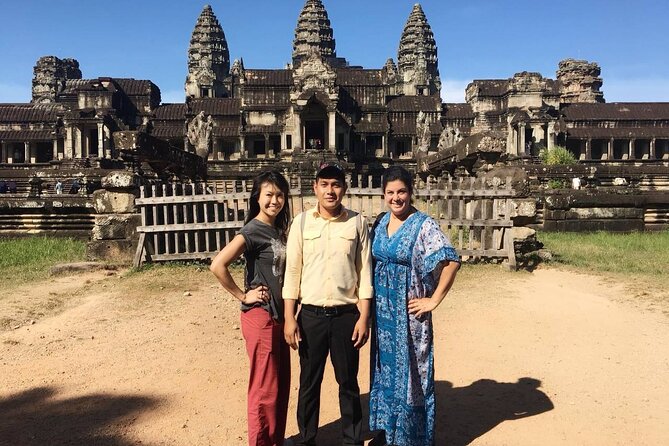
You pay $130 for the 2-day private experience, and that price mostly covers your guide, transportation, and the shared effort of getting you through Angkor efficiently. The tour includes hotel pickup and drop-off, an air-conditioned vehicle, an English-speaking guide, bottled water, and cold towels.
One cost you should budget for separately is the Angkor passes. Temple passes are not included, and the tour information lists a 2-day pass cost of USD67 per person. It’s the main “make or break” item in the total cost, so add it early before you commit.
Also note meals and soft drinks/alcohol aren’t included. That’s not a problem—Angkor days run on water and energy anyway—but you’ll want to plan lunch and snacks so you don’t end up hungry mid-temple.
Day 1: Angkor Archaeological Park to Bayon’s faces
Your morning starts with Angkor access at the Angkor Enterprise ticket office. You’ll need the right temple pass for at least two days, and it’s one pass per person. This is worth doing cleanly at the start, because it sets you up to move through the complex with less stress.
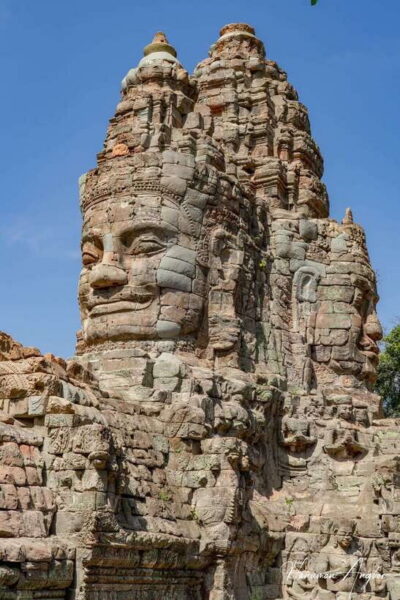
Then it’s straight into Angkor Thom, starting at Bayon. Bayon is known for its packed stone faces—Mahayana Buddhist royal imagery from the late 12th to early 13th century. The main payoff here is understanding that Bayon isn’t just decoration. It’s tied to Jayavarman VII’s capital, so your guide can help you look at it like a political-religious statement, not just a photo stop.
Next comes Baphuon, a three-tiered temple mountain associated with Udayadityavarman and dedicated to Shiva. People often rush by this kind of structure because it’s not as instantly recognizable as Bayon. With a guide, it turns into a useful “bridge” stop that explains how these temples blend Hindu devotion with the Khmer way of building sacred space.
Ta Prohm and the parts you’ll want to slow down for
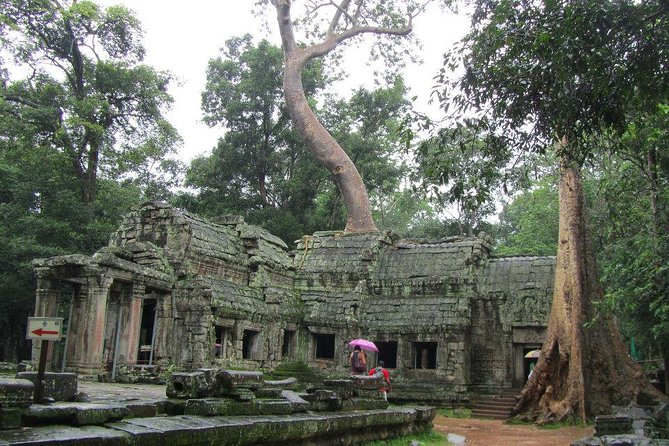
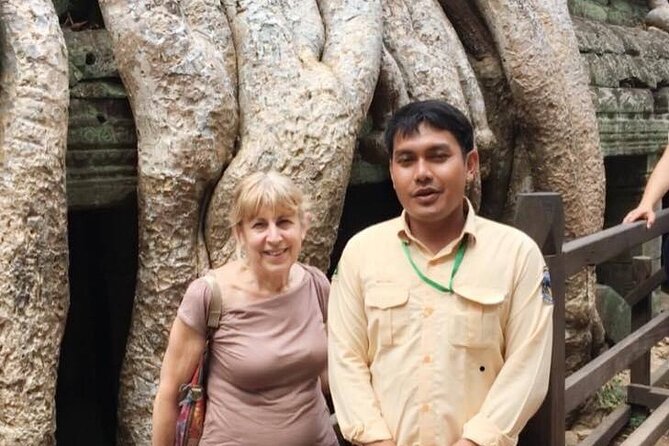
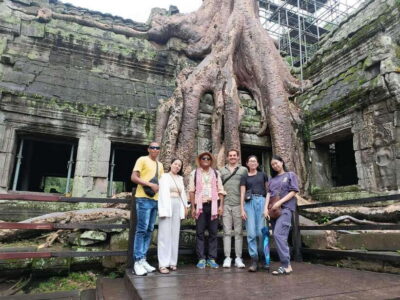
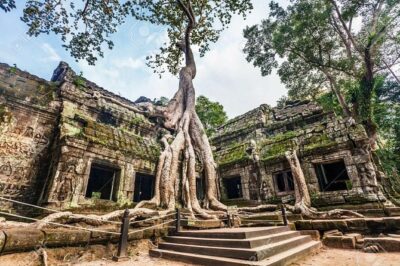
After Baphuon, you’ll hit Ta Prohm, the temple many people know for its dramatic tree roots. It’s commonly called Ta Prohm today, but it originally had another name tied to the Rajavihara designation. The value of this stop isn’t only the scenery—it’s that you can see how nature and stone share the same stage.
This is also one of the places where timing and attention matter. You’ll be walking in and out of doorways and courtyards, and the guide can help you spot the framing details that make Ta Prohm feel different from, say, Angkor Wat’s symmetry.
If you’re trying to conserve energy, treat Ta Prohm as your “take it slow” stop. You’ll get more out of fewer photos when you pause to look at how the carvings and structure sit around the roots.
Terrace of the Elephants and the royal-court feeling
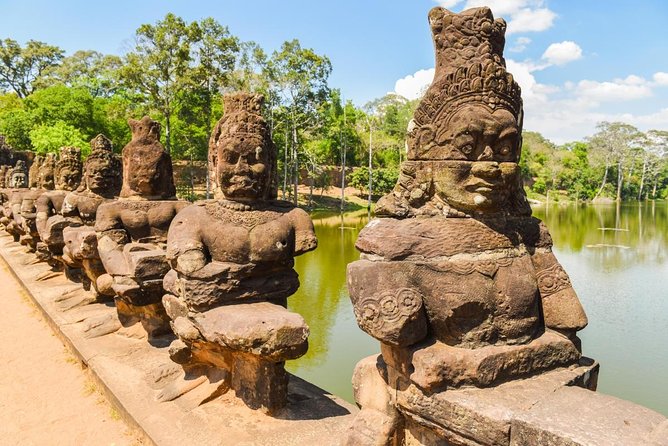
Then comes the Terrace of the Elephants, part of the royal terraces along the Eastern boundary of the palace grounds. This area looks like a staging platform because it faced the parade grounds—processions and royal movement in a visible, organized way.
You’ll likely appreciate this more than you expect if you’re the type who likes context. It helps explain why Angkor isn’t just about temples scattered around forests. It was a whole designed world: palace, ritual, ceremony, and movement.
You only get a limited amount of time here, though. If you’re the type who wants to linger over every carving, you may wish you had more hours. Still, it’s a smart stop because it adds function, not just form.
More time at the temples, spread over days

Angkor Wat after lunch: the huge moment, twice earned
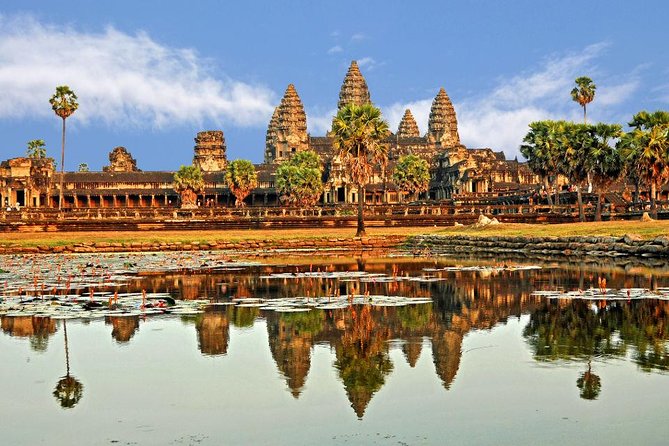
In the afternoon, the tour moves to Angkor Wat, the largest religious monument in the world on a vast site. The first visit is big—no kidding. Angkor Wat’s size can make you feel tiny, but that’s also why it works so well with a guide. You’re not just staring up. You’re learning how to scan the complex.
Even if Angkor Wat is the temple you’ve seen on countless postcards, seeing it in person is different. The proportions hit you physically, and details like the layout and the defensive-ritual vibe of the walls start to make sense.
Also, the schedule gives you a second chance the next morning for sunrise. That means today’s visit doesn’t have to be perfect. You can enjoy it as the daytime monument, then save your best energy for the early light tomorrow.
Phnom Bakheng: the end-of-day climb tradeoff
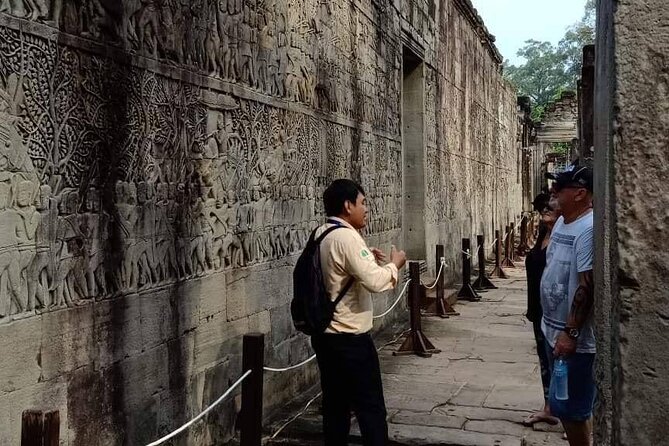
Day 1 wraps with Phnom Bakheng, a temple mountain dedicated to Shiva with Hindu and Buddhist layers over time. It’s built on a hill, and that’s the practical catch: you’ll be climbing. For many people it’s worth it, because the position gives you viewpoints over the area.
But this is exactly where your comfort level matters. If your feet aren’t great on steps, you’ll want to pace yourself and consider where you stop. The tour information also warns it’s not suitable for people who can’t walk or climb normally, so treat Phnom Bakheng as a real test.
If you’re planning photos, this is where you’ll want to bring your patience. You’ll share the space with others, and the light changes fast. A guide can help you choose a spot where you can actually enjoy the view, not just stand and hope.
Day 2 sunrise at Angkor Wat: why the second visit matters
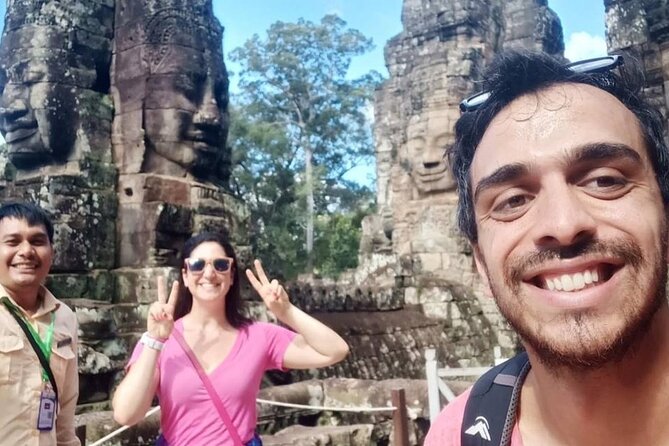
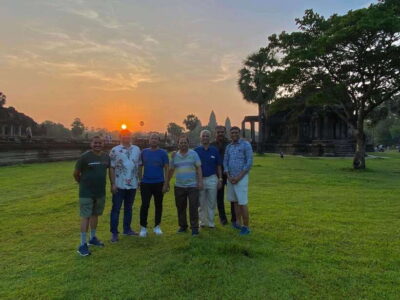
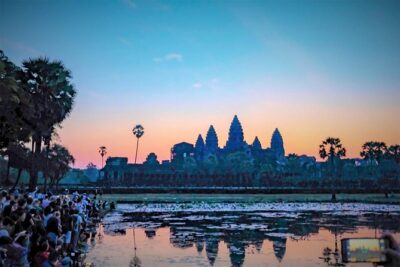
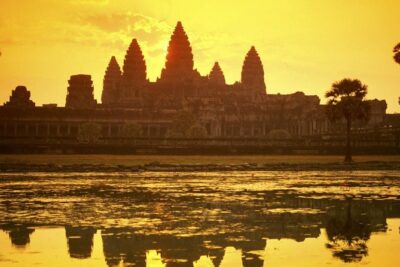
Day 2 starts with a revisit to Angkor Wat for sunrise. This is one of those things that can feel touristy in theory, and magical in practice. Early light flattens shadows, softens the stone colors, and makes the temple shapes look sharper and calmer.
After that sunrise segment, you head back so you can eat breakfast at the hotel. That detail matters. Too many temple tours forget that sunrise is only fun if you’re not wrecked after.
This second visit also changes how you experience the complex. Day 1 helped you learn the layout. Sunrise helps you see what “mood” does to stone. You’ll often remember the second visit more, because it’s where the temple stops being just a stop and starts being a scene.
Banteay Srei: the ladies’ temple with finer details
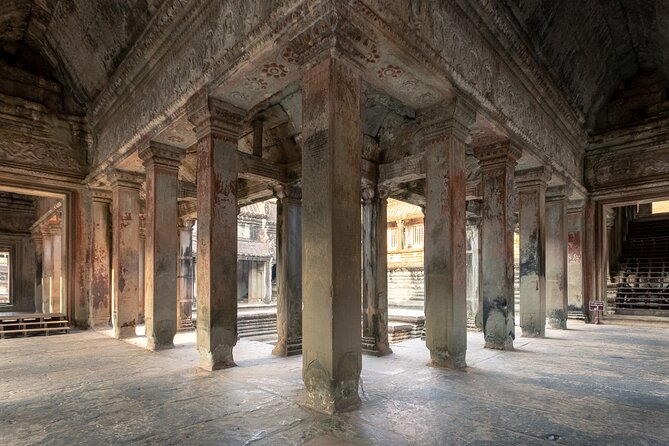
After sunrise, you move to Banteay Srei, often called the ladies’ temple. It’s a 10th-century Khmer temple dedicated to Shiva, and it sits near Phnom Dei, about 25 km from the main group. This distance is part of the attraction: it feels like a different world from the busiest Angkor core.
Why it’s a favorite stop on this kind of tour is the vibe. Banteay Srei often feels more intimate, and it rewards slower looking. You can also learn from your guide why the temple’s design and decoration matter, instead of only chasing it for an image.
It’s listed for about two hours here, which is a good length. Enough time to pause, walk around, and not feel like you sprinted through carvings.
Banteay Samre and Pre Rup: strong “second-tier” value
Next comes Banteay Samre, a Hindu temple in the Angkor Wat style, built during the reign of Suryavarman II and Yasovarman II in the early 12th century. It’s located about 400 meters east of the East Baray. That’s the kind of positioning detail a good guide helps you notice, and it gives you a better sense of how the complex was planned.
Then you’ll visit Pre Rup, a temple mountain connected to Rajendravarman and dedicated to Shiva, built in 961 or early 962. Pre Rup is a stop that often rewards people who like structure and layers. You can see how brick, laterite, and sandstone work together, which helps you “read” the temple the way your guide wants you to.
These stops aren’t usually the first ones people put on their wishlist. That’s exactly why they’re valuable. They widen your Angkor experience beyond the three mega-name temples.
Kompong Phluk by boat: a real change of pace
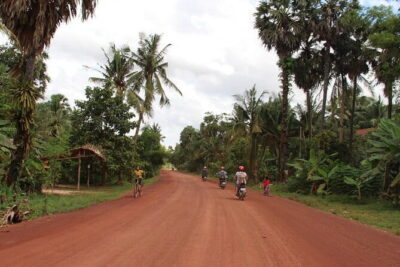
Later in the day, you’ll head out to Kompong Phluk, a set of villages on stilts on Tonle Sap. The name is explained as Harbor of the Tusks. In practice, you’ll see a working riverside life—fishing is the main survival rhythm, and the wet season shifts what people do.
The tour includes the fee for the motorised boat, which is key. Boat time can be the highlight for many visitors because it gives you angles on the stilt homes you just can’t get from shore.
There’s also a “people factor” here. Angkor is monumental and stone-heavy. Kompong Phluk brings it back to daily life and shows you how water shapes culture and livelihood. You may find this contrast makes the whole two-day trip feel more grounded.
Or choose the Preah Khan area instead of Kompong Phluk
You also get an alternative option instead of Kompong Phluk: Preah Khan, Neak Poan, Ta Som, and East Mebon. This swap can be useful if you’d rather spend more time in temple grounds and less in boat village touring.
Preah Khan in particular is a name that many people recognize, and grouping it with Neak Poan, Ta Som, and East Mebon suggests a temple-heavy end to the day. You return to town around 5:00pm, so you’re not stuck late into the evening.
If you’re sensitive to motion sickness or sun glare on the water, that alternative may feel smarter. If you really want the stilt village experience, stick with Kompong Phluk.
How the guide and AC ride affect your whole day
The biggest difference between a good Angkor day and a frustrating one is pacing. This tour uses an air-conditioned vehicle for pickup, drop-off, and between stops. That means you can cool down and reset instead of spending hours overheating in a vehicle that feels like a sauna.
Your English-speaking guide also matters more than people expect. A guide helps you avoid wandering. Instead of seeing random stones, you learn what each place is supposed to be—Bayon as a royal center, Banteay Srei as a more detailed devotional stop, Phnom Bakheng as a hilltop viewpoint.
From the experience reports I see, names like Seng and Choup stood out for how they handled the trip. The practical takeaway for you: ask questions, tell your guide your pace, and let them steer you toward the best angles and the least painful walking paths.
Practical tips to make those steps feel manageable
Even with a guide and a comfortable car, Angkor is still Angkor. You’ll be walking on uneven stone and climbing in places, and the tour itself notes it’s not suitable for people with less-than-average fitness.
Here’s how you set yourself up:
- Wear shoes with grip you trust. Smooth sandals are a bad idea here.
- Bring sunscreen and a hat. Bottled water is included, but sun protection is on you.
- Use your time wisely at the hilltop viewpoint. Don’t sprint up, or you’ll hate the view.
- If you’re choosing between Kompong Phluk and the temple alternative, pick based on your body and comfort—not just on what sounds cool.
Who should book this tour (and who might want to skip it)
This tour fits best if you want a private experience with an English-speaking guide and a plan that hits the core monuments plus extra temples. Couples and small groups often love it because you can move at a pace that suits you.
It’s also ideal if you want a clean mix: major Angkor temples for context, then a contrasting water-world visit at Kompong Phluk. The sunrise at Angkor Wat is a big plus for people who want the classic light and don’t want to gamble on it.
I’d think twice if you have trouble with stairs or hills. Phnom Bakheng’s climb and temple-site walking can add up fast, and the tour isn’t designed for low mobility.
Should you book the 2-Day Angkor & Village Tour?
Yes, if you want a smart, guided two-day Angkor plan with hotel pickup, AC comfort, and a real change of scenery on the second day. The value is strongest when you’re already planning to buy your Angkor passes and you’ll actually use the included extras: cold towels, bottled water, and the motorised boat fee.
Book this tour especially if you like explanations as you go—Angkor makes more sense when someone helps you look in the right direction. Skip it or choose another option if you know you can’t handle climbing and uneven surfaces, because the temples won’t slow down for your feet.
FAQ
How long is the 2-Day Angkor & Village Tour?
It runs for about 2 days (approx.).
What time does the tour start, and is hotel pickup included?
The start time is 8:30am, and complimentary hotel pickup and drop-off are included.
Is this a private tour?
Yes. It’s private, meaning only your group participates.
Is an English-speaking guide included?
Yes. A professional English-speaking guide is included.
Are temple passes included in the price?
No. Temple passes are not included. The 2-day pass cost is listed as USD67 per person.
Does the tour include Angkor Wat sunrise?
Yes. Day 2 includes a revisit to Angkor Wat for sunrise.
Is there a boat ride for the floating village?
Yes. The tour includes the fee for a motorised boat as part of the Kompong Phluk visit.
What’s included besides transportation and the guide?
Included items are bottled water and cold towels, plus the motorised boat fee.
Is the tour suitable for young children?
It’s not available for children under 3 years old, and it’s also not suitable for those who cannot walk or climb normally.
More Tour Reviews in Siem Reap
- Angkor Wat Sunrise or Sunset Tour with Guide from Siem Reap
★ 5.0 · 12,109 reviews - Siem Reap: Angkor Wat: Small-Group Sunrise or Sunset Tour
★ 5.0 · 9,444 reviews - From Siem Reap: Kampong Phluk Floating Village Tour by Boat
★ 4.9 · 6,979 reviews - Sunset tour of Kampong Phluk stilts home village on the Tonle Sap
★ 5.0 · 4,865 reviews - Siem Reap: Angkor Wat 2-Day Tour with Sunrise and Sunset
★ 4.9 · 4,429 reviews
More Days at the Temples
- Siem Reap: Angkor Wat 2-Day Tour with Sunrise and Sunset
★ 4.9 · 4,429 reviews - Angkor 2-Day Sunset & Sunrise Small-Group Tour
★ 5.0 · 2,567 reviews - 2 Days Exclusive Temple Highlights with Sunset and Sunrise Tour
★ 5.0 · 1,157 reviews - Siem Reap: Angkor Sunrise 1- or 2-Day Guided Temples Tour
★ 4.9 · 1,132 reviews - 2 Days Guided Historical Tour in Angkor
★ 5.0 · 855 reviews
More Temple Circuits Around Siem Reap
- Angkor Wat Sunrise or Sunset Tour with Guide from Siem Reap
★ 5.0 · 12,109 reviews - Siem Reap: Angkor Wat: Small-Group Sunrise or Sunset Tour
★ 5.0 · 9,444 reviews - Siem Reap: Angkor Wat 2-Day Tour with Sunrise and Sunset
★ 4.9 · 4,429 reviews - Siem Reap: Full-Day Angkor Wat Guided Tour with Sunset
★ 4.9 · 3,803 reviews - Angkor Wat Sunrise tour with Small – Group and Guide tours
★ 5.0 · 3,655 reviews
Just Added: Fresh Siem Reap Tour Reviews

Angkor Temple Tours, compared.
 ★ 5.0Angkor Wat Sunrise or Sunset Tour with Guide from Siem ReapFrom $1812,109 reviews
 ★ 5.0Angkor Wat: Small-Group Sunrise or Sunset TourFrom $159,444 reviews
 ★ 4.9Angkor Wat 2-Day Tour with Sunrise and SunsetFrom $344,429 reviews
 ★ 4.9Full-Day Angkor Wat Guided Tour with SunsetFrom $153,803 reviews
 ★ 5.0Angkor Wat Sunrise tour with Small – Group and Guide toursFrom $143,655 reviews
 ★ 5.0Angkor Wat Highlights and Sunrise Guided Tour from Siem ReapFrom $233,213 reviews
 ★ 5.0Angkor Wat Sunset Small Group Tour with Lunch IncludedFrom $203,059 reviews
 ★ 5.0Full-Day Angkor Wat Sunrise Private Tour with Guide from Siem ReapFrom $602,920 reviews
Browse the lists this tour appears in