
Reviewed · ANGKOR WAT TEMPLE TOURS
2-Day Angkor Wat Tour
Two days at Angkor can reset your brain. In Siem Reap, this tour strings together the big-ticket temples plus the quieter “why it was built” details, with a licensed English guide and air-conditioned rides between stops.
I particularly like the personal guide style, not just checkpoint sightseeing. The explanations can cover Khmer culture, religion, and even everyday food—helpful when you’re staring at stone carvings and trying to know what you’re actually looking at. In the guide lineup, names like Sinan and David come up for strong temple storytelling, with a focus on religious traditions and how they shaped what you see.
One thing to plan for: the headline price does not include the Angkor Pass or the Tonle Sap boat ticket, and the morning sunrise starts early. You’ll also climb stairs and walk uneven ground, so bring a moderate fitness level expectation.
In This Review
- Key things I’d clock before you go
- How the hotel pickup and private comfort really matters
- Day 1 at Angkor Thom: gates, faces, and temple stairs
- Angkor Wat on day 1: a guided close look with a proper lunch break
- Day 2 sunrise at Angkor Wat: when early beats exhaustive
- Ta Prohm, Neak Pean, and Preah Khan: the mix that keeps it interesting
- Banteay Srei and the pink sandstone photo moment
- Kampong Phluk on Tonle Sap: a real change of pace
- Price and value: what the $164 really covers
- Who this tour fits best (and who might want a different plan)
- Should you book this 2-day Angkor Wat tour?
- FAQ
- Is the Angkor Pass included in the tour price?
- Do I need tickets for Tonle Sap?
- What’s included in the tour besides the guide?
- Is there a lunch included?
- What time does the tour start?
- Is the guide English speaking?
- Is this a private tour?
- How early is sunrise day?
- Is the tour good for people with limited mobility?
- What if weather cancels the experience?
Key things I’d clock before you go
- Licensed English guide who helps you read the temples instead of just posing for photos
- Air-conditioned pickup/drop-off from your hotel, plus cool towels and unlimited water
- Sunrise at Angkor Wat for the classic view—before the day fully kicks in
- Day 1 covers Angkor Thom core sites: Bayon and more, in a tight, logical route
- Ta Prohm and Preah Khan add variety beyond the most famous faces
- Tonle Sap and Kampong Phluk end with a private boat cruise and sunset viewing
Other ways to walk the great temple
- Angkor Wat Sunrise or Sunset Tour with Guide from Siem Reap★ 5.0 · 12,109 reviews
- Siem Reap: Angkor Wat: Small-Group Sunrise or Sunset Tour★ 5.0 · 9,444 reviews
- Siem Reap: Angkor Wat 2-Day Tour with Sunrise and Sunset★ 4.9 · 4,429 reviews
- Siem Reap: Full-Day Angkor Wat Guided Tour with Sunset★ 4.9 · 3,803 reviews
How the hotel pickup and private comfort really matters
This tour is run as a private tour for your group, which is a big deal in Angkor. You’re not stuck waiting behind someone else’s photo habit, and you’re not packed into a “share the guide” situation.
Pickup starts in the 8:30 am window, and you’ll ride in an A/C car or minivan between temple zones. That matters because Khmer heat can turn “short walks” into sweat sprints. On top of that, you get unlimited bottle water and cool towels, which keeps the day from turning into a hydration scavenger hunt.
Day 1 at Angkor Thom: gates, faces, and temple stairs
Your first full day centers on Angkor Thom, the old walled city that frames some of the most recognizable Angkor imagery.
You begin with a stop at the main complex area and then work key pieces in sequence: the South Gate, the Bayon, Phimeanakas, Baphuon, and the Terrace of the Elephants. This is the kind of route that helps you build a mental map. You’re not just collecting famous stones—you’re learning how the layout guides your eyes.
Here’s what makes each stop worth your time:
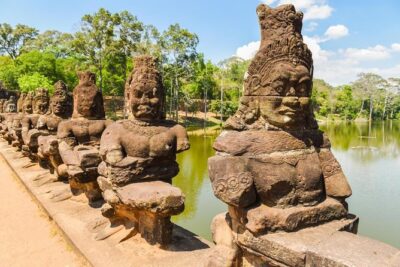
- Angkor Thom South Gate is short but useful. It’s a fast way to orient yourself to how entrance symbolism worked in Khmer royal space.
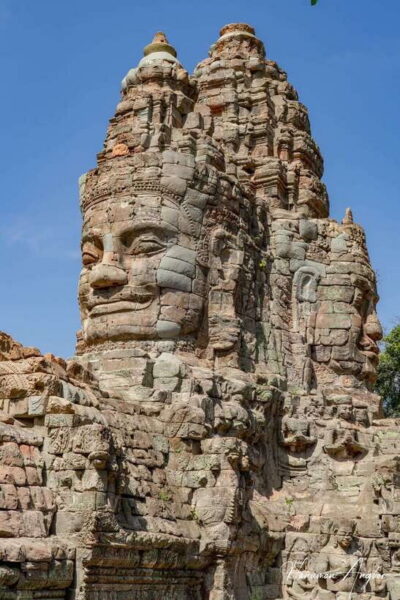
- Bayon Temple takes the time—about 2 hours—and that’s where the mood locks in. The stone faces can feel like they’re watching you, but the payoff is learning what those images are doing in the bigger temple story.
- Phimeanakas and Baphuon are quicker stops (roughly 30 minutes each) that help connect architecture and meaning. If you love structure and details, these are the “read the stone” breaks.
- The Terrace of the Elephants gives you a sense of how ceremonial movement likely worked before modern paths existed.
A small practical note: this is temple walking. Even when the time blocks are modest, expect stairs and uneven surfaces. If you’ve got mobility limits, plan for slower pacing and don’t try to race every viewpoint.
Angkor Wat on day 1: a guided close look with a proper lunch break
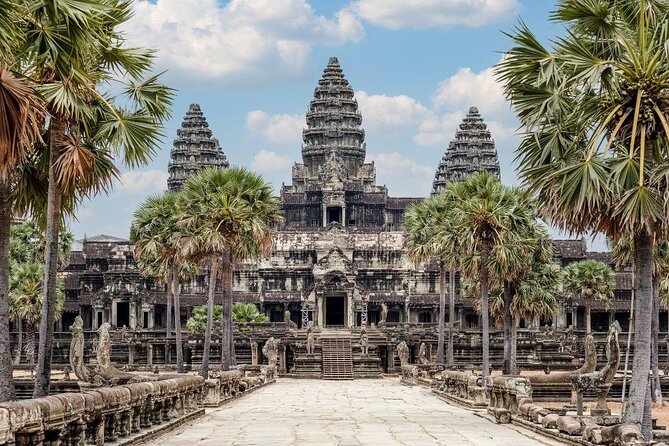
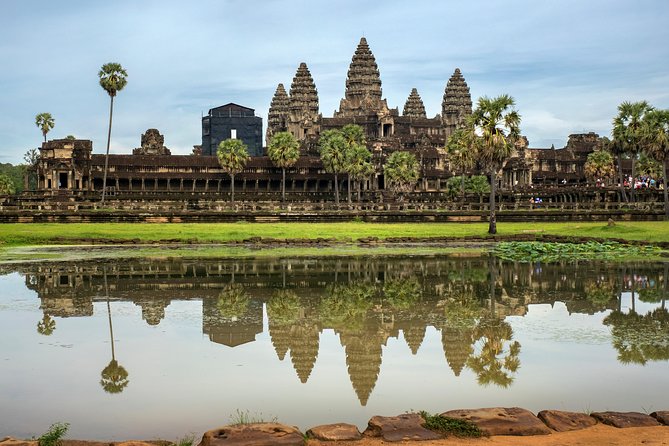
After the Angkor Thom section, you move into the heart of Angkor Wat for a longer visit on day one—about 2 hours. This is a good strategy. Instead of seeing Angkor Wat only once (and only at sunrise), you get one daytime pass to notice the planning, bas-reliefs, and layout.
Your day includes lunch in a local Khmer-style restaurant inside the Angkor park area. That’s not just convenience; it’s also less time stuck in transit and more time actually absorbing the complex.
Also, note the pass logic: the Angkor Pass is required for admission, and it’s not included in your base tour price. You’ll pay the 2-day Angkor Pass (USD 62 per person) as part of the day’s flow. Budget for that up front so you don’t waste energy at the gate.
Day 2 sunrise at Angkor Wat: when early beats exhaustive
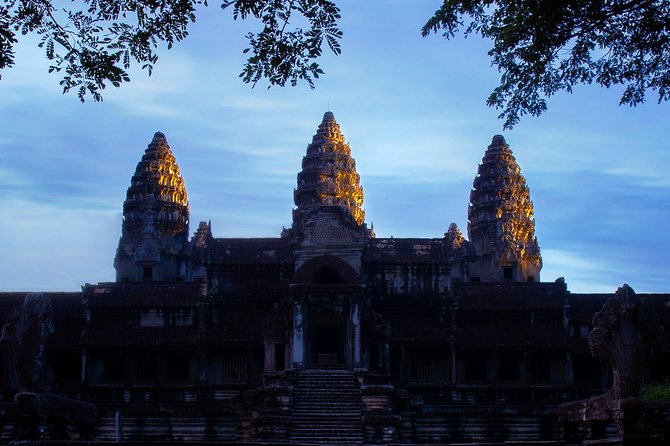
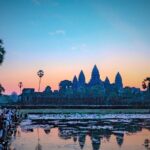
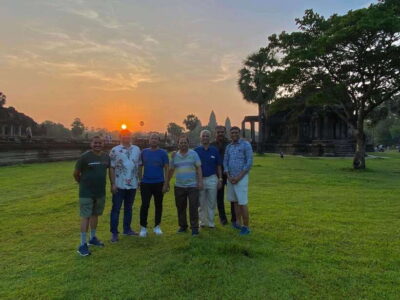
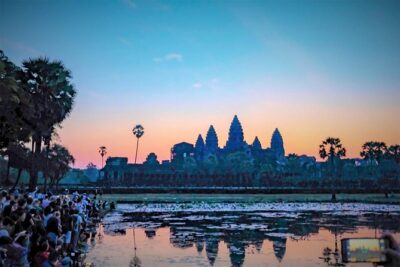
Day two starts with one of the most famous temple experiences in Southeast Asia: sunrise at Angkor Wat.
The tour suggests a very early start—around 4:40 am if you want a takeaway breakfast from your hotel—and then you’re set to watch the sunrise. The tour block for sunrise viewing is about 2 hours, which usually gives enough time to settle in, walk to a good vantage point, and actually enjoy the light shift instead of treating it like a quick checkmark.
Sunrise is also where the day’s pace makes sense. If you save your big excitement for the morning, the rest of the day feels more relaxed. It’s the difference between seeing temples and living inside the Angkor atmosphere for a couple of hours.
You’ll then move into other temples for guided time blocks, so you’re not left alone after sunrise with a map and a hope.
More temple circuits, set side by side


Ta Prohm, Neak Pean, and Preah Khan: the mix that keeps it interesting
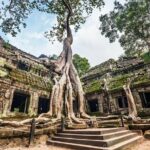
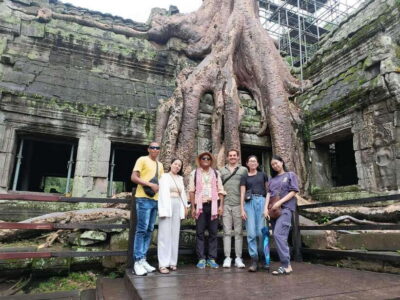
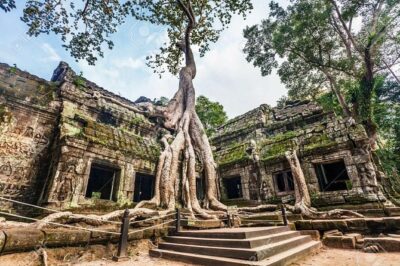
After sunrise, you get a change of texture with Ta Prohm, where the day’s tone turns more cinematic. This stop is about 2 hours, which is a comfortable amount of time to look past the iconic tree roots and understand how the site’s form and setting work together.
From there, the route shifts to other named temples:
- Neak Pean (about 45 minutes) is a calmer stop and a good breather between busier zones.
- Preah Khan is longer at about 1 hour, and it’s the kind of site where a guide’s religious or historical context can really matter. The experience here often feels less like “famous ruins” and more like “why people built sacred space the way they did.”
The tour also includes Ta Som (about 30 minutes) and Eastern Mebon (about 30 minutes). Shorter blocks work well here because each stop has enough time for a focused look without turning the day into a never-ending stair marathon.
If you’re the kind of person who gets frustrated when guides rush you, this is where the licensed guide helps: the pacing feels designed, not accidental.
Banteay Srei and the pink sandstone photo moment
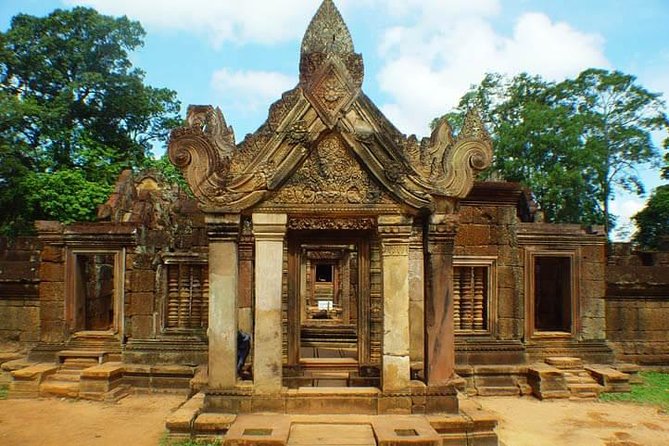
Later, the tour heads further north to Banteay Srei, sometimes called the lady’s temple. The big hook is its petite pink sandstone, which makes it visually different from several darker stone sites around Angkor.
The time block listed for this stop is short, so treat it like a focused visit: a guided look, key viewpoint photos, then back on the road. If you prefer long wandering time at every temple, you might feel the time squeeze here. But if you want the full Angkor “greatest hits with context,” this kind of stop length fits the overall rhythm.
Kampong Phluk on Tonle Sap: a real change of pace

The day ends with Tonle Sap, specifically a visit to Kampong Phluk and a private boat cruise for sunset.
Tonle Sap is described as the biggest freshwater lake in Southeast Asia, and the stop is built to connect you with how people live around that water. Instead of another stone temple, you get a different sensory world—boats, houses on stilts, and a slower pace timed to light and weather.
The tour mentions enjoying the sunset during the boat cruise, and that’s the payoff. Yes, you’ll want photos, but the value is watching daily life shaped by the lake. It’s one of the best “don’t stay in ruins all day” moments in the whole two days.
Just keep in mind: this part has its own ticket cost. The Tonle Sap ticket with boat ride is USD 20 per person and it’s not included.
Price and value: what the $164 really covers
At USD 164 per person, you’re paying for the structured experience: a licensed English guide, A/C transportation, hotel pickup/drop-off, and basics that make long days easier (water and cool towels).
But you also need to budget the major admission costs separately:
- Angkor Pass (2-day): USD 62 per person
- Tonle Sap boat ticket: USD 20 per person
- Food and soft drinks are not included
So your all-in base math looks like USD 164 + 62 + 20 = USD 246 per person, before snacks, drinks, and any extras at meals. Is that expensive? Not for a two-day, guided, transport-supported Angkor plan. It’s especially good value if you want sunrise at Angkor Wat and you’d rather pay for convenience than spend time figuring out timing, passes, and routes on your own.
Where you may feel the cost is if you’re the type who only cares about one or two temples. For you, a simpler day trip could be cheaper. For anyone aiming to see both Angkor icons and the surrounding temples with context, this price feels fair.
Who this tour fits best (and who might want a different plan)
This works especially well if:
- You want a two-day Angkor Wat package without doing logistics math every morning
- You’d like someone to explain Khmer religion and temple symbolism, not just point at carvings
- You appreciate breaks baked into the day, like the midday lunch plan and the shift to Tonle Sap at the end
It might be less ideal if:
- You hate early mornings. Sunrise day starts extremely early.
- You need a completely step-free experience. The temples involve walking and stair climbing.
- You want long unstructured time at every temple. The day is guided and efficient, with several shorter stops.
Should you book this 2-day Angkor Wat tour?
If you want the easiest path to a full Angkor experience—sunrise, the key faces of Bayon, the variety of Ta Prohm and Preah Khan, and then a Tonle Sap sunset boat—this is a strong fit. The biggest deciding factor is whether you’re okay paying the separate admission fees and getting up early.
My practical advice: if you book, pack for heat and early hours, and mentally plan for a “high-value day” rhythm. Angkor rewards attention. With a licensed guide, you’ll spend less time guessing what something means and more time understanding why it was built.
FAQ
Is the Angkor Pass included in the tour price?
No. You need to buy the Angkor Pass for a 2-day visit at USD 62 per person.
Do I need tickets for Tonle Sap?
Yes. The Tonle Sap ticket with boat ride is USD 20 per person and is not included.
What’s included in the tour besides the guide?
You get hotel pick-up and drop-off, air-conditioned transportation (car/minivan), unlimited bottled water, and cool towels during the excursion.
Is there a lunch included?
Lunch is included during the Angkor Wat day as a break at a local Khmer-style restaurant inside the Angkor park area.
What time does the tour start?
The start time is listed as 8:30 am.
Is the guide English speaking?
Yes. The tour includes an English speaking guide who is licensed.
Is this a private tour?
Yes. It is private, and only your group participates.
How early is sunrise day?
If breakfast is included with your room, you can ask the hotel to pack a takeaway breakfast and get ready for sunrise around 4:40 am.
Is the tour good for people with limited mobility?
The tour notes a moderate physical fitness level. Expect walking and stairs at temple sites.
What if weather cancels the experience?
The experience requires good weather. If it’s canceled due to poor weather, you’ll be offered a different date or a full refund.
More Days at the Temples
- Siem Reap: Angkor Wat 2-Day Tour with Sunrise and Sunset
★ 4.9 · 4,429 reviews - Angkor 2-Day Sunset & Sunrise Small-Group Tour
★ 5.0 · 2,567 reviews - 2 Days Exclusive Temple Highlights with Sunset and Sunrise Tour
★ 5.0 · 1,157 reviews - Siem Reap: Angkor Sunrise 1- or 2-Day Guided Temples Tour
★ 4.9 · 1,132 reviews - 2 Days Guided Historical Tour in Angkor
★ 5.0 · 855 reviews
More Temple Circuits Around Siem Reap
- Angkor Wat Sunrise or Sunset Tour with Guide from Siem Reap
★ 5.0 · 12,109 reviews - Siem Reap: Angkor Wat: Small-Group Sunrise or Sunset Tour
★ 5.0 · 9,444 reviews - Siem Reap: Angkor Wat 2-Day Tour with Sunrise and Sunset
★ 4.9 · 4,429 reviews - Siem Reap: Full-Day Angkor Wat Guided Tour with Sunset
★ 4.9 · 3,803 reviews - Angkor Wat Sunrise tour with Small – Group and Guide tours
★ 5.0 · 3,655 reviews
Angkor Wat, a Few More Ways In
- Angkor Wat Sunrise or Sunset Tour with Guide from Siem Reap
★ 5.0 · 12,109 reviews - Siem Reap: Angkor Wat: Small-Group Sunrise or Sunset Tour
★ 5.0 · 9,444 reviews - Siem Reap: Angkor Wat 2-Day Tour with Sunrise and Sunset
★ 4.9 · 4,429 reviews - Siem Reap: Full-Day Angkor Wat Guided Tour with Sunset
★ 4.9 · 3,803 reviews - Angkor Wat Sunrise tour with Small – Group and Guide tours
★ 5.0 · 3,655 reviews
Just Added: Fresh Siem Reap Tour Reviews

Angkor Wat Temple Tours, compared.
 ★ 5.0Angkor Wat Sunrise or Sunset Tour with Guide from Siem ReapFrom $1812,109 reviews
 ★ 5.0Angkor Wat: Small-Group Sunrise or Sunset TourFrom $159,444 reviews
 ★ 4.9Angkor Wat 2-Day Tour with Sunrise and SunsetFrom $344,429 reviews
 ★ 4.9Full-Day Angkor Wat Guided Tour with SunsetFrom $153,803 reviews
 ★ 5.0Angkor Wat Sunrise tour with Small – Group and Guide toursFrom $143,655 reviews
 ★ 5.0Angkor Wat Highlights and Sunrise Guided Tour from Siem ReapFrom $233,213 reviews
 ★ 5.0Angkor Wat Sunset Small Group Tour with Lunch IncludedFrom $203,059 reviews
 ★ 5.0Full-Day Angkor Wat Sunrise Private Tour with Guide from Siem ReapFrom $602,920 reviews
Browse the lists this tour appears in