
Reviewed · ANGKOR TEMPLE TOURS
2 Day Cambodia Private Guided Tour in Angkor Temples
Angkor in two days, with a real plan. I like that this is private enough to move at your pace, yet still structured, so you hit the right highlights like Angkor Wat and end with the sunset view from Phnom Bakheng. One thing to plan for: the Angkor Pass and entrance fees are not included, so you’ll still handle that before you start walking in.
I also like the day-to-day comfort: hotel pickup and drop-off with a private air-conditioned vehicle, plus cool drinks and fresh tissue along the route. And if you’ve ever wondered why some guides make ruins feel flat while others make them click, the guide here is set up for expert English commentary—the kind that explains what you’re looking at without turning it into a lecture.
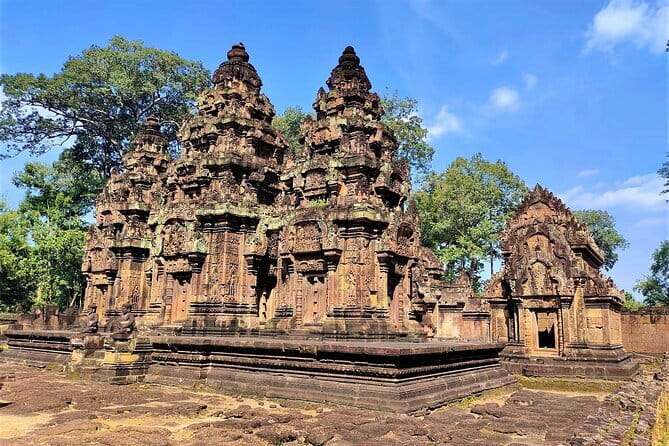
The itinerary balances big names with temples that feel calmer and more personal, like Ta Prohm’s jungle atmosphere and the pink sandstone carvings at Banteay Srei. Still, you’ll be out in the heat for two packed days, so wear good shoes and be ready to take breaks.
In This Review
- Key things I think you’ll care about
- Is This Private Angkor Tour Good for You?
- Price and Logistics: What You’re Actually Paying For
- Getting Started in Siem Reap: Pickup, Comfort, and Pace
- Day 1: Angkor Thom, Ta Prohm, Angkor Wat, and Phnom Bakheng Sunset
- Angkor Thom South Gate: Restored faces and first impressions
- Bayon Temple: The Buddhist state temple with famous stone faces
- Inside Angkor Thom: Keep your eyes moving
- Baphuon and Phimeanakas: Towers, terraces, and palace details
- Terraces of the Elephants and the Leper King: Carvings that tell on the era
- Ta Nei and Ta Prohm: Buddha focus, then jungle magic
- Angkor Wat: The main event
- Phnom Bakheng at sunset: panoramic reward
- Day 2: Banteay Srei Carvings and the More Quiet Circuit
- Banteay Srei: Pink sandstone and delicate carving work
- Banteay Samre: Restoration style, then the reality of time
- Pre Rup: Bold design and proportion
- Ta Som: A quieter temple with not-fully-restored character
- Neak Pean: The man-made pond and the ritual geometry
- Preah Khan: A larger temple with a backstory
- Banteay Prei: For the people who want more than the usual
- A market break: Om Pich palm cake and Preah Dak
- The Real Difference: Your Guide and How You’ll Experience Angkor
- Temple-Spotting Tips for This Exact Route
- Should You Book This 2-Day Private Angkor Tour?
- FAQ
- What’s included in the tour?
- Is the Angkor Pass included in the price?
- Do you pick up from hotels in Siem Reap?
- How long is the tour?
- Which temples are visited?
- Is this a private tour?
Key things I think you’ll care about
- Private, licensed English guide: questions welcomed, explanations clear, and the pacing is built for your group.
- A/C vehicle + hotel pickup: fewer headaches between sites, more time for photos and soaking in details.
- Top temples plus side stops: you get Angkor Thom, Bayon, Ta Prohm, Angkor Wat, and also quieter stops.
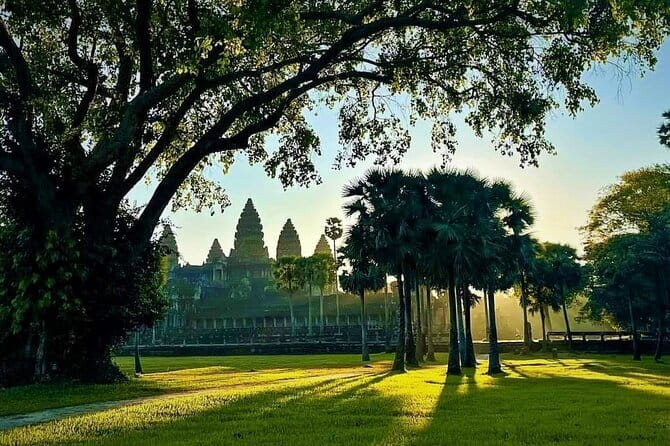
- Sunset at Phnom Bakheng: panoramic views from the highest temple in the park.
- Angkor Pass is separate: your guide helps you purchase it at the entrance.
- Water and tissues included: handy on long, hot days in Siem Reap.
More temple circuits, set side by side
- Angkor Wat Sunrise or Sunset Tour with Guide from Siem Reap★ 5.0 · 12,109 reviews
- Siem Reap: Angkor Wat: Small-Group Sunrise or Sunset Tour★ 5.0 · 9,444 reviews
- Siem Reap: Angkor Wat 2-Day Tour with Sunrise and Sunset★ 4.9 · 4,429 reviews
- Siem Reap: Full-Day Angkor Wat Guided Tour with Sunset★ 4.9 · 3,803 reviews
Is This Private Angkor Tour Good for You?
If you want the “greatest hits” of Angkor Archaeological Park but you also dislike the chaos of being herded, this fits well. It’s private, so it’s just your group in the car and with the guide, not a mixed crowd sharing the same timing.
It’s also a good match for first-timers who want context. The route includes both major monuments and the in-between temples that many people skip. I especially like that your guide can point out what makes each site different—Buddhist vs. Hindu themes, building styles, and what restoration (or lack of it) changes about what you see today.
You might love this even more if you like photos with a plan. The last stretch of Day 1 is built around sunset at Phnom Bakheng, which is one of the most scenic vantage points in the entire park.
Price and Logistics: What You’re Actually Paying For
The tour is priced at $113.05 per person for about two days. That number covers a lot of the expensive parts that add up fast on your own: a private vehicle with air-conditioning, hotel pickup and drop-off, and a professional licensed English-speaking guide.
What’s not included is also important. The Angkor Pass (entrance fee) covers the temples on the itinerary, but you’ll buy it at the entrance with your guide’s help. Meals are also at your own expense (lunches are available at local restaurants), and tips for the guide and driver are extra.
Here’s the practical way to think about value: you’re paying for fewer logistics problems and more “seeing time.” With a private guide, you spend less effort figuring out where to go next and more time understanding what you’re looking at—especially helpful at Angkor, where the same stone structures can look similar until someone points out the differences.
If you’re traveling as a couple or small group and you don’t want to rent your own transport for two long days, the math usually works out.
Getting Started in Siem Reap: Pickup, Comfort, and Pace
Day 1 begins with pickup from your hotel in Siem Reap. You just share your hotel name and address so the guide and driver can meet you in the lobby. That small detail matters more than you’d think—Angkor days start early (and end late), and you don’t want to waste time negotiating meeting points.
During the tour, transportation is via a private air-conditioned vehicle. On hot days, that’s not a luxury—it’s what keeps you from turning sightseeing into survival. You’ll also have cool drinks and fresh tissue during the route, which makes a noticeable difference when you’re moving temple to temple.
Pacing is another hidden value. The itinerary lists planned time at each stop, but because it’s private, your guide can adjust to your group’s speed. Some people rush for photos; others want to linger over carvings. This setup makes that easier.
Day 1: Angkor Thom, Ta Prohm, Angkor Wat, and Phnom Bakheng Sunset
Day 1 is the “big backbone” of the classic Angkor experience. It’s packed, but it’s also logically ordered: you start in Angkor Thom, work through the signature temples, then close with the best view for sunset.
More time at the temples, spread over days

Angkor Thom South Gate: Restored faces and first impressions
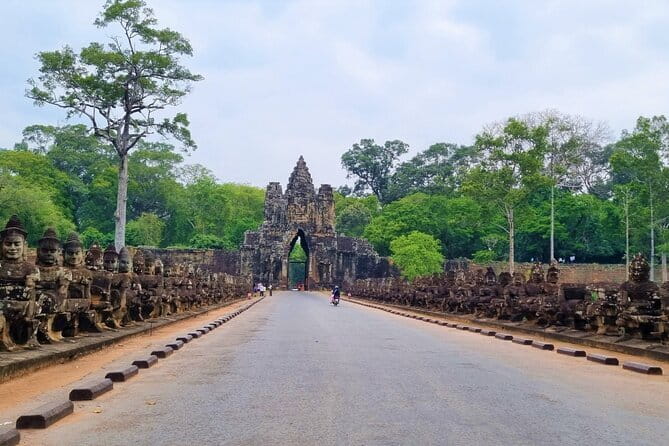
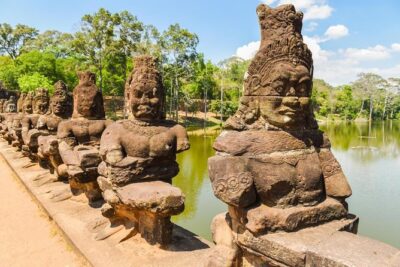
You begin at Angkor Thom South Gate, a main entrance into Angkor Thom along the road from Angkor Wat. This gate is a favorite because it’s restored and many of the heads remain in place. It’s also a great first stop because it gives you a sense of scale before you start moving deeper into the city-temple complex.
Bayon Temple: The Buddhist state temple with famous stone faces
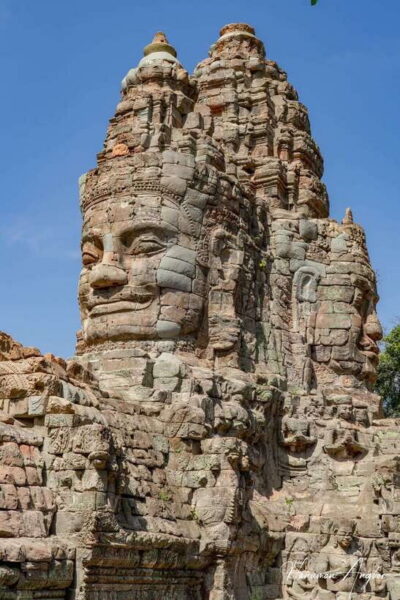
Next is Bayon Temple, built during Jayavarman VII’s reign. The standout detail here is that Bayon is described as the only Buddhist state temple and also the last temple built in the Angkor Empire. Even if you know nothing about Angkor, the stone faces are the kind of feature that makes the whole place feel instantly iconic.
Inside Angkor Thom: Keep your eyes moving
The itinerary then continues with Angkor Thom (listed again as a separate stop). Think of this as time to connect the dots: the way the city plan works, where major structures sit, and how the movement between towers and courtyards feels like a designed journey—not random ruins scattered across jungle.
Baphuon and Phimeanakas: Towers, terraces, and palace details
You’ll visit Baphuon Temple, which sits on a rectangular sandstone base with five levels—less common than temples that shrink level by level. Then you move to Phimeanakas, near the center of the Royal Palace area. One of the interesting points your guide can explain is that it was once crowned with a golden pinnacle; a historical description by Zhou Daguan mentions it as the Tower of … you’ll get the full story from your guide.
These two stops are a good break from the most crowded icons. They’re still visually strong, but you get more of that “how it all functioned” feeling—palace space, ceremonial architecture, and the political theater of stone.
Terraces of the Elephants and the Leper King: Carvings that tell on the era
After that comes the Terrace of the Elephants and the Terrace of the Leper King. Both are known for their bas-reliefs, and they belong to Jayavarman VII’s reign theme of grandeur.
The Terrace of the Elephants focuses on the idea of ceremony and movement, with elephants pictured as quietly stepping while servants and princes ride. The Terrace of the Leper King keeps the drama going with detailed bas-reliefs inside and outside the terrace area. If you like standing close enough to see tool marks and story sequences, this is time well spent.
Ta Nei and Ta Prohm: Buddha focus, then jungle magic
Next is Ta Nei, a late 12th-century stone temple near the northwest corner of the East Baray. It’s dedicated to the Buddha, and that shift in religious focus is one more way Angkor feels layered rather than repetitive.
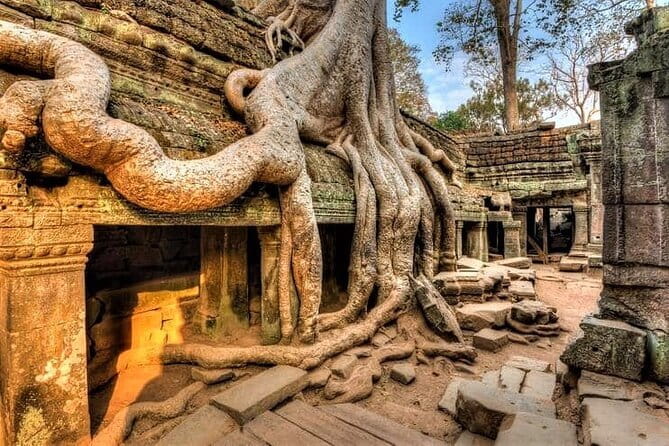
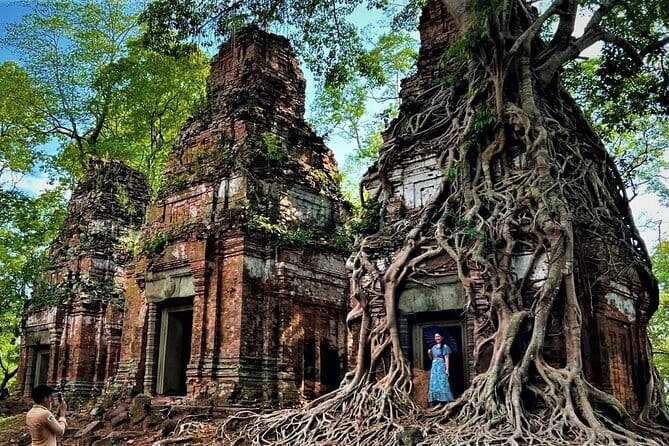
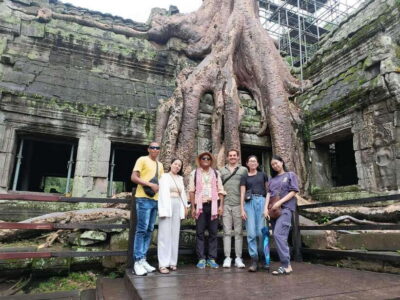
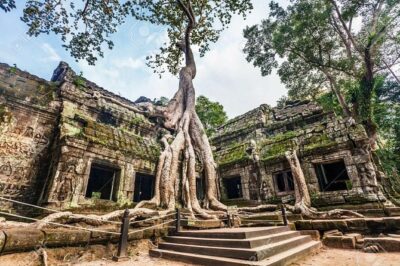
Then you hit Ta Prohm Temple, the jungle-covered one. Your guide will help you understand why this site feels so cinematic: Ta Prohm is described as having been left largely untouched by archaeologists, except for clearing paths for visitors and structural strengthening. So you see both the ruin and the “encroaching growth” effect side by side.
If you’re a fan of seeing real atmosphere, Ta Prohm is often where the day starts to feel less like a checklist and more like a scene.
Angkor Wat: The main event
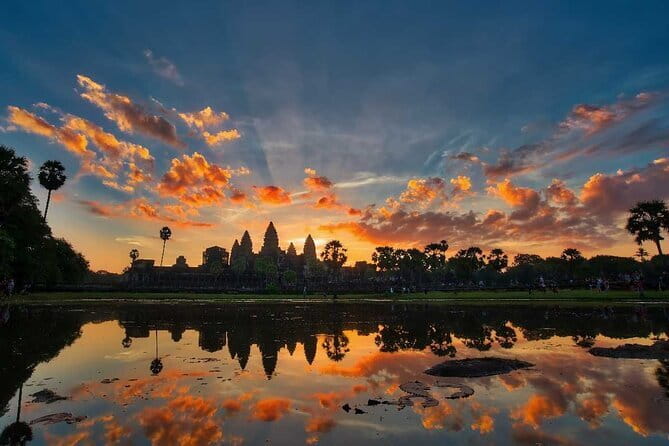
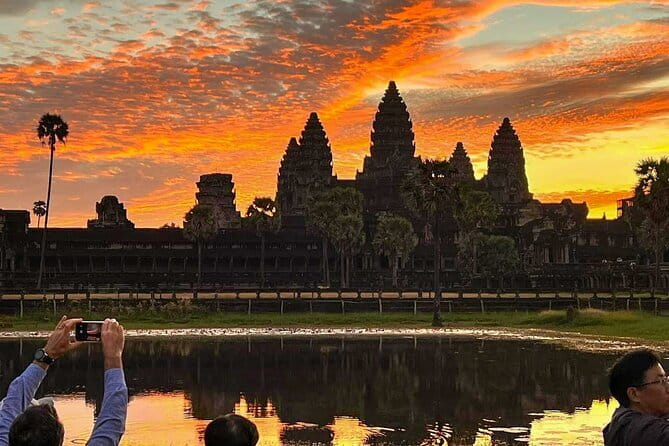
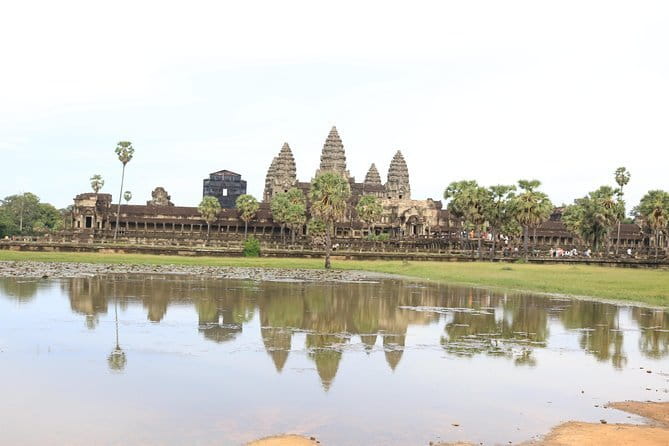
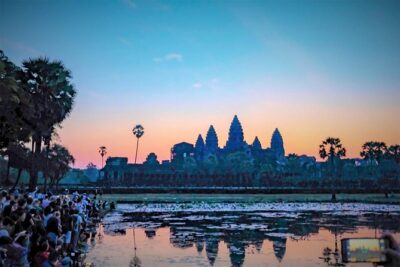
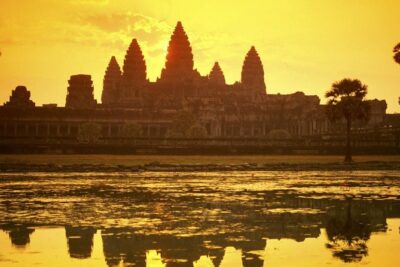
You end the first main sweep with Angkor Wat, the best preserved of the Angkor monuments and also the world’s largest religious monument. The site is famous for its composition, balance, proportions, reliefs, and sculpture—basically everything you want when you’re trying to understand why Angkor is still studied centuries later.
This is also where you’ll appreciate a guide who can point out how to “read” the temple: where the symmetry is intentional, how the bas-reliefs are arranged, and what elements are meant to guide your movement.
Phnom Bakheng at sunset: panoramic reward
Finally, Day 1 leads to Phnom Bakheng, described as the highest temple in Angkor Archaeological Park and a temple mountain honoring Shiva. The key reason this stop matters is the view: it offers some of the best panoramic scenery across the whole Angkor area during sunset.
This is the payoff moment. After hours of stone faces, terraces, and corridors, you get a wider picture of how the temples sit in a larger landscape. It’s a good time to slow down and take in the scale.
Day 2: Banteay Srei Carvings and the More Quiet Circuit
Day 2 leans slightly away from the loudest crowds and toward variety—pink sandstone detail, partially restored structures, and temples that feel more peaceful because fewer people aim for them.
Banteay Srei: Pink sandstone and delicate carving work
Start with Banteay Srei, praised as a precious gem and a jewel in Khmer art. The signature here is its pink sandstone carvings. If you like close-up detail—figures, patterns, and the way the stone is worked—this is one of the best uses of your time across the two days.
It’s also the kind of temple where a good guide helps you see what’s decorative and what’s symbolic.
Banteay Samre: Restoration style, then the reality of time
Next is Banteay Samre, described as one of the most complete complexes at Angkor due to restoration using anastylosis (a technique that reuses original elements). But the description also notes that the lack of maintenance over the past 20 years shows in places.
That contrast is actually useful. It reminds you that restoration choices change what you experience—some temples feel crisp; others show age more clearly. Either way, your guide can help you understand why.
Pre Rup: Bold design and proportion
Pre Rup follows, known for bold architectural design and a fine sense of balance, scale, and proportion. It’s almost identical in style to East Mebon, but built later. This is the kind of stop that works well when you want your brain to catch up after all the visual input from Day 1.
Ta Som: A quieter temple with not-fully-restored character
Ta Som is listed as not restored. That makes it feel calmer, smaller, and more serene, and it can be a relief after the larger ceremonial sites. A specific detail to watch for: the past growth of fig trees at the entrance towers, where faces could be seen through roots and trees.
Even if you don’t get the exact same tree effect as in older photos, it’s still a strong reminder that nature and ruins share the same space here.
Neak Pean: The man-made pond and the ritual geometry
Then you’ll visit Neak Pean, described as a large square man-made pond bordered by steps and surrounded by four small structures. The size is listed as 70 meters (230 feet) each side—big enough that you feel the geometry. Neak Pean gives you a different Angkor experience: less about towering stone faces, more about ceremonial planning and water symbolism.
Preah Khan: A larger temple with a backstory
Preah Khan is next. It’s located about 2 kilometers northeast of Angkor Thom on the Grand Circuit, built in the second half of the 12th century and dedicated to the king’s father. If you enjoy stories anchored in time periods, this is a stop where context can really improve what you see.
Banteay Prei: For the people who want more than the usual
Banteay Prei is described as rarely visited, located near another small temple called Prasat Prei. It’s labeled as a minor temple, so it won’t be for everyone. But if you like going beyond the “poster sites” and you want a deeper Angkor feel, this is your kind of stop.
A market break: Om Pich palm cake and Preah Dak
The last stop is a market-style break: Om Pich steamed Toddy Palm Cake in Prashdak Village, plus time at Preah Dak Market. The tour notes that the market is a popular place for souvenirs like objects and arts, and the stop is listed as free for admission. This is a good moment to buy small gifts and snack on something local before you head back.
The Real Difference: Your Guide and How You’ll Experience Angkor
The best part of this kind of tour is not the vehicle or the checklist. It’s the guide’s ability to make you look differently.
In past runs, this tour has been led by English-speaking guides like Leap and Sara, with drivers such as Sophal and Ry. The consistent theme in those experiences: clear communication beforehand, friendly coaching on site, and practical care like keeping water ready. One account highlights cold towels during the route, which tells you the team is thinking about comfort, not only facts.
That matters because Angkor can feel overwhelming. Bayon’s faces, Ta Prohm’s roots, Angkor Wat’s symmetry—they’re all powerful, but they can blur together if you’re not sure what you’re seeing.
A strong guide helps you:
- notice the differences between religious styles (Hindu vs. Buddhist emphasis)
- understand why a temple was built the way it was
- connect terraces and carvings to the reign and purpose behind them
And because it’s private, you’re not stuck following someone else’s pace while your questions pile up.
Temple-Spotting Tips for This Exact Route
A private tour still requires good habits, especially on two packed days.
1) Use the water timing strategy
You’ll get cool drinks and fresh tissue during the day, so take advantage right before you enter a major cluster. Don’t wait until you feel awful; small hydration breaks keep your energy for the best photo moments.
2) Plan for strong sun and do not rush Phnom Bakheng
Sunset at Phnom Bakheng is a highlight, and the view is the goal. Give yourself time to settle in and switch from fast walking mode to slower looking mode.
3) Choose what you photograph up close
Some temples reward distance and symmetry (Angkor Wat), while others reward being near details (Banteay Srei carvings, Terrace bas-reliefs). If you try to photograph everything the same way, you’ll lose the best shots.
4) Expect some sites to feel quieter
Not every stop is designed to be the star of the show. Ta Som is described as not restored, Banteay Samre has visible results of time and maintenance gaps, and Banteay Prei is a minor, rarely visited temple. Treat these as “better listening” stops, not just visual Instagram stops.
Should You Book This 2-Day Private Angkor Tour?
I’d book it if you want a smooth, private two-day plan that covers major monuments and still includes temples that make Angkor feel lived-in, not just famous.
It’s especially worth it if you’re traveling with someone who needs explanations (or you just want them for yourself). The guide support, the private A/C transport, and the sunset payoff make the day feel organized rather than chaotic.
The main reason not to book is if you’re trying to travel with total freedom and zero extra costs. You’ll need to budget for the Angkor Pass (entrance fees) and you’ll pay for meals and tips. Also, two days is fast for Angkor—if you want a slower, deeper pace at fewer temples, you might prefer a shorter list.
FAQ
What’s included in the tour?
The tour includes hotel pickup and drop-off, a professional official licensed English tour guide, private air-conditioned vehicle transfers, and cool drink water with fresh tissue during the tour.
Is the Angkor Pass included in the price?
No. Entrance fees for the temples are not included, and the Angkor Pass is needed. Your guide will assist you with purchasing it at the entrance of Angkor Park before you start.
Do you pick up from hotels in Siem Reap?
Yes. The tour offers pickup at your hotel in the city of Siem Reap. You’ll provide your hotel name and hotel address for the guide and driver to meet you in the lobby.
How long is the tour?
It runs for 2 days, approximately, with specific time allocated for each stop on both days.
Which temples are visited?
On Day 1, you’ll visit places including Angkor Thom South Gate, Bayon Temple, Baphuon Temple, Phimeanakas, Terrace of the Elephants, Terrace of the Leper King, Ta Nei, Ta Prohm, Angkor Wat, and Phnom Bakheng. On Day 2, you’ll visit Banteay Srei, Banteay Samre, Pre Rup, Ta Som, Neak Pean, Preah Khan, Banteay Prei, plus a market stop at Preah Dak.
Is this a private tour?
Yes. It’s private, so only your group participates.
Just Your Group: Private Days
- Full-Day Angkor Wat Sunrise Private Tour with Guide from Siem Reap
★ 5.0 · 2,920 reviews - Siem Reap: Angkor Wat Private Tuk-Tuk Tour
★ 4.9 · 2,222 reviews - Angkor Wat Private Day Tour from Siem Reap
★ 5.0 · 834 reviews - Angkor Wat Private Tuk-Tuk Tour (sunrise Option) & more
★ 5.0 · 439 reviews - Private Angkor Wat Day Tour – Best of Angkor
★ 5.0 · 269 reviews
More Days at the Temples
- Siem Reap: Angkor Wat 2-Day Tour with Sunrise and Sunset
★ 4.9 · 4,429 reviews - Angkor 2-Day Sunset & Sunrise Small-Group Tour
★ 5.0 · 2,567 reviews - 2 Days Exclusive Temple Highlights with Sunset and Sunrise Tour
★ 5.0 · 1,157 reviews - Siem Reap: Angkor Sunrise 1- or 2-Day Guided Temples Tour
★ 4.9 · 1,132 reviews - 2 Days Guided Historical Tour in Angkor
★ 5.0 · 855 reviews
More Temple Circuits Around Siem Reap
- Angkor Wat Sunrise or Sunset Tour with Guide from Siem Reap
★ 5.0 · 12,109 reviews - Siem Reap: Angkor Wat: Small-Group Sunrise or Sunset Tour
★ 5.0 · 9,444 reviews - Siem Reap: Angkor Wat 2-Day Tour with Sunrise and Sunset
★ 4.9 · 4,429 reviews - Siem Reap: Full-Day Angkor Wat Guided Tour with Sunset
★ 4.9 · 3,803 reviews - Angkor Wat Sunrise tour with Small – Group and Guide tours
★ 5.0 · 3,655 reviews
Just Added: Fresh Siem Reap Tour Reviews

Angkor Temple Tours, compared.
 ★ 5.0Angkor Wat Sunrise or Sunset Tour with Guide from Siem ReapFrom $1812,109 reviews
 ★ 5.0Angkor Wat: Small-Group Sunrise or Sunset TourFrom $159,444 reviews
 ★ 4.9Angkor Wat 2-Day Tour with Sunrise and SunsetFrom $344,429 reviews
 ★ 4.9Full-Day Angkor Wat Guided Tour with SunsetFrom $153,803 reviews
 ★ 5.0Angkor Wat Sunrise tour with Small – Group and Guide toursFrom $143,655 reviews
 ★ 5.0Angkor Wat Highlights and Sunrise Guided Tour from Siem ReapFrom $233,213 reviews
 ★ 5.0Angkor Wat Sunset Small Group Tour with Lunch IncludedFrom $203,059 reviews
 ★ 5.0Full-Day Angkor Wat Sunrise Private Tour with Guide from Siem ReapFrom $602,920 reviews
Browse the lists this tour appears in