
Reviewed · ANGKOR SUNRISE & SUNSET TOURS
2-Day Eight Temple Tour with Optional Sunrise
Temple-hopping in Siem Reap, minus the hassle. I like that this is a private setup where you can actually move at your own pace, and I also love having a guide who turns each site into a story you can picture. The one thing to plan for is the steep climb at Pre Rup, which can be a lot if you don’t like stairs.
What makes this route work is the mix: a range of standout temples inside the Angkor Archaeological Park plus a few glorious stops just beyond the biggest draw. I also appreciate the practical touches like hotel pick-up and cold water, so you’re not starting the day already worn out. One more heads-up: the main temple pass cost (3 days) is not included, so budget for that from the start.
In This Review
- Key things I’d plan around before you go
- Why this two-day eight-temple route works in Siem Reap
- Day 1: Pre Rup’s climb, Banteay Samre’s towers, and pink sandstone at Banteay Srei
- Ta Prohm and Banteay Kdei: the jungle is part of the show
- Day 2: Angkor Wat first, then Preah Khan’s unfinished feeling, finishing with Bayon
- Bayon’s mixed inscriptions: why this temple rewards time
- Optional sunrise: when it’s worth it and what to clarify
- Price, temple pass, and what you’re getting for $98
- Dress code and pacing: the small rules that make temples better
- Who this tour is best for
- Should you book this two-day eight-temple tour?
- FAQ
- How long is the 2-Day Eight Temple Tour?
- What does the $98 tour price include?
- Are meals included?
- Do I need to buy a temple pass?
- Which temples are visited during the tour?
- Does the tour offer a private experience?
- Is hotel pick-up included?
- What’s the dress code for entering temples?
- Is mobile ticketing used?
- What is the cancellation policy?
Key things I’d plan around before you go
- Private tour, only your group means fewer stops forced by other people’s schedules
- Hotel pick-up and suitable transport save time and reduce stress between sites
- Eight temples across two days keeps it feeling like a real itinerary, not a scattershot day trip
- Optional sunrise is mentioned in the tour name, but your core plan is built around daytime temple visits
- Mobile ticket keeps the start of the day simple
- Dress code matters: shoulders and knees covered to enter temples
Chasing the light? More dawn and dusk runs
- Angkor Wat Sunrise or Sunset Tour with Guide from Siem Reap★ 5.0 · 12,109 reviews
- Siem Reap: Angkor Wat: Small-Group Sunrise or Sunset Tour★ 5.0 · 9,444 reviews
- Sunset tour of Kampong Phluk stilts home village on the Tonle Sap★ 5.0 · 4,865 reviews
- Siem Reap: Angkor Wat 2-Day Tour with Sunrise and Sunset★ 4.9 · 4,429 reviews
Why this two-day eight-temple route works in Siem Reap
Siem Reap is packed with ancient sites, but getting them all done can turn into a logistics game. This tour keeps the driving and planning handled, so you can focus on the temples—stone towers, carved doors, and that slow “wait, what am I looking at?” feeling that Angkor does better than anywhere.
The sweet spot here is pacing. The itinerary is structured, but it’s a private tour, so you can linger at carvings, climb when you feel like it, and skip the parts where you’re already temple-weary. That matters because some of these sites reward patience: you’ll notice details more when you’re not constantly rushing to catch up.
You’ll also get a guide who does more than recite dates. In the feedback I saw, guide Sam came up repeatedly for storytelling and for helping people frame great photos. You don’t need to be a photographer to benefit—you just end up knowing where to look and when to tilt your head toward the better angles.
Day 1: Pre Rup’s climb, Banteay Samre’s towers, and pink sandstone at Banteay Srei
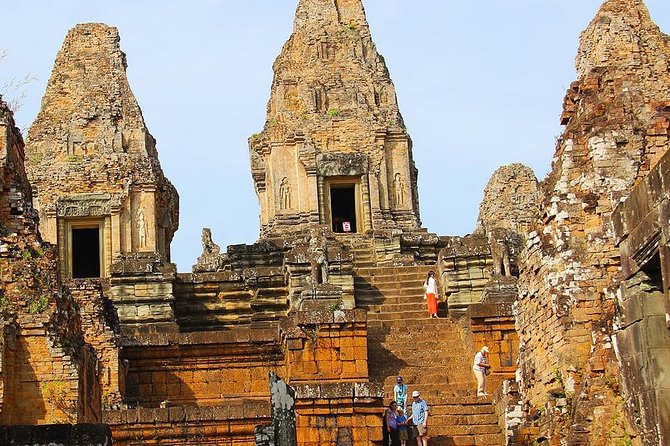
Day 1 starts with Pre Rup, a “mountain temple” where the big moment is at the top. You’re going to earn that view with a steep climb to the towers, but the payoff is a countryside panorama you just can’t get from ground level.
Pre Rup tip: plan your energy for the climb, not for the photo. If you’re breathing hard at the top, you’ll still enjoy it—you just might take fewer stairs back down.
After Pre Rup, you’ll go to Banteay Samre, built in a style similar to Angkor Wat. It’s a temple where you can easily spend about an hour exploring the towers and taking in the intricate carvings. If you like detailed stonework, this is a good breather after the effort of Pre Rup—your legs will notice the difference.
Then comes Banteay Srei, one of the best-known surprises on this kind of route. It’s famous for its pink sandstone, quarried from the Kulen Mountain range, and it’s home to extremely intricate carvings. There’s even a legend tied to the carvings—if you’ve heard the story that women made them, this is where that idea sticks in your mind because the detail really does feel delicate.
A practical note for Banteay Srei: this site rewards slow looking. If you’re the type who tries to “cover everything,” you’ll miss the point. Let the carvings pull you in.
Ta Prohm and Banteay Kdei: the jungle is part of the show
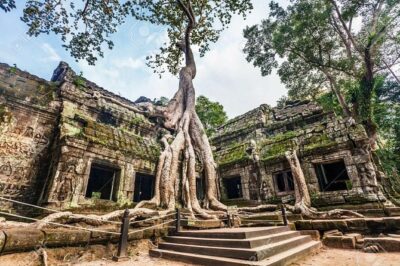
Ta Prohm is where this itinerary turns cinematic. It’s also called the Tomb Raider temple because it was used as a set for the Tomb Raider movie starring Angelina Jolie. But the reason Ta Prohm is memorable isn’t pop culture—it’s the way the temple has been left to the elements, with jungle growth spreading right through the structures.
That “nature versus stone” mix changes how you experience the place. You don’t just walk around a building; you navigate a living scene. Expect some uneven footing and shaded stretches where the light shifts as the trees create it.
Just nearby is Banteay Kdei, known as the Citadel of Chambers or the Citadel of Monks’ Cells. It’s a Buddhist temple, and it fits well after Ta Prohm because it feels like a different mood: less film-set drama, more enclosed, contemplative geometry.
Why I like this pairing: Ta Prohm hits you with scale and atmosphere, then Banteay Kdei lets you focus on form and stillness. If you’re temple-hopping all day, that contrast helps you stay engaged.
Day 2: Angkor Wat first, then Preah Khan’s unfinished feeling, finishing with Bayon
The second day is built around the big three that most people come to see. It starts with Angkor Wat, the centerpiece of the Angkor Archaeological Park and the reason many first-timers plan a Siem Reap trip at all. It’s also described as the largest temple built during the Khmer empire, and it draws over 2 million visitors per year.
Here’s where the private format helps. Angkor Wat is busy by nature, but a private pace means you can avoid the worst bottlenecks by spending more time in the right moments rather than sprinting through every section.
Next up is Preah Khan, a 12th-century temple built by King Jayavarman VII. Unlike many other sites, Preah Khan has been left to the elements. The temple has been kept safe for visitors, but restoration work is limited, so it keeps a more worn, “you’re seeing it as found” quality.
That can be a big plus if you like authenticity. You’re not looking at something cleaned up to perfection—you’re looking at a place still showing its age, which changes how you read the stone.
More temple circuits, set side by side


Bayon’s mixed inscriptions: why this temple rewards time
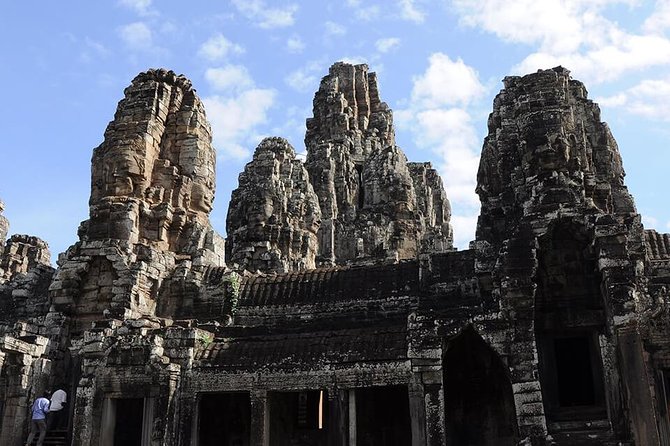
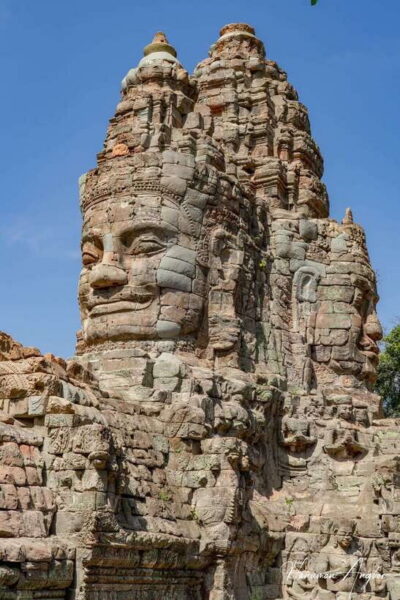
Bayon is the final stop and one of the most fascinating in the mix. It has remnants of Hindu inscriptions and also both Mahayana and Theravada Buddhist inscriptions. That blend makes Bayon feel like a historical crossroads, not a single-purpose monument.
The experience here is all about getting inside the details. You’ll spend a few hours exploring the nooks and crannies, and that time matters because Bayon is not a “one glance” temple. You’ll start to notice how different carvings and inscriptions sit side-by-side, and how the space keeps pulling you to different levels and angles.
My advice for Bayon: take breaks. If you keep going non-stop, you’ll miss the logic of the place. If you pause, you’ll start to see patterns.
Optional sunrise: when it’s worth it and what to clarify
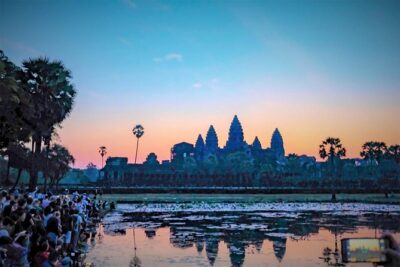
Your tour name includes an optional sunrise add-on. The itinerary details provided here focus on daytime temple visits for both days, so sunrise may affect timing or the order.
Before you book or commit, ask your operator to confirm:
- whether sunrise is an optional add-on or part of a fixed schedule
- where pick-up happens and how early you’ll start
- whether the sunrise option changes the rest of the day
Sunrise can be beautiful and less crowded, but it’s only worth it if it doesn’t wreck your energy for climbs like Pre Rup.
Price, temple pass, and what you’re getting for $98
The listed price is $98 for the tour, for about 2 days. That price covers the guide, cold water, and suitable transport for the group size, plus convenient pick-up from your Siem Reap hotel. You also get a mobile ticket, which helps on the day since you won’t be scrambling over paperwork.
The big “don’t forget this” cost is the 3-day temple pass, listed at $62 per person. Because the pass is separate, your true budget becomes tour price plus the pass. Still, it’s fairly straightforward: you’re paying for guided temple access plus the transport and storytelling.
I like this value model for two reasons:
- you’re not paying extra for separate drivers or trying to stitch together a day-by-day plan
- you’re buying time savings and a guide who helps you understand what you’re looking at
Dress code and pacing: the small rules that make temples better
You must cover your shoulders and knees to enter the temples. That’s not just a formality—it’s the rule that decides whether you get to step inside when you want to.
Because Pre Rup involves a steep climb to towers at the top, the tour asks you to move. You’ll enjoy the view more if you pace yourself up, then take your time descending without rushing the photos.
Also, since Ta Prohm includes jungle growth through the structures, expect the environment to feel wild and uneven in places. You’ll get the best experience by wearing footwear you’re comfortable walking in on temple grounds.
Who this tour is best for
This is a strong fit if you want a lot of temples without turning your trip into a spreadsheet. It’s also ideal if you like the idea of hearing stories from your guide instead of just reading plaques.
It’s especially good for first-timers who want the major names—Angkor Wat, Ta Prohm, Bayon—while still getting variety with Banteay Srei, Banteay Samre, Preah Khan, and Banteay Kdei.
If you’re sensitive to stairs or steep climbs, you’ll want to think carefully about Pre Rup. The tour does include it for a reason, but it’s still a physical moment in the middle of the day.
Should you book this two-day eight-temple tour?
I’d book it if you want structure without rigidity: private transport, a guide like Sam who can tell the story behind the stone, and enough temples to feel you actually “did Angkor” in two days.
I’d think twice if you don’t like climbs, because Pre Rup is part of the core day 1 plan. I’d also budget for the temple pass ahead of time so there are no surprises on the day.
If you’re hoping to check off temples fast, this private setup can still work—but you’ll enjoy it more when you slow down and let the details come to you.
FAQ
How long is the 2-Day Eight Temple Tour?
It’s listed as about 2 days.
What does the $98 tour price include?
It includes a tour guide, cold water, and suitable transport for the group size, plus convenient pick-up from your Siem Reap hotel.
Are meals included?
No. Food and drinks aren’t included.
Do I need to buy a temple pass?
Yes. A 3-day temple pass is listed as $62 per person, and it’s not included in the tour price.
Which temples are visited during the tour?
The itinerary includes Pre Rup, Banteay Samre, Banteay Srei, Ta Prohm, Banteay Kdei, Angkor Wat, Preah Khan, and Bayon.
Does the tour offer a private experience?
Yes. It’s described as a private tour/activity, meaning only your group participates.
Is hotel pick-up included?
Yes. Private transport includes convenient pick-up from your Siem Reap hotel.
What’s the dress code for entering temples?
You must cover your shoulders and knees to enter the temples.
Is mobile ticketing used?
Yes. The tour includes a mobile ticket.
What is the cancellation policy?
Cancellation is free up to 24 hours in advance for a full refund. If you cancel less than 24 hours before the start time, the amount paid isn’t refunded.
More Days at the Temples
- Siem Reap: Angkor Wat 2-Day Tour with Sunrise and Sunset
★ 4.9 · 4,429 reviews - Angkor 2-Day Sunset & Sunrise Small-Group Tour
★ 5.0 · 2,567 reviews - 2 Days Exclusive Temple Highlights with Sunset and Sunrise Tour
★ 5.0 · 1,157 reviews - Siem Reap: Angkor Sunrise 1- or 2-Day Guided Temples Tour
★ 4.9 · 1,132 reviews - 2 Days Guided Historical Tour in Angkor
★ 5.0 · 855 reviews
More Temple Circuits Around Siem Reap
- Angkor Wat Sunrise or Sunset Tour with Guide from Siem Reap
★ 5.0 · 12,109 reviews - Siem Reap: Angkor Wat: Small-Group Sunrise or Sunset Tour
★ 5.0 · 9,444 reviews - Siem Reap: Angkor Wat 2-Day Tour with Sunrise and Sunset
★ 4.9 · 4,429 reviews - Siem Reap: Full-Day Angkor Wat Guided Tour with Sunset
★ 4.9 · 3,803 reviews - Angkor Wat Sunrise tour with Small – Group and Guide tours
★ 5.0 · 3,655 reviews
Dawn and Dusk Over Angkor
- Angkor Wat Sunrise or Sunset Tour with Guide from Siem Reap
★ 5.0 · 12,109 reviews - Siem Reap: Angkor Wat: Small-Group Sunrise or Sunset Tour
★ 5.0 · 9,444 reviews - Sunset tour of Kampong Phluk stilts home village on the Tonle Sap
★ 5.0 · 4,865 reviews - Siem Reap: Angkor Wat 2-Day Tour with Sunrise and Sunset
★ 4.9 · 4,429 reviews - Siem Reap: Full-Day Angkor Wat Guided Tour with Sunset
★ 4.9 · 3,803 reviews
Just Added: Fresh Siem Reap Tour Reviews


Angkor Sunrise & Sunset Tours, compared.
 ★ 5.0Angkor Wat Sunrise or Sunset Tour with Guide from Siem ReapFrom $1812,109 reviews
 ★ 5.0Angkor Wat: Small-Group Sunrise or Sunset TourFrom $159,444 reviews
 ★ 5.0Sunset tour of Kampong Phluk stilts home village on the Tonle SapFrom $214,865 reviews
 ★ 4.9Angkor Wat 2-Day Tour with Sunrise and SunsetFrom $344,429 reviews
 ★ 4.9Full-Day Angkor Wat Guided Tour with SunsetFrom $153,803 reviews
 ★ 5.0Angkor Wat Sunrise tour with Small – Group and Guide toursFrom $143,655 reviews
 ★ 5.0Angkor Wat Highlights and Sunrise Guided Tour from Siem ReapFrom $233,213 reviews
 ★ 5.0Angkor Wat Sunset Small Group Tour with Lunch IncludedFrom $203,059 reviews
Browse the lists this tour appears in