
Reviewed · ANGKOR TEMPLE TOURS
2-Day Explore Angkor Temple & Floating Village
Angkor is old stone and big feelings, and this two-day loop is built for both. You get a licensed English-speaking guide and a smooth air-conditioned vehicle that keeps the day from turning into a logistics headache. I particularly loved the early timing choices and how the guide kept things organized without rushing the important parts.
My second big win: the little comfort touches—free cool water and cold towels—made the heat feel manageable, especially after long temple walks. The one thing to think about is cost beyond the tour price: you still need the 2-day Angkor pass and you’ll pay for the Tonlé Sap boat experience on top.
If you want a first-rate Angkor plan with real local context (not just a list of names), this is a solid way to do it. You’ll cover a lot of ground across Day 1 and Day 2, including sunrise and sunset viewpoints, plus Ta Prohm and the floating village.
In This Review
- Key points before you go
- Price and what you’re really paying for
- The vibe: private, guided, and built around timing
- Day 1 at Angkor Thom and Angkor Wat, ending with Phnom Bakheng
- South Gate of Angkor Thom: start with the city’s grand entrance
- Bayon Temple: faces everywhere, with real symbolism
- Baphuon Temple: a steep-feeling monument with Hindu roots
- Terrace of the Elephants: the view point that tells a story
- Angkor Archaeological Park lunch break: plan for higher prices
- Angkor Wat: the big centerpiece you’ll actually have time for
- Phnom Bakheng: sunset views and a temple-mountain climb
- Day 2 starts at 4:40 am for sunrise, then sweeps through more iconic and lesser-visited temples
- Ta Prohm: the famous roots-and-stone look
- Pre Rup: shorter stop, strong temple vibe
- Ta Som: smaller, quieter, still very worth it
- Neak Pean: an artificial island with a Buddhist temple
- Preah Khan: a longer temple block
- Lunch inside the Angkor area again
- Banteay Srei: the Lady Temple with Hindu dedication
- Tonlé Sap Lake floating village: private boat ride and lake reality
- What to expect from the guide (and why that matters more than you think)
- Comfort, getting around, and small details that affect the day
- Who this tour fits best
- Should you book this 2-Day Angkor plus floating village tour?
- FAQ
- What’s included in the $110 per person tour price?
- Do I need an Angkor pass for this tour?
- Is the Tonlé Sap floating village boat ride included?
- What time is the sunrise visit on Day 2?
- How much time is there for lunch?
- Can I cancel and get a full refund?
Key points before you go
- Sunrise + sunset Angkor views: Day 1 ends at Phnom Bakheng; Day 2 starts with a 4:40 am Angkor Wat sunrise pickup.
- A licensed guide with strong English: the guides are licensed and field-tested for clear explanations and flexible timing.
- Comfort that actually helps: bottled/cool water and cold towels are included during the tour.
- A smart temple mix: Angkor Thom highlights, major monuments, and quieter stops like Neak Pean and Ta Som.
- Floating village time is real travel, not a drive-by: you’ll do a private boat ride on Tonlé Sap Lake.
- Lunch is on you inside the park: you’ll get about 60 minutes, but meals aren’t included, and food can cost more there.
More temple circuits, set side by side
- Angkor Wat Sunrise or Sunset Tour with Guide from Siem Reap★ 5.0 · 12,109 reviews
- Siem Reap: Angkor Wat: Small-Group Sunrise or Sunset Tour★ 5.0 · 9,444 reviews
- Siem Reap: Angkor Wat 2-Day Tour with Sunrise and Sunset★ 4.9 · 4,429 reviews
- Siem Reap: Full-Day Angkor Wat Guided Tour with Sunset★ 4.9 · 3,803 reviews
Price and what you’re really paying for
The tour price is $110 per person for two days in Siem Reap. That amount mainly covers the human and vehicle parts: a licensed English-speaking guide, an air-conditioned car/tuk-tuk-style vehicle (you’ll ride in comfort), and pickup/drop-off from your hotel. It also includes cool water and towels, which sounds small until you’re walking hot stone in the sun.
Then there’s the “don’t forget this” layer. The 2-day Angkor pass is $62 per person and it isn’t included. Temple entry isn’t bundled into the tour price, and each stop notes admission isn’t included. You’ll also need a Tonlé Sap pass with a boat ride for the floating village segment, and travel insurance isn’t included.
So what’s the value? If you compare this to piecing together your own driver, hiring a guide separately, and trying to time sunrise/sunset without a plan, this tour is priced to keep you from burning time. Plus, it’s private for your group, so you’re not stuck following someone else’s pace.
The vibe: private, guided, and built around timing
This is a private tour/activity, meaning only your group participates. The itinerary can also be adjusted during your tour with your local guide. That flexibility matters in Angkor, where crowds, heat, and your own energy level can make “exact schedules” feel unrealistic.
From real guide feedback, the experience stands out for staying on time and managing the route well. One guide, Raman, was praised for being punctual and for sharing detailed, clear history at each stop. Another driver/partner mentioned, Mr Sokea, was specifically remembered for a great 2-day tuk-tuk tour experience. And Mr Raksa was highlighted for professional guidance, good English, and answering questions.
The practical takeaway: you’re not just getting transportation. You’re getting someone who understands the flow of Angkor and can help you interpret what you’re seeing.
Day 1 at Angkor Thom and Angkor Wat, ending with Phnom Bakheng
Day 1 is a classic “big Angkor views plus major monuments” day. The pacing is temple-to-temple, with a lunch break inside the Angkor area.
South Gate of Angkor Thom: start with the city’s grand entrance
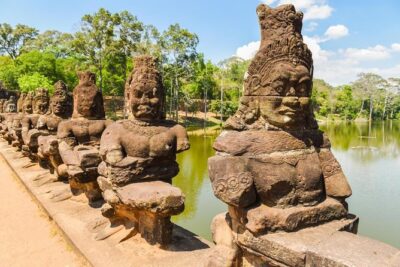
You begin at Angkor Thom South Gate, the gateway to the last and enduring capital city of the Khmer empire, founded in the late 12th century by King Jayavarman VII. This is a strong opener because it frames Angkor Thom as a functioning royal city, not just a set of ruins.
Expect some walking and photo time right away. It’s also a good “orientation moment” before you zoom deeper into Bayon and the inner sites.
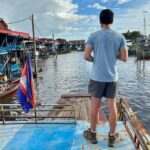
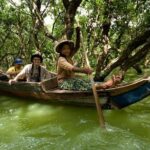
Back out on the lake, more stilted villages
Bayon Temple: faces everywhere, with real symbolism
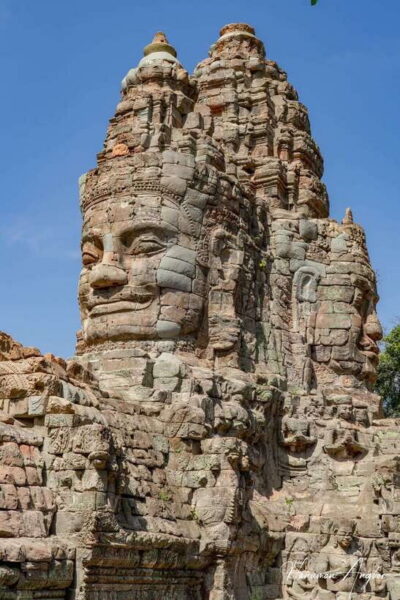
Next is Bayon Temple (about 45 minutes). Bayon is known for its richly decorated Khmer design and for being the state temple of Jayavarman VII. If you’ve ever seen photos of the stone faces, this is the place those images come from.
Where this stop shines: your guide can help you connect the art to the king and the religious purpose. The value of a guided visit is biggest here—these temples can look like a maze if you don’t know what you’re looking at.
Baphuon Temple: a steep-feeling monument with Hindu roots
Then you’ll head to Baphuon Temple (around 30 minutes), located in Angkor Thom northwest of Bayon. It’s a three-tier temple mountain built as the state temple of Udayadityavarman II and dedicated to Shiva.
This stop adds variety. Bayon feels Buddhist/Mahayana linked by the king’s era, while Baphuon brings in Shiva-dedicated Hindu elements. That mix helps you understand Angkor as a culture where different traditions coexisted through architecture.
Terrace of the Elephants: the view point that tells a story
The Terrace of the Elephants takes about 15 minutes. It’s part of the walled city of Angkor Thom, and it was used by Jayavarman VII as a platform to view a victorious returning army.
This is one of those spots where a guide really helps. Without context, it’s easy to see “a carved terrace.” With context, you understand it as a staged moment of power—stone as media.
Angkor Archaeological Park lunch break: plan for higher prices
You then take a lunch break in the Angkor Archaeological Park for about 60 minutes. Meals and drinks aren’t included, and there’s a heads-up that food (and driver costs) can be a bit more expensive than downtown Siem Reap.
My practical suggestion: treat this as a refresh break, not a gourmet lunch. Use the hour to refuel, hydrate, and reset your feet. Since you’ll have more walking later, you’ll be glad you didn’t treat it like a long sit-down meal.
Angkor Wat: the big centerpiece you’ll actually have time for
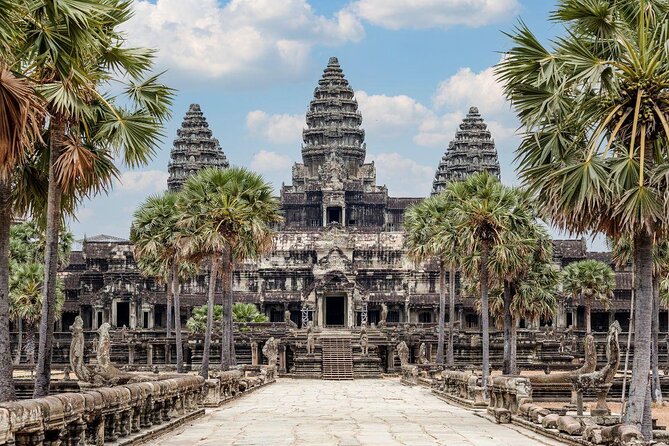
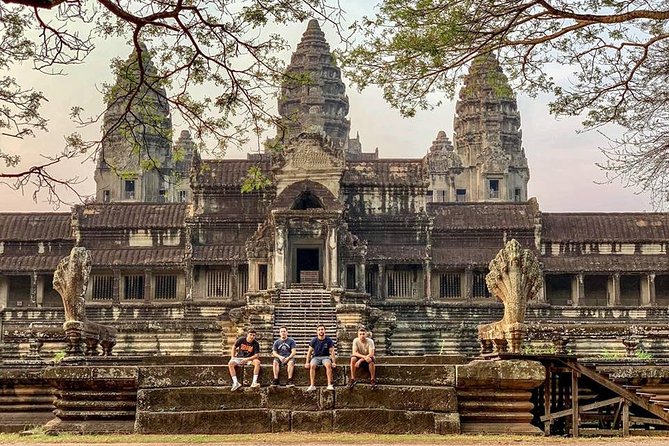
After lunch you’ll visit Angkor Wat (about 1 hour 30 minutes). Angkor Wat is described as the largest religious monument in the world and one of the most iconic sights in Cambodia.
This is where your day gets momentum. With good timing, you can move through key areas without feeling like you’re sprinting. Your guide’s job here is to explain how the design relates to religious ideas and to help you see beyond the postcard angles.
Phnom Bakheng: sunset views and a temple-mountain climb
Finally, Day 1 ends at Phnom Bakheng for the sunset (about 1 hour 30 minutes total). You’ll see Angkor from the top, and the site is a Hindu and Buddhist temple mountain dedicated to Shiva.
The tradeoff is simple: it’s a climb to reach the viewpoint. But if you like seeing Angkor change color as the light drops, this is a strong way to end a temple-heavy day.
Day 2 starts at 4:40 am for sunrise, then sweeps through more iconic and lesser-visited temples
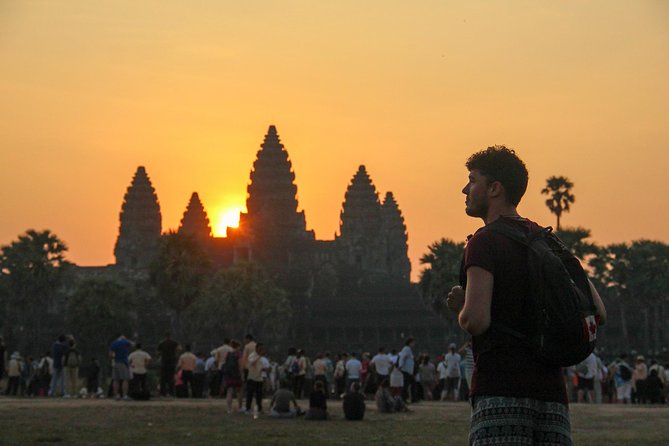
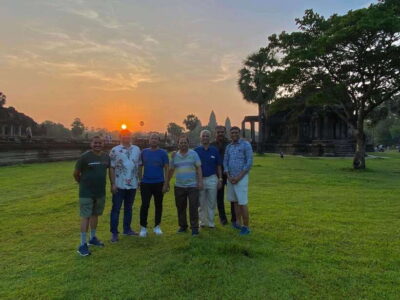
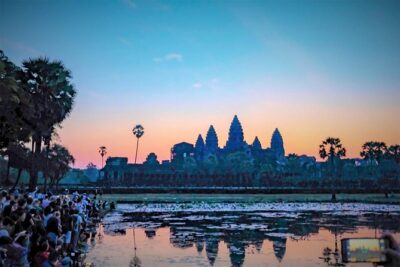
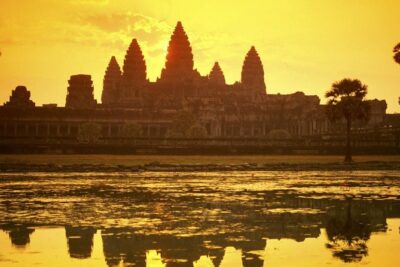
Day 2 begins with a very early pickup: 4:40 am from your hotel to catch sunrise at Prasat Angkor Wat temple. After that, you’ll have breakfast nearby before continuing.
This is a real advantage if you want the calm feel of early light. It’s also smart because it spreads the day’s most energy-heavy part (sunrise time) into an earlier window.
Ta Prohm: the famous roots-and-stone look
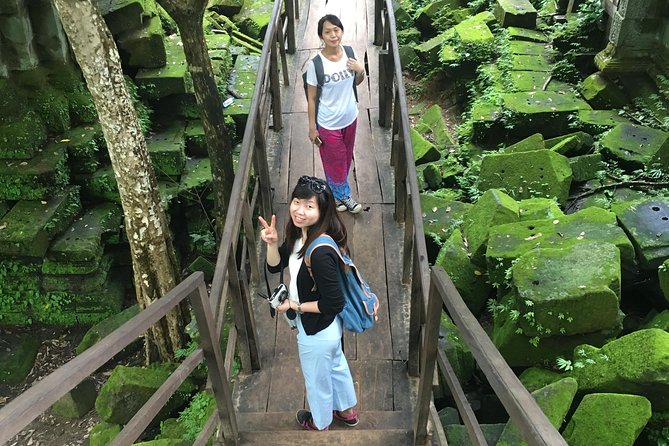
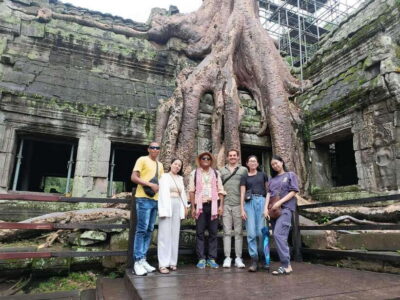
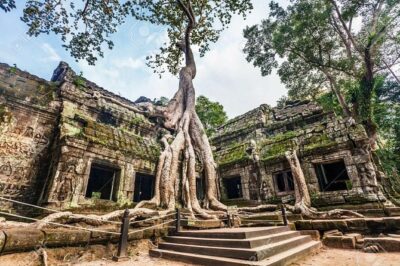
After sunrise time, you visit Ta Prohm (about 1 hour). Ta Prohm is often recognized for the way trees and temple architecture mingle, and it was originally called Rajavihara.
What makes this stop worth a guide: Ta Prohm can look visually chaotic from a distance, but once someone explains the setting and historical context, it becomes easier to appreciate how the structure was built and why it looks the way it does today.
Pre Rup: shorter stop, strong temple vibe
Next is Pre Rup (about 35 minutes), a Hindu temple built as the state temple of Khmer king Rajendravarman dedicated in 961 or early 962.
This stop works well as a rhythm reset after Ta Prohm. You get another layer of Khmer religious building traditions without committing to a long walk.
Ta Som: smaller, quieter, still very worth it
Then comes Ta Som (around 20 minutes), a smaller temple built for Jayavarman VII. This is the kind of stop where you can catch details and carvings that are harder to notice at the larger sites.
If you like “less famous” temples, this is the day’s quiet win.
Neak Pean: an artificial island with a Buddhist temple
You’ll also see Neak Pean (about 20 minutes), described as an artificial island with a Buddhist temple on a circular island in Jayatataka Baray.
This is a different feel from the dense stone-city temples. It adds a more water-and-temple atmosphere, which helps break up your mental map of Angkor.
Preah Khan: a longer temple block
Then you visit Preah Khan (about 1 hour). It was built in the 12th century for Jayavarman VII to honor his father.
This longer time block gives you space to slow down. Preah Khan tends to reward attention to arrangement and religious meaning, and your guide’s explanations can help you “read” the site instead of just walking through it.
Lunch inside the Angkor area again
You stop for lunch for about 60 minutes at a local restaurant inside the Angkor park area. Admission tickets still aren’t included, and again, food and drinks aren’t part of the tour price.
If you’re the type who gets hungry fast, consider eating a bit earlier in the hour so you don’t rush the next temples.
Banteay Srei: the Lady Temple with Hindu dedication
After lunch you go to Banteay Srei (around 45 minutes), often called the Lady temple in the itinerary details. It’s a 10th-century Cambodian temple dedicated to Shiva.
This stop is a great transition toward the end of the Angkor-heavy schedule. It’s still part of the classic Angkor circuit, but it feels like a distinct monument rather than a repeat of the same style.
Tonlé Sap Lake floating village: private boat ride and lake reality
The day finishes with Tonlé Sap Lake (about 50 minutes), before heading back to downtown Siem Reap. You’ll visit the floating village by taking a private boat ride at Tonlé Sap Lake.
Tonlé Sap is a seasonally inundated freshwater lake connected to the Mekong through the Tonlé Sap River. This part matters because it changes the story from stone civilization to living water-based life. It’s not just a cultural add-on—it’s a different environment that will give you perspective on how Cambodians live with the rhythms of water.
Admission/ticket details: the Tonlé Sap pass with a boat ride is not included, so you’ll want to plan that cost into your total budget.
What to expect from the guide (and why that matters more than you think)
Most of your time here is spent walking. What changes your experience is what happens while you walk.
In the feedback, guides like Raman and Mr Raksa were praised for answering questions, explaining Khmer history and temple meaning clearly, and being flexible about timing. One review also called out professional photographing skills, which can be a big deal if you want better shots at major viewpoints.
And the guide isn’t only for explanations. They’re also for decision-making: when to pause, how to manage heat, and how to keep your day moving without making you feel like a passenger in a schedule.
If you’re the kind of traveler who wants the “why” behind the “what,” a licensed guide is a huge value-add. If you’re the kind who only wants photos and minimal reading, you’ll still benefit from having someone who knows the best order and timing.
Comfort, getting around, and small details that affect the day
The tour includes an air-conditioned vehicle and free cool water and towels. That’s genuinely helpful for Angkor because you’ll likely be outside for long stretches and stepping between sites.
Also, pickup and drop-off are included from your hotel, which saves you from navigating Siem Reap traffic on your own during big-day mornings.
A small consideration: lunch is paid by you inside the Angkor area, and food can cost more than downtown. Bring a plan—if you have dietary needs, you’ll want to eat something reliable during that hour and keep moving.
For footwear, aim for sturdy shoes. Angkor walkways and stone steps can be uneven. You’ll be thankful you didn’t show up in anything slick or flimsy.
Who this tour fits best
This is a strong match if:
- You’re visiting Angkor for the first time and want a guided route with both major icons and supporting temples.
- You like early starts and want both sunrise and sunset for the Angkor views.
- You want a private experience where timing can adjust with your guide.
- You care about comfort during temple days (water and towels matter to you).
It may be less ideal if:
- You already have a tight budget and want to avoid added ticket layers (Angkor pass plus Tonlé Sap pass/boat ride).
- You hate early mornings; Day 2 pickup is 4:40 am.
Should you book this 2-Day Angkor plus floating village tour?
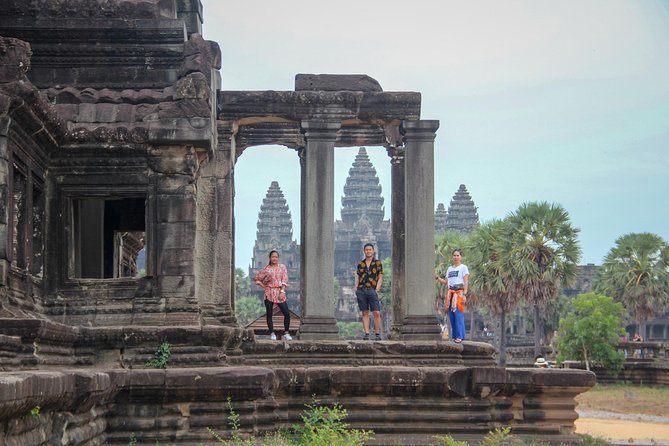
I’d book it if you want a clean, guided plan that covers the major Angkor highlights plus Ta Prohm and then finishes with the Tonlé Sap floating village in a real way. The combination of licensed English guidance, AC transport, and included water/towels turns two packed days into something you can actually enjoy instead of merely survive.
But do the math first. When you add the $62 two-day Angkor pass and plan for the Tonlé Sap pass with boat ride, your total spend is more than the $110 tour price. If that fits your budget, this is a practical and very satisfying way to see Angkor without getting lost in planning.
If you tell me your travel dates and how many people are in your group, I can help you estimate the likely all-in total and suggest what kind of pace you should expect across both days.
FAQ
What’s included in the $110 per person tour price?
The tour includes a full vaccinated English-speaking licensed guide, an air-conditioned vehicle, free cool water and towels during the trip, and pickup and drop-off at your hotel.
Do I need an Angkor pass for this tour?
Yes. The Angkor pass of two days costs $62 per person and it’s not included. Each temple stop notes that admission tickets are not included.
Is the Tonlé Sap floating village boat ride included?
No. The Tonlé Sap pass with a boat ride is not included, so you’ll need to pay for it separately.
What time is the sunrise visit on Day 2?
You’ll be picked up at 4:40 am from your hotel to see the sunrise at the Prasat Angkor Wat temple, with breakfast nearby afterward.
How much time is there for lunch?
There are two lunch breaks, each about 60 minutes. Lunch is not included, and food/drinks inside the park may cost more than downtown.
Can I cancel and get a full refund?
Yes. There is free cancellation, and you can cancel up to 24 hours in advance for a full refund.
More Days at the Temples
- Siem Reap: Angkor Wat 2-Day Tour with Sunrise and Sunset
★ 4.9 · 4,429 reviews - Angkor 2-Day Sunset & Sunrise Small-Group Tour
★ 5.0 · 2,567 reviews - 2 Days Exclusive Temple Highlights with Sunset and Sunrise Tour
★ 5.0 · 1,157 reviews - Siem Reap: Angkor Sunrise 1- or 2-Day Guided Temples Tour
★ 4.9 · 1,132 reviews - 2 Days Guided Historical Tour in Angkor
★ 5.0 · 855 reviews
Out on Tonle Sap
- From Siem Reap: Kampong Phluk Floating Village Tour by Boat
★ 4.9 · 6,979 reviews - Sunset tour of Kampong Phluk stilts home village on the Tonle Sap
★ 5.0 · 4,865 reviews - Kompong Phluk Floating Village Half-Day Tour ( Morning / Sunset )
★ 5.0 · 1,494 reviews - Siem Reap: Kulen Mountain, Beng Mealea and Tonle Sap Tour
★ 5.0 · 1,483 reviews - Tonle Sap Lake & Kampong Phluk Village Half-Day Tour
★ 5.0 · 1,045 reviews
More Temple Circuits Around Siem Reap
- Angkor Wat Sunrise or Sunset Tour with Guide from Siem Reap
★ 5.0 · 12,109 reviews - Siem Reap: Angkor Wat: Small-Group Sunrise or Sunset Tour
★ 5.0 · 9,444 reviews - Siem Reap: Angkor Wat 2-Day Tour with Sunrise and Sunset
★ 4.9 · 4,429 reviews - Siem Reap: Full-Day Angkor Wat Guided Tour with Sunset
★ 4.9 · 3,803 reviews - Angkor Wat Sunrise tour with Small – Group and Guide tours
★ 5.0 · 3,655 reviews
Just Added: Fresh Siem Reap Tour Reviews

Angkor Temple Tours, compared.
 ★ 5.0Angkor Wat Sunrise or Sunset Tour with Guide from Siem ReapFrom $1812,109 reviews
 ★ 5.0Angkor Wat: Small-Group Sunrise or Sunset TourFrom $159,444 reviews
 ★ 4.9Angkor Wat 2-Day Tour with Sunrise and SunsetFrom $344,429 reviews
 ★ 4.9Full-Day Angkor Wat Guided Tour with SunsetFrom $153,803 reviews
 ★ 5.0Angkor Wat Sunrise tour with Small – Group and Guide toursFrom $143,655 reviews
 ★ 5.0Angkor Wat Highlights and Sunrise Guided Tour from Siem ReapFrom $233,213 reviews
 ★ 5.0Angkor Wat Sunset Small Group Tour with Lunch IncludedFrom $203,059 reviews
 ★ 5.0Full-Day Angkor Wat Sunrise Private Tour with Guide from Siem ReapFrom $602,920 reviews
Browse the lists this tour appears in