
Reviewed · ANGKOR SUNRISE & SUNSET TOURS
2 Days Angkor temples with Sunrise & Sunset
Sunrise makes Angkor feel brand new, and this 2-day Angkor Doors tour packs the big hits with a friendly English guide (often Bunpheng) and smart pacing in an AC vehicle. I love hitting Angkor Wat at dawn and getting to the calmer carvings at Banteay Srei with real time to look. The catch: you’ll still need the separate Angkor Pass for temple entry, and sunrise means an early start.
I also like that it’s built for comfort and control. This is a private tour, so it’s just your group, not a giant cattle-car lineup—and the guide can adapt when your Cambodia plans are tight or your schedule changes. From what I’ve seen on tours with Bunpheng, punctual, professional guidance is part of the package, not an accident.
One more thing you should plan around: the dress code is strict, and you must cover your thighs and shoulders in the temple complexes. The meeting time starts at 9:00 am, but on day 2 you’ll be up at about 4:30 am or 5:00 am for sunrise, depending on the season.
In This Review
- Key things that make this Angkor tour worth your time
- Why sunrise and sunset are the whole game here
- Day 1: From Prasat Kravan’s brick towers to Phnom Bakheng’s temple-mountain views
- Day 2: Angkor Wat sunrise plus the quiet temples that reward patience
- The Banteay Srei carving focus (and how to enjoy it without rushing)
- Tickets and costs: the real value math
- Transport, timing, and a private guide that can adjust
- Dress code and temple etiquette that keeps your day from stalling
- Who should book this Angkor sunrise and sunset tour
- Should you book it?
- FAQ
- What’s included in the $115 per person tour price?
- Do I need to pay for temple entry tickets?
- What time does the tour start?
- Where does the sunset happen?
- Is there a dress code for visiting temples?
- Can I cancel and get a full refund?
Key things that make this Angkor tour worth your time
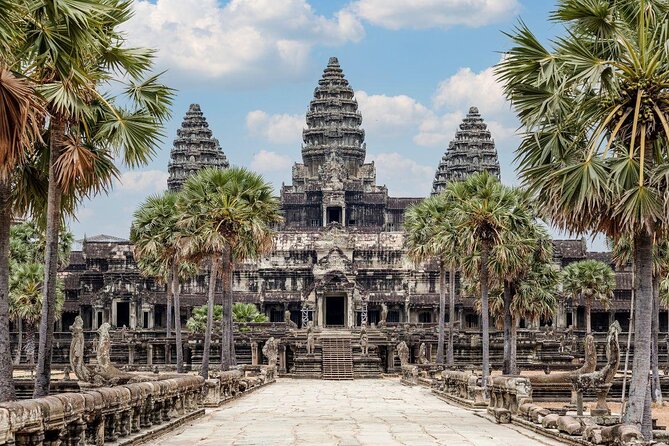
- Dawn at Angkor Wat: You’ll be there early enough to enjoy the light shift, then move into the main temple afterward
- Sunset viewpoint options: South Gate of Angkor Thom or Phnom Bakheng, depending on timing
- Banteay Srei focus: One of the best-known “small temple, huge detail” stops, with time to admire carvings
- A strong circuit of classics: Ta Prohm, Angkor Thom sights, plus temples across the Angkor World Heritage Area
- English guide who adapts: Reviews repeatedly mention Bunpheng’s punctual professionalism and friendly style
- Comfort between ruins: AC transport plus cold drinking water while you travel temple to temple
Chasing the light? More dawn and dusk runs
- Angkor Wat Sunrise or Sunset Tour with Guide from Siem Reap★ 5.0 · 12,109 reviews
- Siem Reap: Angkor Wat: Small-Group Sunrise or Sunset Tour★ 5.0 · 9,444 reviews
- Sunset tour of Kampong Phluk stilts home village on the Tonle Sap★ 5.0 · 4,865 reviews
- Siem Reap: Angkor Wat 2-Day Tour with Sunrise and Sunset★ 4.9 · 4,429 reviews
Why sunrise and sunset are the whole game here
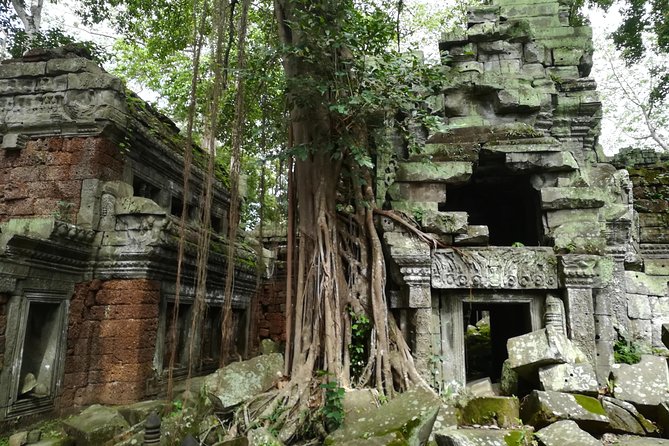
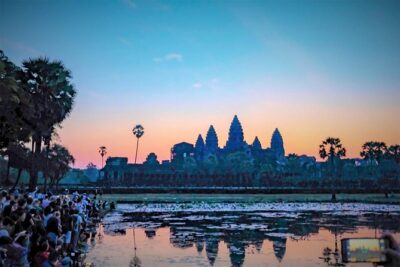
Angkor is crowded later in the day. The light is nicer early, and the air usually feels less heavy, too. That’s why the sunrise at Angkor Wat is such a big deal: you get the temple when it’s still waking up, then you’re in place to explore while the day is fresh.
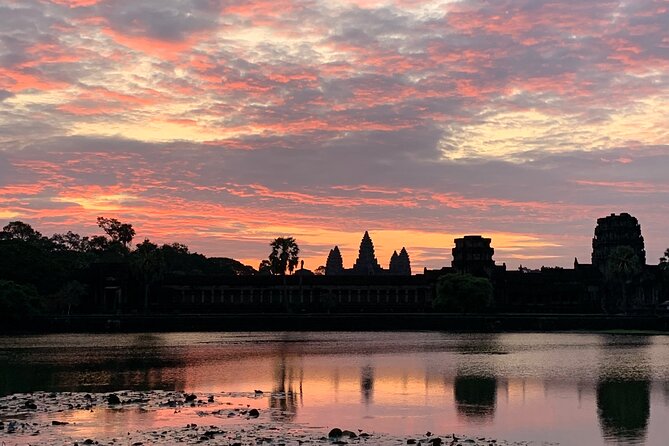
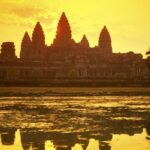
Sunset is what makes the last stretch memorable. With a sunset at the South Gate of Angkor Thom or at Phnom Bakheng, you’re aiming for that softer glow on stone and silhouettes of towers. It’s a simple upgrade that changes the vibe from sightseeing to storytelling.
One practical note: sunrise day 2 starts around 4:30 am or 5:00 am depending on the season. If you sleep lightly, consider packing earplugs and keeping your water bottle ready the night before, so you’re not scrambling in the dark.
Day 1: From Prasat Kravan’s brick towers to Phnom Bakheng’s temple-mountain views
Day 1 is the “build your Angkor confidence” day. You start with smaller, less overwhelming temples, then work up to the big city-palace zone at Angkor Thom.
Prasat Kravan
You’ll start at Prasat Kravan, a small 10th-century temple with five reddish brick towers on an elevated terrace. It’s not the loudest site in Angkor, but that’s the point. You get to see the structure clearly, notice the brickwork, and get your eyes used to the Khmer temple style before the day gets major.
Potential drawback: if you’re the type who only wants the headline temples, this first stop may feel brief. The upside is that it sets the pace without exhausting you right away.
Banteay Kdei
Next is Banteay Kdei, meaning A Citadel of Chambers. It’s a Buddhist temple built in the late 12th and early 13th century by King Jayavarman VII. The layout feels like a warren of spaces, which rewards slow walking and good footwear.
What to look for: pay attention to how the temple’s corridors guide you. It’s one of those places where the experience isn’t just a view—it’s moving through stone passages.
Ta Prohm
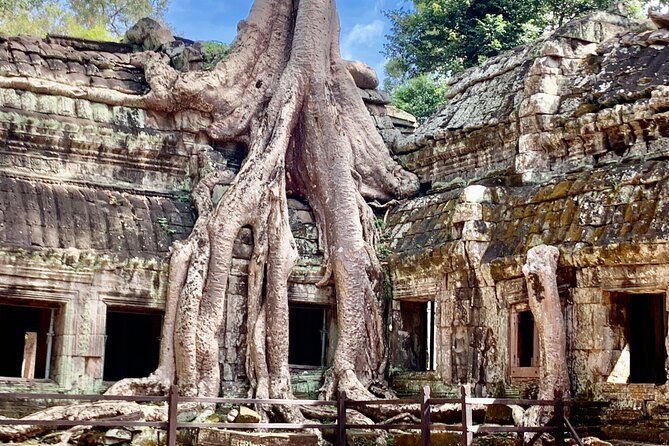
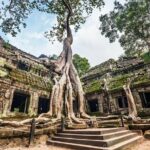
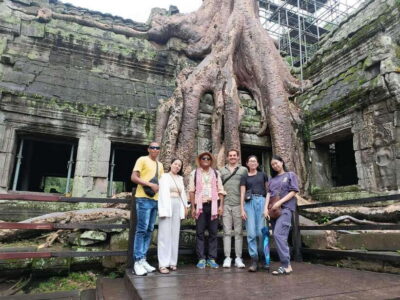
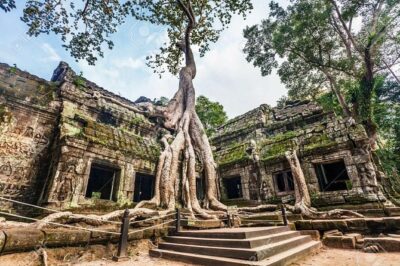
Ta Prohm is the star that many people come for, built in the Bayon style in the late 12th and early 13th century. It originally functioned as a Buddhist monastery and university, and part of Ta Prohm’s fame comes from how nature has grown into the architecture.
This stop can be busy at mid-morning, but the tour flow usually helps you see it without spending your whole day waiting in lines.
Ta Keo
Ta Keo was the state temple for Jayavarman V, with construction starting in 975 AD. Unusually, it was never finished. That “unfinished” angle matters because you can actually feel the temple’s planned ambition without the final completion that you see at other major sites.
If you like architecture more than crowd photos, this is a solid pause in the middle of the day.
Angkor Thom (including South Gate and key highlights)
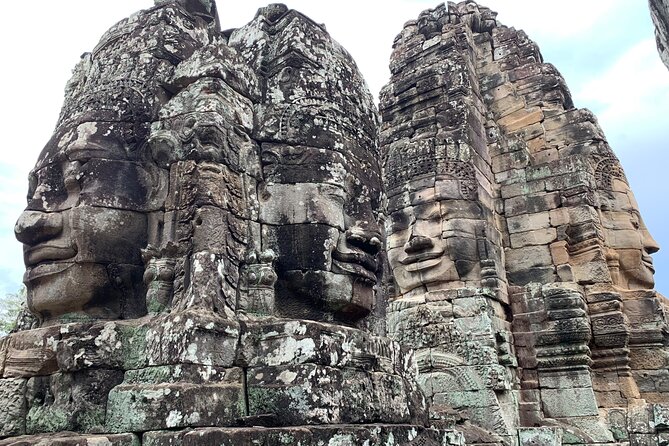
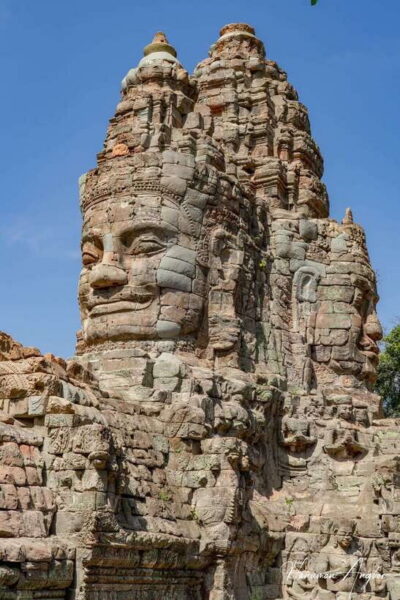
Then you step into Angkor Thom, the ancient capital city of the Khmer Empire. Here you can see major features such as the Royal Palace, the Terrace of the Elephants, the Terrace of the Leper King, Bayon temple, and the South Gate plus its bridge approach.
This is where you should switch from single-stop curiosity to big-picture understanding. The key is timing and attention: look at how each landmark relates to the larger capital plan. The South Gate is also the one tied to the sunset option, so it helps to see it earlier so you know what you’re returning to (if sunset is placed there).
Potential drawback: Angkor Thom is big. Even with a guide, you’ll want to keep your energy for the key areas, not try to sprint for every view.
Phnom Bakheng
Day 1 ends at Phnom Bakheng, a temple mountain dedicated to Shiva built by King Yasovarman at the end of the 9th century. It sits at the top of the hill, so expect stairs and an “arrival equals payoff” kind of moment.
This is also one of the likely sunset locations. If your day’s end is Phnom Bakheng, you’ll want to stay present for the light change because the views can be a moving picture, not a single photo.
Day 2: Angkor Wat sunrise plus the quiet temples that reward patience
Day 2 is built around the big morning and then follows with a sequence of temples that don’t all feel identical. You’re going from the most famous silhouette to smaller, more detailed ruins where carvings and layout matter.
Angkor Wat (sunrise first, then explore)
The tour starts early—around 4:30 am or 5:00 am depending on the season—to watch sunrise at Angkor Wat. After sunrise, you’ll head to the main temple.
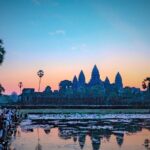
This is the part where the “early start” is absolutely worth it. Angkor Wat at sunrise isn’t just dramatic; it’s readable. Shadows and reflections help you understand the shape and geometry, and you get to see the atmosphere settle before the daytime chaos.
Pre Rup and/or East Mebon area (early Khmer architecture time)
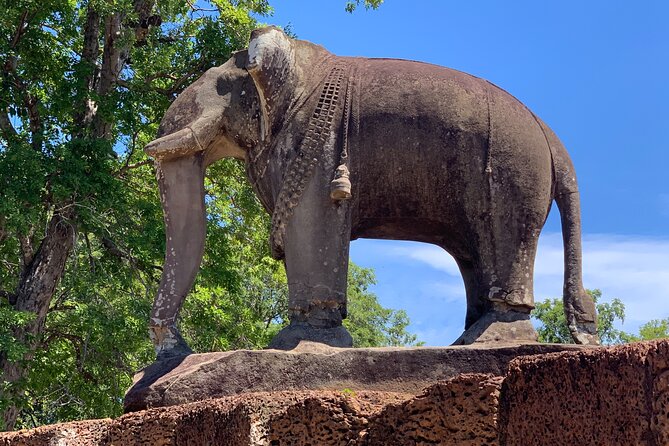
After Angkor Wat, you’ll visit Pre Rup and also include an East Mebon temple stop. Both are described as good examples of early Khmer architecture built in the 10th century.
The reason I like these stops is that they break the rhythm after the huge Angkor Wat hit. They give you a chance to notice how the style evolves across different phases of Khmer building.
Banteay Srei (the carvings stop)
Next is Banteay Srei, also known as the Citadel of the Women. It’s famous for fine carvings, with the temple often linked to delicate, detailed work.
This stop is one of the best uses of your time on the whole trip. When you slow down here, you’ll see that you’re not just looking at stone—you’re reading tiny stories in the panels. The tour lists admission as free for this stop, which makes it even easier to justify spending extra time.
Banteay Samre (a smaller Angkor Wat feel)
Then comes Banteay Samre, a Hindu temple built in the early 12th century by Kings Suryavarman II and Yasovarman II, dedicated to Vishnu. It’s described as like a smaller replica of Angkor Wat.
That’s a helpful expectation. Don’t go in thinking it will match Angkor Wat scale. Go in expecting a compact version where you can still understand the temple’s layout and form.
Eastern Mebon (another 10th-century architecture moment)
You’ll also visit Eastern Mebon, another early Khmer architecture example from the 10th century. This feels like more of the same era, which is useful if you’re trying to compare building styles rather than chasing the biggest name.
Ta Som
Ta Som is a Buddhist temple built by King Jayavarman VII in the end of the 12th century dedicated to Lokesvara Buddha. At about 20 minutes, it’s a short, focused visit.
If you want to avoid temple fatigue, Ta Som is exactly the kind of stop that keeps things moving while still giving you something meaningful to see.
Neak Pean (Entwined Serpents on a man-made island)
Neak Pean is one of those places you remember because it’s different. Built in the 12th century by Jayavarman VII, it means Entwined Serpents and sits on a man-made island in the middle of a man-made lake.
This is where the setting matters as much as the stones. If you’re taking a break from high-volume sites, this one gives your eyes and mind a reset.
Preah Khan (Royal Sword, bigger temple energy)
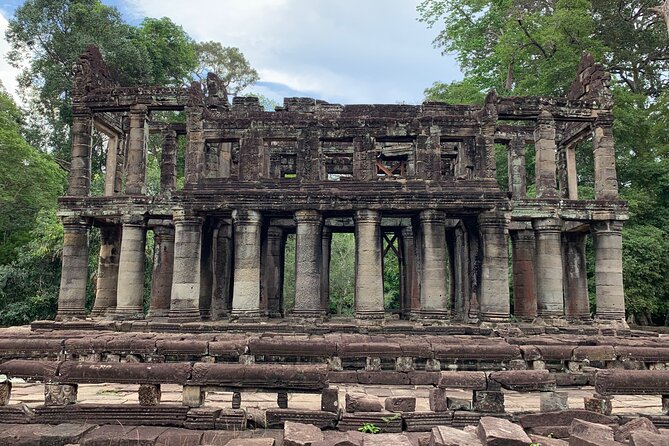
Finally, you’ll visit Preah Khan, translating to Royal Sword, built by Jayavarman VII and dedicated to his late father. It’s located about 1 km north of the ancient city of Angkor Thom and is a large complex in this route.
With around 50 minutes here, you get enough time to walk the space rather than just touch it with your camera. It’s a strong closing stop because it feels like a living piece of the kingdom, not just an outdoor museum label.
The Banteay Srei carving focus (and how to enjoy it without rushing)
Banteay Srei is the temple stop that works for both types of travelers: the ones who love famous names and the ones who prefer detail. The tour highlights its fine carvings and the idea that the work is delicate, tied to the temple’s nickname about women.
Here’s how I’d approach it if you want the best return on your attention:
- Spend a minute standing back first, so you see the overall form.
- Then pick one area and scan slowly for repeating motifs.
- Don’t try to photograph everything. Better to record a few strong angles and spend the rest of your time looking.
Because admission is listed as free for this stop, it’s also one of those moments where your budget feels friendly. Still, remember the dress code rule for temple complexes. If you forgot a scarf or wrap, this is where you don’t want to reach a dead end at the gate.
More temple circuits, set side by side
Tickets and costs: the real value math
The tour price is $115 per person. What you’re paying for is the English-speaking guide, AC transportation (car/minivan/minibus depending on group needs), and cold drinking water. There’s also mobile ticket convenience and pickup offered.
What you don’t pay for inside that $115 is temple entry. The Angkor Pass needed for this experience is the 3-Day Angkor Pass at $62 per person (price shown in the provided info). So a realistic planning total is:
- $115 tour + $62 Angkor Pass = about $177 per person
Food and accommodation are separate, and that’s normal for multi-day temple trips. If you’re budget-tracking, I recommend setting aside a bit for water snacks and lunch, especially after sunrise when you’ll likely feel hungry earlier than you expect.
Value-wise, I like this setup because you’re not just buying access—you’re buying a flow. Two days lets you avoid the “one day, everything is a blur” feeling. And sunrise plus sunset is included in the structure, which usually costs you extra time or effort if you try to DIY it.
Transport, timing, and a private guide that can adjust
This is a private tour, meaning it’s only your group. That matters more than you’d think at Angkor, where walking distances and heat can quickly turn a plan into a grind.
You’ll travel by an AC vehicle between sites, and the tour includes cold drinking water. Those two small comforts reduce decision fatigue. You’re less likely to lose the whole day to logistics, which is a common pain point around Siem Reap.
Also pay attention to the meeting point and time. Start time is listed as 9:00 am for pickup/meeting, but day 2 sunrise is around 4:30 am or 5:00 am. That means your day 1 evening matters: pack your temple day items, set out clothing that meets the dress code, and keep your phone charged.
From reviews, the guide quality shows up as punctual professionalism. Bunpheng is repeatedly described as punctual, professional, friendly, and even skilled at photography, which can be handy if you want clean sunrise/sunset shots without giving up time to figure out the best angles yourself.
Dress code and temple etiquette that keeps your day from stalling
The dress code is strict: cover your thighs and shoulders when entering temple complexes. If you’re not dressed correctly, you may be refused entrance to the temples.
What I’d do in practice:
- Wear light long pants or a skirt/cover-up that reaches at least the knee area.
- Bring a thin layer for your shoulders (scarf, light shirt, or wrap).
- Avoid anything too short, too low, or too transparent at the gate.
Temple visits move fast when you’re in the flow. If you’re stuck correcting clothing at the entrance, you lose time for the best light and the best spots.
Who should book this Angkor sunrise and sunset tour
This fits best if you:
- Want two full days of Angkor without trying to stitch together sunrise by yourself
- Like a mix of iconic temples (Ta Prohm, Angkor Thom, Angkor Wat) and quieter, detail-heavy stops (Banteay Srei, Neak Pean)
- Care about having an English guide who can explain what you’re looking at, not just deliver a driver and a map
It may feel less perfect if you:
- Only want one or two headline temples and hate early mornings
- Prefer a totally unscheduled pace with no fixed stop sequence at all
That said, for most first-timers, this tour is a smart balance: you see the core of Angkor and still have breathing room.
Should you book it?
I’d book this if sunrise and sunset are on your must-do list and you want a guided route that covers a lot of ground without turning the day into chaos. The price is reasonable when you factor in guide + AC transport + the sunrise/sunset structure, and the Angkor Pass is the main extra cost you already know to plan for.
If you’re okay getting up early and you’ll follow the dress code (so you don’t lose entrance time), you’re set up for a genuinely satisfying two-day Angkor experience—one that goes beyond postcard moments and lets you actually see why these temples were built the way they were.
FAQ
What’s included in the $115 per person tour price?
The tour includes an English-speaking guide, AC transportation (car/minivan/minibus), and cold drinking water. It also includes a mobile ticket, and pickup is offered.
Do I need to pay for temple entry tickets?
Yes. Entrance fees are not included. You need a 3-Day Angkor Pass, listed at $62 per person.
What time does the tour start?
The meeting/start time is listed as 9:00 am. On day 2, sunrise begins around 4:30 am or 5:00 am depending on the season.
Where does the sunset happen?
The overview says sunset is watched at either the South Gate of Angkor Thom or Phnom Bakheng.
Is there a dress code for visiting temples?
Yes. You must cover your thighs and shoulders when entering the temple complex. If you don’t have the correct clothing, you may be refused entrance.
Can I cancel and get a full refund?
Free cancellation is available if you cancel at least 24 hours before the experience’s start time. If you cancel less than 24 hours before, you won’t get a refund.
More Days at the Temples
- Siem Reap: Angkor Wat 2-Day Tour with Sunrise and Sunset
★ 4.9 · 4,429 reviews - Angkor 2-Day Sunset & Sunrise Small-Group Tour
★ 5.0 · 2,567 reviews - 2 Days Exclusive Temple Highlights with Sunset and Sunrise Tour
★ 5.0 · 1,157 reviews - Siem Reap: Angkor Sunrise 1- or 2-Day Guided Temples Tour
★ 4.9 · 1,132 reviews - 2 Days Guided Historical Tour in Angkor
★ 5.0 · 855 reviews
More Temple Circuits Around Siem Reap
- Angkor Wat Sunrise or Sunset Tour with Guide from Siem Reap
★ 5.0 · 12,109 reviews - Siem Reap: Angkor Wat: Small-Group Sunrise or Sunset Tour
★ 5.0 · 9,444 reviews - Siem Reap: Angkor Wat 2-Day Tour with Sunrise and Sunset
★ 4.9 · 4,429 reviews - Siem Reap: Full-Day Angkor Wat Guided Tour with Sunset
★ 4.9 · 3,803 reviews - Angkor Wat Sunrise tour with Small – Group and Guide tours
★ 5.0 · 3,655 reviews
Dawn and Dusk Over Angkor
- Angkor Wat Sunrise or Sunset Tour with Guide from Siem Reap
★ 5.0 · 12,109 reviews - Siem Reap: Angkor Wat: Small-Group Sunrise or Sunset Tour
★ 5.0 · 9,444 reviews - Sunset tour of Kampong Phluk stilts home village on the Tonle Sap
★ 5.0 · 4,865 reviews - Siem Reap: Angkor Wat 2-Day Tour with Sunrise and Sunset
★ 4.9 · 4,429 reviews - Siem Reap: Full-Day Angkor Wat Guided Tour with Sunset
★ 4.9 · 3,803 reviews
Just Added: Fresh Siem Reap Tour Reviews

Angkor Sunrise & Sunset Tours, compared.
 ★ 5.0Angkor Wat Sunrise or Sunset Tour with Guide from Siem ReapFrom $1812,109 reviews
 ★ 5.0Angkor Wat: Small-Group Sunrise or Sunset TourFrom $159,444 reviews
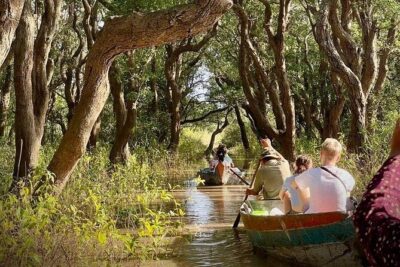 ★ 5.0Sunset tour of Kampong Phluk stilts home village on the Tonle SapFrom $214,865 reviews
 ★ 4.9Angkor Wat 2-Day Tour with Sunrise and SunsetFrom $344,429 reviews
 ★ 4.9Full-Day Angkor Wat Guided Tour with SunsetFrom $153,803 reviews
 ★ 5.0Angkor Wat Sunrise tour with Small – Group and Guide toursFrom $143,655 reviews
 ★ 5.0Angkor Wat Highlights and Sunrise Guided Tour from Siem ReapFrom $233,213 reviews
 ★ 5.0Angkor Wat Sunset Small Group Tour with Lunch IncludedFrom $203,059 reviews
Browse the lists this tour appears in