
Reviewed · ANGKOR SUNRISE & SUNSET TOURS
2 Days Temples with Sunrise-Small Group
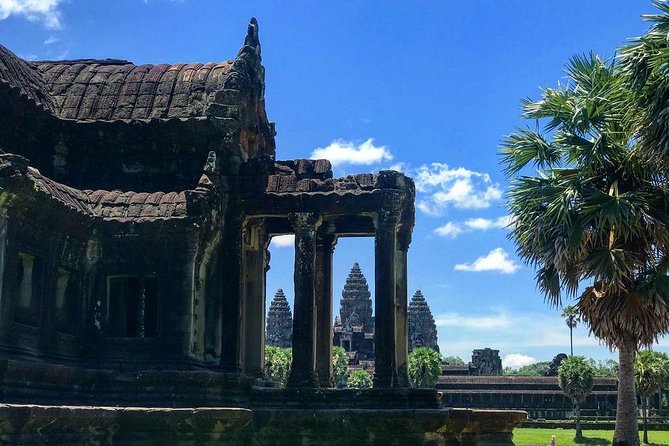
Sunrise at Angkor changes everything. I like how this 2-day plan hits major temples without wasting your mornings, and I especially like the way it sets you up for an Angkor Wat sunrise start. The main drawback is that the temple pass is extra on top of the tour price, and you’ll need to plan for a long, early day (plus a torch for the dawn entry).
The small-group limit (up to 15 people) helps you move at a human pace. You also get a licensed English-speaking guide, and in my reading of past guest experiences, guides like Sok stood out for making the stones easier to understand fast, not just name-dropping.
The other consideration is practical: temple sites mean walking, sun, and rules. You’ll want shoulders and knees covered, and your sunrise timing means you should confirm you can wake up early (a wake-up call helps).
In This Review
- Key Things I’d Plan Around
- Small-Group Pace in Siem Reap: 2 Days, Big Temple Hits
- Day 1 Outside Angkor Thom: Pre Rup, Banteay Srei, Preah Khan, and Neak Pean
- Pre Rup: A Hindu temple with a “state temple” feel
- Banteay Srei: Sandstone carvings that reward attention
- Preah Khan: Ruined stone, roots, and atmosphere
- Neak Pean: A Buddhist temple on a circular island
- Day 2 Angkor Wat Sunrise: Torch, Timing, and the Easy-to-Miss Corners
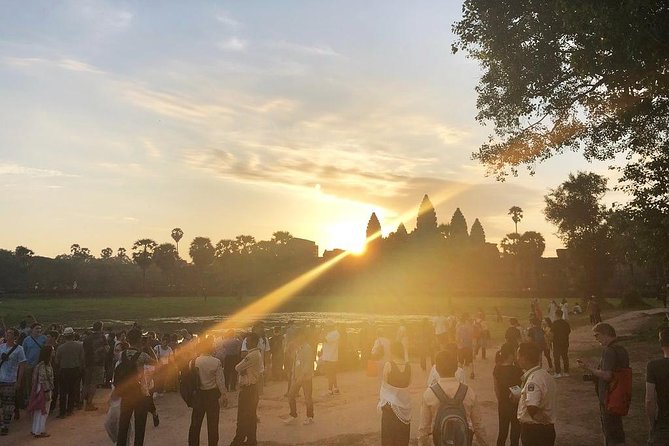
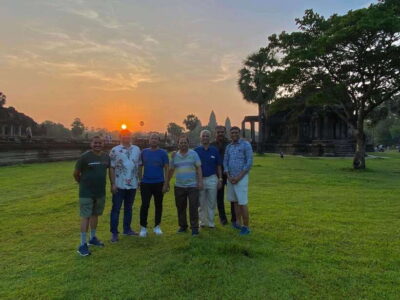
- Sunrise at Angkor Wat: entering while it’s still dark
- Srah Srang and breakfast: a practical pause before the heavy hitters
- Ta Prohm: jungle-enveloped ruins and the “roots over stone” feeling
- Terrace of the Elephants and the Terrace of the Leper King: quick, iconic passes
- Bayon: central towers and more than 200 faces
- Temple Pass, Dress Code, and What to Bring So You Don’t Get Stuck
- Guide and Comfort Details: Pickup, Air-Conditioning, and the Human Touch
- Value for the Price: What $43 Covers and What Costs Extra
- Who This Tour Suits (and Who Might Prefer Something Else)
- Should You Book This 2-Day Sunrise Temples Tour?
- FAQ
- What time does the tour start?
- Does this tour include pickup from my hotel?
- Is the Angkor temple pass included in the price?
- Do I need to bring a torch for Angkor Wat sunrise?
- What temples are included across the two days?
- Is breakfast included?
- What’s the dress code for temple visits?
- How big is the group?
- Are kids allowed?
Key Things I’d Plan Around
- Pre-dawn Angkor Wat entry: you’ll start in darkness, so bring a torch.
- Small group up to 15: fewer people usually means less time stuck waiting.
- Day 1 temples outside Angkor Thom: Pre Rup, Banteay Srei, Preah Khan, and Neak Pean.
- Ta Prohm with jungle atmosphere: a standout stop for the “tree roots meets stone” look.
- Comfort touches on the move: hotel pickup, air-conditioned vehicle, mineral water, and (in prior experiences) cool flannels between stops.
- Extra temple pass needed: the tour price doesn’t include the main Angkor admission.
Chasing the light? More dawn and dusk runs
- Angkor Wat Sunrise or Sunset Tour with Guide from Siem Reap★ 5.0 · 12,109 reviews
- Siem Reap: Angkor Wat: Small-Group Sunrise or Sunset Tour★ 5.0 · 9,444 reviews
- Sunset tour of Kampong Phluk stilts home village on the Tonle Sap★ 5.0 · 4,865 reviews
- Siem Reap: Angkor Wat 2-Day Tour with Sunrise and Sunset★ 4.9 · 4,429 reviews
Small-Group Pace in Siem Reap: 2 Days, Big Temple Hits
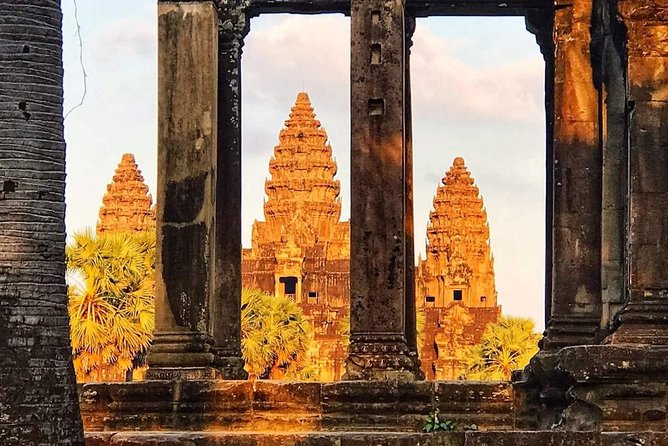
Siem Reap is built around one big destination: Angkor. The trick is doing it in a way that doesn’t turn your trip into a hurry-up-and-queue festival. This 2-day sunrise and temples tour aims for a compact route, with an expert local English-speaking guide and pickup from your hotel so you’re not wrestling with tuk-tuks before dawn.
What I like about this format is the rhythm. Day 1 is designed to get you into the calmer, less central Angkor area first, with outside-temple stops that still feel deep into the Khmer world. Day 2 then pivots to the headline moment: sunrise at Angkor Wat, followed by several major sites inside Angkor.
It’s also nice that the transport is set up for comfort. You ride in an air-conditioned vehicle, and you get bottled mineral water. In earlier experiences people noted little comfort upgrades between stops, like having a driver or staff member ready with water and a cool flannel, which matters when you’re out in the heat for hours.
The bottom line: if you want the most famous temples in a short timeframe, this is a realistic way to do it without feeling totally rushed.
Day 1 Outside Angkor Thom: Pre Rup, Banteay Srei, Preah Khan, and Neak Pean
Day 1 is your warm-up day, and it’s a good one. You start with temples outside the Angkor Thom city core, which is often less about crowds and more about enjoying the details.
Pre Rup: A Hindu temple with a “state temple” feel
You’ll begin at Pre Rup, a Hindu temple associated with Khmer king Rajendravarman (the information ties it to the state temple of Rajendravarman). The admission is not included in the base tour price, so you’ll want your temple pass plan in place (more on that later).
Why this stop matters: Pre Rup helps set the tone for what you’re seeing in Angkor: temple geometry, Hindu religious purpose, and a layout that rewards slow looking rather than just photos. It’s also a useful introduction before you shift into the more famous “wow” temples on Day 2.
Banteay Srei: Sandstone carvings that reward attention
Next is Banteay Srei, and this is the one people usually remember for fine carving. The site is described as intricately carved and well-preserved, and the relief work on the smaller sandstone structure is often regarded as among the best craftsmanship in Cambodia. In the tour details, the Banteay Srei admission is marked as free.
The good news for you: a stop like this can feel different from the larger, busier sites. Smaller temples often let your eyes rest and your brain switch gears from “how big” to “how detailed.” If you like sculpture and ornament—this is one of the better places to train your eye.
More temple circuits, set side by side
Preah Khan: Ruined stone, roots, and atmosphere
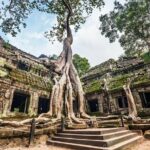
After that, you head to Preah Khan, a ruined but atmospheric temple where you see a mix of crumbling stone and tree roots. The time you’re given is about 2 hours, which is helpful here because this kind of site takes time to read visually.
Admission isn’t included for Preah Khan, so make sure you understand that your temple pass rules apply. The value of Preah Khan is the mood: it feels like the jungle and the masonry are co-authoring the scene, and that makes it a strong Day 1 capstone before you spend more energy the next morning.
Neak Pean: A Buddhist temple on a circular island
You finish Day 1 with Neak Pean. This stop gets you to an artificial island with a Buddhist temple on a circular structure, set in what’s described as Jayatataka Baray. You’ll get around 50 minutes here.
It’s a shorter, more scenic breather compared to the longer walking stretches. If you’re starting to feel temple fatigue, Neak Pean is the kind of stop that refocuses you: it’s a single concept you can enjoy without needing to cover 20 viewpoints.
Day 2 Angkor Wat Sunrise: Torch, Timing, and the Easy-to-Miss Corners
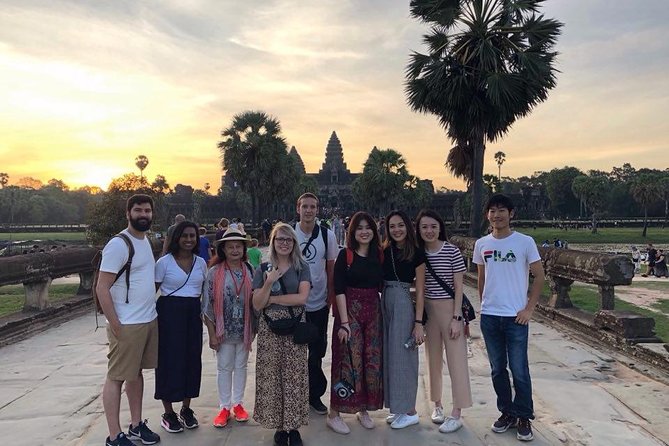
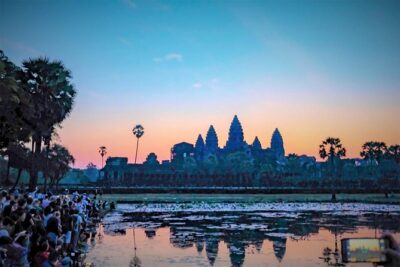
Day 2 is the payoff. You’ll depart your hotel pre-dawn for a sunrise experience at Angkor Wat, and you’ll enter in darkness. That’s not a small detail. The tour instructions explicitly say to bring a torch.
Also, you’re not just going for any entrance—you’re guided to the eastern side, described as little-visited in the tour plan. That matters because even at Angkor, where you stand and which paths you use can change how crowded the experience feels.
Sunrise at Angkor Wat: entering while it’s still dark
The visit is about 2 hours 5 minutes at Angkor Wat. The idea is to get you moving early enough to see how the temple reads before the day fully heats up and before crowds thicken.
This is a good moment to use your guide well. A strong guide will point out axes, rooflines, and the way you move through the galleries. You don’t need to be a history buff to appreciate the structure—you just need someone to help you notice the right things at the right time.
Srah Srang and breakfast: a practical pause before the heavy hitters
After the morning temple run, you stop at Srah Srang and your tour plan includes breakfast at a Khmer local restaurant. The instruction suggests you might take it away from your hotel or order after you return, and it also hints you can request a breakfast pack if your hotel includes breakfast.
Srah Srang’s admission is marked as free. This portion of the day is about re-fueling and cooling down your pace. I like tours that don’t pretend you won’t need food and a breather.
Ta Prohm: jungle-enveloped ruins and the “roots over stone” feeling
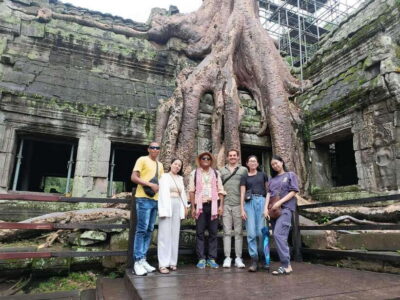
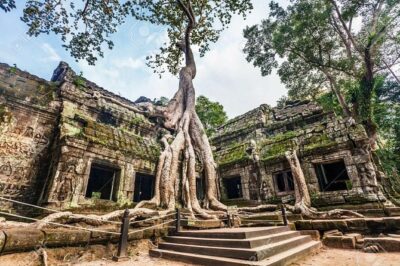
Then you go to Ta Prohm, a temple famous for its jungle enclosure and the way tree roots and masonry interlock. The plan gives you about 1 hour.
There’s one detail in the tour info that makes Ta Prohm feel more real: at one point it was home to 2,740 monks. Having that kind of reference point helps you look past the famous visual and remember there was a living community here, not just scenery.
Terrace of the Elephants and the Terrace of the Leper King: quick, iconic passes
You’ll pass by the Terrace of the Elephants and also the Terrace of the Leper King. The time is short here (about 20 minutes), and admissions are marked as free. That means this is a “grab the highlights” stop, not a sit-and-study stop.
If you tend to want more time, that’s the trade-off of a 2-day whirlwind: some places get less than you might want. The upside is you still get your photos and your mental map without burning the day.
Bayon: central towers and more than 200 faces
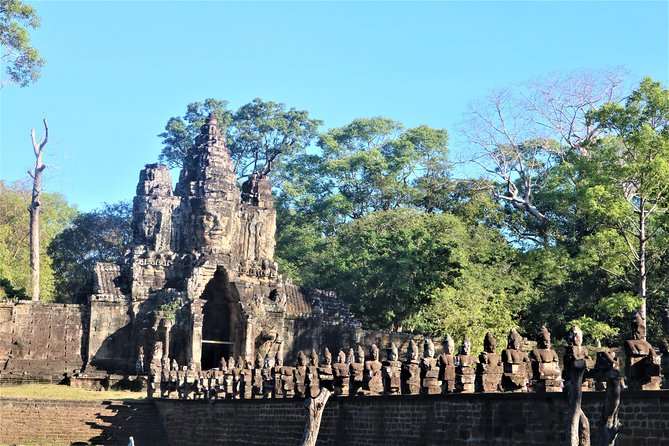
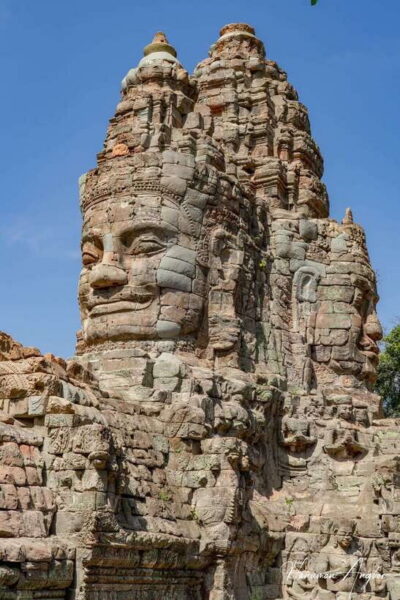
Finally you reach Bayon Temple, known for its central towers with more than 200 enormous faces. You’ll get about 1 hour here, and it’s one of the most visually distinctive stops in the entire Angkor complex.
Bayon works well as a finishing temple because it’s readable quickly. You look up, you see the faces, and then you start noticing how the views differ from each walkway. Even without expert lore, your brain will pick up the pattern faster because the design is so repetitive and clear.
Temple Pass, Dress Code, and What to Bring So You Don’t Get Stuck
This tour lists a base price of $43 per person, but the big thing you need to plan for is the temple pass. The tour instructions clearly say an additional surcharge of USD 62 for a 2–3 days temple pass is payable on the day of your activity. Temple pass is not included in the tour price.
Also, each stop has its own admission note (some are marked free in the schedule, others not). In practice, what you should assume is: the pass governs access for the sites where required, and you may still see free sites on the route. To avoid a last-minute surprise, confirm on the morning of your tour how your pass will cover your exact stops.
You’ll also want to follow the dress code: casual is fine, but you must cover shoulders and knees inside temples. Bring a light layer if your clothes are borderline. This is one of those rules that can slow you down fast if you’re careless.
For the sunrise portion, bring what the plan asks for: a torch for the dark entry. Comfortable walking shoes matter too. You’re visiting multiple sites over two days, and your feet will notice. Think support over style.
One more practical tip: request (or confirm) a wake-up call at your hotel so you’re not gambling with early morning timing.
Guide and Comfort Details: Pickup, Air-Conditioning, and the Human Touch
The tour includes hotel pickup and drop-off and an air-conditioned vehicle. That’s not just convenience. It keeps your start and finish cleaner, which is important when your Day 2 begins pre-dawn.
What makes the guide experience feel worth it is how much context you can absorb quickly. Past guest feedback singled out guides such as Sok for temple knowledge, and the drive experience was associated with a driver named Richard. You also get support details like mineral water and the helpful addition of cool flannels between stops.
Now, I’d frame it like this: you’re paying for more than transportation. You’re paying for someone local who can help you understand what you’re looking at so the temples feel meaningful, not just impressive.
If you’re choosing between a fast “see everything” option and a guided one, the guided option is usually better value here. The temples are complex. A guide helps you get your bearings fast.
Value for the Price: What $43 Covers and What Costs Extra
Let’s talk math, because Angkor costs can surprise you if you only look at the headline number.
- Tour price: $43 per person
- Temple pass: $62 per person (payable on the day of your activity)
- Meals: not included as a general rule, though breakfast is part of the Day 2 plan at a local Khmer restaurant
So, you’re likely planning on about $105 before souvenirs, plus whatever you spend on drinks, lunch, or dinner. For many visitors, that still feels like strong value because you’re getting:
- 2 full days of guided temple visits
- hotel pickup/drop-off
- air-conditioned transport
- mineral water
- English-speaking licensed guide
- sunrise entry portion at Angkor Wat, with specific guidance on where and how to enter
Where you lose a bit of value: if you were hoping for a fully all-inclusive price, temple pass costs mean you’ll pay extra anyway. But if you’re already planning to visit Angkor, this tour price becomes much easier to justify.
Also, group size matters. With a maximum of 15 travelers, you’re less likely to feel lost in a big crowd, and that often improves how much you actually enjoy the stops.
Who This Tour Suits (and Who Might Prefer Something Else)
This tour suits you if you want:
- Angkor Wat sunrise in a structured way (with torch advice and early entry)
- a mix of major Angkor highlights and Day 1 temples outside the main city core
- English-speaking guiding so you can understand what you’re seeing as you walk
You might consider a different option if:
- you hate early mornings and long temple days
- you’re hoping for a slower, more flexible schedule where you can linger for an hour at every viewpoint
- you’re sensitive to heat and walking, since this is a two-day schedule with multiple stops
This is also a solid fit for first-timers to Siem Reap who want a compact route and a guide to keep everything organized.
One note for families: children must be accompanied by an adult, and children younger than 5 are not allowed.
Should You Book This 2-Day Sunrise Temples Tour?
I’d say book it if Angkor Wat sunrise is high on your list and you want a plan that covers the big names without requiring you to coordinate transport and guide details yourself. The small-group limit, licensed English guide, hotel pickup, and the clear sunrise instructions (including the torch) make it a practical choice.
I’d pause before booking if the temple pass extra cost changes your budget, or if you’re not comfortable with dress code rules and early wake-up timing. Also, if you want a very leisurely style, this itinerary will feel busy—by design.
If you’re the kind of traveler who likes to see a lot while still having help to make it make sense, this is a good match.
FAQ
What time does the tour start?
The tour lists a start time of 8:00 am. Since the sunrise at Angkor Wat is pre-dawn, you should also arrange a wake-up call at your hotel to avoid missing the early departure.
Does this tour include pickup from my hotel?
Yes. Hotel pickup and drop-off are included, and you travel by air-conditioned vehicle.
Is the Angkor temple pass included in the price?
No. A temple pass is not included. You’ll need to pay an additional USD 62 per person for a 2–3 days temple pass on the day of your activity.
Do I need to bring a torch for Angkor Wat sunrise?
Yes. The sunrise plan specifically notes that you should bring a torch for entry while it’s still dark.
What temples are included across the two days?
You’ll visit Pre Rup, Banteay Srei, Preah Khan, and Neak Pean on Day 1. On Day 2 you’ll see Angkor Wat at sunrise, then Srah Srang, Ta Prohm, Terrace of the Elephants (and the Terrace of the Leper King), and Bayon Temple.
Is breakfast included?
Breakfast is included on Day 2 at a Khmer local restaurant. The tour also suggests you can request a breakfast pack if your hotel includes breakfast.
What’s the dress code for temple visits?
Dress code is casual, but you must cover shoulders and knees inside temples.
How big is the group?
The tour has a maximum of 15 travelers.
Are kids allowed?
Children must be accompanied by an adult, and children younger than 5 years old are not allowed.
More Days at the Temples
- Siem Reap: Angkor Wat 2-Day Tour with Sunrise and Sunset
★ 4.9 · 4,429 reviews - Angkor 2-Day Sunset & Sunrise Small-Group Tour
★ 5.0 · 2,567 reviews - 2 Days Exclusive Temple Highlights with Sunset and Sunrise Tour
★ 5.0 · 1,157 reviews - Siem Reap: Angkor Sunrise 1- or 2-Day Guided Temples Tour
★ 4.9 · 1,132 reviews - 2 Days Guided Historical Tour in Angkor
★ 5.0 · 855 reviews
More Temple Circuits Around Siem Reap
- Angkor Wat Sunrise or Sunset Tour with Guide from Siem Reap
★ 5.0 · 12,109 reviews - Siem Reap: Angkor Wat: Small-Group Sunrise or Sunset Tour
★ 5.0 · 9,444 reviews - Siem Reap: Angkor Wat 2-Day Tour with Sunrise and Sunset
★ 4.9 · 4,429 reviews - Siem Reap: Full-Day Angkor Wat Guided Tour with Sunset
★ 4.9 · 3,803 reviews - Angkor Wat Sunrise tour with Small – Group and Guide tours
★ 5.0 · 3,655 reviews
Dawn and Dusk Over Angkor
- Angkor Wat Sunrise or Sunset Tour with Guide from Siem Reap
★ 5.0 · 12,109 reviews - Siem Reap: Angkor Wat: Small-Group Sunrise or Sunset Tour
★ 5.0 · 9,444 reviews - Sunset tour of Kampong Phluk stilts home village on the Tonle Sap
★ 5.0 · 4,865 reviews - Siem Reap: Angkor Wat 2-Day Tour with Sunrise and Sunset
★ 4.9 · 4,429 reviews - Siem Reap: Full-Day Angkor Wat Guided Tour with Sunset
★ 4.9 · 3,803 reviews
Just Added: Fresh Siem Reap Tour Reviews

Angkor Sunrise & Sunset Tours, compared.
 ★ 5.0Angkor Wat Sunrise or Sunset Tour with Guide from Siem ReapFrom $1812,109 reviews
 ★ 5.0Angkor Wat: Small-Group Sunrise or Sunset TourFrom $159,444 reviews
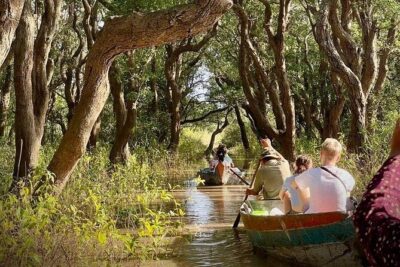 ★ 5.0Sunset tour of Kampong Phluk stilts home village on the Tonle SapFrom $214,865 reviews
 ★ 4.9Angkor Wat 2-Day Tour with Sunrise and SunsetFrom $344,429 reviews
 ★ 4.9Full-Day Angkor Wat Guided Tour with SunsetFrom $153,803 reviews
 ★ 5.0Angkor Wat Sunrise tour with Small – Group and Guide toursFrom $143,655 reviews
 ★ 5.0Angkor Wat Highlights and Sunrise Guided Tour from Siem ReapFrom $233,213 reviews
 ★ 5.0Angkor Wat Sunset Small Group Tour with Lunch IncludedFrom $203,059 reviews
Browse the lists this tour appears in