
Reviewed · ANGKOR SUNRISE & SUNSET TOURS
3-Day Private tour: Small tour, Outside tour, Grand tour with Sunrise
Angkor feels bigger when you stop chasing it and start understanding it. This private 3-day grand tour from Siem Reap strings together Angkor Thom, Angkor Wat, Ta Prohm, plus the outside-circuit wow factors like Beng Mealea and Kampong Phluk. I really like that you get an English-speaking guide who explains what you’re seeing while you move through the ruins. I also like the comfort bits: private air-conditioning, and free cold water and towels between temple stops. One consideration: the Angkor 3-day pass (and the Tonle Sap Lake pass) are not included, so you’ll want to budget and plan those upfront.
From the guide notes and past travelers’ write-ups, the big difference here is how much the guide helps you connect the dots. Guides such as Sous Raman and the Asean Angkor Guide were praised for clear explanations and even humor, and for helping people get good photos at the right moments. You’ll also likely meet a punctual driver (names like Sothea, Raksa, and Dora show up in feedback), plus the small comfort touch of water and a towel right after the heat-and-stone grind.
This plan is packed, and Siem Reap’s humidity can be real. Day 2 includes Kampong Phluk on Tonle Sap Lake, but the schedule specifically warns it’s not a great time to visit during the dry season (March to July), when conditions can be less satisfying. If you want an Angkor trip with structure and less hassle, this fits well. If you hate long days, you may want fewer temples.
In This Review
- Key highlights you will feel on the ground
- What this 3-day private grand tour really includes
- Day 1: South Gate to Bayon, then Angkor Wat and Phnom Bakheng
- Angkor Thom South Gate
- Bayon, Baphuon, and the “royal square” feeling
- Lunch and the pivot to Angkor Wat
- Phnom Bakheng sunset viewpoint climb
- Day 2: Banteay Srei early, Beng Mealea jungle, then Rolous and Kampong Phluk
- Banteay Srei (Lady’s temple) before the crush
- Beng Mealea: the jungle temple feeling
- Rolous Group: Bakong and Prasat Preah Kor
- Kampong Phluk: stilt village life on Tonle Sap
- Day 3: Angkor Wat again, Ta Prohm’s trees, and the eastern circuit temples
- Ta Prohm: the tree-and-stone photo icon
- Preah Khan, Neak Pean, Ta Som, and the temple chain
- Temple timing, heat, and photo tips that save your day
- Price and value: what $175 per person covers (and what it doesn’t)
- Who should book this tour, and who might want a different pace
- Should you book this 3-day private Grand tour in Siem Reap?
- FAQ
- What’s included in this 3-day private tour?
- Do I need to buy the Angkor pass?
- Is food and beverage included?
- Is this a private tour or a group tour?
- What are the main stops across the three days?
- Are admission tickets included for the temples?
- What should I know about Tonle Sap Lake timing?
- What if the weather is poor or I need to cancel?
Key highlights you will feel on the ground
- A guide-led route through Angkor Thom and Angkor Wat, with a clear order so you don’t feel lost in stone.
- Outside-circuit stops like Beng Mealea and Kampong Phluk, so you see more than the postcard core.
- Early-morning timing at Banteay Srei, designed to help you beat the worst of the crowds.
- Comfort between stops: private air-conditioned vehicle plus free cold water and towels.
- The Bakheng viewpoint climb, a classic high point for dramatic light on the ruins.
- Strong English support, with a fully vaccinated English-speaking tour guide included.
Chasing the light? More dawn and dusk runs
- Angkor Wat Sunrise or Sunset Tour with Guide from Siem Reap★ 5.0 · 12,109 reviews
- Siem Reap: Angkor Wat: Small-Group Sunrise or Sunset Tour★ 5.0 · 9,444 reviews
- Sunset tour of Kampong Phluk stilts home village on the Tonle Sap★ 5.0 · 4,865 reviews
- Siem Reap: Angkor Wat 2-Day Tour with Sunrise and Sunset★ 4.9 · 4,429 reviews
What this 3-day private grand tour really includes
You’re paying for more than ticket-free sightseeing. The tour includes hotel pickup and drop-off in Siem Reap, a private air-conditioned vehicle, and an English-speaking tour guide (listed as fully vaccinated). Cold water and towels are provided during the tour, which matters a lot in Angkor’s heat.
Because it’s private, you’re not sharing your schedule with strangers who drift slower or faster than you do. Your guide can keep the day organized: temple order, timing, and photo stops. That structure is a big deal when you’re visiting places with similar-looking corridors, doorways, and towers.
The main thing you should expect to manage yourself: temple admissions and meals. Most temple sites on the itinerary show admission tickets as not included, and food/drink are not included either. The guide can still help you buy passes and keep things moving, but you should bring cash/card for the passes and plan meals on your own.
Day 1: South Gate to Bayon, then Angkor Wat and Phnom Bakheng
Day 1 starts early, meeting at 8:00 am in the hotel lobby. The first move is practical: you buy your Angkor 3-day pass before heading into the Angkor Thom complex. This is one of those small logistics wins. Instead of you figuring out pass lines and confusion at the gate, your day is ready to go.
Angkor Thom South Gate
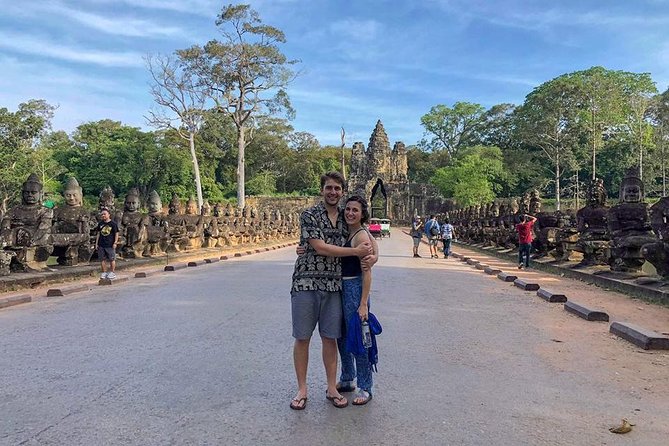
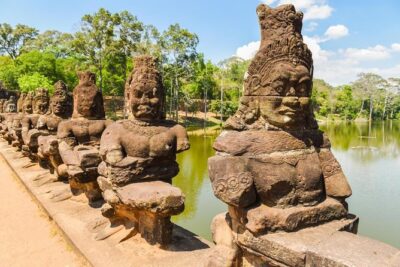
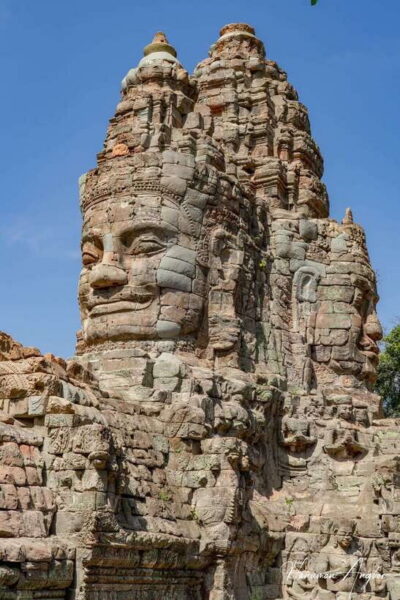
The South Gate is your orientation point into the Khmer Empire’s ancient city. Even if you know Angkor basics, this stop helps your brain lock in the geography. You’re stepping into a walled-city mindset—big axis, ceremonial approach, and the feeling that every temple had a political role.
Bayon, Baphuon, and the “royal square” feeling
From there you move to Bayon, the late-12th/early-13th century state temple of Jayavarman VII, famous for its many faces. You’ll get about 45 minutes here, which is enough time to look up, look forward, and understand why Bayon is the emotional center of Angkor Thom.
Next is Baphuon (about 30 minutes). It’s a three-tiered temple mountain associated with Shiva and built by Khmer rulers in a different era than Bayon. With a guide, this stop becomes more than architecture spotting; it helps you compare how the Khmer changed styles over time.
Then the day rounds out key structures inside the royal zone:
- Phimeanakas (about 20 minutes) inside the Royal Palace compound area
- Terrace of the Elephants (about 10 minutes), where Jayavarman VII’s victorious army viewing role is tied to the terrace’s meaning
- Terrace of the Leper King (about 5 minutes), a shorter stop that can still be worthwhile if you learn the story behind the name
Short note: several of these stops are brief on the schedule. That isn’t a flaw, as long as the guide is explaining while you’re there. The time pressure keeps the day from turning into a slow shuffle with sore legs.
More temple circuits, set side by side
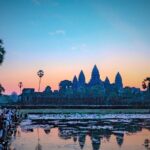
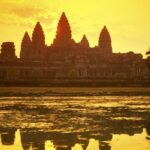
Lunch and the pivot to Angkor Wat
After the terraces, you get a lunch break around 60 minutes before moving to Angkor Wat. Angkor Wat is listed for about 1 hour 30 minutes on Day 1. That’s a solid chunk, especially because you’re not only walking; you’re also absorbing the shift from its Hindu origins (Vishnu) to later Buddhist use.
A good guide usually helps you pick what to notice: the symbolism, the structure, and the why-be-this-way logic behind the layout.
Phnom Bakheng sunset viewpoint climb
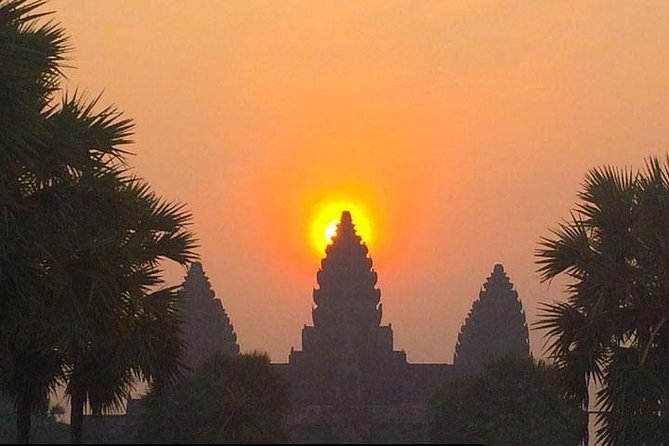
The day ends with Phnom Bakheng, about 1 hour. This is the climb-and-view stop. Expect the classic payoff: you’re higher than the main temple grounds, so you get that dramatic sense of Angkor spreading out below you.
If heat is wearing you down, this viewpoint can feel like a reward and a test at the same time. Plan to pace yourself on the stairs and don’t treat it like a race.
Day 2: Banteay Srei early, Beng Mealea jungle, then Rolous and Kampong Phluk
Day 2 also starts at 8:00 am. The theme is variety: refined red sandstone, then a temple swallowed by trees, then everyday Cambodian life by the water.
Banteay Srei (Lady’s temple) before the crush
You head to Banteay Srei early. This is called out as a way to get there before huge crowds. The payoff is your experience: smaller scale, intricate carvings, and less of that scramble-y feeling you can get at the most famous sites.
Banteay Srei is known as a “red sandstone” temple in the tour plan, and the point of going early isn’t just fewer people. It’s better time to actually look at the details without being pushed around.
Beng Mealea: the jungle temple feeling
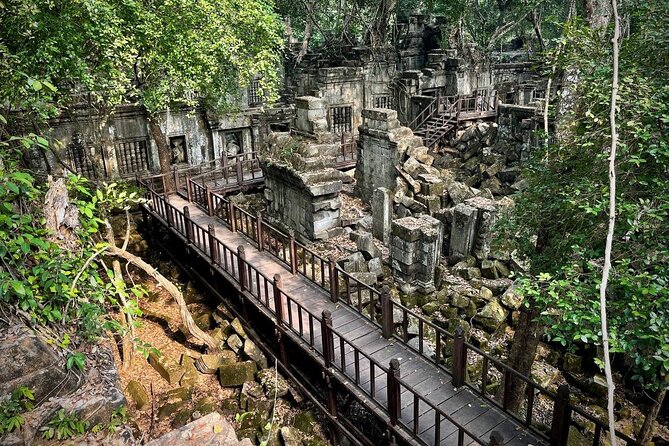
Next is Beng Mealea, about 1 hour, described as a jungle temple from the Angkor Wat period. This is the stop that tends to make people say I can’t believe this is real.
The schedule also calls it 40 km east of the main Angkor group, on the ancient royal highway toward Preah Khan Kompong Svay. That distance adds travel time, but it also adds a different mood—less museum-like, more raw and atmospheric.
One warning you should not ignore: this is a walking-through-temple style stop. Wear shoes you can trust. Bring a hat and keep a steady rhythm so you don’t burn out before the best photo moments.
Rolous Group: Bakong and Prasat Preah Kor
After a lunch break (about 60 minutes), you continue with temples in the Rolous Group: Bakong (about 1 hour) and Prasat Preah Kor (listed as a must-see “secret bull temple”). The idea is to show you a different era and style from the main circuit, without sending you across Cambodia.
Bakong is described as the first temple mountain of sandstone constructed by rulers of the Khmer empire near modern Siem Reap. That framing makes Bakong feel less like a lesser site and more like an early chapter of Angkor’s architectural story.
The plan lists Bakong as “free,” but with temple sites you should still verify on the day what ticket rules apply. Even when something is marked free, conditions can change.
Kampong Phluk: stilt village life on Tonle Sap
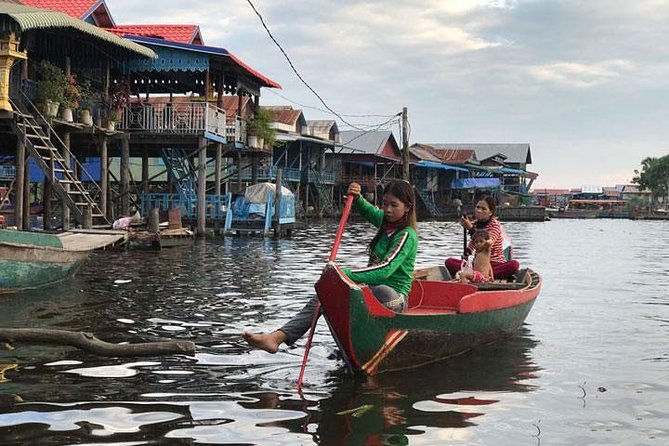
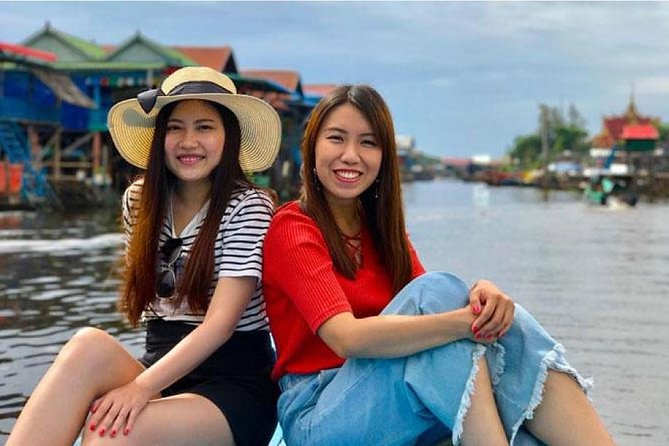
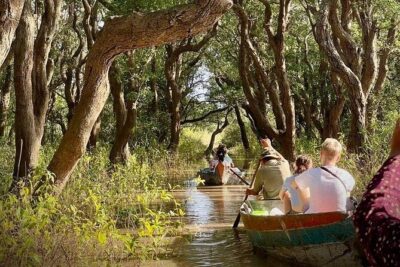
Finally, you visit Kampong Phluk (about 1 hour). This is a commune/village built on stilts on Tonle Sap, tied to fishing and seasonal rhythms. The tour plan specifically notes that it’s not good to visit Tonle Sap Lake during the dry season (March to July). Use that as a guide when you plan your trip dates.
This stop adds contrast to the Angkor stonework. You’re shifting from temples and kings to daily life and water-based survival. It’s also where your guide can point out what you’re seeing in the village context, not just as scenery.
Day 3: Angkor Wat again, Ta Prohm’s trees, and the eastern circuit temples
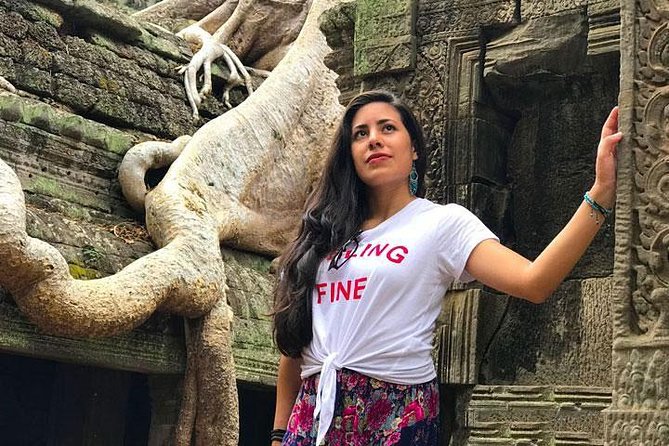
Day 3 keeps the structure but adds more of the “less crowded but still famous” temples around Angkor. Angkor Wat is on the plan again for about 1 hour, so you’re not locked into a single rushed look on Day 1. That second visit window can help you focus on what you missed earlier.
The schedule mentions a breakfast stop around 40 minutes at Angkor Archaeological Park. From there, the day turns into a temple walkathon with a sequence designed to keep you moving across the broader Angkor area.
Ta Prohm: the tree-and-stone photo icon
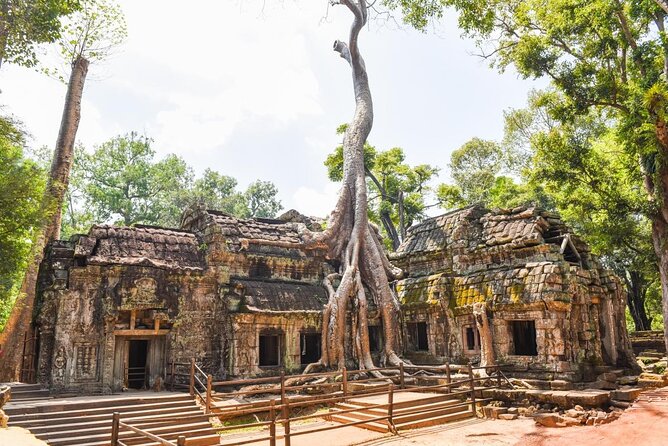
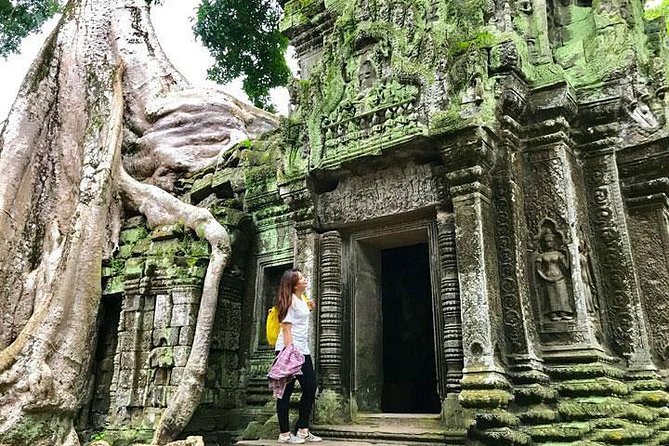
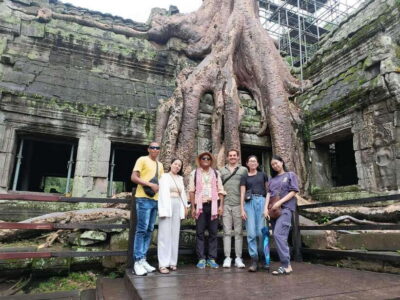
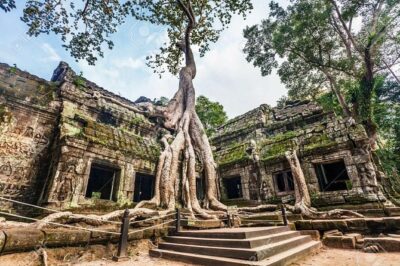
Ta Prohm (about 1 hour) is next. This is one of those temples people recognize instantly because of the trees. The tour plan calls it Rajavihara originally, but the modern identity is what pulls you in: tangled roots, dramatic framing, and that slightly wild feel.
Preah Khan, Neak Pean, Ta Som, and the temple chain
After Ta Prohm comes Preah Khan (about 1 hour). It’s associated with Jayavarman VII and describes a huge organization with almost 100,000 officials and servants. That scale matters because it changes how you read the site—you stop thinking of it as a single temple and start seeing it as a city engine.
Then you hit a run of related structures:
- Neak Pean (about 30 minutes), an artificial island with a Buddhist temple on a circular island in Jayatataka Baray
- Ta Som (about 30 minutes), a smaller temple northeast of Angkor Thom
- Eastern Mebon Temple (about 30 minutes), on what was once an artificial island at the center of a dry East Baray reservoir
- Srah Srang (about 1 hour) as a lunch-break anchor point on the route
- Pre Rup (about 40 minutes), a state temple of Rajendravarman dedicated to Shiva, built as a temple mountain
This sequence is where a strong guide earns their keep. These sites can look similar if you’re only glancing. With explanations, you start noticing how each one fits into the bigger plan—water reservoirs, symbolic islands, and the Khmer way of mixing religion and government planning.
Temple timing, heat, and photo tips that save your day
Even with a private schedule, you still fight the biggest enemy in Angkor: heat. One past traveler flat-out noted it was so hot their iPhone couldn’t be used. That’s not meant to scare you. It’s a reminder to protect your gear and keep your energy steady.
Here’s what you can do without turning the day into a science project:
- Use the included cold water and towels on purpose, not as an afterthought.
- Slow down on climbs like Phnom Bakheng. Save your speed for flat ground.
- For photos, ask your guide about the best angles at each major stop. Past feedback mentioned guides helping people get natural shots, so take advantage of that rather than guessing.
Also, don’t ignore timing. Day 2 is set up to reach Banteay Srei earlier to avoid huge crowds. That’s a real quality-of-life perk. Less pushing, more time at the details, and fewer rushed photos where everyone’s faces are half-blurred.
Price and value: what $175 per person covers (and what it doesn’t)
The listed price is $175.00 per person for about 3 days. For that, you get:
- Hotel pickup and drop-off
- A private air-conditioned vehicle
- Fully vaccinated English-speaking tour guide
- Free cold water and towels during the tour
- Private participation (only your group)
You do not get:
- Angkor 3-day pass
- Tonle Sap Lake pass
- Beverage and food
So the smart way to think about value is this: you’re paying to remove most friction—transport, guide, and comfort—while you handle the unavoidable temple admissions and your meals. Since this route includes multiple major sites across several days, a guide-led plan can be cheaper than you assume if you would otherwise hire separate drivers for outside stops.
Group discounts are mentioned too. If you’re traveling with friends or family, ask about combining groups to lower per-person cost.
Who should book this tour, and who might want a different pace
This tour is ideal if you want:
- A structured Angkor route that hits Angkor Thom, Angkor Wat, and Ta Prohm, plus outside sites like Beng Mealea and Kampong Phluk
- A guide who can explain temple meanings, so you’re not just walking and photographing
- Private comfort: air-conditioning, water, towels, and pickup/drop-off
It may not suit you if:
- You hate long temple days and lots of walking
- You want a totally relaxed itinerary with lots of free time (this plan is built for consistent progress)
- You’re visiting Tonle Sap in the dry season (March to July), since the schedule specifically notes it may not be good then
Should you book this 3-day private Grand tour in Siem Reap?
If your goal is to see the key Angkor highlights and still feel like you understood what you were looking at, this is a strong pick. The mix of Angkor Thom, Angkor Wat, Ta Prohm, plus outside stops like Beng Mealea and Kampong Phluk gives you variety in a small amount of time.
Just be practical: buy or budget for the passes, plan for heat, and wear comfortable shoes. If you do those basics, you’ll get the big-value part of a private guided Angkor trip—less confusion, better pacing, and temple context you’ll remember.
FAQ
What’s included in this 3-day private tour?
The tour includes a fully vaccinated English-speaking tour guide, a private air-conditioned vehicle, free cold water and towels during the tour, and hotel pick-up and drop-off.
Do I need to buy the Angkor pass?
Yes. The Angkor pass of 3 days is not included, and the tour includes time to purchase the pass before exploring Angkor Thom.
Is food and beverage included?
No. Beverage and food are not included in the tour price.
Is this a private tour or a group tour?
This is a private tour/activity. Only your group will participate.
What are the main stops across the three days?
The route includes Angkor Thom highlights (South Gate, Bayon, Baphuon, and terraces), Angkor Wat, Phnom Bakheng, Banteay Srei, Beng Mealea, temples in the Rolous Group (including Bakong), Kampong Phluk, and additional Angkor sites such as Ta Prohm, Preah Khan, Neak Pean, Ta Som, East Mebon, Srah Srang, and Pre Rup.
Are admission tickets included for the temples?
Admission tickets are listed as not included for most stops. One stop, Bakong, is listed as free, but you should still be ready for on-site admission rules.
What should I know about Tonle Sap Lake timing?
The tour plan specifically notes it is not good to visit Tonle Sap Lake during the dry season from March to July.
What if the weather is poor or I need to cancel?
The experience requires good weather; if canceled due to poor weather, you’ll be offered a different date or a full refund. There is also free cancellation up to 24 hours in advance for a full refund.
More Days at the Temples
- Siem Reap: Angkor Wat 2-Day Tour with Sunrise and Sunset
★ 4.9 · 4,429 reviews - Angkor 2-Day Sunset & Sunrise Small-Group Tour
★ 5.0 · 2,567 reviews - 2 Days Exclusive Temple Highlights with Sunset and Sunrise Tour
★ 5.0 · 1,157 reviews - Siem Reap: Angkor Sunrise 1- or 2-Day Guided Temples Tour
★ 4.9 · 1,132 reviews - 2 Days Guided Historical Tour in Angkor
★ 5.0 · 855 reviews
More Temple Circuits Around Siem Reap
- Angkor Wat Sunrise or Sunset Tour with Guide from Siem Reap
★ 5.0 · 12,109 reviews - Siem Reap: Angkor Wat: Small-Group Sunrise or Sunset Tour
★ 5.0 · 9,444 reviews - Siem Reap: Angkor Wat 2-Day Tour with Sunrise and Sunset
★ 4.9 · 4,429 reviews - Siem Reap: Full-Day Angkor Wat Guided Tour with Sunset
★ 4.9 · 3,803 reviews - Angkor Wat Sunrise tour with Small – Group and Guide tours
★ 5.0 · 3,655 reviews
Dawn and Dusk Over Angkor
- Angkor Wat Sunrise or Sunset Tour with Guide from Siem Reap
★ 5.0 · 12,109 reviews - Siem Reap: Angkor Wat: Small-Group Sunrise or Sunset Tour
★ 5.0 · 9,444 reviews - Sunset tour of Kampong Phluk stilts home village on the Tonle Sap
★ 5.0 · 4,865 reviews - Siem Reap: Angkor Wat 2-Day Tour with Sunrise and Sunset
★ 4.9 · 4,429 reviews - Siem Reap: Full-Day Angkor Wat Guided Tour with Sunset
★ 4.9 · 3,803 reviews
Just Added: Fresh Siem Reap Tour Reviews

Angkor Sunrise & Sunset Tours, compared.
 ★ 5.0Angkor Wat Sunrise or Sunset Tour with Guide from Siem ReapFrom $1812,109 reviews
 ★ 5.0Angkor Wat: Small-Group Sunrise or Sunset TourFrom $159,444 reviews
 ★ 5.0Sunset tour of Kampong Phluk stilts home village on the Tonle SapFrom $214,865 reviews
 ★ 4.9Angkor Wat 2-Day Tour with Sunrise and SunsetFrom $344,429 reviews
 ★ 4.9Full-Day Angkor Wat Guided Tour with SunsetFrom $153,803 reviews
 ★ 5.0Angkor Wat Sunrise tour with Small – Group and Guide toursFrom $143,655 reviews
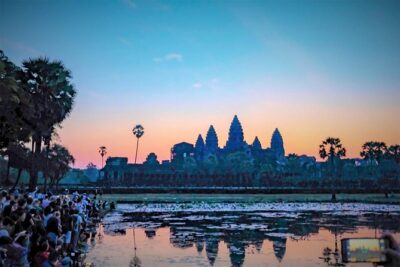 ★ 5.0Angkor Wat Highlights and Sunrise Guided Tour from Siem ReapFrom $233,213 reviews
 ★ 5.0Angkor Wat Sunset Small Group Tour with Lunch IncludedFrom $203,059 reviews
Browse the lists this tour appears in