
Reviewed · ANGKOR TEMPLE TOURS
3-Day ‘Temples & Tonle Sap’ Tour
Morning temples and water villages. That’s the feel of this tight 3-day plan from Siem Reap, built for travelers who want big Angkor hits and the Tonle Sap floating villages without wrestling with logistics. I like that the day structure mixes famous sites with quieter, earlier Khmer stops like the Roluos group, so your itinerary doesn’t feel like a simple checklist.
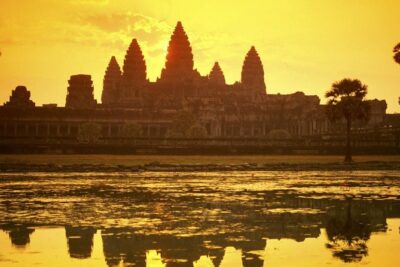
My other favorite part is the way Angkor Wat shows up twice—once in the afternoon and again for sunrise—so you’re not stuck seeing it only when the crowds peak. The main thing to consider is that the temple passes are not included, so budget for the Angkor 3-day pass on top of the tour price.
In This Review
- Key points before you go
- Price and value: what $250 covers (and what it doesn’t)
- Day 1: Angkor passes, classic temples, and the long Angkor-Wat day
- Day 2: Angkor Wat sunrise, then a cluster of temples and the ladies temple
- Day 3: Tonle Sap at Kampong Phluk, Roluos temples, and a local market break
- Guide, transfers, and why the logistics feel easier than DIY
- Pace, walking, and who should choose this itinerary
- Should you book this Temples & Tonle Sap tour?
- FAQ
- Are the temple passes included?
- Does the tour include hotel pickup and drop-off?
- Is a boat ride included?
- What time does the tour start?
- Are meals included?
- Is the tour suitable for young children?
- What if I need to cancel?
Key points before you go
- Hotel pickup and drop-off keep your first morning stress-free
- Angkor Wat sunrise plus an afternoon visit gives you two very different atmospheres
- Motorized boat ride connects the Angkor temples to Tonle Sap’s floating lifestyle
- An English-speaking guide helps you understand what you’re looking at, not just where to walk
- Air-conditioned vehicle, bottled water, and cold towels help on a long, hot schedule
More temple circuits, set side by side
- Angkor Wat Sunrise or Sunset Tour with Guide from Siem Reap★ 5.0 · 12,109 reviews
- Siem Reap: Angkor Wat: Small-Group Sunrise or Sunset Tour★ 5.0 · 9,444 reviews
- Siem Reap: Angkor Wat 2-Day Tour with Sunrise and Sunset★ 4.9 · 4,429 reviews
- Siem Reap: Full-Day Angkor Wat Guided Tour with Sunset★ 4.9 · 3,803 reviews
Price and value: what $250 covers (and what it doesn’t)
At $250 for about 3 days, this tour earns its value by handling the hard parts: pickup/drop-off, transportation in an air-conditioned vehicle, and a professional English-speaking guide. You’re also getting a motorized boat fee, plus bottled water and cold towels—small things that matter when you’re moving temple to temple.
What you’ll add is the Angkor temple pass. You buy passes at the Angkor Enterprise ticket office, with rates listed as USD 62 for 3 days (or USD 72 for 7 days). Meals are not included, so bring cash for lunch breaks and any drinks you want along the way.
Also note the tour runs as an action-packed schedule, and it’s not suitable if you can’t walk normally or aren’t comfortable with long temple days. If you’re the type who likes to linger for hours, you might find the pacing a bit intense—but that’s also how the tour fits so much in.
Day 1: Angkor passes, classic temples, and the long Angkor-Wat day
Day 1 starts with Angkor pass logistics. You head to the Angkor Enterprise ticket office to buy your Angkor passes—one per person—then move on to the temple circuit. This is one of those “not glamorous, but smart” parts: it keeps you from losing time later or searching for the right pass while you’re already in the thick of it.
From there, you get the big-hitter temples in Angkor Thom and the Bayon-style world:
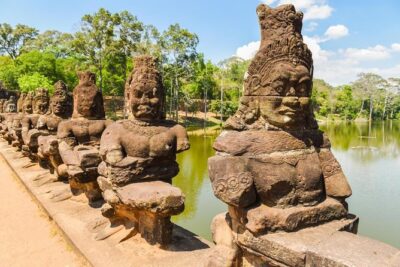
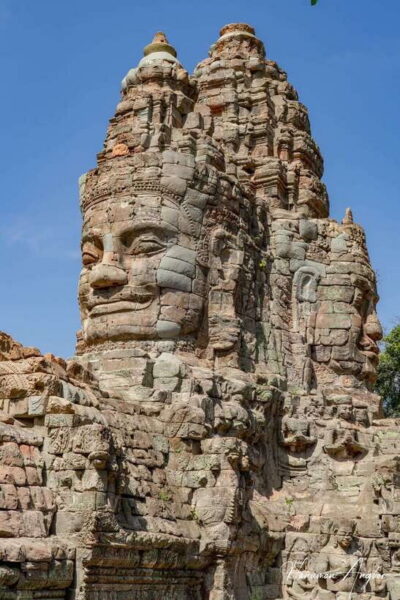
- Bayon Temple: described as a richly decorated Khmer temple built in the late 12th or early 13th century as the state temple of Jayavarman VII, the Mahayana Buddhist king. It’s positioned at the center of Jayavarman’s capital, Angkor.
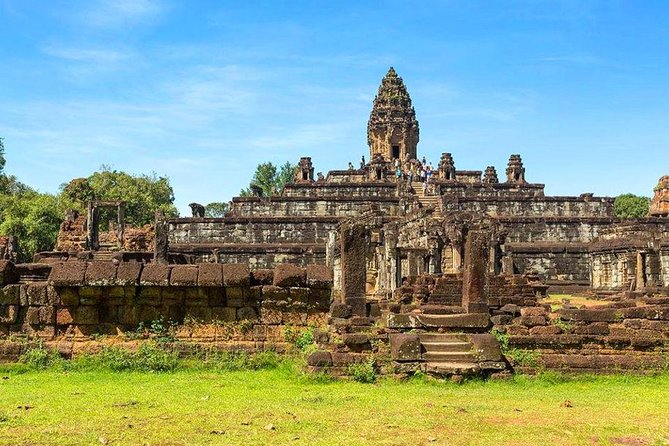
- Baphuon Temple: a three-tiered temple mountain from the mid-11th century, serving as the state temple of Udayadityavarman, dedicated to Shiva.
Then the itinerary pivots toward a more recognizable, photo-friendly kind of ruin:
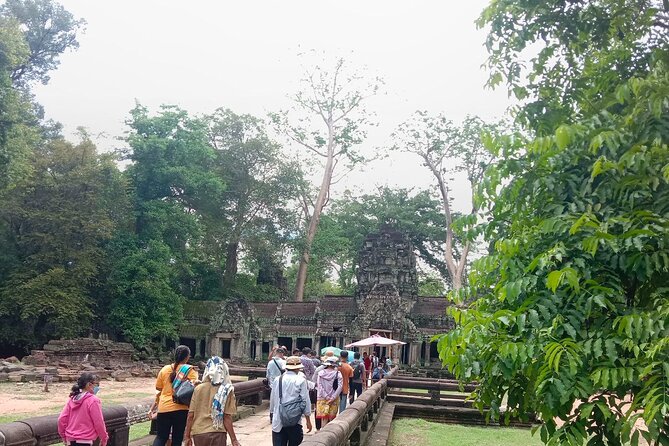
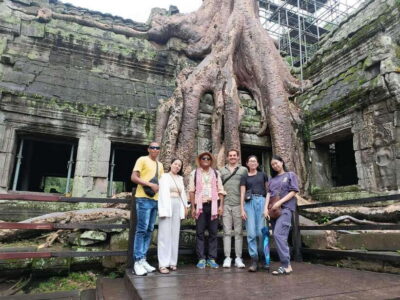
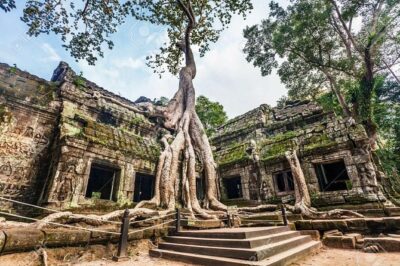
- Ta Prohm Temple: built in the Bayon style in the late 12th and early 13th centuries, originally called Rajavihara. You’ll have a focused block of time here, which is helpful because Ta Prohm can eat up attention fast.
You also stop at a royal-palace boundary space:
- Terrace of the Elephants (with the Terrace of the Leper King): these terraces form the eastern boundary of the Royal Palace grounds and face the parade grounds. It’s a good “pause” moment in the day because it feels different from the inner temple halls.
After lunch, the day’s centerpiece comes:
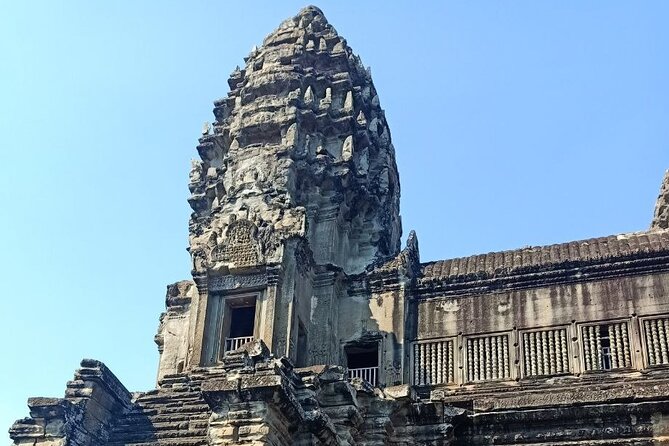
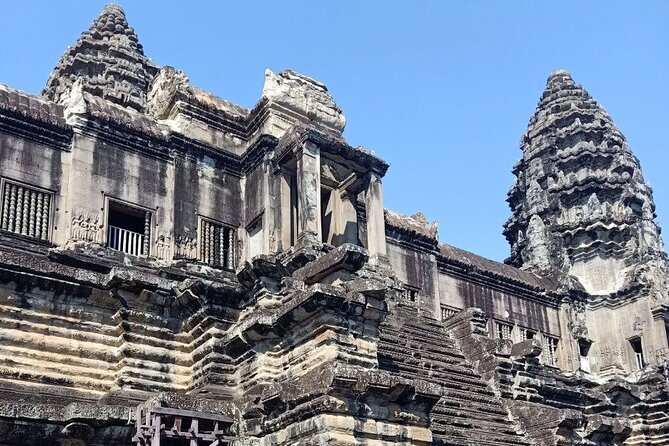
- Angkor Wat: the largest religious monument in the world, on a site measuring 162.6 hectares. Expect a long block here (the itinerary lists about 3 hours), and plan to see it as both architecture and atmosphere—this is the “everyone comes here for a reason” temple.
The day closes with a viewpoint temple:
- Phnom Bakheng: a temple mountain dedicated to Shiva, built at the end of the 9th century during the reign of King Yasovarman (889–910), and located atop a hill. Since it’s a popular tourist stop, you’ll want to stay flexible with timing and just follow your guide’s rhythm.
How this works for you: the day gives you the major Angkor Thom temples plus Angkor Wat in one push. If you’ve only got a short stay, this is efficient. The trade-off is you’re likely to feel temple fatigue by late afternoon, especially after a morning full of walking.
Day 2: Angkor Wat sunrise, then a cluster of temples and the ladies temple
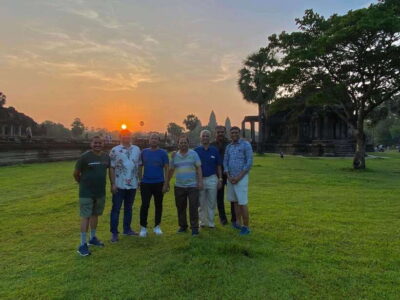
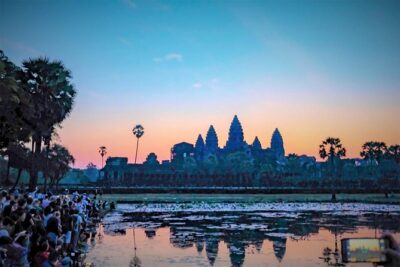
Day 2 starts with a classic choice: you revisit Angkor Wat for sunrise. Then the tour returns you to the guest hotel for breakfast. Seeing Angkor Wat this way changes your whole mental image of the place; it’s less about the “photo moment” and more about how the temple sits in the morning light and open space.
After breakfast, you shift into a tight temple neighborhood:
- Preah Khan, Neak Poan, Ta Som, and East Mebon are visited as a cluster, with about 2 hours allocated. Even without getting a huge, separate deep-dive at each stop, clustering is a smart way to keep travel time down and help your brain connect the sites.
Next you head to Banteay Srei, often called the ladies temple:
- Banteay Srei: a 10th-century Cambodian temple dedicated to Shiva, located near Phnom Dei hill, about 25 km north-east of the main Angkor area (as described). It’s a strong choice for contrast because it feels removed from the densest central zones.
Then you continue through smaller Angkor-era sites:
- Banteay Samre: in the Angkor Wat style, built in the early 12th century during the reign of Suryavarman II and Yasovarman II. It’s noted as being 400 metres east of the East Baray.
- Banteay Kdei: a Buddhist temple whose name means A Citadel of Chambers (also called Citadel of Monks’ cells). It’s located southeast of Ta Prohm and east of Angkor Thom, built mid-12th to early-13th centuries.
What I like about Day 2: it balances intensity with breathing room. The sunrise return and hotel breakfast are practical. And the mix of sites keeps you from repeating the exact same temple geometry all day.
Possible drawback: you’ll be up early for the sunrise timing (even if the exact pickup time isn’t stated here). If you’re sleep-sensitive, it helps to pack a good breakfast-ready attitude for the morning and not schedule anything strenuous the night before.
Day 3: Tonle Sap at Kampong Phluk, Roluos temples, and a local market break
Day 3 connects the temples to the water world of Cambodia, starting with:
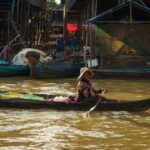
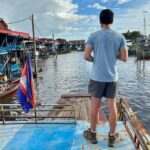
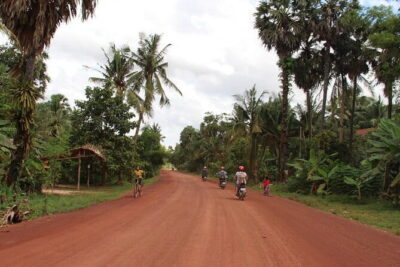
- Kompong Phluk (Kampong Phluk): villages largely built on stilts on the Tonle Sap, where the name is given as Harbor of the Tusks. The community depends on fishing, and the tour notes the wet season in Cambodia runs from May to October. This is where the Tonle Sap part becomes real—homes, daily work, and life organized around the water level.
This is also the most likely point in the schedule where the included motorized boat ride fits best. The itinerary doesn’t label the boat ride to a single stop, but given the boat is included and Kampong Phluk is a stilt-village area, you’ll get the water-side perspective instead of just looking from shore.
Then you move away from the “famous postcard” centers toward a key early Khmer group:
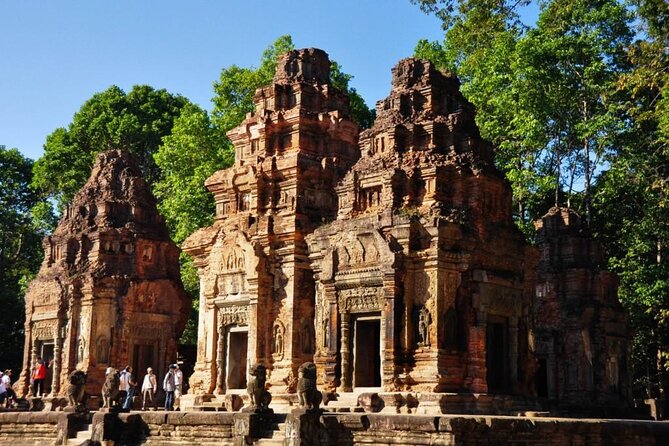
- Roluos Temples: this group is described as including some of the earliest permanent structures built by Khmer. They mark the beginning of the classical period of Khmer civilization, dating from the late 9th century, and the notes say some structures were totally built with brick.
This part matters because it changes how you interpret the whole Angkor complex. If you only visit Angkor’s biggest names, you can miss the sense that the civilization evolved in stages. The Roluos group gives you that progression feeling.
On the way back, there’s a more human-scale break:
- Phsar Leu (top market) and Phsar Chas (old market), plus Artisans d Angkor. The itinerary lists this time as about 2 hours and says admission is free. It’s the sort of stop that works well if you want to stretch your legs, snack, and shop without the pressure of a long detour.
How this day feels: less about temple-to-temple endurance and more about variety—water villages, early temple history, then local markets. It’s a strong “final day” choice if you want your last hours to feel different from Angkor Thom.
Back out on the lake, more stilted villages

Guide, transfers, and why the logistics feel easier than DIY
The tour’s structure is built around reducing friction. You get hotel pickups and drop-offs, plus an air-conditioned vehicle throughout the tour time blocks. That means you’re not negotiating tuk-tuks or arranging multiple drivers for sunrise, midday circuits, and Tonle Sap travel.
You also get a professional English-speaking guide, and the tour specifically highlights learning the history and culture of the area. In practice, that can help you connect dates, rulers, and temple purposes—like when the itinerary spells out that Bayon ties to Jayavarman VII and Baphuon ties to Udayadityavarman dedicated to Shiva. It turns the ruins from scenery into story.
Small comfort items help too: bottled water and cold towels are included. On hot days, that’s not “nice to have.” It’s the difference between pushing through and suddenly feeling cranky and dehydrated.
Your group setup is also worth mentioning. The experience notes say it’s a private tour/activity, so it’s only your group participating. That usually means fewer waits while people from other parties funnel in and out. It still runs as a schedule, though, so you’ll be following the day plan rather than roaming freely.
Pace, walking, and who should choose this itinerary
This is not a slow, sit-and-stare tour. It’s designed to fit more in than most independent schedules because the transportation and ticket timing are handled for you.
The tour also states it’s not suitable if you have less than average fitness or cannot walk normally. That’s a real consideration at Angkor, where uneven ground and long temple circuits are the norm. If you’ve got knee issues or your mobility is limited, you should think carefully before booking.
On the other hand, it says most travelers can participate, and it’s not limited to advanced adventurers. If you’re comfortable walking through ruins and you want a guided plan that hits the major highlights and a few earlier sites, this style is a good fit.
One more practical note: the vehicle departs your hotel at 8:30 am (start time listed). If you stay far from the pickup zone or you’re slow in the morning, plan to be ready on time so the day doesn’t feel rushed.
Should you book this Temples & Tonle Sap tour?
Book it if you want a guided, time-saving route through Angkor with a strong day-by-day structure. If you’re the kind of traveler who likes the “done for me” parts—pickup, transport, a guide, and even the motorized boat fee—this one is good value once you add the temple pass cost.
Skip or reconsider if you dislike early mornings, hate walking long days, or you want total freedom to linger at one temple for hours. Also, if your biggest goal is just one or two temples, paying for a bundled multi-day circuit may feel like you’re paying to move more than you want.
If you do book, I’d make one smart move: budget for the 3-day Angkor pass (USD 62) in advance, and plan your lunches around the tour timing so you don’t end up scrambling for food between stops.
FAQ
Are the temple passes included?
No. You buy the Angkor passes separately at the Angkor Enterprise ticket office. The listed rates include USD 62 for a 3-day pass.
Does the tour include hotel pickup and drop-off?
Yes. Hotel pickups and drop-offs are included, and the tour uses an air-conditioned vehicle for transport during the experience.
Is a boat ride included?
Yes. The fee for the motorized boat ride is included as part of the tour.
What time does the tour start?
The listed start time is 8:30 am, and the vehicle departs the guests hotel at that time.
Are meals included?
No. Meals, soft drinks, and alcohol are not included.
Is the tour suitable for young children?
It is not available for children under 3 years old.
What if I need to cancel?
You can cancel for a full refund if you cancel at least 24 hours in advance of the experience start time. If you cancel less than 24 hours before, you won’t get a refund.
More Days at the Temples
- Siem Reap: Angkor Wat 2-Day Tour with Sunrise and Sunset
★ 4.9 · 4,429 reviews - Angkor 2-Day Sunset & Sunrise Small-Group Tour
★ 5.0 · 2,567 reviews - 2 Days Exclusive Temple Highlights with Sunset and Sunrise Tour
★ 5.0 · 1,157 reviews - Siem Reap: Angkor Sunrise 1- or 2-Day Guided Temples Tour
★ 4.9 · 1,132 reviews - 2 Days Guided Historical Tour in Angkor
★ 5.0 · 855 reviews
Out on Tonle Sap
- From Siem Reap: Kampong Phluk Floating Village Tour by Boat
★ 4.9 · 6,979 reviews - Sunset tour of Kampong Phluk stilts home village on the Tonle Sap
★ 5.0 · 4,865 reviews - Kompong Phluk Floating Village Half-Day Tour ( Morning / Sunset )
★ 5.0 · 1,494 reviews - Siem Reap: Kulen Mountain, Beng Mealea and Tonle Sap Tour
★ 5.0 · 1,483 reviews - Tonle Sap Lake & Kampong Phluk Village Half-Day Tour
★ 5.0 · 1,045 reviews
More Temple Circuits Around Siem Reap
- Angkor Wat Sunrise or Sunset Tour with Guide from Siem Reap
★ 5.0 · 12,109 reviews - Siem Reap: Angkor Wat: Small-Group Sunrise or Sunset Tour
★ 5.0 · 9,444 reviews - Siem Reap: Angkor Wat 2-Day Tour with Sunrise and Sunset
★ 4.9 · 4,429 reviews - Siem Reap: Full-Day Angkor Wat Guided Tour with Sunset
★ 4.9 · 3,803 reviews - Angkor Wat Sunrise tour with Small – Group and Guide tours
★ 5.0 · 3,655 reviews
Just Added: Fresh Siem Reap Tour Reviews

Angkor Temple Tours, compared.
 ★ 5.0Angkor Wat Sunrise or Sunset Tour with Guide from Siem ReapFrom $1812,109 reviews
 ★ 5.0Angkor Wat: Small-Group Sunrise or Sunset TourFrom $159,444 reviews
 ★ 4.9Angkor Wat 2-Day Tour with Sunrise and SunsetFrom $344,429 reviews
 ★ 4.9Full-Day Angkor Wat Guided Tour with SunsetFrom $153,803 reviews
 ★ 5.0Angkor Wat Sunrise tour with Small – Group and Guide toursFrom $143,655 reviews
 ★ 5.0Angkor Wat Highlights and Sunrise Guided Tour from Siem ReapFrom $233,213 reviews
 ★ 5.0Angkor Wat Sunset Small Group Tour with Lunch IncludedFrom $203,059 reviews
 ★ 5.0Full-Day Angkor Wat Sunrise Private Tour with Guide from Siem ReapFrom $602,920 reviews
Browse the lists this tour appears in