
Reviewed · ANGKOR TEMPLE TOURS
3-Day tour with with All major Temple, Banteay Srei + Floating Village
Angkor can feel like sensory overload. This 3-day plan turns it into clear, day-by-day flow with smart timing and a human guide. You’re covering the big hitters, plus the smaller temples that make Angkor feel real, not staged.
What I like most is the private, luxury-style approach and the fact that your guide can adjust the day to your pace. I also love that you’re not just parked in front of stones; you’re getting context you can actually use while you walk.
One thing to keep in mind: the Angkor Archaeological Site entrance pass isn’t included, so you’ll need to plan for that extra cost and buy it at the main gate in US dollars. Also, you’ll be out in heat and sun for long stretches, so comfort depends on your tolerance.
In This Review
- Key things that make this tour work
- What you’re paying for: a 3-day Angkor plan with fewer headaches
- Day 1: Angkor Thom faces, jungle mood, then Angkor Wat at sunset-hour energy
- Bayon Temple: the stone-face moment that’s hard to forget
- Terrace of the Elephants: royal staging area and storybook stonework
- Terrace of the Leper King: a deep-cut stop that rewards curiosity
- Ta Prohm: jungle roots that make Angkor feel alive
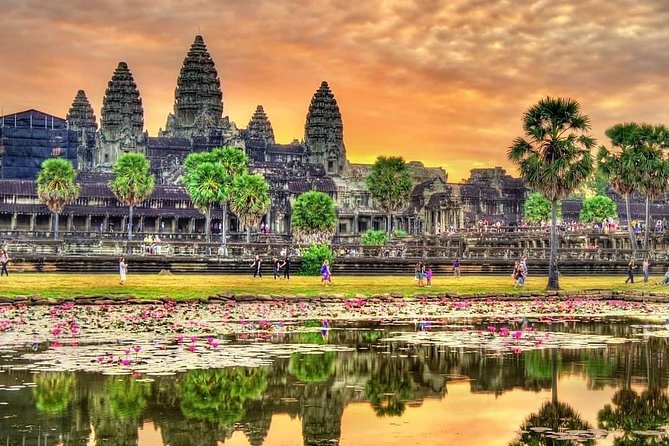
- Angkor Wat: the big finish with huge scale
- Phnom Bakheng: sunset viewpoint energy
- Day 2: Sunrise at Angkor Wat (optional) and Banteay Srei’s “small temple, huge detail” effect
- Sunrise Angkor Wat: the 5:00 start and why it’s worth it
- Banteay Srei: miniature scale and delicate carvings
- Eastern Mebon: an island temple feel on a reservoir site
- Ta Som: honoring a sibling, with an intimate scale
- Neak Pean: the naga symbolism on water-themed grounds
- Preah Khan: temple-city vibes and giant garuda sculptures
- Day 3: Roluos classics plus Kompong Phluk on Tonle Sap
- Bakong and Preah Ko: the early Angkor roots in the Roluos area
- Lolei: island temple logic tied to reservoirs
- Kompong Phluk: Tonle Sap community time on a UNESCO biosphere system
- Siem Reap city time: art school, workshops, and markets
- Price and what’s actually included (and what you’ll still need to budget)
- The Angkor pass, strict dress rules, and how to avoid day-trip friction
- Guide quality: why names like Veasna and Lion matter in a 3-day plan
- Who this tour is for (and who should consider a different style)
- Should you book this 3-day Angkor tour?
- FAQ
- Is the Angkor Archaeological Site entrance pass included?
- What time does the sunrise tour start on Day 2?
- What’s included in the tour price?
- What are the dress code rules at Angkor temples?
- Do I get pickup if I’m staying in Siem Reap?
- Is Kompong Phluk part of this tour?
Key things that make this tour work
- English-speaking guide with real authority: you may get guides like Veasna (a former monk with strong English) or Lion, both praised for knowledge and hospitality.
- Private vehicle comfort: air-conditioned transport between sites, plus cool water and a cool wet towel to reset.
- A balanced Angkor mix: major temples like Angkor Wat and Angkor Thom, plus quieter classics around the Roluos area.
- Real Tonle Sap life: Kompong Phluk gives you a human-scale view of lake communities, not just temple selfies.
- Timing that respects mornings: a 5:00 departure for sunrise at Angkor Wat (with an option if you’d rather not).
The pink sandstone carvings, a few more runs
- Siem Reap Tour: Angkor Wat Sunrise, Bayon, Ta Prohm, Banteay Srei★ 5.0 · 931 reviews
- 2-Day Angkor Wat With Small, Big Circuit and Banteay Srei Tour★ 5.0 · 545 reviews
- From Siem Reap: Banteay Srei Temple & Grand 5 Temple Tour★ 4.8 · 262 reviews
- 3-Days Discovery Of Angkor: Waterfalls,Floating Village and Banteay Srei temple★ 5.0 · 214 reviews
What you’re paying for: a 3-day Angkor plan with fewer headaches
At $162.50 per person for roughly three days, this tour is priced like a serious Angkor package, not a “see three temples, call it a day” deal. The biggest value is that you’re buying structure: an organized route, an English-speaking guide, and dependable transport.
Included comforts matter here. You get an air-conditioned vehicle, plus cool water and a cool wet towel. In Siem Reap, that small “reset” can change how you experience the day—because Angkor is less about sprinting and more about lingering in shade when you can find it.
Also, this is operated as a full private experience for your group, which usually means less waiting around and fewer compromises. One minor nuance: the tour mentions group discounts, but it still reads like a private setup. Either way, the core promise stays the same—your guide runs your day.
Day 1: Angkor Thom faces, jungle mood, then Angkor Wat at sunset-hour energy
Day 1 strings together the most recognizable Angkor Thom landmarks and then caps with the main monument most people picture first: Angkor Wat. The result is an emotional arc—power, ceremony, jungle romance, then grandeur.
Bayon Temple: the stone-face moment that’s hard to forget
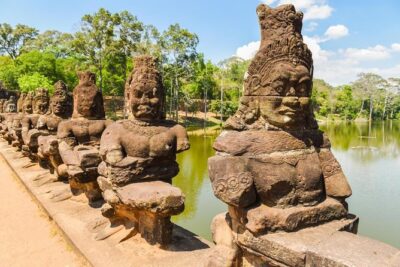
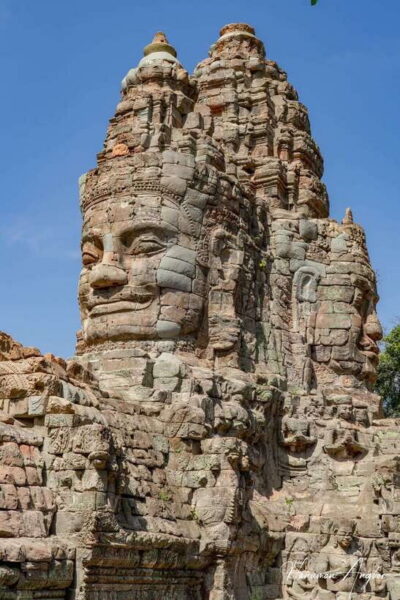
Bayon is the state temple of Jayavarman VII, famous for its mass of face towers. Many of the towers still stand, and the carvings face in all four directions, with the central tower having more faces than the others.
This is a good “start slow” temple. You’ll want a few minutes to let your brain catch up with the scale before you start reading details. The time on this stop is about 1 hour, which is enough if your guide keeps the narrative clear instead of dumping every fact at once.
Terrace of the Elephants: royal staging area and storybook stonework
Right in the heart of Angkor Thom, the Terrace of the Elephants overlooks the Royal Square and functioned as the entrance area to the Royal Palace. The name comes from the elephant carvings along the terrace wall.
The practical value here is pacing: it’s a natural break between major temple climbs, and it helps you understand how Angkor was built like a ceremonial city, not only a set of isolated temples.
More temple circuits, set side by side
Terrace of the Leper King: a deep-cut stop that rewards curiosity
The Terrace of the Leper King is named after a sculpture found on top. It’s tied to the Jayavarman VII era and has been restored in a way that lets visitors explore internal layers by entering the structure.
This stop is listed for 30 minutes. In real terms, that’s about long enough to appreciate why it’s considered one of the more intriguing terraces—especially if you like temples that feel layered and “worked on over time,” not frozen in a single date.
Ta Prohm: jungle roots that make Angkor feel alive
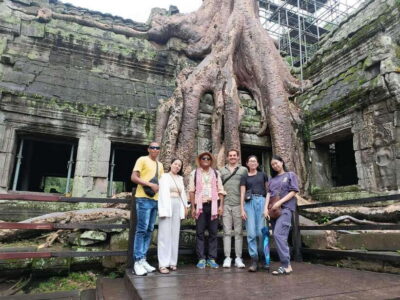
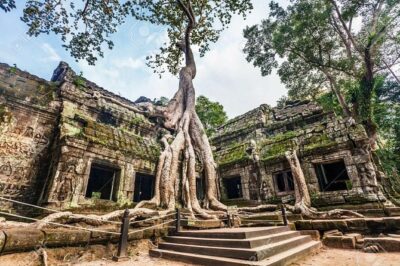
Ta Prohm is the famous jungle temple built in the 12th century as a royal monastery dedicated to the king’s mother. What makes it special isn’t just the stones—it’s that the temple was intentionally left in a more natural, rediscovered state so you can see how jungle and architecture tangle together.
You’ll have about 1 hour here. Don’t treat it like a quick photo stop. Instead, use your guide to point out how the roots “hold” walls and how the temple’s layout changes your walking route. The time is right for soaking up the eerie, romantic atmosphere people talk about—without feeling rushed.
Angkor Wat: the big finish with huge scale
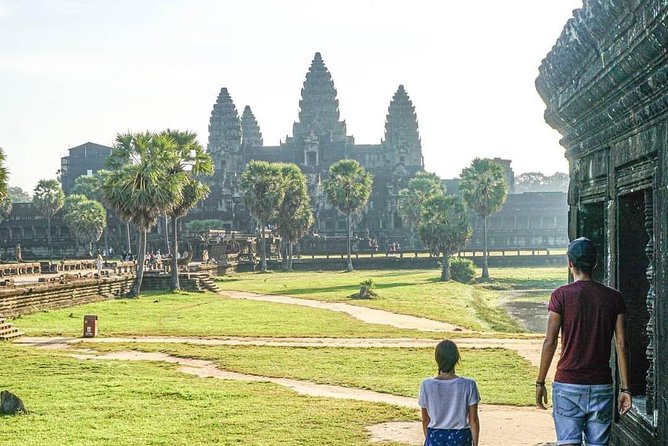
Angkor Wat is the largest religious building in the world, designed under Suryavarman II and built over about 30 years. Unlike many other Khmer temples, it faces west, which matters for the way the complex is oriented and understood.
This stop is around 2 hours. For most visitors, it’s the day’s anchor point—the place where you start thinking, ok, I’m really in Angkor. You’ll likely cover major viewpoints and the key axes, but you’ll be glad you didn’t try to do it alone.
Phnom Bakheng: sunset viewpoint energy
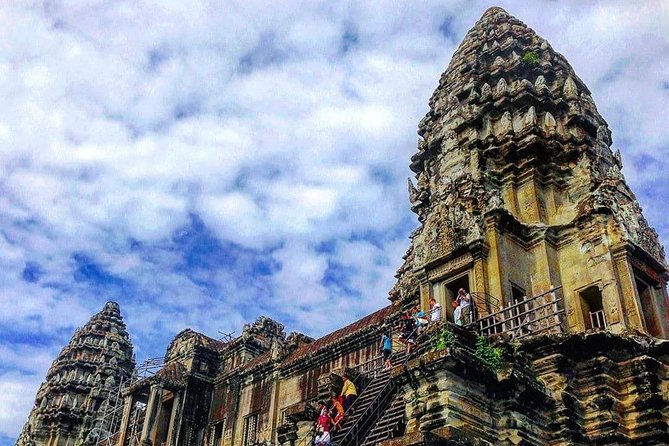
Bakong/Phnom Bakheng is a classic sunset climb and a favorite viewpoint for Angkor Wat in the distance. The route starts from the east side, and from the top you get a sweeping view with Angkor Wat to the southeast.
This stop is listed for 1 hour 30 minutes. That includes time to ascend, pause for photos, and soak in the view. If you’re sensitive to steep walking, tell your guide; the pace can be adjusted.
Day 2: Sunrise at Angkor Wat (optional) and Banteay Srei’s “small temple, huge detail” effect
Day 2 leans into finer carvings and a different Angkor mood: Hindu temples and the “miniature masterpieces” feeling you get at Banteay Srei.
Sunrise Angkor Wat: the 5:00 start and why it’s worth it
Day 2 starts with a 05:00 departure for sunrise at Angkor Wat. The tour notes an option—if you don’t want the early wake-up call, you can skip the sunrise and do the temple visit differently.
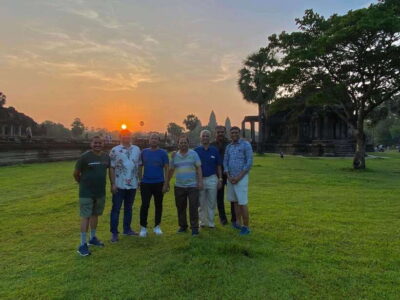
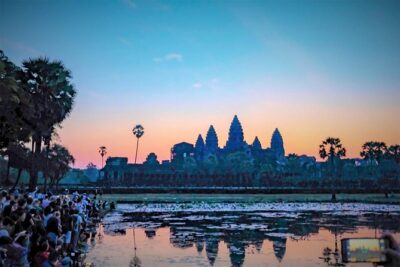
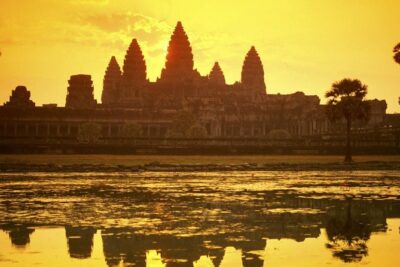
Sunrise is where Angkor changes. The light is softer, shadows are longer, and the stone surfaces look less harsh. If you’re even slightly curious about sunrise photography or just want a calmer first look, this is the time window to take seriously.
Banteay Srei: miniature scale and delicate carvings
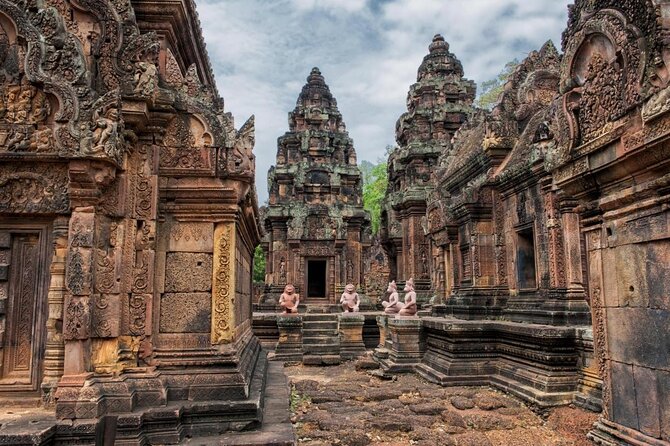
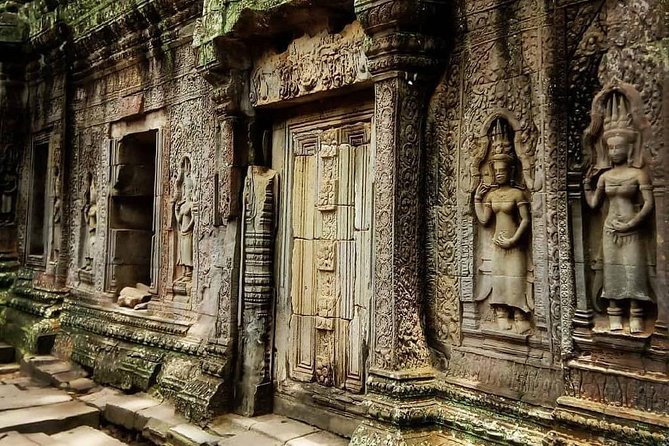
Banteay Srei is often called the Citadel of Beauty and the Citadel of a woman. It’s not a royal temple in the usual sense; it was built by Brahmin priests, and the temple’s decoration is famous even among Angkor fans.
This is where the tour’s “luxury private guide” advantage becomes clear. A lot of people rush Banteay Srei because it’s smaller than Angkor Wat. Don’t do that. Ask your guide to walk you through the carved surfaces—because the details are the point. The visit is about 2 hours, which is the right amount for meaningful viewing, not skimming.
Note: the tour info mentions that some inner spaces are closed, so don’t expect full access everywhere.
Eastern Mebon: an island temple feel on a reservoir site
Eastern Mebon dates to the 10th century (constructed in 952) and was built on an island in the Eastern Baray reservoir area. The idea of worship by boat is included in the tour description, which helps you picture how people experienced the site when the water system was functioning.
The stop is about 1 hour. This is a good “stretch your legs, reset your eyes” temple—less demanding than the big climbs, but still historically meaningful.
Ta Som: honoring a sibling, with an intimate scale
Ta Som was built by Jayavarman VII to honor his older sister. The tour description highlights that the sister’s shrine is smaller, which gives you a human-scale angle on how power and family roles show up in architecture.
This is about 1 hour, and it tends to feel less “main stage” than Angkor Wat. That’s a plus.
Neak Pean: the naga symbolism on water-themed grounds
Neak Pean means Nagas Intertwining Tails, referring to the male and female naga pair with tails joining at the base. The tour presents it as a symbol tied to happiness/intercourse action, which may sound unusual until you see how Khmer symbolism can mix romance, ritual, and nature imagery.
Time here is around 1 hour. This stop is ideal if you like temple meaning, not only temple looks.
Preah Khan: temple-city vibes and giant garuda sculptures
Preah Khan was built in the 12th century and is described as one of Jayavarman VII’s largest projects. The tour info includes the idea that it functioned beyond a temple—possibly like a Buddhist university and a considerable city.
You’ll also see giant garuda stone sculptures grasping naga tails. Your guide’s job here is important: they’ll help you understand the connections between the carvings and the larger layout as you move through the site.
The visit is about 1 hour, and it’s a strong finale before you head into Day 3.
Day 3: Roluos classics plus Kompong Phluk on Tonle Sap
Day 3 keeps things lighter on big climbs and adds the lake experience, so your Angkor week doesn’t feel like stone-only training.
Bakong and Preah Ko: the early Angkor roots in the Roluos area
Bakong is part of the Roluos Group and is near Preah Ko. The tour says a modern Buddhist temple sits to the right of the east entrance, and Bakong was built late in the 9th century by King Indravarman I dedicated to Siva.
Preah Ko is the first temple built in Hariharalaya, built under Indravarman I in 879 to honor the royal family in relation to Shiva.
These are short stops—30 minutes each—but that’s actually a good thing. You get the flavor of early Khmer temple planning without exhausting your legs.
Lolei: island temple logic tied to reservoirs
Lolei is described as being comparable in situation to Mebon, forming an island in the middle of a reservoir (Indratataka). The tour description includes the reservoir size and the timing of excavation after consecration.
That’s a lot of information for one site, but a good guide translates it into what you can picture while standing there. Expect about 40 minutes.
Kompong Phluk: Tonle Sap community time on a UNESCO biosphere system
Kompong Phluk sits on Tonle Sap, a lake-river system that the tour calls the largest in Southeast Asia and a UNESCO Biosphere site. The description focuses on ecology and endangered flora and fauna, and it also explains why it matters economically: people there live from fishing.
This stop is 2 hours. This is your chance to see Cambodia as more than temple corridors. If you’ve spent two days walking through stone, this part changes the pace.
Practical note: the tour data doesn’t specify boat time, so if you care about what kind of lake experience you’ll have, you might ask your guide what to expect day-of.
Siem Reap city time: art school, workshops, and markets
In the afternoon, the tour includes a city visit featuring an art and craft school (Les Artisan), plus local markets around Pub Street. The art school is described as a joint venture between Cambodian and French governments that trains young Cambodians in traditional sandstone carving, woodwork, and silk weaving.
This is brief—4 minutes listed as free admission—so don’t treat it like a full cultural deep-dive museum visit. Still, it’s a useful way to connect what you saw carved in temple stone to living craft skills today.
Price and what’s actually included (and what you’ll still need to budget)
Let’s talk money honestly, because this tour is valuable but you need to know what’s not covered.
Included:
- Professional English-speaking guide
- Air-conditioned vehicle with a professional driver
- Cool water and cool wet towel
- Taxes and service charges
- Pickup offered, plus a mobile ticket
Not included:
- Hotel accommodation
- Meals, drinks, tips/gratuities
- Single supplement (if applicable)
- Travel insurance
- Most importantly: Angkor Archaeological Site entrance pass
That last item is the one most people forget. The tour info makes it clear: the pass gives access to sights in and around Angkor, and you should buy it at the main gate. It’s charged in US dollars, and children under 12 are free with proof at the booth (passport needed).
So your $162.50 price is the guide + transport + experience framework. Your Angkor pass cost is separate, but it’s a standard part of any Angkor plan. If you’re budgeting, figure it as a necessary add-on so your trip stays smooth.
The Angkor pass, strict dress rules, and how to avoid day-trip friction
This kind of tour can run beautifully or feel annoying, depending on one prep detail: the Angkor dress code and the entrance pass.
For the sites that enforce stricter rules (the tour specifically mentions Baphuon as an example), you’ll need clothing that:
- covers shoulders, and
- falls below the knees
If you show up in bright, overly revealing, or disrespectful printed shirts, entry can be refused.
Also, the tour mentions that you should make efforts to protect electronics from natural elements, since those elements can damage devices. That’s practical advice in a place where humidity and dust are real.
If you want your day to flow, do this:
- Wear breathable clothing you can match to the dress code.
- Keep your entrance pass visible when required.
- Have some patience when you hit security or gate checks. These aren’t “time wasters”; they’re how the system works.
Guide quality: why names like Veasna and Lion matter in a 3-day plan
In a 3-day Angkor route, your guide isn’t a luxury accessory. They’re the part that makes everything make sense.
The provided feedback includes multiple examples of strong guiding. Veasna is described as a former monk with excellent English and deep understanding. That combo tends to produce better explanations, not just more facts. Another guide mentioned is Lion, described as knowledgeable and passionate.
When a guide has this kind of grasp, it changes how you read the sites:
- Bayon stops being only faces and starts meaning you can track across the day.
- Banteay Srei stops being “pretty carvings” and becomes a style lesson.
- Preah Khan stops being “more ruins” and becomes a sense of how Angkor functioned like a city.
On top of that, the tour style is framed as personal and customer-centered, with an approach designed to customize your day around your comfort.
Who this tour is for (and who should consider a different style)
This works best if you:
- want major temples plus smart extras over three days,
- prefer a private setup over constant crowd weaving,
- care about explanations that make the architecture click, and
- want a real break from temples with Kompong Phluk and Siem Reap city stops.
You might choose something else if you:
- only want a casual highlights loop and don’t want early starts,
- would rather roam independently and hate fixed schedules,
- are very budget-sensitive once you add the Angkor pass.
Should you book this 3-day Angkor tour?
I’d book it if you want the Angkor region to feel organized, explained, and paced across three distinct moods: faces and ceremony, sunrise + precision carvings, then lake life and city craft.
It’s not the cheapest way to see Angkor, but the value is clear: private-style attention, English guidance, air-conditioned transport, and real time at each important site. Just plan for the Angkor entrance pass separately, follow the dress code, and you’ll get a smoother trip with fewer stress points.
If you’re flexible and ready to walk (some days include climbs and sun), this is a strong match for a first serious Angkor visit or a second trip where you want deeper structure.
FAQ
Is the Angkor Archaeological Site entrance pass included?
No. The entrance pass for Angkor Archaeological Site access is not included, and you’ll need to purchase it at the main gate. Fees are charged in US dollars, and it provides access to sights in and around Angkor.
What time does the sunrise tour start on Day 2?
The sunrise departure is listed at 05:00 for Angkor Wat on Day 2. The tour also notes it’s optional if you don’t want to wake up that early.
What’s included in the tour price?
The tour includes an all-day visit with a professional English-speaking guide, air-conditioned transportation with a driver, taxes and service charges, and cool water plus a cool wet towel.
What are the dress code rules at Angkor temples?
Some temples have strict requirements, including covering shoulders and wearing clothing that falls below the knees. The tour also warns that brightly-coloured clothing or shirts with obscene or disrespectful prints may lead to refusal of entry.
Do I get pickup if I’m staying in Siem Reap?
Pickup is offered. Return transfers are inclusive only if you’re staying in and inside Siem Reap.
Is Kompong Phluk part of this tour?
Yes. Day 3 includes Kompong Phluk on Tonle Sap, described as an important lake community area for fishing and local life.
Out on Tonle Sap
- From Siem Reap: Kampong Phluk Floating Village Tour by Boat
★ 4.9 · 6,979 reviews - Sunset tour of Kampong Phluk stilts home village on the Tonle Sap
★ 5.0 · 4,865 reviews - Kompong Phluk Floating Village Half-Day Tour ( Morning / Sunset )
★ 5.0 · 1,494 reviews - Siem Reap: Kulen Mountain, Beng Mealea and Tonle Sap Tour
★ 5.0 · 1,483 reviews - Tonle Sap Lake & Kampong Phluk Village Half-Day Tour
★ 5.0 · 1,045 reviews
More Temple Circuits Around Siem Reap
- Angkor Wat Sunrise or Sunset Tour with Guide from Siem Reap
★ 5.0 · 12,109 reviews - Siem Reap: Angkor Wat: Small-Group Sunrise or Sunset Tour
★ 5.0 · 9,444 reviews - Siem Reap: Angkor Wat 2-Day Tour with Sunrise and Sunset
★ 4.9 · 4,429 reviews - Siem Reap: Full-Day Angkor Wat Guided Tour with Sunset
★ 4.9 · 3,803 reviews - Angkor Wat Sunrise tour with Small – Group and Guide tours
★ 5.0 · 3,655 reviews
The Carvings of Banteay Srei
- Full-Day Banteay Srei & 4 Temples – Grand Tours Join-in Tour
★ 5.0 · 1,155 reviews - Siem Reap Tour: Angkor Wat Sunrise, Bayon, Ta Prohm, Banteay Srei
★ 5.0 · 931 reviews - 2-Day Angkor Wat With Small, Big Circuit and Banteay Srei Tour
★ 5.0 · 545 reviews - From Siem Reap: Banteay Srei Temple & Grand 5 Temple Tour
★ 4.8 · 262 reviews - 3-Days Discovery Of Angkor: Waterfalls,Floating Village and Banteay Srei temple
★ 5.0 · 214 reviews
Just Added: Fresh Siem Reap Tour Reviews

Angkor Temple Tours, compared.
 ★ 5.0Angkor Wat Sunrise or Sunset Tour with Guide from Siem ReapFrom $1812,109 reviews
 ★ 5.0Angkor Wat: Small-Group Sunrise or Sunset TourFrom $159,444 reviews
 ★ 4.9Angkor Wat 2-Day Tour with Sunrise and SunsetFrom $344,429 reviews
 ★ 4.9Full-Day Angkor Wat Guided Tour with SunsetFrom $153,803 reviews
 ★ 5.0Angkor Wat Sunrise tour with Small – Group and Guide toursFrom $143,655 reviews
 ★ 5.0Angkor Wat Highlights and Sunrise Guided Tour from Siem ReapFrom $233,213 reviews
 ★ 5.0Angkor Wat Sunset Small Group Tour with Lunch IncludedFrom $203,059 reviews
 ★ 5.0Full-Day Angkor Wat Sunrise Private Tour with Guide from Siem ReapFrom $602,920 reviews
Browse the lists this tour appears in