
Reviewed · ANGKOR TEMPLE TOURS
4-Day Tour(The Amazing Face, Jungle of Temple & Holy Clay)
Angkor has a way of eating your time. This private 4-day plan keeps it focused, from face-filled Angkor Thom to jungle temples and the holy-clay vibe. You’ll get a professional English-speaking guide and air-conditioned transport, plus a flexible schedule that can help you dodge some of the worst crowd crush. One thing to plan for: the Angkor admission pass isn’t included, and a few temples have strict dress rules.
What I like most is the mix of famous hits and calmer, weirder stops. I especially like how Day 1 stacks the big “classic Khmer art” moments at Angkor Thom before moving into Ta Prohm-style jungle atmosphere, and how Day 3 starts with sunrise at Angkor Wat so you can see the site in a quieter rhythm. The possible drawback is timing and logistics: the day with sunrise starts early (around 4:30am), and you’ll need to budget time and energy for heat, temples with climbing stairs, and the entrance pass before you go in.
In This Review
- Key Highlights You’ll Care About
- Private Four-Day Angkor Plan: Face, Jungle, and Sunset
- What You Really Pay For: The $274 Value and Angkor Pass Reality
- Your Guide and Comfort: Air-Conditioned Rides, Clear English, and Real Pacing
- Day 1 in Angkor Thom: South Gate Faces to Ta Prohm Trees
- Day 2 Beyond the Main Circuit: Banteay Srei, Floating Village, and Artisan Stops
- Day 3 Sunrise at Angkor Wat plus the Roluos Temples
- Day 4 Koh Ker and Beng Mealea: The More Adventurous Temple Mood
- Optional Sunset at Pre Rup (Phre Rub): A Strong Finish if You Time It Right
- Small Rules That Matter: Dress Code, Heat, and Temple Stairs
- Who This Tour Suits Best (and Who Might Skip It)
- Should You Book This 4-Day Private Angkor Tour?
- FAQ
- Is Angkor Archaeological Site admission included in the tour price?
- What’s included in the tour besides the guide?
- What’s not included?
- Is pickup available?
- How early does the sunrise Angkor Wat day start?
- Is there an optional sunset stop?
- Are the temples strict about clothing?
- What’s the group size like?
- What should I bring for the heat?
- Is free cancellation available?
Key Highlights You’ll Care About
- Private, full-day feel: it’s designed for just your group, with a guide who can set the pace.
- Sunrise Angkor Wat: start early and pair it with breakfast near the main site.
- Angkor Thom face circuit: South Gate, Bayon towers, Baphuon, and the big carved terraces.
- Jungle temples on purpose: Ta Prohm, Ta Nei, and especially Beng Mealea for a more adventurous walk.
- Banteay Srei’s fine carvings: small temple, delicate details, and great preservation.
- Optional sunset at Pre Rup (Phre Rub): a specific, scenic finish to the day’s temple run.
More temple circuits, set side by side
- Angkor Wat Sunrise or Sunset Tour with Guide from Siem Reap★ 5.0 · 12,109 reviews
- Siem Reap: Angkor Wat: Small-Group Sunrise or Sunset Tour★ 5.0 · 9,444 reviews
- Siem Reap: Angkor Wat 2-Day Tour with Sunrise and Sunset★ 4.9 · 4,429 reviews
- Siem Reap: Full-Day Angkor Wat Guided Tour with Sunset★ 4.9 · 3,803 reviews
Private Four-Day Angkor Plan: Face, Jungle, and Sunset
This is a classic Siem Reap temple program built for people who want the essentials without feeling like they’re stuck in a conveyor belt. You’ll be moving across key zones of the Angkor region over four days, with a guide to explain what you’re looking at and why the Khmer builders made the choices they did.
The tour’s name points to the three moods it tries to deliver: amazing faces (Angkor Thom and Bayon), jungle of temple (Ta Prohm and Beng Mealea-style spaces), and holy clay (temples like Pre Rup / Phre Rub that emphasize carved upper levels and sculptural symbolism). Even if you’ve seen photos, the pace here helps you get a real sense of how these places connect.
Another real plus is that this is private and described as customizable and flexible. In plain terms: you’re not locked into a rigid “everyone must do it now” rhythm. Your guide can manage timing so you spend less time just waiting and more time looking closely.
What You Really Pay For: The $274 Value and Angkor Pass Reality
The price is $274 per person for a 4-day tour. For many people in Siem Reap, that works out as decent value because you’re paying for (1) a professional English-speaking guide, and (2) transportation in an air-conditioned vehicle with a driver. You also get cool water and a cool wet towel, which sounds small until you’re sweating in temple queues.
But here’s the part you must not overlook: the Angkor Archaeological Site entrance pass is not included. The guide and vehicle can take you to the temples, but you are responsible for purchasing the pass at the main gate. The pass covers access around Angkor and should be visible at all times. It’s also stated that children under 12 are free, so families may have a different total cost.
So the value question becomes: can you add the pass to your budget without stress? If yes, the $274 price feels practical for a private, multi-day plan. If no, you may want a cheaper format and handle guide-only services, because the pass cost is unavoidable for most major Angkor stops.
Your Guide and Comfort: Air-Conditioned Rides, Clear English, and Real Pacing
Comfort matters on an Angkor itinerary. This tour uses an air-conditioned vehicle, and it provides cool water and a cool wet towel. Those details are useful because the sun can be intense even on hazier days, and temple tours often involve walking between sites and climbing steps once you’re inside.
The guide is the other big deal. The tour includes a professional English-speaking guide, and guide quality shows up repeatedly in how people talk about their experience. One name you may hear connected with clear English explanations is Buntheun, mentioned as speaking fluent, easy-to-follow English. You’ll want a guide like that, because Angkor’s carvings and layouts can be confusing if you only know the famous names.
One more practical tip from the tour’s guidance: bring a hat/cap, sunglasses, and sunblock with a high SPF. Even when it looks cloudy, the sun still hits hard. And if you’re relying on a camera or phone, protect it from dust and humidity—your equipment is your responsibility.
Day 1 in Angkor Thom: South Gate Faces to Ta Prohm Trees
Day 1 focuses on Angkor Thom, the walled city inside Angkor. It’s the best place to start if you want the famous “temple faces” feeling right away, because you’ll see it at multiple points instead of just one landmark photo.
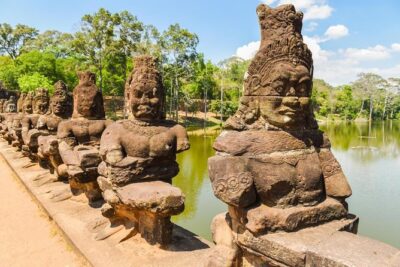
You start at the Angkor Thom South Gate. The causeway railings show 54 stone figures involved in the Hindu story of the Churning of Ocean. It’s one of those moments where the temple tells a myth in stone before you even reach the main complex.
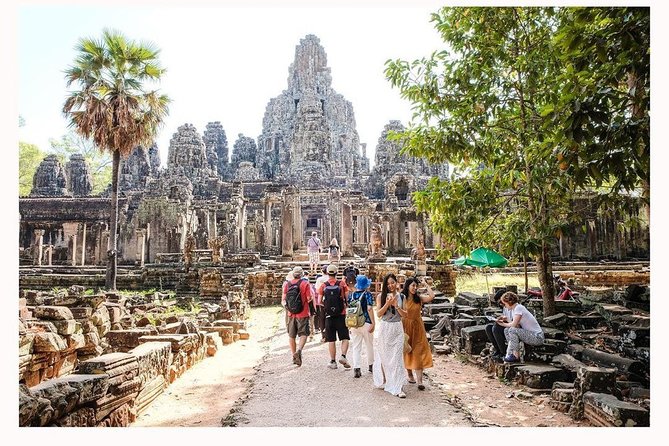
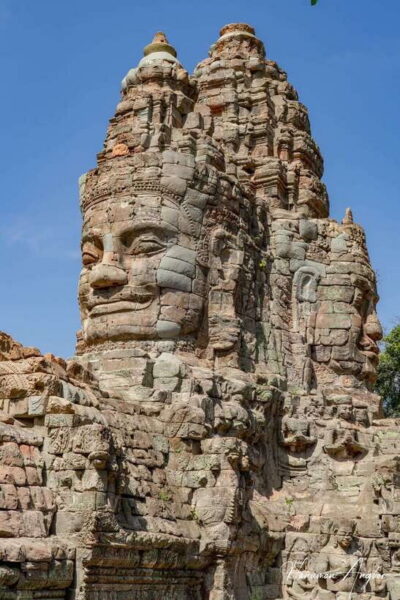
Next is the Bayon Temple, known for its giant stone faces. The layout includes 37 standing towers, most with four carved faces turned toward the cardinal points. The viewpoint shifts as you move, so you’re not just seeing one face—you’re seeing the expression change depending on where you stand.
From there you head to Baphuon, a three-tiered temple mountain built as the state temple of Udayadityavarman II dedicated to Shiva. It’s short on time compared to Bayon, but it’s a useful contrast: more architectural mass, less of the continuous face motif.
Then come the carved terraces. Terrace of the Elephants runs long and wide with a repeating parade of carved elephants and garudas. After that, Terrace of the Leper King adds another layer with deeply carved nagas and demons. This is where you start seeing how Angkor blends religious symbolism with dramatic storytelling in stone.
You’ll also pass by Preah Palilay, in a shaded forest setting. Its eastern gopura includes Buddhist-themed carvings, which adds variety to a day that began with Hindu stories.
Lunch is typically handled at a local restaurant around Sras Srang or back at the hotel, depending on timing.
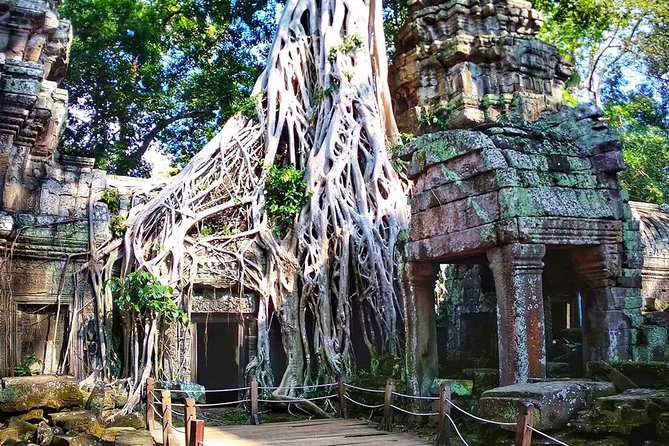
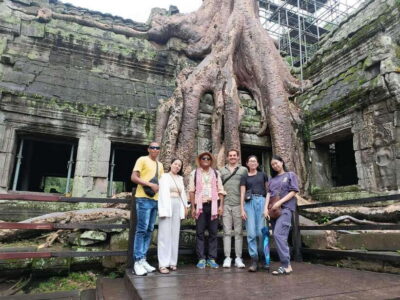
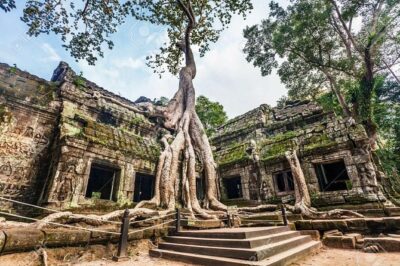
The afternoon moves from stone to jungle atmosphere, starting with Ta Prohm. This is the temple monastic complex where nature remains part of the scene, with some of the best “tree-in-temple” photo moments. After that you’ll visit Ta Nei, a jungle temple reminiscent of Ta Som style and tied to Jayavaraman VII artistry.
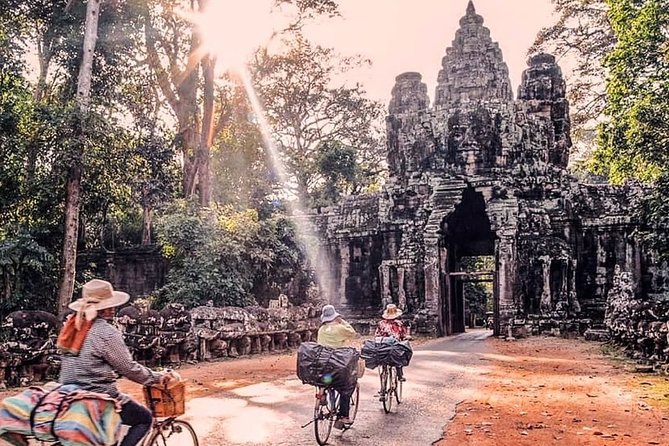
Finally, Ta Keo gives you a more serious architectural finish. It’s a temple-mountain dedicated to Shiva and noted as the first temple constructed wholly of sandstone. The day wraps at the Victory Gate guarding Angkor Thom.
A consideration for Day 1: with so many sites, you’ll want your guide to pace you. If you rush, you’ll miss the carvings. If you slow down, you’ll feel the heat more. Private helps because the pace can be adjusted.
More time at the temples, spread over days

Day 2 Beyond the Main Circuit: Banteay Srei, Floating Village, and Artisan Stops
Day 2 is where the tour gets more interesting for people who want variety, not just the biggest names.
The day begins with Banteay Srei, the pink sandstone temple often called the pink temple of women. It’s smaller than the huge Angkor giants, but that’s part of the value: the carvings are delicate and the site is considered in excellent condition. This is a great temple if you like details—especially the apsara carvings—and it also gives your legs a break from the longest climbs.
Then comes Banteay Samre, built in a style related to Angkor Wat and influenced by the broader Khmer architectural language. It has good bas-relief carving condition and has been restored by archaeologists who took it apart and reconstructed it. That means you can look at it with more confidence about the original structure compared to places with heavy collapse.
Lunch goes back to the hotel or the temple area.
After lunch, you shift away from temple stone and into water and village life at Kampong Phluk (Floating Village). This includes a scenic boat ride and access to fisherman routines, plus a possible floating restaurant dining experience if you choose it. The Tonle Sap Lake setting is a big part of the appeal, and it’s a good change of pace from temple after temple.
In the afternoon you also get a more city-style stop at Psar Chaa (Old Market). It’s described as the most visited and a strong place to browse souvenirs like silks, silverworks, carvings, statuary, and handcrafts. This is time you can use for gifts and practical supplies.
The last stop is Artisans Angkor, a training ground for unschooled rural youth between 18 and 28 years old in handicraft skills. It’s not just shopping; it’s a place where you can see craft training tied to real jobs.
A drawback to consider on Day 2: it includes both temple time and water/market time, so the day can feel varied in weather and walking surfaces. If it’s hot, the market and boat rides can wear you out. Private pacing helps here too—just don’t plan to sprint through everything.
Day 3 Sunrise at Angkor Wat plus the Roluos Temples
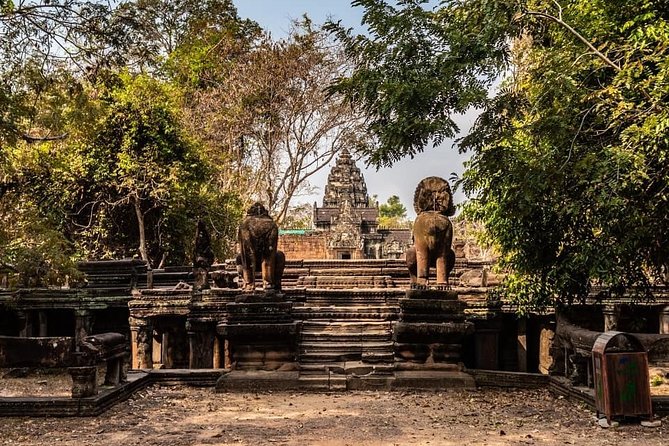
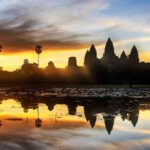
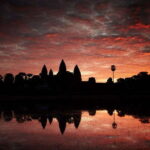
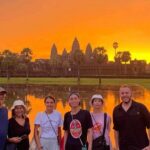
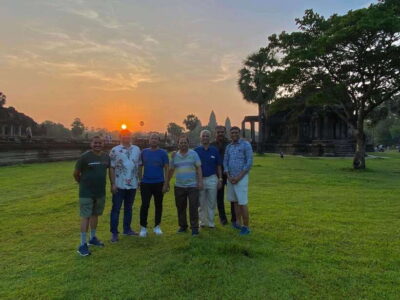
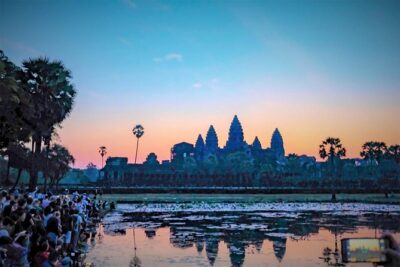
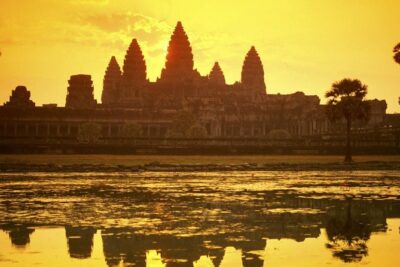
Day 3 starts with the big one: Angkor Wat at sunrise. The plan lists an early start around 4:30am, and the reward is the chance to see the temple in morning light with fewer people around compared to later arrivals.
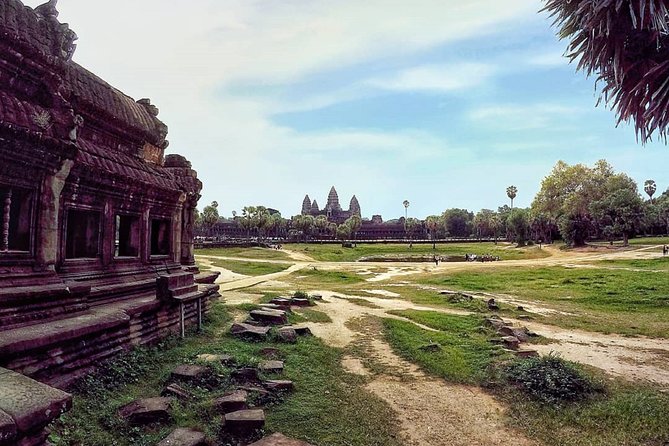
You’ll have breakfast at a restaurant in front of Angkor Wat after sunrise, then begin the main tour at Angkor Wat. Angkor Wat is described as a massive three-tier pyramid with five beehive-like towers rising about 65 meters. It was constructed by Suryavarman II and dedicated to Vishnu as a “temple mountain” concept.
This is also the part of the tour where dressing for comfort helps. Sunrise can feel cool-ish at first, but by mid-morning you’ll be in full sun and walking between spaces.
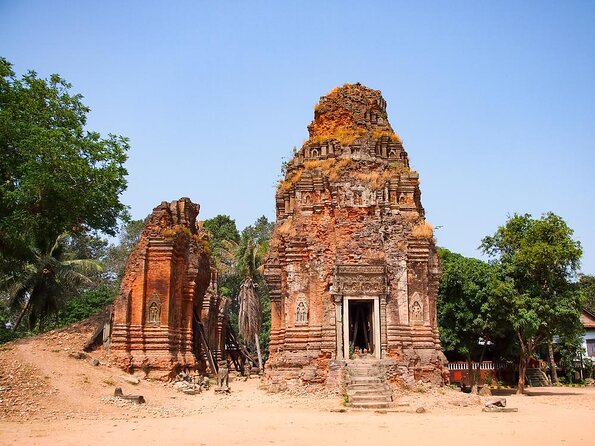
After Angkor Wat, you move to the Roluos area, including Bakong, Preah Ko, and Lolei. These are older large mountain temples in the earlier Khmer capital region. Preah Ko and Lolei are described as late 9th century and 9th century respectively, both tied to Shiva, with Lolei once described as an island temple because of its reservoir setting long ago.
This contrast is smart: you’re not only seeing Angkor at its most iconic. You’re seeing how Angkor’s temple ambition developed earlier in the kingdom.
One logistics note: the sunrise timing plus multiple sites means Day 3 is mentally demanding. If you need downtime, ask your guide to build in short rest gaps between zones.
Day 4 Koh Ker and Beng Mealea: The More Adventurous Temple Mood
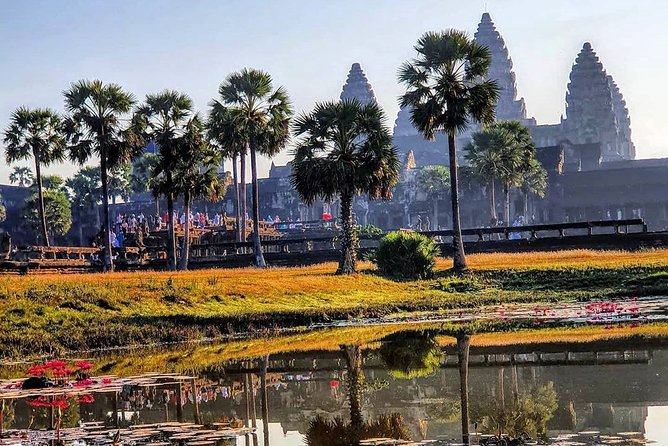
Day 4 takes you outside the most central Angkor route.
First is Koh Ker, described as a temporary capital during a period of internecine strife in the Angkorian kingdom. It’s a different flavor than Angkor Thom and Angkor Wat. Instead of perfect symmetry and tight photo angles, Koh Ker feels more remote in the way the ruins sit among surrounding villages and roads.
Then you head to Beng Mealea. This is one of the most “go explore” style temples on the list. The jungle covers over a square kilometer around the site, and the temple was built around the end of the 11th century. The tour description points out that there’s very little restoration, which means you’ll walk through a more mysterious archaeological space and feel like you’re in an adventure more than a finished museum.
You should manage expectations here. It may not have the same famous sculpture density as some of the major complexes, but that’s exactly why people like it: you feel the scale of the ruins and the atmosphere of the jungle.
After lunch near Koh Ker, you end with Pre Rup as an optional sunset finish (described as sunset at Phre Rub Temple). The plan specifically calls out the carved false doors on the upper level and a view of the surrounding countryside.
Day 4 is for you if you want your Angkor time to include at least one day that feels less controlled and more like you’re wandering through ancient space.
Optional Sunset at Pre Rup (Phre Rub): A Strong Finish if You Time It Right
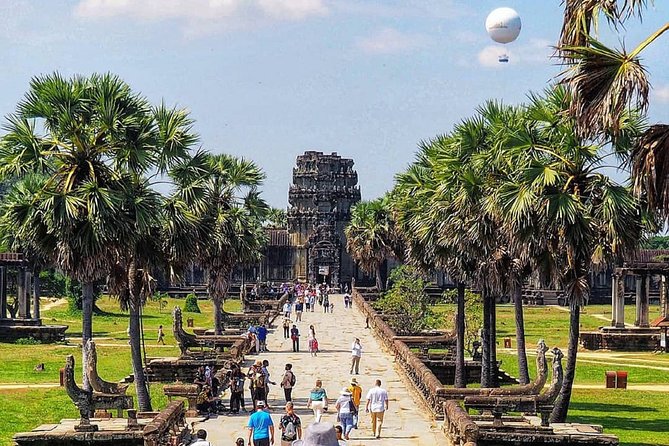
Sunset stops at Angkor can be tricky—too late and you’re rushing, too early and you miss the light. The tour includes optional free of charge sunset at Pre Rup (Phre Rub Temple), and the description gives you a clear reason to pick it: the temple is an architecturally and artistically superior temple-mountain, with beautifully carved false doors and a strong overlook over the countryside.
If you’re the type who likes the moment when stone turns warm in the evening, this is the stop that fits. If you hate late starts or you’re already tired from sunrise earlier, you might skip it and keep the day calmer. Either choice works since this is noted as optional.
Small Rules That Matter: Dress Code, Heat, and Temple Stairs
This tour follows some standard Angkor temple rules, and they matter in practice.
- Dress code: some temples (the tour notes Baphuon specifically) have a strict requirement. Plan to wear clothes that cover shoulders and fall below the knees. If your outfit is too short or too flashy, you could be refused entry.
- Sun protection: even on cloudy days, sunblock with high SPF, sunglasses, and a hat/cap are strongly advised.
- Electronics care: protect your camera and phone from heat and natural elements. If something breaks due to poor protection, the tour states it’s your responsibility.
Also remember the day structure means lots of walking. You’ll see major temple-mountain staircases, terraces, and uneven surfaces. Wear shoes you’re comfortable using on stone.
Who This Tour Suits Best (and Who Might Skip It)
This private 4-day tour fits best if you:
- Want a private experience where the schedule is flexible and you’re not stuck behind a swarm of buses.
- Like both the big name sights and the more atmospheric jungle ruins.
- Plan to invest in the Angkor pass and want a guide to make the entrances and temple time worth it.
- Prefer air-conditioned transport and small comfort details like cool water and wet towels.
You might skip it if you:
- Hate early mornings and don’t want a sunrise start around 4:30am.
- Are traveling on a tight budget where the Angkor pass and food add up quickly.
- Want lots of free time with no schedule at all. This is temple-dense by design.
Should You Book This 4-Day Private Angkor Tour?
I think this booking makes sense for a lot of people in Siem Reap, especially if you’re okay with paying for an Angkor pass and you want a guide to connect the dots between temples. The private format, the sunrise Angkor Wat start, and the combination of Angkor Thom faces, jungle temples, and Beng Mealea-style exploration are the big reasons.
Book it if your priority is seeing the major Angkor icons plus at least a couple of places that feel less polished and more wild. Consider alternatives if you want slower days, no sunrise, or you’d rather build your own route and manage guide time yourself.
If you do book, do your homework on the pass and dress code before Day 1. Then you can focus on the fun part: walking through stone stories that actually make sense once someone explains what you’re looking at.
FAQ
Is Angkor Archaeological Site admission included in the tour price?
No. The entrance pass to the Angkor Archaeological Site is not included. You buy it separately at the main gate, and it gives access to sights in and around Angkor. Children under 12 are free.
What’s included in the tour besides the guide?
You get a professional English-speaking guide, transportation by air-conditioned vehicle with a professional driver, all applicable taxes and service charges, and cool water plus a cool wet towel.
What’s not included?
Hotel accommodation, the Angkor admission pass, single supplement charges (where applicable), personal expenses like meals, drinks, and shopping, and travel insurance (highly recommended). The tour also states breakfast and lunch during a full-day tour are excluded on own payment.
Is pickup available?
Pickup is offered, with return transfers inclusive only for customers staying in and inside Siem Reap. You should provide correct hotel information.
How early does the sunrise Angkor Wat day start?
The plan states an early morning tour at about 4.30 am to see sunrise at Angkor Wat.
Is there an optional sunset stop?
Yes. The tour offers an optional free-of-charge sunset at Pre Rup (Phre Rub Temple).
Are the temples strict about clothing?
Yes. Some temples have a strict dress code, including covering shoulders and keeping clothing below the knees. Brightly colored clothing and shirts with obscene or disrespectful prints may be refused entry.
What’s the group size like?
This is a private tour/activity, so only your group participates.
What should I bring for the heat?
The tour advises sunglasses, a hat/cap, and sunblock with a high SPF factor, even if it is cloudy. Cool water is provided, but sun protection still matters.
Is free cancellation available?
Yes. You can cancel up to 24 hours in advance for a full refund. If you cancel less than 24 hours before the experience start time, the amount paid is not refunded. The experience requires good weather, and if it’s canceled due to poor weather, you’ll be offered a different date or a full refund.
More Tour Reviews in Siem Reap
- Angkor Wat Sunrise or Sunset Tour with Guide from Siem Reap
★ 5.0 · 12,109 reviews - Siem Reap: Angkor Wat: Small-Group Sunrise or Sunset Tour
★ 5.0 · 9,444 reviews - From Siem Reap: Kampong Phluk Floating Village Tour by Boat
★ 4.9 · 6,979 reviews - Sunset tour of Kampong Phluk stilts home village on the Tonle Sap
★ 5.0 · 4,865 reviews - Siem Reap: Angkor Wat 2-Day Tour with Sunrise and Sunset
★ 4.9 · 4,429 reviews
More Days at the Temples
- Siem Reap: Angkor Wat 2-Day Tour with Sunrise and Sunset
★ 4.9 · 4,429 reviews - Angkor 2-Day Sunset & Sunrise Small-Group Tour
★ 5.0 · 2,567 reviews - 2 Days Exclusive Temple Highlights with Sunset and Sunrise Tour
★ 5.0 · 1,157 reviews - Siem Reap: Angkor Sunrise 1- or 2-Day Guided Temples Tour
★ 4.9 · 1,132 reviews - 2 Days Guided Historical Tour in Angkor
★ 5.0 · 855 reviews
More Temple Circuits Around Siem Reap
- Angkor Wat Sunrise or Sunset Tour with Guide from Siem Reap
★ 5.0 · 12,109 reviews - Siem Reap: Angkor Wat: Small-Group Sunrise or Sunset Tour
★ 5.0 · 9,444 reviews - Siem Reap: Angkor Wat 2-Day Tour with Sunrise and Sunset
★ 4.9 · 4,429 reviews - Siem Reap: Full-Day Angkor Wat Guided Tour with Sunset
★ 4.9 · 3,803 reviews - Angkor Wat Sunrise tour with Small – Group and Guide tours
★ 5.0 · 3,655 reviews
Just Added: Fresh Siem Reap Tour Reviews

Angkor Temple Tours, compared.
 ★ 5.0Angkor Wat Sunrise or Sunset Tour with Guide from Siem ReapFrom $1812,109 reviews
 ★ 5.0Angkor Wat: Small-Group Sunrise or Sunset TourFrom $159,444 reviews
 ★ 4.9Angkor Wat 2-Day Tour with Sunrise and SunsetFrom $344,429 reviews
 ★ 4.9Full-Day Angkor Wat Guided Tour with SunsetFrom $153,803 reviews
 ★ 5.0Angkor Wat Sunrise tour with Small – Group and Guide toursFrom $143,655 reviews
 ★ 5.0Angkor Wat Highlights and Sunrise Guided Tour from Siem ReapFrom $233,213 reviews
 ★ 5.0Angkor Wat Sunset Small Group Tour with Lunch IncludedFrom $203,059 reviews
 ★ 5.0Full-Day Angkor Wat Sunrise Private Tour with Guide from Siem ReapFrom $602,920 reviews
Browse the lists this tour appears in