
Reviewed · ANGKOR WAT TEMPLE TOURS
Angkor Wat 2-Day Tour
Two days can beat the Angkor crowd mood. This private 2-day temple circuit from Siem Reap lines up the big icons and the quieter corners, starting at 8:00am with a driver and an English-speaking guide.
I especially like how practical it feels on the ground: drinking water and cold towels are included, so you stay comfortable between temple walks.
One thing to plan for: temple tickets are not included, and you’ll also want to budget meals since lunch near temples isn’t part of the price.
In This Review
- Key things I like about this Angkor Wat 2-day tour
- Angkor Wat 2 days: the flow and why it works
- Getting started at 8:00am: your first temple moves
- Angkor Wat: the largest religious building and what to look for
- Angkor Thom’s South Gate: the entrance built for drama
- Bayon Temple: the 54 towers and the smiling faces effect
- Baphuon and the Royal Terraces: architecture plus jaw-dropping carvings
- Chau Say Tevoda, Thommanon, and Takeo: powerful outside the core
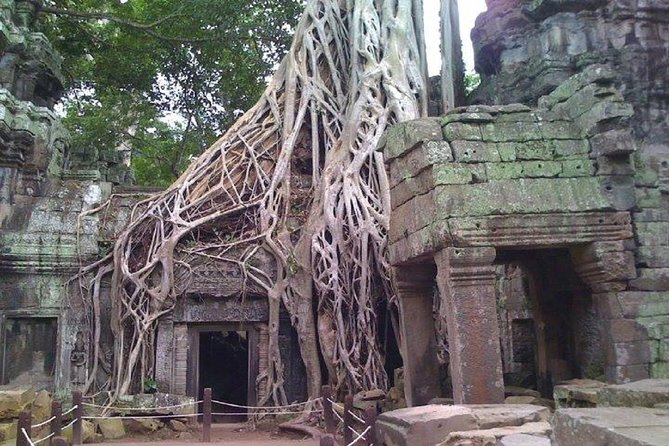
- Ta Prohm: the tree-through-temple photo moment
- Banteay Kdei and Srah Srang: quieter ruins and reservoir views
- Sunset at Angkor Wat or Bakheng Mountain: pick your vibe
- Price and value: why $360 can make sense
- Drivers and guides: the human factor that changes the day
- Dress code and pacing: small rules, big impact
- Who should book this Angkor Wat 2-day tour?
- Should you book the Angkor Wat 2-day tour?
- FAQ
- What time does the tour start?
- Is this a private tour?
- What’s included in the tour price?
- What is not included?
- Do I need to buy temple tickets ahead of time?
- What temples and areas are covered?
- Is there a dress code?
- Is a mobile ticket used?
- What is the cancellation policy?
Key things I like about this Angkor Wat 2-day tour
- 8:00am start to get you into the temples early
- Mobile ticket keeps things simple once you’re booked
- Cold towels and bottled water during the busy circuit
- South Gate to Bayon sequence (those 54 towers of smiling faces)
- Ta Prohm with massive tree roots for that signature Angkor photo moment
- Sunset at Angkor Wat or Bakheng Mountain so you can choose your view style
Other ways to walk the great temple
- Angkor Wat Sunrise or Sunset Tour with Guide from Siem Reap★ 5.0 · 12,109 reviews
- Siem Reap: Angkor Wat: Small-Group Sunrise or Sunset Tour★ 5.0 · 9,444 reviews
- Siem Reap: Angkor Wat 2-Day Tour with Sunrise and Sunset★ 4.9 · 4,429 reviews
- Siem Reap: Full-Day Angkor Wat Guided Tour with Sunset★ 4.9 · 3,803 reviews
Angkor Wat 2 days: the flow and why it works
This tour is built around two great principles: cover the most famous sights without feeling like you’re doing only the same old checklist, and give you enough time for the key “wow” moments. Day 1 focuses on Angkor Wat and nearby temples in a small circuit style. Day 2 expands into the Grand Circuit feel, starting at Angkor Thom’s main entrance and rolling through major temples outside the main city as well.
You’re also not stuck in a single “temple only” rhythm. The day naturally mixes big stone set pieces with atmospheric stops—like forested ruins and a reservoir viewpoint—then ends with sunset either at Angkor Wat or from Bakheng Mountain. That matters because Angkor isn’t just about seeing. It’s also about timing, heat, and light.
Getting started at 8:00am: your first temple moves
A starting time of 8:00am is a big deal here. Angkor temples get hotter and busier as the day goes on, and early timing helps you start your walking circuit before the sun becomes a full-contact sport.
The tour begins with a short drive from Siem Reap to Angkor Wat, and you’ll have an English-speaking guide to help you interpret what you’re looking at, not just point at it. That’s the difference between reading about Angkor later and understanding the design choices while you’re standing in front of them.
Also, the included cold towels and drinking water are there for the realistic part of temple touring: the transitions between sites can be long and the walking can add up quickly.
Angkor Wat: the largest religious building and what to look for
Angkor Wat is the main event, and the tour doesn’t treat it like a quick stop. You start there, and the guide helps you make sense of why this place feels so dramatic even if you’ve seen pictures already.
Since this is described as the largest religious building in the world, your job is to look past the postcard angles. Focus on how the temple’s layout pushes your movement: causeways, courtyards, and layered spaces create a gradual sense of arrival. Even if you’re not a “details person,” you’ll feel the design.
What I’d pay attention to during your visit:
- How the main temple structure changes as you move—many views look different from one step to the next
- The way the circuit keeps you from feeling stuck in one corner
- The overall pacing: with a guide and a schedule, you’re not guessing what matters most
Day 1 continues from Angkor Wat through a small circuit of other nearby temples in the Angkor Archaeological Park. The value of this approach is that you don’t spend the whole day in transit. You get more temple time per hour.
Angkor Thom’s South Gate: the entrance built for drama
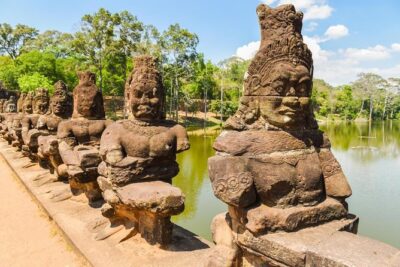
Day 2’s spotlight begins at the South Gate of Angkor Thom, and it’s a smart place to start because it sets the tone immediately. This gate was built to protect the capital of Angkor Thom, and the causeway in front of it is decorated with rows of devas and asuras based on the Hindu myth of the Churning of the Sea of Milk.
If you only have one day, you might skip the gates and go straight to the main temples. Don’t. A gate is like a movie opening scene: it tells you what kind of story you’re about to step into. Here, that story is carved and symbolic, not just decorative.
More temple circuits, set side by side
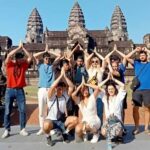
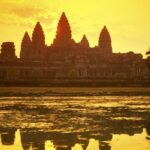
Bayon Temple: the 54 towers and the smiling faces effect
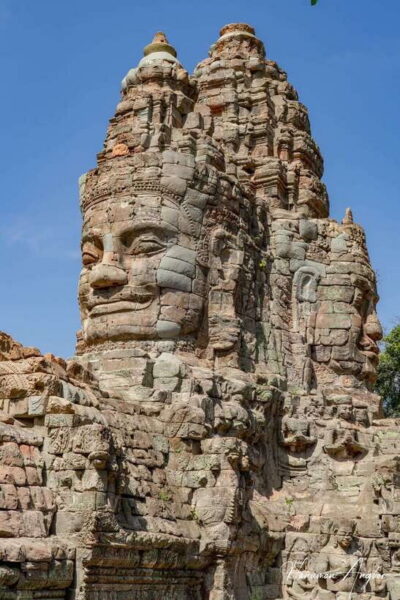
About a short distance from the South Gate is Bayon Temple, described as the heart of Angkor Thom and connected to King Jayavarman VII. The key visual here is the 54 towers decorated with 216 smiling faces of Avalokiteshvara.
When you’re standing among those towers, you quickly understand why Bayon feels otherworldly. The faces aren’t just art—they act like an orientation tool. As you shift position, the faces seem to watch different directions, which gives the whole complex a living, almost surreal quality.
This is one of the most praised stops for a reason: it’s bold, it’s readable, and it rewards time spent looking, not just snapping a photo and moving on.
Baphuon and the Royal Terraces: architecture plus jaw-dropping carvings
Next comes Baphuon Temple, noted as the second biggest temple of Angkor Thom, built in the mid-11th century as a state temple for King Udayadityavarman II dedicated to Shiva. It’s pyramid-shaped with three tiers. That structure matters because it changes how you experience the ruins. Instead of flat walls and scattered carvings, you get a sense of vertical planning and staged views as you climb and circle.
Then the tour shifts to two closely placed terraces at the royal palace area:
- Terrace of Elephants: a 350m-long viewing stage for public ceremonies, used as a base for the king to watch military training
- Terrace of the Leper King: packed with carvings that many people describe as jaw-dropping
The value of including both terraces is that they show a different side of Angkor than the big temple towers do. You’re seeing a place built for ceremony and public display, with details designed to reward attention.
Chau Say Tevoda, Thommanon, and Takeo: powerful outside the core
After Angkor Thom’s main city area, the tour moves to several temples outside the capital: Chau Say Tevoda, Thommanon, and Takeo. These are described as very impressive and should not be missed on this circuit.
I like stops like these because they keep the day from becoming a repeat of the same visual pattern. Even when Angkor feels related temple-to-temple, each ruin has its own “personality” based on size, carvings, and how the surrounding area frames it.
Ta Prohm: the tree-through-temple photo moment
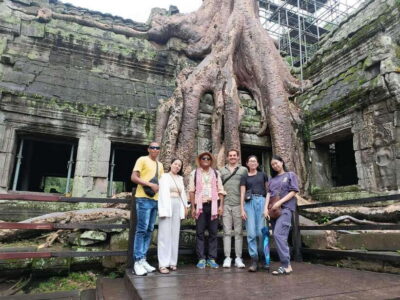
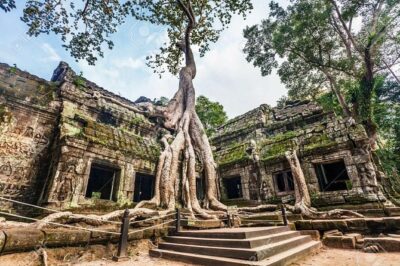
Then you reach Ta Prohm, famously described as once used as a Buddhist monastery and university. It’s also called the Tomb Raider temple because it was used for filming, and that’s exactly what you’ll feel when you walk through it—like you’re in a movie set that became real.
The most distinctive feature is the tree growing through the temple. You’ll want to take your time here, because the best photos come from patience: find your angle, wait for foot traffic to move, and notice how the roots and stones create contrast.
This is one of the stops where a guide really helps. Instead of just telling you it’s famous, an experienced guide can point out where the design and nature interact most clearly.
Banteay Kdei and Srah Srang: quieter ruins and reservoir views
Next is Banteay Kdei, described as recently restored and still open to tourists. It also has a forest setting, so it tends to feel more mysterious and quiet than the busiest iconic spots.
Then comes Srah Srang, a baray or reservoir associated with Banteay Kdei. The standout detail here is the view potential, especially around sunrise and sunset.
This stop is a nice break from constant stair-climbing and tower staring. A reservoir gives you breathing room. It also gives you a different kind of Angkor moment: not a single structure dominating your vision, but a broader scene where light and reflection can make a difference.
Sunset at Angkor Wat or Bakheng Mountain: pick your vibe
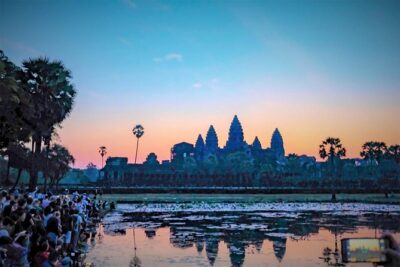
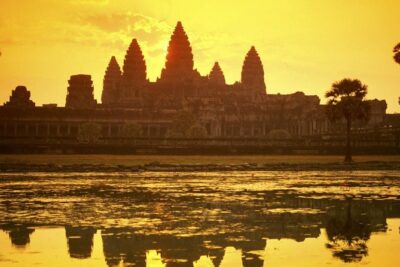
The tour ends with a sunset option: either Angkor Wat itself or Bakheng Mountain.
Here’s how to decide without overthinking it:
- If you want the classic and most iconic setting, go for sunset at Angkor Wat.
- If you want a more elevated viewpoint style, Bakheng Mountain is the call.
Either option makes sense because the tour is designed to reach a major viewing moment at day’s end. And since the circuit includes a lot of walking during daylight hours, ending with a planned sunset gives the day a natural emotional finish.
Price and value: why $360 can make sense
At $360 for two days, the price works best if you want more than basic transportation. What you’re getting includes transportation, cold towels, drinking water, and an English speaking guide, on a private basis.
The tradeoff is that temple tickets are not included, and lunch near temples is also not included. So your real total cost is your tour price plus entrance fees and food. If you’re traveling with a group, entrance fees can add up fast—so I’d plan for that early.
Where the money feels well spent is in the comfort and direction: fewer decision moments, less time lost to figuring routes, and someone handling explanations while you focus on the ruins.
Drivers and guides: the human factor that changes the day
The experience quality here isn’t just about temples. It’s about how the day runs between them.
From the way the tour is described and the guide/driver examples shared, you can expect a professional approach to timing and refreshment. Guides like Seng, Lucky (who was noted as also being a professional photographer), and drivers such as Mr Ly, Ly Hol, and Vutha show up repeatedly in the provided feedback. What they have in common is simple: punctual starts, clear English explanations, and the ability to keep you comfortable with water and cold towels.
There’s also a useful pattern: flexibility when possible. One example involved adding a stop to Tonle Sap Lake, including a boat ride to a fishing village on stilts. That kind of extra only works if timing allows, but it’s a reminder to ask early if you want a specific detour.
Dress code and pacing: small rules, big impact
The tour notes a dress code requirement for temple visits. That’s not a minor detail in Cambodia. If your outfit doesn’t meet the rules, you may face delays or restrictions.
Plan your day around this:
- Bring temple-appropriate clothing
- Keep your hands free for photos (you’ll want them free at gates and terraces)
- Assume warm weather. The included cold towels and water are there because the day can get intense
Also, since you’re hitting multiple temples in two days, you’ll want to pace yourself. The best experience is usually when you slow down at the stops that feel most meaningful—like Bayon and Ta Prohm—and keep moving at the ones where you mainly want a solid look.
Who should book this Angkor Wat 2-day tour?
This works especially well if:
- You want a private experience rather than merging into a bigger group shuffle
- You care about understanding what you’re seeing, not just collecting monuments
- You want a classic mix: Angkor Wat, Angkor Thom, major terraces, and film-famous Ta Prohm
- You like having a structured sunset plan at the end of the day
If you’re very strict about doing absolutely everything on your own schedule, you might prefer a self-guided approach. But if your goal is to see the big winners with less stress, this circuit-style plan is a strong match.
Should you book the Angkor Wat 2-day tour?
I think you should book it if you want a well-paced, guide-led temple circuit that starts at a good hour, keeps you comfortable with water and cold towels, and gives you a real sunset decision at the end.
Skip it—or at least adjust your expectations—if you’re hoping the tour price includes everything. Since temple tickets and lunch aren’t included, you’ll need to budget those separately. Also, temple days are physically active, so the “2 days” feel full even if the hours don’t sound long on paper.
If you want your Angkor time to feel organized, meaningful, and not overly chaotic, this is the kind of tour that delivers.
FAQ
What time does the tour start?
The tour starts at 8:00am in Siem Reap.
Is this a private tour?
Yes. It’s a private tour/activity, meaning only your group participates.
What’s included in the tour price?
Included items are transportation, cold towels, drinking water, and an English speaking guide.
What is not included?
Not included are temple tickets, lunch near temples, and personal expenses.
Do I need to buy temple tickets ahead of time?
The tour does not include temple tickets, so you should plan on getting them separately.
What temples and areas are covered?
Day 1 focuses on Angkor Archaeological Park with a start at Angkor Wat and a small circuit. Day 2 includes Angkor Thom (South Gate, Bayon, Baphuon, Terrace of Elephants, Terrace of the Leper King) plus temples outside the capital (Chau Say Tevoda, Thommanon, Takeo), then Ta Prohm, Banteay Kdei, Srah Srang, and a sunset option at Angkor Wat or Bakheng Mountain.
Is there a dress code?
Yes. You need to follow the dress code rules when visiting the temples.
Is a mobile ticket used?
Yes. The tour uses a mobile ticket.
What is the cancellation policy?
You can cancel for a full refund if you do it at least 24 hours before the experience’s start time. If you cancel less than 24 hours before, the amount paid isn’t refunded.
More Days at the Temples
- Siem Reap: Angkor Wat 2-Day Tour with Sunrise and Sunset
★ 4.9 · 4,429 reviews - Angkor 2-Day Sunset & Sunrise Small-Group Tour
★ 5.0 · 2,567 reviews - 2 Days Exclusive Temple Highlights with Sunset and Sunrise Tour
★ 5.0 · 1,157 reviews - Siem Reap: Angkor Sunrise 1- or 2-Day Guided Temples Tour
★ 4.9 · 1,132 reviews - 2 Days Guided Historical Tour in Angkor
★ 5.0 · 855 reviews
More Temple Circuits Around Siem Reap
- Angkor Wat Sunrise or Sunset Tour with Guide from Siem Reap
★ 5.0 · 12,109 reviews - Siem Reap: Angkor Wat: Small-Group Sunrise or Sunset Tour
★ 5.0 · 9,444 reviews - Siem Reap: Angkor Wat 2-Day Tour with Sunrise and Sunset
★ 4.9 · 4,429 reviews - Siem Reap: Full-Day Angkor Wat Guided Tour with Sunset
★ 4.9 · 3,803 reviews - Angkor Wat Sunrise tour with Small – Group and Guide tours
★ 5.0 · 3,655 reviews
Angkor Wat, a Few More Ways In
- Angkor Wat Sunrise or Sunset Tour with Guide from Siem Reap
★ 5.0 · 12,109 reviews - Siem Reap: Angkor Wat: Small-Group Sunrise or Sunset Tour
★ 5.0 · 9,444 reviews - Siem Reap: Angkor Wat 2-Day Tour with Sunrise and Sunset
★ 4.9 · 4,429 reviews - Siem Reap: Full-Day Angkor Wat Guided Tour with Sunset
★ 4.9 · 3,803 reviews - Angkor Wat Sunrise tour with Small – Group and Guide tours
★ 5.0 · 3,655 reviews
Just Added: Fresh Siem Reap Tour Reviews

Angkor Wat Temple Tours, compared.
 ★ 5.0Angkor Wat Sunrise or Sunset Tour with Guide from Siem ReapFrom $1812,109 reviews
 ★ 5.0Angkor Wat: Small-Group Sunrise or Sunset TourFrom $159,444 reviews
 ★ 4.9Angkor Wat 2-Day Tour with Sunrise and SunsetFrom $344,429 reviews
 ★ 4.9Full-Day Angkor Wat Guided Tour with SunsetFrom $153,803 reviews
 ★ 5.0Angkor Wat Sunrise tour with Small – Group and Guide toursFrom $143,655 reviews
 ★ 5.0Angkor Wat Highlights and Sunrise Guided Tour from Siem ReapFrom $233,213 reviews
 ★ 5.0Angkor Wat Sunset Small Group Tour with Lunch IncludedFrom $203,059 reviews
 ★ 5.0Full-Day Angkor Wat Sunrise Private Tour with Guide from Siem ReapFrom $602,920 reviews
Browse the lists this tour appears in