
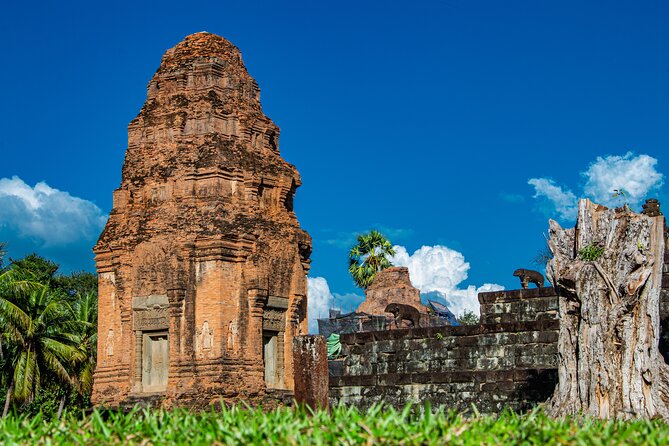
Reviewed · ANGKOR TEMPLE TOURS
Best of Angkor Temples 3 Days Private Tour from Siem Reap
Stone at dawn beats any museum. This private tour is built around the best light of the day: sunrise at Angkor Wat and sunset at Pre Rup, with a professional guide who helps you spot what matters and get strong photos. I also like that you’re not stuck with a fixed pace; the guide can flex your daily timing so you spend energy on the temples, not logistics. One thing to plan for: temple admissions and the 3 Days Angkor Pass are not included in the base price, and the early start means you should grab breakfast before you roll.
You’ll cover major highlights inside Angkor’s core—Angkor Wat, Angkor Thom’s South Gate, Bayon, Ta Prohm, plus stops like the Terrace of the Elephants and Banteay Kdei—then expand outward to places that feel wilder, like Beng Mealea and the Roluos temples. You get free hotel pickup/drop-off around Siem Reap, bottled water, and air-conditioned transport, so the day stays manageable even when the route is packed.
There are a few rules that can catch people off guard. You’ll need respectful dress (shoulders and knees covered), and drones are not allowed unless you ask APSARA permission. Also, the tour runs only if weather cooperates, since temple days depend on visibility.
In This Review
- Key things I’d bet on before you book
- Angkor Wat sunrise at 4:30 am: why it’s worth the alarm
- Angkor Wat and the surrounding core: seeing the complex like a map
- Bayon to Ta Prohm to Banteay Kdei: three moods in one long day
- The next circuit: Banteay Srei and the temples that feel more personal
- Pre Rup sunset: finishing with a temple-mountain feel
- Final day variety: Beng Mealea and the Roluos group
- Price and value: what $217 buys you, and what you’ll add for temples
- Your guide matters: photo help and story context
- Logistics that can trip you up: dress code and drone rules
- Who should book this tour, and who should pause
- Should you book this Best of Angkor Temples 3 Days Private Tour?
- FAQ
- What time does the tour start from Siem Reap?
- Is the 3 Days Angkor Pass included in the price?
- What’s included in the tour price?
- What’s not included?
- Do I need separate admission tickets for each stop?
- What dress code do I need for the temples?
- Are drones allowed at the temples?
Key things I’d bet on before you book
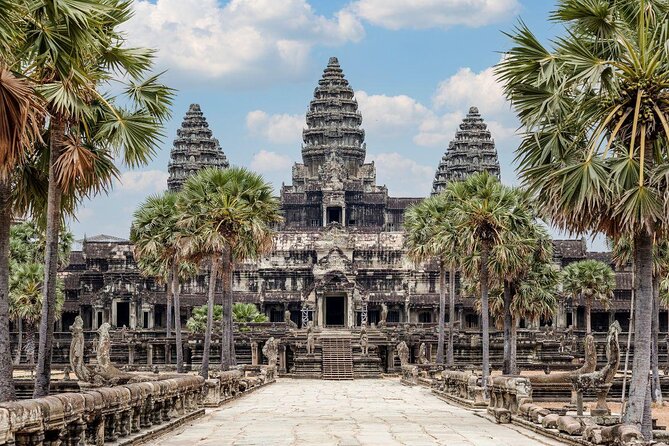
- Angkor Wat sunrise at a 4:30 am start, so you’re there before the crowds swell.
- Pre Rup sunset to close the day when the temples look their best.
- A professional English-speaking guide who can explain what you’re seeing while helping with photos.
- A route that mixes famous names with outside-Angkor stops like Beng Mealea and the Roluos group.
- Free hotel pickup and drop-off plus bottled water and AC transport.
- Angkor Pass needed for the temple set in this schedule (not included in the base price).
More temple circuits, set side by side
- Angkor Wat Sunrise or Sunset Tour with Guide from Siem Reap★ 5.0 · 12,109 reviews
- Siem Reap: Angkor Wat: Small-Group Sunrise or Sunset Tour★ 5.0 · 9,444 reviews
- Siem Reap: Angkor Wat 2-Day Tour with Sunrise and Sunset★ 4.9 · 4,429 reviews
- Siem Reap: Full-Day Angkor Wat Guided Tour with Sunset★ 4.9 · 3,803 reviews
Angkor Wat sunrise at 4:30 am: why it’s worth the alarm
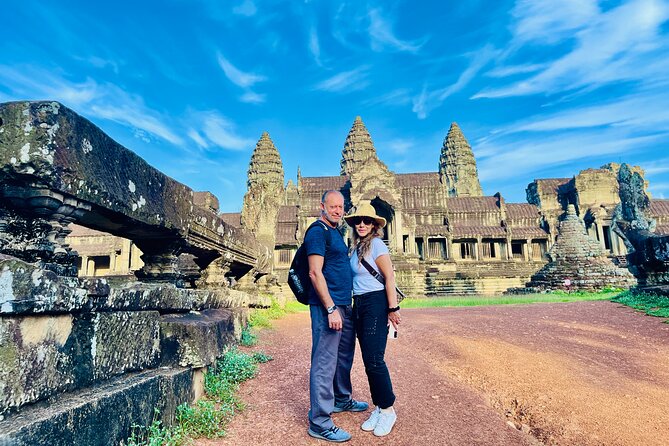
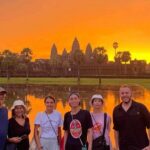
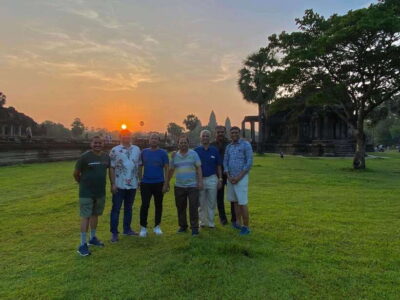
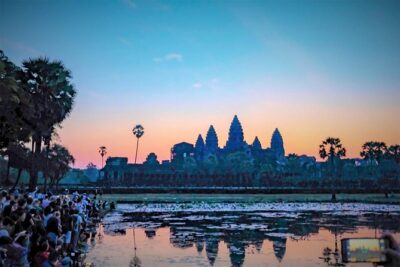
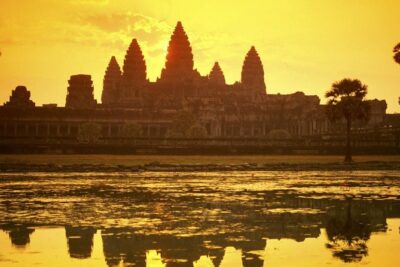
If you’re even slightly serious about photos, sunrise at Angkor Wat is the move. The tour begins at 4:30 am, which means you’re leaving early enough to catch the temple in calmer light. I like this approach because it turns the first morning into a focused visit instead of a frantic dash once the heat and crowds hit.
Practical tip: breakfast can be the make-or-break moment. If your hotel offers breakfast, the tour suggests asking for a breakfast pack so you can eat after sunrise time at Angkor Wat. That’s smart, because you avoid the classic problem of being hungry while trying to manage sunrise views and queues.
What you’ll do here is straightforward: you’ll spend about 2 hours at Angkor Wat. This is the big one—the largest religious monument in the world on a 162.6-hectare site—with a story that shifts over time. Originally built as a Hindu temple for Vishnu, it was gradually transformed into a Buddhist temple by the end of the 12th century. Having that explanation in plain language helps you stop treating the place like a photo backdrop and start reading the architecture.
Admission note: the Angkor Wat stop lists admission as not included. The good news is that temple entrance fees are available to purchase on the day just before sunrise, and they accept visa cards.
Angkor Wat and the surrounding core: seeing the complex like a map
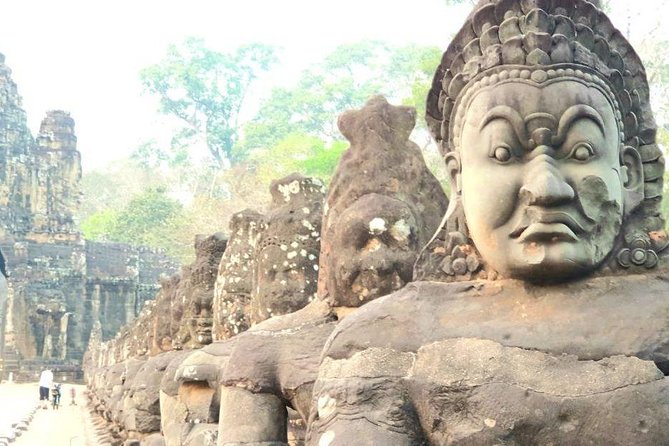
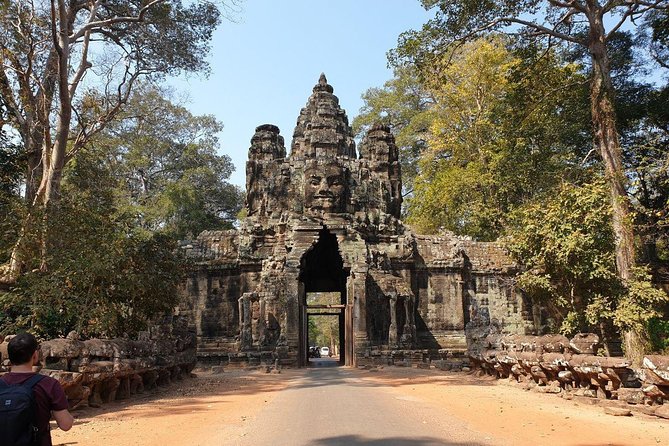
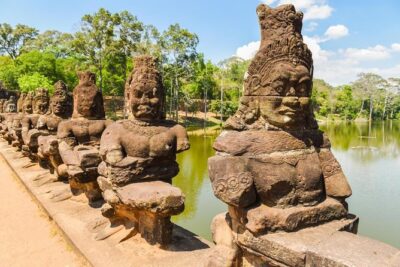
After sunrise, your day becomes a tour of themes—royal city planning, Buddhist change, and Khmer state power—rather than just a checklist of names. You start with Angkor Wat, then head to Angkor Thom South Gate, which takes about 15 minutes.
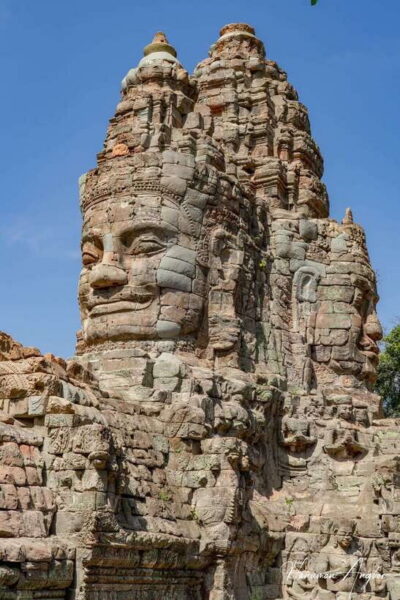
From there, you move into the heart of Angkor Thom at Bayon Temple (about 1 hour). Bayon is described as a richly decorated Khmer temple built around the late 12th or early 13th century, serving as the state temple of the Mahayana Buddhist King Jayavarman VII. It’s positioned at the center of Jayavarman’s capital, Angkor Thom. When the guide explains that relationship, Bayon stops being random towers and becomes a statement—this is what power looked like on stone.
You’ll also include the Terrace of the Elephants (free) for about 15 minutes. And you’ll stop at the Terrace of the Leper King in the northwest corner of the Royal Square of Angkor Thom. Even with shorter time blocks, these stops matter because they keep you inside the Angkor Thom setting instead of bouncing out immediately.
A quick reality check: the core temple group can feel crowded and hot later in the morning. That’s why I like a schedule that front-loads Angkor Wat sunrise and then keeps the rest of the first day balanced with short-but-targeted stops.
Bayon to Ta Prohm to Banteay Kdei: three moods in one long day
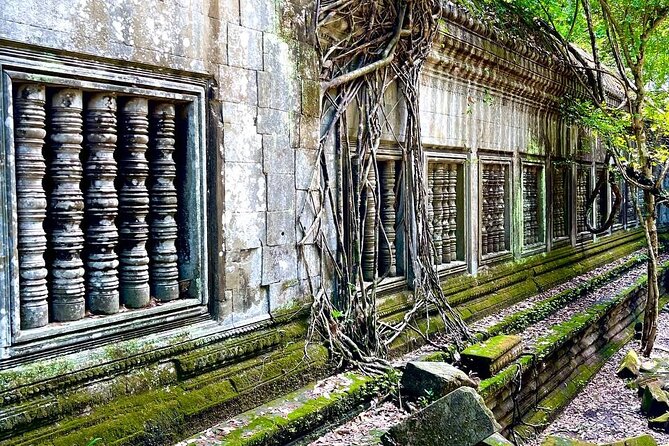
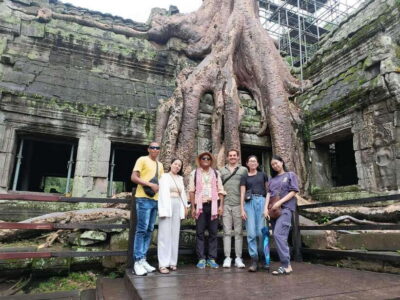
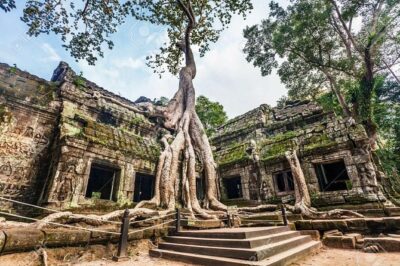
The first major mood shift comes with Ta Prohm, where you’ll spend about 1 hour. Ta Prohm is known by its modern name, while its original name was Rajavihara. It’s built largely in the Bayon style, dating to the late 12th and early 13th centuries. If you want temples that feel more open to the sky, this is one of the best bets in the schedule.
Next is Banteay Kdei, around 40 minutes. The tour frames it as a Buddhist temple meaning A Citadel of Chambers, also known as Citadel of Monks’ cells. It’s located southeast of Ta Prohm and east of Angkor Thom. I like this stop because it’s not as universally photographed as the headline temples, yet it’s still inside the core temple logic. You’ll get a temple that feels more like a place people once lived with daily routines, not only a monument staged for postcards.
What can be a drawback here is simply time pressure. Your first day includes many stops, and several of them are shorter visits. If you’re the type who wants a slow sit-down at every structure, you might feel rushed. The trade-off is you see more in one day and you don’t waste half your trip in transit.
The next circuit: Banteay Srei and the temples that feel more personal
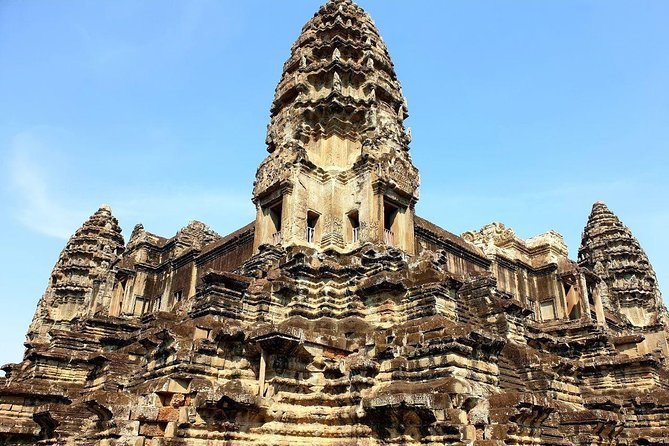
The following morning swings the focus toward temples that aren’t always on people’s shortest lists. First up is Banteay Srei for about 2 hours. It’s a 10th-century temple dedicated to Hindu god Shiva, located near the hill of Phnom Dei, about 25 km northeast of the main group of temples connected to Yasodharapura and Angkor Thom.
I like the way the tour builds contrast. After the dense, iconic core, Banteay Srei can feel like you’re meeting a different side of Khmer craft—still grand, but in a setting that feels more spread out. The guide’s context matters a lot here, because without it, you might miss why a smaller or more technical-feeling temple still counts as major.
From there you visit Preah Khan (about 1 hour). Preah Khan was built in the 12th century for King Jayavarman VII to honor his father, and it’s associated with the Jayatataka baray. The tour notes that Preah Khan served as the center of a substantial organization with almost 100,000 officials and servants. That number is the kind of detail that makes you look again. Suddenly the temple isn’t only a religious structure; it’s a piece of how a huge system worked.
Then comes the baray-connected string of smaller sites:
- Neak Pean (about 30 minutes): an artificial island with a Buddhist temple on a circular island in Jayatataka Baray, described as the Mebon of the Preah Khan baray.
- Ta Som (about 35 minutes): a small temple built at the end of the 12th century for Jayavarman VII, dedicated to his father Dharanindravarman II.
- Eastern Mebon (about 40 minutes): a 10th-century temple on what was an artificial island at the center of the now-dry East Baray reservoir.
- Banteay Samre (about 50 minutes, free admission): an early 12th-century Hindu temple in the Angkor Wat style, located about 400 metres east of the East Baray.
This cluster is one of the best parts of the tour because it shows a different kind of Angkor. Instead of only monumental walls and gates, you’re also seeing the Khmer relationship with water management and the ceremonial geography of reservoirs.
More time at the temples, spread over days
Pre Rup sunset: finishing with a temple-mountain feel
Near the end of the second day, you’ll reach Pre Rup for about 1 hour. Pre Rup is a Hindu temple built as the state temple of Khmer king Rajendravarman, dedicated in 961 or early 962. The tour describes it as a temple mountain made of combined brick, laterite, and sandstone.
Sunset here matters because the structure is read best when the light slides across surfaces. Even if you’re not a photographer, you’ll probably feel the shift: the site goes from daytime brightness to a more dramatic, slower view. The schedule supports that by building in time for the sun to drop.
Admission note: Pre Rup lists admissions as not included for this stop.
Final day variety: Beng Mealea and the Roluos group
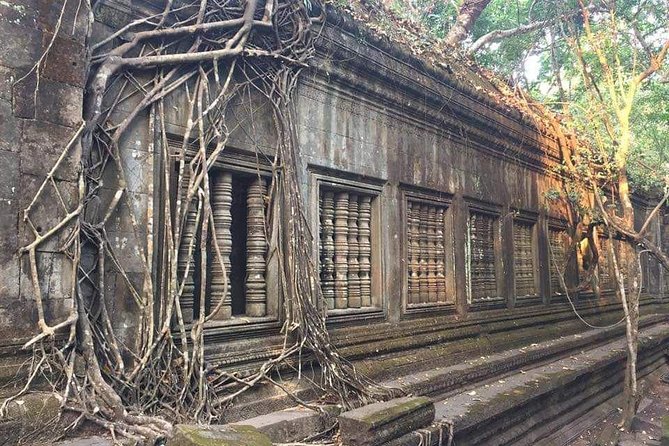
By the third day, you’re not trying to repeat the same kind of temple all over again. You start with Beng Mealea, which the tour describes as largely unrestored, with trees and thick brush growing among towers and courtyards, plus many stones lying in great heaps. It’s built as a Hindu temple, but carvings show Buddhist motifs. You’re also told that getting there used to be difficult, and road access has improved, with the temple about 77 km from Siem Reap by road.
One odd detail in the schedule: Beng Mealea’s listed stop time is only 3 minutes. I’d treat that as a short photo-and-orientation stop rather than a slow exploration. If you want a long walk through the brushy ruins, you might ask your guide if they can extend your time here within your day’s plan.
After Beng Mealea, the tour moves to the Roluos group, which gives you a more classic temple base near Siem Reap. You’ll visit:
- Preah Ko (described as Preah Ko or the Sacred Bull), about 40 minutes. It’s the first temple built in the ancient city of Hariharalaya, built under Khmer king Indravarman I in 879 to honor members of the king’s family in relation with Shiva.
- Prasat Bakong for about 1 hour, marked as free admission. Bakong is described as the first temple mountain of sandstone constructed by rulers of the Khmer empire at Angkor, and it served as the official state temple of King Indravarman I.
- Lolei for about 30 minutes, described as the northernmost temple of the Roluos group (Preah Ko, Bakong, and Lolei). Lolei is a late 9th-century Hindu temple dedicated to Shiva and members of the royal family.
I like closing with this set because it’s geographically and emotionally different. You’ve already chased big sunrise and big sunset. Roluos is the part where you can slow down and see temple styles as part of an earlier Khmer phase—stone built for leadership and ritual.
Price and value: what $217 buys you, and what you’ll add for temples
At $217 per person for the 3-day private tour, you’re paying for more than driving and a route. The included part is the stuff that usually costs real time and effort:
- bottled water
- free pickup and drop-off at city hotels
- a professional English-speaking tour guide
- sightseeing as specified
- transportation by air-conditioned vehicle
- a mobile ticket
What’s not included is the part that can surprise you: breakfast, lunch, and drinks, plus travel insurance, plus guide and driver tipping. And most importantly, temple admissions. The tour specifically notes that the 3 Days Angkor Pass is US$62 and covers all temples in the itinerary.
In other words, your likely out-the-door temple add-on is the Angkor Pass. Since many stops list admission as not included, having that pass keeps everything consistent. The tour also notes the entrance fees accept visa cards and can be purchased on the day just before sunrise, which can help if your schedule gets tight.
So the value question is: do you want a guide-led plan that hits sunrise, sunset, and a wide spread of sites in a private setting? If yes, the price makes sense because you’re buying the time management and interpretation, not only transport.
Your guide matters: photo help and story context
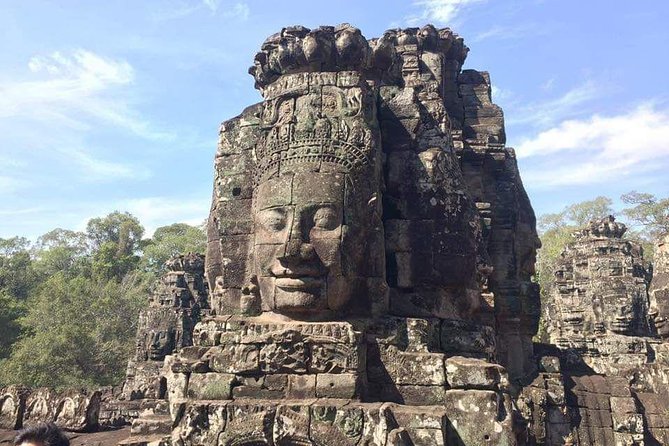
The best way to judge this kind of temple tour is not by how many names you see. It’s by whether someone helps you understand what you’re looking at while you’re standing there, sweaty and short on attention.
In this case, the tour highlights a professional English-speaking guide, and the guide’s flexibility shows up in the way the schedule can be tailored. One named guide who’s come up with strong notes is Tann Sopheap. The comments I’ve seen connect him to two big wins: he speaks both Cambodian and English, and he’s flexible with daily scheduling so the visit fits what your group wants. There’s also a clear emphasis on explanations and on helping you get good pictures, with the guide shooting or helping you frame key moments.
For you, that can mean less time guessing where to stand and more time using that energy to understand the temple layout. It can also mean the guide can adjust when the sun, queues, or your group’s stamina changes.
Logistics that can trip you up: dress code and drone rules
Angkor is strict about basic respect. The tour requires respectful dress: shoulders and knees covered. It also notes that only a real dress scarf is allowed. That last part matters because people sometimes show up with whatever they have and hope for the best. Don’t do that here. Pack a proper scarf or wrap that you can use without fuss.
Also keep your drone expectations realistic. The tour says flying a drone at the temples is not allowed, only asking permission from APSARA. If you plan to bring a drone, confirm the paperwork and permission rules before you go, because you don’t want a day-ending snag at the gate.
Finally, admissions can be handled smoothly if you remember the practical guidance: visa cards are accepted, and you can buy temple entrance fees on the day just before sunrise.
Who should book this tour, and who should pause
This tour fits you if you want:
- a private plan with hotel pickup and AC transport
- sunrise at Angkor Wat plus sunset at Pre Rup
- a guide-led explanation so the temples make sense as you move between them
- a mix of famous and less-visited stops, including Beng Mealea and the Roluos group
It might not fit you if you hate early mornings or you need lots of slow time at each stop. Some visits are intentionally short (like South Gate and Terrace stops), and the schedule is full enough that you’ll be moving most of the day.
If you do like variety and you’re okay with a brisk pace, you’ll probably appreciate how much ground it covers without turning the experience into chaos.
Should you book this Best of Angkor Temples 3 Days Private Tour?
I’d book it if you want a guide-driven way to see Angkor without getting lost in planning. The biggest strengths are the timing—sunrise at Angkor Wat and sunset at Pre Rup—and the private setup that makes flexibility possible. You also get a thoughtful mix of temple types: the core power centers, the water-linked circuit, and the more rugged feel of Beng Mealea plus the Roluos group.
Before you commit, just budget for the US$62 Angkor Pass and plan for a true early start at 4:30 am. Pack for temple dress rules, and keep a scarf ready. If you do those things, you’ll get a strong, photo-friendly, story-rich Angkor experience that feels organized rather than rushed.
FAQ
What time does the tour start from Siem Reap?
The tour start time is 4:30 am, which is set up for the sunrise experience at Angkor Wat.
Is the 3 Days Angkor Pass included in the price?
No. The 3 Days Angkor Pass (US$62) is not included, but it covers all the temples on the tour’s schedule.
What’s included in the tour price?
The price includes bottled water, free pickup and drop-off at city hotels, a professional English-speaking tour guide, sightseeing as specified, and air-conditioned transportation. A mobile ticket is also mentioned as part of the experience.
What’s not included?
Breakfast, lunch, and drinks, travel insurance, and guide and driver tipping are not included.
Do I need separate admission tickets for each stop?
Many stops list admissions as not included. The Angkor Pass is the stated way to cover all temples on the schedule. The tour also notes that entrance fees can be purchased on the day just before sunrise and accept visa cards.
What dress code do I need for the temples?
You’ll need shoulders and knees covered. The tour specifies that only a real dress scarf is allowed.
Are drones allowed at the temples?
Drones are not allowed unless you ask for permission from APSARA.
Just Your Group: Private Days
- Full-Day Angkor Wat Sunrise Private Tour with Guide from Siem Reap
★ 5.0 · 2,920 reviews - Siem Reap: Angkor Wat Private Tuk-Tuk Tour
★ 4.9 · 2,222 reviews - Angkor Wat Private Day Tour from Siem Reap
★ 5.0 · 834 reviews - Angkor Wat Private Tuk-Tuk Tour (sunrise Option) & more
★ 5.0 · 439 reviews - Private Angkor Wat Day Tour – Best of Angkor
★ 5.0 · 269 reviews
More Days at the Temples
- Siem Reap: Angkor Wat 2-Day Tour with Sunrise and Sunset
★ 4.9 · 4,429 reviews - Angkor 2-Day Sunset & Sunrise Small-Group Tour
★ 5.0 · 2,567 reviews - 2 Days Exclusive Temple Highlights with Sunset and Sunrise Tour
★ 5.0 · 1,157 reviews - Siem Reap: Angkor Sunrise 1- or 2-Day Guided Temples Tour
★ 4.9 · 1,132 reviews - 2 Days Guided Historical Tour in Angkor
★ 5.0 · 855 reviews
More Temple Circuits Around Siem Reap
- Angkor Wat Sunrise or Sunset Tour with Guide from Siem Reap
★ 5.0 · 12,109 reviews - Siem Reap: Angkor Wat: Small-Group Sunrise or Sunset Tour
★ 5.0 · 9,444 reviews - Siem Reap: Angkor Wat 2-Day Tour with Sunrise and Sunset
★ 4.9 · 4,429 reviews - Siem Reap: Full-Day Angkor Wat Guided Tour with Sunset
★ 4.9 · 3,803 reviews - Angkor Wat Sunrise tour with Small – Group and Guide tours
★ 5.0 · 3,655 reviews
Just Added: Fresh Siem Reap Tour Reviews

Angkor Temple Tours, compared.
 ★ 5.0Angkor Wat Sunrise or Sunset Tour with Guide from Siem ReapFrom $1812,109 reviews
 ★ 5.0Angkor Wat: Small-Group Sunrise or Sunset TourFrom $159,444 reviews
 ★ 4.9Angkor Wat 2-Day Tour with Sunrise and SunsetFrom $344,429 reviews
 ★ 4.9Full-Day Angkor Wat Guided Tour with SunsetFrom $153,803 reviews
 ★ 5.0Angkor Wat Sunrise tour with Small – Group and Guide toursFrom $143,655 reviews
 ★ 5.0Angkor Wat Highlights and Sunrise Guided Tour from Siem ReapFrom $233,213 reviews
 ★ 5.0Angkor Wat Sunset Small Group Tour with Lunch IncludedFrom $203,059 reviews
 ★ 5.0Full-Day Angkor Wat Sunrise Private Tour with Guide from Siem ReapFrom $602,920 reviews
Browse the lists this tour appears in