
Reviewed · MONK BLESSING & SPIRITUAL TOURS
Buddhist Monastery with Monks Water Blessing
This is luck, sung over water. A Buddhist monastery water blessing in Siem Reap is a short, moving way to see Cambodia’s living spirituality—right where the chanting happens. You’ll get the water blessing experience with a guided visit to the monastery, not just a quick photo stop.
Two things I really like: first, the ritual is explained clearly step by step, including what the monks are doing and why it matters. Second, the tour’s English-speaking guide can make Buddhism in Cambodia feel understandable and grounded, and one standout guide name I saw was Chantha, praised for his knowledge and excellent English.
One thing to keep in mind is reliability. While the experience is usually set up for a smooth visit, there’s at least one cautionary review about pickup problems and the monastery not being ready, so I’d plan to confirm your pickup details and give yourself a little time buffer.
In This Review
- Key highlights at a glance
- What a Monks Water Blessing Looks Like in Siem Reap
- Pickup, Private Group, and the Morning or Noon Option
- Monastery Arrival: Chanting, Learning, and How the Tour Frames Buddhism
- The Two-Step Ritual: Sprinkling, Then the Head-Pouring Blessing
- What You’re Really Paying For: Value Behind the $49 Price
- Why the Guide Can Make or Break the Experience (Chantha as an Example)
- Comfort and Participation Tips for the Ceremony Day
- Potential Red Flags: When Pickup and Timing Go Wrong
- Who This Tour Fits Best (and Who Should Skip It)
- Should You Book This Buddhist Monastery Water Blessing Tour?
- FAQ
- How long is the water blessing tour in Siem Reap?
- Is hotel pickup included?
- What happens during the ceremony?
- Do I need to bring a sarong?
- What’s the group setup?
- Can I cancel for free?
Key highlights at a glance
- Two ritual stages: a shorter chanting-and-sprinkling moment, then a longer head-pouring blessing
- A real guide in the moment: you learn what each step means while the monks chant
- Respectful coverage provided: a sarong/kromar is included for the blessing ceremony
- Pickup and transport included: remork for small groups, mini-van for larger ones
- Water and a donation are covered: you get water during the tour and a donation to the monk is included
- Short and flexible: typically 1–4 hours, with morning or noon scheduling by request
A quiet water blessing, other mornings
- Siem Reap: 1-Hour Cambodian Buddhist Water Blessing★ 4.9 · 68 reviews
- Monk Blessing Ceremony in Siem Reap★ 5.0 · 24 reviews
- Private Guided Angkor Wat Tour by Lady Tuk Tuk with Monk Blessing★ 5.0 · 19 reviews
- Angkor Wat & Temples: Private Spiritual Tour by Lady Tuk Tuk★ 4.9 · 18 reviews
What a Monks Water Blessing Looks Like in Siem Reap
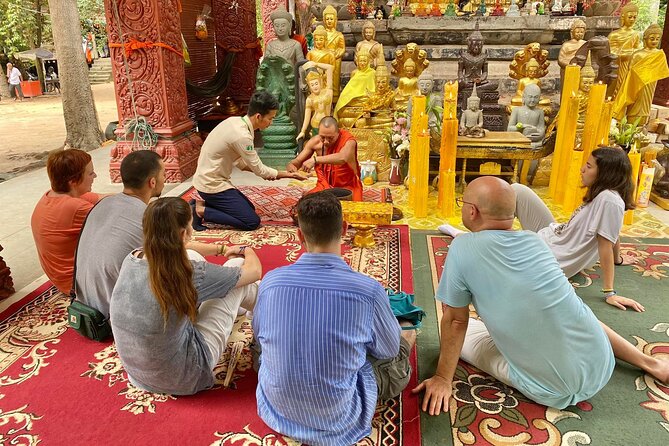
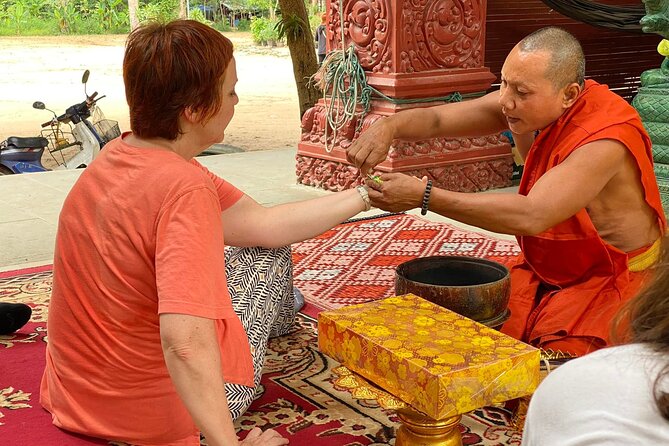
In Cambodia, water blessings are more than a ceremony you watch—they’re a public wish spoken through sound, gesture, and water. The monks chant, and you’re welcomed into that moment with light sprinkling first, then a stronger ritual where blessed water is poured over your head.
What makes this work for a lot of visitors is the pacing. The experience is active and sensory, yet still short enough that you can fit it around Angkor plans. And because the tour includes an English-speaking guide, you’re not left guessing what you’re meant to feel or do.
This is also a chance to see Buddhism as something practiced daily, not staged. Instead of treating the monastery as a backdrop, you’re part of the rhythm for a couple hours, learning in the same space where it’s done.
Pickup, Private Group, and the Morning or Noon Option
This is set up as a private tour for only your group, which matters if you want space to ask questions. You’ll be picked up from your Siem Reap hotel, then driven to the local pagoda/monastery area.
Transport is handled in a practical way: for groups of 1–5 people you’ll ride in a remork, and for more than 5 you’ll use a mini-van. That detail matters because remorks can be quicker through some traffic patterns, while a mini-van is more comfortable for bigger parties.
Timing is flexible. You can request a morning or noon schedule, and the tour is expected to take about 1 to 4 hours. You’ll also receive a mobile ticket, and the monastery stop includes admission that’s listed as free for the activity window.
One more note: the tour is described as near public transportation, which can be useful if you’re staying close to major roads. Still, the whole point is that hotel pickup handles the hard part for you.
Monastery Arrival: Chanting, Learning, and How the Tour Frames Buddhism
Before the water blessing happens, you’ll visit the monastery and learn the basics of Buddhism in Cambodia with your local English-speaking guide. The idea is simple: you get context first, then you take part in the ritual with less confusion.
The ceremony begins with monks chanting in a way meant to offer good wishes. In this first part, they chant harmoniously, wishing good luck, safe travel, and a long life. You’ll notice the tone right away—steady and communal—more like a shared prayer than a performance.
What I like about this segment is that it gives you something to hold onto. When you understand the purpose of each step, the ritual feels less like a novelty and more like a meaningful tradition carried out in real time.
If you’re someone who usually skips religious explanations because you assume it’ll be too abstract, this is a nice counterpoint. The guide’s job is to translate what’s going on while you’re standing there.
The Two-Step Ritual: Sprinkling, Then the Head-Pouring Blessing
The water blessing is structured in two stages, and the contrast between them is the whole point.
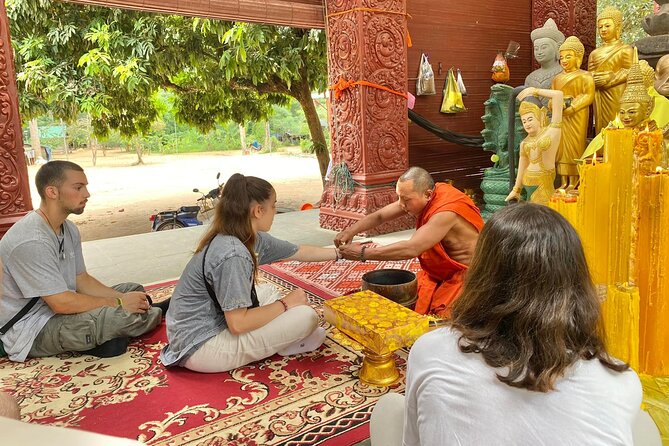
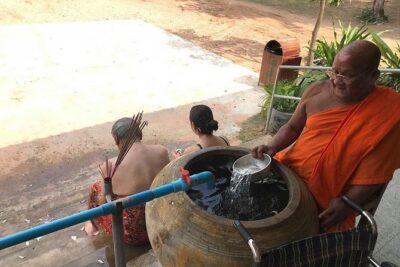
Stage one: light sprinkling with chanting. Monks chant while you receive a lighter blessing. It’s not the full intensity yet, but it marks the start of the ritual and helps you settle into the moment. This part is where many people get their first emotional cue—calm, focused, sometimes surprising how grounding it feels.
Stage two: longer ritual with blessed water vessels. The second stage is the bigger one. Vessels of blessed water are poured over your head while the monks chant for the ritual’s longer sequence. For this part, you’ll be provided a sarong/kromar so you can participate in a respectful, covered way.
That head-pouring element is why you should treat this as an actual ceremony, not a quick tourist experience. Even if you’re not religious, you’re participating in someone else’s meaningful practice, in an active way. Keep your movements steady, listen to what you’re instructed to do, and let the guide handle the pacing.
Finally, the tour includes a donation to the monk. That’s important because it signals participation in the local tradition—not just watching from the edge.
What You’re Really Paying For: Value Behind the $49 Price
At $49 per person, this tour can feel like a small price—until you break down what’s included. You’re not just buying a seat. You’re paying for a guided visit to the monastery plus transport from your hotel, plus the items and basics that make participation smooth.
Here’s what’s covered:
- Local English-speaking guide
- Hotel pickup
- Transportation by remork or mini-van
- Water provided throughout the tour
- Sarong/kromar provided
- Donation to the monk included
There’s also a listed note that the admission ticket is free for the activity portion shown in the schedule. That combination helps the tour feel more like a complete local experience than a bare-bones transfer.
In real value terms, this is worth it when you care about understanding. If you want the ceremony explained—why the chants, what the stages mean, and how to participate appropriately—having a guide turns the blessing into something you can actually interpret later.
If you’re simply chasing a photo op, this price may feel high for how short the event is. But if you want meaning and guidance, $49 can make sense for a focused, respectful cultural experience.
Why the Guide Can Make or Break the Experience (Chantha as an Example)
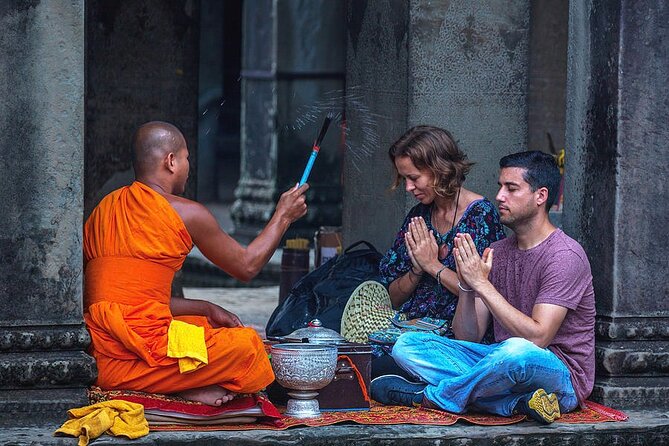
The quality difference here comes down to the guide. In one high-scoring experience, Chantha was praised for being extremely knowledgeable about the history and culture of Siem Reap and Cambodia, and for explaining each step and its significance with strong English.
That kind of guidance matters because the blessing has structure. You’re entering a ritual with two stages, and without explanation you might miss the intent behind what happens. With the right guide, it clicks into place: chanting isn’t random, the water isn’t just symbolic, and your role isn’t passive.
I also appreciate the balance this tour seems to aim for: it’s not only spirituality, and it’s not only logistics. You’re given background, then you’re guided through the ceremony itself.
Comfort and Participation Tips for the Ceremony Day
This is described as an activity where most people can participate, and it’s built around providing what you need to take part respectfully. The sarong/kromar being included is a big help. It means you’re not hunting for clothing rules on the fly.
Still, I’d plan for practical comfort:
- Wear clothes that feel comfortable for a short ceremony and can handle a bit of water contact.
- Expect that you’ll be close enough to hear chanting and see the ritual steps clearly.
- Keep your focus on following instructions when the second stage begins, since that’s when the pouring happens.
Also remember: water is provided throughout the tour, so you won’t have to manage that. But the ceremony itself is the main event, so it helps to arrive with a calm mindset and not treat it like a race to finish.
Potential Red Flags: When Pickup and Timing Go Wrong
The tour is usually structured for a smooth visit with hotel pickup and a guided monastery experience. But one caution from a lower-rated account described a scenario where no pickup arrived on time, and the driver arrived an hour late, with the monastery clearly not expecting them.
You can’t assume that risk is common, but you can act smart about it. Here’s my practical advice:
- Double-check your pickup details the day before and again the morning of the tour.
- Don’t schedule this right up against something tight. Leave a cushion so you’re not stressed if timing runs later than expected.
This is the kind of cultural experience where stress can take away from the moment. A little buffer keeps the ceremony from turning into damage control.
Who This Tour Fits Best (and Who Should Skip It)
This tour is a great fit if you want:
- A short, respectful way to experience Buddhist tradition in Siem Reap
- Guided explanation that helps you understand what you’re seeing
- An activity that still feels meaningful even if your schedule is tight
It’s also a good choice if you’re traveling in a group that appreciates having clear structure. The private format means you can ask questions without crowd pressure.
Who might not love it: if you’re looking for a long temple circuit or lots of sightseeing stops, this is likely not your best match. The focus is the monastery visit and the water blessing ceremony itself, with an emphasis on participating and learning the ritual.
Should You Book This Buddhist Monastery Water Blessing Tour?
Book it if you’re drawn to living culture and want the ceremony explained, not just watched. The combination of hotel pickup, an English-speaking guide, sarong/kromar provided, water included, and a donation covered turns it into a well-rounded experience for the time you spend.
Skip it or rethink if you hate uncertainty around timing. Even with safeguards, there’s at least one reported situation where pickup and monastery readiness didn’t align. If your trip has a strict schedule, give yourself buffer time and confirm pickup details.
If you do book, go in with respect and curiosity. This isn’t a stunt. It’s a tradition carried out with real intention, and when the guide does their job well, it can be genuinely memorable.
FAQ
How long is the water blessing tour in Siem Reap?
It runs about 1 to 4 hours, depending on the schedule and flow of the ceremony.
Is hotel pickup included?
Yes. Pickup is offered from your Siem Reap hotel.
What happens during the ceremony?
You’ll first take part in monks chanting with a light sprinkling of water, then you’ll participate in a longer ritual where blessed water is poured over your head.
Do I need to bring a sarong?
No. A sarong/kromar is provided for the ritual.
What’s the group setup?
It’s a private tour/activity, so only your group participates.
Can I cancel for free?
Yes. Free cancellation is available up to 24 hours before the experience starts for a full refund.
More Tour Reviews in Siem Reap
- Angkor Wat Sunrise or Sunset Tour with Guide from Siem Reap
★ 5.0 · 12,109 reviews - Siem Reap: Angkor Wat: Small-Group Sunrise or Sunset Tour
★ 5.0 · 9,444 reviews - From Siem Reap: Kampong Phluk Floating Village Tour by Boat
★ 4.9 · 6,979 reviews - Sunset tour of Kampong Phluk stilts home village on the Tonle Sap
★ 5.0 · 4,865 reviews - Siem Reap: Angkor Wat 2-Day Tour with Sunrise and Sunset
★ 4.9 · 4,429 reviews
A Blessing and a Quiet Morning
- Siem Reap: 1-Hour Cambodian Buddhist Water Blessing
★ 4.9 · 68 reviews - Monk Blessing Ceremony in Siem Reap
★ 5.0 · 24 reviews - Private Guided Angkor Wat Tour by Lady Tuk Tuk with Monk Blessing
★ 5.0 · 19 reviews - Angkor Wat & Temples: Private Spiritual Tour by Lady Tuk Tuk
★ 4.9 · 18 reviews - Siem Reap: Khmer Water Blessing by Monk and Lotus Farm Visit
★ 5.0 · 15 reviews
Just Added: Fresh Siem Reap Tour Reviews

Monk Blessing & Spiritual Tours, compared.
 ★ 4.91-Hour Cambodian Buddhist Water BlessingFrom $3768 reviews
 ★ 5.0Monk Blessing Ceremony in Siem ReapFrom $4524 reviews
 ★ 5.0Private Guided Angkor Wat Tour by Lady Tuk Tuk with Monk BlessingFrom $3719 reviews
 ★ 4.9Angkor Wat & Temples: Private Spiritual Tour by Lady Tuk TukFrom $5018 reviews
 ★ 5.0Khmer Water Blessing by Monk and Lotus Farm VisitFrom $5515 reviews
 ★ 5.0Siem Reap Cambodian Buddhist Water Blessing and Local MarketFrom $1913 reviews
★ 4.8Siem Reap Cambodian Buddhist Water Blessing and Local MarketFrom $5411 reviews
★ 5.0Siem Reap Cambodian Buddhist Water Blessing and Local MarketFrom $1913 reviews
★ 4.8Siem Reap Cambodian Buddhist Water Blessing and Local MarketFrom $5411 reviews
 ★ 5.0Traditional Khmer Water Blessing by Monk and Lotus Farm VisitFrom $7010 reviews
Browse the lists this tour appears in