
Reviewed · FARMS
Traditional Khmer Water Blessing by Monk and Lotus Farm Visit
A monk pours or sprinkles holy water, and you get to wish for good fortune. This is a 3 to 4 hour Siem Reap route that mixes religious ritual with everyday local stops like a market snack stop and a lotus farm drive. I especially like the chance to learn why each place matters, and how the water blessing is done with structure, not just a photo moment. One possible drawback: you should feel comfortable with a hands-on spiritual ceremony, including holy water and a small donation element.
In This Review
- Key highlights worth your attention
- Tuk-Tuk Pickup and the Pace That Makes It Feel Real
- Royal Residence Spiritual House: Phreah Ang Chek and Phreah Ang Chom
- Psar Chaa Old Market Snack Stop: Fried Banana and Sweet Potato
- Lotus Farm Drive Toward Tonle Sap Lake: Farming as a Living Story
- Wat Po Banteaychey Temple Prep: How to Understand the Ritual
- The Khmer Water Blessing: Chanting, Holy Water, and Making a Wish
- After the Blessing: Change Clothes and Wander the Pagoda Area
- Price and Value: Why $70 Can Make Sense for This Format
- Who Should Book This and Who Might Skip It
- Should You Book the Traditional Khmer Water Blessing Tour?
- FAQ
- How long is the Traditional Khmer Water Blessing tour?
- Is hotel pickup included?
- What transportation do you use?
- What happens during the water blessing?
- Do you visit a temple before the blessing?
- Is the lotus farm visit included?
- Are there any snacks or drinks provided?
- How many people are in the group?
- What if the weather is poor?
Key highlights worth your attention
- Monk-led water blessing with chanting and a chance to make a wish for health, pleasure, or good fortune
- Tuk-tuk transportation with pickup from your hotel, keeping the pace calm and local
- Lotus farm viewing en route to Tonle Sap Lake, plus time to learn about farming and harvesting
- Temple learning before the ritual at Wat Po Banteaychey, so you know what you’re seeing
- Old Market snack stop with fried banana and sweet potato from a local business open for 20+ years
A quiet water blessing, other mornings
- Siem Reap: 1-Hour Cambodian Buddhist Water Blessing★ 4.9 · 68 reviews
- Monk Blessing Ceremony in Siem Reap★ 5.0 · 24 reviews
- Private Guided Angkor Wat Tour by Lady Tuk Tuk with Monk Blessing★ 5.0 · 19 reviews
- Angkor Wat & Temples: Private Spiritual Tour by Lady Tuk Tuk★ 4.9 · 18 reviews
Tuk-Tuk Pickup and the Pace That Makes It Feel Real
This tour is designed to move at human speed. You start with hotel pickup (the exact time depends on where you’re staying) and then ride around Siem Reap in a tuk-tuk style transport. That matters more than it sounds. Smaller rides tend to keep the day relaxed, and the route feels like you’re part of local life rather than being rushed between major sights.
The total time is about 3 to 4 hours, which is a sweet spot. Long enough to feel like a full cultural outing, short enough that you’re not exhausted by mid-afternoon. The group size is capped at 15, so you usually won’t get swallowed by a huge crowd dynamic. You’ll also have cold water and local snacks included, which helps when the humidity ramps up.
One practical note: since you’ll be visiting temples and doing a religious ritual, plan for modest, comfortable clothing and shoes you can move in easily. The tour also includes time where you’ll later need to change your clothes after the blessing, so you’ll want to bring something simple that’s easy to manage.
Royal Residence Spiritual House: Phreah Ang Chek and Phreah Ang Chom
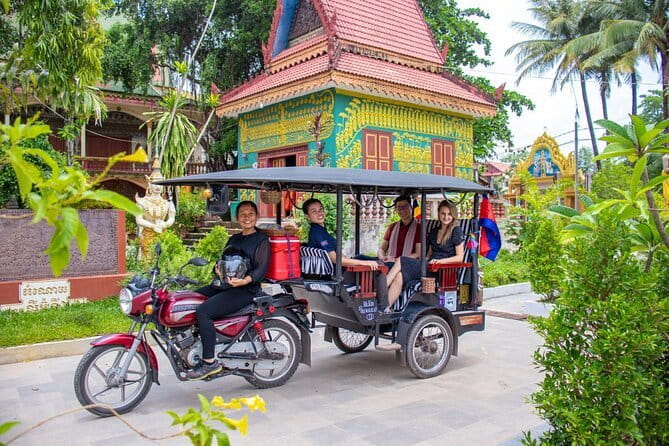
Your first major cultural stop after pickup focuses on a spiritual house associated with the Royal Residence. The site is described as having a spiritual house tied to Phreah Ang Chek and Phreah Ang Chom, and you’ll get a guided walk through the area with explanations from your local guide.
Why I like starting here: it sets context. Siem Reap has the world-famous Angkor complex, but Cambodian spirituality shows up in smaller daily structures too. Even before the water blessing, you’ll understand that religious belief isn’t only tied to big stone monuments. It’s present in ritual spaces, temple roles, and beliefs about luck, health, and protection.
Practical expectation: this segment is around 30 minutes, so think of it as orientation plus key details, not a slow deep study. If you like to ask questions, this is a good time to do it—your guide will be in information mode, and the day is still moving.
Psar Chaa Old Market Snack Stop: Fried Banana and Sweet Potato
Next you’ll head into town for Psar Chaa, the old market area. This isn’t a shopping sprint. It’s a short stop tied to a specific food tradition: you’ll meet a longtime banana business owner in Siem Reap, open for more than 20 years, and you’ll try fried banana and sweet potato.
Why this works as part of a spiritual-day itinerary: food is a direct entry point to daily culture. And because the stop is brief (about 5 minutes), you’re not sacrificing your main experience to snack tourism.
What you should do here is simple. Eat, observe, and ask one question about the food—how they prep it, how it’s sold, or how they keep business going. The included snack is your energy reset before temples and the ritual.
Lotus Farm Drive Toward Tonle Sap Lake: Farming as a Living Story
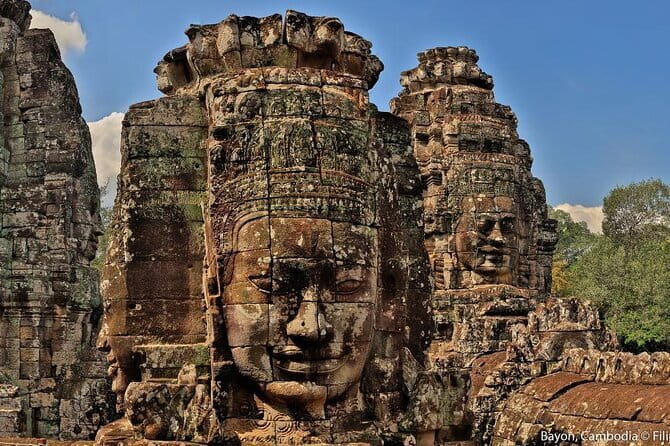
After the market bite, the tour shifts toward the lotus farm route. As you travel, you’ll already see lotus fields along the road that leads toward Tonle Sap Lake, and your guide will explain farming and harvesting.
This is one of the most visually satisfying parts of the tour because it’s not a staged attraction. You’re watching a working environment from the roadside, and then you get about 30 minutes at the lotus farm entrance. You’ll also have a chance to connect the dots between agriculture and belief systems—how certain plants and seasons take on meaning in daily life.
A quick reality check: lotus fields can look different depending on the time of day and season. The tour doesn’t promise a specific photo backdrop, but it does promise context—how people manage the harvest and why lotus growing matters locally. Even if the view isn’t perfect, the learning is the point.
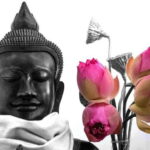
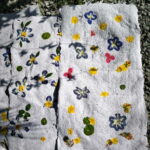
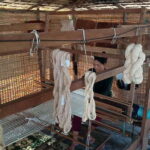
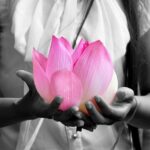
Worth a side-by-side look before you book this Siem Reap tour:
Wat Po Banteaychey Temple Prep: How to Understand the Ritual
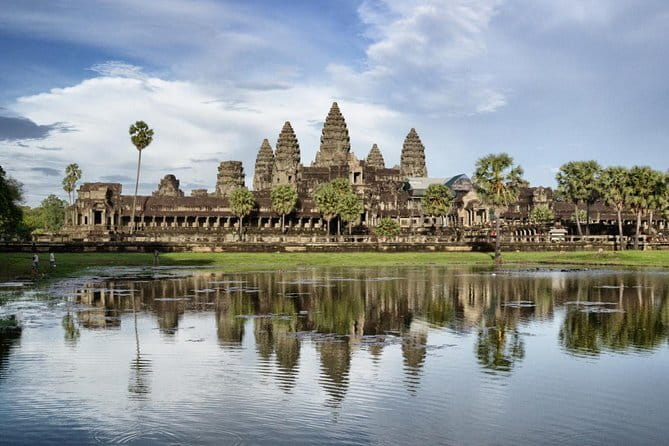
Before the blessing, you’ll spend time at Wat Po Banteaychey. This segment is about 1 hour and includes temple education: belief basics, how local temples are structured, and what activities happen there.
This is the part that prevents the whole day from becoming one long ceremonial photo line. When you walk into the water blessing with temple context, the chanting and actions feel connected to something real. Your guide’s explanations are your translation layer—what parts mean, how temple life fits together, and what the ceremony is for.
If you’ve visited temples in Cambodia before, you’ll recognize the pattern: the most meaningful moments often happen when you understand the “why” behind the “what.” If you haven’t visited much yet, this is a great primer without feeling like a classroom.
Tip for comfort: temples often involve standing, walking, and waiting a bit. Wear something you can move in, keep water accessible, and don’t over-plan your footwear.
The Khmer Water Blessing: Chanting, Holy Water, and Making a Wish
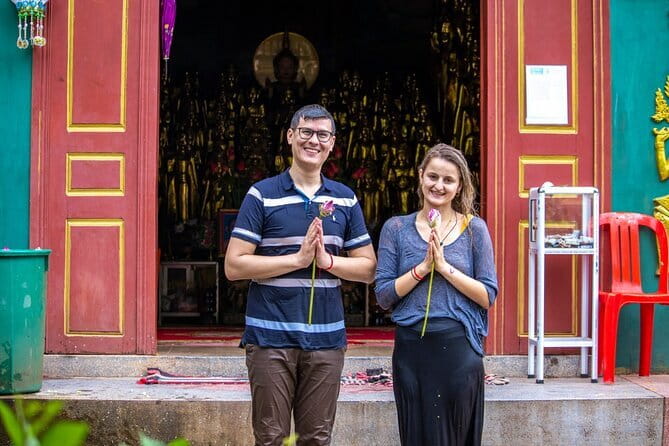
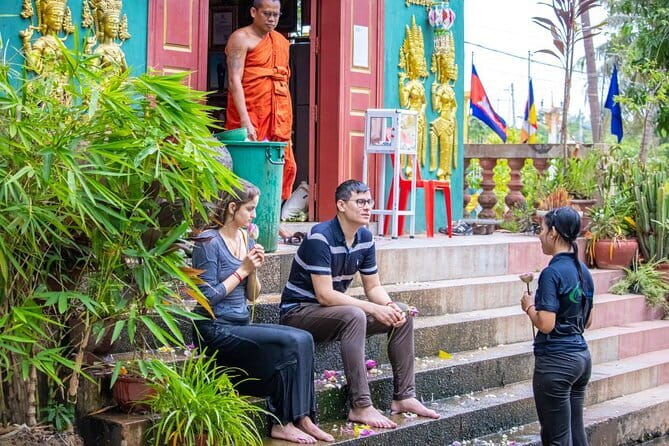
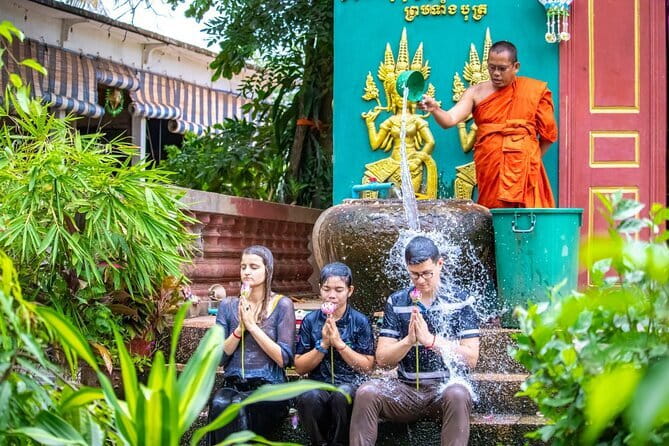
Now for the heart of the experience: the traditional Khmer water blessing. A monk chants, and holy water is sprinkled or poured over you. The guide explains how wishes are used in the ritual—hopes for good fortune, pleasure, or health.
This is where you need to decide what kind of experience you want.
- If you enjoy spiritual practices and respectful ceremonies, this can feel deeply personal and calm.
- If you’re uncomfortable with being physically involved in a religious act, you might find this part less relaxing.
Either way, it helps to go in with a respectful mindset. The tour includes monk offering and donations, so the ceremony isn’t only symbolic. It has a real-world spiritual and community connection.
Also pay attention to the tone. This is guided, structured, and explained ahead of time. That’s a big part of why the experience has strong ratings: people often worry it might be a tourist setup, but the day is built around learning and doing it properly.
After the Blessing: Change Clothes and Wander the Pagoda Area
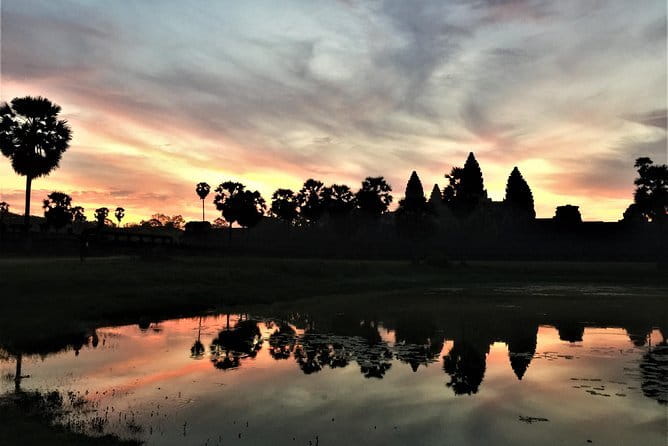
When the blessing ends, you’ll have time to change your clothes and then wander in the pagoda area. The tour is still guided, and you can ask questions if anything is unclear. This part is around 30 minutes, which gives you enough time to slow down without feeling like the day is dragging.
Why I think this “post-ritual wander” matters: it helps you absorb what you just experienced. Sitting with the setting, noticing how people move around the temple grounds, and asking questions while things are fresh often makes the experience stick.
Also, changing clothes isn’t just logistics. It signals that the blessing is handled as a real ceremony. You’re not treated like a spectator. The tour encourages you to participate, then reset.
If you want a smooth end to the outing, plan a bit of buffer afterward. You may feel reflective after a spiritual ritual, and it’s nice to have time to wander or grab something nearby.
Price and Value: Why $70 Can Make Sense for This Format
At $70 for roughly 3 to 4 hours, the key value question is what you’re getting besides the monk ritual. Here’s what’s included: a local English-speaking guide, transportation by tuk-tuk, cold water and local snacks, monk offering and donations, and lotus farm entrance.
For many Siem Reap activities, you pay for transportation and guide time, then everything else is extra. Here, the bundle is tighter. You’re not just paying to be dropped at a site—you’re paying for an explained route with multiple stops that support the central moment.
The day also has a good pacing logic:
- context-building stops (Royal Residence spiritual house, temple learning),
- a sensory local stop (old market snack),
- an agriculture-to-place connection (lotus farm),
- then the ritual moment,
- finishing with time to reset and explore the pagoda area.
If that sequence matches how you like to travel—slow enough to learn, short enough to stay sane—this price can feel fair.
Who Should Book This and Who Might Skip It
This is a strong fit if you want:
- a guided, respectful religious experience in Siem Reap,
- a day that connects spirituality to daily Cambodian life (market snack + lotus farming),
- a smaller-group outing (up to 15),
- hotel pickup and practical included items like water and snacks.
It may be less ideal if:
- you dislike being physically involved in ceremonial practices (holy water is part of it),
- you want a purely sightseeing day with no ritual component,
- you’re short on time and need just quick Angkor-style highlights.
One more thing: the tour is said to require good weather. If rain is expected, schedule flexibility becomes important.
Should You Book the Traditional Khmer Water Blessing Tour?
I’d book this when you want something more personal than a checklist of temples. The mix of temple prep, the monk chanting ritual, and the lotus farm stop makes the day feel like a connected story rather than separate attractions stacked together.
I’d hold off if you’re sensitive to religious ceremonies involving water, or if you know you won’t be able to change clothes comfortably after. Also, consider timing. With a weather dependency, you’ll be happier if you have at least one flexible afternoon in your plan.
If you like thoughtful cultural travel—asking questions, learning the meaning behind the actions, and seeing how local life feeds into spiritual practice—this is a very good use of a half-day in Siem Reap.
FAQ
How long is the Traditional Khmer Water Blessing tour?
It runs about 3 to 4 hours.
Is hotel pickup included?
Yes. Hotel pickup is offered, and the pickup time depends on where you’re located in Siem Reap.
What transportation do you use?
You travel with a tuk-tuk style vehicle (described as Remork) during the tour.
What happens during the water blessing?
A monk chants, and holy water is sprinkled or poured over you. You can make wishes for good fortune, pleasure, or health.
Do you visit a temple before the blessing?
Yes. Before the water blessing, you’ll visit Wat Po Banteaychey and learn about Buddhist belief, temple structure, and temple activities.
Is the lotus farm visit included?
Yes. Lotus farm entrance fee is included, and you also see lotus fields along the road before arriving.
Are there any snacks or drinks provided?
Yes. You’ll get cold water and local snacks during the tour, including fried banana and sweet potato at the old market stop.
How many people are in the group?
The tour has a maximum of 15 travelers.
What if the weather is poor?
The experience requires good weather. If it’s canceled due to poor weather, you’ll be offered a different date or a full refund.
More Farms in Siem Reap
- Siem Reap Lotus Silk Farm Discovery tour & Lake experience
★ 4.7 · 291 reviews - Siem Reap: Lotus Silk Farm- Tour, Lake & Masterclass
★ 4.9 · 77 reviews - Angkor Silk Farm & Lotus Silk Farm: Siem Reap Discovery Tour
★ 4.8 · 68 reviews - Lotus Silk Farm: Discover Learn and Experiment the Lotus Flower
★ 5.0 · 45 reviews - Siem Reap: Khmer Water Blessing by Monk and Lotus Farm Visit
★ 5.0 · 15 reviews
More Tour Reviews in Siem Reap
- Angkor Wat Sunrise or Sunset Tour with Guide from Siem Reap
★ 5.0 · 12,109 reviews - Siem Reap: Angkor Wat: Small-Group Sunrise or Sunset Tour
★ 5.0 · 9,444 reviews - From Siem Reap: Kampong Phluk Floating Village Tour by Boat
★ 4.9 · 6,979 reviews - Sunset tour of Kampong Phluk stilts home village on the Tonle Sap
★ 5.0 · 4,865 reviews - Siem Reap: Angkor Wat 2-Day Tour with Sunrise and Sunset
★ 4.9 · 4,429 reviews
A Blessing and a Quiet Morning
- Siem Reap: 1-Hour Cambodian Buddhist Water Blessing
★ 4.9 · 68 reviews - Monk Blessing Ceremony in Siem Reap
★ 5.0 · 24 reviews - Private Guided Angkor Wat Tour by Lady Tuk Tuk with Monk Blessing
★ 5.0 · 19 reviews - Angkor Wat & Temples: Private Spiritual Tour by Lady Tuk Tuk
★ 4.9 · 18 reviews - Siem Reap: Khmer Water Blessing by Monk and Lotus Farm Visit
★ 5.0 · 15 reviews
Just Added: Fresh Siem Reap Tour Reviews

Farms, compared.
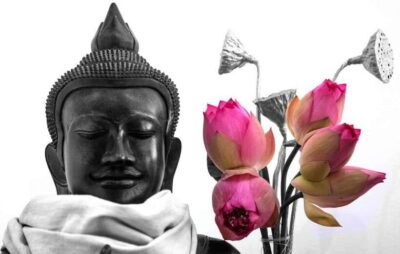 ★ 4.7Siem Reap Lotus Silk Farm Discovery tour & Lake experienceFrom $20291 reviews
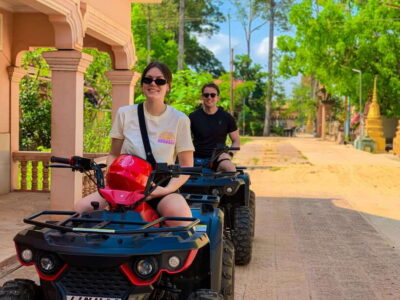 ★ 4.9Khmer Village and Fish Farm ATV TourFrom $33266 reviews
 ★ 4.9Lotus Silk Farm- Tour, Lake & MasterclassFrom $7077 reviews
 ★ 4.8Angkor Silk Farm & Lotus Silk Farm: Siem Reap Discovery TourFrom $2568 reviews
 ★ 5.0Lotus Silk Farm: Discover Learn and Experiment the Lotus FlowerFrom $4745 reviews
Lotus Silk Farm – Tour, Lake & Artisan immersionFrom $4020 reviews
★ 5.0Lotus Silk Farm: Discover Learn and Experiment the Lotus FlowerFrom $4745 reviews
Lotus Silk Farm – Tour, Lake & Artisan immersionFrom $4020 reviews
 ★ 5.0Khmer Water Blessing by Monk and Lotus Farm VisitFrom $5515 reviews
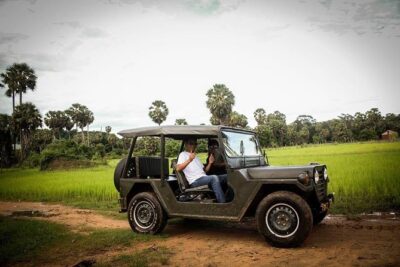 ★ 4.5Silk Farm & Countryside Offbeat Jeep TourFrom $5511 reviews
Browse the lists this tour appears in