
Reviewed · ANGKOR TEMPLE TOURS
Grand Circuit with Banteay Srei and Banteay Samre Tour
Pink stone meets quiet Angkor days. This Grand Circuit route lets you trade the busiest headline sites for a smoother run through lesser-visited temples, then finishes with the famous carved pink splendor of Banteay Srei. I like the day’s temple variety because you see different eras, styles, and religious symbolism instead of repeating the same view twice. The pacing also gives you time to actually look at details, not just snap and run.
One thing to plan for: entrance fees aren’t included, so you’ll need to budget for the one-day Angkor Pass (listed at $37 per person). Most of the temples on this circuit use that pass, so it’s worth sorting your ticket before you arrive.
You’ll ride in an AC vehicle with bottled water, and your English-speaking guide keeps the story clear while you hop from site to site. Also, remember the temple dress code: cover thighs and shoulders, or entry can be refused.
In This Review
- Key highlights worth your attention
- Why this Grand Circuit route feels calmer than the headline temples
- Pickup, AC transport, and how you’ll handle an 8–9 hour day
- Banteay Srei: the pink temple and the “Citadel of Women” carvings
- Morning temples: Preah Khan, Banteay Prei, Neak Pean, Ta Som, and East Mebon
- Preah Khan: “Royal Sword” and a big 12th-century feel
- Banteay Prei: a lesser-known mid-morning stop
- Neak Pean: entwined serpents and a man-made island setting
- Ta Som: Jayavarman VII’s 12th-century temple
- East Mebon: early Khmer architecture and elephant details
- Afternoon temples: Banteay Srei, Banteay Samre, and Pre Rup
- Banteay Srei again, but now as the day’s centerpiece
- Banteay Samre: a quick look with strong identity
- Pre Rup: late 10th century Shiva temple
- Price and value: $59 plus what you’ll pay for entry
- Dress code and lunch timing: two small things that matter a lot
- Who this tour suits best (and who should think twice)
- Should you book this Grand Circuit with Banteay Srei and Banteay Samre?
- FAQ
- How long is the Grand Circuit tour?
- Is pickup included?
- Is the Angkor Pass included in the price?
- What’s included in the tour price?
- Do I need to pay for temple tickets at each stop?
- Is lunch included?
- What dress code do I need for temples?
- Is this tour private?
- Can I cancel for a full refund?
Key highlights worth your attention
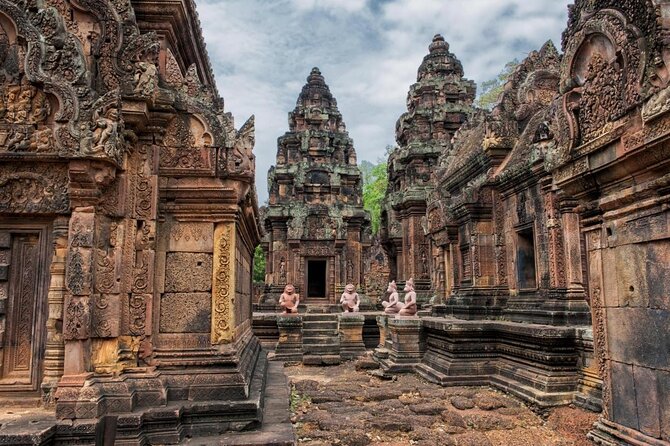
- Banteay Srei’s pink sandstone carvings: small-scale, precise, and full of Hindu imagery.
- Preah Khan and Jayavarman VII-era temples: big atmosphere, with strong “Royal Sword” backstory.
- Neak Pean’s man-made island setting: a Buddhist temple vibe that feels calmer than the main roads.
- Air-conditioned transport plus bottled water: simple but very welcome in Siem Reap heat.
- English guidance that explains what you’re looking at: guides such as Pheng or Chen are known for clear on-site explanations.
- A practical day design: several short stops plus longer time at the standout sites.
The pink sandstone carvings, a few more runs
- Siem Reap Tour: Angkor Wat Sunrise, Bayon, Ta Prohm, Banteay Srei★ 5.0 · 931 reviews
- 2-Day Angkor Wat With Small, Big Circuit and Banteay Srei Tour★ 5.0 · 545 reviews
- From Siem Reap: Banteay Srei Temple & Grand 5 Temple Tour★ 4.8 · 262 reviews
- 3-Days Discovery Of Angkor: Waterfalls,Floating Village and Banteay Srei temple★ 5.0 · 214 reviews
Why this Grand Circuit route feels calmer than the headline temples
Angkor can be a lot. Even if you love temples, you still have to process crowds, heat, ticket lines, and that constant feeling of “where do I look first?” This tour’s big advantage is that it doesn’t try to stuff every famous Angkor Wat-style hit into one day. Instead, it works through a Grand Circuit path that leans toward quieter, slightly less obvious temples.
That matters because it changes your mood. You get time to slow down at places like Neak Pean, where the setting is part of the experience: it’s built on a man-made island, so you feel separated from the usual rush. Then you jump to a very different vibe at Banteay Srei, where the carvings do the talking. The result is a day that feels like a journey through Khmer ideas, not a checklist.
And yes, you still get major names. Preah Khan is a 12th-century temple tied to King Jayavarman VII, and it gives you that grand, lived-in-feel even though you’re not stuck inside the most crowded zones. It’s a smart balance: famous enough to satisfy you, varied enough to keep your eyes interested.
Pickup, AC transport, and how you’ll handle an 8–9 hour day
This is set up as a private tour activity for your group, with pickup offered and transportation provided in an AC car, minivan, or minibus. That combination is practical in Siem Reap. The ride is long enough that AC matters, and the day is structured enough that you won’t be left trying to figure out logistics on your own.
The tour runs about 8 to 9 hours, which is long for one day but not excessive. You’re not constantly in transit with no breaks—there are temple stops built into the day, including multiple sites in the morning and a second cluster in the afternoon. The guide also includes bottled drinking water, which sounds basic, but it keeps you moving instead of hunting for supplies.
Two details help this feel smoother:
- The tour includes a mobile ticket, which can reduce last-minute friction when you’re about to enter sites.
- Your guide is English-speaking and positioned to explain what you’re seeing as you go, so you’re not only relying on signage.
One more thing: the day includes a lunch window where you eat on your own (with a restaurant recommendation). That’s a useful break if you like food stops, but it also means you should carry a little snack or plan your timing so you don’t arrive at the afternoon temples hungry and cranky.
Banteay Srei: the pink temple and the “Citadel of Women” carvings
If you’re choosing this tour for one reason, it’s Banteay Srei. This is often described as the Citadel of the Women, and it’s known for its fine carvings on pink sandstone. That mix—small-to-medium scale temple with lots of intricate detail—is exactly why it’s worth time.
What I like about planning your day around Banteay Srei is that it changes how you look at Angkor. Big temples can overwhelm you. Smaller, carved temples force you to slow down and actually notice patterns: myth scenes, figures, and decorative elements. On a route like this, you’re not rushing through it while already visually overloaded.
You also get a longer visit here (about 2 hours), which is enough time to do two things most people forget:
- Get oriented at the main areas first.
- Then come back to specific carvings and religious motifs once you know what you’re looking for.
The tour also builds in photo-friendly moments along the way, including chances to see nearby villages and stop for pictures on the drive toward Banteay Srei. If you’ve only seen temple complexes on the main circuits, those village glimpses help you remember you’re in a living region, not an empty museum set.
Morning temples: Preah Khan, Banteay Prei, Neak Pean, Ta Som, and East Mebon
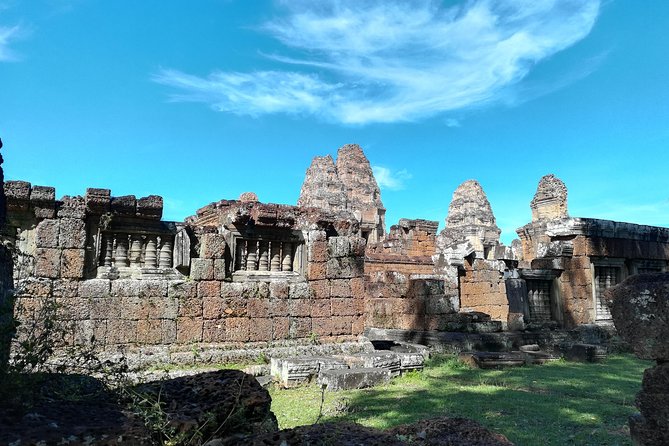
Your morning route is designed like a “temple sampler” with different styles and moods. It’s a strong mix of Buddhist and Hindu influences, plus a heavy dose of the 12th-century Khmer era tied to King Jayavarman VII.
Round the grand circuit, a few more stops
Preah Khan: “Royal Sword” and a big 12th-century feel
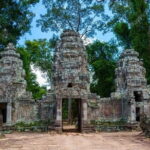
Preah Khan translates to Royal Sword, and the temple was built by Jayavarman VII and dedicated to his late father. It sits about 1 kilometer north of Angkor Thom, and it has that classic Angkor effect: walls and gateways that feel half ceremonial, half storybook.
You get around 2 hours here, which helps because Preah Khan isn’t a “walk through and done” site. You need time to notice how the layout pulls you from one area to the next and how the religious purpose shows up in carvings and spatial design.
Banteay Prei: a lesser-known mid-morning stop
Banteay Prei is included in the morning set. It’s not your loudest headline stop, so treat it like a palate cleanser: a moment to absorb the quieter temple rhythm before you move to the more scene-stealing sites.
Neak Pean: entwined serpents and a man-made island setting
Next up is Neak Pean, meaning Entwined Serpents. It’s a Buddhist temple built on a man-made island, and that detail matters. Even if you only spend about 45 minutes, the island setting gives the area a calm, reflective feel compared with the more open, land-connected complexes.
This is a great stop for slow looking and photos where you include water and the temple edges in the frame. If you’re trying to avoid “I just photographed a wall” moments, Neak Pean is the answer.
Ta Som: Jayavarman VII’s 12th-century temple
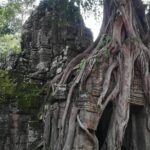
Then comes Ta Som, another Jayavarman VII temple from the 12th century, with a shorter visit (about 30 minutes). It’s the kind of stop that rewards curiosity. You don’t need 90 minutes here if you’re thinking, but you do want a guide to help you notice what makes it different from the other sites.
East Mebon: early Khmer architecture and elephant details
You’ll also visit Eastern Mebon Temple, noted as an early Khmer architecture example built in the 10th century. This is one of those stops that can be easy to rush—so use the time (about 30 minutes) to focus on the sculptural style and any standout imagery.
One especially memorable note from past experiences on this route: people often mention elephant details at East Mebon. Even if you’re not specifically hunting for animals, it’s worth keeping your eyes open so you leave with more than just “another ancient structure.”
Afternoon temples: Banteay Srei, Banteay Samre, and Pre Rup
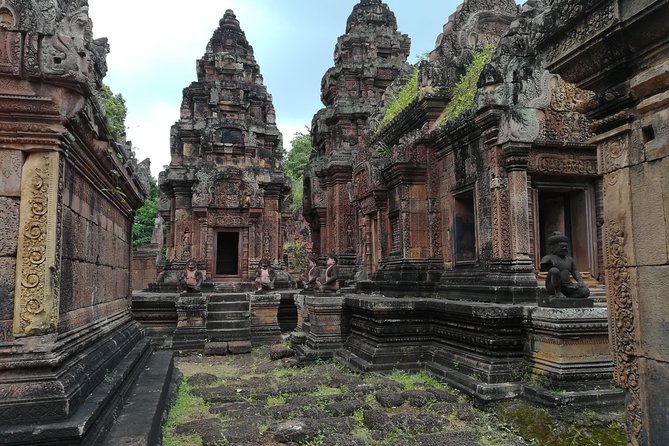
The afternoon keeps the “story” energy going while shifting the visuals toward more famous carvings and Shiva-related Hindu symbolism.
Banteay Srei again, but now as the day’s centerpiece
After lunch (on your own, with a recommended restaurant), you return to Banteay Srei for the kind of attention that demands time. The tour schedule gives you about 2 hours at Banteay Srei, which makes sense because it’s the day’s most carving-dense stop.
This is where I’d use your best time for close-up viewing: take a slow lap, look for recurring motifs, then focus on a few specific panels. If you’ve only seen larger Angkor temples before, this is your chance to experience the fine-grain side of Khmer art.
Banteay Samre: a quick look with strong identity
After Banteay Srei, the tour includes Banteay Samre, usually with a shorter combined window alongside Pre Rup (the schedule lists about 1 hour for this segment). That means you’ll want to enter with a mindset: enjoy, absorb, and pick two or three “must-see” angles rather than trying to cover everything.
Pre Rup: late 10th century Shiva temple
Finally, Pre Rup comes into view. This is a Hindu temple from the late 10th century, dedicated to Lord Shiva. Even with a shorter visit (about 40 minutes is listed for Pre Rup), it’s a good capstone because it adds clear Hindu context to the earlier mix of Buddhist and Jayavarman VII-era sites.
If you like temples that feel more symbolic than gigantic, Pre Rup is the right ending note.
Price and value: $59 plus what you’ll pay for entry
The tour price is $59 per person, and the value depends on what you already have for tickets.
Here’s the plain math:
- $59 covers the English-speaking guide, transportation (AC vehicle), and bottled water.
- The one-day Angkor Pass is $37 per person, and entrance fees aren’t included in the base price.
So if you need the pass, your on-the-ground total is likely $96 per person, before food. That’s not just about numbers. The pass cost buys access across multiple sites, and this tour concentrates that access into a route designed to keep you moving efficiently.
If you already have an Angkor Pass, the $59 looks even better because you’re not paying twice for entry. Either way, this tour is priced like a guided circuit day: less about luxury, more about getting you to the right temples in the right order.
Also, the tour can arrange buying your Angkor Pass if you don’t have it yet. That saves time and confusion, especially if you’re arriving with questions.
Dress code and lunch timing: two small things that matter a lot
Cambodia’s temple rules are strict for a reason: your entry depends on what you wear. The tour sets the expectation clearly—cover thighs and shoulders when entering temple complexes. If your clothes don’t meet the dress code, you may be refused entry.
So pack smart:
- A lightweight scarf or shawl can cover shoulders fast.
- A sarong or extra layer helps with thighs if you’re wearing shorts.
Lunch is your own account, and the guide will recommend a restaurant. Since the afternoon is packed, don’t plan a long sit-down meal unless you’re comfortable running tight on time. If you hate rushed lunches, grab something solid quickly and keep your energy up for the late temples.
Finally, use the built-in time wisely for photos. The route includes time for pictures along the way toward Banteay Srei, but temple interiors and sacred zones can have viewing limits. Treat it like a viewing experience first, photography second, and you’ll feel less stressed.
Who this tour suits best (and who should think twice)
This tour fits you if:
- You’ve already done the biggest Angkor hits and want the less-famous circuit with strong variety.
- You want an English guide to explain the symbolism so you’re not guessing at every carving.
- You prefer an efficient day that still gives real time at Banteay Srei and major stops like Preah Khan.
It might not be your best match if:
- You want an ultra-relaxed day with long stops at every site. Some segments are shorter, especially the combined stretch that includes Banteay Samre and Pre Rup.
- You’re very sensitive to ticket costs. Entrance fees and the Angkor Pass will affect your total budget.
One more fit detail: because it’s private and only for your group, it works well for couples or friends who want flexible pacing within the schedule. That also makes it easier to ask questions without hearing everyone else’s conversation all day.
Should you book this Grand Circuit with Banteay Srei and Banteay Samre?
Yes, if you want a guided temple day that focuses on variety and carvings instead of a frantic “see everything” sprint.
I’d especially recommend booking if you:
- Want Banteay Srei as a highlight with enough time to actually appreciate the work.
- Like historical context, because guides such as Pheng and Chen have been noted for clear explanations and professional presentation, and the driving partner often credited for smooth handling is Mai.
- Are happy to plan for the Angkor Pass and dress code so the day stays smooth.
If you’d rather only visit the most famous sites, you might be better with a more headline-heavy plan. But if your goal is to leave with a deeper sense of Khmer religious life—Hindu and Buddhist, different centuries, different temple styles—this route does a lot of work for the price.
FAQ
How long is the Grand Circuit tour?
It runs about 8 to 9 hours.
Is pickup included?
Yes, pickup is offered.
Is the Angkor Pass included in the price?
No. Entrance fees and the one-day Angkor Pass (listed at $37 per person) are not included. You may be taken to buy the pass if you don’t have one.
What’s included in the tour price?
An English-speaking tour guide, transportation in an AC vehicle, and bottled drinking water.
Do I need to pay for temple tickets at each stop?
Admission tickets are not included for the temple stops, and you’ll need the Angkor Pass for entry.
Is lunch included?
No. Lunch is on your own account, and a restaurant will be recommended.
What dress code do I need for temples?
You must cover your thighs and shoulders when entering temple complexes. If you’re not dressed correctly, you may be refused entry.
Is this tour private?
Yes. It’s listed as a private activity, with only your group participating.
Can I cancel for a full refund?
Yes. Free cancellation is allowed up to 24 hours in advance for a full refund.
More Temple Circuits Around Siem Reap
- Angkor Wat Sunrise or Sunset Tour with Guide from Siem Reap
★ 5.0 · 12,109 reviews - Siem Reap: Angkor Wat: Small-Group Sunrise or Sunset Tour
★ 5.0 · 9,444 reviews - Siem Reap: Angkor Wat 2-Day Tour with Sunrise and Sunset
★ 4.9 · 4,429 reviews - Siem Reap: Full-Day Angkor Wat Guided Tour with Sunset
★ 4.9 · 3,803 reviews - Angkor Wat Sunrise tour with Small – Group and Guide tours
★ 5.0 · 3,655 reviews
Along the Grand Circuit
- Siem Reap: Banteay Srei and Grand Circuit Heritage Tour
★ 4.9 · 163 reviews - Banteay Srei and Grand Circuit Heritage Tour from Siem Reap
★ 5.0 · 142 reviews - 2-Day Private Tour in Angkor Wat Grand Circuit
★ 5.0 · 23 reviews - Preah Khan, Neak Pean, Ta Som-East MebonTemple – Grand Circuit
★ 5.0 · 10 reviews - Angkor Grand Circuit Temples Tour
★ 5.0 · 8 reviews
The Carvings of Banteay Srei
- Full-Day Banteay Srei & 4 Temples – Grand Tours Join-in Tour
★ 5.0 · 1,155 reviews - Siem Reap Tour: Angkor Wat Sunrise, Bayon, Ta Prohm, Banteay Srei
★ 5.0 · 931 reviews - 2-Day Angkor Wat With Small, Big Circuit and Banteay Srei Tour
★ 5.0 · 545 reviews - From Siem Reap: Banteay Srei Temple & Grand 5 Temple Tour
★ 4.8 · 262 reviews - 3-Days Discovery Of Angkor: Waterfalls,Floating Village and Banteay Srei temple
★ 5.0 · 214 reviews
Just Added: Fresh Siem Reap Tour Reviews

Angkor Temple Tours, compared.
 ★ 5.0Angkor Wat Sunrise or Sunset Tour with Guide from Siem ReapFrom $1812,109 reviews
 ★ 5.0Angkor Wat: Small-Group Sunrise or Sunset TourFrom $159,444 reviews
 ★ 4.9Angkor Wat 2-Day Tour with Sunrise and SunsetFrom $344,429 reviews
 ★ 4.9Full-Day Angkor Wat Guided Tour with SunsetFrom $153,803 reviews
 ★ 5.0Angkor Wat Sunrise tour with Small – Group and Guide toursFrom $143,655 reviews
 ★ 5.0Angkor Wat Highlights and Sunrise Guided Tour from Siem ReapFrom $233,213 reviews
 ★ 5.0Angkor Wat Sunset Small Group Tour with Lunch IncludedFrom $203,059 reviews
 ★ 5.0Full-Day Angkor Wat Sunrise Private Tour with Guide from Siem ReapFrom $602,920 reviews
Browse the lists this tour appears in