
Reviewed · ANGKOR TEMPLE TOURS
Highlight of Angkor Complex 2 Days Private Tour
Angkor can feel like a blur of stone, so this plan helps it make sense fast. This 2-day private tour builds a smart route through the big sites and the lesser-seen corners, with hotel pickup and a guide who can explain what you’re looking at. What I like most is the private format (your group only) and the way the itinerary mixes the headline temples with spots like Ta Nei that many people skip.
I also like the on-the-ground pacing: you get set stops with realistic time blocks, comfortable transfers between them, and small comforts like drink water and cool fresh tissue during the day. The guide also assists with the Angkor Pass at the start, which removes a common stress point. One drawback to consider: the temples are many, so even with a private car, you’ll still do a good amount of walking and heat management across two full days.
If you want Angkor without the chaos of big groups, this is the kind of tour that keeps you moving with purpose. It’s a solid-value pick at $149.46 per person, especially since it’s been widely booked (about 45 days in advance on average) and consistently rated highly.
In This Review
- Key points worth knowing before you go
- Price and what $149.46 covers (and what it doesn’t)
- Getting picked up in Siem Reap and riding between temples
- Dress code and temple etiquette (simple, but important)
- Day 1: Angkor Thom South Gate, Bayon, and the big symbolism stops
- Angkor Thom South Gate: restored faces on the main road
- Bayon Temple: built later, tied to the royal city center
- Angkor Thom: the city expressed in three dimensions
- Baphuon and Phimeanakas: stepped towers and palace-center details
- Terrace of the Elephants and Terrace of the Leper King: sculpture as storytelling
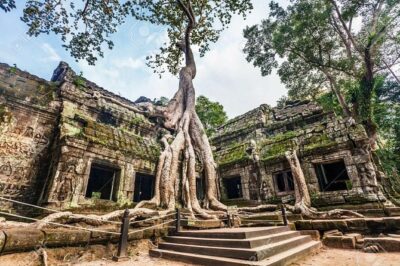
- Ta Prohm: the kingdom of the trees
- Day 1’s late peak: Angkor Wat for depth, then Ta Nei for a quieter reward
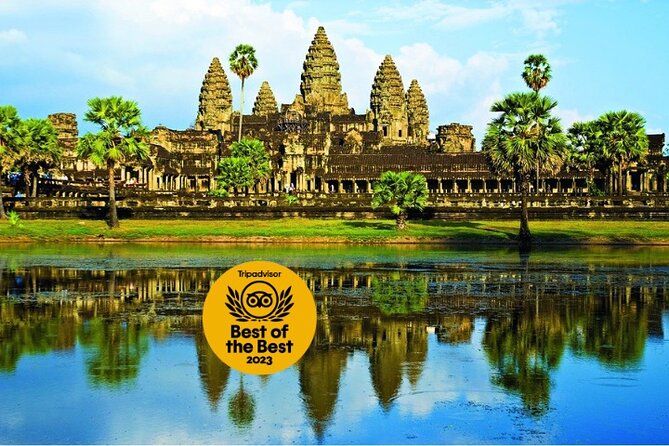
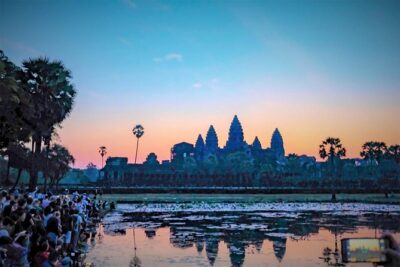
- Angkor Wat: the biggest monument, best preserved, built to be read
- Ta Nei: deep in the jungle, hard to find, not as crowded
- Day 2: from Banteay Srei’s carvings to Preah Khan’s 12th-century focus
- Banteay Srei: a precious gem of Khmer art (in the description, anyway)
- Banteay Samre: restoration by anastylosis, and what happens when maintenance fades
- Pre Rup: bold design with balance and proportion
- Eastern Mebon: stone elephants and religious scenes
- Neak Pean: luxury fantasy with a man-made pond layout
- Preah Khan: dedicated in 1191, tied to Jaya-varman VII
- Banteay Prei: a quieter add-on for deeper interest
- Preah Dak Market and Om Pich: a 30-minute cultural pause for snacks and gifts
- What the best version of this tour looks like
- Who should book this private Angkor 2-day tour
- Should you book? My quick decision guide
- FAQ
- Is pickup and drop-off included?
- Do I need to buy temple tickets separately?
- Is this tour private?
- Is a guide included, and what language?
- What’s provided during the tour?
- Are meals included?
- What should I wear to visit the temples?
- Is tipping included in the price?
- Is there free cancellation?
Key points worth knowing before you go
- Private group-only touring means the guide can slow down or adjust to your pace without juggling strangers.
- Smart blend of famous and quiet temples, including Ta Prohm and Angkor Wat plus lesser-visited stops like Ta Nei and Banteay Prei.
- Angkor Pass help at the start so you’re not stuck figuring out tickets while others are already walking in.
- Comfort-focused details: hotel pickup/drop-off, comfortable vehicle transfers, and provided water plus cool tissue.
- Guide quality matters here, with one recent guide mentioned by name: Mr. Sara.
- Flexibility on request showed up in feedback, including adding a stop at the land mine museum if requested.
More temple circuits, set side by side
- Angkor Wat Sunrise or Sunset Tour with Guide from Siem Reap★ 5.0 · 12,109 reviews
- Siem Reap: Angkor Wat: Small-Group Sunrise or Sunset Tour★ 5.0 · 9,444 reviews
- Siem Reap: Angkor Wat 2-Day Tour with Sunrise and Sunset★ 4.9 · 4,429 reviews
- Siem Reap: Full-Day Angkor Wat Guided Tour with Sunset★ 4.9 · 3,803 reviews
Price and what $149.46 covers (and what it doesn’t)
At $149.46 per person for about two days, the value is best understood in what’s included versus what’s extra.
Included up front:
- Hotel pickup and drop-off (you provide your hotel name for pickup)
- A professional English-speaking licensed guide
- All private transfers by comfortable vehicle
- Drink water and cool fresh tissue during the trip
Not included:
- Tipping for guide and driver
- Temple entry fees via the Angkor Pass
- Meals, which are on your own (lunch options are typically available at local restaurants, with menus noted around $3–$10 per dish)
Here’s the key point: because the Angkor Pass covers all temples in the itinerary, you’re not paying a separate ticket stop by stop. Your guide assists you in purchasing it at the Angkor Park entrance before you start touring, which can save time and keep your day from turning into a ticket hunt.
The other practical cost factor is food. You’ll have lunch breaks at local restaurants, and prices vary by what you choose, so I’d mentally budget lunch during both days. Still, compared to many “shortcut” tours, this one aims to deliver a full Angkor sampling with guided context rather than just dropping you at gates.
Getting picked up in Siem Reap and riding between temples
This tour is designed for an easy start from wherever you’re staying. You get pickup and drop-off at your hotel, plus private vehicle transfers that follow the day’s route.
That matters because Angkor isn’t a single cluster you can wander from spot to spot. The stops are spread across multiple temple areas—so having a comfortable ride between them is not a luxury. It’s what keeps your time focused on the temples themselves.
You’ll also want to know this is a private tour/activity. Only your group participates, and the tour is offered in a range of languages. English is specifically supported by the licensed guide.
One small logistics note from the listing details: it’s described as being near public transportation. That’s useful background if you’re the type who likes options, but in practice the included pickup and private transfers are the main plan.
Dress code and temple etiquette (simple, but important)
This tour asks you to dress appropriately because you’re entering active religious grounds.
Plan for:
- A shirt that covers your shoulders
- Trousers or knee-length pants or skirts
It’s not just politeness. Clothing that fits the setting helps you move through entrances without friction and shows respect at each stop, especially inside or near sacred areas.
Also keep your day-to-day strategy simple: bring the same practical mindset you use for long museum days—comfortable footwear, and patience for a lot of stone, steps, and sun.
Day 1: Angkor Thom South Gate, Bayon, and the big symbolism stops
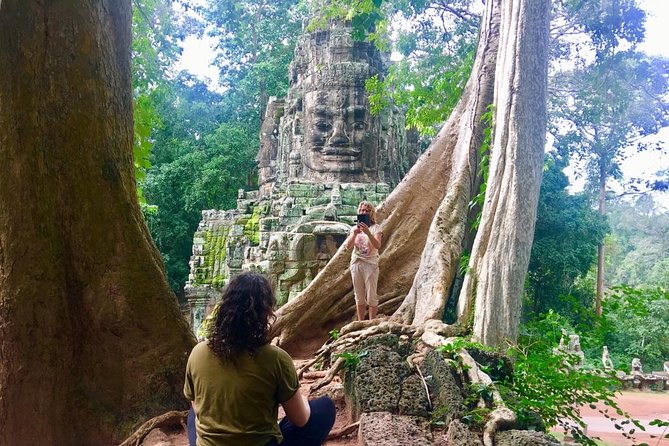
Day 1 is all about Angkor Thom, with a tight sequence of what many people consider the core experience. You start at the South Gate, then step into the heart of the royal city with Bayon and the surrounding structures.
More time at the temples, spread over days


Angkor Thom South Gate: restored faces on the main road
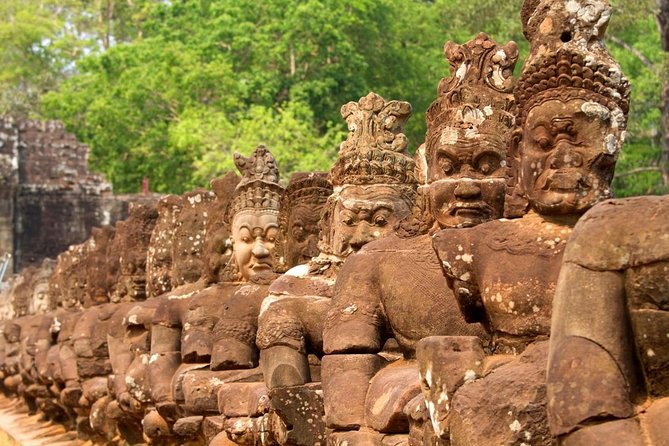
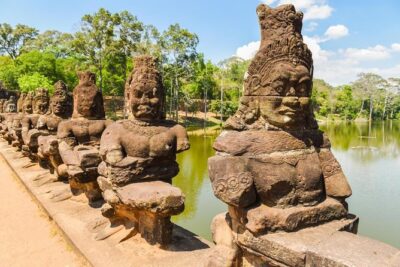
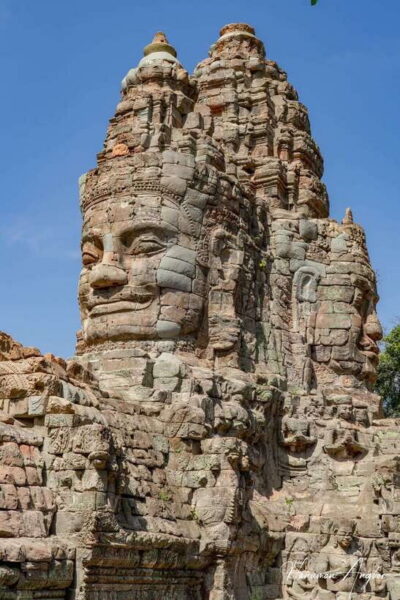
The South Gate is described as the most popular entrance because it’s been fully restored, and many of the carved heads remain in place. If you’ve seen photos of Angkor Thom gates, this is where the look comes from—so arriving here first helps you get oriented fast.
Time block is noted around 25 minutes, which is enough to take in the restoration work and connect it to what’s ahead.
Bayon Temple: built later, tied to the royal city center
Next is Bayon Temple, built nearly 100 years after Angkor Wat. The basic structure and the earliest parts aren’t clearly known, but because it sat in the center of a royal city, the location and purpose matter as much as the stone itself.
Expect around 1 hour here. This is a great stop to slow down. Bayon’s power comes from how it dominates the space around you, not just how it looks in one single angle.
Angkor Thom: the city expressed in three dimensions
Then you move into Angkor Thom itself. The description leans into scale and meaning—Buddhist cosmology expressed materially, on a scale meant for an entire nation.
Time is listed as about 30 minutes. That’s not a long “wander” window, so let your guide do the heavy lifting: ask them what you should notice first, so those 30 minutes don’t vanish into general sightseeing.
Baphuon and Phimeanakas: stepped towers and palace-center details
After Bayon and the city core, you shift to two structures close to palace-world symbolism.
- Baphuon (about 45 minutes) sits on a rectangular sandstone base with five levels that are roughly the same size, rather than narrowing step by step like some other temple designs. If you like noticing architectural pattern differences, this is a satisfying stop.
- Phimeanakas (about 30 minutes) is located near the center of the area enclosed by the walls of the Royal Palace. It’s described as having originally been crowned with a golden pinnacle, referenced via Zhou Daguan’s description calling it the Tower of the…
This is the sort of sequence where a guide’s explanations pay off. You’ll see more than shapes if you know what those shapes were trying to represent.
Terrace of the Elephants and Terrace of the Leper King: sculpture as storytelling
You then hit two famous terraces with very specific themes.
- Terrace of the Elephants (about 45 minutes) features elephants that are said to be ridden by servants and princes. The description also notes step design that treats obstacles evenly. That detail is exactly why terraces are worth a careful look: they combine narrative with engineered geometry.
- Terrace of the Leper King (about 30 minutes) is set in the reign of Jayavarman VII and described as having dramatic bas-reliefs both inside and outside. During clearing, the site revealed more of the carvings, which is part of why it has become so striking.
This is one of the main points where you stop thinking of Angkor as a sightseeing checklist and start seeing it as a political and spiritual statement carved into stone.
Ta Prohm: the kingdom of the trees
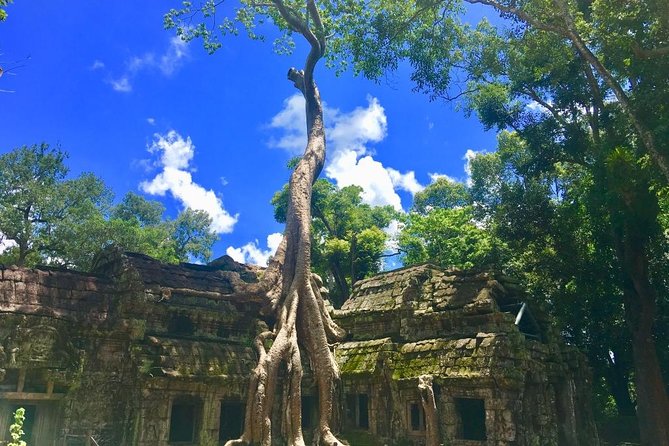
Finally on Day 1, you reach Ta Prohm, described as the kingdom of the trees. The tour highlights that it was left largely untouched by archaeologists except for clearing paths for visitors and strengthening structures to stave off further deterioration.
Time is about 1 hour 30 minutes, which helps. Ta Prohm is visually intense, and you’ll want more than a quick photo stop to really read the way the trees and stone interact.
Day 1’s late peak: Angkor Wat for depth, then Ta Nei for a quieter reward
After Ta Prohm, the day pivots toward Angkor Wat and then adds a less obvious temple to cap things off.
Angkor Wat: the biggest monument, best preserved, built to be read
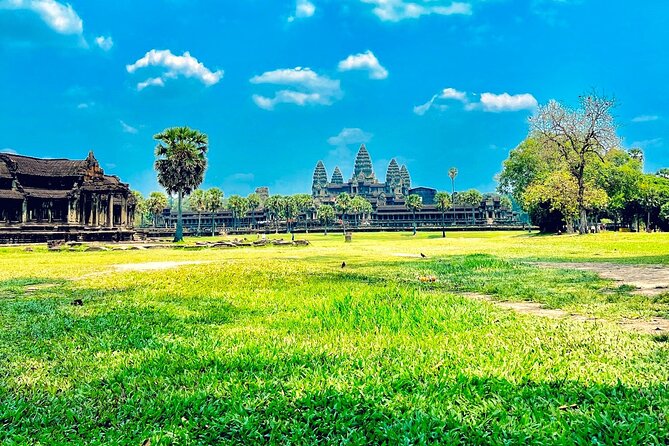
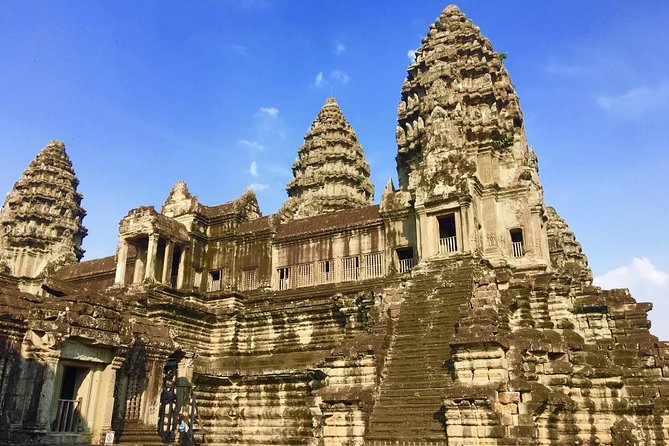
Angkor Wat gets about 3 hours. The description calls it the largest monument in the Angkor group and the best preserved, with balance, proportions, composition, and relief sculpture working together.
That time block is meaningful. If you only visit Angkor Wat for a photo sweep, you miss why the design feels so composed. With a guide, you can pick out what’s aligned where and why the carvings matter to the larger story.
Ta Nei: deep in the jungle, hard to find, not as crowded
The last stop on Day 1 is Ta Nei (about 45 minutes). It’s described as deep in the Cambodian jungle, about 200 meters west of the East Baray, and noted as difficult to find and not a popular tourist destination.
Because it’s less crowded, Ta Nei can feel calmer. And because it’s smaller and harder to reach, it often benefits from a guided visit: you want someone to help you understand what to look for before the day’s energy fades.
Day 2: from Banteay Srei’s carvings to Preah Khan’s 12th-century focus
Day 2 is where you get a broader Angkor mix, including more “off the main road” temples.
Banteay Srei: a precious gem of Khmer art (in the description, anyway)
The tour calls Banteay Srei a precious gem and a jewel in Khmer art, as French archaeologists described it. You get about 1 hour 20 minutes here.
Banteay Srei is ideal early in the second day if you want your eyes to recalibrate after Day 1’s bigger complexes. It’s the kind of site where details matter, and time helps you take in carving style rather than just grand scale.
Banteay Samre: restoration by anastylosis, and what happens when maintenance fades
Next is Banteay Samre (about 45 minutes). It’s described as one of the most complete complexes at Angkor due to restoration using anastylosis. At the same time, the description notes the absence of maintenance over the past 20 years is evident.
This is a good reminder that Angkor is not frozen in time. You’re seeing living conservation choices, and you might find yourself noticing where restored sections look sharper next to more faded areas.
Pre Rup: bold design with balance and proportion
Pre Rup gets about 50 minutes. It’s described as bold in architectural design with fine balance, scale, and proportion. The temple is noted as almost identical in style to the East Mebon, but built several years later.
This is a worthwhile stop if you care about design logic—how one structure relates to another across time.
Eastern Mebon: stone elephants and religious scenes
The route then includes Eastern Mebon (about 30 minutes). The highlight here is the sculpture: including free-standing stone elephants at corners of the first and second tiers, plus religious scenes like Indra atop his t… (as described in the overview).
Even with a shorter time block, this kind of stop works because the featured images are easy to spot if you know what you’re looking for.
Neak Pean: luxury fantasy with a man-made pond layout
Neak Pean (about 45 minutes) is described as a large square man-made pond, about 70 meters each side, bordered by steps and surrounded by four small structures.
Neak Pean is the kind of place where the geometry helps you understand the temple’s intent. With a guide, you can connect the pond layout to the feeling of planned ritual space.
Preah Khan: dedicated in 1191, tied to Jaya-varman VII
Then you head to Preah Khan (about 1 hour). The description places it about 2 kilometers north-east of Angkor Thom on the Grand Circuit, and says it was built in the second half of the 12th century (AD 1191) by King Jaya-varman VII, dedicating it to his father Dh… (as described).
If you like narrative anchors, this is one: a named king, a named year, and a stated dedication. That’s helpful when you’re trying to keep track of Khmer Empire chronology across two days.
Banteay Prei: a quieter add-on for deeper interest
Banteay Prei (about 45 minutes) is described as rarely visited and located near another small temple called Prasat Prei. It’s also stated that it’s a minor temple and only really of interest if you have time and specific interest in going deeper with Angkor.
In other words: if you love Angkor’s “b-side,” this stop can be a real satisfaction. If you’re burned out, you may want to treat it as a gentle late-day breather rather than a must-obsess stop.
Preah Dak Market and Om Pich: a 30-minute cultural pause for snacks and gifts
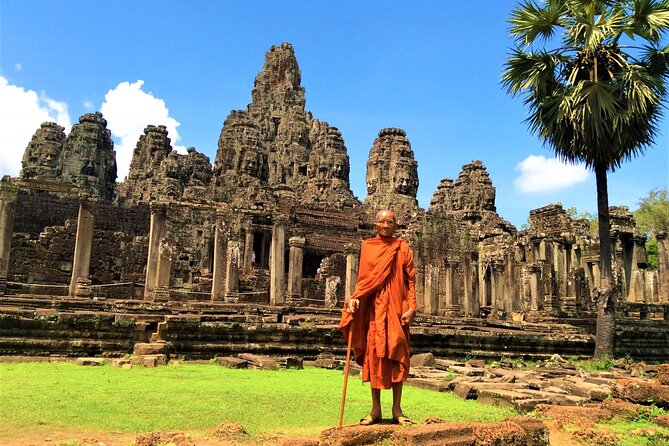
The last stop is listed as Om Pich steamed Toddy Palm Cake in Prashdak Village, about 30 minutes. The tour also mentions Preah Dak Market as a famous and popular place for souvenirs such as objects and arts.
This is the right kind of ending if you want two things:
1) a small local food moment (toddy palm cake is the specific item named), and
2) a practical place to pick up gifts without scrambling.
Keep it short and simple here. The value is in having a designated pause, not in turning the day into a shopping spree.
What the best version of this tour looks like
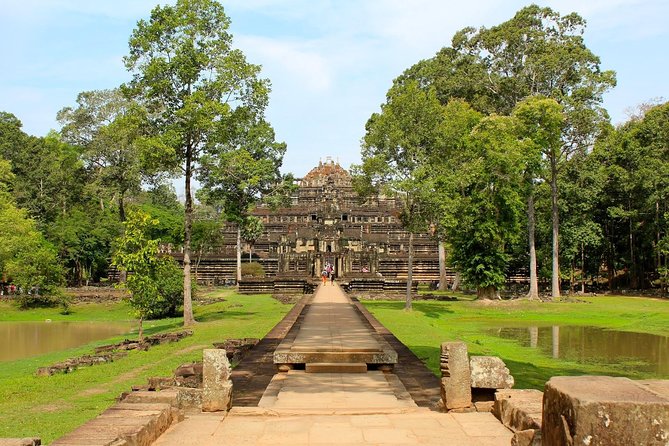
This tour’s standout strength is that it doesn’t just hit the headline temples. It also includes the smaller, less crowded stops—Ta Nei and Banteay Prei—that change how you understand Angkor.
That same “big plus small” structure shows up in the way the itinerary moves:
- Day 1 gives you Angkor Thom’s gates, terraces, and the emotional Ta Prohm.
- Day 2 balances carved showpieces (Banteay Srei) with a wider circuit of temples (Neak Pean, Preah Khan) and a market wrap-up.
You also benefit from real guide attention. One guide name that came up in feedback was Mr. Sara, paired with praise for being on time, keeping people comfortable, and covering Khmer context thoroughly. That’s the difference between being escorted from one doorway to the next and actually understanding what you’re seeing.
One last note on flexibility: feedback included an added stop at the land mine museum on request. If that matters to you, ask about it during planning so the day stays balanced.
Who should book this private Angkor 2-day tour
This works well for:
- Couples, families, and friend groups who want private timing instead of big-bus pacing
- Travelers who want the major sights plus less-visited temples to make the trip feel complete
- People who value explanations from a professional licensed English-speaking guide
It may be less ideal if:
- You want a very slow, minimal-walking day and don’t like temple hopping
- You don’t care about guided interpretation and would rather self-drive and roam
Should you book? My quick decision guide
If you’re coming to Siem Reap for Angkor and you want a plan that covers both the famous monuments and the quieter ones, I’d lean yes. The private group format, guided help with the Angkor Pass, and comfort touches like water and cool tissue make the whole experience feel smoother than doing it on your own.
Book it if you like being guided and you’re okay with a full two-day schedule. If you only want a quick hit of the top three sites, you might find this style too packed. But for most first-time Angkor visitors who want depth without chaos, this route looks like a strong match.
FAQ
Is pickup and drop-off included?
Yes. The tour includes hotel pickup and drop-off. You provide your hotel name for pickup.
Do I need to buy temple tickets separately?
Yes. Entrance fees are not included. You’ll need the Angkor Pass, which covers the temples in the itinerary. Your guide assists you with purchasing it at the entrance of Angkor Park before starting.
Is this tour private?
Yes. It’s a private tour/activity, and only your group participates.
Is a guide included, and what language?
A professional English speaking licensed tour guide is included. The tour is also offered in a range of languages.
What’s provided during the tour?
You get drink water and cool fresh tissue for the whole trip, along with private transfers in a comfortable vehicle.
Are meals included?
No. Meals are not included. Lunch is available at local restaurants, and you pay your own meal costs (menus are noted around $3–$10 per dish).
What should I wear to visit the temples?
Dress appropriately: cover your shoulders, and wear trousers or knee-length pants or skirts.
Is tipping included in the price?
No. Tipping for the tour guide and driver is not included.
Is there free cancellation?
Yes. You can cancel for a full refund up to 24 hours in advance of the experience start time.
Just Your Group: Private Days
- Full-Day Angkor Wat Sunrise Private Tour with Guide from Siem Reap
★ 5.0 · 2,920 reviews - Siem Reap: Angkor Wat Private Tuk-Tuk Tour
★ 4.9 · 2,222 reviews - Angkor Wat Private Day Tour from Siem Reap
★ 5.0 · 834 reviews - Angkor Wat Private Tuk-Tuk Tour (sunrise Option) & more
★ 5.0 · 439 reviews - Private Angkor Wat Day Tour – Best of Angkor
★ 5.0 · 269 reviews
More Days at the Temples
- Siem Reap: Angkor Wat 2-Day Tour with Sunrise and Sunset
★ 4.9 · 4,429 reviews - Angkor 2-Day Sunset & Sunrise Small-Group Tour
★ 5.0 · 2,567 reviews - 2 Days Exclusive Temple Highlights with Sunset and Sunrise Tour
★ 5.0 · 1,157 reviews - Siem Reap: Angkor Sunrise 1- or 2-Day Guided Temples Tour
★ 4.9 · 1,132 reviews - 2 Days Guided Historical Tour in Angkor
★ 5.0 · 855 reviews
More Temple Circuits Around Siem Reap
- Angkor Wat Sunrise or Sunset Tour with Guide from Siem Reap
★ 5.0 · 12,109 reviews - Siem Reap: Angkor Wat: Small-Group Sunrise or Sunset Tour
★ 5.0 · 9,444 reviews - Siem Reap: Angkor Wat 2-Day Tour with Sunrise and Sunset
★ 4.9 · 4,429 reviews - Siem Reap: Full-Day Angkor Wat Guided Tour with Sunset
★ 4.9 · 3,803 reviews - Angkor Wat Sunrise tour with Small – Group and Guide tours
★ 5.0 · 3,655 reviews
Just Added: Fresh Siem Reap Tour Reviews

Angkor Temple Tours, compared.
 ★ 5.0Angkor Wat Sunrise or Sunset Tour with Guide from Siem ReapFrom $1812,109 reviews
 ★ 5.0Angkor Wat: Small-Group Sunrise or Sunset TourFrom $159,444 reviews
 ★ 4.9Angkor Wat 2-Day Tour with Sunrise and SunsetFrom $344,429 reviews
 ★ 4.9Full-Day Angkor Wat Guided Tour with SunsetFrom $153,803 reviews
 ★ 5.0Angkor Wat Sunrise tour with Small – Group and Guide toursFrom $143,655 reviews
 ★ 5.0Angkor Wat Highlights and Sunrise Guided Tour from Siem ReapFrom $233,213 reviews
 ★ 5.0Angkor Wat Sunset Small Group Tour with Lunch IncludedFrom $203,059 reviews
 ★ 5.0Full-Day Angkor Wat Sunrise Private Tour with Guide from Siem ReapFrom $602,920 reviews
Browse the lists this tour appears in