
Reviewed · ANGKOR TEMPLE TOURS
Kbal Spean, Banteay Srei & Banteay Samre temple
Kbal Spean makes your morning feel like a mission worth it. This private, full-day route trades the crowds of Angkor Wat for Kbal Spean’s riverside carvings and the delicate temple work at Banteay Srei. You get an English-speaking guide, air-conditioned transport, and cold water, plus just enough structure to keep the day smooth. The main thing to plan for: it’s a long day with hill hiking at Kbal Spean and temple dress rules, and entrance fees are extra.
If you like your Siem Reap trips to feel personal, this one fits. The pacing moves from a countryside hike to two major temple stops that are famous for very different reasons, ending with an optional history add-on at the Landmine Museum. One possible drawback is that you should budget for the one-day Angkor pass and other entry fees, since they are not included.
In This Review
- Key Points You’ll Care About
- The Big Idea: Countryside Temples, Not Just Angkor Wat
- A quick reality check on the day’s shape
- Price and Value: What You Pay for (and What’s Extra)
- Why the price can still make sense
- Getting There: Pickup, Transport, and Timing That Works
- What to bring for the timing
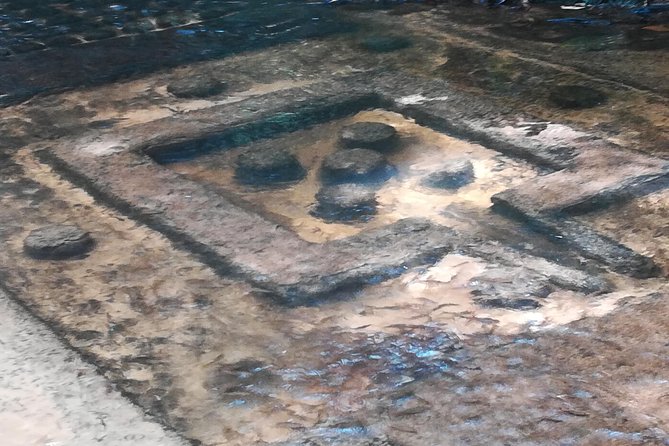
- Kbal Spean: The River of 1000 Lingas and a Real Morning Workout
- What makes Kbal Spean special
- The main consideration
- Banteay Srei: The Citadel of Women and the Art of Small Details
- Why the “Citadel of Women” idea is worth noting
- Banteay Samre: A 12th-Century Hindu Temple in an Angkor Wat Style
- What to expect at Banteay Samre
- Optional Stop: Cambodia Landmine Museum for Recent History
- When this stop is a good match
- The Temples’ Dress Code: It’s Not Optional
- Private Guide Energy: What You Gain When It’s Just Your Group
- Who This Tour Suits Best
- Practical Tips to Make the Day Smoother
- Should You Book This Tour?
- FAQ
- FAQ
- What time does the tour start?
- How long is the tour?
- Is pickup included?
- Is the tour private?
- What’s included in the price?
- Do I need the one-day Angkor Pass?
- Are entrance fees included for the temples?
- Is the Cambodia Landmine Museum included?
- What should I wear to enter the temples?
Key Points You’ll Care About
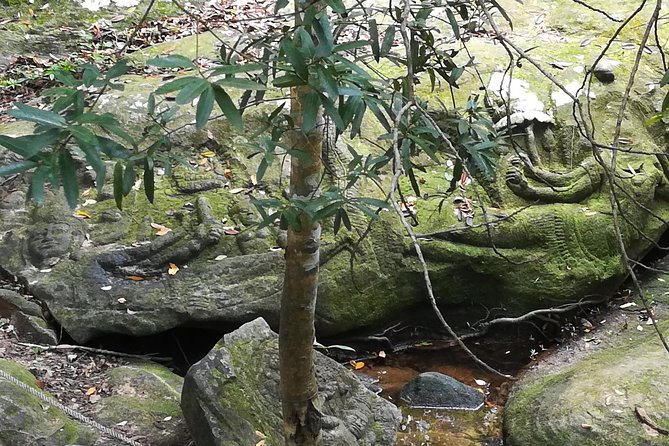
- Kbal Spean hike from Siem Reap: about 45 km out, and it’s best if you’re comfortable walking uphill.
- Banteay Srei’s intricate carvings: called the Citadel of Women, where the detail matters.
- Banteay Samre off the main circuit: a 12th-century Hindu temple in a style similar to Angkor Wat.
- Optional Cambodia Landmine Museum: a short stop to learn about war history from 1970–1998.
- Dress code at temples: you’ll need clothing that covers thighs and shoulders.
The pink sandstone carvings, a few more runs
- Siem Reap Tour: Angkor Wat Sunrise, Bayon, Ta Prohm, Banteay Srei★ 5.0 · 931 reviews
- 2-Day Angkor Wat With Small, Big Circuit and Banteay Srei Tour★ 5.0 · 545 reviews
- From Siem Reap: Banteay Srei Temple & Grand 5 Temple Tour★ 4.8 · 262 reviews
- 3-Days Discovery Of Angkor: Waterfalls,Floating Village and Banteay Srei temple★ 5.0 · 214 reviews
The Big Idea: Countryside Temples, Not Just Angkor Wat
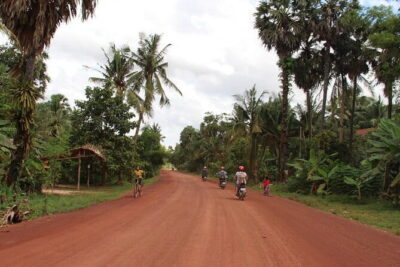
This is the kind of day that changes how you see Siem Reap. Instead of stacking your schedule around one headline site, you’ll spend the morning and afternoon in the surrounding countryside—temple architecture plus a bit of terrain—so the Kingdom of Cambodia story feels wider than one landmark.
What I like most is that the day has two strong anchor points that aren’t the same kind of “wow.” First, there’s the hiking side at Kbal Spean, famous for the River of 1000 Lingas. Second, there’s the fine-detail focus at Banteay Srei, often called the Citadel of Women because people believe the carving work was done with especially delicate skill. Put together, you get both scale and precision in one day.
A quick reality check on the day’s shape
You’re looking at about 7–8 hours, starting at 8:00 am after breakfast pickup. That means you’ll want an early start mindset, comfortable shoes, and the energy to move between countryside drives and temple walking. It’s not a sit-and-stare tour.
Price and Value: What You Pay for (and What’s Extra)
The listed price is $64.11 per person, and the tour includes an English-speaking guide, transportation in an air-conditioned car/minivan/minibus, and cold drinking water. You also get a mobile ticket, and it’s set up as a private experience, meaning it’s only your group.
Here’s the part that matters for your budget: entrance fees are not included. You’ll need a one-day Angkor Pass for each visitor, listed at $37 per person. That pass is an important line item if you’re trying to keep total costs predictable.
You can optionally add the Cambodia Landmine Museum for $6 per person, and food and drinks are also not included. So if you want a rough total, plan on the tour price plus the Angkor pass, then decide if the museum stop fits your interests.
Why the price can still make sense
For me, the value comes from how the inclusions match the day. A private, English-guided countryside route isn’t just transportation—it’s timing, navigation, and interpretation. Kbal Spean especially benefits from having someone help you understand what you’re looking at as you climb and then reach the carved riverside area. And at Banteay Srei and Banteay Samre, a guide helps you notice the design logic behind the carvings and layout, not just admire them.
If you’re traveling with a small group (or you just want a day that doesn’t feel like a cattle chute), this is the kind of pricing that can feel fair.
More temple circuits, set side by side


Getting There: Pickup, Transport, and Timing That Works
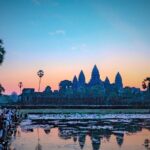
This day starts early. Pickup is after breakfast, with a start time of 8:00 am, and then you drive out of Siem Reap to begin at Kbal Spean. The drive to Kbal Spean is roughly 45 km from Siem Reap City, and you’ll ride in an air-conditioned vehicle.
The schedule is built around practical stop lengths:
- Kbal Spean: about 2 hours
- Banteay Srei: about 3 hours
- Banteay Samre: about 2 hours
- Optional Landmine Museum: about 30 minutes
Those time blocks are helpful because they suggest you won’t be rushed through every site, but you also won’t waste the whole day on one stop.
What to bring for the timing
I’d treat this as a day where you need:
- Good walking shoes for the hill hiking at Kbal Spean
- Clothing that follows the temple dress code (covered thighs and shoulders)
- A plan for water and food, since only bottled cold water is included and food isn’t
Kbal Spean: The River of 1000 Lingas and a Real Morning Workout
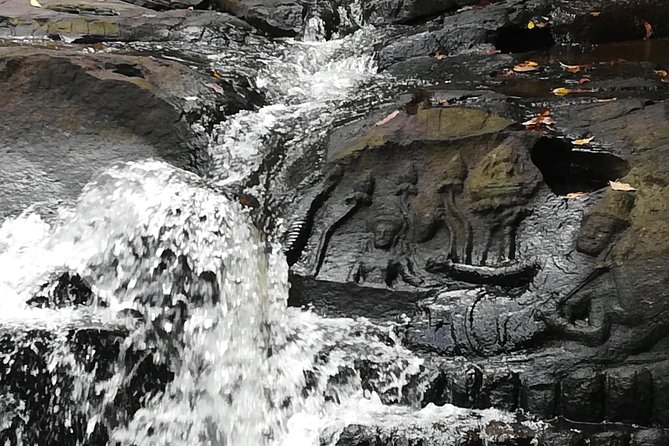
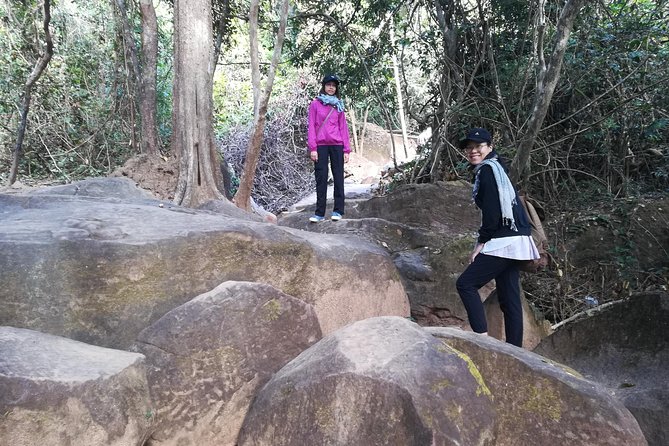
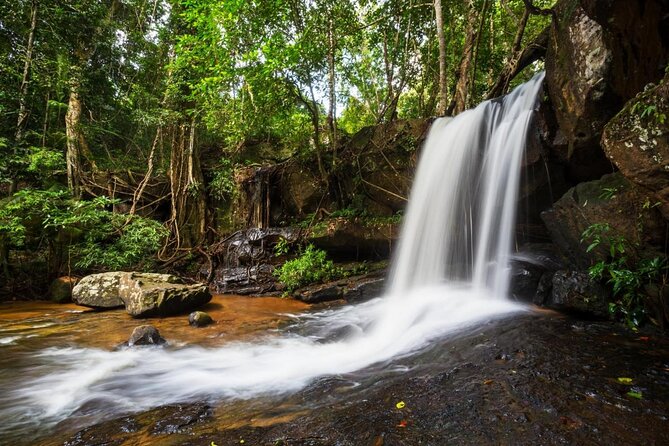
Kbal Spean is your first stop, and it sets the tone. You’ll be picked up after breakfast and taken out to a countryside area where a hike is part of the experience. It’s specifically recommended for visitors who are fit, and the note about hill hiking plus good walking shoes is not subtle—plan to actually walk.
The payoff is the famous carved story known as the River of 1000 Lingas. It’s one of those places where the setting and the details matter together: you’re not just looking at a single temple façade. You’re seeing carved stone tied to the idea of a sacred river.
What makes Kbal Spean special
Kbal Spean works because it’s different from typical temple viewing. You don’t get the easy, flat stroll experience. Instead, you get a climb, then a shift into something more grounded and unusual—carvings that feel like they were meant to be experienced as part of a water and stone landscape.
If you’ve already done Angkor Wat-style temple highlights, Kbal Spean gives you variety without abandoning Cambodia’s stone-carving tradition.
The main consideration
The drawback is physical. If your legs are tired already or you’re not comfortable with hill walking, this could turn into the least fun part of the day. The good news: because the tour is private, your guide can help keep the pace manageable for your group.
Banteay Srei: The Citadel of Women and the Art of Small Details
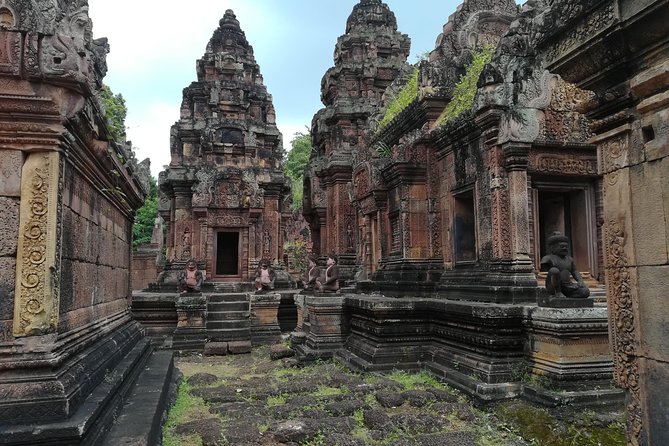
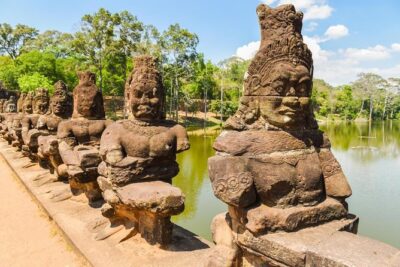
After Kbal Spean, you head to Banteay Srei, often translated as the Citadel of Women. This is one of those temple stops where the reputation is earned, mainly because the carvings are so intricate that people believe only extremely delicate hands could have produced that kind of detail.
You’ll have about 3 hours here, which is a gift. Many temple visits feel rushed, and you end up seeing only the biggest, easiest angles. Here, the extra time matters because Banteay Srei rewards looking closely—at the design patterns, the carving depth, and the way the architecture holds those details in place.
Why the “Citadel of Women” idea is worth noting
It’s not just a catchy name. The nickname points you toward what to focus on when you’re walking the site. If you pay attention to craftsmanship and ornamentation, you’ll have a more satisfying visit than if you only count towers and compare layouts.
This is also where a good English-speaking guide can make your visit feel like more than sightseeing. You’ll understand what you’re seeing as you go, which helps you notice the story the carvings are telling.
Banteay Samre: A 12th-Century Hindu Temple in an Angkor Wat Style
Next comes Banteay Samre, a 12th-century Hindu temple built in the style of Angkor Wat. That means you’ll recognize a familiar architectural language, but you won’t feel like you’re repeating the exact same experience.
This stop runs about 2 hours, and it’s described as a great temple to visit because it’s well off the tourist trail. That “off the main path” detail is practical: it can make the experience calmer and more personal. When you’re not pressed by crowds, you can take in proportions and carvings without the constant interruption of people flowing through like a conveyor belt.
What to expect at Banteay Samre
Think of it as a contrast to Banteay Srei. Where Banteay Srei leans hard into precision and delicacy, Banteay Samre gives you a different feel through its older, Angkor-like structure and temple layout. Both matter, but they hit your attention in different ways.
If you’re the type who likes comparing styles across a day, Banteay Samre is a strong third act.
Optional Stop: Cambodia Landmine Museum for Recent History
If your schedule and your interests allow it, there’s an optional stop at the Cambodia Landmine Museum. It’s only about 30 minutes, but it adds a different dimension to the day—recent history alongside ancient temple culture.
The key point here is that it focuses on the war period from 1970 to 1998, and you learn about the impact of landmines during that time. Since the museum entry fee is $6 per person and it’s not included, you should decide based on whether you want that emotional and educational shift.
When this stop is a good match
I think this add-on works best if:
- You want context beyond architecture
- You’re curious how Cambodia’s story connects past and present
- You’re okay with a shorter, focused visit rather than a long museum day
The Temples’ Dress Code: It’s Not Optional
You’ll need to follow a strict temple dress code at both Banteay Srei and Banteay Samre. You must cover thighs and shoulders when entering the temple complex. If you’re not dressed correctly, you may be refused entrance.
This is one of those details that can ruin a morning if you ignore it, so plan ahead. A light layer helps. And if you’re traveling with summer clothes, check what you’re wearing before you head out.
Private Guide Energy: What You Gain When It’s Just Your Group
This is a private tour, meaning only your group participates. That matters more than you might think. It can help you move at a pace that fits you, pause when something catches your eye, and ask questions without feeling like you’re stealing time.
In the notes from past bookings, one guide named Chen gets specific praise for making the day feel special. When you hear that kind of feedback, it usually points to something practical: explanation and attention that make the sites easier to understand and more fun to look at.
Who This Tour Suits Best
I’d recommend this day if you want:
- A temple-and-countryside break from the standard Angkor Wat-first routine
- A more personal experience (private group)
- A mix of hiking + fine carvings + architecture
- Time to take Banteay Srei seriously without rushing
You might want to choose something else if:
- Hill hiking at Kbal Spean sounds like a stretch for your comfort level
- You’re not interested in any history beyond temple sights (unless you choose the Landmine Museum stop)
Practical Tips to Make the Day Smoother
A few small choices can make a big difference:
- Wear good walking shoes early in the day since Kbal Spean starts with a hike.
- Bring clothing that meets the temple dress code so you don’t scramble at the gate.
- Plan for the reality that you’ll pay extra for the one-day Angkor Pass and other entrance fees.
- Eat a real breakfast. The tour is long, and food isn’t included.
- If you’re sensitive to sun and heat, plan for that too—this is outdoors time plus driving between sites.
Should You Book This Tour?
Yes, I’d book it if you want a Siem Reap day that feels like more than a checklist. The combination of Kbal Spean’s unusual carved “river” concept, Banteay Srei’s craftsmanship focus, and Banteay Samre’s Angkor-style temple design gives you variety in one outing.
If you’re budgeting, do the math up front: the tour price plus the one-day Angkor Pass is the main cost you should expect, and the Landmine Museum is optional. If you’re comfortable with an early start and you’re ready for hill walking, this is the kind of countryside day that makes your trip feel more complete.
FAQ
FAQ
What time does the tour start?
The tour starts at 8:00 am, with pickup after breakfast.
How long is the tour?
It runs about 7 to 8 hours.
Is pickup included?
Yes. Pickup is offered.
Is the tour private?
Yes. It’s a private tour/activity, and only your group participates.
What’s included in the price?
You get an English speaking tour guide, transportation in an air-conditioned vehicle, and bottles of cold drinking water.
Do I need the one-day Angkor Pass?
Yes. A one-day Angkor pass is required for each visitor, and it is not included in the tour price (listed as $37 per person).
Are entrance fees included for the temples?
No. Entrance fees are not included for the stops.
Is the Cambodia Landmine Museum included?
It’s optional. If you choose it, admission is $6 per person.
What should I wear to enter the temples?
You must cover your thighs and shoulders. If your clothing does not meet the dress code, you may be refused entrance.
More Tour Reviews in Siem Reap
- Angkor Wat Sunrise or Sunset Tour with Guide from Siem Reap
★ 5.0 · 12,109 reviews - Siem Reap: Angkor Wat: Small-Group Sunrise or Sunset Tour
★ 5.0 · 9,444 reviews - From Siem Reap: Kampong Phluk Floating Village Tour by Boat
★ 4.9 · 6,979 reviews - Sunset tour of Kampong Phluk stilts home village on the Tonle Sap
★ 5.0 · 4,865 reviews - Siem Reap: Angkor Wat 2-Day Tour with Sunrise and Sunset
★ 4.9 · 4,429 reviews
More Temple Circuits Around Siem Reap
- Angkor Wat Sunrise or Sunset Tour with Guide from Siem Reap
★ 5.0 · 12,109 reviews - Siem Reap: Angkor Wat: Small-Group Sunrise or Sunset Tour
★ 5.0 · 9,444 reviews - Siem Reap: Angkor Wat 2-Day Tour with Sunrise and Sunset
★ 4.9 · 4,429 reviews - Siem Reap: Full-Day Angkor Wat Guided Tour with Sunset
★ 4.9 · 3,803 reviews - Angkor Wat Sunrise tour with Small – Group and Guide tours
★ 5.0 · 3,655 reviews
The Carvings of Banteay Srei
- Full-Day Banteay Srei & 4 Temples – Grand Tours Join-in Tour
★ 5.0 · 1,155 reviews - Siem Reap Tour: Angkor Wat Sunrise, Bayon, Ta Prohm, Banteay Srei
★ 5.0 · 931 reviews - 2-Day Angkor Wat With Small, Big Circuit and Banteay Srei Tour
★ 5.0 · 545 reviews - From Siem Reap: Banteay Srei Temple & Grand 5 Temple Tour
★ 4.8 · 262 reviews - 3-Days Discovery Of Angkor: Waterfalls,Floating Village and Banteay Srei temple
★ 5.0 · 214 reviews
Just Added: Fresh Siem Reap Tour Reviews

Angkor Temple Tours, compared.
 ★ 5.0Angkor Wat Sunrise or Sunset Tour with Guide from Siem ReapFrom $1812,109 reviews
 ★ 5.0Angkor Wat: Small-Group Sunrise or Sunset TourFrom $159,444 reviews
 ★ 4.9Angkor Wat 2-Day Tour with Sunrise and SunsetFrom $344,429 reviews
 ★ 4.9Full-Day Angkor Wat Guided Tour with SunsetFrom $153,803 reviews
 ★ 5.0Angkor Wat Sunrise tour with Small – Group and Guide toursFrom $143,655 reviews
 ★ 5.0Angkor Wat Highlights and Sunrise Guided Tour from Siem ReapFrom $233,213 reviews
 ★ 5.0Angkor Wat Sunset Small Group Tour with Lunch IncludedFrom $203,059 reviews
 ★ 5.0Full-Day Angkor Wat Sunrise Private Tour with Guide from Siem ReapFrom $602,920 reviews
Browse the lists this tour appears in