
One sentence that hits you fast: Angkor is big, and it’s easy to miss things. I like that this private 3-day setup gives you focused temple time plus a local-style walkthrough rather than a rush-through, and I also love the mix of famous icons with smaller stops that help you understand how the Khmer Empire moved and worshiped. The main thing to watch is the budget: the tour price is $110, but the temple ticket ($62/pax) and the Tonle Sap boat fee ($15/pax) are not included, and meals are on you.
I also really appreciate how the itinerary builds meaning as you go. You start with classic carvings and lesser-seen complexes, then move into Angkor Thom and Ta Prohm, and finally end with Angkor Wat and life on Tonle Sap in Chong Kneas. If you hate heat or you need lots of breaks, you’ll want to pace yourself, because temple days mean walking time and long sightline stops.
In This Review
- Key highlights worth planning around
- Why Angkor feels different with a private English guide
- Day 1: Banteay Srei, Ta Som, Neak Pean, and Preah Khan
- Day 2: Angkor Thom gates, Bayon faces, and Ta Prohm’s jungle spell
- Day 3: Chong Kneas on Tonle Sap and the Artisans Angkor workshop
- Price and logistics: what $110 really covers
- How much time at each temple, and how to pace yourself
- Who this private Angkor experience is perfect for
- Should you book this private 3-day temple tour?
- FAQ
- How long is the private tour?
- Is hotel pickup and drop-off included?
- What’s included in the tour price?
- What is not included?
- Do I need to buy temple tickets separately?
- Do I get a ticket for the experience on my phone?
- Is this a private tour or a shared group?
- What stops are included for Day 3?
- Is cancellation free?
- Is the tour suitable for most people?
Key highlights worth planning around
- Mr. Buth Chansip: A guide known for deep, clear temple context (and it shows in how he explains what you’re actually looking at).
- 14 temple stops across 3 days in a private format: you get a manageable pace, not a herding situation.
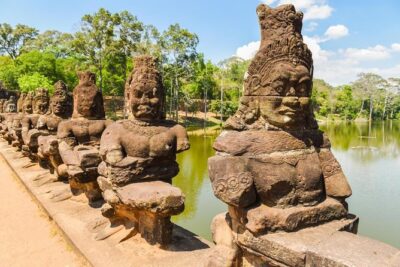
- Angkor Thom details: the South Gate scene with 54 devas and 54 asuras pulling Shesha’s tail is the kind of “look closer” moment that makes the place click.
- Ta Prohm’s roots and ruins: you’re guided through why this jungle-temple look isn’t just scenery, it’s part of the story.
- Tonle Sap floating village by boat: you see real community life in Chong Kneas (boat fee applies).
- Artisans Angkor included: a hands-on creative stop on wood/stone carving, lacquering, silver plating, and silk painting.
More temple circuits, set side by side
- Angkor Wat Sunrise or Sunset Tour with Guide from Siem Reap★ 5.0 · 12,109 reviews
- Siem Reap: Angkor Wat: Small-Group Sunrise or Sunset Tour★ 5.0 · 9,444 reviews
- Siem Reap: Angkor Wat 2-Day Tour with Sunrise and Sunset★ 4.9 · 4,429 reviews
- Siem Reap: Full-Day Angkor Wat Guided Tour with Sunset★ 4.9 · 3,803 reviews
Why Angkor feels different with a private English guide
Angkor Archaeological Park covers the remains of several Khmer capitals from the 9th to the 15th centuries, and it includes what’s often described as the largest pre-industrial city in the world. On your own, that scale can overwhelm you: you’ll see stone, gates, towers, and trees, but the “why this place looks like this” part is harder to catch.
A private English-speaking guide changes that. You’re not just moving from temple to temple; you’re getting explanations that connect the dots between Hindu and Buddhist phases, royal building programs, and the symbolism carved into doorways and bas-reliefs. And when you have a guide who can interpret the details, even a short stop like a south gate can feel like a full lesson.
In particular, I’m drawn to how this tour’s route alternates between the big-name sites and the supporting players. That’s what helps you build a mental map fast: you start recognizing styles, eras, and design choices. You’ll spend enough time at key sites (like Angkor Wat and Bayon) while still getting “small but meaningful” moments at places that many day-tour routes skip.
Day 1: Banteay Srei, Ta Som, Neak Pean, and Preah Khan
Day 1 sets the tone with classic Khmer artistry and a mix of temple functions. The total time per stop is reasonable, which matters because temple visits aren’t just viewing. You’re looking for carvings, layout details, and vantage points, and that takes slow attention.
Banteay Srei (about 1 hour) is a strong start. It’s a 10th-century temple often described as a jewel of classical Khmer art, known for intricate decoration carved in pinkish sandstone. This is one of those places where a guide helps you focus: if you only scan from far away, you’ll miss how dense the carving work is and how carefully the motifs fit the architecture.
Next, Ta Som (about 40 minutes) brings you to a late 12th-century Bayon-style temple built by Jayavarman VII with a Buddhist purpose. If you like seeing the overlap between political power and religion, this stop is useful. It gives you a different “feel” than purely Hindu-focused sites.
Then you head to Neak Pean (about 30 minutes), a smaller temple on an island in the middle of the last baray constructed in the Angkor area. This is the kind of location that’s easy to overlook if you only expect towering grandeur. With the right framing, it reads like part of a water-and-spiritual system, not just a standalone ruin.
After lunch, Preah Khan (about 1 hour) is the payoff for people who love complex temple compounds. It’s a huge, highly explorable monastic complex built by Jayavarman VII in the late 12th century. You’ll appreciate this more if you take your time inside the compound and let the guide point out how the spaces feel designed for daily monastic life, not only ceremonial worship.
Practical tip for Day 1: expect warmer light and more shade gaps at many temples. I’d plan on sun protection and breathable clothing, and I’d carry a small water bottle even though drinking water is included.
Day 2: Angkor Thom gates, Bayon faces, and Ta Prohm’s jungle spell
Day 2 is where Angkor shifts from “beautiful and intricate” into “big drama.” You’ll see the grand layouts of Angkor Thom and then land in the most famous visual mood: Ta Prohm.
You start with Angkor Thom South Gate (about 15 minutes). This one is short on paper, but it’s not short on storytelling. The gate’s scene shows 54 devas and 54 asuras pulling the serpent Shesha from opposite sides. It’s a reminder that Khmer temple art isn’t random decoration. It’s religion, cosmology, and power turned into stone theater.
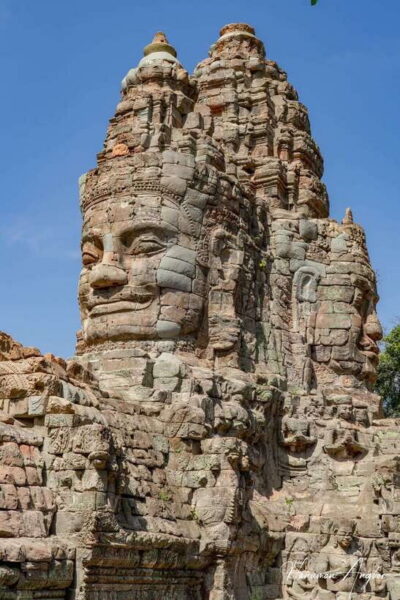
Then you move to Bayon (about 1 hour), the temple with over 2,000 large faces on its towers. What I like about having a guide here is that you don’t just count faces—you learn how to notice bas-reliefs connected to everyday life: markets, fishing, festivals with cockfights, jugglers, and more. That’s where Bayon stops being only “iconic” and starts feeling human.
Baphuon (about 30 minutes) follows, built around 1060 by Udayadityavarman II, dedicated to Siva. It gives you a Hindu anchor point so you can compare with the Buddhist-leaning parts you saw earlier. Phimeanakas (about 30 minutes) then continues that comparison, built in the late 10th to early 11th century by Jayavarman V and Udayadityavarman I, also dedicated to Hindu worship.
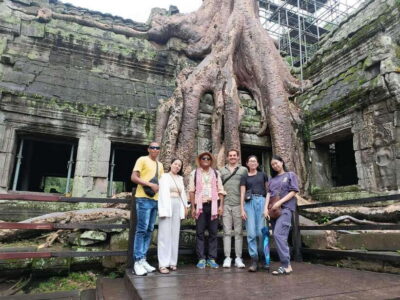
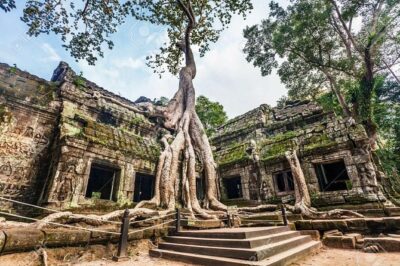
Next is Ta Prohm (about 1 hour), often called the Jungle Temple. This is the stop that most people picture before they arrive: fig, banyan, and kapok trees with roots gripping stones. But with a guide, you’ll get past the movie-poster look. You’ll understand it as a meeting point between architecture and the way nature can reclaim a site over time.
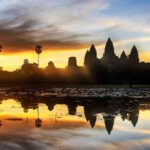
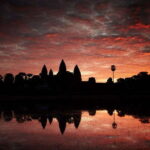
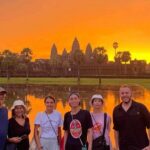
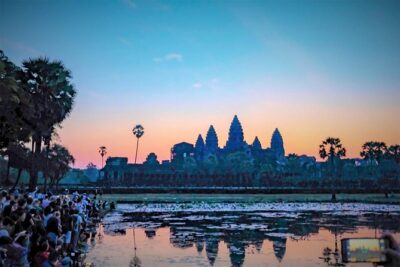
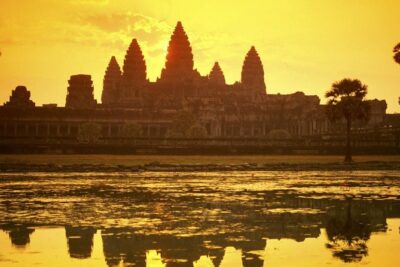
Finally, you reach Angkor Wat (about 3 hours). It’s the largest religious monument in the world, built by King Suryavarman II in the early 12th century, first Hindu and later Buddhist. Three hours is a strong amount of time. It’s long enough to walk key corridors without feeling like you’re just rushing to the next viewpoint.
Practical tip for Day 2: since Angkor Wat is large, you’ll get more value if you commit to “slow looking” instead of checking off every angle. Pick a few places to stand and absorb the geometry, then let the rest fill in as you move.
Day 3: Chong Kneas on Tonle Sap and the Artisans Angkor workshop
Day 3 is a smart change of pace. After two days of temple stone and symbolism, you shift to water, daily life, and contemporary craft.
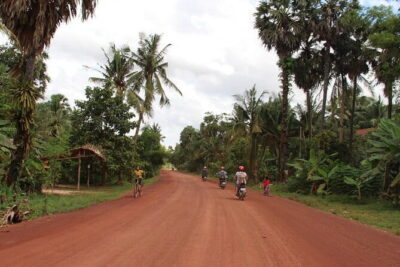
You start with Chong Kneas Floating Village (about 2 hours) on Tonle Sap Lake. You’ll travel by boat to see how communities live and work—specifically the communities described here: Cambodian, Cham, and Vietnam groups. The boat fee is included as a separate charge ($15/pax), so budget for it.
Even if you’ve seen floating villages in other countries, this one lands differently because the Angkor-era region isn’t only temples. It’s people shaped by the lake and seasonal rhythms. I like that you’re not only watching scenery; you’re seeing lifestyle in a way that connects to the broader Cambodia story.
After that, you go to Artisans Angkor (about 1 hour), where Les Artisan D’Angkor is a fine art school and workshop space. This is one of those stops that feels more practical than typical “souvenir shopping.” You’ll see or learn about wood and stone carving, lacquering, silver plated work, and silk painting. The fact that the artisans ticket is included makes this feel like a value add rather than an extra cost you didn’t ask for.
You end back at your hotel after the craft stop, which is exactly what you want after a boat morning and a day of walking.
Practical tip for Day 3: if you’re sensitive to motion, take it easy on the boat. You’ll still enjoy the village time, but don’t power through tiredness at the end.
More time at the temples, spread over days

Price and logistics: what $110 really covers
This is a private 3-day tour priced at $110 with private A/C transportation, a private English-speaking tour guide, drinking water, and hotel pickup and drop-off. That part matters because Angkor sites are spread out, and “just take tuk-tuks between stops” usually turns into time lost and stress gained.
Now the important budget math:
- Temple ticket: $62 per person (not included)
- Tonle Sap boat fee: $15 per person (not included)
- Meals and beverages: not included
So, the likely travel cost for planning purposes is $110 + $62 + $15 = $187 per person, before meals. That’s not cheap, but the structure explains why. You’re paying for private transport, private guide attention, and a full multi-day sweep that includes both major and supporting temples plus the lake and artisan visit.
What you’re getting for the guide portion is the real value. Angkor can feel like a pile of impressive ruins if you don’t know what to look for. A good guide helps you notice how each temple fits into a timeline and a purpose—Hindu worship here, Buddhist context there, royal building programs everywhere.
Also note the tour includes travel insurance, which is a small but useful comfort item when you’re doing multi-day sightseeing.
How much time at each temple, and how to pace yourself
A big reason people enjoy this kind of private route is pacing. The day plan is built with a mix of short and longer stops, so you’re not stuck for hours at one monument while others sit untouched.
You’ll spend about:
- Banteay Srei: 1 hour
- Ta Som: 40 minutes
- Neak Pean: 30 minutes
- Preah Khan: 1 hour
- South Gate: 15 minutes
- Bayon: 1 hour
- Baphuon: 30 minutes
- Phimeanakas: 30 minutes
- Ta Prohm: 1 hour
- Angkor Wat: 3 hours
- Chong Kneas: 2 hours
- Artisans Angkor: 1 hour
That means your “attention budget” stays intact. The longer stays (like Angkor Wat and Bayon) are where you’ll want it. The shorter ones (like South Gate) are best treated as fast missions: stand where the guide points, take a few photos, and then move on before your legs protest.
My advice: wear comfortable shoes, expect uneven stone, and plan for sun between stops. Even with A/C during transfers, temple time is still active walking and standing.
Who this private Angkor experience is perfect for
This tour is a strong match if:
- You’re visiting Angkor for the first time and want a guided route that makes sense.
- You want both famous temples and supporting sites, so you come away with more than a photo memory.
- You like explanations that connect architecture and religion, especially the shift between Hindu and Buddhist context.
- You prefer private pacing over crowded group logistics.
It’s also a good fit if you care about Cambodia beyond temples. The Tonle Sap Chong Kneas boat time and the Artisans Angkor workshop stop add texture to your trip, so you’re not only chasing stones.
If you’re the type who hates planning and just wants to wander, you might find the day structure limiting. But if you enjoy getting the most out of each day, this private format helps you do exactly that.
Should you book this private 3-day temple tour?
I’d book it if your goal is to see Angkor in a way that actually makes sense. The private English guide, A/C transport, and the balanced mix of Angkor Thom, Ta Prohm, and Angkor Wat with earlier Khmer sites give you a trip that feels organized without feeling sterile.
I’d think twice only if your budget can’t stretch to temple tickets plus the Tonle Sap boat fee, or if you’re very sensitive to long hot days and walking. For most first-timers, the added cost buys you clarity, comfort, and fewer wasted hours.
If you do book, I’d come with one attitude: don’t try to memorize everything. Focus on what your guide is pointing out, take a break when you need it, and let Angkor reveal itself in layers.
FAQ
How long is the private tour?
It’s an approx. 3-day experience.
Is hotel pickup and drop-off included?
Yes. The tour includes hotel pick up and drop off.
What’s included in the tour price?
Included features are private transportation with A/C, a private English-speaking tour guide, drinking water, hotel pick up and drop off, and travel insurance.
What is not included?
Temple ticket pricing is not included ($62 per person), the Tonle Sap boat fee is not included ($15 per person), and meals and beverages are not included.
Do I need to buy temple tickets separately?
Yes. The temple ticket is listed as $62 per person and is not included.
Do I get a ticket for the experience on my phone?
The tour mentions mobile ticket.
Is this a private tour or a shared group?
It’s private. Only your group participates.
What stops are included for Day 3?
Day 3 includes a boat trip to the floating village of Chong Kneas on Tonle Sap Lake, and a visit to Artisans Angkor (Les Artisan D’Angkor), which includes an included ticket.
Is cancellation free?
Yes, cancellation is free. You can cancel up to 24 hours in advance for a full refund.
Is the tour suitable for most people?
The information says most travelers can participate, and it’s described as near public transportation.
Just Your Group: Private Days
- Full-Day Angkor Wat Sunrise Private Tour with Guide from Siem Reap
★ 5.0 · 2,920 reviews - Siem Reap: Angkor Wat Private Tuk-Tuk Tour
★ 4.9 · 2,222 reviews - Angkor Wat Private Day Tour from Siem Reap
★ 5.0 · 834 reviews - Angkor Wat Private Tuk-Tuk Tour (sunrise Option) & more
★ 5.0 · 439 reviews - Private Angkor Wat Day Tour – Best of Angkor
★ 5.0 · 269 reviews
More Days at the Temples
- Siem Reap: Angkor Wat 2-Day Tour with Sunrise and Sunset
★ 4.9 · 4,429 reviews - Angkor 2-Day Sunset & Sunrise Small-Group Tour
★ 5.0 · 2,567 reviews - 2 Days Exclusive Temple Highlights with Sunset and Sunrise Tour
★ 5.0 · 1,157 reviews - Siem Reap: Angkor Sunrise 1- or 2-Day Guided Temples Tour
★ 4.9 · 1,132 reviews - 2 Days Guided Historical Tour in Angkor
★ 5.0 · 855 reviews
More Temple Circuits Around Siem Reap
- Angkor Wat Sunrise or Sunset Tour with Guide from Siem Reap
★ 5.0 · 12,109 reviews - Siem Reap: Angkor Wat: Small-Group Sunrise or Sunset Tour
★ 5.0 · 9,444 reviews - Siem Reap: Angkor Wat 2-Day Tour with Sunrise and Sunset
★ 4.9 · 4,429 reviews - Siem Reap: Full-Day Angkor Wat Guided Tour with Sunset
★ 4.9 · 3,803 reviews - Angkor Wat Sunrise tour with Small – Group and Guide tours
★ 5.0 · 3,655 reviews
Just Added: Fresh Siem Reap Tour Reviews

Angkor Temple Tours, compared.
 ★ 5.0Angkor Wat Sunrise or Sunset Tour with Guide from Siem ReapFrom $1812,109 reviews
 ★ 5.0Angkor Wat: Small-Group Sunrise or Sunset TourFrom $159,444 reviews
 ★ 4.9Angkor Wat 2-Day Tour with Sunrise and SunsetFrom $344,429 reviews
 ★ 4.9Full-Day Angkor Wat Guided Tour with SunsetFrom $153,803 reviews
 ★ 5.0Angkor Wat Sunrise tour with Small – Group and Guide toursFrom $143,655 reviews
 ★ 5.0Angkor Wat Highlights and Sunrise Guided Tour from Siem ReapFrom $233,213 reviews
 ★ 5.0Angkor Wat Sunset Small Group Tour with Lunch IncludedFrom $203,059 reviews
 ★ 5.0Full-Day Angkor Wat Sunrise Private Tour with Guide from Siem ReapFrom $602,920 reviews
Browse the lists this tour appears in