
Reviewed · ANGKOR WAT TEMPLE TOURS
Private Day Angkor Wat Temple and Banteay Srei Temple Tour
8.5 hours of Angkor beats the do-it-yourself shuffle. This private route strings together Ta Prohm, Angkor Thom, and Angkor Wat with an English guide, air-conditioned comfort, and enough structure that you spend your time looking—not figuring out.
I especially like two things: first, the English explanations that help you understand what you’re seeing (from temple symbolism to Khmer artistry). Second, the comfort package—AC vehicle, cool water, and towels—so a long day stays tolerable in the Siem Reap heat.
One watch-out: the temples pass isn’t included (it’s $37 per person for 1 day), so you’ll want to plan that extra cost before you go.
In This Review
- Key highlights worth knowing
- Why this private Angkor Wat and Banteay Srei plan makes sense
- Price and value: $43 plus the temples pass
- Before you arrive: the 1-day temples pass and what it covers
- Ta Prohm: Rajavihara’s jungle look and why it feels different
- Pre Rup: a quick state-temple stop with a strong backstory
- Banteay Srei (Pink Ladies Temple): small scale, detailed mastery
- Angkor Thom South Gate: the causeway and the 100-meter moat moment
- Bayon Temple: 173 faces and the human question behind them
- Baphuon and Phimeanakas: royal power in sandstone
- Terrace of the Elephants and Terrace of the Leper King: royal boundaries you can feel
- Angkor Wat: the symbolic “center” and the long main event
- Comfort, transport, and how guides can reduce stress
- Who should book this private day tour?
- A note on the guide: communication that helps your day run smoother
- Should you book this private Angkor Wat and Banteay Srei tour?
- FAQ
- What temples are included on this private tour?
- How long is the tour?
- Is pickup included?
- What does the tour price include?
- Is the temples pass included?
- Are the admission tickets included for each temple stop?
- What are the operating hours for the tour?
- Is this tour private?
- Can I cancel and still get a refund?
- Is this suitable for everyone in my group?
Key highlights worth knowing
- A tight “big hits” Angkor loop: Ta Prohm, Pre Rup, Banteay Srei, Angkor Thom, and Angkor Wat in one day
- AC comfort and practical extras: parking, road tolls, cool water, and towels along the way
- Banteay Srei’s fine carving in a smaller temple: known for detailed pink-stone artwork from the 10th century
- Angkor Thom’s major set pieces: South Gate causeway, Bayon’s face towers, and the royal terraces
- Flexible pacing with transport help: a guide can coordinate closer access and alternative rides when needed
- Temples pass required: mobile ticket, but you pay $37 per person for the 1-day entry
Other ways to walk the great temple
- Angkor Wat Sunrise or Sunset Tour with Guide from Siem Reap★ 5.0 · 12,109 reviews
- Siem Reap: Angkor Wat: Small-Group Sunrise or Sunset Tour★ 5.0 · 9,444 reviews
- Siem Reap: Angkor Wat 2-Day Tour with Sunrise and Sunset★ 4.9 · 4,429 reviews
- Siem Reap: Full-Day Angkor Wat Guided Tour with Sunset★ 4.9 · 3,803 reviews
Why this private Angkor Wat and Banteay Srei plan makes sense
If you only have one full day, the hardest part of Angkor is timing: you want the famous temples and you also want to feel like you’re not sprinting. This tour is built around a realistic 8 hours 30 minutes schedule, with an air-conditioned vehicle and an English-speaking guide to keep the day moving without turning it into a blur.
You’ll also get the benefit of a private tour format, meaning your guide can slow down for your questions or shift order when the light is good. That matters at places like Ta Prohm and Bayon, where details reward time.
Price and value: $43 plus the temples pass
The advertised price is $43 per person, and it includes the big day-cost stuff: an English tour guide, an AC vehicle, pickup/drop-off at the airport, parking, and road tolls. Add in cool water and towels, and it’s a more comfortable setup than hiring a driver and trying to manage everything solo.
The separate cost is the temples pass: $37 per person for 1 day, not included in the tour price. So for many visitors, the all-in total for entry is about $80 per person before any meals. If you’re going to Angkor anyway, paying for a guide + transportation usually beats spending that time bargaining and managing logistics on your own.
Before you arrive: the 1-day temples pass and what it covers
Entry isn’t rolled into the tour price. You’ll need a 1-day temples pass at $37 per person, and the pass is tied to your visit to the temple circuit that day.
Because the pass is required, I’d treat this like a checklist item, not an afterthought. Have it sorted before you hit the first major stop so you don’t lose precious minutes in the middle of the day.
Ta Prohm: Rajavihara’s jungle look and why it feels different
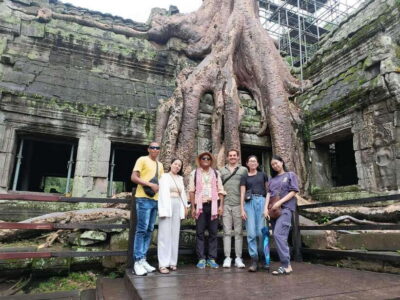
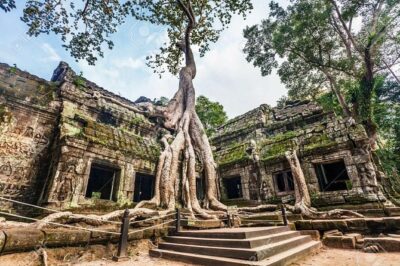
Ta Prohm is the temple most people picture when they hear Angkor: ruins wrapped in roots, vines, and a dense jungle atmosphere. The temple was originally known as Rajavihara, meaning monastery of the King, and it was built as a Mahayana Buddhist monastery and university. Construction is dated to 1186 AD.
On this route, you get about 1 hour here. That’s enough time to catch the iconic root-covered structures, and also to step back and notice the layout so the chaos starts to feel organized instead of random.
Practical note: Ta Prohm is a walking-heavy stop even when you’re not rushing. Wear shoes you trust on uneven ground, and if you need mobility help, ask your guide early so they can coordinate the easiest way through.
The pink sandstone carvings, a few more runs


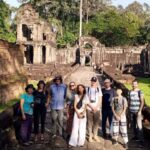
Pre Rup: a quick state-temple stop with a strong backstory
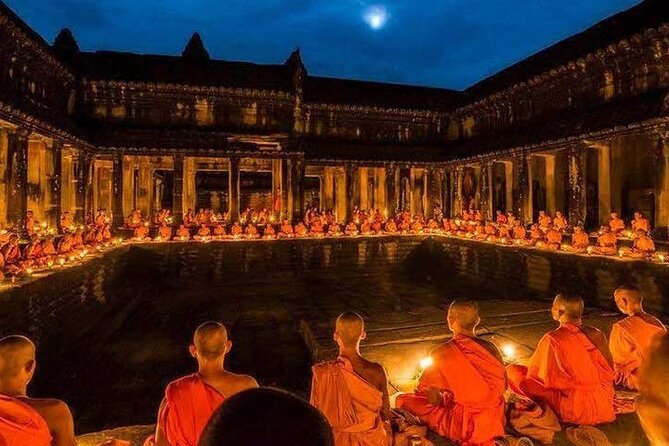
After Ta Prohm, the day turns to Pre Rup, built as a state temple for King Rajendravarman in the late 10th century (either 961 or 962 AD). It’s only described as a short stop here—around 20 minutes—so you’re not going to get a long, leisurely exploration.
Still, that short timing can be a win. Pre Rup helps you understand the “state temple” purpose of Angkor’s religious architecture, and it adds variety after the jungle intensity of Ta Prohm.
Banteay Srei (Pink Ladies Temple): small scale, detailed mastery
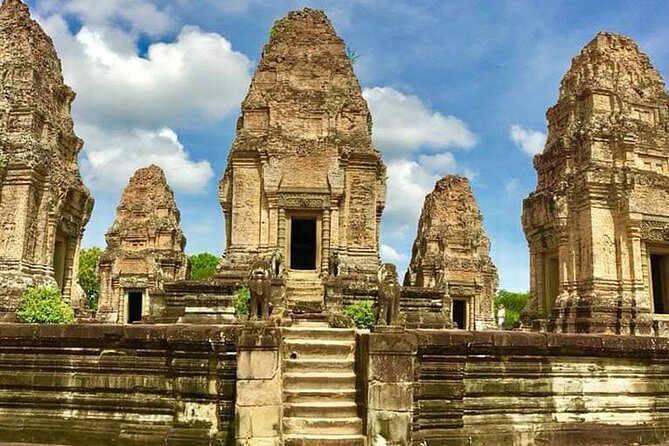
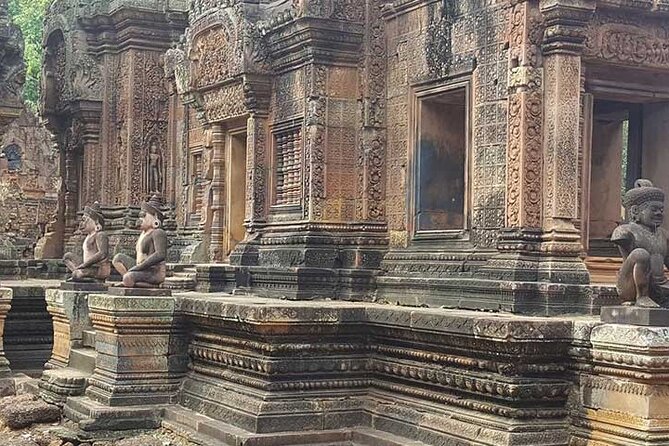
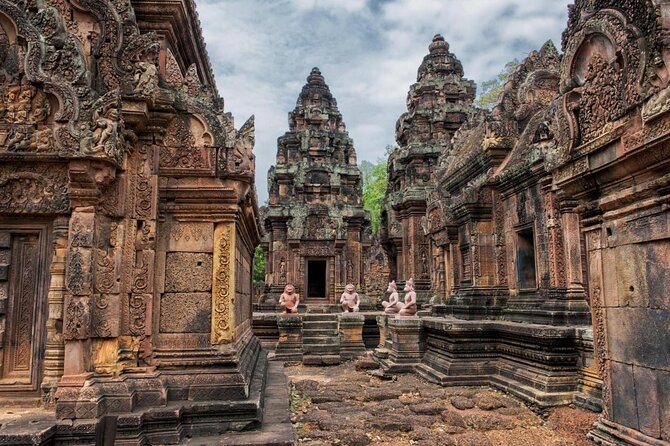
Then you go to Banteay Srei, also called the Pink Ladies Temple. It’s a 10th-century Khmer Hindu temple dedicated to Shiva, and it’s known for being smaller than many other Angkor sites—so instead of big sweeping views, you focus on the craftsmanship.
You get about 1 hour at Banteay Srei, which is a good match for a temple where the real reward is close-up carving. Look for the motifs and figures of gods, because this is one of those places where the details are doing the storytelling.
Location also matters: it’s about 25 km (16 mi) northeast of the main Angkor area. That distance is part of why a guided day-trip is valuable; it reduces the stress of figuring out transport while still keeping you on schedule.
Angkor Thom South Gate: the causeway and the 100-meter moat moment
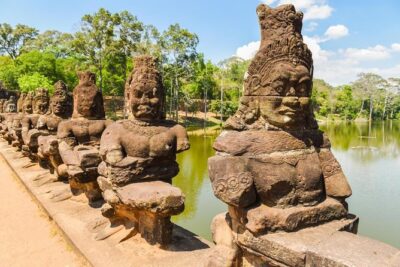
Angkor Thom is the old royal city, and you start by entering through the South Gate. You’re met by a grand causeway that crosses a 100-meter-wide moat, flanked by a naga balustrade starting with a major stone carving of a seven-headed naga.
This is a great “reset” stop between temples because it sets the stage. You see the scale of the city defenses before you move into the royal core, and it helps you orient yourself when you later stand in front of Bayon.
You’ll spend about 20 minutes here, which is enough for the entry views and for photos without turning it into a long detour.
Bayon Temple: 173 faces and the human question behind them
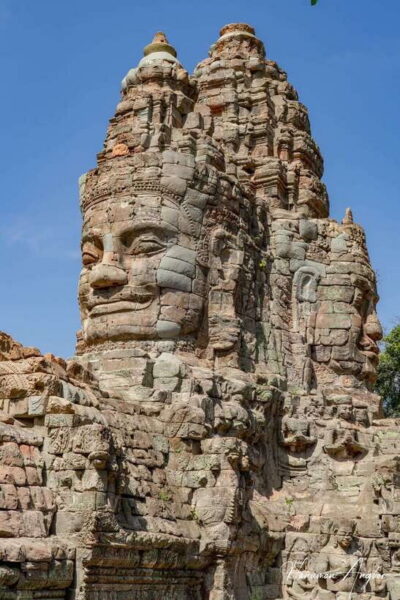
Next is Bayon, one of Angkor Thom’s headline sites. Bayon’s towers have 173 gigantic faces, and there’s ongoing debate about who they represent. Locals have their own beliefs too, including ideas linked to the Four Faces theme.
You’ll have about 50 minutes at Bayon. That’s a solid amount of time because you can move around the towers and catch the faces from different angles, which makes the expressions feel less fixed and more watchful.
If you want to get real value from this stop, slow down just a little and look at how the faces appear as you walk the paths. The temple works like a moving perspective show.
Baphuon and Phimeanakas: royal power in sandstone
Your route continues inside Angkor Thom with Baphuon and then Phimeanakas.
Baphuon is the state temple of King Udayadityavarman II, and you’ll have about 40 minutes here. The stop is long enough to notice the temple’s monument scale and how it connects with the surrounding royal layout.
Then there’s Phimeanakas, a temple with a story and part of the royal enclosure. You get about 30 minutes at this stage, which is more than enough to take in the setting and start linking these temples to the “royal” idea of the city, not just the “pretty ruins” idea.
Terrace of the Elephants and Terrace of the Leper King: royal boundaries you can feel
The day finishes Angkor Thom territory with two long royal terraces.
The Terrace of the Elephants was built at the end of the 12th century by King Jayavarman VII. It stretches more than 300 meters, running from the Baphuon area in the south toward the Leper King terrace to the north. You’ll have about 30 minutes for this section.
Then you move to the Terrace of the Leper King for about 15 minutes. Together, these terraces form the eastern boundary of the royal palace grounds, and they face the parade grounds. Even without getting lost in every carving, the sheer length makes the royal-city design feel real.
If you’re short on time, these terraces are where you can read Angkor’s “city planning” with your eyes. They’re not just monuments; they’re boundaries and stages.
Angkor Wat: the symbolic “center” and the long main event
Finally comes the big finish: Angkor Wat. You’ll get about 3 hours here, which is the right amount of time for a temple this big and this famous.
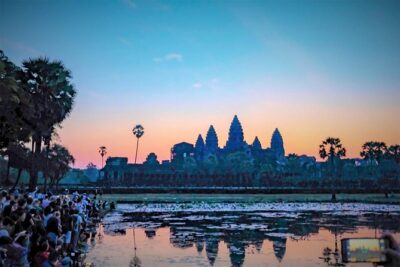
Angkor Wat is described as representing the abode of Hinduism’s ancient gods, and the structure is packed with symbolism. The temple has five concentric rectangular walls with moats alongside, symbolizing a cosmic chain of mountains and ocean. The main tower represents Mount Meru, said to be the center of the Hindu and Buddhist universe.
In practical terms, that symbolism is why Angkor Wat feels different from other temples on the circuit. You’re not just looking at stone—you’re walking through a carefully designed model of the cosmos.
With three hours, I’d use the time in two modes: first, get your bearings and walk key lines of sight; second, slow down where the carvings and structure details give you the most payoff.
Comfort, transport, and how guides can reduce stress
This is a private tour with an air-conditioned vehicle, plus cool water and towels. You’ll also have parking fees and road tolls handled, which keeps you from dealing with small friction points during a long day.
One of the smartest parts of a good Angkor guide is flexibility with walking. I’ve seen this operator’s approach described as adjusting logistics for a guest with a hurt foot—arranging closer driving and using options like a moped or tuk tuk—so the person didn’t have to miss major sites. Even if you don’t have mobility needs, that kind of problem-solving is a value you feel in your legs and your mood.
Who should book this private day tour?
This tour is a strong fit if you want the classic temples without the stress of planning routes and entry timing. It’s also ideal for first-timers who want English guidance to connect the temple symbolism—like Meru and cosmic walls—with what they’re standing in front of.
If you care about Khmer art details, Banteay Srei is a highlight, since its smaller scale pushes you toward close-looking instead of just taking big “wow” photos.
If you’re traveling as a couple or small group and want to keep control of the pace, the private format is a good match. And if walking is a concern, choose this kind of guided setup because the guide can coordinate transport to reduce strain.
A note on the guide: communication that helps your day run smoother
The tour’s English guidance is a real advantage because Angkor’s temples aren’t intuitive. I’ve heard from clients about guides who communicate well via WhatsApp and can customize what they see based on your priorities. Chanra, for example, was specifically described as excellent at communicating in advance and adding suggestions during the tour.
That kind of communication matters because it lets you arrive with fewer uncertainties and better expectations about timing and what to focus on.
Should you book this private Angkor Wat and Banteay Srei tour?
I’d book it if you want a single-day Angkor plan that covers Ta Prohm, Angkor Thom, and Angkor Wat without turning the day into a navigation project. The $43 tour price covers the hard-to-organize parts—guide, transport, and comfort—while the temples pass cost is clearly separated.
Skip it only if you’re determined to DIY every stop and you’re comfortable planning temple entry and travel timing on your own. If you’d rather spend your energy on the temples, not the logistics, this private circuit is built for that.
FAQ
What temples are included on this private tour?
The tour includes Ta Prohm, Pre Rup, Banteay Srei, Angkor Thom South Gate, Bayon, Baphuon, Phimeanakas, the Terrace of the Elephants, the Terrace of the Leper King, and Angkor Wat.
How long is the tour?
It runs for about 8 hours 30 minutes.
Is pickup included?
Yes. Pickup is offered, and the inclusions list includes pick up and drop off at the airport.
What does the tour price include?
Included items are an air-conditioned vehicle, an English tour guide, parking fees and road tolls, cool water and towels, and pickup/drop-off at the airport.
Is the temples pass included?
No. The tour does not include the temples pass. A 1-day pass is listed as $37.00 per person.
Are the admission tickets included for each temple stop?
No. The stops list indicates admission tickets are not included.
What are the operating hours for the tour?
The listed opening hours are Monday through Sunday, 8:00 AM to 4:00 PM.
Is this tour private?
Yes. It is a private tour/activity, meaning only your group participates.
Can I cancel and still get a refund?
You can cancel for a full refund if you cancel at least 24 hours before the experience’s start time.
Is this suitable for everyone in my group?
The information says most travelers can participate, and the tour is private, which can make it easier to adjust the pace for your group’s needs.
More Temple Circuits Around Siem Reap
- Angkor Wat Sunrise or Sunset Tour with Guide from Siem Reap
★ 5.0 · 12,109 reviews - Siem Reap: Angkor Wat: Small-Group Sunrise or Sunset Tour
★ 5.0 · 9,444 reviews - Siem Reap: Angkor Wat 2-Day Tour with Sunrise and Sunset
★ 4.9 · 4,429 reviews - Siem Reap: Full-Day Angkor Wat Guided Tour with Sunset
★ 4.9 · 3,803 reviews - Angkor Wat Sunrise tour with Small – Group and Guide tours
★ 5.0 · 3,655 reviews
The Carvings of Banteay Srei
- Full-Day Banteay Srei & 4 Temples – Grand Tours Join-in Tour
★ 5.0 · 1,155 reviews - Siem Reap Tour: Angkor Wat Sunrise, Bayon, Ta Prohm, Banteay Srei
★ 5.0 · 931 reviews - 2-Day Angkor Wat With Small, Big Circuit and Banteay Srei Tour
★ 5.0 · 545 reviews - From Siem Reap: Banteay Srei Temple & Grand 5 Temple Tour
★ 4.8 · 262 reviews - 3-Days Discovery Of Angkor: Waterfalls,Floating Village and Banteay Srei temple
★ 5.0 · 214 reviews
Angkor Wat, a Few More Ways In
- Angkor Wat Sunrise or Sunset Tour with Guide from Siem Reap
★ 5.0 · 12,109 reviews - Siem Reap: Angkor Wat: Small-Group Sunrise or Sunset Tour
★ 5.0 · 9,444 reviews - Siem Reap: Angkor Wat 2-Day Tour with Sunrise and Sunset
★ 4.9 · 4,429 reviews - Siem Reap: Full-Day Angkor Wat Guided Tour with Sunset
★ 4.9 · 3,803 reviews - Angkor Wat Sunrise tour with Small – Group and Guide tours
★ 5.0 · 3,655 reviews
Just Added: Fresh Siem Reap Tour Reviews


Angkor Wat Temple Tours, compared.
 ★ 5.0Angkor Wat Sunrise or Sunset Tour with Guide from Siem ReapFrom $1812,109 reviews
 ★ 5.0Angkor Wat: Small-Group Sunrise or Sunset TourFrom $159,444 reviews
 ★ 4.9Angkor Wat 2-Day Tour with Sunrise and SunsetFrom $344,429 reviews
 ★ 4.9Full-Day Angkor Wat Guided Tour with SunsetFrom $153,803 reviews
 ★ 5.0Angkor Wat Sunrise tour with Small – Group and Guide toursFrom $143,655 reviews
 ★ 5.0Angkor Wat Highlights and Sunrise Guided Tour from Siem ReapFrom $233,213 reviews
 ★ 5.0Angkor Wat Sunset Small Group Tour with Lunch IncludedFrom $203,059 reviews
 ★ 5.0Full-Day Angkor Wat Sunrise Private Tour with Guide from Siem ReapFrom $602,920 reviews
Browse the lists this tour appears in