
Reviewed · ANGKOR TEMPLE TOURS
Private Siem Reap 3 Day Tour Discover All Highlight Angkor Temple
After sunrise, the temples never feel far away. This private 3-day Siem Reap tour strings together the big Angkor moments with easy comfort—including AC rides, cold water, and towels on hand. You also get a real change of pace with Tonle Sap and the floating village lifestyle, plus a couple of town stops that help you understand what you’re looking at.
What I especially like is the smart pacing for a private group. Day 1 mixes older Angkor-era sites around Roluos with a long floating-village stretch, so you’re not only doing gate-to-gate photos. Day 2 then hits the classic Angkor Wat to Bayon core, while Day 3 keeps going north with temples that are often quieter—plus a stop for sugar-making and local souvenirs.
One thing to consider: not everything is included. The big one is the Angkor Pass (the guide helps you buy it at the park entrance), and lunches are on your own, so you’ll want to budget a bit beyond the tour price.
In This Review
- Key things you should know before you go
- Private 3 days across Siem Reap and Angkor highlights
- Comfort and timing: AC rides, water, and the Angkor Pass plan
- Day 1: Roluos temples, Kampong Phluk floating village, and Wat Bo town culture
- Preah Ko and Bakong: early pyramids and temple evolution
- Lolei: smaller, younger, and good for slower looking
- Kampong Phluk floating village: the Tonle Sap lifestyle connection
- Wat Bo and Satcha: temple art and modern artisan support
- What Day 1 is best for
- Day 2: Angkor Wat at sunrise plus Angkor Thom’s royal route
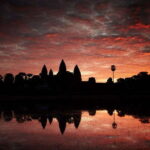
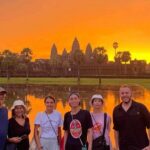
- Angkor Wat sunrise: national emblem energy with a schedule that makes sense
- Angkor Thom’s South Gate, Bayon, and Baphuon: faces and royal scale
- Phimeanakas and the terraces: the Royal Square details
- Ta Prohm: the jungle-temple effect with a strong place in the route
- Banteay Kdei and Ta Nei: longer on time, more temple language
- What Day 2 is best for
- Day 3: Banteay Srei beauty, sugar-making, and the Phnom Bakheng sunset plan
- Banteay Srei: the artistry-focused morning stop
- Banteay Samre: close enough to connect, different enough to notice
- Palm sugar producer group and souvenir sellers: how food becomes a craft story
- Preah Khan, Neak Pean, Pre Rup, and East Mebon: the Angkor engineering trail
- Sunset at Phnom Bakheng: end your trip with the view
- Price and value: what $253.65 covers and what you’ll pay extra
- Who this tour suits best (and who should reconsider)
- Should you book this private Siem Reap 3-day highlights tour?
- FAQ
- Is pickup and drop-off included?
- Is this a private tour?
- What about transportation during the 3 days?
- Is Angkor Pass included?
- Are meals included?
- Are there any tickets included for specific stops?
- Is the Angkor Wat sunrise included?
Key things you should know before you go
- AC private transport with iced towels and cold water keeps long temple days from feeling brutal
- A true private tour means you can slow down, linger, or cut a stop short based on your energy
- Two Tonle Sap moments are built in: floating village time and time focused on lake life
- Angkor Pass is separate, so plan for that day-of ticket purchase
- Comfortable timing starts with an early Angkor Wat sunrise slot, then returns for breakfast
- The tour covers more than the “must-see list” with Roluos-era temples and additional Angkor compounds beyond the first hits
More temple circuits, set side by side
- Angkor Wat Sunrise or Sunset Tour with Guide from Siem Reap★ 5.0 · 12,109 reviews
- Siem Reap: Angkor Wat: Small-Group Sunrise or Sunset Tour★ 5.0 · 9,444 reviews
- Siem Reap: Angkor Wat 2-Day Tour with Sunrise and Sunset★ 4.9 · 4,429 reviews
- Siem Reap: Full-Day Angkor Wat Guided Tour with Sunset★ 4.9 · 3,803 reviews
Private 3 days across Siem Reap and Angkor highlights
This tour is built for travelers who want maximum highlights without the scramble of group logistics. Since it’s private, you’re not stuck following a slowest-person pace, and the guide can adjust on the fly if the light is better in one direction or if you’re ready to move on.
The best part is how it balances the big-name temples with a couple of very practical context stops. Angkor can feel like pure stone unless you connect it to the living landscape around it. Here, that connection comes from your Tonle Sap day and the local crafts and food-making moments in Siem Reap.
Also, the vehicle comfort is not a small detail. In one recent experience, the group rode in a clean Toyota Highlander with AC, iced towels, and cold water—exactly what you want when you’re bouncing between temple zones for hours.
Comfort and timing: AC rides, water, and the Angkor Pass plan
You’ll move around Siem Reap and Angkor in a private air-conditioned vehicle, with cold bottled water and towels available during the tour. That matters more than it sounds, because temple days aren’t just walking—they’re heat management, hydration, and waiting for the right time of day at key viewpoints.
Your guide is also there to smooth the day-of process for the Angkor Pass. It isn’t included in the base tour price, but the guide helps you purchase it at the entrance of Angkor Park before you start touring that day. Since the pass is what covers the temples on the route, it’s a big “don’t miss this” item to plan for.
You’ll also have a mobile ticket for the tour itself, and pickup and drop-off are included. That helps you avoid the common hassle of figuring out transport once you’re already tired from an early morning.
Day 1: Roluos temples, Kampong Phluk floating village, and Wat Bo town culture
Day 1 starts in the earlier Angkor world—around Roluos (Hariharalaya), the predecessor capital area. This is a smart move because it sets the stage. Instead of sprinting straight to the headline temples, you begin with the temples that show how Khmer temple architecture developed.
Preah Ko and Bakong: early pyramids and temple evolution
Preah Ko (Sacred Bull) sits in the Hariharalaya zone, placed between Lolei and the pyramidal Bakong temple. The feel here is more intimate than the main Angkor crowding you’ll see later. You’ll have time to actually notice layout and design instead of only snapping the front gate.
Then Bakong comes in—built under Indravarman I and consecrated in 881. It’s important historically because it’s often considered a kind of prototype for the typical Khmer temple pyramid style. If you’ve ever wondered why Angkor temples look the way they do, this is where you start seeing the logic.
More time at the temples, spread over days

Lolei: smaller, younger, and good for slower looking
Lolei is younger and smaller than the other big Roluos stops. It’s also closer to the main road, so you can expect it to feel easier to slot into your day. If you’re the type who enjoys comparing temple scale and detail, this pairing—Bakong first, then Lolei—works well.
Kampong Phluk floating village: the Tonle Sap lifestyle connection
After the temple circuit, you switch gears with a private cruise to Kampong Phluk. This community has lived on the floating villages for multiple generations, and your time here is long enough to absorb the rhythm of daily life on and around the water.
You’ll spend about 3 hours in this floating village stretch, then you continue with additional Tonle Sap focus time. The Tonle Sap lake is one of the most productive fishing areas in the world, supporting millions of people and a large share of Cambodia’s inland fish catch. In practical terms, it’s not just scenery—it’s a working ecosystem.
A quick consideration: this is one of those days where you’ll want sensible shoes and a light cover for sun. Heat plus walking around viewpoints can sneak up on you, even with the water and towels.
Wat Bo and Satcha: temple art and modern artisan support
Back in Siem Reap, Wat Bo offers a calmer pause. It’s known for well-preserved wall paintings from the late 19th century, which can give you a different way of reading temple scenes: not only architecture, but storytelling.
Then you head to Satcha, a Cambodian Handicraft Center. This is a worthwhile stop if you want to understand how local artisans are being supported today. It’s also a good spot for souvenirs that feel connected to real craft rather than mass-produced trinkets.
What Day 1 is best for
Day 1 is ideal if you want your trip to feel like more than a highlight checklist. The combination of Roluos temples plus Tonle Sap helps your eyes land with more meaning when you reach Angkor Wat and Bayon on Day 2.
Day 2: Angkor Wat at sunrise plus Angkor Thom’s royal route
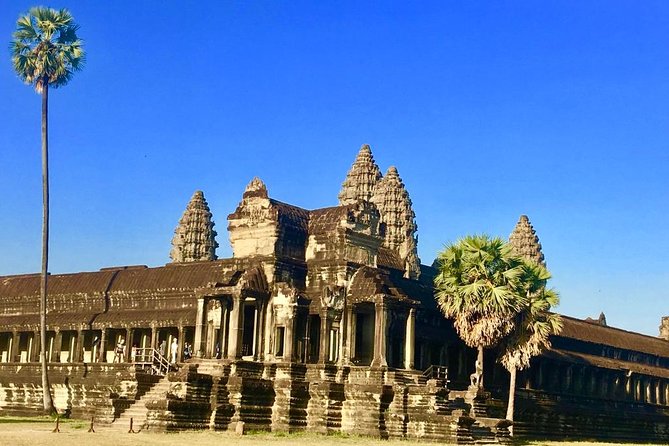
Day 2 is where most people picture Angkor: early start, iconic monuments, and long photo walks. The tour has a sunrise plan at Angkor Wat, and after sunrise you return for breakfast. That return-for-breakfast detail is more valuable than it looks, because sunrise temple time can otherwise mean you’re running on fumes.
Angkor Wat sunrise: national emblem energy with a schedule that makes sense
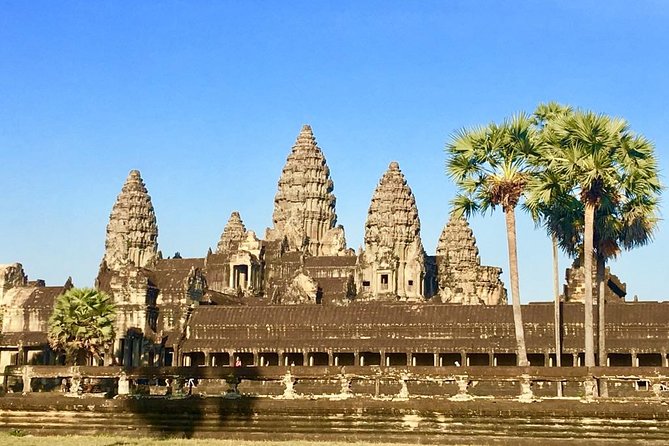
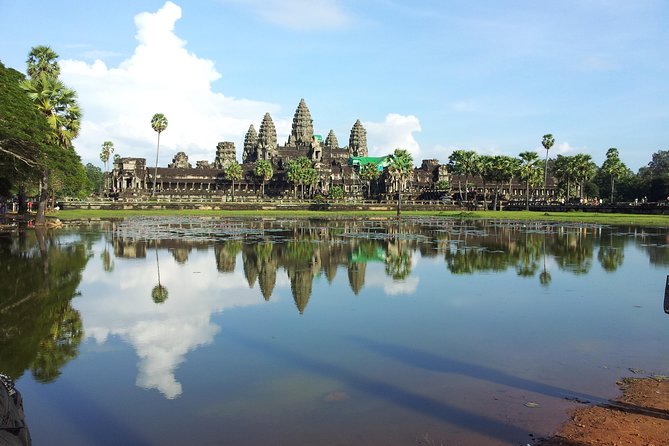
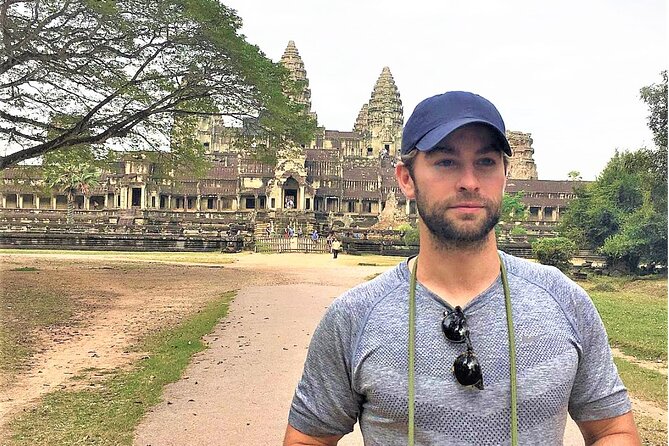
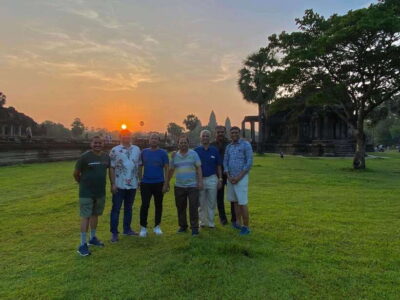
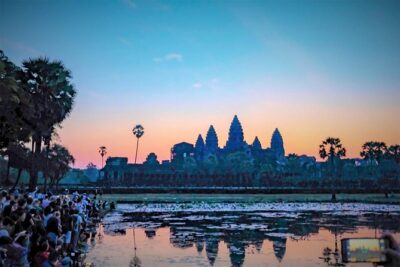
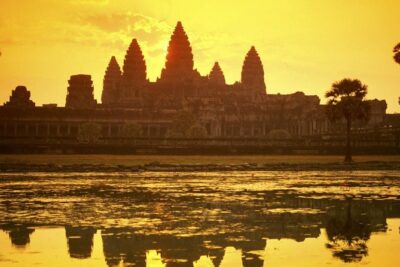
Angkor Wat is the national emblem of Cambodia, and it’s the pride of the Khmer people. Seeing it at sunrise usually means you’ll be there when the temple is cooler and the crowds are still calmer. The structure of the day—sunrise, then breakfast—helps you avoid the classic mistake of going hard early and burning out before the real exploring begins.
Angkor Thom’s South Gate, Bayon, and Baphuon: faces and royal scale
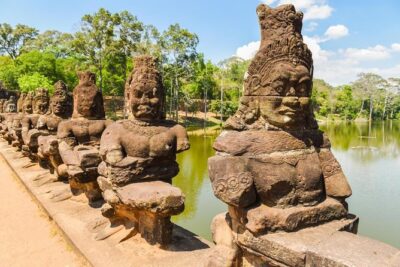
South Gate is the famous city gate view that many routes funnel you through. It’s essentially your entry to Angkor Thom’s royal city world, and it sets up the scale you’ll see as you move deeper.
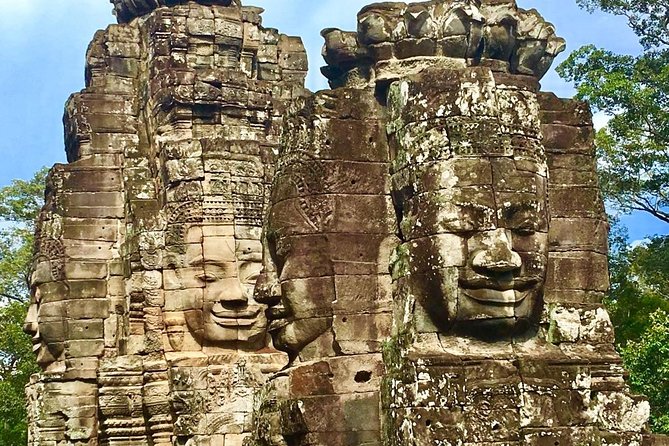
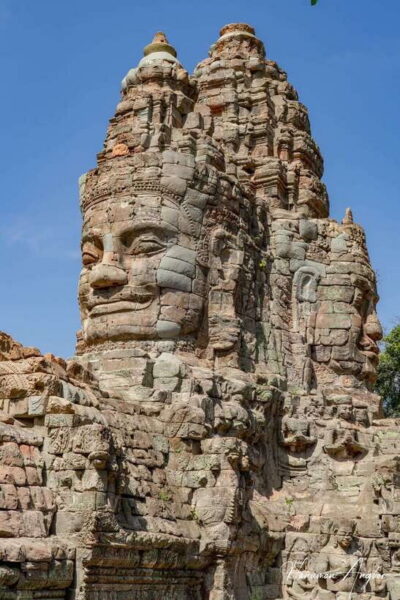
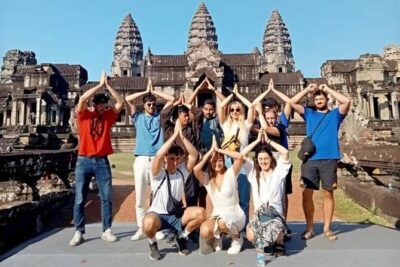
Bayon is next: built around 1200 A.D., it’s famous for its stone faces. Then you move on to Baphuon, a state temple linked to King Udayadityavarman II and dedicated to Shiva.
Phimeanakas and the terraces: the Royal Square details
Phimeanakas is a laterite structure started by Rajendravarman II, with later kings adding changes. It’s one of those stops where the value is in details—how the temple style shifts across centuries.
Then comes Terrace of the Elephants and the Terrace of the Leper King. These are the kinds of places where you’ll enjoy a pause. They’re long enough for carvings and storytelling to come into focus, and they help you understand that Angkor wasn’t only built for worship—it was also built for record, authority, and ceremony.
Ta Prohm: the jungle-temple effect with a strong place in the route
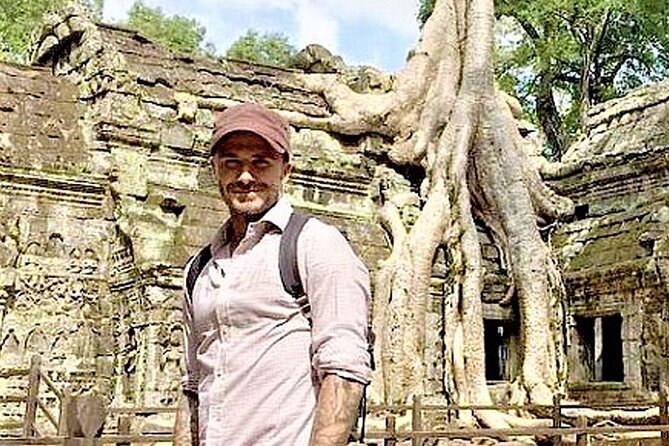
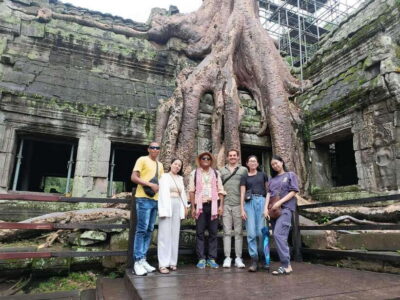
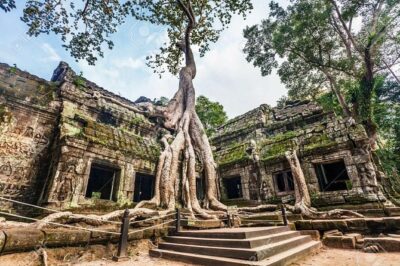
Ta Prohm is often described as Angkor’s jungle temple. The value here is not only the dramatic vibe—it’s that it shows how human structures interact with nature over time. It also usually delivers a strong visual contrast to the clearer, more open temple pyramids you’ll see elsewhere.
Banteay Kdei and Ta Nei: longer on time, more temple language
Banteay Kdei is a huge temple built by Jayavarman VII. It’s part of that Jayavarman VII Buddhist era shift you’ll notice across the wider site. The schedule allocates a very long time value to this stop, so you should expect extended temple walking and breaks rather than a quick pass.
Ta Nei follows. It’s a late 12th century stone temple dedicated to the Buddha, located near the northwest corner of the East Baray. This stop works as a quieter, more focused follow-up if you’re starting to feel temple saturation.
What Day 2 is best for
Day 2 is best for first-timers—or anyone who wants the main Angkor identity in two parts: Angkor Wat at dawn, then Angkor Thom’s major compounds, including the terraces and face temple.
Day 3: Banteay Srei beauty, sugar-making, and the Phnom Bakheng sunset plan
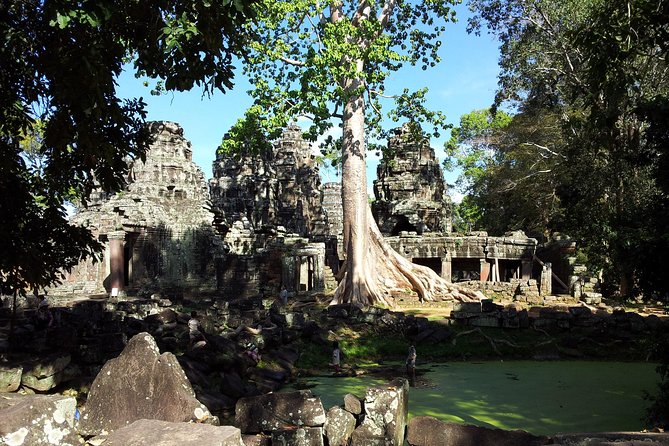
Day 3 shifts toward temples that many people consider the most rewarding when you’re already familiar with the headline ones. Banteay Srei is often a standout for its look and feel, and your time here is planned for about 2 hours.
Banteay Srei: the artistry-focused morning stop
Banteay Srei is usually the temple people talk about when they want something more delicate and detailed than the biggest, most massive structures. You’ll get about 2 hours here—enough time to appreciate carvings and layout without sprinting.
Banteay Samre: close enough to connect, different enough to notice
Banteay Samré sits near the East Baray. It’s a Hindu temple from the early 12th century, tied to Suryavarman II and Yasovarman II. This is a good contrast stop: you’ll be able to compare styles without it feeling like an entirely separate trip.
Palm sugar producer group and souvenir sellers: how food becomes a craft story
One of the most useful non-temple moments is the Palm Sugar Producer Group and souvenir sellers stop. It’s scheduled as a long block (about 6 hours) and is marked as admission included.
The practical teaching moment is that you can learn about the prices of making sugar in action, including a burning-stove demonstration. If you like understanding what you’re buying—or you just want a break from stone after two days—this stop delivers.
Preah Khan, Neak Pean, Pre Rup, and East Mebon: the Angkor engineering trail
Preah Khan is listed as a very short stop in the schedule, so expect a quick touch rather than a deep scan.
Then Neak Pean gives you something different. It’s exceptional because its layout differs from other Khmer architecture. It was built on an artificial island in a huge Baray, and that island setting is a key part of why it’s worth slowing down for about an hour.
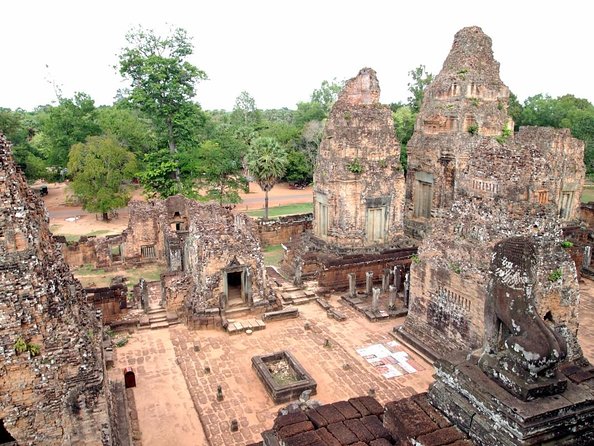
Pre Rup follows, founded in 961 and linked to Rajendravarman II. East Mebon is then set on what was an artificial island in the center of the dry East Baray reservoir, with about 50 minutes allocated.
Sunset at Phnom Bakheng: end your trip with the view
The tour overview includes a sunset at Phnom Bakheng. If you’re choosing this tour because you want an emotional closer—not just more temples—this is why. Sunset adds a time-of-day element that makes the last day feel special, and it breaks the day up so you’re not only counting hours of walking.
Price and value: what $253.65 covers and what you’ll pay extra
At about $253.65 per person for a 3-day private experience, the value comes from what’s included, not just the headline number.
Included value you’re getting:
- Private air-conditioned transfers for the full multi-day route
- Pickup and drop-off from your Siem Reap hotel
- A professional English-speaking licensed guide
- Private cruise for the floating village visit
- Cold bottled water and towels across the tour
What costs extra:
- Tips for the guide and driver
- Meals during the tour, with lunches available at local restaurants. Prices are given as roughly $3–$10 per dish.
- The Angkor Pass, which covers the temples in the itinerary and is purchased with guide help
In other words, the tour price buys you the logistics, the comfort, and the guided flow. You bring a bit of spending money for food and the temple pass. If you like the idea of having your days planned and your heat managed, this setup is usually worth it.
Who this tour suits best (and who should reconsider)
This is a strong fit for:
- First-time or second-time Angkor visitors who want the “classic” route plus extra temples and context
- People who hate wasting time sorting transport between sites
- Couples or small groups who want flexibility without giving up structure
- Travelers who appreciate comfort details like AC, water, and cool towels on temple days
You might reconsider if:
- You prefer fully self-guided touring and don’t want to purchase tickets through a guide’s help
- You’re on a tight budget and don’t want to add costs for the Angkor Pass and meals
- You want a deeper focus on only one temple area rather than a spread across Day 1, Day 2, and Day 3
Should you book this private Siem Reap 3-day highlights tour?
I’d book it if you want Angkor highlights with comfort and a schedule that makes sense: sunrise in the right place, a royal-city circuit, and a day that connects temples to life on Tonle Sap. The private transport with water and towels is a real quality-of-life win, and the floating village stop is the kind of contrast that keeps the trip from feeling repetitive.
I wouldn’t book it if you’re the type who wants zero extra planning around tickets and food. The Angkor Pass and meals are not included, and that’s money you’ll handle on top of the tour price.
FAQ
Is pickup and drop-off included?
Yes. Private hotel pickup and drop-off in Siem Reap are included. You provide your hotel name for tour pickup.
Is this a private tour?
Yes. It’s private, so only your group participates.
What about transportation during the 3 days?
All transfers are by private air-conditioned vehicle as mentioned in the itinerary.
Is Angkor Pass included?
No. Entrance fee, including the Angkor Pass, is not included. Your guide will assist you in purchasing it at the entrance of Angkor Park before starting the tour.
Are meals included?
Meals are not included. Lunches are available at local restaurants with vegetarian and non-vegetarian options, and you pay on your own (menu prices range from about $3–$10 per dish).
Are there any tickets included for specific stops?
Some stops are marked as admission included (for example, the floating village cruise and several town-related visits), while many temple stops are marked as admission not included. Your guide will help with the Angkor Pass for temples.
Is the Angkor Wat sunrise included?
Yes. The tour includes an early morning sunrise at Angkor Wat, and you return to the hotel for breakfast after sunrise.
Just Your Group: Private Days
- Full-Day Angkor Wat Sunrise Private Tour with Guide from Siem Reap
★ 5.0 · 2,920 reviews - Siem Reap: Angkor Wat Private Tuk-Tuk Tour
★ 4.9 · 2,222 reviews - Angkor Wat Private Day Tour from Siem Reap
★ 5.0 · 834 reviews - Angkor Wat Private Tuk-Tuk Tour (sunrise Option) & more
★ 5.0 · 439 reviews - Private Angkor Wat Day Tour – Best of Angkor
★ 5.0 · 269 reviews
More Days at the Temples
- Siem Reap: Angkor Wat 2-Day Tour with Sunrise and Sunset
★ 4.9 · 4,429 reviews - Angkor 2-Day Sunset & Sunrise Small-Group Tour
★ 5.0 · 2,567 reviews - 2 Days Exclusive Temple Highlights with Sunset and Sunrise Tour
★ 5.0 · 1,157 reviews - Siem Reap: Angkor Sunrise 1- or 2-Day Guided Temples Tour
★ 4.9 · 1,132 reviews - 2 Days Guided Historical Tour in Angkor
★ 5.0 · 855 reviews
More Temple Circuits Around Siem Reap
- Angkor Wat Sunrise or Sunset Tour with Guide from Siem Reap
★ 5.0 · 12,109 reviews - Siem Reap: Angkor Wat: Small-Group Sunrise or Sunset Tour
★ 5.0 · 9,444 reviews - Siem Reap: Angkor Wat 2-Day Tour with Sunrise and Sunset
★ 4.9 · 4,429 reviews - Siem Reap: Full-Day Angkor Wat Guided Tour with Sunset
★ 4.9 · 3,803 reviews - Angkor Wat Sunrise tour with Small – Group and Guide tours
★ 5.0 · 3,655 reviews
Just Added: Fresh Siem Reap Tour Reviews

Angkor Temple Tours, compared.
 ★ 5.0Angkor Wat Sunrise or Sunset Tour with Guide from Siem ReapFrom $1812,109 reviews
 ★ 5.0Angkor Wat: Small-Group Sunrise or Sunset TourFrom $159,444 reviews
 ★ 4.9Angkor Wat 2-Day Tour with Sunrise and SunsetFrom $344,429 reviews
 ★ 4.9Full-Day Angkor Wat Guided Tour with SunsetFrom $153,803 reviews
 ★ 5.0Angkor Wat Sunrise tour with Small – Group and Guide toursFrom $143,655 reviews
 ★ 5.0Angkor Wat Highlights and Sunrise Guided Tour from Siem ReapFrom $233,213 reviews
 ★ 5.0Angkor Wat Sunset Small Group Tour with Lunch IncludedFrom $203,059 reviews
 ★ 5.0Full-Day Angkor Wat Sunrise Private Tour with Guide from Siem ReapFrom $602,920 reviews
Browse the lists this tour appears in